
 Worksheets
Physical Science Semester 1 Final
Total questions: 73
Worksheet time: 2hrs 50mins
Which of the following is not a property of metal?
Shiny
Conducts Electricity
Does not Conduct heat
Malleable
Chemistry is the study of…..
How Matter looks
Changes of Matter
Motion
Microscopic properties
Which of the following would be considered a physical change?
a candy bar being digested by a student
charcoal being converted into ash
iron metal reacting with oxygen to form rust
water boiling and being converted into steam
Elements in the same………tend to have similar chemical properties
Group
Period
Row
Table
Which statement best describes a compound?
a material that is made up of a combination of atoms bonded together
a material that is made up of a single type of atom
a mixture of atoms
a mixture of more than one element
If a neutral atom loses one electron, what is the electrical charge of the atom?
-2
Which of the following best describes ionic bonding?
two atoms sharing a set of electrons
one atom transferring some of its electrons to another atom
when two elements with same charge are held together by electrostatic forces
two atoms exchanging a set of electrons
An example of a chemical change occurring would be….
sand being removed from water with a filter
ethanol is purified through distillation.
salt deposits form from evaporated seawater.
a chocolate cake being baked in the oven
How many valence electrons are needed for an atom to be stable?
10 valence electrons
6 valence electrons
4 valence electrons
8 valence electrons
Which state of matter has the most energy?
All states of matter have the same amount of energy
Water is an example of an element
True
False
The formula for dihydrogen sulfide is HS
True
False
Acids are substances with a pH equal to 7.0
True
False
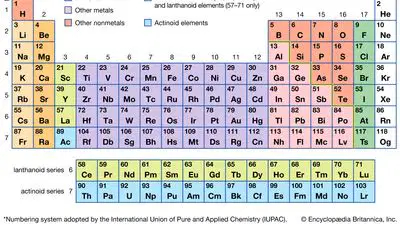
A Potassium atom tends to lose one valence electron to be stable.
True
False
Covalent bonds form between two metals.
True
False
The law of conservation of mass says that mass cannot be created or destroyed.
True
False
A substance that speeds up a chemical reaction without being used up is called an inhibiter.
True
False
Another word for an acid is alkaline
False
True
A decomposition reaction starts with one reactant and has multiple products.
True
False
An object that has a density less than 1 will sink.
True
False


There are 24 cm3 Find the total mass.
Which of the following is an example of a CHEMICAL change?
Shattering a window with a baseball
Ripping paper into 1,000,000,000 tiny pieces
Rusting an iron bar on a humid day
Melting a block of copper metal
Which of the following is an example of a PHYSICAL change?
Neutralizing vinegar with baking soda
Breaking your iPad with a rock due to school stress
Creating a precipitate by mixing Lead Nitrate and Sodium Iodide
Burning popcorn in the microwave
Match the following:
Physical Changes
Changes that change the appearances of the substance, not is identify.
Chemical Changes
changes that cause a substance to change into a new substance
Freezing, Grinding, Chopping, Tearing, Evaporating
Examples of Physical Changes
Combustion, Rusting, Burning, Corroding
Examples of Chemical Changes
The law of Conservation of Mass states
matter can be created and destroyed
matter takes up space
matter cannot be created or destroyed
matter has a new mass after a chemical reaction
What is the substance that is formed after a chemical reaction called?
product
subscript
coefficient
reactants
What type of reaction is Fe + Cl2 → FeCl3
Synthesis
Decomposition
Single Replacement
Combustion
None of these
What type of reaction is C2H2 + O2 → CO2 + H2O
Synthesis
Decomposition
Single Replacement
Combustion
None of these
What type of reaction is BF3 + Li2SO3 → B2(SO3)3 + LiF
Synthesis
Decomposition
Single Replacement
Combustion
None of these
What type of reaction is Ag2O → Ag + O2
Synthesis
Decomposition
Single Replacement
Combustion
None of these
What type of reaction is C5H10 + O2 → CO2 + H2O
Synthesis
Decomposition
Single Replacement
Combustion
None of these
What type of reaction is Zn + HCl → H2 + ZnCl2
Synthesis
Decomposition
Single Replacement
Combustion
None of these
What type of reaction is H2 + N2 → NH3
Synthesis
Decomposition
Single Replacement
Combustion
None of these
What type of reaction is (NH2)3PO4 + Pb(NO3)4 → NH4NO3 + Pb3(PO4)4
Synthesis
Decomposition
Single Replacement
Combustion
None of these
What type of reaction is FeBr3 + H2SO4 → HBr + Fe2(SO4)3
Synthesis
Decomposition
Single Replacement
Combustion
None of these
What type of reaction is Fe + H2SO4 → H2 + FeSO4
Synthesis
Decomposition
Single Replacement
Combustion
None of these
What type of reaction is Mg + Br2 → MgBr2
Synthesis
Decomposition
Single Replacement
Combustion
None of these
What type of reaction is KClO3 → KCl + O2
Synthesis
Decomposition
Single Replacement
Combustion
None of these
What type of reaction is K2CO3 → K2O + CO2
Synthesis
Decomposition
Single Replacement
Combustion
None of these
What type of reaction is CH4 + O2 → CO2 + H2O
Synthesis
Decomposition
Single Replacement
Combustion
None of these
What type of reaction is NaOH + HCl → H2O + NaCl
Synthesis
Decomposition
Single Replacement
Combustion
None of these
What type of reaction is SeCl6 + O2 → SeO2 + Cl2
Synthesis
Decomposition
Single Replacement
Combustion
None of these
Formula for barium sulfide
B2S3
BaS
Ba2S
BaS2
Name for PBr2
phosphorus bromide
phosphorus dibromide
phosphorus dibromine
phosphorus bromine
Name for SrBr2
strontium bromine
strontium bromide
strontium dibromide
strontium dibromine
Name for CO
carbon monoxide
carbon oxide
monocarbon oxide
carbide monoxide
What is the correct formula of phosphorus trichloride?
P2Cl3
P3Cl3
PCl3
PCl5
the name for IF3 is (a)

Match the following: worth 10 points!!!!
Metals
calcium (Ca), iron (Fe), potassium (K)
Non-metals
oxygen (O), iodine (I), nitrogen (N),
Metallic Bonding
Sodium (Na) bonded to Sodium (Na)
Ionic Bonding
Lithium (Li) bonded to Chlorine (Cl)
Covalent Bonding
Hydrogen (H) bonded to Oxygen (O)

This could be the dot diagram for...
He
Al
Be
Si
Organize these options into the right categories
Luster/Shiny
Formed between two Non-Metals
In an endothermic reaction, heat is ...
taken in
given out
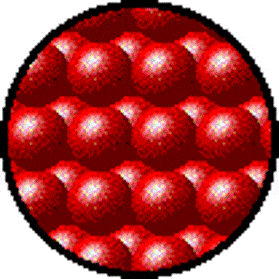
What state of matter does the picture below represent?
solid
liquid
gas
What property of gases allows them to have such rapid movement?
it has high kinetic energy
it has low kinetic energy
the particles have a high attraction for each other
the particles have a low attraction for each other

particles of a solid

particles of a liquid

particles of a gas

