
 Worksheets
Japanese Education System Facts
Total questions: 70
Worksheet time: 35mins

According to the image, why don't Japanese students take exams until grade 4?
To learn mathematics
To establish good manners and develop character
To prepare for university
To learn science

Fill in the blank: In Japan, students don't get any exams until they reach grade four because they are taught how to _____
live
read
calculate
compete
What does assessment of learning focus on developing and utilizing to improve the teaching-learning process?
Assessment of learning focuses on developing and utilizing assessment tools to improve the teaching-learning process.
Assessment of learning focuses on developing and utilizing teaching aids to improve the teaching-learning process.
Assessment of learning focuses on developing and utilizing lesson plans to improve the teaching-learning process.
Assessment of learning focuses on developing and utilizing classroom management strategies to improve the teaching-learning process.
Assessment of learning emphasizes the use of testing to measure which of the following?
Physical skills
Knowledge, comprehension, and other thinking skills
Artistic ability
Attendance
Assessment of learning allows students to go through the standard steps in the constitution for quality assessment.
True
False
What will students experience in assessment of learning regarding rubrics?
Students will experience how to develop rubrics for performance-based and portfolio assessment.
Students will only use rubrics created by teachers for all assessments.
Students will not be involved in any rubric-related activities.
Students will experience rubrics only in written examinations.
Measurement refers to the ________ aspect of evaluation. It involves outcomes that can be quantified statically. It can also be defined as the process in determining and differentiating the information about the attributes or characteristics of things.
quantitative
qualitative
subjective
descriptive
What is the qualitative aspect of determining outcomes of learning that involves value judgment and is more comprehensive than measurement?
Evaluation
Assessment
Testing
Grading
Fill in the blank: A ______ consists of questions or exercises or other devices for measuring learning outcomes.
test
book
lecture
assignment
According to the 'Classification of Test', fill in the blank: A test that is answered by speaking is called an ______ test.
Oral
Written
Practical
Objective
According to the 'Classification of Test', which type of test is answered by writing?
Oral
Written
According to the Method of Preparation, one type of test is called ___________.
Subjectively/Essay
Objective/Multiple Choice
Practical/Hands-on
Oral/Viva
According to the Method of Preparation, one type of test is called ___________.
Objective
Subjective
Practical
Oral
According to the nature of the test, one type is _______.
Personality test
Achievement test
Aptitude test
Intelligence test
According to the nature of the test, one type is _______.
Intelligence test
Personality test
Achievement test
Aptitude test
According to the nature of the test, one type is _______.
Aptitude test
Physical test
Language test
Interest test
According to the nature of the test, one type is _______.
Achievement or summative test
Diagnostic test
Formative assessment
Aptitude test
According to the nature of the test, one type is _______.
Sociometric test
Achievement test
Aptitude test
Personality test
According to the nature of the test, one type is _______.
Diagnostic or formative test
Summative assessment
Objective test
Practical examination
According to the nature of the test, one type is _______.
Trade of vocational test
Personality test
Aptitude test
Interest test
Refer to the diagram titled 'Fundamental Components of Assessment'. Fill in the blank: One of the four fundamental elements of learner-centered assessment is to _________.
Formulate statement of intended learning outcomes
Administer standardized tests
Ignore student feedback
Focus solely on grading
Refer to the diagram titled 'Fundamental Components of Assessment'. Fill in the blank: One of the four fundamental elements of learner-centered assessment is to _________.
Develop or select assessment measures
Ignore assessment feedback
Focus only on grading
Disregard learning objectives
Refer to the diagram titled 'Fundamental Components of Assessment'. Fill in the blank: One of the four fundamental elements of learner-centered assessment is to _________.
Create experiences leading outcomes
Assess only final results
Ignore learner feedback
Focus solely on content delivery
Refer to the diagram titled 'Fundamental Components of Assessment'. Fill in the blank: One of the four fundamental elements of learner-centered assessment is to _________.
Discuss and use assessment results to improve learning
Ignore assessment results and continue with the same methods
Focus only on grading without feedback
Assess learners only at the end of the course
Use assessment results solely for administrative purposes
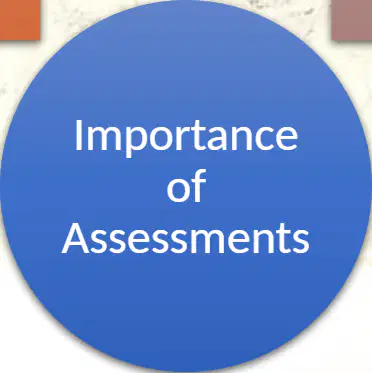
According to the diagram, which of the following is NOT listed as an importance of assessments?
A) Educational Importance
B) Student-Centered Importance
C) Financial Importance
D) Societal Importance
Fill in the blank: The diagram lists ________ Importance as one of the aspects of the Importance of Assessments.
Teacher-Centered
Student-Centered
Peer-Based
Community-Oriented
Which of the following is a type of importance of assessments according to the diagram?
Institutional Importance
Economic Importance
Political Importance
Technological Importance
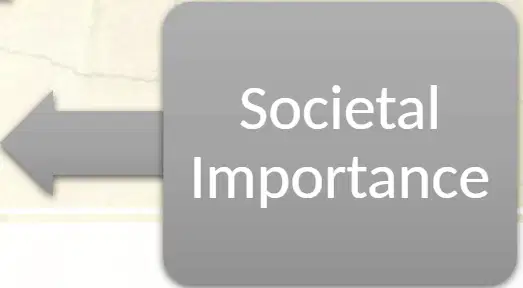
Fill in the blank: According to the diagram, assessments have ________ Importance, which relates to the broader community.
Societal
Personal
Academic
Financial
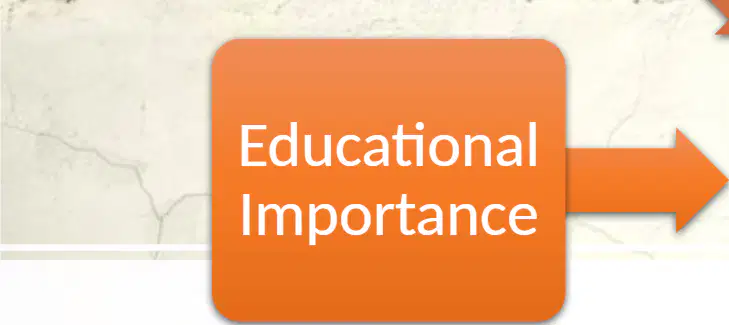
Which of the following is directly connected to the 'Importance of Assessments' in the diagram?
A) Educational Importance
B) Environmental Importance
C) Technological Importance
D) Financial Importance
Education Importance: _________ evaluates student learning outcomes, identifying strengths and weaknesses.
Measures Student Progress
Assigns Homework
Organizes School Events
Decorates Classrooms
Education Importance: _________ guides teachers in adjusting teaching strategies and materials.
Informs Instructional Decisions
Follows Student Attendance
Measures Classroom Size
Records Homework Completion
Education Importance: _________ targets areas needing improvement, enhancing academic performance.
Improves Student Achievement
Reduces School Hours
Increases Homework Load
Limits Extracurricular Activities
Education Importance: _________ encourages students to analyze, evaluate, and create.
Develops Critical Thinking
Improves Memorization
Promotes Physical Activity
Increases Social Interaction
Fill in the blank: Student-centered learning helps to ________ learning gaps by detecting knowledge deficiencies and enabling targeted support.
identify
ignore
widen
complicate
Which of the following is a benefit of student-centered learning?
Enhances student engagement by providing feedback and motivating students to learn
Reduces student engagement
Discourages feedback
Limits motivation
Fill in the blank: Student-centered learning builds ________ by recognizing accomplishments and fostering self-esteem.
confidence
confusion
competition
compliance
Which of the following describes how student-centered learning prepares students for the future?
A) Develops essential skills for higher education and careers
B) Limits career opportunities
C) Reduces skill development
D) Focuses only on current studies
What does evaluating teaching effectiveness assess?
instructional methods and materials
student attendance records
classroom decoration
teacher's personal hobbies
What does informing curriculum development provide for curriculum refinement?
Data-driven decisions
Random guesses
Unstructured opinions
Irrelevant feedback
Personal biases
What does professional development identify?
teachers' training needs
students' exam scores
school infrastructure issues
parent-teacher meeting schedules
What does accountability demonstrate?
teacher responsibility
student creativity
classroom decoration
school location
Meets regulatory requirements. Fill in the blank: ________ and Certification.
Accreditation
Authorization
Validation
Inspection
Informs budgeting and resource distribution. Resource ________.
Allocation
Reduction
Segregation
Consumption
Assess the effectiveness of educational programs. Fill in the blank: Program ________.
Evaluation
Development
Instruction
Planning
Data-driven decision-making. Fill in the blank: Strategic ________.
Planning
Cooking
Dancing
Sleeping
Fill in the blank: __________ ensures graduates are workforce-ready.
Workforce Preparation
Financial Aid
Campus Security
Library Services
Fill in the blank: __________ contributes to a skilled, productive workforce.
Economic Growth
Climate Change
Wildlife Conservation
Space Exploration
Fill in the blank: __________ refers to education equality and opportunities.
Social Mobility
Economic Growth
Cultural Heritage
Political Stability
Fill in the blank: __________ means educated citizens enrich community life.
Community Development
Personal Finance
Physical Education
Environmental Science

In the Assessment Cycle, which stage involves writing outcomes?
PLAN
DO
STUDY
ACT
In the Assessment Cycle, what is the main activity in the DO stage?
TEACH & LEARN
ASSESS & EVALUATE
PLAN & DESIGN
REVIEW & REFLECT
Which stage of the Assessment Cycle focuses on evaluating student work?
CHECK
PLAN
DO
ACT
What is the purpose of the ACT stage in the Assessment Cycle?
REVISE & REINFORCE
COLLECT DATA
SET GOALS
ANALYZE RESULTS
Which of the following is a common component of an assessment?
psychological tests
surveys and tests
observational data
medical and school history
interviews

Fill in the blank: One common component of an assessment is ____________.
psychological tests
weather reports
musical instruments
cooking recipes
Fill in the blank: One common component of an assessment is ____________.
surveys and tests
group projects
field trips
classroom decorations
Fill in the blank: One common component of an assessment is ____________.
interviews
bicycles
sandwiches
televisions
Fill in the blank: One common component of an assessment is ____________.
observational data
random guessing
irrelevant anecdotes
personal opinions
Fill in the blank: One common component of an assessment is ____________.
medical and school history
favorite color
pet's name
holiday destination
shoe size
Fill in the blank: One common component of an assessment is ____________.
medical evaluation
annual leave
holiday party
team lunch
What's the definition of evaluation in education? (Fill in the blank with the correct definition)
Evaluation focuses on grades and might reflect classroom components other than course content and mastery level. An evaluation can be used as a final review to gauge the quality of instruction. It's product-oriented.
Evaluation is solely concerned with student attendance and participation in class activities.
Evaluation refers to the process of assigning homework and projects without assessing their outcomes.
Evaluation is the act of providing feedback without considering the overall performance or mastery of the subject.
What is the primary goal of formative assessment?
To evaluate final outcomes
To monitor student learning and provide ongoing feedback
To rank students against each other
To prepare students for standardized tests
Which of the following is a characteristic of student-centered learning?
Teacher-led instruction
Active engagement of students in their own learning
Standardized curriculum for all students
Focus on memorization of facts
According to assessment principles, what is the purpose of summative assessment?
To provide feedback for improvement
To encourage student participation
To assess daily classroom activities
To measure student learning at the end of an instructional unit
What is the primary purpose of formative assessment in education?
To provide ongoing feedback for improvement
To evaluate final learning outcomes
To prepare students for standardized tests
To rank students against each other
Fill in the blank: A __________ test measures a student's understanding of a specific subject area.
Formative
Summative
Standardized
Diagnostic
Which of the following best describes the role of feedback in student-centered learning?
C) It focuses solely on grading
B) It helps students reflect and improve their learning
D) It is only provided at the end of the course
A) It is optional and not necessary
What is the primary purpose of formative assessments?
To provide ongoing feedback to improve learning
To prepare students for standardized tests
To evaluate final learning outcomes
To rank students against each other
Fill in the blank: __________ is a method used to measure student understanding during the learning process.
Peer Review
Formative Assessment
Summative Assessment
Standardized Testing
According to assessment principles, what is the role of feedback in the learning process?
To limit student creativity
To enhance student motivation and learning
To solely focus on grading
To discourage student participation

