wayground logo

Free Printable Worksheets

Font size

S
M
L
XL
Worksheets

Chem 1 Review

Total questions: 112

Worksheet time: 4hrs 52mins

Name
Class
Date
1.
"Everything is composed of atoms" was stated by:
a)
Democritis
b)
Dalton
c)
Moseley
d)
Einstein
2.
The scientist responsible for "discovering" the nucleus is:
a)
Bohr
b)
Rutherford
c)
Schroedinger
d)
Einstein
3.
The word "atom" comes from a Greek word that means
a)
Invisible
b)
Indivisible
c)
Undivided
4.
What scientist is best known for his "Plum Pudding" model of the atom?
a)
J.J. Thomson
b)
Ernest Rutherford
c)
John Dalton
d)
Democritus
5.
Who came up with the model of an atom pictured?
a)
J.J. Thompson
b)
Ernest Rutherford
c)
Neils Bohr
d)
James Chadwick
6.
Electron cloud is based on
a)
Quantum Mechanics
b)
Gold Foil Experiment
c)
Matter is made up of small particles called atoms
d)
Nuclear Theory
7.
James Chadwick discovered the ________.
a)
proton
b)
neutron
c)
electron
d)
nucleus
8.
What did Thomson discover?
a)
electron
b)
proton
c)
neutron
d)
electron cloud
9.

John Dalton stated:

a)

Atoms are tiny, invisible particles.

b)

Atoms of one element are all the same.

c)

Atoms of different elements are different.

d)

Compounds form by combining atoms.

e)

All of the statements listed.

10.
Proposed the Modern Electron Cloud Model of the atom
a)
Schrodinger & Heisenberg
b)
Dalton
c)
Chadwick
d)
Rutherford
11.
Which particle has a positive charge?
a)
electron
b)
orbital
c)
proton
d)
neutron
12.
This particle determines what element you have - the elements identity.
a)
electron
b)
proton
c)
neutron
d)
valence shell
13.
This causes the mass of the nucleus to increase.
a)
adding an electron
b)
adding a neutron
c)
more orbitals
d)
adding negatively charged particles
14.
Which particles make up the nucleus of an atom?
a)
protons and neutrons
b)
electrons and protons
c)
electrons, protons, and neutrons
d)
electrons and neutrons
15.
An element with a mass number of 11 and an atomic number of 5 has how many neutrons?
a)
11
b)
5
c)
6
d)
16
16.
An atom has 13 protons, 15 neutrons and ___ electrons what is its mass number?
a)
13
b)
26
c)
28
d)
15
17.
In the modern periodic table elements are arranged by:
a)
atomic mass
b)
atomic number
c)
valence electrons
d)
number of isotopes
18.
Who was the first person to come up with the Atomic Theory?
a)
John Dalton
b)
Democritus
c)
Ernest Rutherford
d)
Niels Bohr
19.
Who discovered that the nucleus contains positively charged particles called protons?
a)
Ernest Rutherford
b)
James Chadwick
c)
Democritus
d)
Niels Bohr
20.
Who discovered the electron?
a)
Niels Bohr
b)
Democritus
c)
Joseph Thomson
d)
John Dalton
21.
This unit is represented by the combined number of protons and neutrons
a)
Atomic Mass
b)
Atomic Number
c)
Mass Number
22.
The negative charge particles that float around the outside of the atom
a)
Proton
b)
Neutron
c)
Electron
23.
The smallest possible unit matter can be divided into while still maintaining its properties.
a)
Proton
b)
Atom
c)
Element
24.
The different energy levels of electrons as they orbit the nucleus
a)
Electron Cloud
b)
Orbitals (Energy Levels)
c)
2, 8, 18, 32
25.
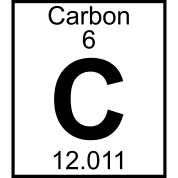
What does the C represent?
a)
atomic mass
b)
atomic number
c)
element name
d)
chemical symbol 
26.

What does the 6 represent?

a)

Atomic mass

b)

atomic number

c)

chemical symbol

d)

element name

27.
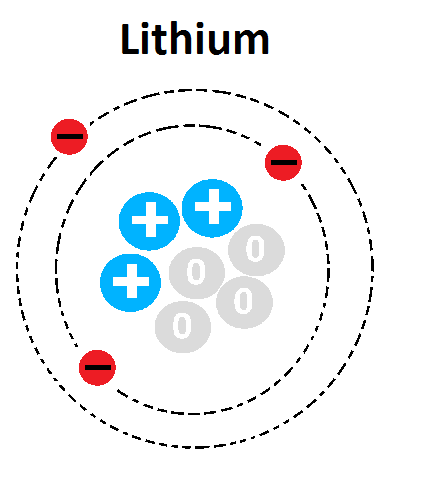
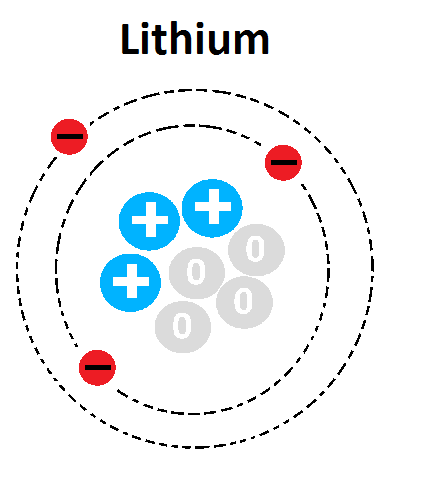
What is the atomic number of this atom?
a)
1
b)
3
c)
4
d)
7
28.

What is the mass number of this atom?

a)

1

b)

3

c)

4

d)

7

29.
A charged atom
a)
Ion
b)
Isotope
c)
Electron Cloud
d)
Quark
30.
Atoms of the same element must always have the same number of _________
a)
electrons
b)
neutrons
c)
isotopes
d)
protons
31.
What is the mass number defined as?
a)
the number of protons
b)
the number of protons and neutrons
c)
the number of neutrons
d)
the number of protons and electrons
32.

What is the atomic mass of this atom?

a)

1

b)

3

c)

4

d)

7

33.

What is the atomic number?

a)

the number of protons

b)

the number of protons and neutrons combined

c)

the number of neutrons

d)

the number of protons and electrons combined

34.
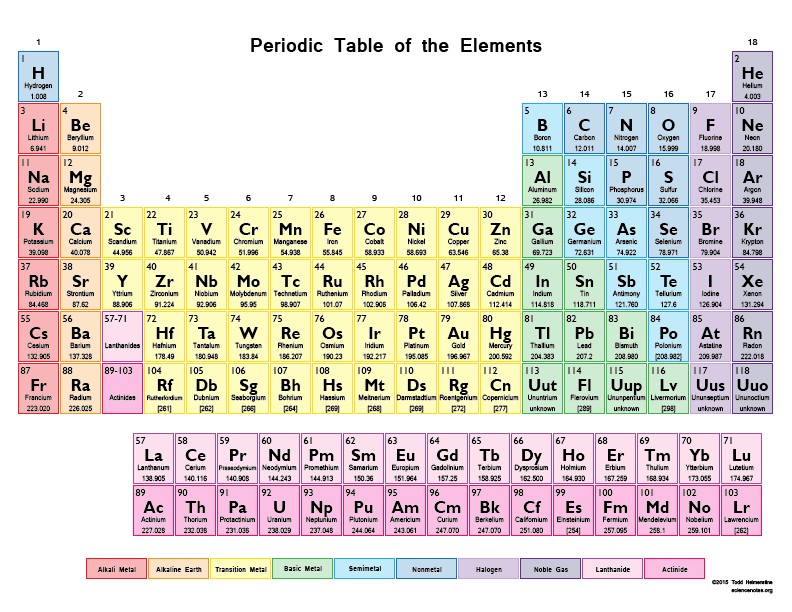
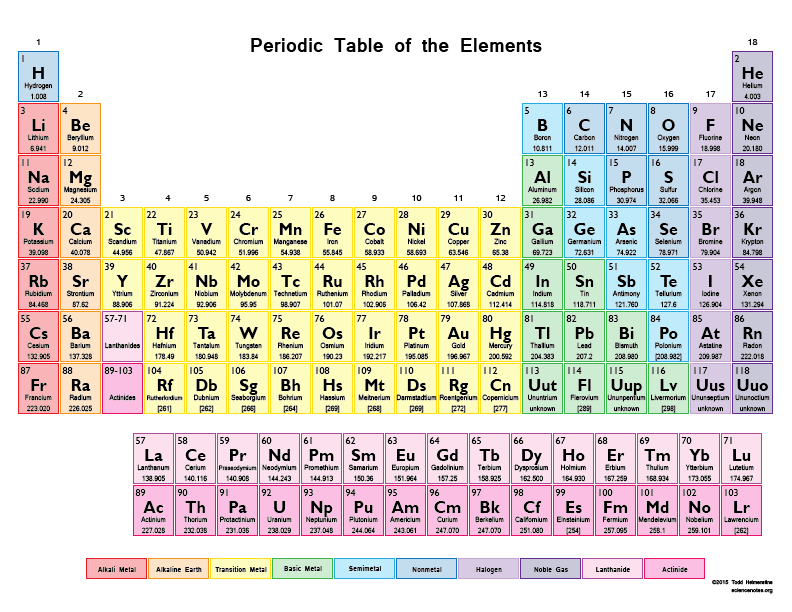
What is the atomic number of Nickel? (enlarge the periodic table)
a)
110
b)
28
c)
46
d)
78
35.
How many protons are in a sodium atom? (tap to enlarge the periodic table)
a)
Sodium has 1 proton.
b)
Sodium has 3 protons.
c)
Sodium has 11 protons
36.
What is the atomic number of Barium? (enlarge the periodic table)
a)
20
b)
38
c)
56
d)
88
37.
An element has the mass number 12 and atomic number  6. The number of neutrons in it is:
a)
6
b)
10
c)
4
d)
8
38.
If an atom has 10 electrons, how many protons does it have?
a)
0
b)
1
c)
10
d)
5
39.
How many electrons are in an atom with an atomic number of 50?
a)
5
b)
8
c)
50
d)
2
40.
What subatomic particles would you find in the nucleus of an atom?
a)
Protons only
b)
Protons and Neutrons
c)
Neutrons and Electrons
d)
Protons and Electrons 
41.
Which subatomic particles contribute the most to the mass of an atom?
a)
Protons, Neutrons, Electrons
b)
Protons only
c)
Protons and Electrons
d)
Protons and Neutrons
42.
What is the mass number of this atom?
a)
9
b)
10
c)
19
d)
27
43.
What is the mass number of this atom?
a)
1
b)
2
c)
3
d)
4
44.
An element with a mass number of 11 and an atomic number of 5 has how many neutrons?
a)
11
b)
5
c)
6
d)
16
45.
Most of the mass of an atom is contained here.
a)
electron orbitals 
b)
nucleus
c)
shells
d)
atomic #
46.
A phosphorus atom has 15 protons and 16 neutrons. What is the mass number?
a)
15
b)
16
c)
31
d)
1
47.
An atom of argon has 18 protons and 22 neutrons. How many electrons does it have?
a)
18
b)
22
c)
40
d)
4
48.
What element has 20 protons? (Use your periodic table.)
a)
Potassium (K)
b)
Calcium (Ca)
c)
Nitrogen (N)
d)
Neon (Ne)
49.
What element has 16 protons? (Use your periodic table.)
a)
Oxygen (O)
b)
Sulfur (S)
c)
Phosphorus (P)
d)
Boron (B)
50.
How many electrons does a neutral atom of Neon have?
a)
10
b)
18
c)
20
d)
30
51.
Which particles are NOT included in the mass number?
a)
Protons
b)
Protons and Neutrons
c)
Electrons
d)
Neutrons
52.
Oxygen has 8 protons. What is oxygen's atomic number?
a)
16
b)
8
c)
15.999
d)
0
53.
What is true about a neutral atom?
a)
The number of protons equal the number of neutrons
b)
The number of protons equal the number of electrons
c)
The number of neutrons equal the number of electrons
d)
The number of protons, neutrons, and electrons are all different
54.
The nucleus is ____________ charged whereas the electron cloud is ____________ charged. 
a)
negatively, positively
b)
negatively, negatively
c)
positively, positively
d)
positively, negatively
55.
The  mass of an atom is located  in the ___________ and the volume of an atom is made of the ____________
a)
electron cloud, nucleus
b)
electron cloud, energy levels
c)
nucleus, electron cloud
d)
nucleus, neutrons
56.
How many valence electrons are represented here?
a)
7
b)
5
c)
2
d)
8
57.
How many electrons can the d sublevel hold?
a)
8
b)
10
c)
2
d)
4
58.
How many electrons can the first energy level hold?
a)
1
b)
2
c)
8
d)
0
59.
How many valence electrons does Chlorine have?
a)
5
b)
2
c)
7
d)
5
60.
How many valence electrons does phosphorus have?
a)
5
b)
2
c)
8
d)
15
61.
Identify the element in Period 5 that has 1 valence electron?
a)
Rb
b)
Nb
c)
Ag
d)
Sb
62.
What element in Period 4 has 5 valence electrons?
a)
Zr
b)
As
c)
V
d)
Sb
63.

What happens to the atomic numbers as you move from left to right on the periodic table?

a)

Increase

b)

Decrease

c)

Stay the same

d)

Nothing

64.

Which of the following elements is most likely to have similar properties to those of sodium (Na)?

a)

Magnesium (Mg)

b)

Sulfur (S)

c)

Francium (Fr)

d)

Titanium (Ti)

65.

If an element has 117 protons which group will it be in on the periodic table?

a)

1

b)

7

c)

11

d)

17

66.

Which element is located in group 3?

a)

Yttrium (Y)

b)

Carbon (C)

c)

Sodium (Na)

d)

Lithium (Li)

67.

Which element is located in period 4?

a)

Zirconium (Zr)

b)

Silicon (Si)

c)

Beryllium (Be)

d)

Iron (Fe)

68.

Two elements that have similar physical and chemical properties are most likely in the same...

a)

period

b)

row

c)

group

69.

Which element is most likely to have six valence electrons?

a)

Barium (Ba)

b)

Carbon (C)

c)

Oxygen (O)

d)

Americium (Am)

70.

Which element is most likely to have three electron energy levels?

a)

Argon (Ar)

b)

Lithium (Li)

c)

Boron (B)

d)

Europium (Eu)

71.

Which element is located in period 4 and group 5?

a)

Vanadium (V)

b)

Zirconium (Zr)

c)

Niobium (Nb)

d)

Titanium (Ti)

72.

Which element is most likely to have six electrons in its 4th energy level?

a)

Oxygen (O)

b)

Selenium (Se)

c)

Krypton (Kr)

d)

Potassium (K)

73.

In which group would an element that is not reactive most likely be located?

a)

1

b)

2

c)

16

d)

18

74.

In which group would an element that is very reactive most likely be located?

a)

1

b)

5

c)

15

d)

18

75.

In which group would an element that is a gas most likely be located?

a)

1

b)

3

c)

12

d)

18

76.

Which of the following elements is most likely a metal?

a)

W

b)

X

c)

Y

d)

Z

77.

Which of the following elements is most likely a metalloid?

a)

W

b)

X

c)

Y

d)

Z

78.

Which of the following elements is most likely a poor conductor of electricity?

a)

Beryllium (Be)

b)

Gold (Au)

c)

Phosphorus (P)

d)

Copper (Cu)

79.

Which of the following has four neutrons?

a)

Calcium (Ca)

b)

Lithium (Li)

c)

Beryllium (Be)

d)

Oxygen (O)

80.

What is the atomic mass of an element with 16 protons, 13 neutrons, and 16 electrons?

a)

13 amu

b)

16 amu

c)

29 amu

d)

45 amu

81.

How many neutrons are located in the nucleus of an atom that has 12 protons, 12 electrons, and an atomic mass of 28 amu?

a)

12

b)

16

c)

28

d)

40

82.

Why do atoms bond?

a)

They typically don't bond

b)

To add or take away energy levels

c)

To have a full valance shell.

d)

To have a full inner shell

83.
Which type of bond has a transfer of an electron from on atom to another?
a)
Polar Covalent 
b)
Non Polar Covalent
c)
Ionic
d)
Metallic
84.
Bonds that form between two metals are called ______________ bonds.
a)
ionic 
b)
covalent
c)
metallic
d)
pervasive
85.
Covalent compounds
a)
Share electrons
b)
transfer electrons
c)
contain a sea of electrons
d)
conduct electricity
86.

Ionic bonding is between a

a)

nonmetal and nonmetal

b)

metal and nonmetal

c)

metal and metal

d)

Depends on the situation

87.

Covalent bonding is between a

a)

nonmetal and nonmetal

b)

metal and nonmetal

c)

metal and metal

d)

It depends on the situation

88.
What is the number of valence electrons for Oxygen?
a)
8
b)
6
c)
2
d)
1
89.

Predict the bond between Mg and Cl

a)

covalent

b)

ionic

c)

metallic

90.

CaCl2 is an example of what type of bond?

a)

Covalent

b)

Metallic

c)

Ionic

91.

Predict the bond that will form between Be and F.

a)

Ionic

b)

Covalent

c)

Metallic

92.

Predict the bond that will form between Se and Cl

a)

Ionic

b)

Covalent

c)

Metallic

93.

What is the number of valence electrons for Carbon?

a)

6

b)

4

c)

2

d)

1

94.

Predict the bond that will form between Al and Cu

a)

Ionic

b)

Covalent

c)

Metallic

95.

Predict the bond that will form between K and Br

a)

Ionic

b)

Covalent

c)

Metallic

96.

What is the number of valence electrons for Lithium?

a)

6

b)

4

c)

2

d)

1

97.

What is the number of valence electrons for Iodine?

a)

6

b)

4

c)

7

d)

5

98.
Covalent bonds are between...
a)
Metal and Non-metal
b)
Non-metal and Non-metal
c)
Metal and Metal
99.
Ionic bonds are between...
a)
Metal and Non-metal
b)
Non-metal and Non-metal
c)
Metal and Metal
100.
When an atom loses an electron, it is called a..
a)
crystal
b)
formula
c)
ion
101.
Why do ionic bonds form?
a)
So the number of protons equals the number of electrons.
b)
To stabilize the atom with a full outer shell.
c)
So an atom can become unstable.
d)
So atoms will stick together to form molecules.
102.

What type of reaction involves the breaking down of a substance into simpler substances?

a)

Single Displacement Reaction

b)

Double Displacement Reaction

c)

Synthesis Reaction

d)

Decomposition Reaction

103.

What type of reaction involves 2 substances combining to form 1 new compound?

a)

Decomposition Reaction

b)

Single Displacement Reaction

c)

Double Displacement Reaction

d)

Synthesis Reaction

104.

What type of reaction involves one element replacing another element in a compound?

a)

Single Displacement Reaction

b)

Double Displacement Reaction

c)

Synthesis Reaction

d)

Decomposition Reaction

105.

What type of reaction involves ions from 2 compounds exchanging places to form 2 completely new compounds?

a)

Single Displacement Reaction

b)

Double Displacement Reaction

c)

Synthesis Reaction

d)

Decomposition Reaction

106.

What are the reactants in the chemical equation pictured?

a)

CH4 and CO2

b)

CH4 and O2

c)

CO2 and H2O

d)

O2 and H2O

107.

What are the products of the chemical reaction pictured?

a)

CH4 and CO2

b)

CH4 and O2

c)

CO2 and H2O

d)

O2 and H2O

108.

What type of chemical reaction is this one?

C2H2 + O2 --> CO2 + H2O

a)

Decomposition

b)

Combustion

c)

Synthesis

d)

Single Replacement

109.

Evidence of a chemical reaction include:

a)

Phase change

b)

No new substance

c)

Bubbles forming

d)

Shape change

110.

3KOH + H3PO4 --> K3PO4 + 3H2O

a)

Combination

b)

Decomposition

c)

Single replacement

d)

Double replacement

111.

When a scientist mixed two chemicals, an exothermic reaction takes place. Which of the following would be proof that the reaction was exothermic?

a)

a change of color

b)

a change of state

c)

a temperature decrease

d)

a temperature increase

112.

HNO₃ + NaOH → NaNO₃ + H₂O

a)

Neutralization/acid base

b)

Single Replacement

c)

Combustion

d)

Double Replacement