
 Worksheets
IB (IMF +VSEPR)
Total questions: 45
Worksheet time: 42mins

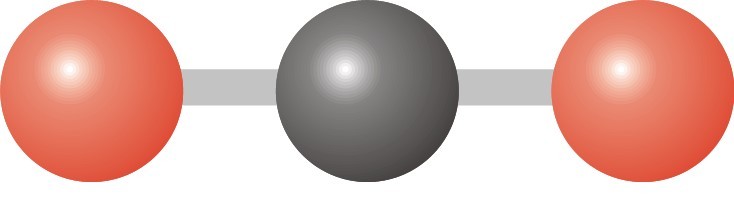
CO2 has polar bonds but is a NON POLAR molecule. Why?
it has an asymmetrical shape
bond polarity or dipole moment between C and O atoms cancel
there is net dipole moment between C and O atoms in molecule
bond polarity does not exist between C+ and O- atoms

Is this molecule polar or nonpolar?
polar
nonpolar
A molecular geometry with 3 bonding pairs is
Trigonal pyramidal
Trigonal planar
Trigonal bipyramidal
Linear
A molecular geometry with 2 lone pairs and 2 bonding pairs is
Tetrahedral
Trigonal pyramidal
Bent
Linear


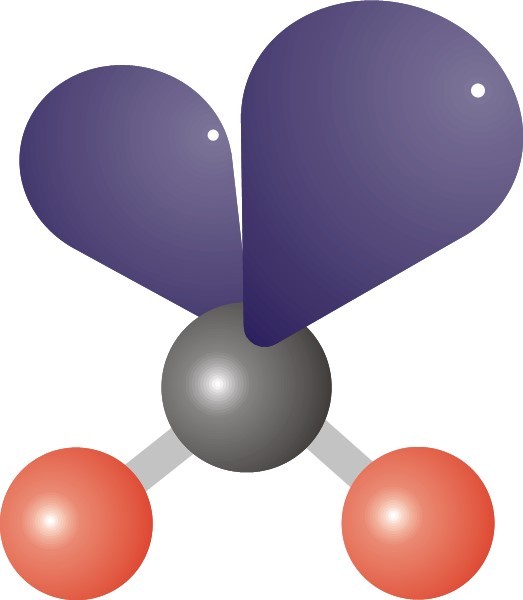
Which molecule would have this geometry?
CO2
NH3
H2S
CH4
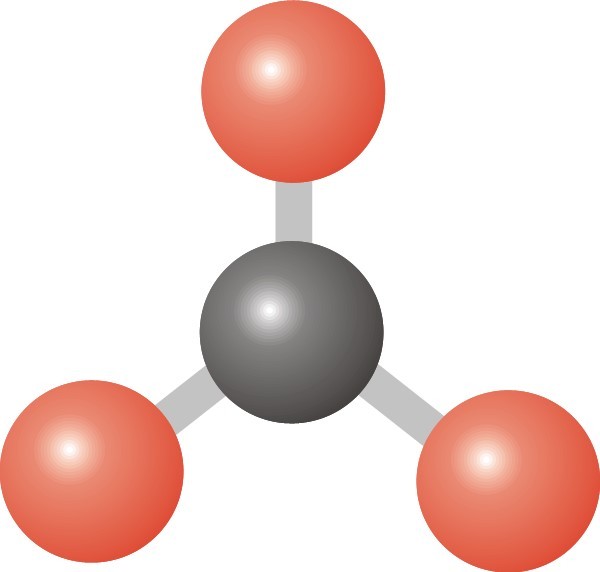
Is this molecule polar?
Yes
No


3 atoms bonded and 1 lone pairs
true linear
trigonal planar
bent
tetrahedral
trigonal pyramidal
2 shared pairs and 0 unshared pairs
true linear
trigonal planar
bent
tetrahedral
trigonal pyramidal
4 shared pairs and 0 unshared pairs
true linear
trigonal planar
bent
tetrahedral
trigonal pyramidal
3 shared pairs and 0 unshared pairs
true linear
trigonal planar
bent
tetrahedral
trigonal pyramidal
3 shared pairs and 1 unshared pairs
true linear
trigonal planar
bent
tetrahedral
trigonal pyramidal
2 shared pairs and 2 unshared pairs
true linear
trigonal planar
bent
tetrahedral
trigonal pyramidal
Tetrahedral molecules are
polar
non-polar
polar molecules
share electrons equally
share electrons unequally
polarity of bonds is based on
atomic radius of each element
electronegativity of each element
the protons
how electrons are transferred
single bonds are
the shortest and strongest
the longest and strongest
the longest and weakest
the shortest and weakest

When you have Br-Br, what is the polarity?
Polar
nonpolar
Ionic

When you have H-Cl, what is the polarity?
nonpolar
polar
ionic
Which substance has the weakest intermolecular forces?
Substance A, boiling point of 75 °C
Substance B, boiling point of 105 °C
Substance C, boiling point of 25 °C
Substance d, boiling point of 45 °C
Which statement explains why Br2 is a liquid at STP and I2 is a solid at STP?
Molecules of Br2 are polar, and molecules of I2 are nonpolar
Molecules of Br2 are nonpolar, and molecules of I2 are polar
Molecules of Br2 have stronger intermolecular forces than molecules of I2.
Molecules of I2 have stronger intermolecular forces than molecules of Br2.
The correct ranking of intermolecular forces in order of greatest to least
dipole-dipole, Hydrogen bonding, van der Waal forces
van der Waal forces, hydrogen bonding, dipole-dipole attraction
Hydrogen bonding, dipole-dipole attraction, van der Waals forces
van der waal forces, dipole-dipole attractions, Hydrogen bonding
Which sample has hydrogen bonding?
H2S
CH4
NH3
HI
Water has an unusually high boiling point for a molecular compound because it has
hydrogen bonding
ion-ion attractions
a high density
a large gram formula mass
A dipole/polar molecule is...
a probability map of where an electron may be found at any one time.
something that occurs when two atoms of similar electronegativities bond.
the creation of opposite charges at either end of the molecule.
London forces occur in all molecules, but are stronger in atoms/molecules with more electrons. Which of these has the strongest London forces?
F2
Br2
I2
Cl2
________ intermolecular forces (IMFs) cause liquids to have ________ boiling points.
weak; high
strong; low
strong; high
external; cold

