
 Worksheets
Test Review Atomic Theory 25-26
Total questions: 83
Worksheet time: 1hrs 23mins
Which scientist discovered the electron?
Bohr
Thomson
Rutherford
Dalton

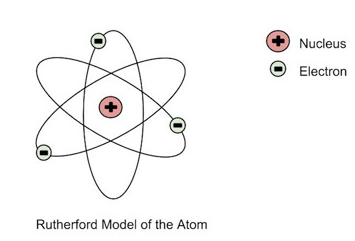
Whose model of the atom is pictured?
Rutherford
Thomson
Dalton
Bohr
What did Rutheford discover about atoms?
An atom is mostly empty space, but has a dense positively charged center (nucleus)
An atom is always negatively charged
An atom is always positively charged
All particles will pass straight through gold foil with no change in path

Whose atomic model is shown?
Bohr
Dalton
Thomson
Rutherford
What 2 particles would you find in the nucleus of an atom?
Protons and Electrons
Protons and Neutrons
Electrons and Neutrons
Neutrons and Electrons
What particle has no charge?
Nucleus
Proton
Electron
Neutron
Who came up with the first atomic theory?
Thomson
Rutherford
Dalton
Schrodinger
All of Dalton's theories are correct EXCEPT -
All atoms of the same element are identical
All matter is made of atoms
Compounds contain different atoms
Atoms of different atoms can combine in whole number ratios
Rutherford did experiments to show -
Neutrons are located in the nucleus
Atoms are mostly empty space
Atoms contain negative particles, now known as electrons
Matter cannot be lost or gained
The scientist credited for discovering the nucleus is -
Dalton
Chadwick
Bohr
Rutherford
What did Bohr's atomic model look like?
A ring with gold foil in the middle
Electrons orbiting the nucleus like the planets around the sun
A scoop of chocolate chip ice cream. It had electrons scattered within a ball of positive charge
A cloud of electrons floating around the nucleus
Who first came up with the idea of an atom, calling it "atomos" which means indivisible?
Dalton
Chadwick
Democritus
Thomson
Which 2 subatomic particles have a mass?
Protons and Neutrons
Protons and Electrons
Electrons and Neutrons
Electrons and Quarks
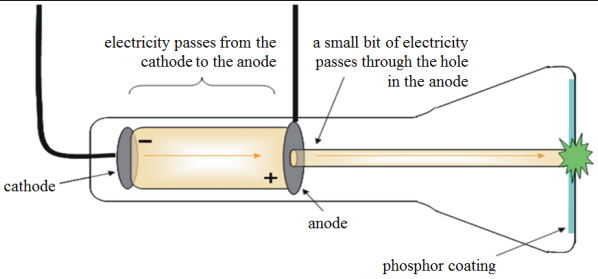
Which scientist used the Cathode Ray to discover the negatively charged particles in an atom?
Bohr
Rutherford
Dalton
Thomson
Which answer lists the scientist in chronological order according to their disoveries?
Dalton, Democritus, Thomson, Rutherford, Bohr
Thomson, Democritus, Dalton, Rutherford, Bohr
Democritus, Dalton, Thomson, Rutherford, Bohr
Bohr, Dalton, Democritus, Thomson, Rutherford
For an atom to be electrically neutral, what 2 subatomic particles must be the same?
Protons and Electrons
Protons and Neutrons
Electrons and Neutrons
They can never be neutral

How many neutrons does this isotope have?
63
29
92
34
How many electrons does Uranium-235 have?
235
143
92
327
Which part of an atom identifies the element?
Electrons
Protons
Neutrons
Mass
An element has an atomic number of 52 and has 78 neutrons. What is it's isotope notation?
(a)

The total number of protons and neutrons in the nucleus of an atom is its
atomic number
Avogadro's number
mass number
The atomic mass of an element listed in the periodic table is the
average atomic mass
relative atomic mass of the most abundant isotope
relative atomic mass of the most abundant radioactive isotope
mass number of hte least abundant isotope
An aluminum isotope consists of 13 protons, 13 electrons and 14 neutrons. Its mass number is
13
14
27
40
A line spectrum is produced...
when an electron goes from its ground state to its excited state
when an electron moves from its excited state to its ground state
when an electron moves into the nucleus
when an electron moves to another position in the same sublevel
If electrons in an atom have the lowest possible energies, the atom is in the
ground state
inert state
excited state
radiation - emitting state
Atoms of the same element can differ in
chemical properties
mass number
atomic number
number of protons
Three isotopes of argon occur in nature—36Ar, 38Ar, and 40Ar. Calculate the average atomic mass of argon to two decimal places, given the following relative atomic masses and abundances of each of the isotopes: argon-36 0.337%, argon-38 0.063%, and argon-40 99.600%
54.37
40.00
39.99
3998




Isotopes of the same element must have a different number of
neutrons
protons
both neutrons and protons
An atom of Chlorine-37 has
37 protons, 37 neutrons and 37 electrons
17 protons, 37 neutrons and 17 electrons
17 protons, 20 neutrons and 37 electrons
17 protons, 20 neutrons and 17 electrons

How many neutrons does the isotope of Lithium have?
8
4
3
5
Four isotopes of lead include lead-204, lead-206, lead-207, and lead-208. The average atomic mass of lead is 207.2. Which isotope of lead is likely to be the most abundant.
204
206
207
208
Two isotopes of carbon are carbon-12 and carbon-14. These isotopes differ from one another by two protons.
true
false
Copper has two isotopes, Cu-63 and Cu-65. If the average atomic mass of copper is 63.5 g, what is the % of each isotope?
50% Cu-63 and 50% Cu-65
25% Cu-63 and 75% Cu-65
75% Cu-63 and 25% Cu-65

What is the atomic mass of the pictured isotope?
17
35
18


What is the name of the pictured isotope?
Copper-29
Copper-63
Copper-34
Nitrogen has two isotopes. One isotope has a mass of 14.003 amu and a relative abundance of 99.63%, while the other has a mass of 15.000 amu and a relative abundance of 0.37%. What is the average atomic mass for nitrogen?
14.993 amu
14.456 amu
14.778 amu
14.007 amu
Calculate the atomic mass of silicon. The three silicon isotopes have atomic masses and relative abundances of 27.9 amu (92.2%), 28.9 amu (4.7%) and 29.9 amu (3.1%). Round your answer to 3 sig figs and only type a #.
(a)
Calculate the average atomic mass of the following element:
25Y (11%), 32Y (39%), 29Y (22%), 30Y (28%)
32.0
30.0
29.0
Calculate the average atomic mass of the following element:
25Y (11%), 32Y (39%), 29Y (22%), 30Y (28%)
32.0
30.0
29.0
What do all isotopes of hydrogen have in common?
1 proton
1 electron
Mass of 1
1 neutron
What do the mass numbers on the periodic table represent?
The mass of the most abundant isotope
The mass of the least abundant isotope
The average mass of the two most abundant isotopes
The average mass of all the isotopes
Electrons that have not been excited are said to be at:
high level
base line
excited state
ground state
With each higher energy level, the electrons are
lower in energy
more stable
weaker
farther from the nucleus

How can scientists use the color spectrum of individual elements to help determine the composition of stars in our galaxy?
Since each element has its own unique line spectra, it is possible to use a spectrometer to examine the light being emitted by the stars to determine what elements are present?
Since each element does not have its own unique color spectrum, it is impossible to determine what elements make up our starts.
Since the stars are so far away, the light we would be studying can not be trusted to determine their composition.
The bright-line spectrum of an element in the gaseous phase is produced as
protons move from lower energy states to higher energy states
protons move from higher energy states to lower energy states
electrons move from lower energy states to higher energy states
electrons move from higher energy states to lower energy states

The diagram represents the bright-line spectra of four elements and a bright-line spectrum produced by a mixture of three of these elements. Which element is not present in the mixture?
A
D
X
Z

Based on the bright-line spectra shown in the image, which two gases are present in the mixture?
Según los espectros de líneas brillantes que se muestran en la imagen, ¿qué dos gases están presentes en la mezcla?
A and C
B and D
B and C
A and D

The unknown emission spectra belongs to the element
Hydrogen
Mercury
Neon
Sodium

All stars are composed of a mixture of elements. When these elements are heated they emit specific amounts of electromagnetic radiation, known as an emission spectrum. Each element emits a unique, identifiable, spectrum.
Using the bright-line emission spectrum chart below, identify the elements present in this modeled star (found in the line labeled “mixture”). Select all that apply
Lithium
Strontium
Cadmium

What gases are in the unknown mixture?
Select all that apply
Gas A
Gas B
Gas C
Gas D

Which element(s) is/are found in the star's spectra below?
Hydrogen only
Hydrogen & Helium
Calcium only
Hydrogen & Calcium

The unknown emissions spectra belongs to the element
Hydrogen
Mercury
Neon
Sodium

What happens when an electron absorbs a photon?
The electron loses energy and moves to a lower energy level or orbital.
The electron remains in the same energy level or orbital.
The electron is destroyed and ceases to exist.
The electron gains energy and moves to a higher energy level or orbital.
What happens when an electron emits a photon?
The electron transitions from a higher energy state to a lower energy state and emits a photon.
The electron absorbs a photon and transitions to a higher energy state.
The electron emits multiple photons simultaneously.
The electron remains in the same energy state and emits a photon.
According to Bohr, the energy absorbed by an electron upon excitation comes in a fixed amount called
exact energy
fixed energy
quantized energy
None of the above
When an electron returns to ground state from an excited state, the atom will
emit energy
absorb energy
rotate
wiggle

