
 Worksheets
Introduction to the Five Themes of Geography
Total questions: 100
Worksheet time: 50mins
Which theme of geography asks the question, "Where is it?"
Place
Region
Location
Movement
A geographer studying local climate, landforms, and architecture is focusing on which theme?
Location
Region
Movement
Place
Which theme examines how people modify or adapt to their surroundings?
Human-Environment Interaction
Place
Region
Movement
Select the two themes most directly involved when tracking shipping routes and ideas spreading online.
Movement
Place
Region
Location
Human-Environment Interaction
Which theme groups areas to compare similarities and differences across them?
Movement
Location
Place
Region
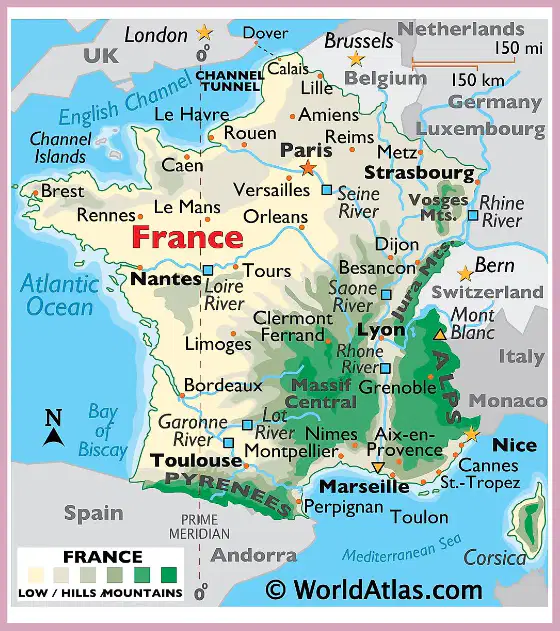
Which statement best describes France’s absolute location?
Close to 30° N and 20° E
Around 60° N and 10° W
About 46° S and 2° W
Near 46° N and 2° E
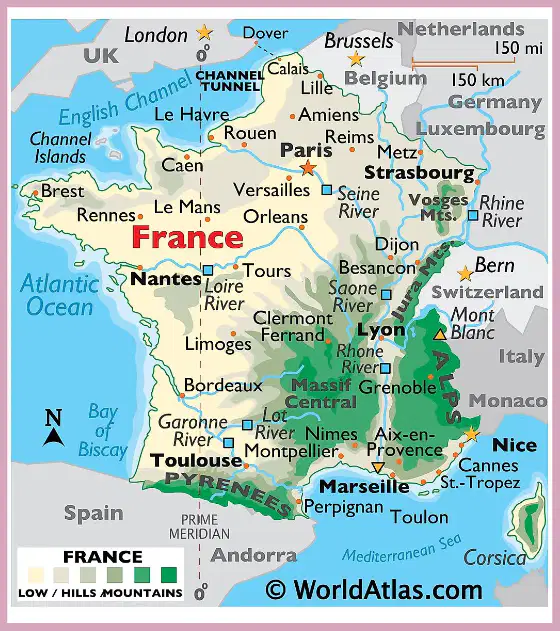
France is located in which part of Europe?
Western Europe region
Eastern Europe area
Northern Europe region
Southern Europe area
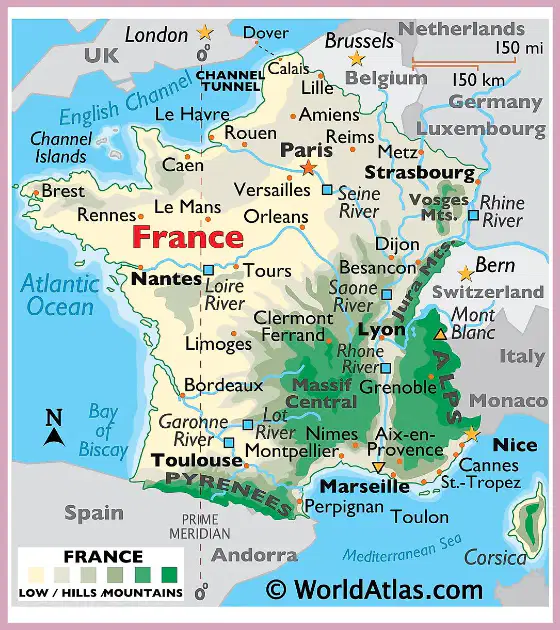
Which bodies of water border France on different sides?
Atlantic Ocean to the west
English Channel to the north
Mediterranean Sea to the south
Black Sea to the east
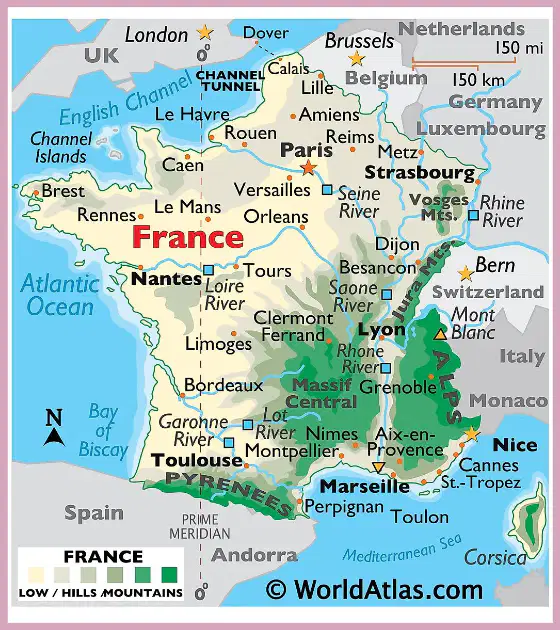
How many countries share a land border with France?
Seven countries total
Eight countries total
Nine countries total
Six countries total
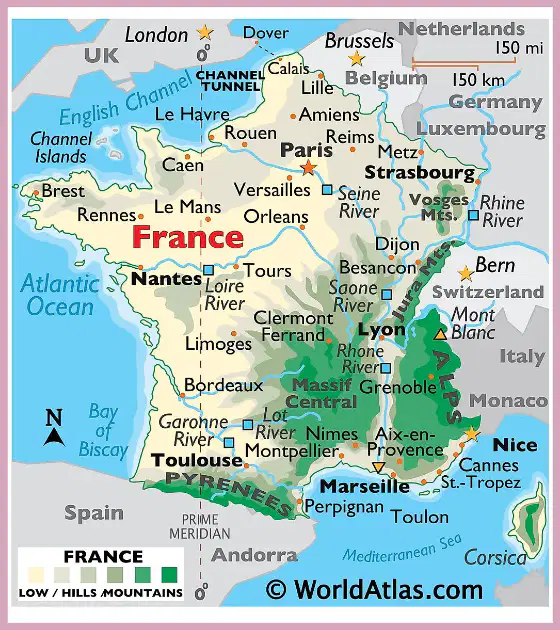
Which set lists ONLY countries that border France?
Belgium, Germany, Switzerland
Luxembourg, Andorra, Netherlands
Italy, Monaco, Spain
United Kingdom, Portugal, Austria
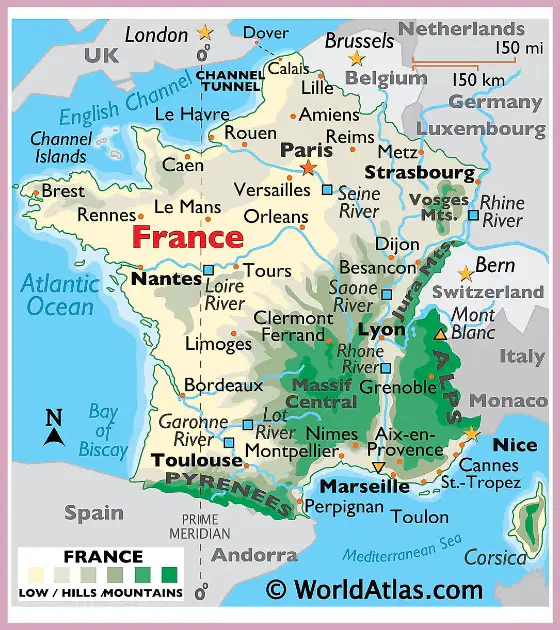
Which statement about France’s surrounding water is accurate?
Only the Mediterranean touches France
Only the Atlantic touches France
France is surrounded by water on three sides
Water borders France on all four sides
Which description correctly distinguishes absolute from relative location using France?
Absolute uses coordinates like 2° E
Relative uses coordinates like 46° N
Relative gives latitude values like 46° N
Absolute uses neighbors like Spain
Which mountain range contains Mont Blanc, the highest peak in Western Europe at about 4,807 meters?
Pyrenees mountain range
Alps mountain range
Massif Central range
Jura mountain range

Which rivers are major waterways flowing through France? Select all that apply.
Seine River
Loire River
Garonne River
Danube River
Rhône River
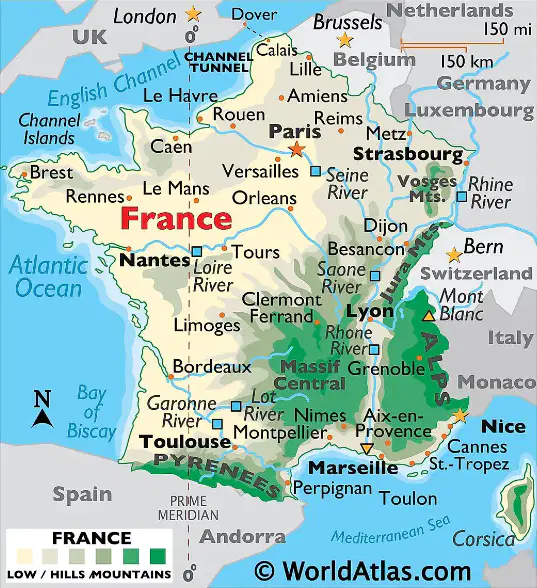
France has about 2,130 miles of coastline. Which two seas or oceans border these coasts?
Arctic Ocean
Black Sea
Mediterranean Sea
Atlantic Ocean
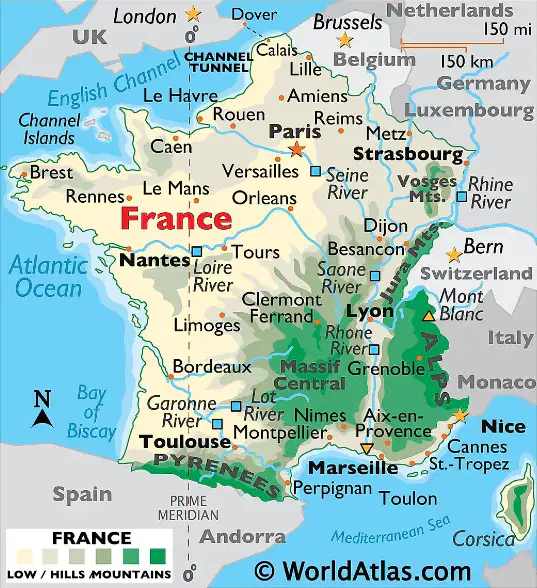
Corsica is best described as which geographic feature of France?
Largest inland plateau
Largest river island
Largest mountain valley
Largest island in the Mediterranean
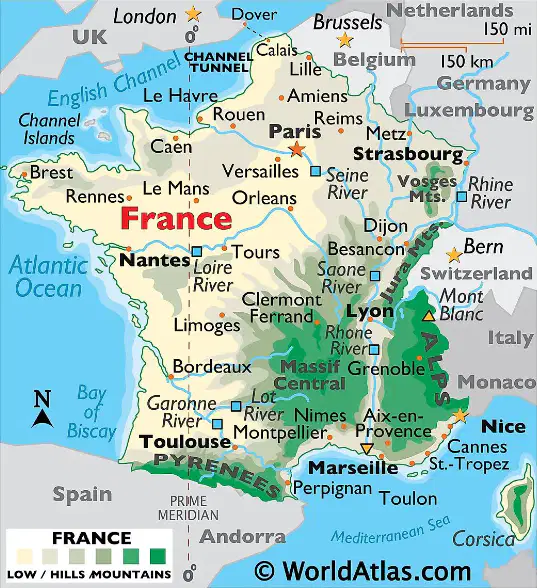
Which statement about France’s plains is accurate?
Limited to coastal peninsulas
Part of the North European Plain
Located in the Massif Central
Found mainly in the Pyrenees
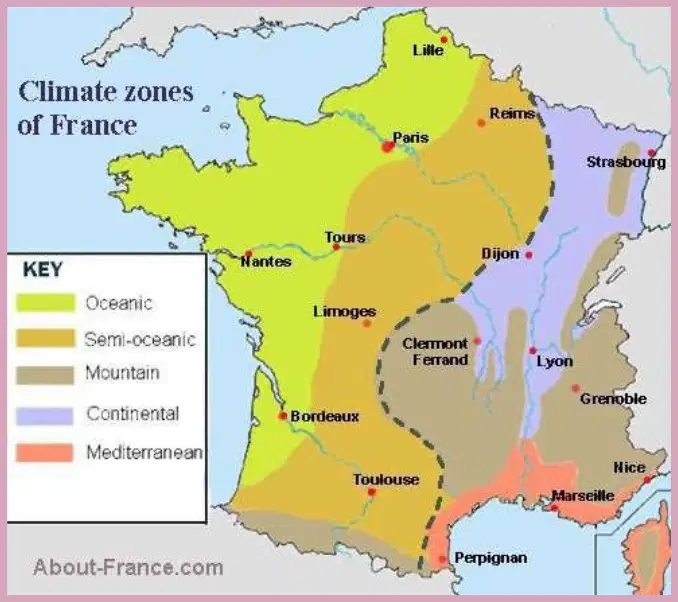
Match each climate zone to its general location in France.
Continental in the east
Oceanic in the west
Mountain across high elevations
Mediterranean in the south
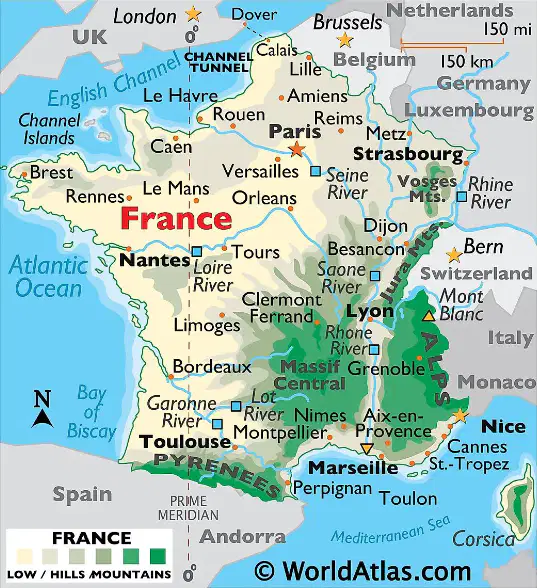
Which set lists mountain ranges found in France?
Alps, Pyrenees, Jura, Massif Central
Andes, Alps, Carpathians, Jura
Pyrenees, Urals, Massif Central, Apennines
Jura, Rockies, Alps, Atlas
Which set best describes France’s physical landscapes mentioned here?
Mountains, valleys, plains, beaches
Deserts, rainforests, tundra, canyons
Wetlands, steppe, taiga, dunes
Volcanoes, glaciers, savannas, reefs
Which climate description fits France’s regional pattern in this material?
Dry desert nationwide, monsoon in summer
Mild in the west, Mediterranean in the south
Humid subtropical everywhere, alpine year-round
Arctic in the north, tropical in the east
Which human characteristic is identified as official for France?
English is the official language
German is the official language
Latin is the official language
French is the official language
Select all features that reflect France’s cultural heritage listed here.
Space exploration dominance
Art and literature traditions
Fashion and cuisine influences
Heavy industry exports
Which statement about France’s government is accurate in this content?
France follows a theocratic council
France operates as a military dictatorship
France is ruled by a hereditary monarchy
France has a democratic republic system
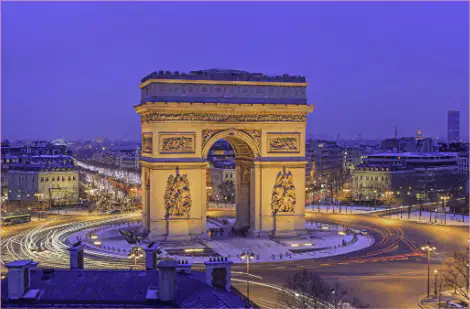
Which landmark matches its description: ordered by Napoleon in 1806?
Louvre Museum fortress
Eiffel Tower in 1889
Arc de Triomphe in Paris
Notre Dame Cathedral
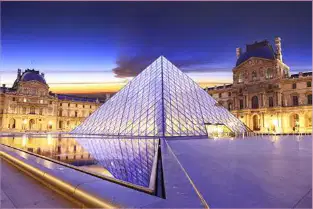
Which landmark now houses famous art like the Mona Lisa?
Sacré-Cœur basilica
Carcassonne fortified city
Mont Saint-Michel island
Louvre Museum in Paris
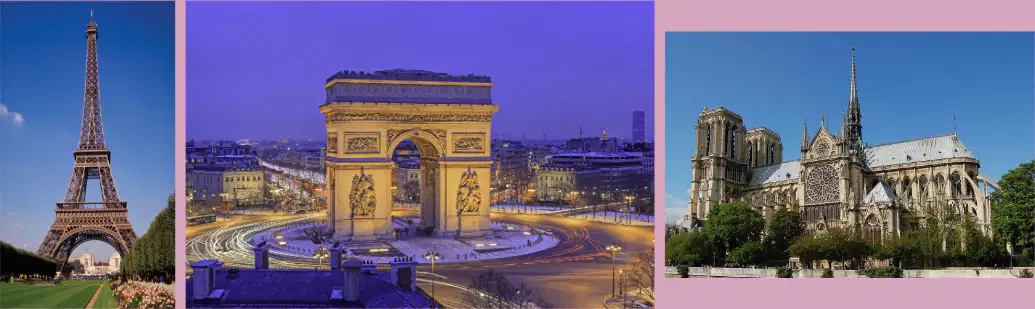
Select all landmarks correctly paired with a detail from this material.
Eiffel Tower built in 1889
Notre Dame construction began 1163
Sacré-Cœur built 1870–1919
Carcassonne is a modern glass tower
Which statement best describes the status of the French language within France?
It is official and spoken by about ninety percent
It is unofficial and spoken by small communities
It is regional and limited to a few provinces
It is declining and used mainly by tourists
French is an official language in how many countries worldwide?
About forty-five countries
About twenty-nine countries
About sixty countries
About twelve countries
Which pair lists commonly mentioned non-French languages in France?
Swedish and Norwegian dialects
German and Polish dialects
Breton and Flemish dialects
Hindi and Mandarin dialects
Which statement about religion in France is accurate?
Most people identify with Islam as first
Nearly everyone identifies with some religion
About half identify as Christian mostly Catholic
Judaism is absent from modern French society
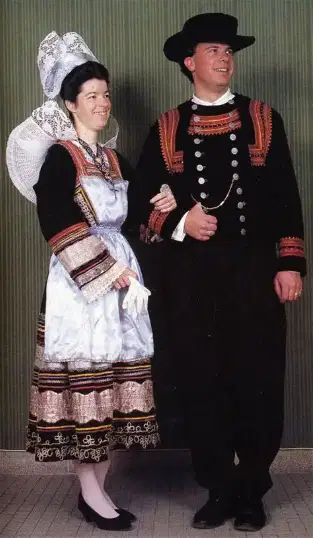
Which combination correctly names a French region and its traditional clothing feature?
Normandy with embroidered kilts
Brittany with large bows
Arles with distinctive headdresses
Alsace with lace bonnets
Which statement best summarizes Paris in modern fashion?
Paris is a minor local market
Paris is a world fashion capital
Paris focuses on mass uniforms
Paris is a city avoiding couture
Which list includes French fashion houses named in the material?
Balenciaga and Versace
Gucci and Prada
Hermès and Louis Vuitton
Dior and Chanel
What does couture most closely mean in this context?
High-quality custom-fitted clothing
Secondhand recycled clothing
Ready-to-wear casual clothing
Traditional ceremonial uniforms
Which change describes the evolution of French fashion over time?
From restrictive corsets to more comfortable styles
From colorful outfits to only black uniforms
From comfortable styles to tighter corsets
From handmade pieces to no tailoring at all

Which items are highlighted as key elements of French cuisine?
Wine and regional specialties
Spicy curries and ramen bowls
Cheese with over 400 varieties
Bread especially baguettes
What characterizes French cuisine preparation and presentation?
Only frozen foods with quick heating
Random ingredients with minimal attention
High-quality ingredients with careful preparation
Low-quality ingredients with fast assembly
Historically in the 1600s–1700s, how long could royal feasts in France last?
Exactly twenty-four hours
Over twelve hours
About three hours
Under one hour
Which statement about France’s Jewish community is correct?
It is the largest in Europe
It is the smallest worldwide
It is officially banned today
It exists only in rural areas
Approximately what share of France’s population does not identify with any religion?
About ten percent
About twenty percent
About forty percent
About eighty percent
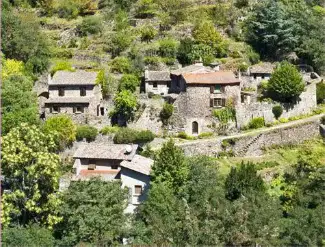
Which example shows people adapting to France’s mountainous environment?
Building terraced vineyards on steep hillsides
Constructing urban highways across city neighborhoods
Operating nuclear power plants along the coastline
Clearing forests to expand flat farmland
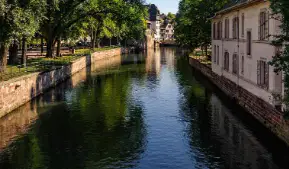
What is the main purpose of canals and waterways pictured in French towns?
Breeding fish for food supply
Protection from ocean flooding
Generating nuclear electricity
Transportation of people and goods
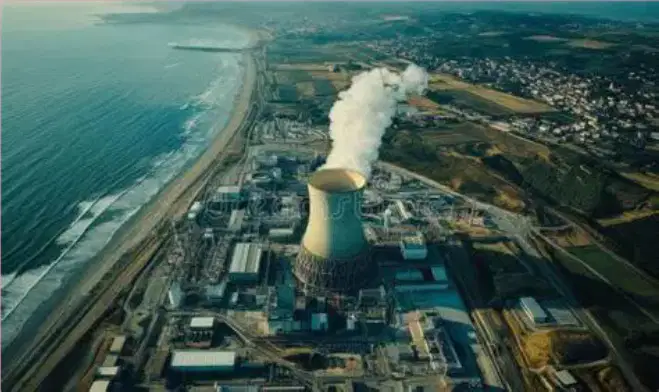
Which benefit do dams most directly provide in France?
Reliable energy and water management
More natural forest habitats
Higher mountain snowfall levels
Increased beach tourism
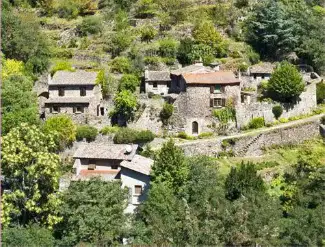
Which practice helps farmers grow grapes on steep slopes?
Irrigating flat plains with canals
Planting trees to shade vineyards
Using wind turbines for soil drying
Terracing the hillsides for stable plots
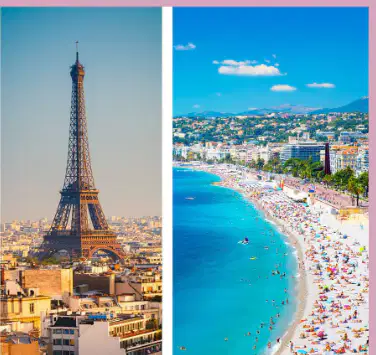
Which economic activity depends on France’s natural landscapes and beauty?
Computer programming in offices
Space launches from remote sites
Tourism in coastal and mountain areas
Steel manufacturing in urban zones
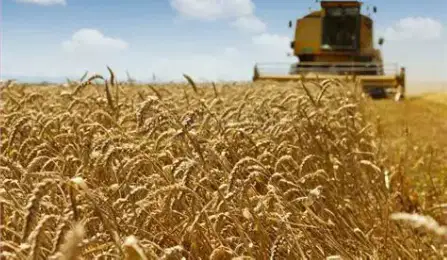
France being Europe’s largest agricultural producer demonstrates dependence on which resource category?
Offshore oil drilling platforms
Fertile soils and favorable climates
High-speed internet networks
Urban apartment complexes
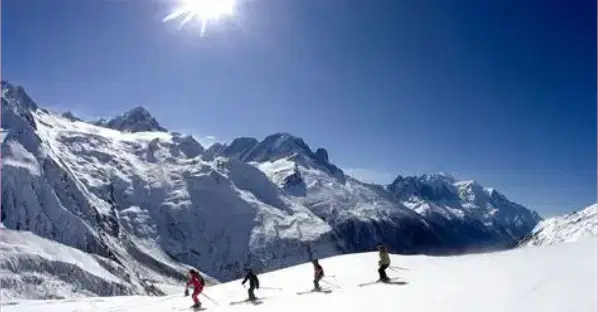
Which pair correctly matches interaction type to example in France?
Adaptation—Clearing forests for farmland
Adaptation—Alpine skiing tourism
Modification—Terraced hillside vineyards
Dependence—Urban highway construction
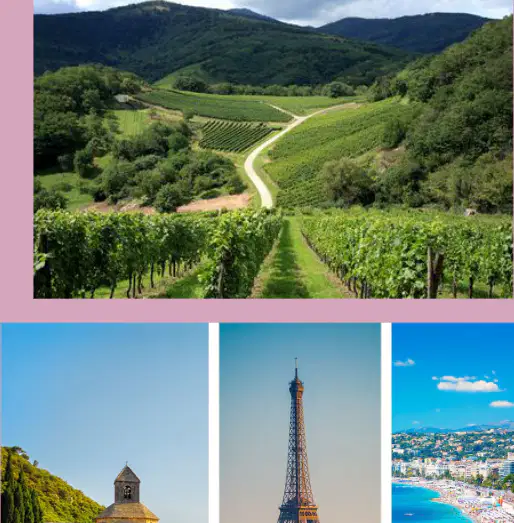
Select all examples of dependence on natural resources in France.
Nuclear power plant construction
Urban development projects
Fish harvested from rivers and seas
Timber and minerals extraction
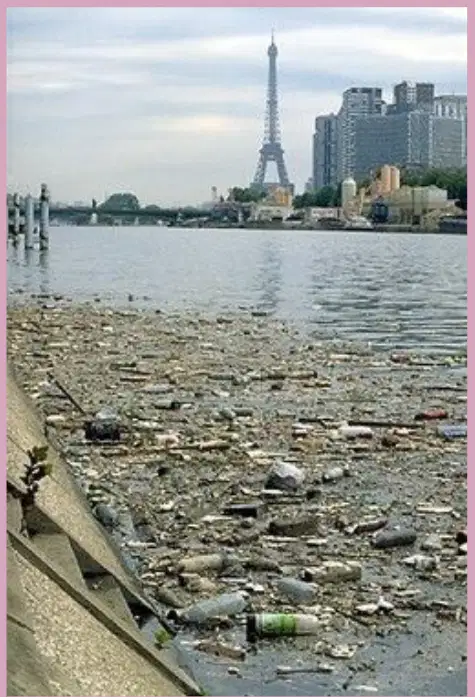
Which issue is shown by trash floating near a famous tower along a river in France?
Water pollution in urban rivers
Deforestation in mountain forests
Noise pollution from tourism
Air pollution in rural regions
Which environmental challenges currently affect France? Select all that apply.
Balancing tourism with protection
Improved water quality in all rivers
Climate change impacting agriculture
Air pollution in major cities
Air pollution in large French cities mainly harms which aspect of public well‑being?
Ocean biodiversity
Soil nutrient levels
Human respiratory health
Outdoor recreation opportunities
Why can climate change be a major concern for France’s wine regions?
It reduces urban traffic jams
It alters temperature and rainfall
It increases river shipping speed
It expands protected park areas
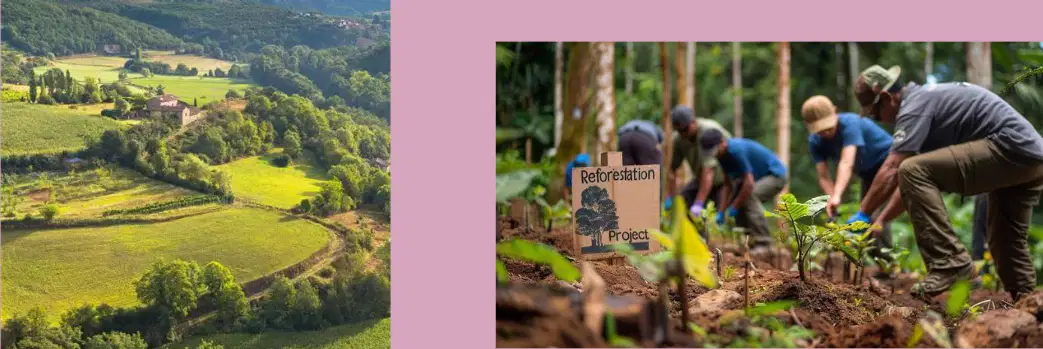
Which actions are part of France’s conservation efforts? Select all that apply.
Developing renewable energy sources
Creating protected parks and reserves
Expanding fossil fuel subsidies
Promoting sustainable farming practices
What is a primary goal stated for France’s climate policy?
Stop all river transportation
Reduce greenhouse gas emissions
Increase greenhouse gas emissions
Ban all tourism activities
What global agreement, adopted in 2015, guides France’s climate commitments?
Paris Climate Agreement
Kyoto Biodiversity Pact
European Clean Water Act
Global Renewable Energy Treaty
Which transportation mode most directly links major French cities at very high speeds?
Long-distance intercity buses
Regional TER trains between suburbs
High-speed TGV rail network
Domestic short-haul flights
Which statement best describes France’s highway system?
Few connections between cities
Mostly unpaved routes
Extensive national network
Limited rural roads only
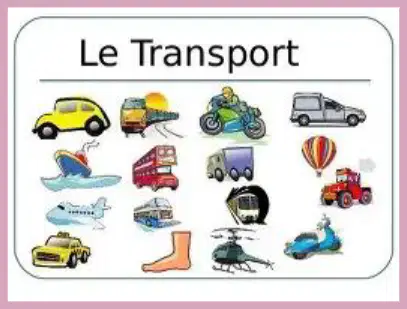
Major airports that serve France’s air travel include which cities?
Nice
Paris
Marseille
Lyon
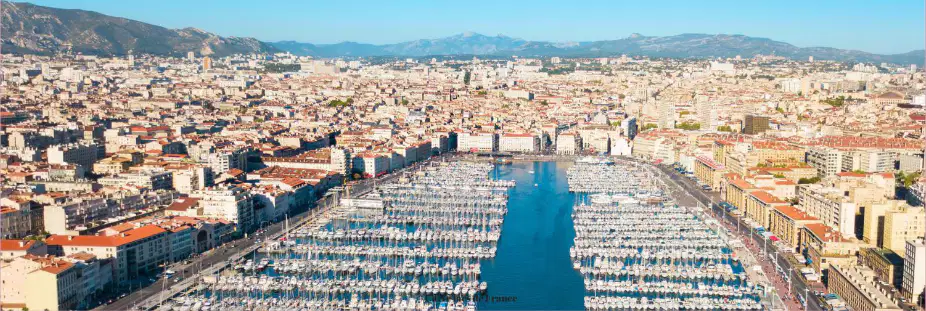
French ports are located along which large water bodies?
Mediterranean Sea
Atlantic Ocean
Black Sea
English Channel
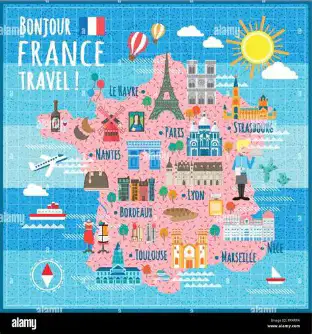
France receives about 90 million visitors yearly. What impact does this have?
Tourism stops international travel
Tourism makes France most visited
Tourism makes France least visited
Tourism reduces city services
Which changes in population movement are highlighted for France?
Decreased immigration
Increased immigration
Urban to rural migration
Rural to urban migration
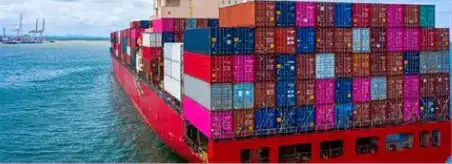
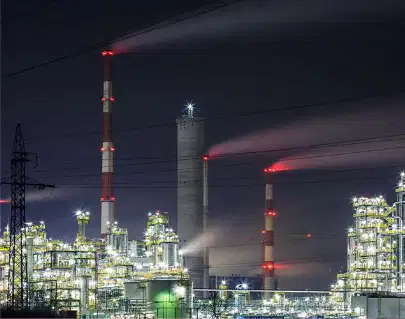
Which items are key French exports?
Crude oil
Pharmaceuticals
Vehicles
Aircraft
Which items are typical French imports?
Chemicals
Luxury goods
Crude oil
Machinery
Which change during 1789–1799 helped spread ideas of liberty, equality, and democracy to other countries?
Industrial Revolution in England
French Revolution in France
Unification of Germany
American Civil War in the US
Napoleonic invasion of Russia
Which pair correctly matches a cultural movement with its field?
Cubism with political rights
Realism with metric units
Surrealism with germ theory
Romanticism with microbiology
Impressionism with painting
Louis Pasteur is best known for discoveries in which scientific area?
Astronomy and telescopes
Microbiology and germ theory
Genetics and DNA coding
Geology and plate motion
Ecology and food webs
What is a key way French language and culture have spread beyond Europe?
Through volcanic eruptions
Through ocean currents
Through mountain building
Through colonization and media
Through asteroid impacts
Which statement about the metric system is accurate?
It measures time only
It uses miles and pounds
It was created by Pasteur
It began in ancient Egypt
It originated in France
Which description best explains how the Tour de France connects to national identity?
It is a winter skiing competition
It replaces all city roads yearly
It showcases diverse French landscapes
It is held only on indoor tracks
It bans international viewers
Select all facts that describe the Tour de France race format.
Routes never change year to year
Takes about three weeks to complete
Always finishes in Paris
Covers about 2200 miles or 3500 km
Begins only in Marseille
Match each jersey color with its meaning in the Tour de France.
Yellow jersey overall leader
Green jersey best sprinter
Polka-dot jersey best climber
White jersey best young rider
Which impact of the Tour de France is highlighted for global audiences?
Bans media coverage
Removes mountain roads
Stops tourism each summer
Eliminates public transportation
Brings French culture worldwide
Which statement best describes administrative regions in France?
Zones centered on industries like wine and tourism
Places known for dialects, cuisine, and traditions
Areas shaped by mountains, valleys, and rivers
Government-defined areas including overseas territories
A map showing the Alps and the Loire Valley is highlighting what kind of French region?
Economic regions focused on tourism
Cultural regions with local cuisine
Physical regions based on landforms
Administrative region classifications
Which options describe cultural regions in France? Select all that apply.
Zones created for government administration
Areas defined by industries like technology
Areas with distinct cultural traditions
Places identified by dialects and cuisine
Economic regions in France are best identified by which feature?
Landforms such as mountain ranges
Concentration of specific industries
Historic dialects and festivals
Government boundaries and departments
France is said to have 13 mainland administrative regions plus 5 overseas regions. What does this detail show about the country?
Its economy is based only on tourism
Its physical geography is entirely uniform
It has multiple levels of regional organization
It lacks cultural diversity across regions

Look at the image of lavender fields, orchards, and a hilltop town labeled must-visit. Which type of region is most directly suggested by the landscape shown?
Economic region from industry clusters
Cultural region from traditions and cuisine
Administrative region by legal boundaries
Physical region due to visible landforms
Which feature best describes Northern France compared to other regions?
Island territories across oceans
Major tourism with beach resorts
Warmer drier summers year-round
Heavily industrial economy focus
Select the characteristics that commonly describe Southern France.
Mediterranean climate with dry summers
Tourism-centered local economy
Cooler wetter weather patterns
Cuisine emphasizing olive oil and herbs
The Paris region is primarily known for which combination?
Rural farms and small villages
Cultural and economic hub city
Fishing ports and coastal towns
Mountains and alpine ski resorts
Which statement about climate differences between north and south France is most accurate?
Neither region experiences seasonal changes
Both north and south are hot deserts
South has cooler wetter; north Mediterranean
North has cooler wetter; south Mediterranean
Identify two features often associated with the Paris region.
Historic architecture alongside modern development
Closer cultural ties to northern Europe
Population around twelve million residents
Primary production of olive oil and seafood
Which region most likely has closer cultural ties to northern Europe?
Northern France with industrial links
Southern France with coastal tourism
Overseas territories on distant islands
Paris region with historic monuments
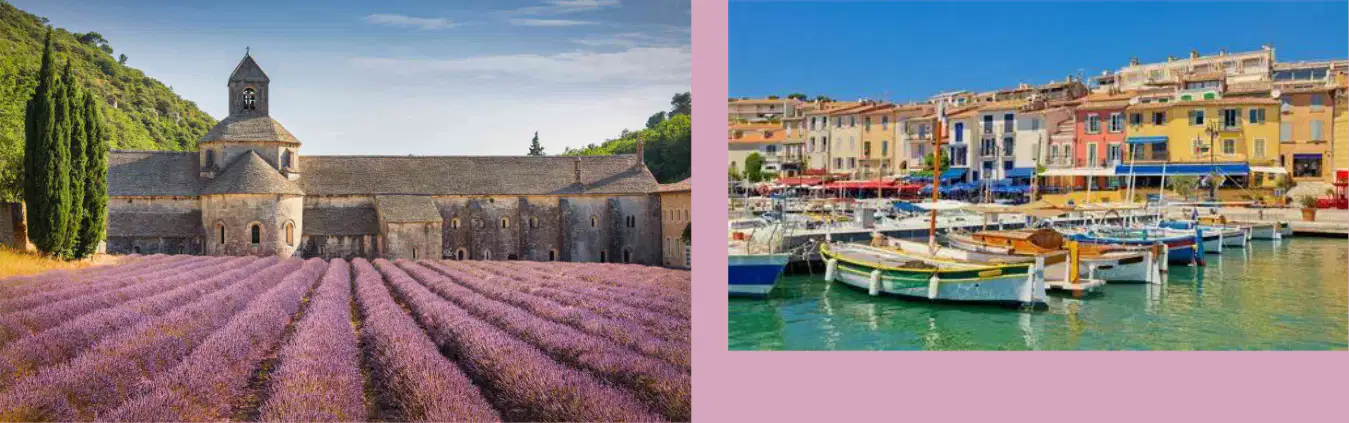
A photo shows lavender fields and a stone abbey in warm sunshine. Which region does this scene best represent?
Overseas territories tropical rainforest
Paris region dense urban core
Southern France Mediterranean landscapes
Northern France urban factories
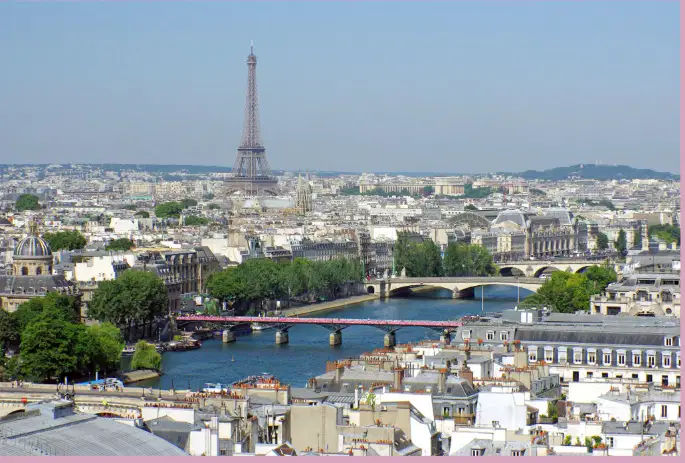
Which combination best matches the Paris skyline views of the Eiffel Tower and Arc de Triomphe?
Coastal fishing harbor and sailboats
Historic sites within a major urban center
Remote island rainforest village
Industrial port with cargo cranes
Which regions show French overseas territories on the map image?
Caribbean, South America, Pacific
Indian Ocean, Baltic Sea, Sahara Desert
Europe, Middle East, Arctic
North America, Central Asia, Antarctica
Select all statements that describe overseas territories shown: they are part of France and have unique cultural influences; they are independent countries with no ties to France; they exist in the Caribbean, South America, and the Pacific.
Part of France with unique cultural influences
Only in Europe and North Africa
Independent countries with no ties to France
Located in Caribbean, South America, Pacific
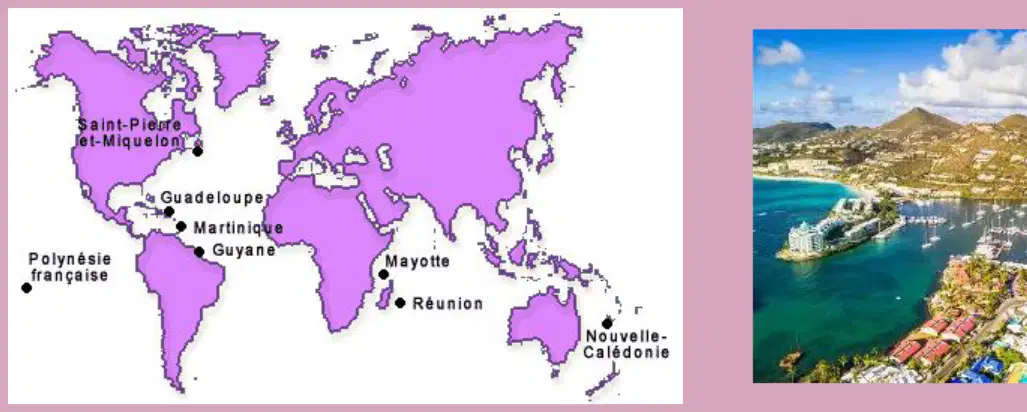
The harbor photo suggests a territory likely in which environment?
Tropical island with coastal tourism
High-altitude desert plateau
Dense inland rainforest basin
Frozen subarctic tundra coastline
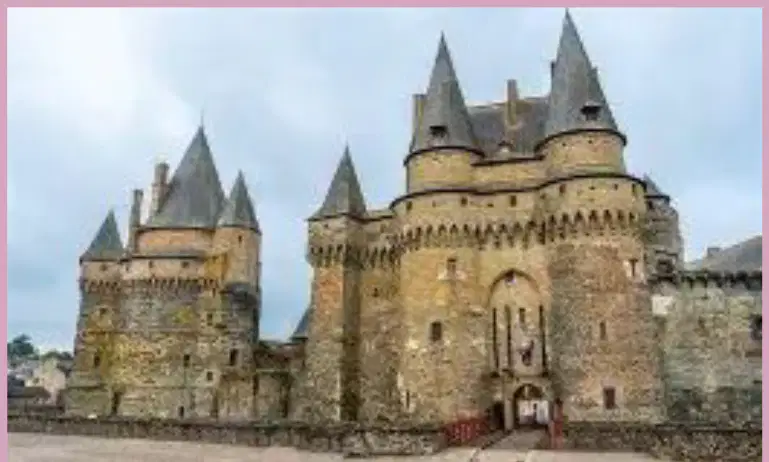
Which change during the Middle Ages most visibly altered France’s physical landscape?
Increase of solar power use
Castle building across regions
Expansion of Roman roadways
Creation of new legal codes
What were two major impacts of the Roman Empire on France?
Introduced sustainable agriculture policies
Organized modern national parks
Built roads, aqueducts, and cities
Latin language evolved into French
During the French Revolution (1789–1799), which outcome changed France’s political structure?
Hosted the Paris Agreement
Built widespread aqueducts
Expanded French territory
Overthrew the monarchy
Which statement best describes Napoleon’s era in shaping France?
Protected biodiversity in national parks
Created green city parks nationwide
Expanded territory and new legal codes
Reduced car dependence with metros
How did the World Wars influence France’s geography and infrastructure?
Organic farming replaced industry
Castles spread across countryside
Significant destruction and rebuilding
Latin evolved into modern French
Which actions are part of France’s renewable energy efforts today?
Expanding wind power generation
Increasing solar power capacity
Building more medieval castles
Creating aqueducts for cities
What urban planning strategy supports environmental sustainability in French cities?
Developing new legal codes
Organizing administrative divisions
Creating green spaces
Expanding empire borders
Which two initiatives reduce environmental impact through transportation and agriculture?
Reducing car dependence
Supporting organic farming
Expanding territorial borders
Rebuilding castle fortifications
What was a major international climate effort hosted by France in 2015?
The Normandy Landings
The Treaty of Versailles
The Napoleonic Code
The Paris Climate Agreement
Which conservation action focuses on biodiversity protection in France?
Increasing castle construction
Creating new administrative divisions
Expanding Roman-style roads
Protecting species in national parks

