
Font size
 Worksheets
Term Exam Review
Total questions: 150
Worksheet time: 1hrs 15mins
Choose the letter of the correct answer: Offspring from asexual reproduction usually __________.
receive genes from two parents
have half the parent’s chromosomes
look exactly like the parent
show great genetic variety
Choose the letter of the correct answer: Asexual reproduction results in offspring that __________.
are genetically identical to the parent
inherit traits from two organisms
come from fertilized gametes
show many new traits
Choose the letter of the correct answer: The different variations of one gene are called __________.
traits
genotypes
alleles
mutations
Choose the letter of the correct answer: The alternative forms of a gene are known as __________.
proteins
phenotypes
chromosomes
alleles
Choose the letter of the correct answer: A red and white flower producing pink offspring is an example of __________.
mutation
incomplete dominance
codominance
recessive inheritance
Choose the letter of the correct answer: When two traits blend together in the offspring, it shows __________.
multiple alleles
codominance
incomplete dominance
pure dominance
Choose the letter of the correct answer: A hiker sees water suddenly rushing through a dry canyon and climbs to safety. The stimulus is __________.
the canyon trail
the sound of wind
climbing to higher ground
the sudden appearance of water
Choose the letter of the correct answer: You notice water starting to flow in a dry stream bed and move away. The response is __________.
moving away from danger
the rocks in the canyon
the dark clouds
the smell of rain
Choose the letter of the correct answer: The space between two neurons where impulses pass is called the __________.
receptor
medulla
synapse
axon
Choose the letter of the correct answer: The tiny gap where one neuron transmits a signal to another is the __________.
dendrite
synapse
nucleus
stimulus
Choose the letter of the correct answer: Pulling your hand away from a hot pan is controlled by the __________.
central nervous system
endocrine system
digestive system
circulatory system
Choose the letter of the correct answer: An immediate reaction to pain, like withdrawing from heat, is directed by the __________.
muscular system
respiratory system
skeletal system
central nervous system
Choose the letter of the correct answer: What is the correct sequence of response when catching a ball?
Sensory neuron → Interneuron → Motor neuron
Interneuron → Sensory neuron → Motor neuron
Motor neuron → Sensory neuron → Interneuron
Brain → Heart → Muscle
Choose the letter of the correct answer: When your eyes detect a moving object and your muscles react, the pathway is __________.
Muscle → Brain → Sensory neuron
Motor neuron → Brain → Hormone
Sensory neuron → Interneuron → Motor neuron
Interneuron → Motor neuron → Sensory neuron
Choose the letter of the correct answer: Which part of the neuron receives incoming information?
Axon terminal
Cell membrane
Dendrite
Myelin sheath
Choose the letter of the correct answer: The structure of the neuron that accepts signals from other neurons is the __________.
Synapse
Axon
Nucleus
Dendrite
Choose the letter of the correct answer: A patient cannot control blood sugar. Which gland is malfunctioning?
Pancreas
Thyroid
Pituitary
Adrenal
Choose the letter of the correct answer: Failure to regulate glucose levels in the body indicates a problem in the __________.
Adrenal gland
Pancreas
Ovary
Thymus
Choose the letter of the correct answer: A potato cut and planted grows into a new identical plant. What reproduction is this?
Pollination
Budding
Sexual reproduction
Asexual reproduction
Choose the letter of the correct answer: A gardener plants a piece of stem and it grows into a clone of the parent. This method is __________.
Fragmentation
Fertilization
Sexual reproduction
Asexual reproduction
Choose the letter of the correct answer: The organ linking the nervous and endocrine systems is the __________.
Thyroid
Hypothalamus
Medulla
Pituitary
Choose the letter of the correct answer: Which structure connects the endocrine and nervous systems by controlling hormone release?
Cerebellum
Lungs
Hypothalamus
Pancreas
Choose the letter of the correct answer: Two rabbits produce offspring showing mixed traits. What reproduction occurred?
Sexual reproduction
Fragmentation
Budding
Binary fission
Choose the letter of the correct answer: Offspring of two animals show combined parental characteristics. This results from __________.
Fission
Sexual reproduction
Cloning
Asexual reproduction
Choose the letter of the correct answer: What process is shown when small growths form and break off to become new organisms?
Fragmentation
Fertilization
Budding
Spore formation
Choose the letter of the correct answer: When a small outgrowth develops on a parent and detaches, this process is called __________.
Regeneration
Fertilization
Budding
Variation
Choose the letter of the correct answer: A sea star’s lost arm grows into a new organism. This is __________.
Spore formation
Budding
Fragmentation
Regeneration
Choose the letter of the correct answer: When a part of an organism develops into a complete new individual, the process is __________.
Budding
Regeneration
Mutation
Internal fertilization
Choose the letter of the correct answer: Sexual reproduction’s advantage in changing environments is __________.
Saves energy
Increases genetic diversity
Produces identical offspring
Requires one parent
Choose the letter of the correct answer: Genetic variation in offspring is most increased by __________.
Sexual reproduction
Cloning
Binary fission
Budding
Choose the letter of the correct answer: A flower with both male and female parts can __________.
Fail to reproduce
Only cross-pollinate
Self-pollinate
Reproduce asexually
Choose the letter of the correct answer: A flower that contains anther and stigma together is capable of __________.
Self-pollination
Binary fission
Budding
Fragmentation
Choose the letter of the correct answer: Red × white flowers → pink offspring. This pattern is __________.
Multiple alleles
Codominance
Incomplete dominance
Dominant recessive
Choose the letter of the correct answer: A blending of traits in the offspring indicates __________.
Recessive inheritance
Codominance
Incomplete dominance
Mutation
Choose the letter of the correct answer: A black and white cow produces a calf with black and white patches. This is __________.
Codominance
Incomplete dominance
Recessiveness
Mutation
Choose the letter of the correct answer: Both parental traits appear equally in the offspring. This represents __________.
Polygenic inheritance
Codominance
Recessive traits
Mutation
Choose the letter of the correct answer: Spores help mosses by providing __________.
Wide dispersal
Immediate fertilization
Thick seeds
No need for water
Choose the letter of the correct answer: One advantage of using spores is their ability to __________.
Require pollinators
Form pollen
Spread long distances
Produce fruits
Choose the letter of the correct answer: Blood type AB from parents with A and B shows __________.
Incomplete dominance
Multiple alleles and codominance
Recessive inheritance
Mutation
Choose the letter of the correct answer: A child inherits both A and B alleles equally expressed. This is __________.
Codominance involving multiple alleles
Nondisjunction
Pure dominance
Simple recessive pattern
Choose the letter of the correct answer: One of the quadruplets grows taller due to diet. This trait is affected by __________.
Environmental factor
Recessive gene
Mutation
Inherited gene only
Choose the letter of the correct answer: A person becomes muscular from training. This trait is influenced by __________.
Environment
Chromosomes
Dominant alleles
Codominance
Choose the letter of the correct answer: The structure producing pollen is the __________.
Style
Ovary
Anther
Stigma
Choose the letter of the correct answer: In a flower, pollen grains are formed inside the __________.
Filament
Ovary
Anther
Stigma
In plants, the gametophyte stage produces ____________.
Seeds
Roots
Gametes
Spores
The plant stage that forms egg and sperm cells is the ____________.
Embryo
Gametophyte
Seedling
Sporophyte
Frogs that lay eggs with external fertilization use ____________.
Regeneration
Asexual reproduction
Internal fertilization
External fertilization
When male and female gametes meet outside the body, it is ____________.
Budding
External fertilization
Internal fertilization
Fragmentation
A plant bending toward light shows ____________.
Phototropism
Hydrotropism
Thigmotropism
Geotropism
Growing toward a light source demonstrates ____________.
Phototropism
Mutation
Dormancy
Variation
A vine wrapping around a stick shows ____________.
Thigmotropism
Photoperiodism
Gravitropism
Dormancy
Plants responding to touch by coiling around objects exhibit ____________.
Hydrotropism
Regeneration
Phototropism
Thigmotropism
Male birds performing dances aim to ____________.
Search for food
Attract mates
Warn predators
Find shelter
Bright feathers and songs in male birds mainly function to ____________.
Keep warm
Hide from predators
Signal danger
Attract potential mates
Roots grow downward; stems grow upward because ____________.
Both show positive geotropism
Roots show negative geotropism; stems show positive geotropism
Roots show positive geotropism; stems show negative geotropism
Both show negative geotropism
Plants respond to gravity by having roots grow down and shoots grow up, showing ____________.
Positive geotropism in roots and negative in stems
Negative geotropism in roots only
No tropism
Neutral response to gravity
A seed absorbing water and beginning to grow undergoes ____________.
Pollination
Fertilization
Germination
Fragmentation
When a seed coat breaks and a new plant starts to sprout, it is called ____________.
Germination
Mutation
Spore formation
Regeneration
Trees shedding leaves during winter is an example of ____________.
Fertilization
Dormancy
Metamorphosis
Phototropism
Plants surviving harsh cold seasons by slowing growth demonstrate ____________.
Fragmentation
Internal fertilization
Germination
Dormancy
A scar on a person’s arm after an accident is an example of an ____________ trait.
Acquired
Genetic
Permanent inherited
Inherited
A child’s eye color is determined by ____________.
Diet
Inherited traits
Lifestyle choices
Environment
Learning to play basketball well is a(n) ____________ trait.
Acquired
Genetic
Recessive
Inherited
A plant’s leaf shape is mainly ____________.
Learned
Temporary
Inherited
Acquired
Sunburn developed after staying outside too long is an example of a(n) ____________ trait.
Recessive
Acquired
Dominant
Inherited
A horse becomes overweight due to lack of exercise. This is an ____________ trait.
Acquired
Genetic
Natural
Inherited
A developing organism inside an egg or seed before birth is called a(n) ____________.
Instinct
Pistil
Response
Embryo
Animals that lay eggs outside the mother’s body are described as ____________.
Pollinators
Oviparous
Acquired traits
Monogamous
A plant bending toward or away from a stimulus such as light or gravity shows ____________.
Stamen
Tropism
Pistil
Pheromone
A quick action caused by a change in the environment is called a ____________.
Pollen
Instinct
Response
Embryo
A chemical released by an organism to influence others of the same species is a ____________.
Stamen
Pheromone
Tropism
Pistil
A species in which individuals have only one mate at a time is ____________.
Instinctive
Monogamous
Oviparous
Inherited
A behavior that an animal is born knowing how to do is called a(n) ____________.
Pollination
Acquired trait
Instinct
Interneuron
Animals such as bees and butterflies that carry pollen from one flower to another are called ____________.
Pheromones
Stamen
Pollinators
Pistil
The transfer of pollen from the anther to the stigma is called ____________.
Tropism
Pollination
Oviparity
Inheritance
The male reproductive part of a flower that includes the anther and filament is the ____________.
Ovule
Stamen
Pistil
Embryo
The female reproductive part of a flower that contains the stigma, style, and ovary is the ____________.
Embryo
Pistil
Stamen
Oviparous
The process in which traits are passed from parents to offspring is known as ____________.
Pollination
Instinct
Response
Inheritance
The nerve cell that connects sensory and motor neurons inside the CNS is called a(n) ____________.
Pollinator
Pheromone
Interneuron
Pistil
Specialized cells that transmit impulses throughout the body are known as ____________.
Pistils
Nerve cells
Stamen
Embryos
A trait that develops due to experiences or environmental factors is called a(n) ____________.
Inherited trait
Pheromone
Acquired trait
Instinct
Bees and butterflies help plants reproduce by carrying pollen. They are examples of ____________.
Embryos
Interneurons
Pollinators
Monogamous animals
A chemical signal that affects the behavior of other members of the same species is called a ____________.
Stamen
Oviparous
Tropism
Pheromone
An animal that shows an inborn behavior without learning demonstrates a(n) ____________.
Acquired trait
Response
Instinct
Inheritance
A plant root growing downward due to gravity is an example of ____________.
Pollination
Pheromone
Tropism
Response
When an organism reacts to a stimulus, the action it performs is called a ____________.
Stamen
Pistil
Response
Embryo
A bird learns a new song after being exposed to other birds. This behavior is an example of a(n) ____________.
Acquired trait
Inherited trait
Natural trait
Genetic trait
The tiny developing organism inside a seed that will grow into a new plant is called a(n) __________.
Instinct
Embryo
Response
Pollen
A frog that lays its eggs in water is considered __________.
Instinctive
Oviparous
Pollinator
Monogamous
A vine growing upward and wrapping around a pole due to touch demonstrates __________.
Pheromone
Tropism
Stamen
Inheritance
A sudden action made by an organism when something changes in its surroundings is called a __________.
Response
Instinct
Embryo
Pollen
A chemical released by ants to lead others to food is an example of a __________.
Tropism
Pistil
Pheromone
Stamen
A species in which a male and female choose only one partner during a breeding season is called __________.
Inherited
Instinctive
Oviparous
Monogamous
A newborn animal automatically knowing how to suckle milk shows a(n) __________.
Instinct
Pollination
Interneuron
Acquired trait
Insects that transport pollen from flower to flower while collecting nectar are known as __________.
Stamen
Pistil
Pheromones
Pollinators
The movement of pollen from the male part of a flower to the female part is called __________.
Tropism
Oviparity
Pollination
Inheritance
The male flower structure that contains the anther and filament is the __________.
Pistil
Ovule
Embryo
Stamen
The female flower structure that includes the stigma, style, and ovary is called the __________.
Oviparous
Pistil
Embryo
Stamen
Parents passing characteristics such as eye color or height to their children illustrates __________.
Pollination
Response
Inheritance
Instinct
A neuron that acts as a link between sensory and motor neurons inside the spinal cord is a(n) __________.
Pollinator
Pistil
Pheromone
Interneuron
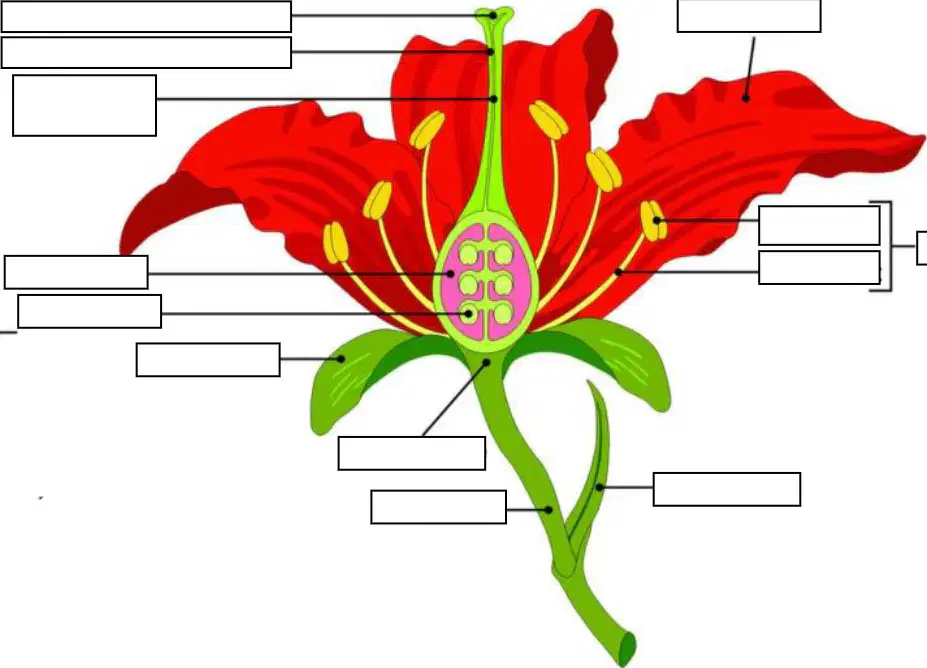
Label the parts of the flower. In the diagram of a flower, which part is the sticky tip at the very top of the central pistil?
Stigma
Anther
Sepal
Petiole
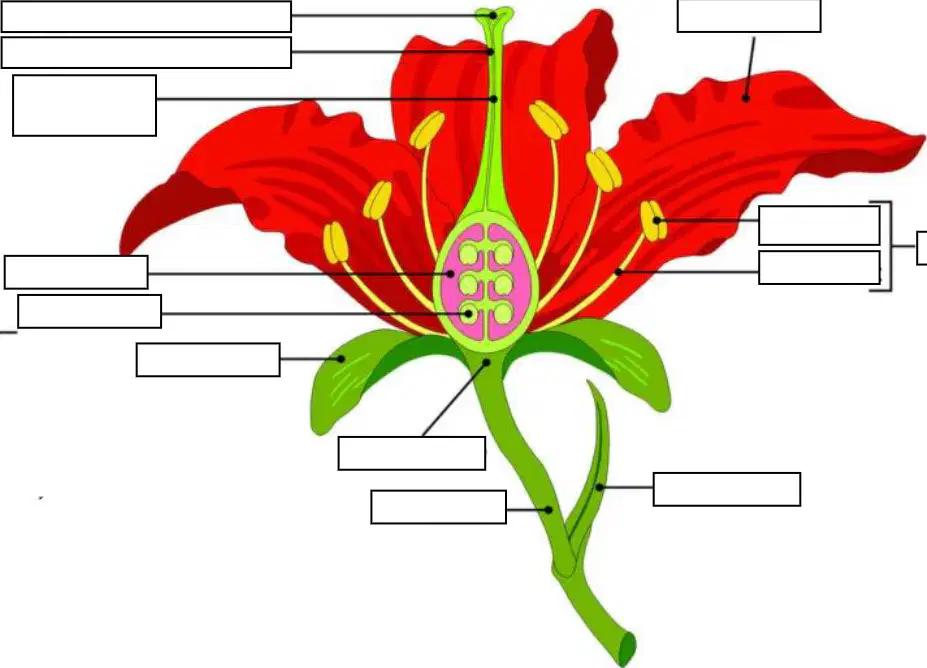
Label the parts of the flower. In the diagram of a flower, which part is the slender tube of the pistil that connects the top to the swollen base?
Style
Ovary
Stigma
Filament
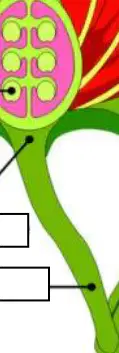
Label the parts of the flower. In the diagram of a flower, which part is the swollen base of the pistil that contains the developing structures?
Ovary
Anther
Sepal
Nectary
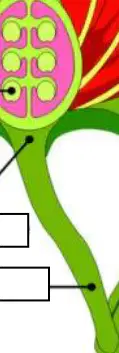
Label the parts of the flower. In the diagram of a flower, which structures are the small bodies shown inside the cross-section of the pistil’s base?
Ovules
Pollen grains
Petals
Seeds
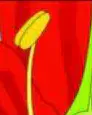
Label the parts of the flower. In the diagram of a flower, which part is the yellow, pollen-bearing tip at the top of each stamen?
Anther
Stigma
Sepal
Petal
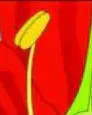
Label the parts of the flower. In the diagram of a flower, which part is the thin stalk that supports each anther?
Filament
Style
Midrib
Peduncle
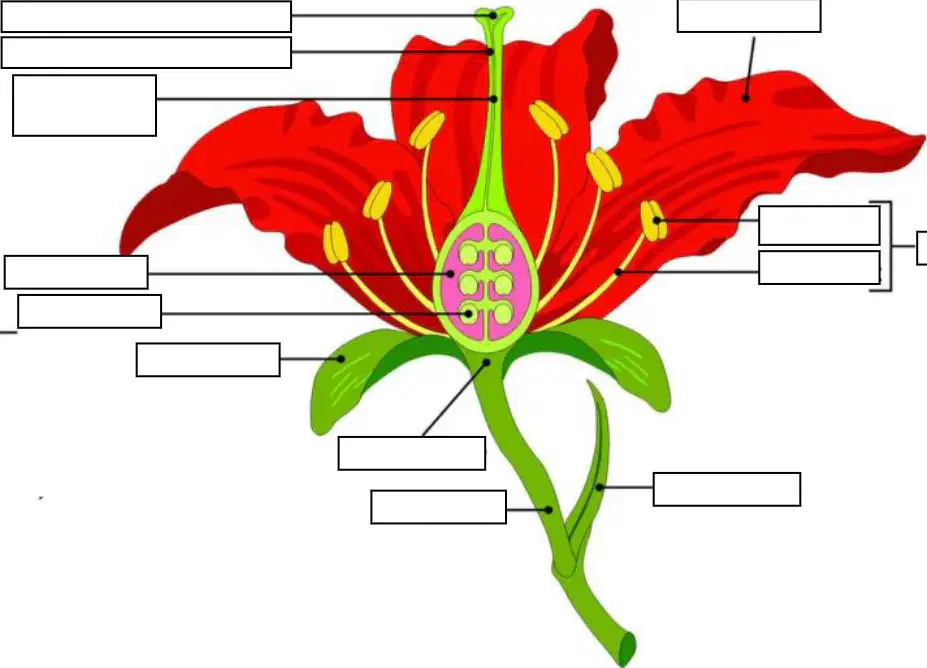
Label the parts of the flower. In the diagram of a flower, which part is the green, leaf-like structure beneath the petals?
Sepal
Petal
Leaf blade
Bract
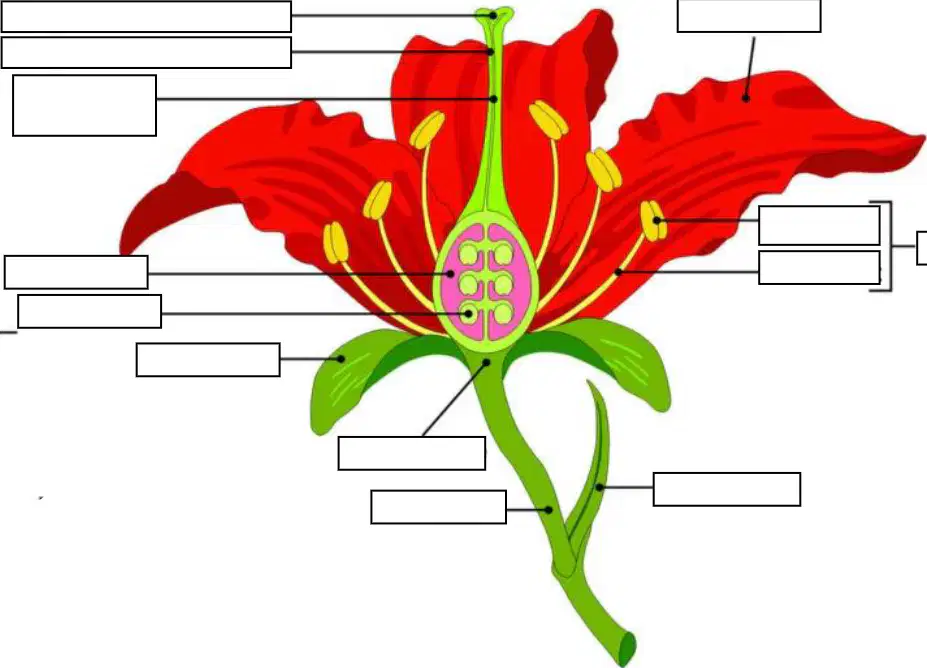
Label the parts of the flower. In the diagram of a flower, which part is the thickened area at the top of the stalk where all floral organs attach?
Receptacle
Peduncle
Node
Ovary
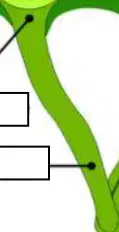
Label the parts of the flower. In the diagram of a flower, which part is the flower stalk that supports the receptacle?
Peduncle
Petiole
Style
Stamen
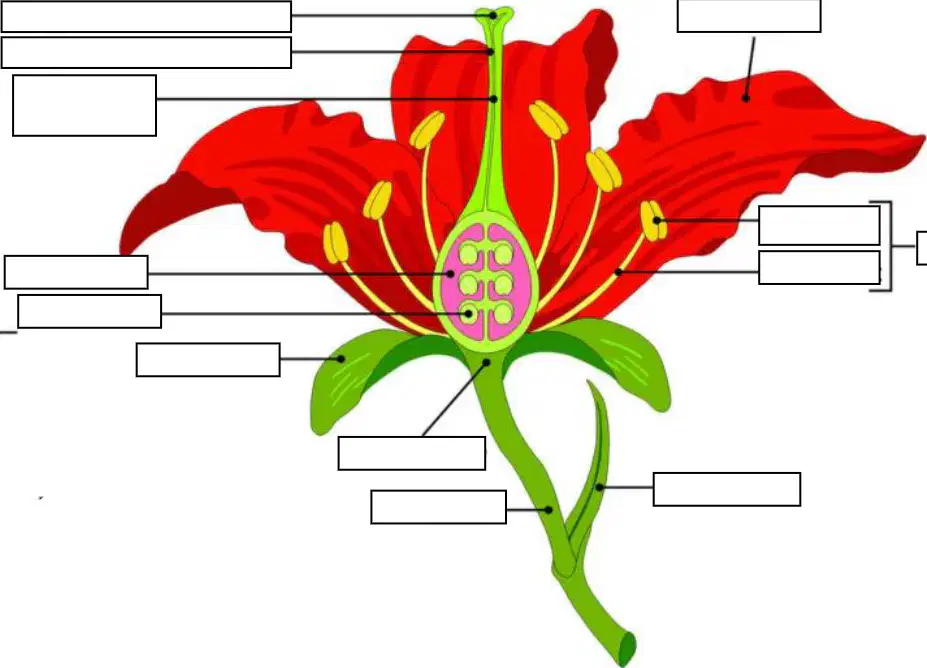
Label the parts of the flower. In the diagram of a flower, which part is the large, red, showy structure that surrounds the reproductive organs?
Petal
Sepal
Bract
Filament
Which statement best describes asexual reproduction?
It involves only one parent and produces genetically identical offspring.
It requires two parents and produces genetically varied offspring.
It always occurs through the fusion of gametes.
It occurs only in animals, not plants.
Why do offspring from asexual reproduction tend to be genetically identical to the parent?
Only one parent's genetic material is used, creating clones.
Both parents contribute genes, increasing variation.
Crossing over during meiosis increases diversity.
Environmental factors eliminate mutations.
What are alleles?
Different versions of the same gene.
Proteins that control metabolism.
Structures that carry neurons' signals.
Cells that form tissues.
The alternative forms of a gene—such as different expressions for flower color—are called what?
Alleles
Chromatids
Plasmids
Isotopes
What is incomplete dominance?
A blending of two parental traits to create an intermediate phenotype.
One allele completely masking another.
Both alleles expressed equally and distinctly.
Traits passing only from the mother.
When offspring traits appear as an intermediate mix of the parents (such as pink flowers from red and white), this is an example of what?
Incomplete dominance
Codominance
Multiple alleles
Polygenic inheritance
What is a stimulus in the context of organism responses?
A change in the environment that causes a reaction.
A neuron that carries signals to muscles.
A learned behavior from experience.
A chemical released at a synapse.
What is a response in relation to a stimulus?
The specific action taken as a result of the stimulus.
The environmental change that prompts behavior.
The organ that detects a change.
The chemical messenger released by a gland.
What is the synapse?
The tiny gap between two neurons where chemical signals are transmitted.
The insulating sheath covering an axon.
The nucleus of a neuron where DNA is stored.
The muscle attachment site for a motor neuron.
The space between the axon terminal of one neuron and the dendrite of the next is called what?
Synapse
Node of Ranvier
Axon hillock
Soma
Which system primarily coordinates rapid, involuntary reflexes like pulling your hand from a hot surface?
Central nervous system (brain and spinal cord)
Digestive system
Endocrine system
Circulatory system
Immediate, involuntary pain reactions such as a reflex to heat are best described as what?
Reflex actions coordinated by the spinal cord
Voluntary responses controlled by skeletal muscles
Hormonal feedback loops from the pancreas
Learned behaviors mediated by the cerebrum
Which sequence correctly traces a simple reflex pathway from detection to action?
Sensory neuron → interneuron → motor neuron
Motor neuron → sensory neuron → interneuron
Interneuron → sensory neuron → motor neuron
Motor neuron → interneuron → sensory neuron
Which set of neurons performs detect–process–react in a nervous system pathway?
Sensory neurons, interneurons, motor neurons
Motor neurons, sensory neurons, interneurons
Interneurons only
Sensory neurons only
Which neuron structure primarily receives chemical signals from other neurons and converts them into electrical impulses?
Dendrites
Axon terminal
Myelin sheath
Cell body nucleus
Which part of a neuron is specialized for receiving neurotransmitters across the synapse from a preceding neuron?
Dendrites
Axon
Node of Ranvier
Schwann cell
Which organ produces the hormones insulin and glucagon to regulate blood glucose levels?
Pancreas
Thyroid gland
Adrenal cortex
Pituitary gland
Which endocrine gland plays the primary role in managing the body’s glucose balance?
Pancreas
Thyroid
Pineal
Thymus
Growing a new, identical plant from a cutting or piece of the parent plant is an example of what reproductive process?
Asexual reproduction (vegetative propagation)
Sexual reproduction through pollination
External fertilization in water
Spore dispersal
Producing a genetically identical clone of a parent plant without fertilization best describes which process?
Vegetative propagation, a form of asexual reproduction
Pollination, a form of sexual reproduction
Meiosis, creating varied gametes
Spore formation in fungi
Which brain region links the nervous and endocrine systems by controlling the pituitary gland?
Hypothalamus
Cerebellum
Medulla oblongata
Cerebrum
Which structure regulates the pituitary gland and hormone release, bridging the nervous and endocrine systems?
Hypothalamus
Thalamus
Pons
Amygdala
Mixed traits resulting from the combination of genes from two parents occur in which type of reproduction?
Sexual reproduction
Asexual reproduction
Binary fission
Budding only
Offspring that show combined characteristics from two parents are produced by what process?
Sexual reproduction
Asexual reproduction
Mitosis without fertilization
Cloning via spores
Which process involves an outgrowth forming on a parent organism and detaching to become a new individual?
Budding
Regeneration
Binary fission
Fragmentation
The formation of a small outgrowth that develops into an independent individual is known as what?
Budding
Sporulation
Grafting
Fertilization
What is regeneration?
Regrowth of a lost or damaged body part, sometimes forming a new organism
Fusion of male and female gametes inside the body
Formation of buds that detach from the parent
Production of spores that disperse by wind
The ability of a fragment of an organism to grow into a complete, independent organism is called what?
Regeneration
Mitosis
Meiosis
Budding
What is a primary advantage of sexual reproduction in changing environments?
Increased genetic diversity that improves chances of survival
Faster population growth with identical offspring
Guaranteed survival due to cloning
Elimination of mutations over generations
Which process leads to the greatest genetic variation among offspring due to gene shuffling from two parents?
Sexual reproduction involving meiosis
Asexual reproduction via mitosis
Binary fission in bacteria
Budding in hydra
What allows a flower to self-pollinate?
Having both male (stamen) and female (pistil) reproductive parts in the same flower
Producing only male flowers on the plant
Wind carrying pollen between different plants
Lack of a stigma on the flower
Self-pollination is possible when a flower contains which combination of parts?
Both anther and stigma within the same flower
Only stamens on one flower and pistils on another
Sepals and petals only
A stigma but no anther
The appearance of a pink intermediate phenotype from red and white parents indicates which inheritance pattern?
Incomplete dominance
Codominance
Sex-linked inheritance
Multiple alleles without dominance
When parental traits blend (for example, straight and curly hair producing wavy hair), which pattern is demonstrated?
Incomplete dominance
Codominance
Complete dominance
Polygenic inheritance
In which inheritance pattern do both parental traits appear distinctly and equally (such as black and white patches)?
Codominance
Incomplete dominance
Complete dominance
Sex-linked inheritance
Codominance occurs under which condition?
Both alleles for a trait are fully and separately expressed in the phenotype.
One allele masks the expression of another completely.
Traits blend into a single intermediate form.
The trait is influenced by multiple genes and the environment.
What features of spores help mosses spread widely?
They are lightweight and produced in large numbers, allowing wind or water dispersal.
They are heavy and remain near the parent plant.
They require animal digestion to germinate.
They must fuse with gametes to travel.
Why are spores considered an adaptation for reproduction in specific environments?
They can travel long distances and colonize new areas.
They only develop underground and remain local.
They require internal fertilization to function.
They are genetically identical to seeds.
Which statement best describes the genetics of human ABO blood types?
They involve multiple alleles (A, B, O), with A and B codominant when inherited together.
They are determined by a single dominant allele over all others.
They arise only from environmental factors like diet.
They are sex-linked traits carried on the X chromosome.
Why is the AB blood type a classic example of codominance?
Both A and B proteins are expressed equally on the blood cells, and the system uses multiple alleles (A, B, O).
Only the A allele is expressed and masks B.
The trait blends to produce an intermediate protein.
It depends on environmental exposure to antigens.

