Worksheets
Eoc practice
Total questions: 181
Worksheet time: 2hrs 54mins
Which of the following converts food into energy for the cell?
vacuole
mitochondria
cytoplasm
cell membrane
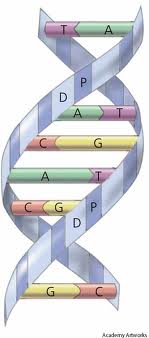


A strand of DNA has these bases:
AGC CAT GTA TAC
What is the complementary DNA strand?
ACG GAT CTA TAG
TCG GTA CAT ATG
TGC CTA GAT ATC
UCG CUA CAU AUG


What is the first thing a student should do if an accident happens during a science experiment?
report to the teacher
clean the laboratory station
locate the nearest exit
put on safety goggles
Which device is used to determine the volume of a liquid?
anemometer
graduated cylinder
test tube
thermometer
Which is a primary function of a vacuole in a cell?
reproduction
enzyme production
protein synthesis
storage
What determines the function of a specialized cell?
the active genes in the cell
the type of RNA in the cell
the number of ribosomes in the cell
the number of chromosomes in the cell
During which phase of the cell cycle does most cell growth occur?
cytokinesis
interphase
prophase
mitosis
What will most likely occur if the population of the world continues to increase at predicted rates?
There will be an increase in biodiversity as a result of improvements in technology.
There will be more rapid depletion of natural resources.
The human race will rapidly become extinct.
All human diseases will be eliminated.

This diagram shows a red blood cell in a beaker that contains a solution with a higher salt concentration than that inside the red blood cell. What will happen to the red blood cell in this environment?
The size of the red blood cell will remain constant.
The red blood cell will swell at first and then shrink.
The red blood cell will swell from absorbing salt molecules.
The red blood cell will shrink from losing water molecules.

This diagram represents a closed terrarium exposed to sunlight. What must happen for the carbon cycle to continue in this terrarium?
All organisms must continue to exchange gases.
The decomposers must begin to produce oxygen.
The plant must produce carbon dioxide at a faster rate.
The snails must double their production of carbon dioxide.
In nature, which type of behavior causes animals to produce aggressive displays and sounds?
imprinting
territoriality
conditioning
habituation
What will most likely happen if a nonnative species is introduced into a stable
ecosystem?
The native species will change their diet, and the ecosystem will remain stable.
The native species will move to another area, and the ecosystem will remain stable.
The native species will have to compete for resources with the nonnative species, and the ecosystem will become unbalanced.
The native species will share their food with the introduced species, and the
ecosystem will become unbalanced.
Why must DNA replication have to occur before a cell can divide by mitosis?
to maintain the same number of chromosomes in the daughter cells as in the parent cell
to cause one of the cells produced to have double the number of chromosomes as the parent cell
to allow crossing over to occur in each of the cells produced
to cause all of the cells produced to have half the number of chromosomes as the parent cell
A section of DNA has these bases:
TAG CAG TAC
Which mRNA sequence is produced from this DNA section?
ATC GTC ATG
AUC GUC AUG
AUG CUG AUC
UTC GTC UTG
Which process can occur in both mitosis and meiosis?
fertilization
independent assortment
gene mutation
crossing over
How do some chemicals increase the risk of a person getting cancer?
by causing cell mutations
by causing a deficiency of vitamin D
by causing an increase of toxins in the skin
by causing a decrease in the immune response
What is the difference between the DNA of a dog and the DNA of a fly?
the type of sugar building blocks
the sequence of nucleotides
the strength of hydrogen bonds
the strength of covalent bonds
Which would be a desirable trait scientists may want to create in a transgenic plant?
the ability to resist insects
the ability to grow less fruit
the ability to change color in the winter
the ability to use a lot of water
Which substance do biochemists often search for in fossils to help better understand the evolutionary relationships of the organism that formed the fossil?
ATP
DNA
iron
oxygen
Scientists believe that the polar bear in Alaska and the brown bear in Russia evolved from a common ancestor. Which would be responsible for this evolutionary change?
artificial selection
asexual reproduction
sexual competition
geographic isolation
What is the basis for the earliest classification system of organisms?
physical characteristics
differences in habitat
evolutionary relationships
reproductive patterns
Waxes create a waterproof layer on the outside of some living organisms. To which group of organic molecules do waxes belong?
carbohydrates
lipids
nucleic acids
proteins
Which best summarizes the role of DNA in the production of proteins?
DNA moves to the cytoplasm to build proteins.
DNA transports amino acids to the ribosomes to make proteins.
DNA contains the instructions used to make proteins.
DNA breaks hydrogen bonds between amino acids.
A student noticed that the freshwater plant, Elodea, produced bubbles when placed in direct light. What could the student most likely conclude?
Bubbles of carbon dioxide were produced as a result of photosynthesis.
Bubbles of oxygen were produced as a result of photosynthesis.
Bubbles of carbon dioxide were produced as a result of cellular respiration.
Bubbles of oxygen were produced as a result of cellular respiration.
Plant cells are able to produce their own food. This process happens in which structure?
cell wall
chloroplast
mitochondrion
vacuole

These diagrams show a variety of cells from the same organism. How can cells from the same organism have such different shapes and functions?
As each cell differentiates, the DNA changes so that each type of cell has different DNA once it reaches maturity.
Mutations in the cells’ nuclei lead to new combinations of DNA, resulting in different shapes and functions in the different types of cells.
During differentiation, different parts of the DNA in each type of cell are activated, resulting in the different structure and function of the cells.
During differentiation, different types of cells produce proteins which destroy the nonactive DNA, leading to cell specialization.
Which statement best explains how sweating during exercise maintains homeostasis?
It regulates mineral concentrations in cells.
It regulates body temperature.
It maintains water balance.
It maintains sugar balance in cells.
The chemical colchicine disrupts cell division. Which cell process would most likely stop if colchicine were added to a culture of human liver cells?
mitosis
meiosis
crossing over
active transport
Which statement best explains why animals are considered heterotrophic?
They are able to produce food through the process of photosynthesis.
They are able to produce food through the process of respiration.
They are able to obtain nutrients by decomposing plant and animal tissue.
They are able to obtain nutrients by consuming other organisms or their products.
In some ecosystems, wolves have been eliminated due to their threats to humans. How can the reintroduction of wolves benefit the ecosystem?
It can eliminate weak animals from a prey population, thereby decreasing competition for natural resources.
It can eliminate the most fit animals among the prey population, which will cause an increase in birthrates of the prey.
It can cause the prey population to migrate to other areas, resulting in more fit prey.
It can cause the prey population to better blend in with their environment.
What will most likely be the result as humans move into new areas, forests are clear cut and housing developments are built?
Global temperatures will decrease because trees are removed.
Many organisms will lose their homes because their habitats have been destroyed.
Better sanitation in the area will reduce the amount of pollution.
The rainfall in the area will increase because there will be increased runoff.
What activity most contributes to the depletion of the ozone layer?
burning fossil fuels
release of CFCs
deforestation
overuse of fertilizers
Which effect could a mutation in mRNA have on the production of proteins?
The protein produced will have a different identity.
The protein produced will have a coiled shape.
The protein produced will produce excess nitrogen.
The protein produced will produce excess water.
What carries the instructions for making amino acids in a protein?
the nitrogen base on the tRNA
the hydrogen bonding between nitrogen bases
the sequence of nitrogen bases on the mRNA
the nitrogen base bonding on the DNA molecule
How are mitosis and meiosis similar?
both have two cell divisions
both require DNA replication
both produce gametes
both involve crossing over
Genetically identical plants will produce either pink flowers or blue flowers, depending on the type of soil in which they are planted. What is most likely the explanation for the differences in flower color?
The flower-color gene is codominant.
Mutations alter the flower-color gene.
The flower-color gene is sex-linked.
Environmental factors affect flower color.

This diagram shows DNA fingerprints for a child and four adults. Which adult is most likely a parent of the child?
Adult 1
Adult 2
Adult 3
Adult 4
Which transgenic organism has been used to clean up oil spills?
bacteria
jellyfish
fungus
paramecia
An antibiotic which was effective 20 years ago against a specific type of bacterial infection no longer works against the same kind of infection today. Which best explains why the antibiotic is no longer as effective as it was 20 years ago?
Bacteria resistant to the antibiotic have killed off nonresistant bacteria.
Viruses have changed the structure of the bacteria that causes the infection.
Resistant bacteria have survived and reproduced at a greater rate than nonresistant bacteria.
The human body has developed an immunity to the antibiotics.
An insecticide kills most of the ants on a plant. Over time, it is determined that the insecticide is not as effective for killing ants. Which statement best explains this observation?
he ants killed initially by the insecticide were genetically the same as the surviving ants.
The ants killed initially by the insecticide had thinner cell membranes than
the surviving ants.
The ants that survived were younger than those that died as a result of the insecticide.
The ants killed by the insecticide and the surviving ants were genetically different.
Multicellular eukaryotic autotrophs belong to which kingdom?
Animalia
Fungi
Plantae
Protista
Salivary amylase is an enzyme in humans that breaks down starches. What substance would humans have difficulty digesting without this enzyme?
lipids
nucleic acids
proteins
carbohydrates
Which best explains why the rate of a biochemical reaction decreases at high temperatures?
The activation energy increases.
The shape of the enzyme changes.
The enzyme-substrate complex forms.
The bonds between substrates are broken.
A contractile vacuole helps protists eliminate excess liquid. This is a “pumping" process which reduces pressure inside the cell and prevents the cell from bursting. What is most likely the source of energy for this process?
DNA
lipids
ATP
ribosomes
What do both prokaryotic and eukaryotic cells contain?
membrane-bound organelles
linear chromosomes
cytoplasm
a nucleus
Which of these cells in the human body is specialized to transport oxygen throughout the body?


What would most likely be produced when a cell with eight chromosomes undergoes mitosis?
two cells with four chromosomes each
two cells with eight chromosomes each
four cells with four chromosomes each
four cells with eight chromosomes each

This diagram shows a Paramecium, a unicellular protist.
When a chemical is added to the pond water in which the Paramecium lives, the Paramecium stops moving. Which structure is most likely affected?
1
2
3
4
Which adaptation do ferns, gymnosperms, and angiosperms have that mosses do not have?
chloroplasts
flowers
stomata
vascular tissue
Which graph best illustrates the growth of a population introduced into an environment with limited resources?


Which will most likely result in a negative growth rate in the human population of a country?
The death rate is higher than the birth rate.
The birth rate is higher than the death rate.
The country has improved economic conditions.
The country has made improvements in sanitation.
Why are many farmers encouraged to plant different types of crops on the same land throughout the year?
It prevents insects from destroying crops.
It allows for more genetic variation in plants.
It provides more food to other countries.
It helps preserve the quality of the soil.
During translation, what does the tRNA deliver to the ribosomes?
amino acids
DNA
mRNA
proteins
Which will most likely cause an increase in the frequency of genetic mutations in humans?
increased exposure to mold spores in the air
increased exposure to the rising levels of atmospheric CO2
increased exposure to bacteria in drinking water
increased exposure to X-rays
Having freckles is dominant over not having freckles. If two individuals heterozygous for freckles have a child, what is the probability the child will have freckles?
0%
25%
50%
75%
Identical twin girls are separated at birth and cared for by two different families. After twenty years, the twins have different heights and weights. What is most likely the cause of these differences?
One twin had a genetic condition that prevented her from growing tall.
The DNA of one twin was different from the DNA of the other twin.
Each twin was provided a different diet and physical activities.
The proteins made by one twin were different than the proteins made by the other twin.
What is the function of a restriction enzyme?
to control the movement of proteins into a cell
to regulate blood sugar levels
to produce hormones that regulate digestion
to cut DNA at a specific nucleotide sequence
Some marine worms and mollusks go through similar larval stages during development. Which can be inferred about their relationship?
They share a common ancestor.
They mate with each other.
They compete for a habitat.
They share the same food source.
Which statement best describes natural selection?
As the weather changes, organisms that are able to find shelter need less energy to live.
Organisms that eat only plants need less food than organisms that eat animals.
Organisms better adapted to their environment are more likely to reproduce and pass on their traits to their offspring.
Small organisms are more likely to survive than larger organisms.
Some scientists claim recent evidence suggests birds should be reclassified to share more taxonomic groups with dinosaurs. What type of evidence would provide the best support for this claim?
evidence showing birds shared similar habitats with dinosaurs
evidence showing birds shared similar nutritional requirements as dinosaurs
evidence showing birds shared similar behaviors with dinosaurs
evidence showing birds shared a common genetic history with dinosaurs

This is a dichotomous key for selected arthropods. This diagram shows a caddis fly. To which order does the caddis fly belong?
Acarina
Diptera
Siphonaptera
Trichoptera
Which molecules are joined together to make proteins?
fatty acids
nucleic acids
amino acids
acetic acids
Which word equation best represents the process of cellular respiration?
carbon dioxide + glucose → oxygen + water
carbon dioxide + water → glucose + oxygen
glucose + oxygen → carbon dioxide + water
oxygen + water → carbon dioxide + glucose
How does the body of a runner keep up with the demand for energy when cellular oxygen levels are low?
through energy production in the mitochondria
through aerobic respiration in the plasma membrane
through ATP produced directly from sunlight
through anaerobic respiration in the cytoplasm
Which organelle is responsible for packaging and transporting proteins within a cell?
Chloroplast
Vacuole
Golgi apparatus
Cell wall
What process do plants use to convert sunlight into chemical energy?
Photosynthesis
Transpiration
Fermentation
Respiration
Which type of cell division results in the production of gametes?
Mitosis
Meiosis
Budding
Binary fission


The diagram represents a cellular process used by cells. In which situation would this process be beneficial to the cells?
growth and repair, because it produces identical types of cells
growth and repair, because it makes the cells of the organism larger
reproduction, because it creates more energy for the organism
reproduction, because it increases the number of chromosomes in the cells

Which student correctly compared the outcomes of meiosis and mitosis?
Student 1
Student 2
Student 3
Student 4
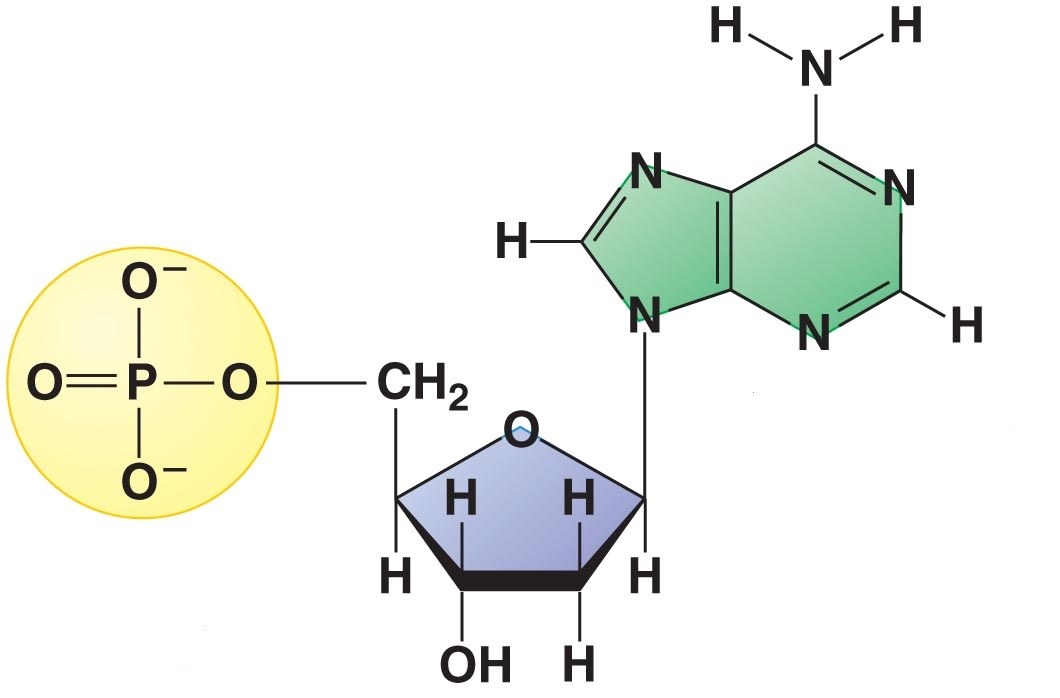
How is a DNA molecule arranged?
double-stranded with alternating deoxyribose and phosphate groups on the sides with adenine, guanine, cytosine, and thymine in the middle
double-stranded with alternating deoxyribose and phosphate groups on the sides with adenine, guanine, cytosine, and uracil in the middle
double-stranded with alternating ribose and phosphate groups on the sides with adenine, guanine, cytosine, and thymine in the middle
double-stranded with alternating ribose and phosphate groups on the sides with adenine, guanine, cytosine, and uracil in the middle
How is a DNA molecule arranged?
double-stranded with alternating deoxyribose and phosphate groups on the sides with adenine, guanine, cytosine, and thymine in the middle
double-stranded with alternating deoxyribose and phosphate groups on the sides with adenine, guanine, cytosine, and uracil in the middle
double-stranded with alternating ribose and phosphate groups on the sides with adenine, guanine, cytosine, and thymine in the middle
double-stranded with alternating ribose and phosphate groups on the sides with adenine, guanine, cytosine, and uracil in the middle
Enzyme X is needed for a reaction to occur. What is the most likely result when additional Enzyme X is added to the reaction?
an increase in the reaction rate
a decrease in the reaction rate
a decrease in the product concentration
an increase in the substrate concentration
Hummingbirds thrive in warm, moist climates, and their primary source of food is nectar from flowering plants. A three-year drought is expected in an ecosystem. How will this most likely affect the hummingbird population in that ecosystem?
The hummingbirds will increase their reproductive rate in order to ensure enough individuals survive.
The hummingbirds will decrease their reproductive rate in order to decrease genetic diversity within the population.
The hummingbirds will immediately adapt to eat new food sources, increasing the overall survival rate of the population.
The hummingbirds will struggle to find food, and only those that can adapt to new food sources will survive.
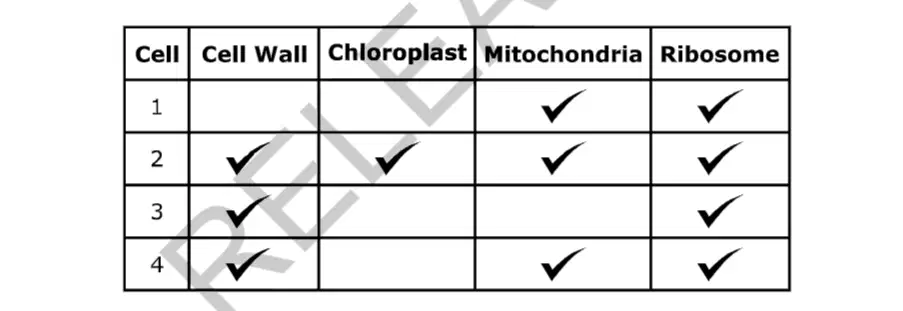
This chart shows characteristics of four different cells observed under a microscope. Which is most likely a prokaryotic cell?
Cell 1
Cell 2
Cell 3
Cell 4
What is the significance of three consecutive nucleotides in DNA?
They code for one amino acid.
They code for three amino acids.
They code for one complete protein.
They code for three complete proteins.
A cell experiences an error during the cell cycle, causing it to go through cytokinesis before mitosis. Which statement best describes the new cells?
The new cells will be double the size of the original cell.
The new cells will have twice as much DNA as the original cell.
The new cells will have no DNA or organelles but will continue progressing through the cell cycle.
The new cells will have an incorrect amount of DNA and organelles, and will likely experience cell death.
Among birds, some skin cells grow feathers when they mature, while other skin cells grow scales at maturity. Which statement best explains this difference?
Skin cells exposed to colder environments grow feathers, while skin cells exposed to wet environments grow scales.
While all cells have the same DNA, specialized cells express certain traits that produce feathers or scales.
Skin cells that have feathers are diploid, while skin cells that make scales are haploid.
Some skin cells have different DNA to build structures like feathers and scales.
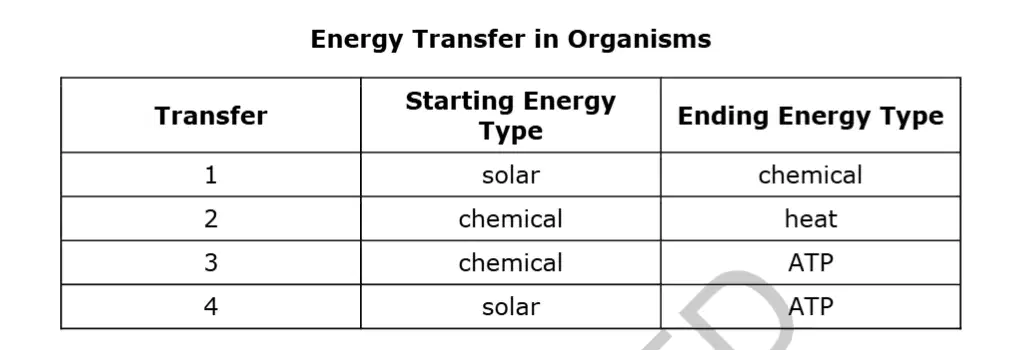
Which transfer represents photosynthesis?
A. 1
B. 2
C. 3
D. 4
A group of students completed two experiments. Their notes are below: Experiment 1: • Hydrogen peroxide was poured on a slice of raw potato. • The peroxide bubbled vigorously. • The peroxide was broken down into water and oxygen. Experiment 2: • A slice of raw potato was heated and then hydrogen peroxide was poured on it. • There was no visible reaction. Which statement explains the results of these experiments?
A. Heating the potato had no effect on the potato enzymes.
B. Heating the potato caused the hydrogen peroxide to evaporate, so the reaction did not occur.
C. Heating the potato caused the potato enzymes to release the water and oxygen from the hydrogen peroxide.
D. Heating the potato caused a shape change in the potato enzymes, so they could no longer function properly.
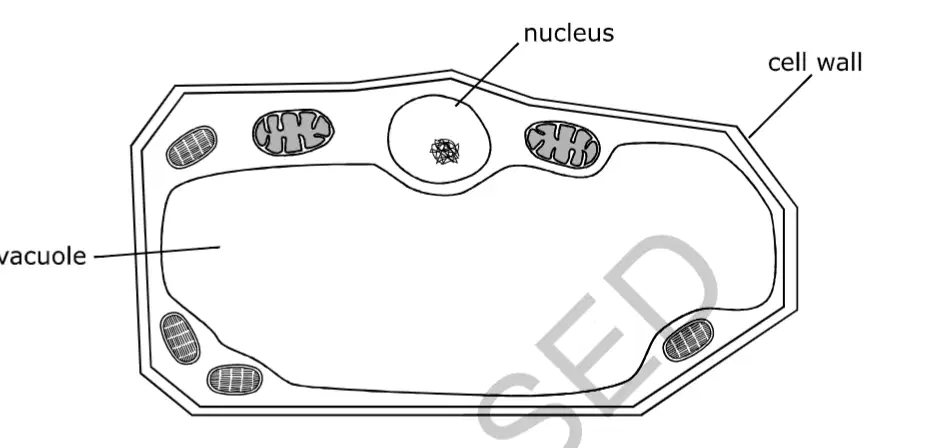
The vacuole allows the plant cell to store water for later use in photosynthesis. A mutation occurs and the size of the vacuole decreases. What effect will this have on the rate of photosynthesis in the cell?
The vacuole will be less able to hold water, decreasing the rate of photosynthesis.
The vacuole will be more able to hold water, increasing the rate of photosynthesis.
The cell will be able to take in more water, decreasing the rate of photosynthesis.
The cell will be able to release more water, increasing the rate of photosynthesis.
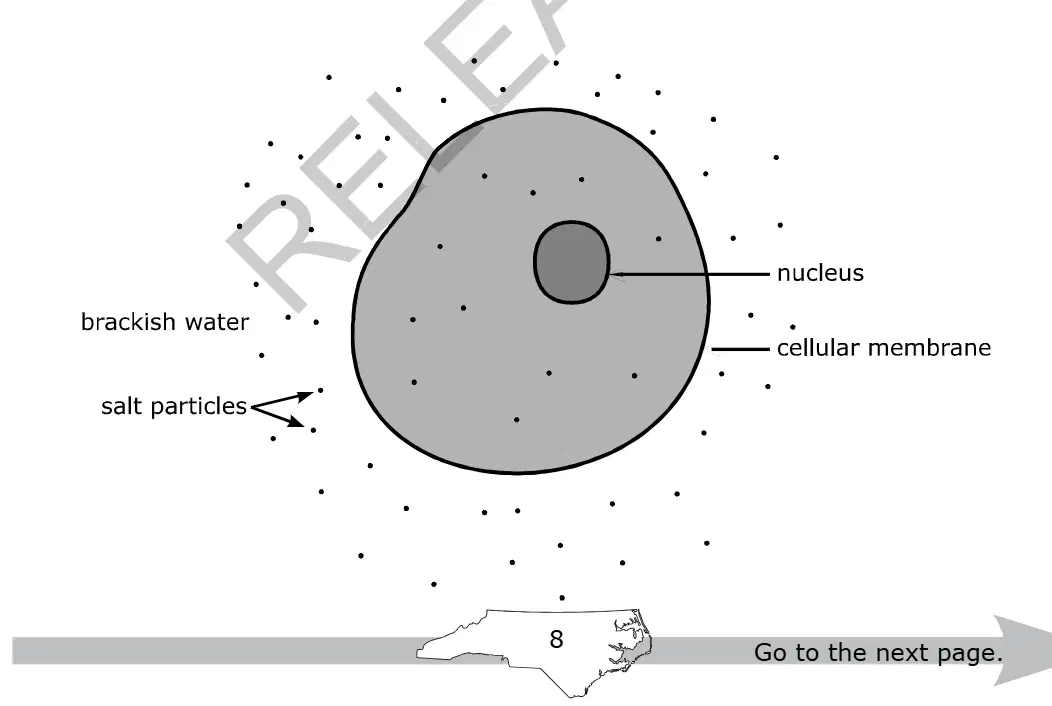
What is the structure labeled as the outer boundary of the cell?
Nucleus
Cellular membrane
Salt particle
Brackish water
Fill in the blank: In a high-salinity environment, the cells of finger mullets must adjust by either taking in water or _______ it.
releasing
absorbing
storing
filtering
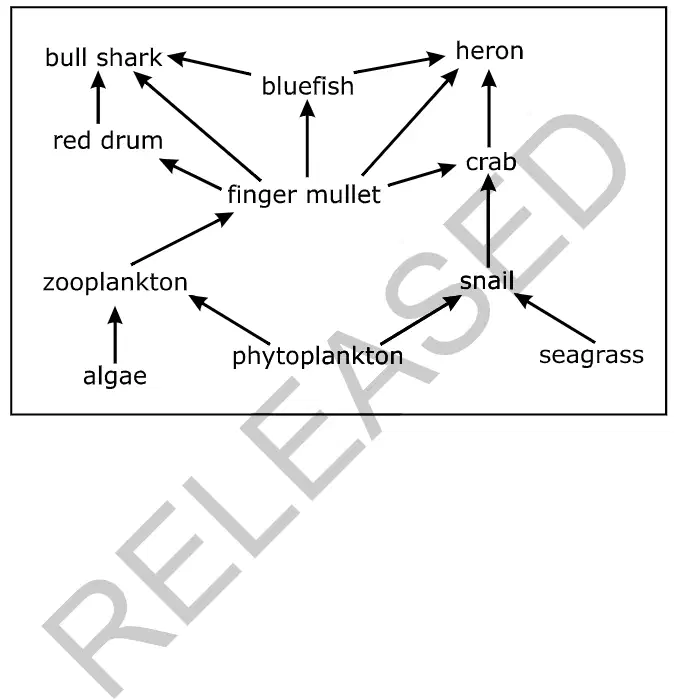
Which organism is at the center of the estuary food web?
finger mullet
blue crab
oyster
seagrass
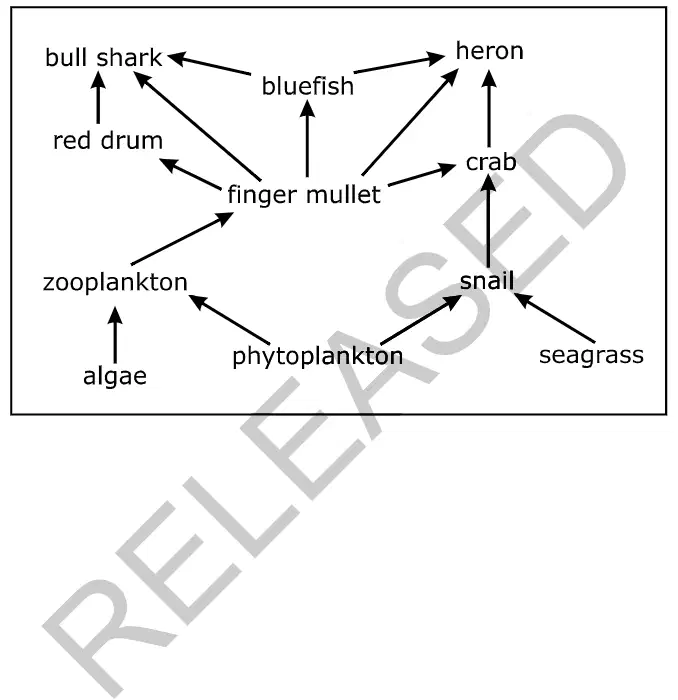
Refer to the passage and the Figure 2: Estuary Food Web diagram. Which of the following organisms is a producer in the estuary food web?
bluefish
algae
crab
bull shark
How does the cellular membrane of the finger mullet’s cell contribute to homeostasis within the cell?
It serves as a solid membrane, allowing no materials to pass into and out of the cell.
It serves as an impermeable membrane, allowing only water to move into and out of the cell.
It serves as a selectively permeable membrane, allowing water and other materials to move into and out of the cell as needed.
It serves as a permeable membrane, allowing any material to easily pass into and out of the cell, whether needed or not.
A researcher hypothesizes that water will move out of the cell more quickly when the concentration of salt in the water outside the cell is greater. Which experiment would best test this hypothesis?
A researcher places three cells of the same type in varying concentrations of salt water. Then the researcher measures the size of each cell every minute during a 5-minute period of time.
A researcher places three cells of the same type in the same concentration of salt water. Then the researcher measures the size of each cell every minute during a 5-minute period of time.
A researcher places cells from three different fish in varying concentrations of salt water. Then the researcher measures the size of each cell at the end of a 5-minute period of time.
A researcher places cells from three different fish in the same concentration of salt water. Then the researcher measures the size of each cell at the end of a 5-minute period of time.
What would most likely occur if a new insect species were introduced into North Carolina’s ecosystems?
The new insect species would maintain the stability of the area.
The new insect species would have less reproductive success.
The new insect species would be eaten by natural predators.
The new insect species would increase competition for food resources.
Which human action could best reduce global climate change?
increasing the ozone layer
converting to carbon-free energy
monitoring smog levels in urban areas
protecting fresh water against pollution
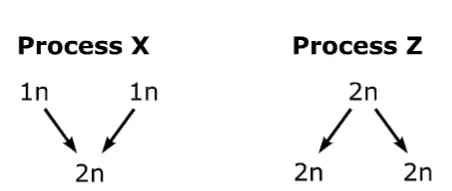
These diagrams illustrate two reproductive processes. Process X: 1n + 1n → 2n Process Z: 2n → 2n + 2n Which statement best explains the processes?
Process X results in cells that have more genetic variation than those produced through Process Z.
Process X results in cells that have less genetic variation than those produced through Process Z.
Process X results in 1 cell that has the exact same DNA as the parent cells, and Process Z results in 2 cells that have the exact same DNA as the parent cell.
Process X results in 1 cell that has the exact same DNA as the parent cells, while Process Z results in 2 cells that have different DNA from the parent cell.
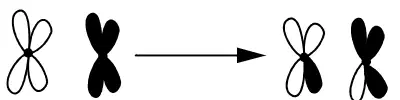
Which choice best describes the source of genetic variation?
crossing-over
gene mutation
nondisjunction
independent assortment
How will melting of the polar ice caps affect the animal populations in the Arctic region?
Arctic organisms will have more available oxygen.
Arctic organisms will have more available drinking water.
Polar bears will find it easier to find food and habitat resources.
Polar bears will find it more difficult to find food and habitat resources.
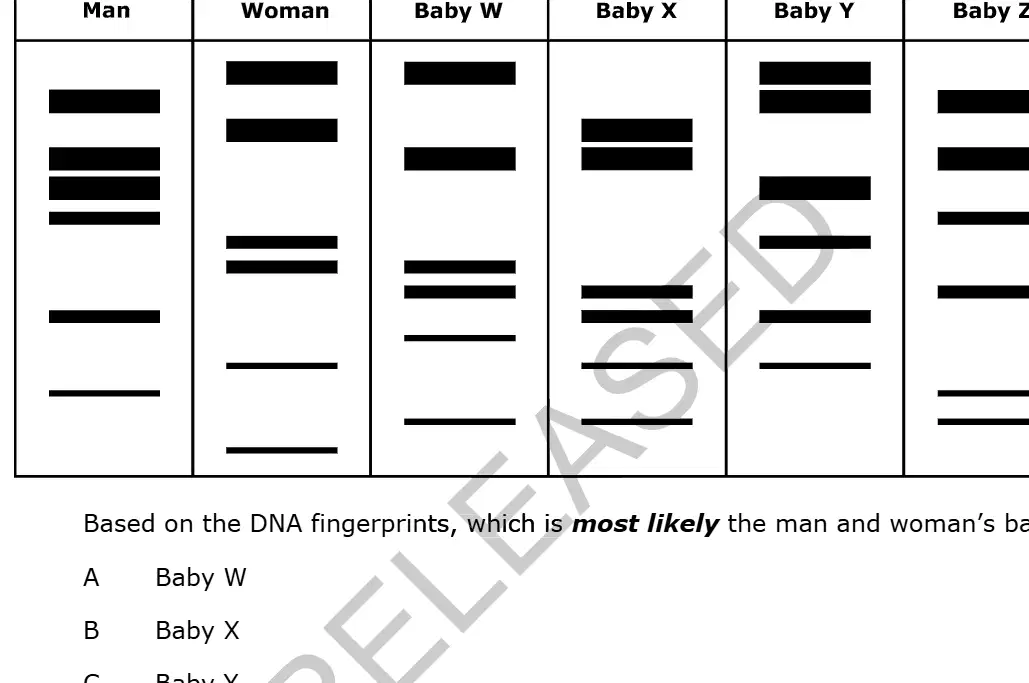
This diagram represents the DNA fingerprint for a man, a woman, and four different babies, one of which is the man and woman’s baby. Based on the DNA fingerprints, which is most likely the man and woman’s baby?
Baby W
Baby X
Baby Y
Baby Z
A farmer reads this information: • A bacterium has a gene that allows it to create pesticide. • The gene has been transferred into a corn plant, allowing the corn plant to produce pesticide. Why might a farmer choose to plant genetically engineered corn?
to spread mutations from the corn to other crops
to reduce chemical use during the growing season
to allow the fields to be used for more than one season
to decrease the amount of land needed to grow the corn crop
A patient takes medication to treat strep throat caused by the bacteria Streptococcus pyogenes. Which statement best describes the reproductive success of the bacteria after the patient has taken the medication for a period of time?
The bacteria may develop resistance to the medication and continue to reproduce.
The patient will require a vaccination to prevent the bacteria from reproducing.
The patient’s immune system will produce antibodies that prevent the bacteria’s reproduction.
The medication may serve as an energy source and cause rapid reproduction of the bacteria.
Which information provides the most reliable evidence of common ancestry for four species of mammals?
embryological forms
nucleotide sequences
anatomical structures
homologous structures
A marine biology program has monitored a population of sharks in the southern Atlantic Ocean for over 100 years. The population has been very successful over this period of time. The biologists hypothesize that natural selection has been acting on the population, increasing its ability to thrive. Select (click) the three observations that best support the hypothesis.
The sharks have been unable to adapt to changes in their environment.
The average number of births has been greater than the average number of deaths in the population.
Individuals differ from one another as a result of genetic diversity.
Individuals are very similar to one another as a result of genetic continuity.
The sharks have been able to adapt to changes in their environment.
A population of rabbits lives in a forest. Some of the rabbits have a mutation that results in extra-powerful hind legs. What will most likely happen to the population of rabbits if a population of wolves is introduced to the forest?
The number of rabbits with normal legs will increase over time because their DNA is not mutated.
The number of rabbits with powerful legs will increase over time because they can better escape the wolves.
The total number of rabbits will decrease over time because all rabbits have an equal chance of getting eaten.
The total number of rabbits will decrease over time because most rabbits will have induced mutations that reduce their survival rate.
An enzyme has an optimal temperature of 25°C. During an experiment, which action would most likely increase the rate of the reaction?
decreasing the light intensity
increasing the temperature above 25°C
decreasing the amount of substrate available
increasing the temperature from 15°C to 25°C
What is the characteristic of Species 1 (Larix laricina)?
short needles clustered in pairs
long needles in bundles of five
broad leaves with serrated edges
scale-like leaves arranged oppositely
What is the scientific name of the species with five needles in each cluster?
Pinus strobus
Pinus sylvestris
Pinus taeda
Pinus nigra
What is the characteristic of Species 3 (Pinus resinosa)?
long needles clustered in pairs
short needles in groups of five
broad leaves with serrated edges
single needle per fascicle
What is the characteristic of Species 4 (Pinus banksiana)?
more than 5 needles in each cluster
needles are flat and broad
leaves are compound and alternate
flowers are large and showy
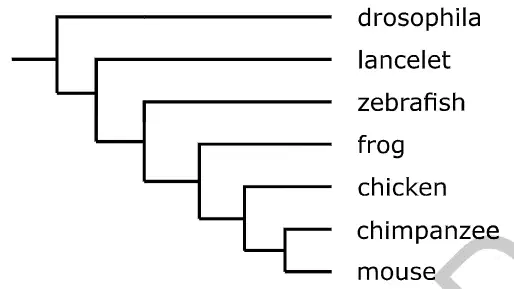
Based on the phylogenetic tree, which two organisms share the most recent common ancestor?
drosophila and lancelet
frog and chicken
chicken and mouse
chimpanzee and frog
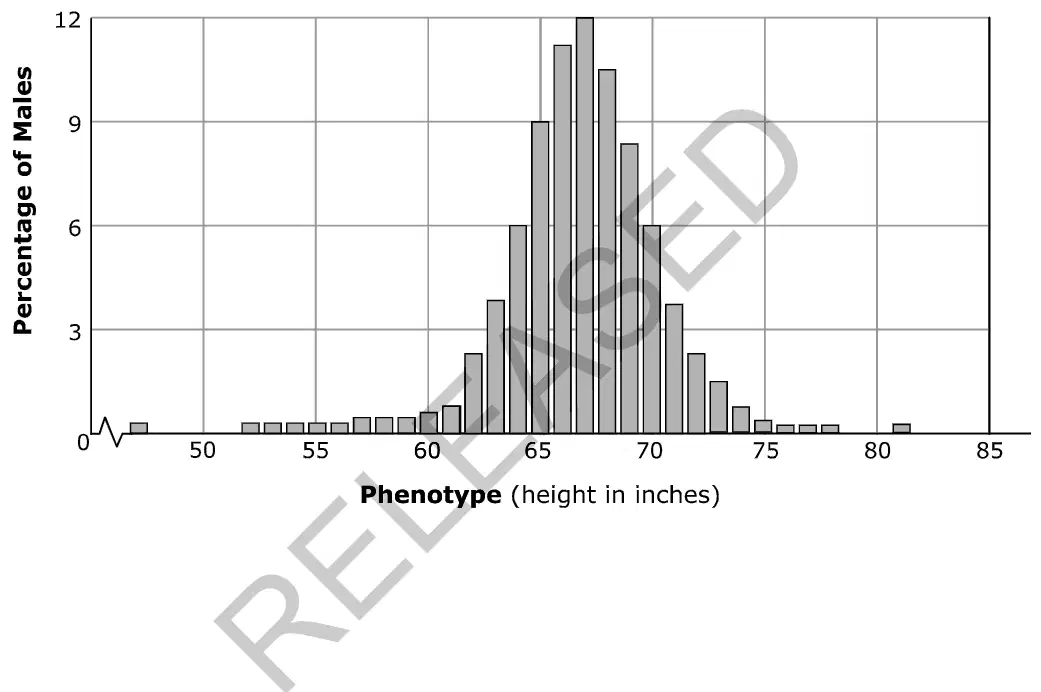
Based on Figure 2, what is the most common height range for males?
55-60 inches
60-65 inches
65-70 inches
75-80 inches
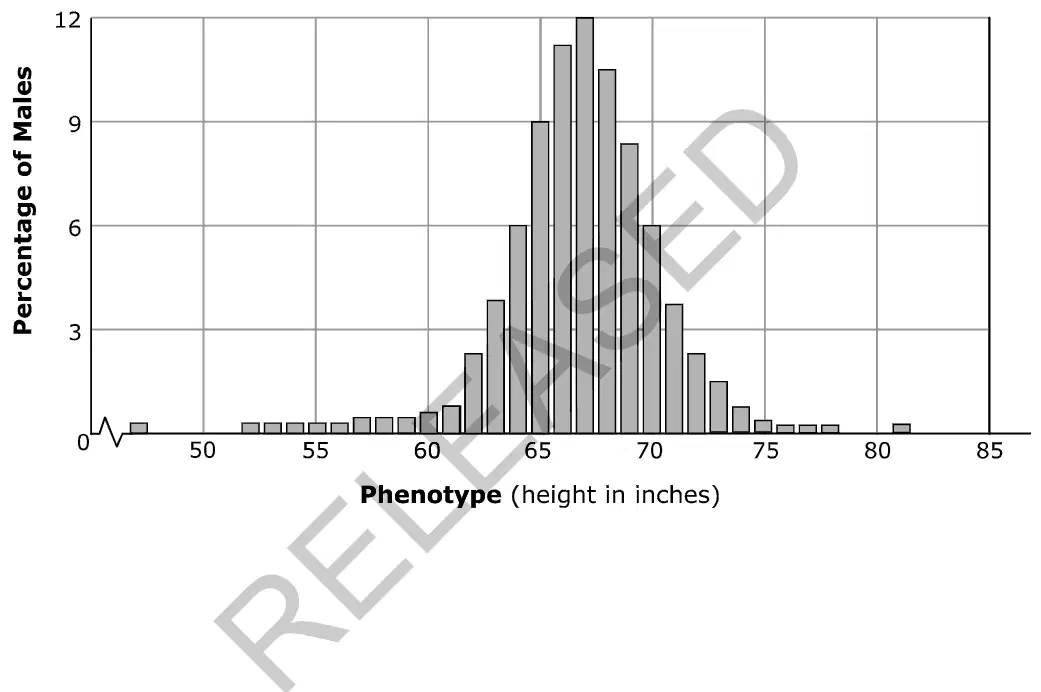
According to Figure 2, what percentage of males are approximately 68 inches tall?
About 10%
About 2%
About 25%
About 50%
The plants in an ecosystem complete both photosynthesis and cellular respiration. How do the two processes differ from one another in terms of energy?
Photosynthesis stores solar energy in the chemical bonds of carbohydrates, while cellular respiration releases energy from the chemical bonds in carbohydrates to produce ATP molecules.
Photosynthesis releases energy from the chemical bonds in carbohydrates to produce ATP molecules, while cellular respiration stores solar energy in the chemical bonds of carbohydrates.
Photosynthesis stores solar energy in ATP molecules for cellular use, while cellular respiration produces ATP by breaking inorganic chemical bonds.
Photosynthesis stores solar energy in high-energy chemical bonds of inorganic compounds, while cellular respiration releases solar energy to heat cellular structures.
How is a DNA molecule arranged?
double-stranded with alternating deoxyribose and phosphate groups on the sides with adenine, guanine, cytosine, and thymine in the middle
double-stranded with alternating deoxyribose and phosphate groups on the sides with adenine, guanine, cytosine, and uracil in the middle
double-stranded with alternating ribose and phosphate groups on the sides with adenine, guanine, cytosine, and thymine in the middle
double-stranded with alternating ribose and phosphate groups on the sides with adenine, guanine, cytosine, and uracil in the middle
Enzyme X is needed for a reaction to occur. What is the most likely result when additional Enzyme X is added to the reaction?
an increase in the reaction rate
a decrease in the reaction rate
a decrease in the product concentration
an increase in the substrate concentration
Hummingbirds thrive in warm, moist climates, and their primary source of food is nectar from flowering plants. A three-year drought is expected in an ecosystem. How will this most likely affect the hummingbird population in that ecosystem?
The hummingbirds will increase their reproductive rate in order to ensure enough individuals survive.
The hummingbirds will decrease their reproductive rate in order to decrease genetic diversity within the population.
The hummingbirds will immediately adapt to eat new food sources, increasing the overall survival rate of the population.
The hummingbirds will struggle to find food, and only those that can adapt to new food sources will survive.
This chart shows characteristics of four different cells observed under a microscope. Which is most likely a prokaryotic cell?
Cell 1
Cell 2
Cell 3
Cell 4
What is the significance of three consecutive nucleotides in DNA?
They code for one amino acid.
They code for three amino acids.
They code for one complete protein.
They code for three complete proteins.
A cell experiences an error during the cell cycle, causing it to go through cytokinesis before mitosis. Which statement best describes the new cells?
The new cells will be double the size of the original cell.
The new cells will have twice as much DNA as the original cell.
The new cells will have no DNA or organelles but will continue progressing through the cell cycle.
The new cells will have an incorrect amount of DNA and organelles, and will likely experience cell death.
Among birds, some skin cells grow feathers when they mature, while other skin cells grow scales at maturity. Which statement best explains this difference?
Skin cells exposed to colder environments grow feathers, while skin cells exposed to wet environments grow scales.
While all cells have the same DNA, specialized cells express certain traits that produce feathers or scales.
Skin cells that have feathers are diploid, while skin cells that make scales are haploid.
Some skin cells have different DNA to build structures like feathers and scales.
Which transfer represents photosynthesis?
A. 1
B. 2
C. 3
D. 4
A group of students completed two experiments. Their notes are below: Experiment 1: • Hydrogen peroxide was poured on a slice of raw potato. • The peroxide bubbled vigorously. • The peroxide was broken down into water and oxygen. Experiment 2: • A slice of raw potato was heated and then hydrogen peroxide was poured on it. • There was no visible reaction. Which statement explains the results of these experiments?
A. Heating the potato had no effect on the potato enzymes.
B. Heating the potato caused the hydrogen peroxide to evaporate, so the reaction did not occur.
C. Heating the potato caused the potato enzymes to release the water and oxygen from the hydrogen peroxide.
D. Heating the potato caused a shape change in the potato enzymes, so they could no longer function properly.
The vacuole allows the plant cell to store water for later use in photosynthesis. A mutation occurs and the size of the vacuole decreases. What effect will this have on the rate of photosynthesis in the cell?
The vacuole will be less able to hold water, decreasing the rate of photosynthesis.
The vacuole will be more able to hold water, increasing the rate of photosynthesis.
The cell will be able to take in more water, decreasing the rate of photosynthesis.
The cell will be able to release more water, increasing the rate of photosynthesis.
What is the structure labeled as the outer boundary of the cell?
Nucleus
Cellular membrane
Salt particle
Brackish water
Fill in the blank: In a high-salinity environment, the cells of finger mullets must adjust by either taking in water or _______ it.
releasing
absorbing
storing
filtering
Which organism is at the center of the estuary food web?
finger mullet
blue crab
oyster
seagrass
Refer to the passage and the Figure 2: Estuary Food Web diagram. Which of the following organisms is a producer in the estuary food web?
bluefish
algae
crab
bull shark
How does the cellular membrane of the finger mullet’s cell contribute to homeostasis within the cell?
It serves as a solid membrane, allowing no materials to pass into and out of the cell.
It serves as an impermeable membrane, allowing only water to move into and out of the cell.
It serves as a selectively permeable membrane, allowing water and other materials to move into and out of the cell as needed.
It serves as a permeable membrane, allowing any material to easily pass into and out of the cell, whether needed or not.
A researcher hypothesizes that water will move out of the cell more quickly when the concentration of salt in the water outside the cell is greater. Which experiment would best test this hypothesis?
A researcher places three cells of the same type in varying concentrations of salt water. Then the researcher measures the size of each cell every minute during a 5-minute period of time.
A researcher places three cells of the same type in the same concentration of salt water. Then the researcher measures the size of each cell every minute during a 5-minute period of time.
A researcher places cells from three different fish in varying concentrations of salt water. Then the researcher measures the size of each cell at the end of a 5-minute period of time.
A researcher places cells from three different fish in the same concentration of salt water. Then the researcher measures the size of each cell at the end of a 5-minute period of time.
What would most likely occur if a new insect species were introduced into North Carolina’s ecosystems?
The new insect species would maintain the stability of the area.
The new insect species would have less reproductive success.
The new insect species would be eaten by natural predators.
The new insect species would increase competition for food resources.
Which human action could best reduce global climate change?
increasing the ozone layer
converting to carbon-free energy
monitoring smog levels in urban areas
protecting fresh water against pollution
These diagrams illustrate two reproductive processes. Process X: 1n + 1n → 2n Process Z: 2n → 2n + 2n Which statement best explains the processes?
Process X results in cells that have more genetic variation than those produced through Process Z.
Process X results in cells that have less genetic variation than those produced through Process Z.
Process X results in 1 cell that has the exact same DNA as the parent cells, and Process Z results in 2 cells that have the exact same DNA as the parent cell.
Process X results in 1 cell that has the exact same DNA as the parent cells, while Process Z results in 2 cells that have different DNA from the parent cell.
Which choice best describes the source of genetic variation?
crossing-over
gene mutation
nondisjunction
independent assortment
How will melting of the polar ice caps affect the animal populations in the Arctic region?
Arctic organisms will have more available oxygen.
Arctic organisms will have more available drinking water.
Polar bears will find it easier to find food and habitat resources.
Polar bears will find it more difficult to find food and habitat resources.
This diagram represents the DNA fingerprint for a man, a woman, and four different babies, one of which is the man and woman’s baby. Based on the DNA fingerprints, which is most likely the man and woman’s baby?
Baby W
Baby X
Baby Y
Baby Z
A farmer reads this information: • A bacterium has a gene that allows it to create pesticide. • The gene has been transferred into a corn plant, allowing the corn plant to produce pesticide. Why might a farmer choose to plant genetically engineered corn?
to spread mutations from the corn to other crops
to reduce chemical use during the growing season
to allow the fields to be used for more than one season
to decrease the amount of land needed to grow the corn crop
A patient takes medication to treat strep throat caused by the bacteria Streptococcus pyogenes. Which statement best describes the reproductive success of the bacteria after the patient has taken the medication for a period of time?
The bacteria may develop resistance to the medication and continue to reproduce.
The patient will require a vaccination to prevent the bacteria from reproducing.
The patient’s immune system will produce antibodies that prevent the bacteria’s reproduction.
The medication may serve as an energy source and cause rapid reproduction of the bacteria.
Which information provides the most reliable evidence of common ancestry for four species of mammals?
embryological forms
nucleotide sequences
anatomical structures
homologous structures
A marine biology program has monitored a population of sharks in the southern Atlantic Ocean for over 100 years. The population has been very successful over this period of time. The biologists hypothesize that natural selection has been acting on the population, increasing its ability to thrive. Select (click) the three observations that best support the hypothesis.
The sharks have been unable to adapt to changes in their environment.
The average number of births has been greater than the average number of deaths in the population.
Individuals differ from one another as a result of genetic diversity.
Individuals are very similar to one another as a result of genetic continuity.
The sharks have been able to adapt to changes in their environment.
A population of rabbits lives in a forest. Some of the rabbits have a mutation that results in extra-powerful hind legs. What will most likely happen to the population of rabbits if a population of wolves is introduced to the forest?
The number of rabbits with normal legs will increase over time because their DNA is not mutated.
The number of rabbits with powerful legs will increase over time because they can better escape the wolves.
The total number of rabbits will decrease over time because all rabbits have an equal chance of getting eaten.
The total number of rabbits will decrease over time because most rabbits will have induced mutations that reduce their survival rate.
An enzyme has an optimal temperature of 25°C. During an experiment, which action would most likely increase the rate of the reaction?
decreasing the light intensity
increasing the temperature above 25°C
decreasing the amount of substrate available
increasing the temperature from 15°C to 25°C
What is the characteristic of Species 1 (Larix laricina)?
short needles clustered in pairs
long needles in bundles of five
broad leaves with serrated edges
scale-like leaves arranged oppositely
What is the scientific name of the species with five needles in each cluster?
Pinus strobus
Pinus sylvestris
Pinus taeda
Pinus nigra
What is the characteristic of Species 3 (Pinus resinosa)?
long needles clustered in pairs
short needles in groups of five
broad leaves with serrated edges
single needle per fascicle
What is the characteristic of Species 4 (Pinus banksiana)?
more than 5 needles in each cluster
needles are flat and broad
leaves are compound and alternate
flowers are large and showy
Based on the phylogenetic tree, which two organisms share the most recent common ancestor?
drosophila and lancelet
frog and chicken
chicken and mouse
chimpanzee and frog
Based on Figure 2, what is the most common height range for males?
55-60 inches
60-65 inches
65-70 inches
75-80 inches
According to Figure 2, what percentage of males are approximately 68 inches tall?
About 10%
About 2%
About 25%
About 50%
The plants in an ecosystem complete both photosynthesis and cellular respiration. How do the two processes differ from one another in terms of energy?
Photosynthesis stores solar energy in the chemical bonds of carbohydrates, while cellular respiration releases energy from the chemical bonds in carbohydrates to produce ATP molecules.
Photosynthesis releases energy from the chemical bonds in carbohydrates to produce ATP molecules, while cellular respiration stores solar energy in the chemical bonds of carbohydrates.
Photosynthesis stores solar energy in ATP molecules for cellular use, while cellular respiration produces ATP by breaking inorganic chemical bonds.
Photosynthesis stores solar energy in high-energy chemical bonds of inorganic compounds, while cellular respiration releases solar energy to heat cellular structures.