
 Worksheets
World Geo Midterm 2025-2026
Total questions: 42
Worksheet time: 21mins
Name
Class
Date
1.
What question do we ask when we look at LOCATION?
a)
Where is it?
b)
What’s the difference?
c)
What is it like there?
d)
How are ideas, people, and places connected?
2.
Someone tells you about the population density, languages spoken, landforms, and animals in Virginia. Which theme of geography is he or she most likely talking about?
a)
location
b)
place
c)
movement
d)
human-environment
3.
Which of the following is an example of modifying the environment?
a)
city planners constructing highways and buildings
b)
Ancient Egyptian farmers waiting for the Nile to flood
c)
residents of Chicago wearing heavy coats in the winter
d)
a student describing the absolute location of Chicago
4.
People depend on the environment for ______.
a)
food, language, and region
b)
clothing, culture, and politics
c)
gold, politics, and shelter
d)
food, clothing, and shelter
5.
You read that plastic products are made in the U.S. and shipped around the globe. Which theme are you most likely reading about?
a)
region
b)
location
c)
movement
d)
place
6.
Which theme of geography studies how and why places are similar to other places?
a)
place
b)
region
c)
human-environment interaction
d)
location
7.
What two themes of geography best fit the statement, "The Sonoran Desert has very unusual plants and animals?
a)
Movement and Place
b)
Region and Human Environment Interaction
c)
Place and Region
d)
Location and Region
8.
What are some things that can be "moved"?
a)
People
b)
Goods
c)
Resources
d)
Ideas
e)
All of the above
9.
Across the street from the Dairy Queen at the VFW is an example of?
a)
absolute location
b)
relative location
10.
Texting is an example of which theme?
a)
human-environment interaction
b)
movement
c)
place
d)
location
11.
The Great Lakes States, Northern Michigan, and the Lake Huron coast are all examples of what theme?
a)
region
b)
movement
c)
place
d)
location
12.
What is geography?
a)
Economics, history, and civics
b)
The study of earth, and how people interact with earth
c)
The study of life
d)
The study of fossils
13.
Which one is an example of physical geography?
a)
Landforms
b)
Language
c)
Buildings
d)
Food
14.
Which is one example of a human characteristic?
a)
Weather
b)
Buildings
c)
Plants
d)
Mountains
15.
What are the three ways we interact with our Earth?
a)
physical, mental, natural
b)
depend, adapt, change
c)
latitude, longitude, parallels
d)
geography, history, civics
16.
Which are examples of Geographic Conditions?
a)
Water, fertile soil, mountains
b)
Trade, War, Pollution
17.
Which are examples of Geographic Connections?
a)
Water, fertile soil, mountains
b)
Trade, War, Pollution
18.
How are we, as members of a global society, connected?
a)
Music, sports, technology, war, goods and services, pollution
b)
electoral college, physical geography, family
c)
push and pull factors
d)
global grid
19.
The most accurate way, meaning no distortion, to show places on earth is:
a)
A globe
b)
Map
c)
GPS
d)
Looking back from the Moon
20.
What is the problem with creating a map?
a)
They are difficult to draw
b)
Your handwriting must be neat
c)
Distortion occurs when taking a 3D object and making it 2D
d)
It’s impossible
21.
True or False: In a Mercator projection, Greenland is way bigger because of distortion.
a)
True
b)
False
22.
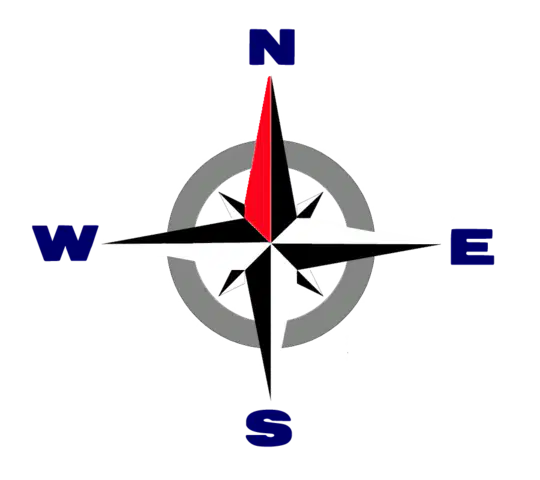
What is the name of the tool pictured below?
a)
Spatial Scale
b)
Intermediate Rose
c)
Compass
d)
Compass Rose
23.
The equator is a line of?
a)
Longitude
b)
Latitude
c)
Symmetry
d)
Equidistant
24.
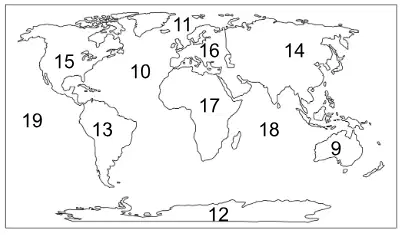
Africa
a)
13
b)
18
c)
15
d)
17
25.
South America
a)
13
b)
18
c)
15
d)
17
26.
North America
a)
13
b)
18
c)
15
d)
17
27.
Australia
a)
16
b)
12
c)
13
d)
9
28.
Asia
a)
14
b)
12
c)
13
d)
9
29.
Europe
a)
14
b)
16
c)
13
d)
9
30.
Antarctica
a)
14
b)
16
c)
13
d)
12
31.
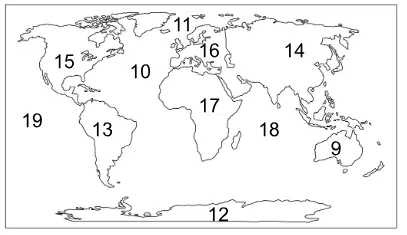
Atlantic Ocean
a)
11
b)
10
c)
9
d)
19
32.
Arctic Ocean
a)
11
b)
10
c)
9
d)
19
33.
Indian Ocean
a)
11
b)
10
c)
9
d)
18
34.
Pacific Ocean
a)
11
b)
10
c)
19
d)
18
35.
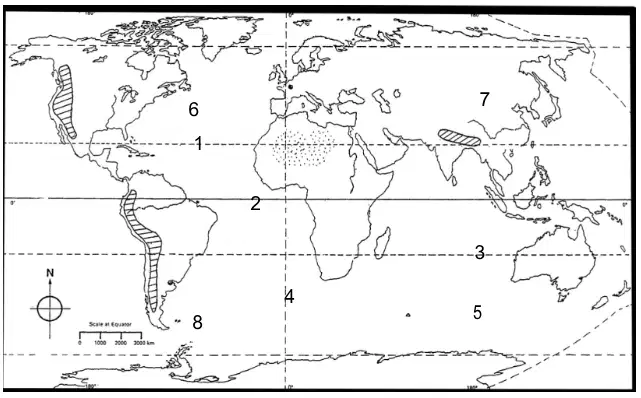
Tropic of Cancer
a)
2
b)
3
c)
1
d)
4
36.
Prime Meridian
a)
2
b)
3
c)
1
d)
4
37.
Equator
a)
2
b)
3
c)
1
d)
4
38.
Tropic Capricorn
a)
2
b)
3
c)
1
d)
4
39.
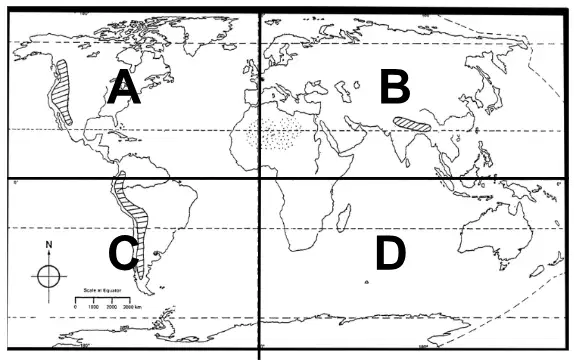
Northern and Eastern Hemisphere
a)
A
b)
B
c)
C
d)
D
40.
Southern and Eastern Hemisphere
a)
A
b)
B
c)
C
d)
D
41.
Southern and Western Hemisphere
a)
A
b)
B
c)
C
d)
D
42.
Northern and Western Hemisphere
a)
A
b)
B
c)
C
d)
D
100 %

