
Font size
 Worksheets
HBS Midyear Exam Review
Total questions: 100
Worksheet time: 50mins
Which term refers to the front or stomach side of the body?
Ventral
Dorsal
Cranial
Vertebral
Which term refers to toward the midline of the body?
Lateral
Deep
Medial
Superficial
Which term refers to away from the point of attachment?
Distal
Proximal
Inferior
Superior
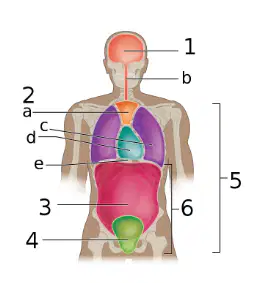
Using the labeled body-cavity image, what is labeled as Number 1?
cranial cavity
pelvic cavity
thoracic cavity
pleural cavity
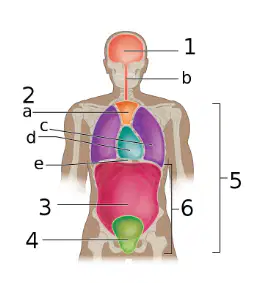
Using the labeled body-cavity image, what is labeled as Number 4?
cranial cavity
pelvic cavity
thoracic cavity
pleural cavity
The reference position for all body directional terms is the?
Sitting position
Anatomical position
Prone position
Supine position
What type of plane/cut divides the body into upper and lower portions?
Transverse
Sagittal
Coronal
Midsagittal/median
Structurally there are many levels to the human body. List all of the levels in the sequence from smallest to largest.
tissue, cell, organelle, organ, organ system, organism
organism, organ system, organ, tissue, cell, organelle
cell, tissue, organ, organ system, organism
Organ system, organelle, organism, tissue
From ankle to toe, what is the order of bones?
tarsals, metatarsals, phalanges
phalanges, metatarsals, tarsals
metatarsals, phalanges, tarsals
tarsals, phalanges, metatarsals
When the joint is extended beyond anatomical position it is called?
Abduction
Extension
Hyperextension
Medial rotation
Which of the following is a long bone?
Patella
Carpal
Femur
Vertebrae
Which part of the muscle is the part that moves?
Origin
Ligament
Bone
Insertion
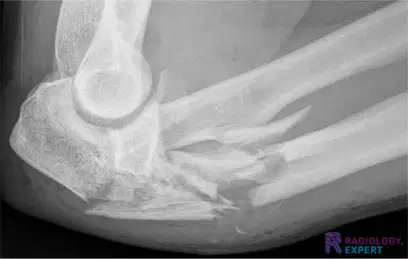
What kind of fracture is seen in the X Ray to the right?
Traverse
Spiral
Comminuted
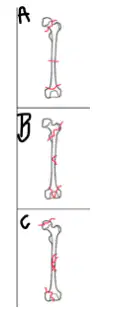
For question 14 use the following image below: Which of these images shows a 'transverse, extra-articular, femoral neck' fracture?
A
B
C
Which of the following options is the correct order of fracture healing? I) Hematoma Formation II) Bone Remodeling III) Bony Callus Formation IV) Fibrocartilage Callus Formation
IV,III,II,I
I,IV,III,II
III,IV,II,I
I,IV,III,II
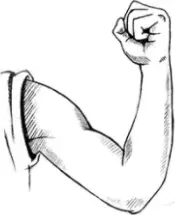
Identify the joint action being performed.
Flexion
Abduction
Adduction
Extension
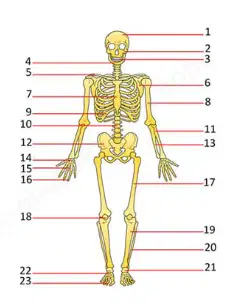
Use the image to the right to answer: Number 18 is sometimes called the kneecap, but what is its scientific name?
ulna
patella
scapula
femur
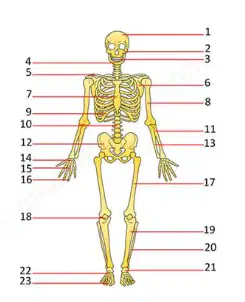
Use the image to the right to answer: Number 2 is referring to which bone?
Zygomatic
Mandible
Parietal
Nasal
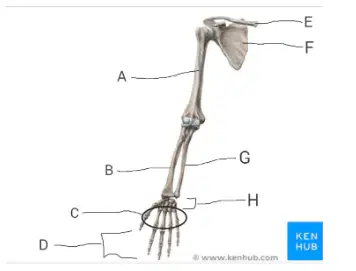
Use the image to the right to answer: Identify bone C in the image.
Tarsals
Phalanges
Metacarpals
Carpals
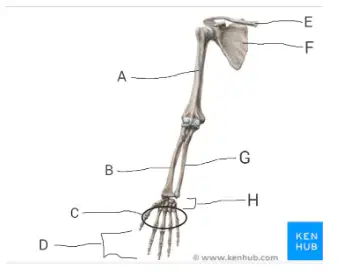
Use the image to the right to answer: Identify bone F in the image.
Clavicle
Scapula
Ulna
Cervical Vertebrae
Orbicularis Oris…
Surrounds the neck
Surrounds the eyes
Surrounds the mouth
Surrounds the ears
Case study: A 48-year-old man comes into your office complaining of severe right knee pain for 8 hours; the knee became warm, swollen and tender by morning. In what region is the man's pain?
Lumbar
Patellar
Buccal
Coxal
Case study: Imaging of the knee joint is ordered for cell count, culture and crystal analysis, and a CT scan is requested to take a look at the cartilage, ligaments and tendons in the joint. What type of tissue are you interested in seeing on the scan?
Epithelial
Connective
Muscular
Nervous
Case study: A year ago, he had some pain and swelling at the base of his big toe on the left foot. A year ago, he experienced pain in which of these?
His most medial toe on his left foot.
His most lateral toe on his left foot.
His proximal toe on his left foot.
His distal toe on his left foot.
How many bones does an adult skeleton possess?
106
156
206
256
Region referring to the belly button?
Digital
Axillary
Umbilical
Inguinal
Region referring to the armpit?
Digital
Axillary
Umbilical
Inguinal
Region referring to the ankle?
Antecubital
Calcaneal
Cephalic
Occipital
Region referring to the cheek?
Buccal
Lumbar
Orbital
Sternal
Which lower leg bone is found on the medial side of the body?
femur
humerus
fibula
tibia
Smooth, skeletal and cardiac are examples of
Epithelial tissue
Muscle tissue
Nervous tissue
Connective tissue
What is the major muscle on the posterior arm?
Bicep
Tricep
Brachi
Deltoid
The deltoid muscle has a _____________ shape.
Trapezoid
Circle/orb
Triangle
Square
During contraction, cross bridges form between?
Fascicles
Actin and myosin
Sarcomeres
Acetylcholine
After the powerstroke, the actin-myosin cross-bridge remains intact until ____ binds to the myosin head. After this, the myosin will detach from actin.
Calcium
ATP
ADP
Troponin
Which of the following lists the structures in order from smallest to largest?
muscle, myofibril, fascicle, myofilament
myofilament, muscle, myofibril, fascicle
myofibril, myofilament, muscle, fascicle
myofilament, myofibril, fascicle, muscle
Muscle Rule 2: Muscles always ______ to get shorter.
lengthen/elongate
pull/contract
push/force
pull/lengthen
Muscle Rule 3: The attachment that is stationary is known as the …
Origin
Insertion
Muscle Rule 4: Muscles that increase ventral angles are known as…
Flexors
Extensors
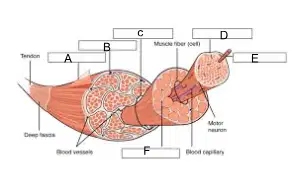
Use the labeled muscle cross-section image to answer: What is the structure labeled A?
Perimysium
Epimysium
Fascicle
Myofilament
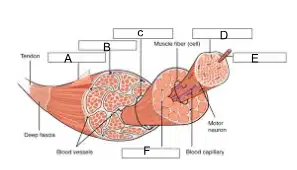
Use the labeled muscle cross-section image to answer: What is the structure labeled C?
Perimysium
Epimysium
Fascicle
Myofilament
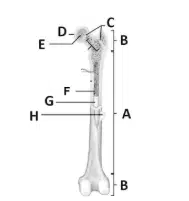
Refer to the labeled long-bone diagram: Letter D represents the covering of the ends of the bone at the joint. What is this known as?
Red bone marrow
Medullary cavity
Diaphysis
Articular cartilage
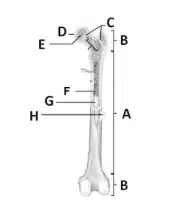
Refer to the labeled long-bone diagram: Which letter represents the periosteum of the bone?
A
H
B
E
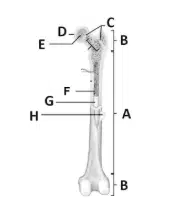
Refer to the labeled long-bone diagram: Letter E of the long bone is made up of what?
Spongy bone
Compact bone
Chondrocytes
Yellow bone marrow
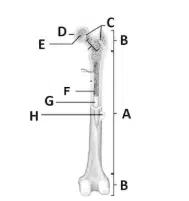
Refer to the labeled long-bone diagram: The epiphysis of the bone is represented by what letter?
A
B
C
D
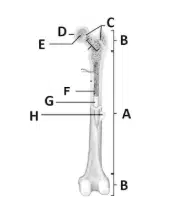
Refer to the labeled long-bone diagram: What letter represents the diaphysis/shaft of a long bone?
A
B
C
D
The ACL, PCL, and patellar tendon all attach to which bone?
Fibula
Tibia
Humerus
Ulna
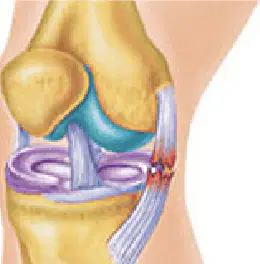
Using the knee image, identify the ligament where the injury mark is located.
ACL
PCL
MCL
LCL
What three long bones are associated with the patellar joint?
Humerus, radius, ulna
Humerus, tibia, fibula
Tibia, fibula, femur
Femur, radius, tibia
Which of the following is the goniometer used to measure?
BMI
Range of motion at a joint
Urine concentration
Muscle Mass
How many ureters does a person typically have?
One
Four
Three
Two
Filtering blood to remove excess water and waste products is the job of the:
Urinary bladder
Kidneys
Ureters
Intestine
Transporting urine from the kidneys to the bladder is the job of the:
Kidneys
Ureters
Urethra
Intestine
Normal urine color is:
Clear/Pale yellow
Amber
Green/Bright yellow
Red
Which of the following is NOT a function of the urinary system?
Osmoregulation
Absorb nutrients
Filter blood
Regulate blood volume
Which of the following is NOT a function of the kidneys?
Red blood cell production
Regulate pH
Absorption of fatty acids
Regulate ion concentrations
Blood flows out of the kidneys to the inferior vena cava via the...
Renal pelvis
Renal vein
Renal artery
Renal plexus
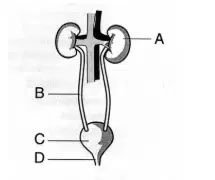
Using the labeled diagram of the urinary system, what is D pointing to?
Kidney
Bladder
Ureter
Urethra
The ____ is a sac-like muscular organ that stores urine until it is ready to be released from the body.
Gallbladder
Stomach
Urethra
Bladder
The triangular divisions of the medulla of the kidney are called?
renal papilla
renal cortex
renal pyramid
renal pelvis
The structural and functional unit of the kidney is called the?
renal pyramid
Nephron
Glomerulus
calyx
Which renal tubule structure consists of a straight descending limb, a hairpin turn, and a straight ascending limb?
Loop of Henle
Collecting duct
Distal convoluted tubule
Proximal convoluted tubule
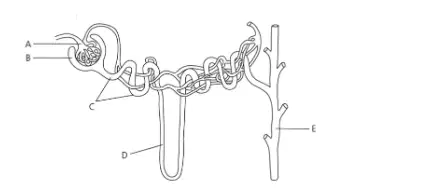
Use the labeled nephron diagram (structures A–E) to identify the part indicated: Name structure A.
Distal convoluted tubule
Proximal convoluted tubule
Collecting duct
Glomerulus
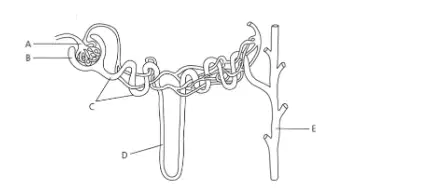
Use the labeled nephron diagram (structures A–E) to identify the part indicated: Name structure B.
Proximal convoluted tubule
Loop of Henle
Bowman's capsule
Collecting duct
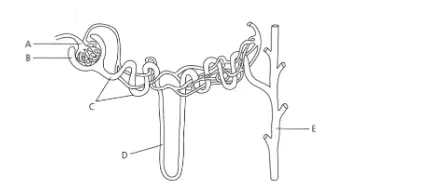
Use the labeled nephron diagram (structures A–E) to identify the part indicated: Name structure C.
Proximal convoluted tubule
Distal convoluted tubule
Loop of Henle
Glomerulus
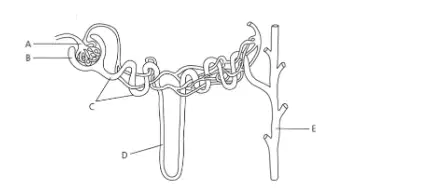
Use the labeled nephron diagram (structures A–E) to identify the part indicated: Name structure D.
Loop of Henle
Glomerulus
Bowman's capsule
Collecting duct
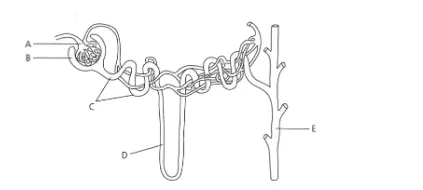
Use the labeled nephron diagram (structures A–E) to identify the part indicated: Name structure E.
Distal convoluted tubule
Glomerulus
Loop of Henle
Collecting duct
What is "filtrate"?
pre-urine filtered by the glomerulus
blood entering the nephron via the afferent arteriole
blood in the capillaries
urine filtered by the bladder
Which of the following is reabsorbed in the Proximal Convoluted Tubule?
water, salts, and glucose
medication, urea, and water
proteins, glucose, filtrate
water, salts, and urea
Which of the following would you NOT expect to find in urine?
Salts
Glucose
Urea
Medication
About how many nephrons are in each kidney?
10 nephrons
1 nephron
1 million nephrons
100 nephrons
In urinalysis, the ______ test measures the concentration of particles in the urine.
specific gravity
pH
ketones
protein
What is the name of the enzyme found in the digestive system that plays a huge role in digestion?
Catalase
Polysaccharides
Proteases
lipases
Protein digestion begins in the
Liver
Esophagus
Stomach
Mouth
Digestion is COMPLETED in the (site of major absorption)
Large intestine
Small intestine
Stomach
Liver
Which enzyme below is involved in the following chemical digestion process? FATS ----> FATTY ACIDS/GLYCEROL (think back to bio what is the macromolecule that makes up fats, that term is similar to one below)
Amylase
Pepsin
Lipase
Trypsin
What carries food from the pharynx to the stomach?
Trachea
Esophagus
Larynx
Bronchioles
What type of digestion takes place in the stomach?
Mechanical
Chemical
Both mechanical and chemical
Where does the process of digestion begin?
Small intestine
Esophagus
Stomach
Mouth
Where does the absorption of nutrients from food take place?
Stomach
Liver
large intestine
small intestine
What part of the digestive system mechanically and chemically breaks down food?
Mouth
Stomach
Both the mouth and stomach
What chemically breaks down food into smaller molecules?
Enzymes
Muscles of the stomach
Teeth
Proteins are broken down into _______.
Amino acids
Glucose
Glycerol
Fatty acids
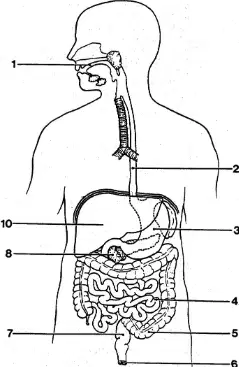
Using the image below answer the following questions (84-86). Which digestive organ is represented by the number 4?
Small intestine
Liver
Mouth
Pancreas

Using the image below answer the following questions (84-86). Which digestive organ is represented by number 10?
Small intestine
Liver
Mouth
Pancreas
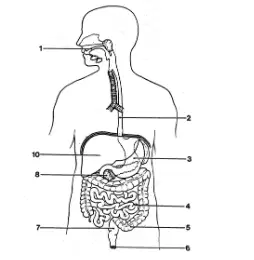
Using the image below answer the following questions (84-86). Which digestive organ is represented by number 2?
Esophagus
Trachea
Mouth
Stomach
Which of the following answers correctly sequences the pathway food takes from the beginning to end?
mouth, esophagus, stomach, large intestine, small intestine, rectum, anus
mouth, esophagus, stomach, small intestine, large intestine, rectum, anus
mouth, rectum, stomach, esophagus, large intestine, small intestine, anus
mouth, stomach, esophagus, rectum, small intestine, large intestine, anus
What is the primary purpose of an upper endoscopy (EGD)?
To screen for colorectal cancer
To examine the large intestine
To examine the upper digestive tract
To treat digestive tract problems without surgery
During a colonoscopy procedure, through which body opening is the colonoscope inserted?
Mouth
Nose
Anus
Ear
Which of the following is NOT a reason to perform an upper endoscopy?
Investigating abdominal pain
Evaluating trouble swallowing
Screening for colorectal cancer
Investigating heartburn
What is the correct sequence of anatomical structures that a colonoscope passes through during a colonoscopy?
Anus, sigmoid colon, ascending colon, transverse colon, descending colon
Anus, rectum, sigmoid colon, descending colon, transverse colon, ascending colon
Mouth, esophagus, stomach, duodenum
Anus, rectum, descending colon, sigmoid colon, transverse colon
Which of the following statements about endoscopic procedures is TRUE?
Both colonoscopy and upper endoscopy use non-invasive imaging techniques
Both procedures use a flexible tube with a light and camera
Upper endoscopy is primarily used to screen for colorectal cancer
Colonoscopy examines the upper portion of the digestive tract
What is the primary mechanism by which celiac disease damages the small intestine?
Direct bacterial infection of intestinal cells
Accumulation of gluten proteins in the intestinal wall
Immune system attack on the intestinal lining in response to gluten
Overproduction of digestive enzymes that erode the intestinal surface
What is the cause of polycystic kidney disease?
Bacterial overgrowth
Environmental factors
Mutations of genes
Viral infection
What is the significance of kidney size in diagnosing PKD?
Kidneys are irregular in shape due to infection
Kidneys are shrunken due to excessive scarring
Kidneys are enlarged due to multiple cysts that formed
The kidneys appear to be normal
The mode of inheritance for PKD is considered autosomal dominant. Suppose a man is heterozygous for PKD, and a woman does not have PKD. What is the probability that their child would have PKD?
100%
50%
25%
0%
What is Chronic Kidney Disease?
Inability of the kidneys to filter blood
Inability of the ureters to transport urine
Inability of the kidney to circulate blood
Inability of the bladder to store urine
What would be the best treatment option for someone who has Chronic Kidney Disease?
Urinalysis
Kidney Transplant
Biopsy
Endoscopy
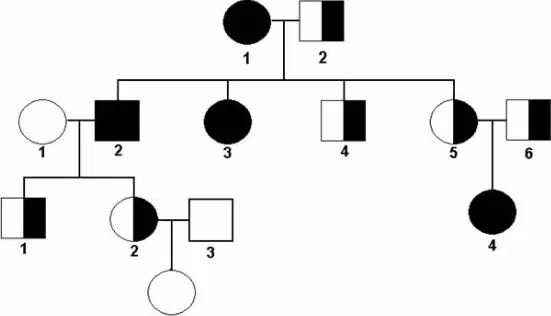
Use the Pedigree below to answer the following questions (99 and 100). How many children do the couple in generation I have together?
6
1
3
4
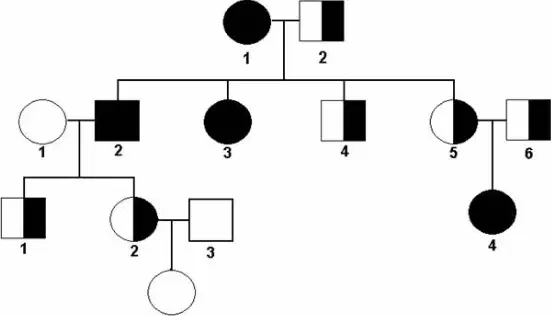
Use the Pedigree below to answer the following questions (99 and 100). How many females are carriers in the pedigree?
1
2
3
7

