
 Worksheets
Agile Methods Final Exam Cover
Total questions: 60
Worksheet time: 30mins
What Agile method is color coded?
Dynamic Development System
Feature Driven Development
Crystal Family of Methodologies
Kanban
In Crystal Family of Methodologies, the darker the color the _____ the methodology
Heavier
Faster
Slower
Quicker
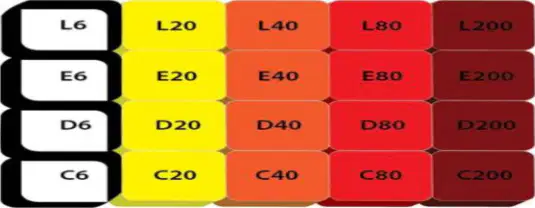
The comfort (C) in Figure 1 Shows ___
How many projects each team is comfortable to working (C)
How many hours each resource is comfortable working (C)
Team size each resource is comfortable to working (C)
Team size and budget each resource is comfortable to working (C)
The discretionary money (D) in Figure 1 Shows _____
How much money is required to complete the project
How many hours each resource is comfortable to work
The amount of money available(D) to use for that project
Team size & Life of the Project
The essentials money (E) in Figure 1 Shows _____
How much money is required to complete the project
How many hours each resource is comfortable to work
The amount of money available(D) to use for that project
Team size & Life of the Project
Crystal clear is designed for ____ projects
Large
Expensive
Medium-sized
Very small
Crystal orange is designed for _____ projects
Large
Expensive
Medium-sized
Very small
The roles and responsibilities in the crystal family of methods are divided into two categories namely ___ and ____.
Developer roles and Team roles
Real roles and Virtual roles
Executive sponsor roles and Team roles
I don't know
The fundamental difference between Crystal Clear and other Crystal methods is that ___
In Crystal Clear, there is more than one team in a project
In Crystal Clear, there could be two teams in a project
In Crystal Clear, there could be more than two teams in a project
In Crystal Clear, there is only one team in a project
In the crystal family of methodology, the ____ allocates or decides the allocation of the money for the project
Project Manager
Executive Sponsor
Ambassador User
Project Chief Accountant
In the crystal family of methodology, the ______ is the person who would be testing the final product
Ambassador User
Executive Sponsor
The lead designer
The programmer
In the crystal family of methodology, taking notes at the Project Planning and Review Meetings is the responsibility of the ____
Business expert
Manager
Coordinator
Technical writer and tester
All the following are virtual roles in crystal methodology except the ______
Business expert
Programmer
Coordinator
Technical writer and tester
All the following are Not real roles in crystal methodology except the _____
Business expert
Programmer
Coordinator
Technical writer and tester
All the following are real roles in crystal methodology except the ___
Lead designer
Programmer
Ambassador user
Coordinator
Which of the following is not a practice found in the crystal methodology?
Springing
Focus
Personal safety
Frequent delivery
Which of the following statements best describes the Crystal family of methodologies?
A set of rigid, prescriptive processes for software development
A collection of adaptive, people-focused methodologies that vary in weight
A single, heavy-weight methodology suitable for large, complex projects
A methodology that emphasizes extensive documentation and reporting
Which Crystal methodology is designed for very small projects with 1-6 team members?
Crystal Clear
Crystal Yellow
Crystal Orange
Crystal Red
Which of the following is not a core value of the Crystal family of methodologies?
Frequent delivery
Reflective improvement
Osmotic communication
Extensive documentation
Which of the following factors are considered when choosing the appropriate Crystal methodology for a project?
Team size
Project criticality
Comfort level of resources
All of the above
Which of the following is a key practice of Crystal methodologies?
Osmotic communication
Personal safety
Focus
All of the above
Which Crystal methodology is designed for medium-sized projects with 10-40 team members?
Crystal Clear
Crystal Orange
Crystal Red
Crystal Maroon
Which Crystal methodology is used for projects where there is a potential risk to human life?
Crystal Diamond
Crystal Sapphire
Crystal Red
Crystal Maroon
Which of the following is a potential disadvantage of the Crystal method?
It can be difficult to understand due to its flexibility.
It may not work well for projects with multiple working areas.
It can be difficult to move from one Crystal methodology to another.
All of the above.
Feature Driven Development organizes software development around making progress on ____.
Iteration
Section
features
Development
Features in the FDD context, though, are not necessarily product features in the commonly understood sense. They are, rather, more akin to ____.
Sprint in scrum
User stories in Scrum
Product owner
Customer
The FDD approach does not cover the entire software development process, but rather focuses on ____.
Testing and coding
Design and building phases
Iteration and sprints
All of the above
FDD does not require any specific process model to be used.
True
False
Maybe
I don't know
Feature- Driven Development (FDD) is a ____.
Only customer centric
Both customer and manager centric
Client-centric, architecture-centric, and pragmatic software process.
None of the above
The term "client" in FDD is used to represent what Agile Modeling refers to ____.
Process
Customer or stakeholders
Tools
Practices
What is feature in FDD?
Customer collaboration
Small client-valued function
All of the above
None of the above
The primary source of requirement in feature driven development is ____.
Features
Product backlog
Requirement document
Whiteboard
Which agile method among the following organizes software development by making progress on features?
Crystal Family of Methods
Dynamics Systems Development
Feature-Driven Development
Kanban
Which agile method among the following focuses on the design and building phases of the software development process?
Crystal Family of Methods
Dynamics Systems Development
Feature-Driven Development
Kanban
Feature- Driven Development (FDD) is a client- centric, architecture- centric, and ____.
Pragmatic software process
Requirement centric
All of the above
None of the above
Which of the following is among the feature- driven development process?
Plan by feature
Design by feature
Build by feature
All of the above
In the feature- driven development process, the creation of a high- level plan occurs during the ___ process.
Plan by feature
Design by feature
Build by feature
Build a feature list
In the feature- driven process, the design- by- feature and build- by- feature processes are iterative procedures, during which the selected features are produced.
False
True
Only in the design-by-feature process
Only in the build-by-feature process
The feature- driven methodology classifies its roles into three categories: key roles, supporting roles and ___.
Teams roles
Additional roles
Domain roles
None of the above
In feature- driven methodology, there are six key roles, five supporting roles, and three further/additional roles.
Maybe
I don't know
True
False
The three further roles that are needed in any project in feature- driven development are:
Testers, deployers, and technical writers
Programmers, managers, and testers
All of the above
None of the above
The feature- driven methodology practices include all the following except ____.
Domain Object Modeling
Individual class ownership
Feature Team
Toolsmith
The fundamental idea behind DSDM is that instead of fixing the amount of functionality in a product, and then adjusting time and resources to reach that functionality, it is preferred to fix _____, and then adjust the amount of functionality accordingly.
System resources
Time
Time and resources
Features
Dynamic Systems Development Method is a non-profit and nonproprietary framework for ____.
CAD development
RAD development
OOP development
All the above
Dynamic Systems Development Method is maintained by the ____.
DSDM consortium
RAD consortium
RAD association
RAD society
Which of the following is not Dynamic Systems Development Method process?
Feasibility study
Business study
Design study
Implementation
Which of the following processes of the dynamic system development method are sequential, and done only once?
Implementation
Feasibility study
Business study
B and C
Dynamic system development method approaches iterations as ____.
Timeboxes
Loops
Both timebox and loops
None of the above
In dynamic system development method, a timebox lasts for a predefined period of time, and the iteration has to end within the timebox.
It is timeframe not timebox
False
Iteration has to start within but not end within the timebox
True
In DSDM, a typical timebox duration is from a few days to
A few weeks
A few months
A few years
A few days
The _____ phase is where the suitability of DSDM for the given project is assessed.
feasibility study
business study
functional model iteration
design and build iteration
At what phase the decision is made, whether to use DSDM or not?
Business study
feasibility study
functional model iteration
design and build iteration
This is a phase where the essential characteristics of the business and technology are analyzed.
Business study
feasibility study
functional model iteration
design and build iteration
The phase is the first iterative and incremental phase. In every iteration, the contents and approach for the iteration are planned, the iteration gone through, and the results analyzed for further iterations.
Business study
feasibility study
functional model iteration
None of the above
The four further outputs of the functional model iteration are Prioritized functions, Functional prototyping review documents, Risk analysis of further development and ____.
Functional requirement
Model design
Coding
Non-functional requirement
This is where the system is mainly built.
design and build iteration
feasibility study
functional model iteration
implementation
This phase is where the system is transferred from the development environment into the actual production environment in the dynamic systems development method.
design and build iteration
feasibility study
functional model iteration
implementation
The ambassador user, adviser user, technical coordinator, and ___ are some of the roles and responsibilities of the people involved in the dynamic systems development method.
Visionary
Flow manager
System manager
Requirement engineer
The only development roles in the dynamic systems development method are the ____.
Programmers and Developers
Programmers and Testers
Developers and Senior Developers
System Designers and Architects
In the dynamic systems development method, a ____ defines the system architecture and is responsible for technical quality in the project.
Senior developer
Technical coordinator
Tester
Visionary user

