
Font size
 Worksheets
Thermodynamics: Enthalpy Calculations (UNIT 6)
Total questions: 92
Worksheet time: 1hrs 9mins
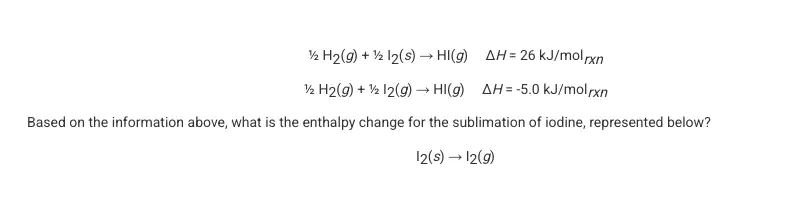
Q1
(a)
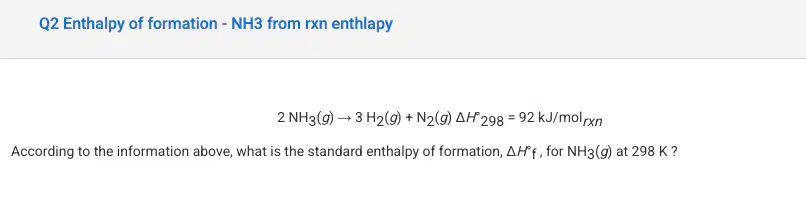
Q2
(a)
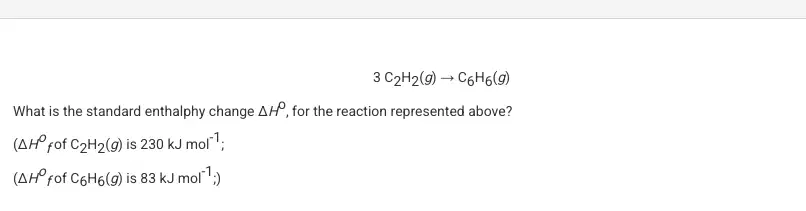
3.
(a)
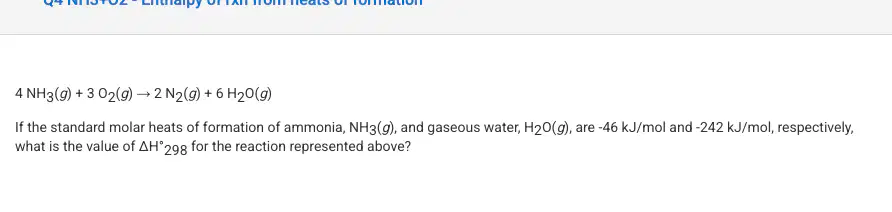
4.
(a)
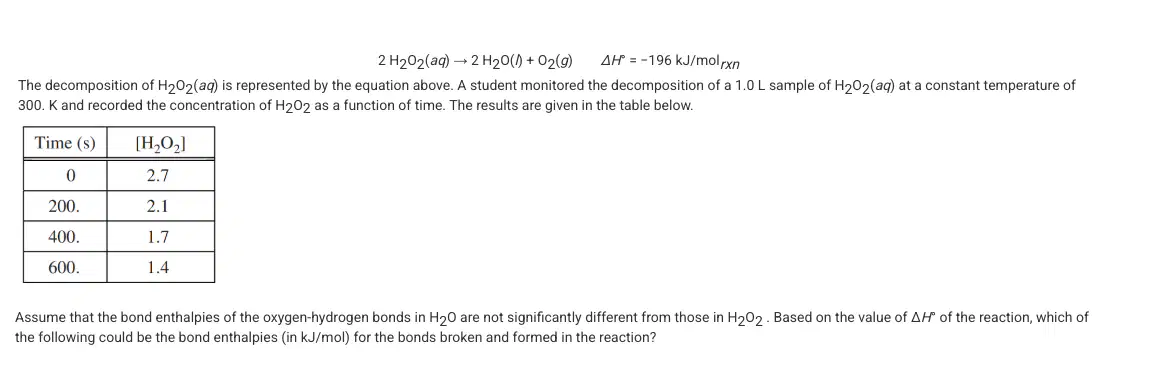
5.
A. O–O in H202 = 300
0--0 in 02 =500
O-H=500
B. O–O in H2O2= 500
O=O in O2 =500
O-H=500
O–O in H2O2=500
O=O in O2= 300
O-H=150
O–O in H2O2= 250
O=O in O2 =300
O–H =150
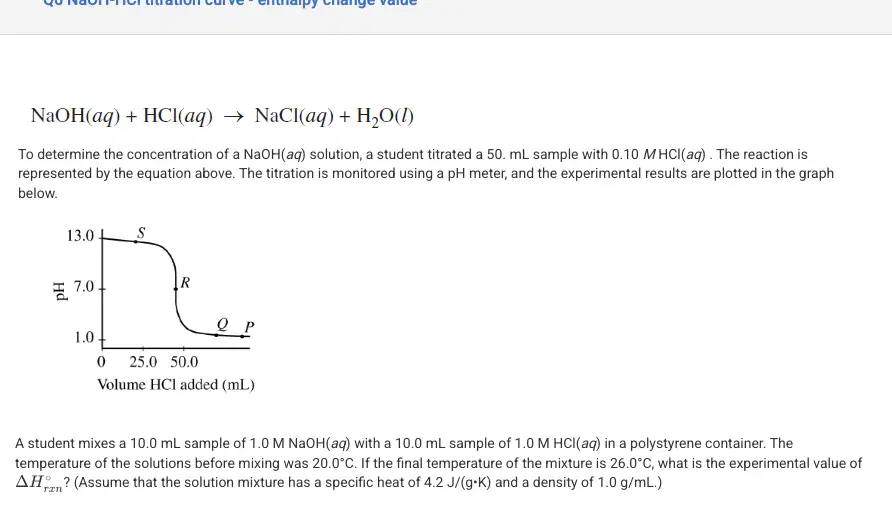
6.
(a)
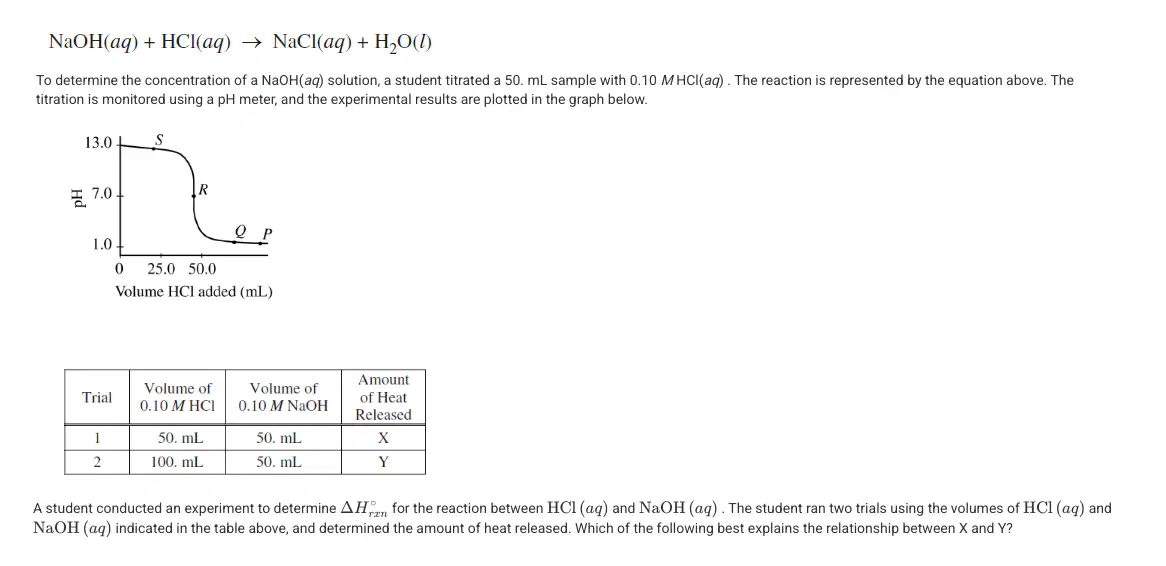
7.
A. Y = 2X, because the volume of HCl(aq) used in trial 2 is twice the volume used in trial 1
B. Y = X, because the number of moles of acid and base reacting with each other is the same in both trials.
C.
Y = 2X / 3, because the heat is distributed over more particles in trial 2 than in trial 1.
D. The relationship between X and Y cannot be predicted.
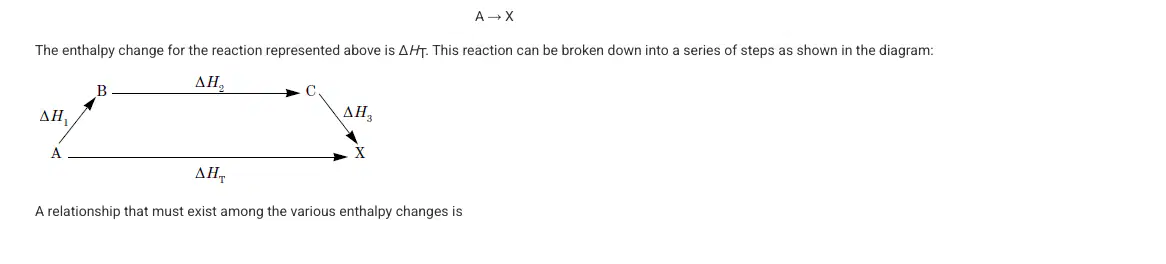
8.
A.
ΔHT – ΔH1 – ΔH2 – ΔH3 = 0
B. ΔHT + ΔH1 + ΔH2 + ΔH3 = 0
C.ΔH3 – (ΔH1 + ΔH2) = ΔHT
D. ΔH3 – (ΔH1 + ΔH2) = ΔHT
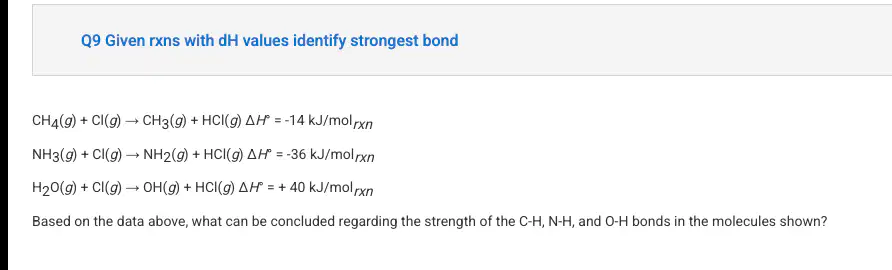
9.
(a)

10.
a. The bond dissociation energy between O atoms in is greater than the sum of the bond dissociation energies of the two bonds in .
b.More bonds are formed in the products than are broken in the reactants.
c.The sum of the bond dissociation energies of the product molecules is equal to the sum of the bond dissociation energies of the reactant molecules.
d.The sum of the bond dissociation energies of the product molecules is greater than the sum of the bond dissociation energies of the reactant molecules.

11.
A.The reaction is endothermic because breaking the bond requires energy.
B.The reaction is endothermic because breaking the bond releases energy.
C.e reaction is exothermic because breaking the bond requires energy.
D.The reaction is exothermic because breaking the bond releases energy.
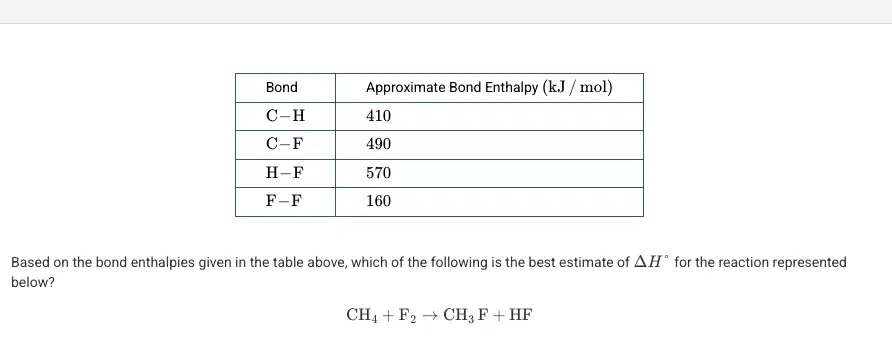
12.
(a)
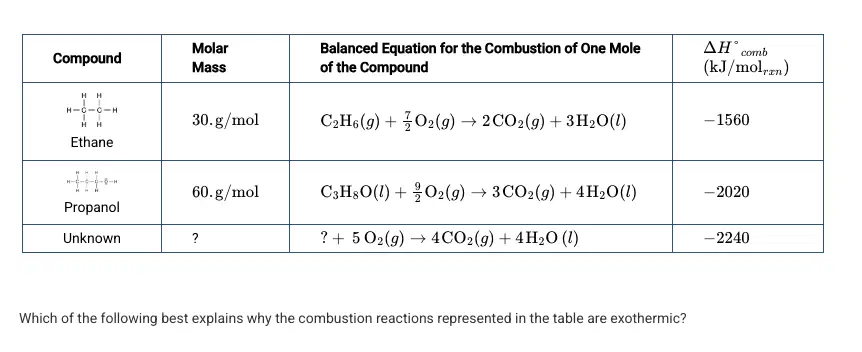
13.
A.The number of bonds in the reactant molecules is greater than the number of bonds in the product molecules.
B.The number of bonds in the reactant molecules is less than the number of bonds in the product molecules.
C.The energy required to break the bonds in the reactants is greater than the energy released in forming the bonds in the products.
D. The energy required to break the bonds in the reactants is less than the energy released in forming the bonds in the products.
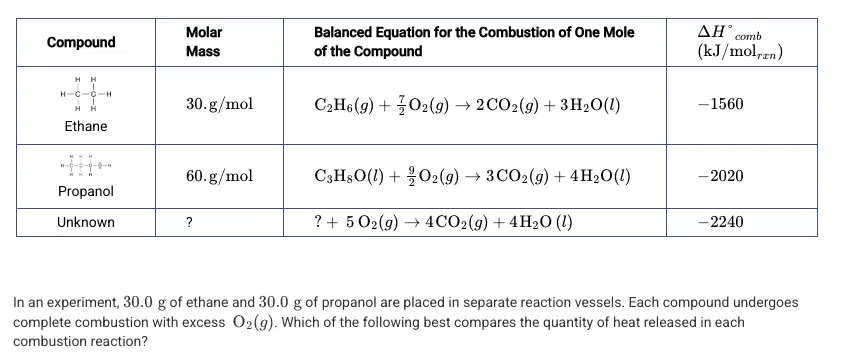
14.
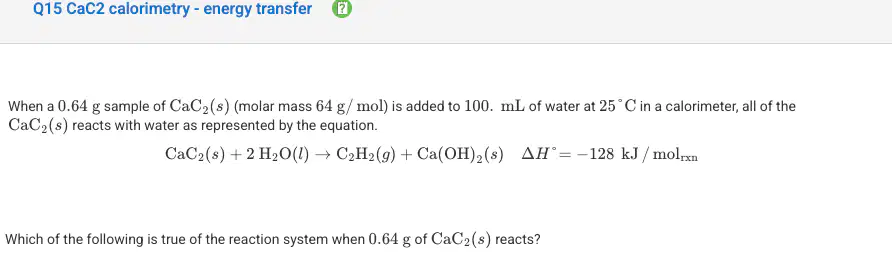
a. qEthane < qPropanol
b. qEthane = qPropanol
c. qEthane > qPropanol
The quantities of heat released in the combustions of ethane and propanol cannot be compared without knowing the specific heat capacity of the compounds.
15.
(a)

16.
A. 1/2[-802+2(799) +4 (646) - 4(414)] KJ/mol
B.
C.
D. 2[-802 -360 _2(464) +414] Kj/mol

17.
(a)

18.
(a)
19.
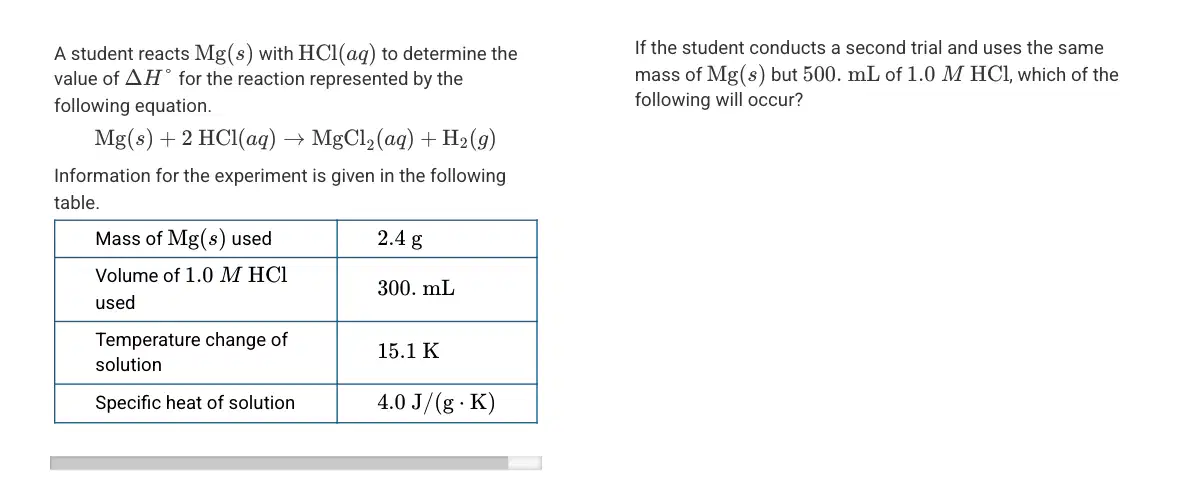
A.The value of the calculated will increase.
B.The temperature change of the solution will be less than .
C.The temperature change of the solution will be approximately 25K
D.The temperature change of the solution will be 15K

20.
A.The thermometer was incorrectly calibrated and read 0.5 Celsius degree too high during the procedure.
B.The thermometer was incorrectly calibrated and read 0.5 Celsius degree too high during the procedure.
C.The calorimeter was poorly insulated, and some heat escaped to the atmosphere during the procedure.
D.The actual molarity of the base solution was 0.53 M but was recorded as 0.50 M.
21.
(a)

22.
(a)

23.
A.The sum of the bond enthalpies of the bonds in the reactant is greater than the sum of the bond enthalpies of the bonds in the products.
B.The sum of the bond enthalpies of the bonds in the reactant is less than the sum of the bond enthalpies of the bonds in the products.
C.The length of the bond between carbon and oxygen in CH3OH is shorter than the length of the bond between carbon and oxygen in CO.
D. All of the bonds in the reactant and products are polar.

24.
A.The energy absorbed as the bonds in the reactants are broken is greater than the energy released as the bonds in the product are formed.
B.The energy released as the bonds in the reactants are broken is greater than the energy absorbed as the bonds in the product are formed.
C.The energy absorbed as the bonds in the reactants are broken is less than the energy released as the bonds in the product are formed.
D. The energy released as the bonds in the reactants are broken is less than the energy absorbed as the bonds in the product are formed.
26.
(a)

27.
A.higher for the sample, because with its lower specific heat it absorbs more energy
B.higher for the sample, because with its higher specific heat it absorbs more energy
C.the same for both metal samples, because the initial and final temperatures are the same
D. the same for both metal samples, because the masses are equal
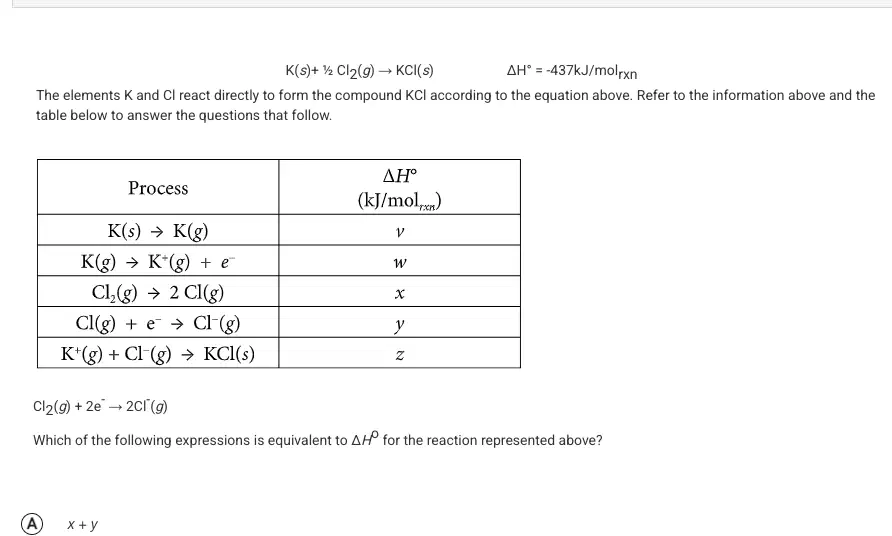
28.
(a)
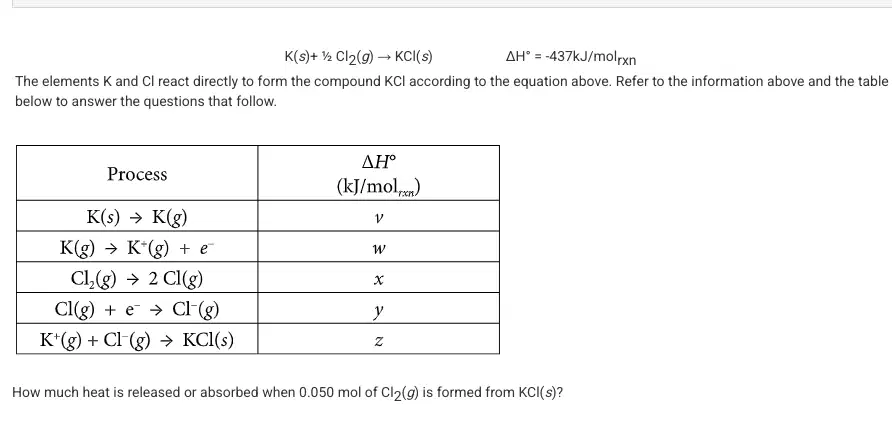
29.
(a)
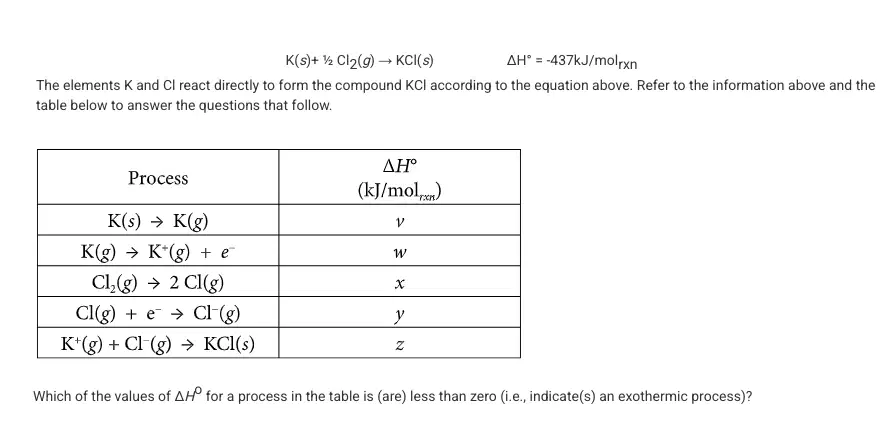
30.
(a)

Q31
A.Thermal energy is transferred between the molecules in sample 1 and the molecules in sample 2 because both samples contain the same substance
B.The molecules from sample 2 transfer thermal energy to the molecules from sample 1 through collisions because there are more moles of molecules in sample 2.
C.The molecules from sample 1 transfer thermal energy to the molecules from sample 2 through collisions because sample 1 has a higher density.
D.The CH3OH molecules from sample 1 transfer thermal energy to CH3OH the molecules from sample 2 through collisions because the average kinetic energy of the molecules in sample 1 is greater.
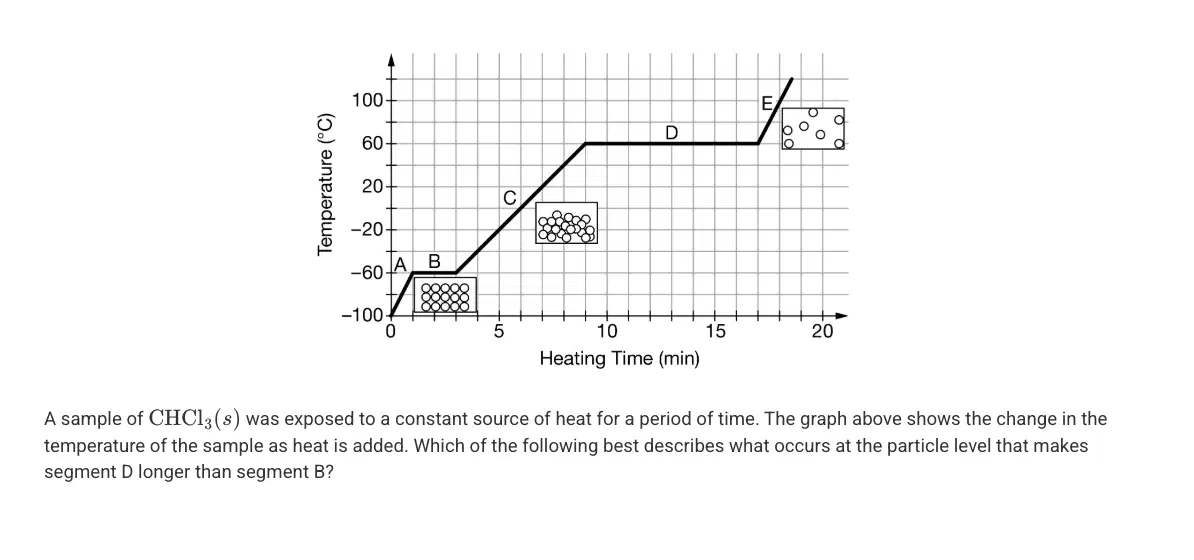
32.
A.The specific heat capacity of the liquid is significantly higher than that of the solid, because the particles in the liquid state need to absorb more thermal energy to increase their average speed.
B.The specific heat capacity of the solid is significantly higher than that of the gas, because the particles in the solid state need to absorb more thermal energy to increase their average speed.
C.The enthalpy of fusion is greater than the enthalpy of vaporization, because separating molecules from their bound crystalline state requires more energy than separating molecules completely from the liquid state.
D. The enthalpy of vaporization is greater than the enthalpy of fusion, because separating molecules completely from the liquid to form a gas requires more energy than separating molecules from their bound crystalline state to a liquid state.
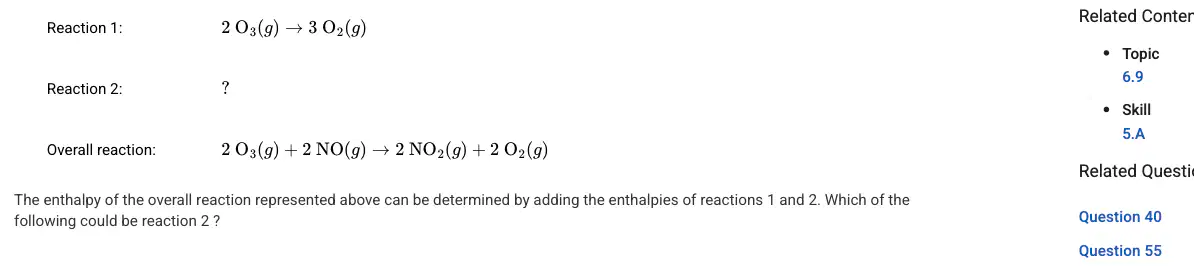
33.
A. NO(g) + O(g) --> NO2(g)
B. 2 NO (g) + O2 (gO --> 2NO2(g)
C. 2 NO (g) + O2 (gO --> 2NO2(g)
D.

34.
(a)
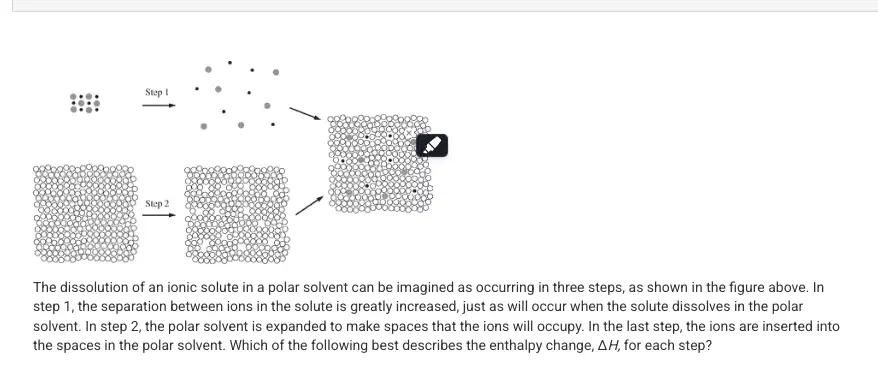
35.
A.All three steps are exothermic.
B.All three steps are endothermic.
C.Steps 1 and 2 are exothermic, and the final step is endothermic
D. Steps 1 and 2 are endothermic, and the final step is exothermic.
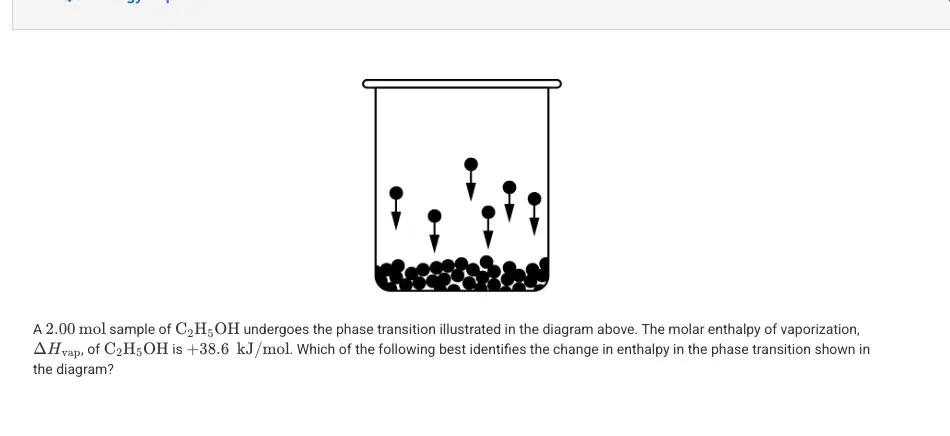
36.
(a)
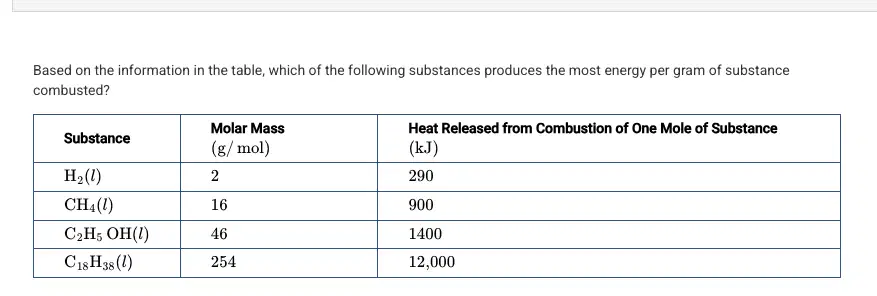
Q.37
A. H2 (L)
B.
C. C2H5 OH(L)
D.
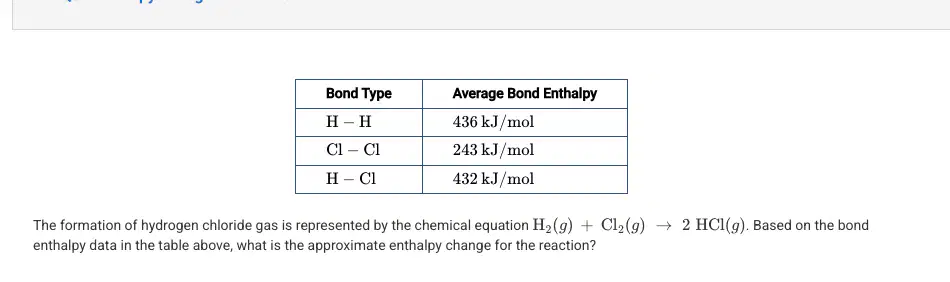
38.
(a)
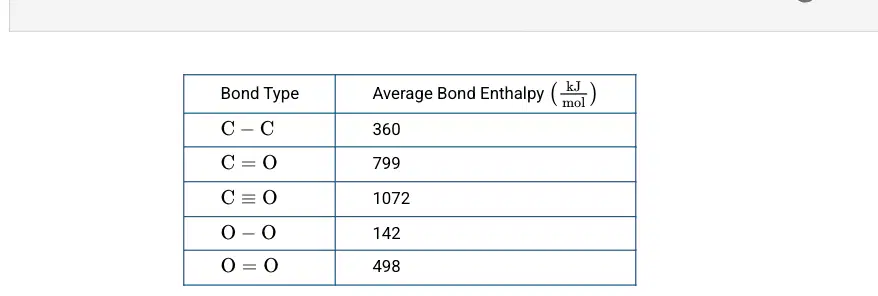
39. The oxidation of carbon monoxide can be represented by the chemical equation 2 CO(g) + O2 --> 2CO2(g) . The table above provides the average bond enthalpies for different bond types. Based on the information in the table, which of the following mathematical expressions is correct for the estimated enthalpy change for the reaction?



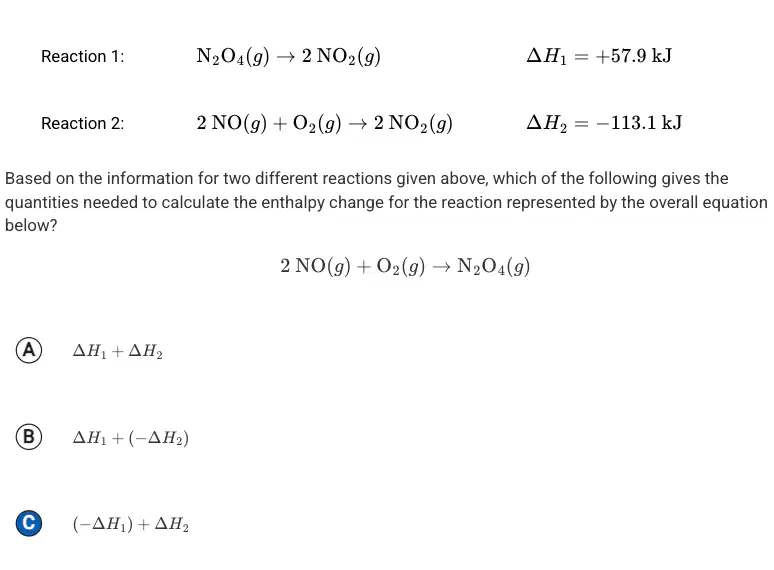
Q40 (Type in A, B or C)
(a)
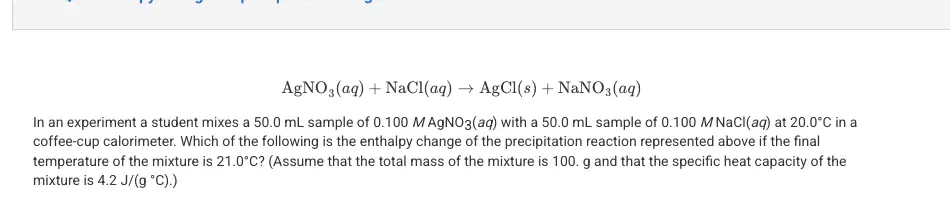
41.
(a)

42.
(a)

43.
(a)
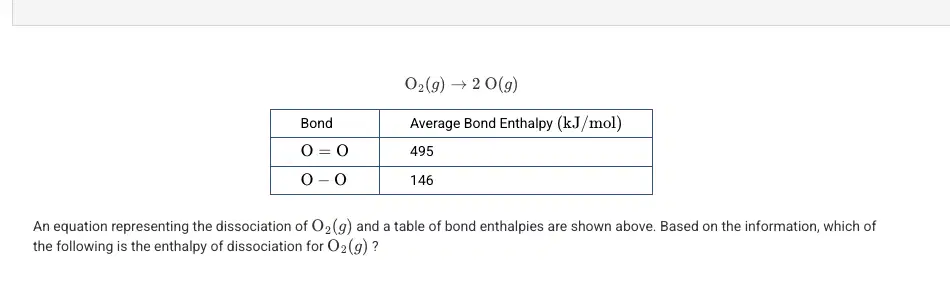
44.
(a)
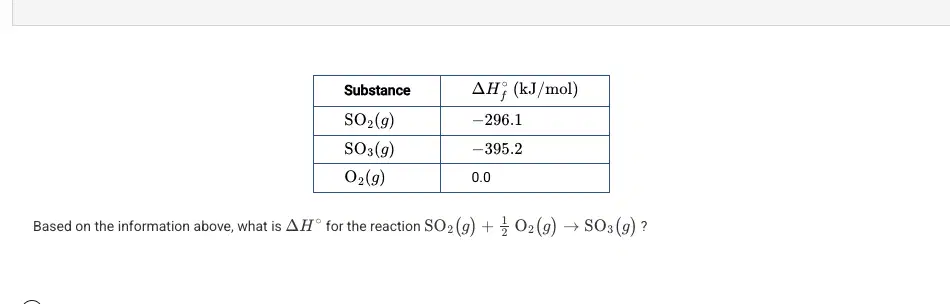
45.
(a)
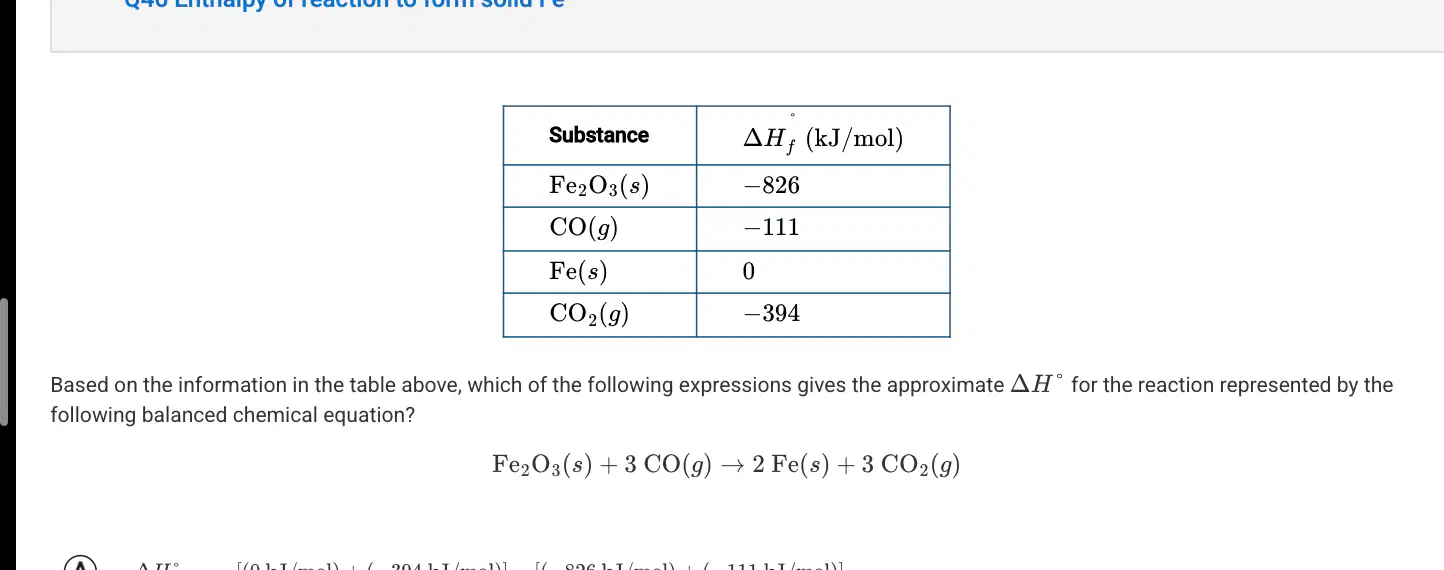
46.

A.
A.

B.
B.

C.
C.
D.
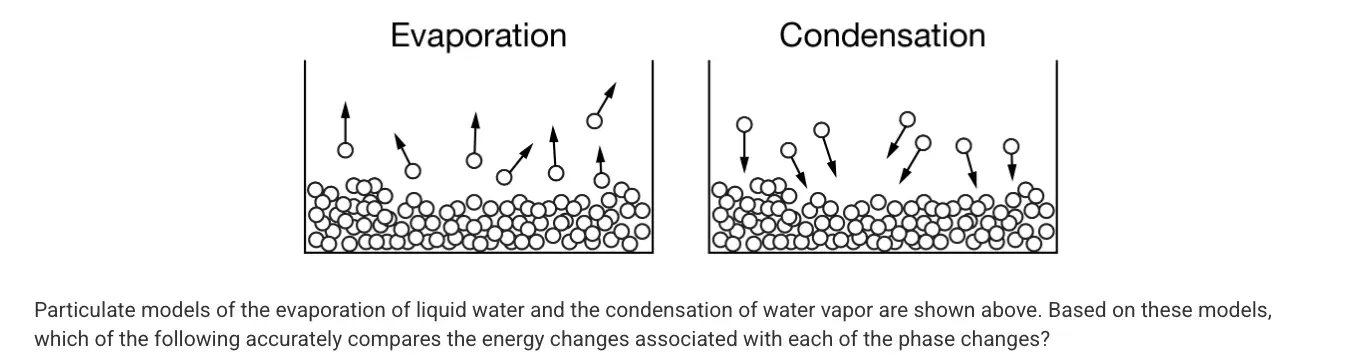
47.
A. The amount of energy absorbed by one mole of water molecules as they escape the liquid is greater than the amount of energy released by one mole of water molecules as they come together to form a liquid.
b. The amount of energy absorbed by one mole of water molecules as they escape the liquid is less than the amount of energy released by one mole of water molecules as they come together to form a liquid.
C.The amount of energy absorbed by one mole of water molecules as they escape the liquid is equal to the amount of energy released by one mole of water molecules as they come together to form a liquid.
D. The amount of energy absorbed by one mole of water molecules escaping the liquid can be either greater than or less than the amount of energy released by one mole of water molecules as they come together to form a liquid.
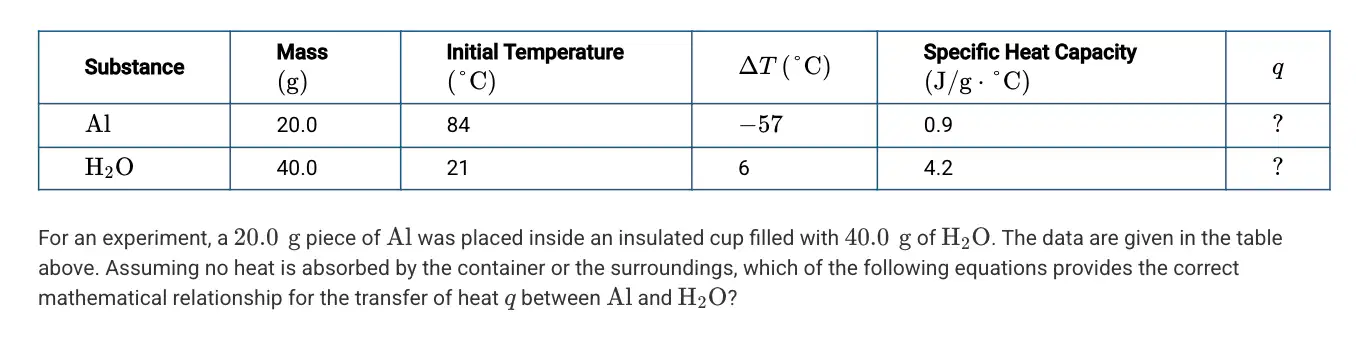
48
A. -qAl = 10 x qH20
B. -qAl = 5 x qH20
C.
D. -qAl = qH20
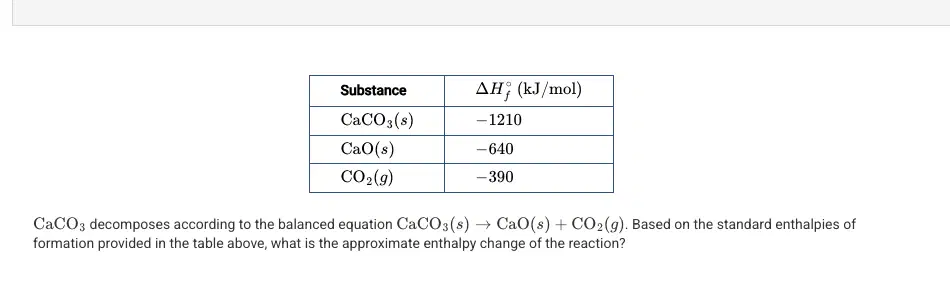
49.
(a)
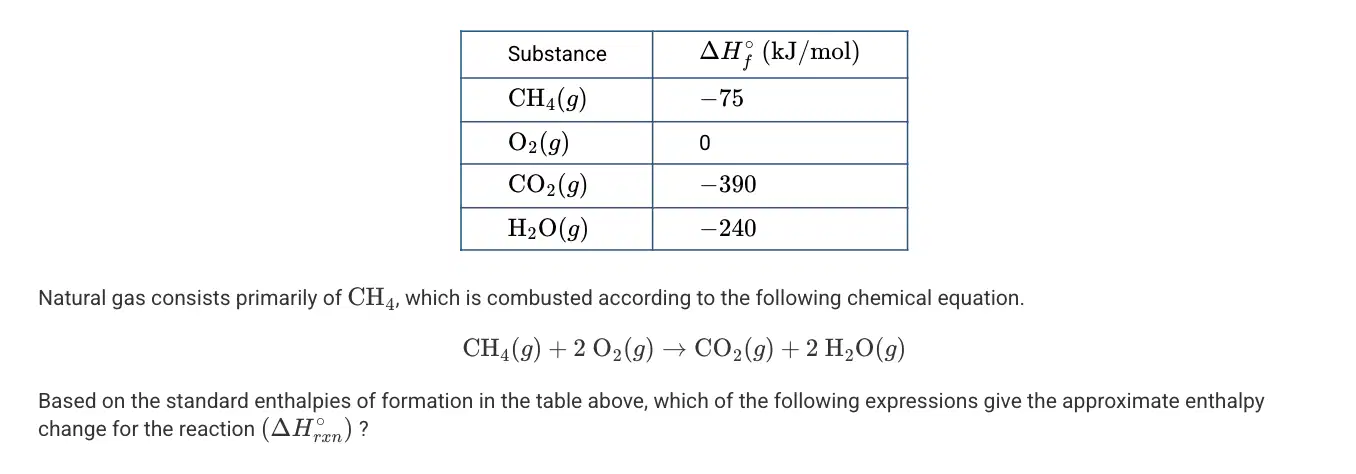
50.

A.
A.

B.
B.

C.
C.
D.
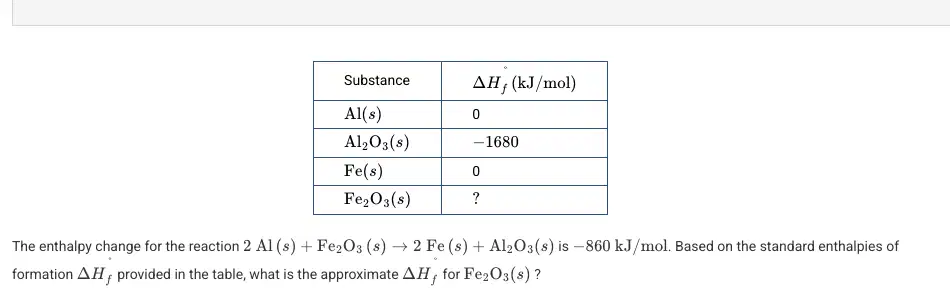
51.
(a)
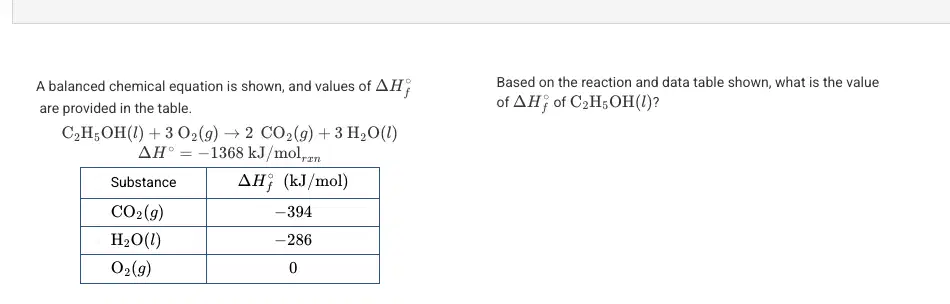
52.
(a)
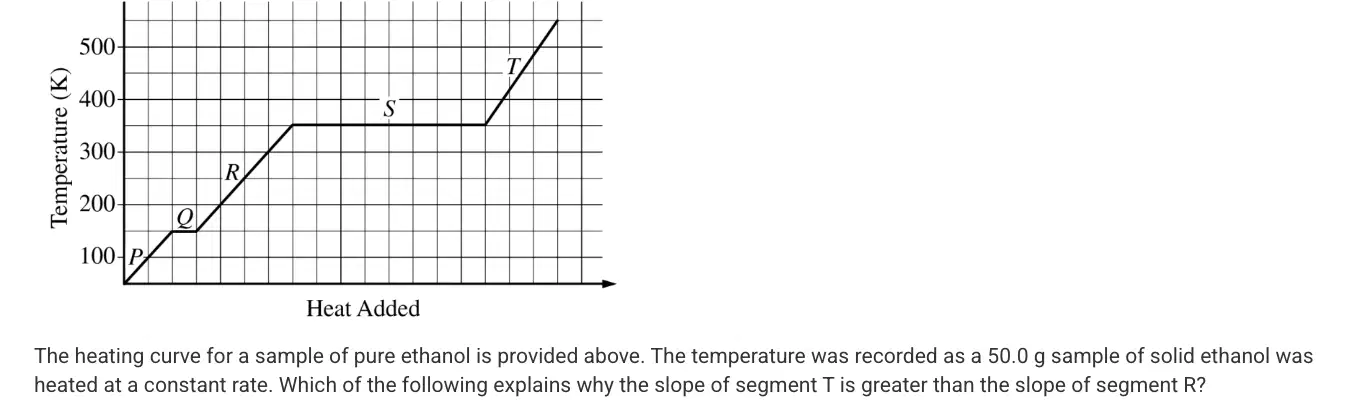
53.
A.The specific heat capacity of the gaseous ethanol is less than the specific heat capacity of liquid ethanol.
B.The specific heat capacity of the gaseous ethanol is greater than the specific heat capacity of liquid ethanol.
C.The heat of vaporization of ethanol is less than the heat of fusion of ethanol.
D.The heat of vaporization of ethanol is greater than the heat of fusion of ethanol.

54.
A.It is an endothermic process, because energy is released by the reaction and is gained by the reaction mixture.
B.It is an endothermic process, because energy is absorbed by the reaction and is lost from the reaction mixture.
C.It is an exothermic process, because energy is released by the reaction and is gained by the reaction mixture.
It is an exothermic process, because energy is absorbed by the reaction and is lost from the reaction mixture.
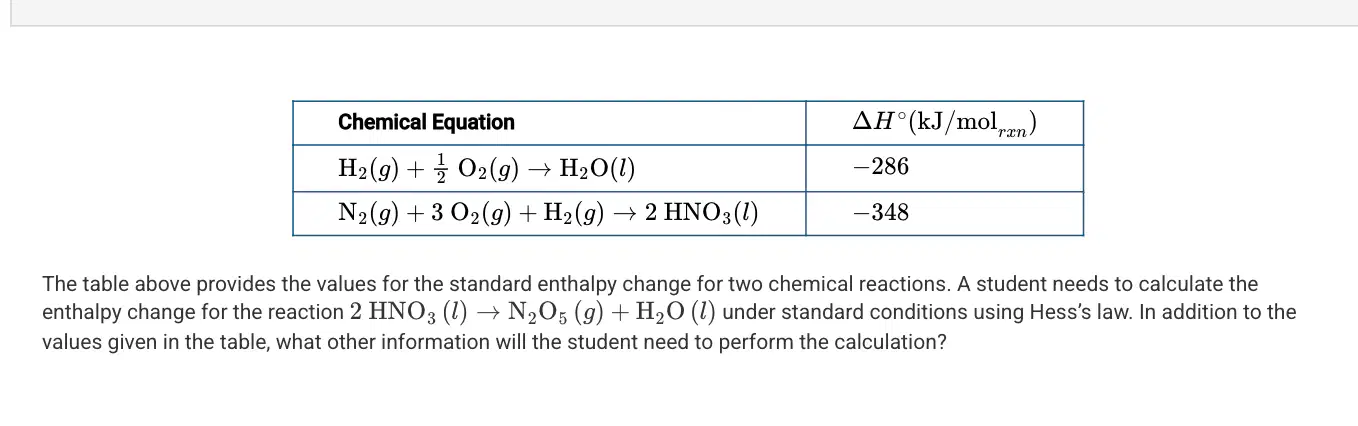
55.

A.
A.

B.
B.

C.
C.
D.

56.
(a)
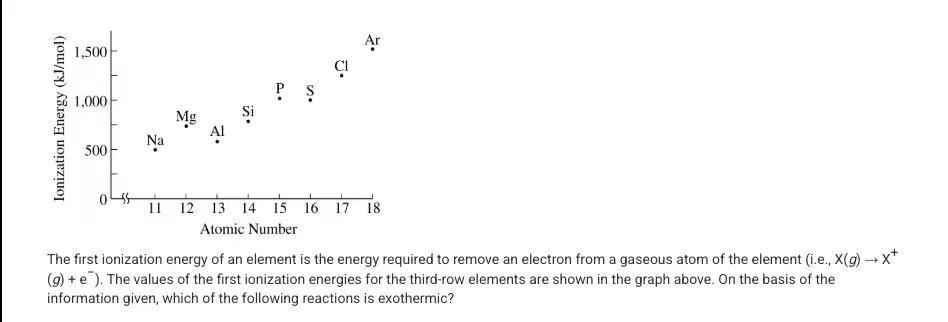
57.
A.Cl(g) + Mg+(g) → Cl+(g) + Mg(g)
B.
Al(g) + Mg+(g) → Al+(g) + Mg(g)
C.P(g) + Mg+(g) → P+(g) + Mg(g)
D.
S(g) + Mg+(g) → S+(g) + Mg(g)
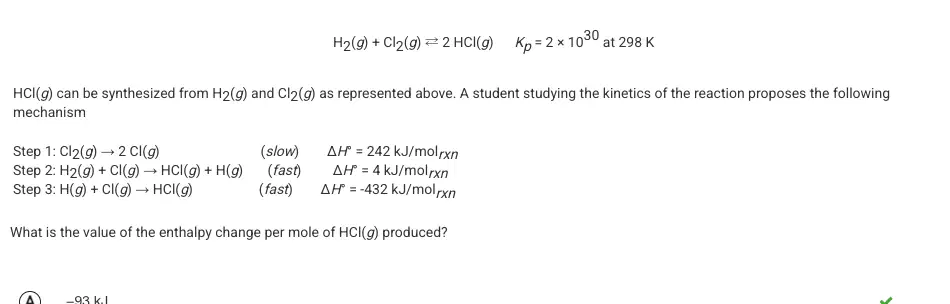
58.
(a)

59.
(a)
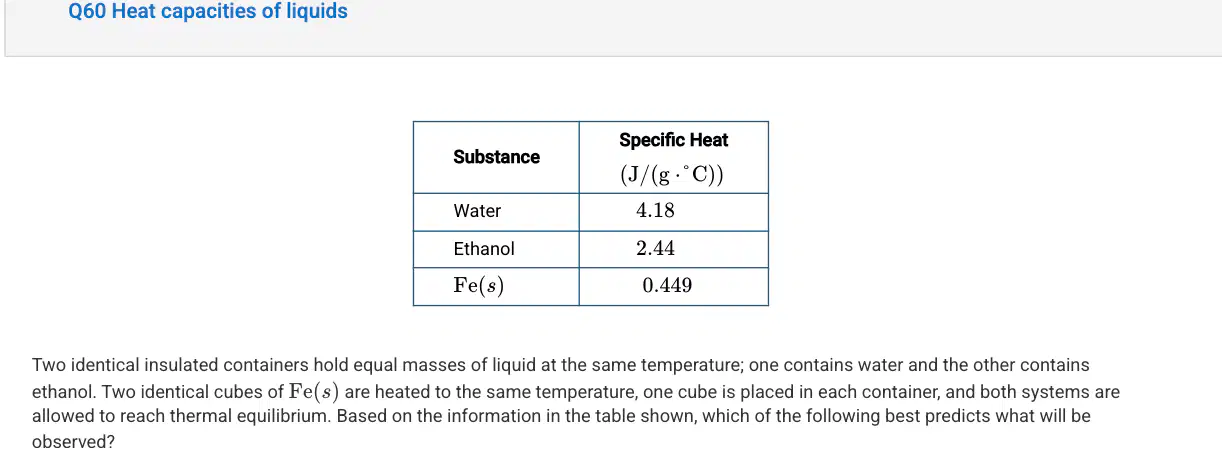
60.
A.Both systems will have the same final temperature because the mass and initial temperature of the liquids are the same.
B.Both systems will have the same final temperature because the cubes will transfer the same amount of heat to both liquids.
C.The ethanol system will have the higher final temperature because the specific heat of ethanol is lower than that of water.
D.The ethanol system will have the lower final temperature because the specific heat of ethanol is lower than that of water.
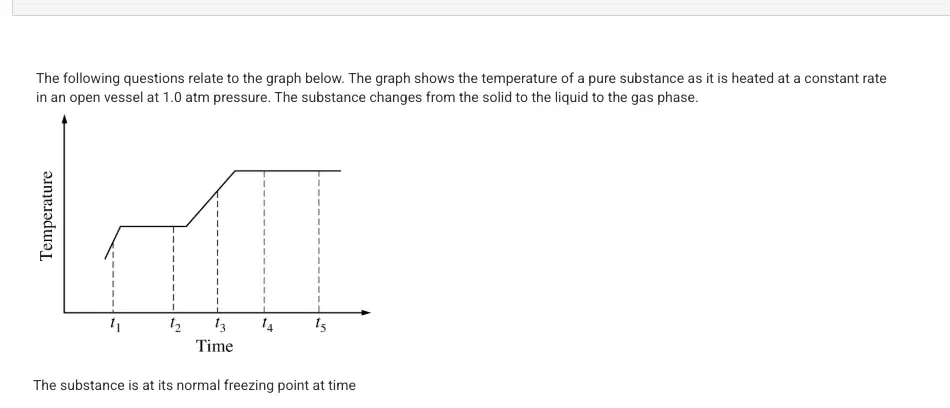
61.
(a)
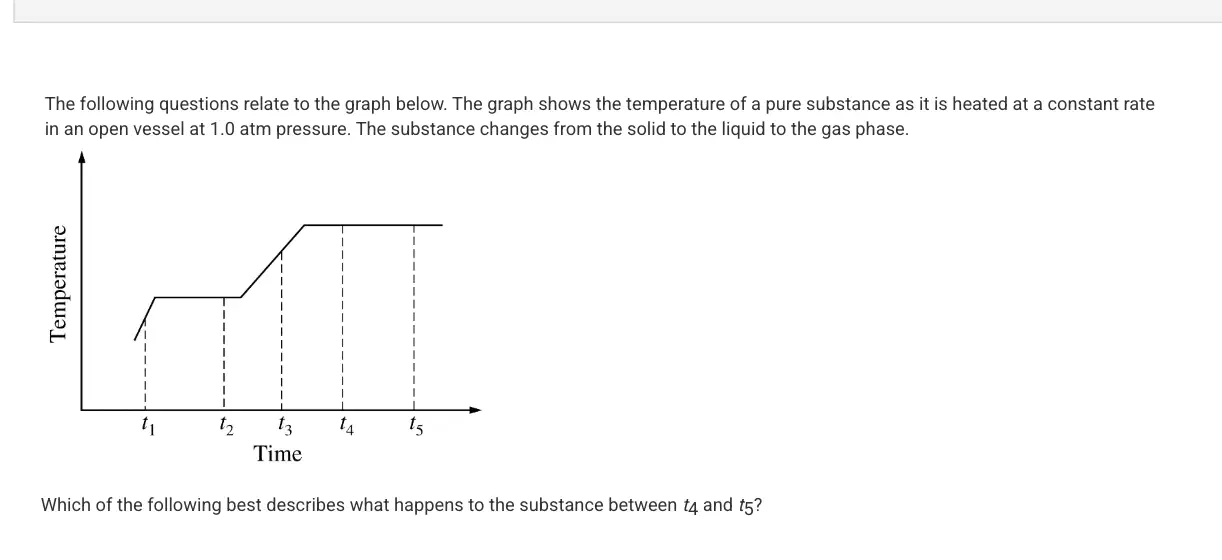
62.
A. The molecules are leaving the liquid phase.
B.The solid and liquid phases coexist in equilibrium
C.The vapor pressure of the substance is decreasing
D.The average intermolecular distance is decreasing.
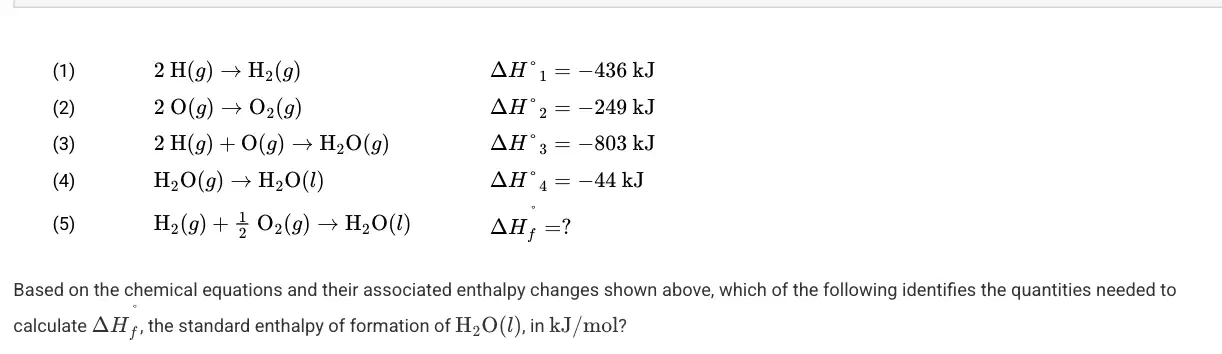
63.


C.

D.
D.
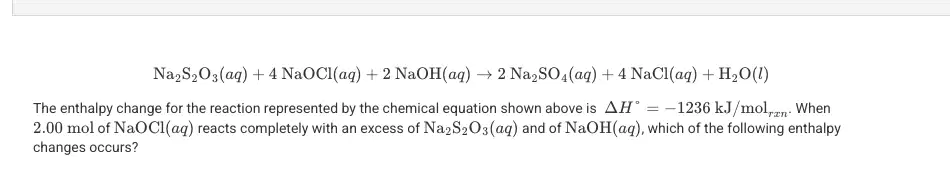
Q64
(a)
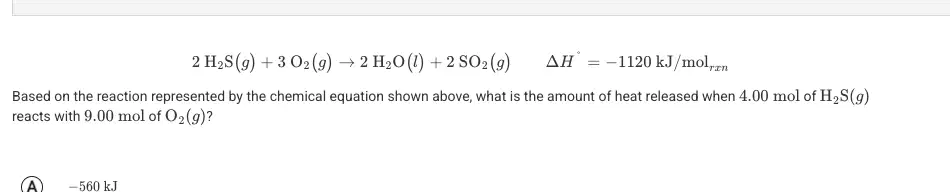
65.
(a)
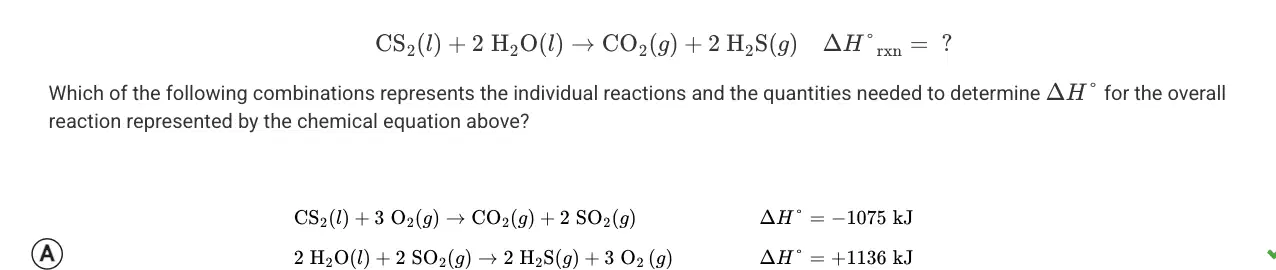
66.



C.
C.
D.
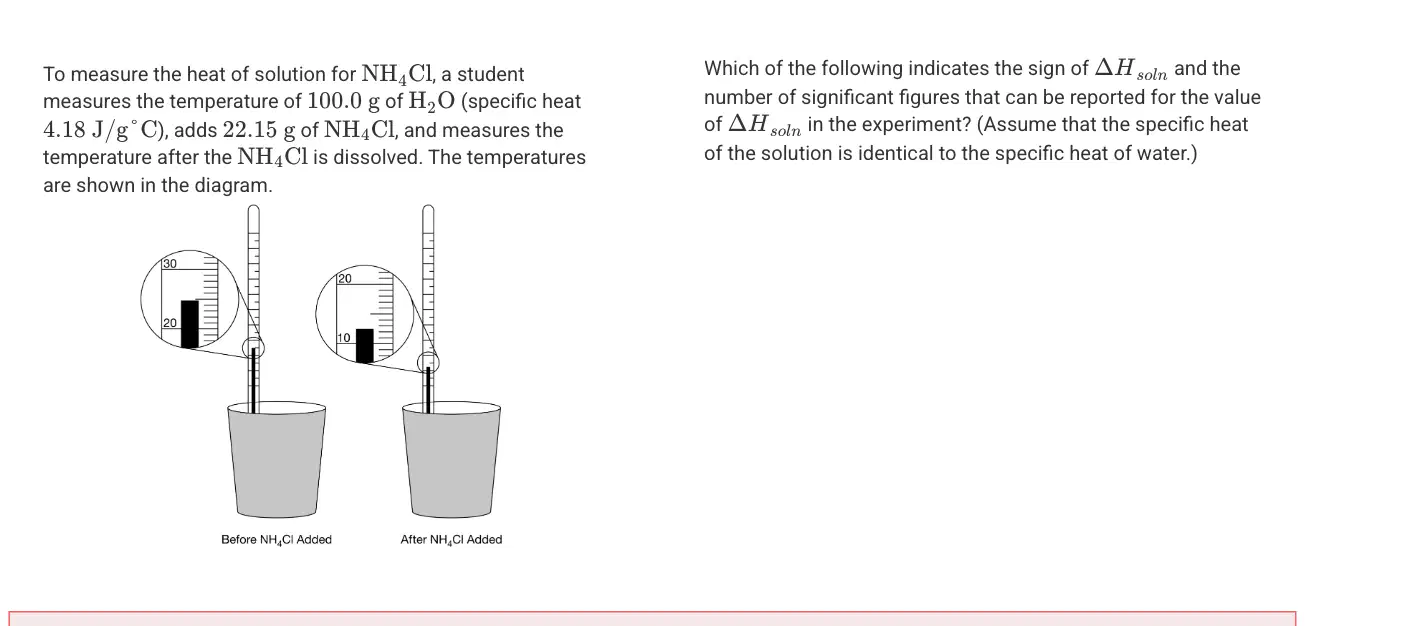
67.
A.

B.
B.

C.
C.

D.
D.

68.
(a)

69.
(a)

70.
(a)
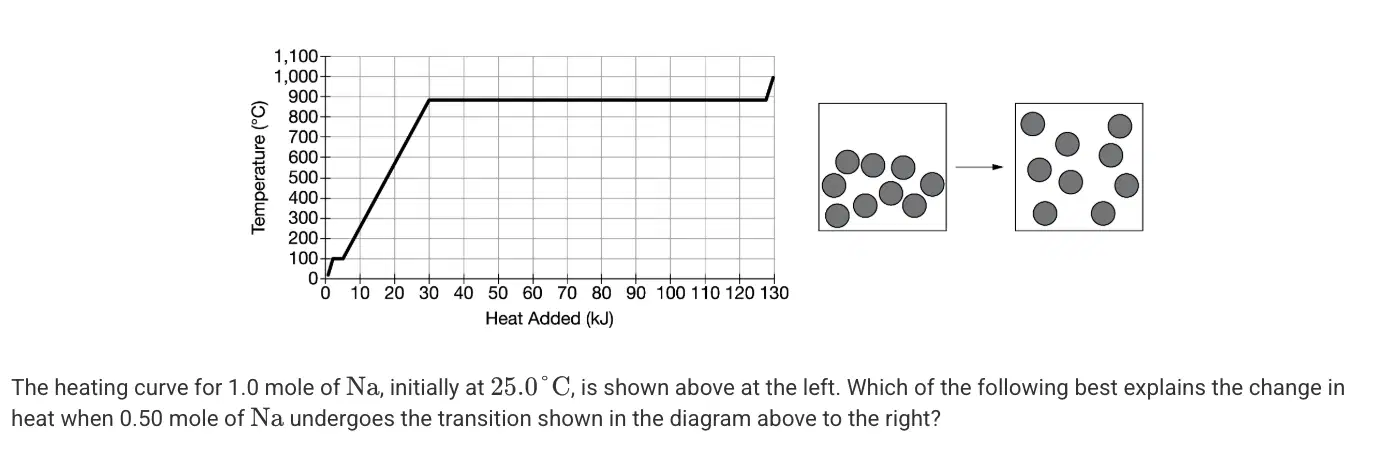
71.
A.Approximately of heat are absorbed as a result of the increase in potential energy between Na the atoms.
B.Approximately 49 KJ of heat are absorbed to overcome the attractive forces acting between Na atoms.
C.Approximately of heat are released as a result of the decrease in the kinetic energy of the Na atoms.
D.Approximately of heat are released to decrease the potential energy between atoms.
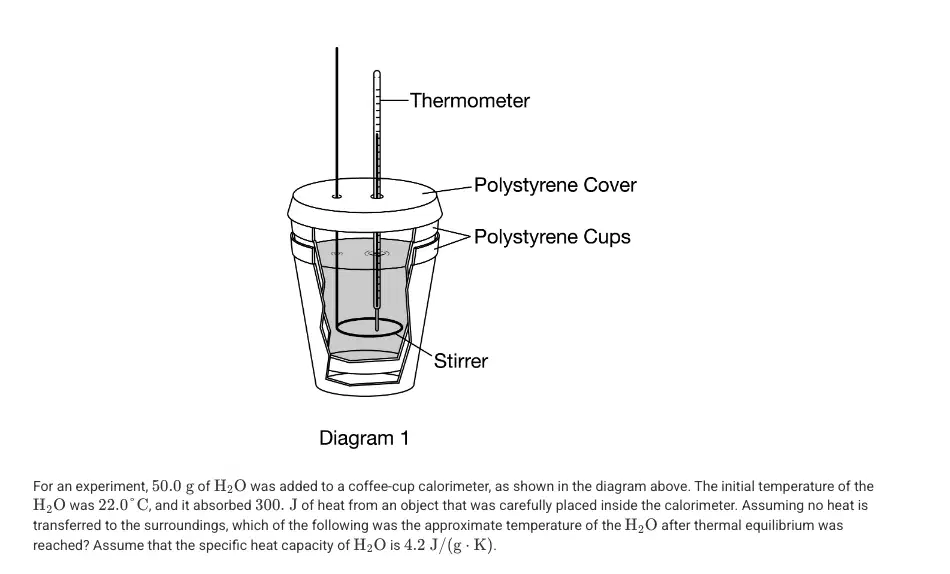
72.
(a)
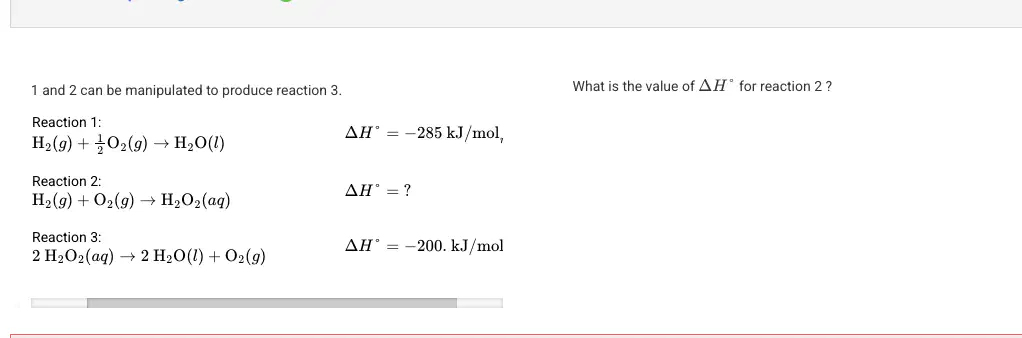
Q73.
(a)
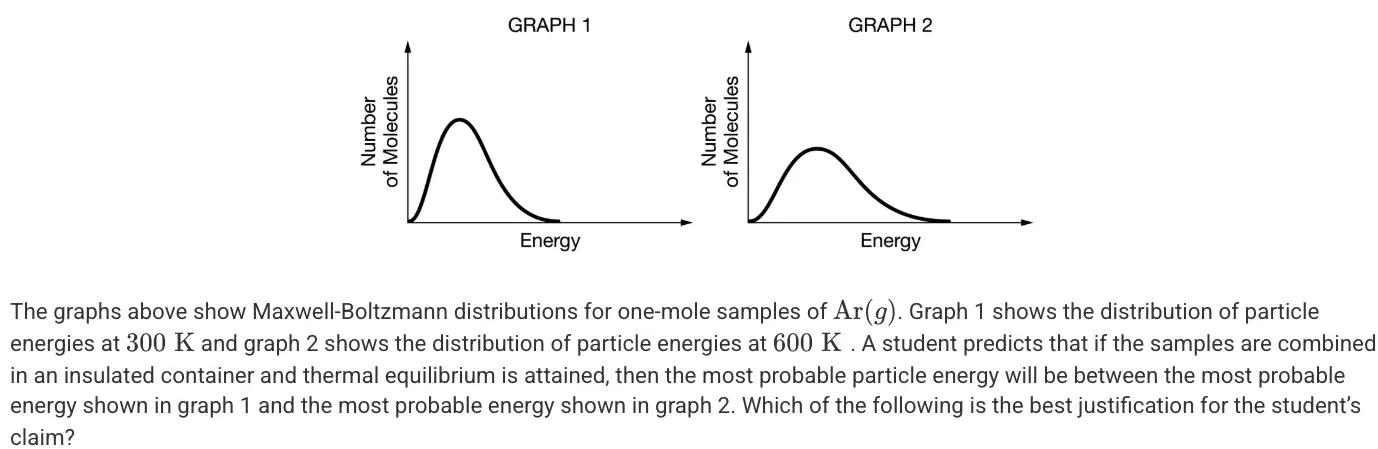
74.
A.When the samples are combined, the gas particles will collide with one another, with the net effect being that the speed of the lowest energy particles decreases while the speed of the highest energy particles increases, leaving the average speed of the particles in the original samples unchanged.
B.When the samples are combined, the gas particles from each sample will collide with the gas particles from the other sample until every particle in the mixture has the same speed, which is between the average speed of the particles in the hotter sample and the average speed of the particles in the cooler sample.
C.When the samples are combined, the gas particles collide with one another until every particle in the mixture has the same kinetic energy, which is between the average kinetic energy of the particles in the hotter sample and the average kinetic energy of the particles in the cooler sample
D.When the samples are combined, the gas particles will collide with one another, with the net effect being that energy will be transferred from the more energetic particles to the less energetic particles until a new distribution of energies is achieved at a temperature between 300K and 600K.
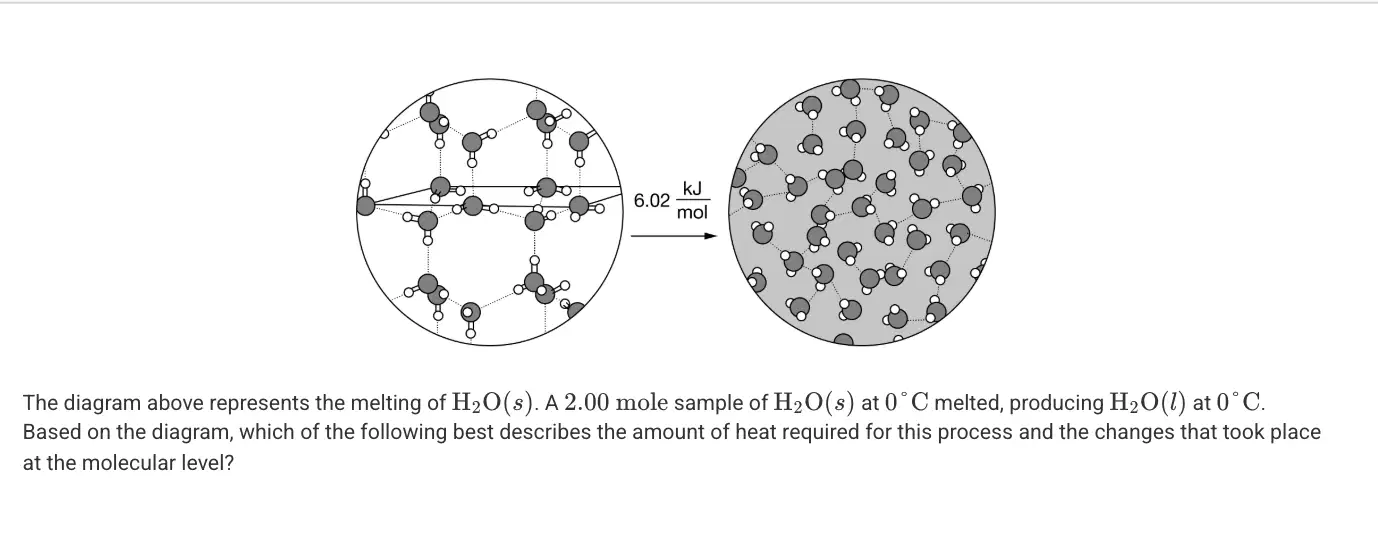
75.
a. 3.01 Kj
of heat was absorbed to decrease the average speed of the water molecules in the liquid, which decreases the distance between molecules.
b. 6.02 Kj of heat was absorbed to increase the number of hydrogen bonds between water molecules in the liquid compared to the solid.
c.12.0 KJ of heat was absorbed to decrease the polarity of the water molecules, which increases the density of the liquid compared to the solid.
d. 12.0 KJ of heat was absorbed to overcome some of the hydrogen bonding forces holding the water molecules in fixed positions in the crystalline structure.
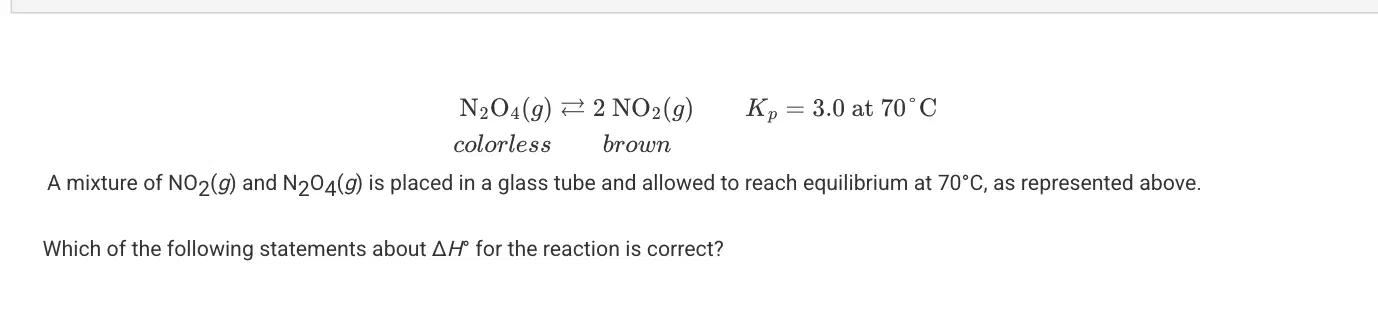
76.
A. (Delta H)< 0 because energy is released when the N−N bond breaks.
B.(Delta H) < 0 because energy is required to break the N−N bond.
C.(Delta H) ° > 0 because energy is released when the N−N bond breaks.
D.(Delta H) > 0 because energy is required to break the N−N bond.
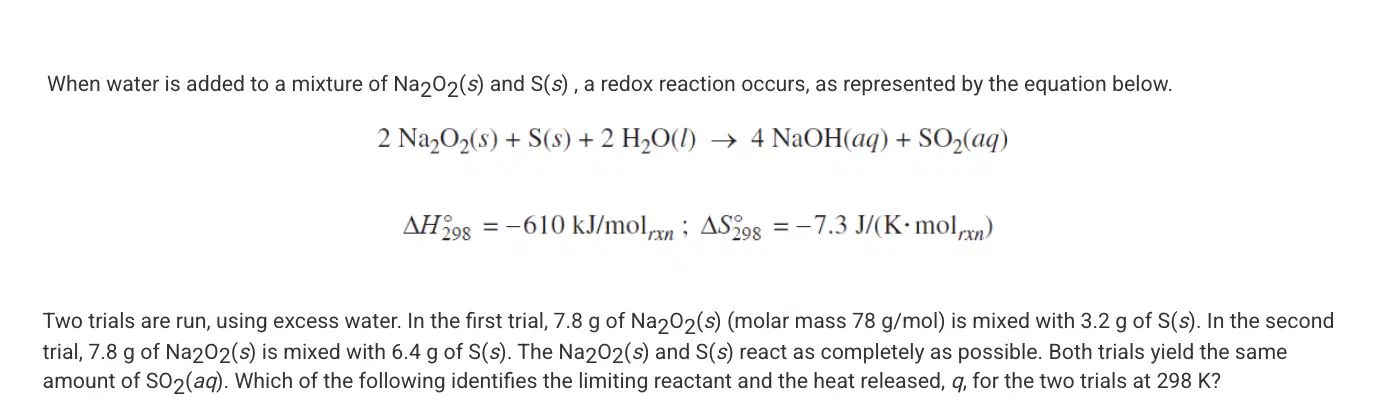
77. Limiting Reactant q
A. Limiting Reactant= S q= 30 KJ
B. Limiting Reactant= S q=61 KJ
C. Limiting Reactant= Na2O2 q= 30Kj
D. Limiting Reactant= Na2O2 q= 61 KJ
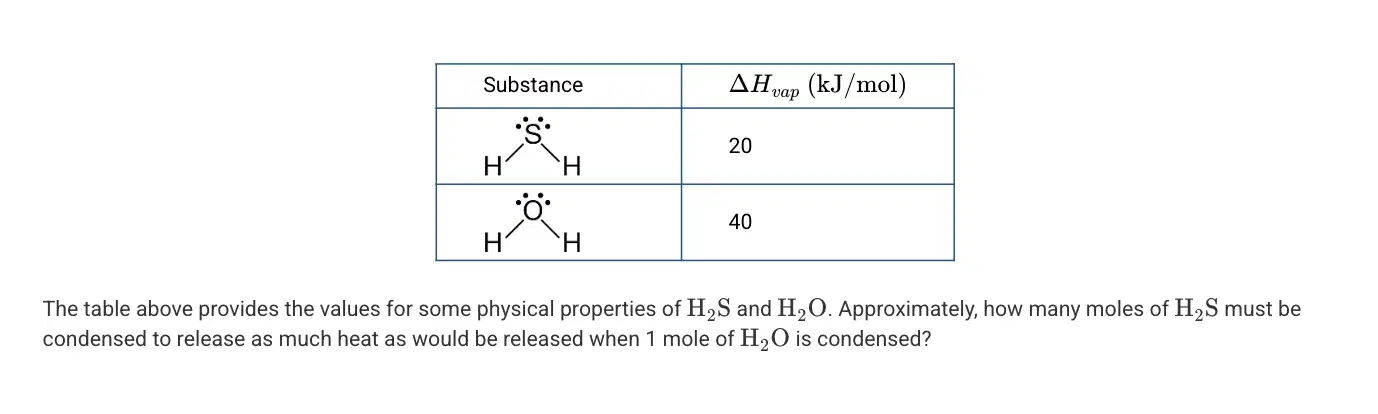
78.
A. 0.5 mole of H2S
B.1 mole of H2S
C. 2 moles of H2S
D.4 moles of H2S
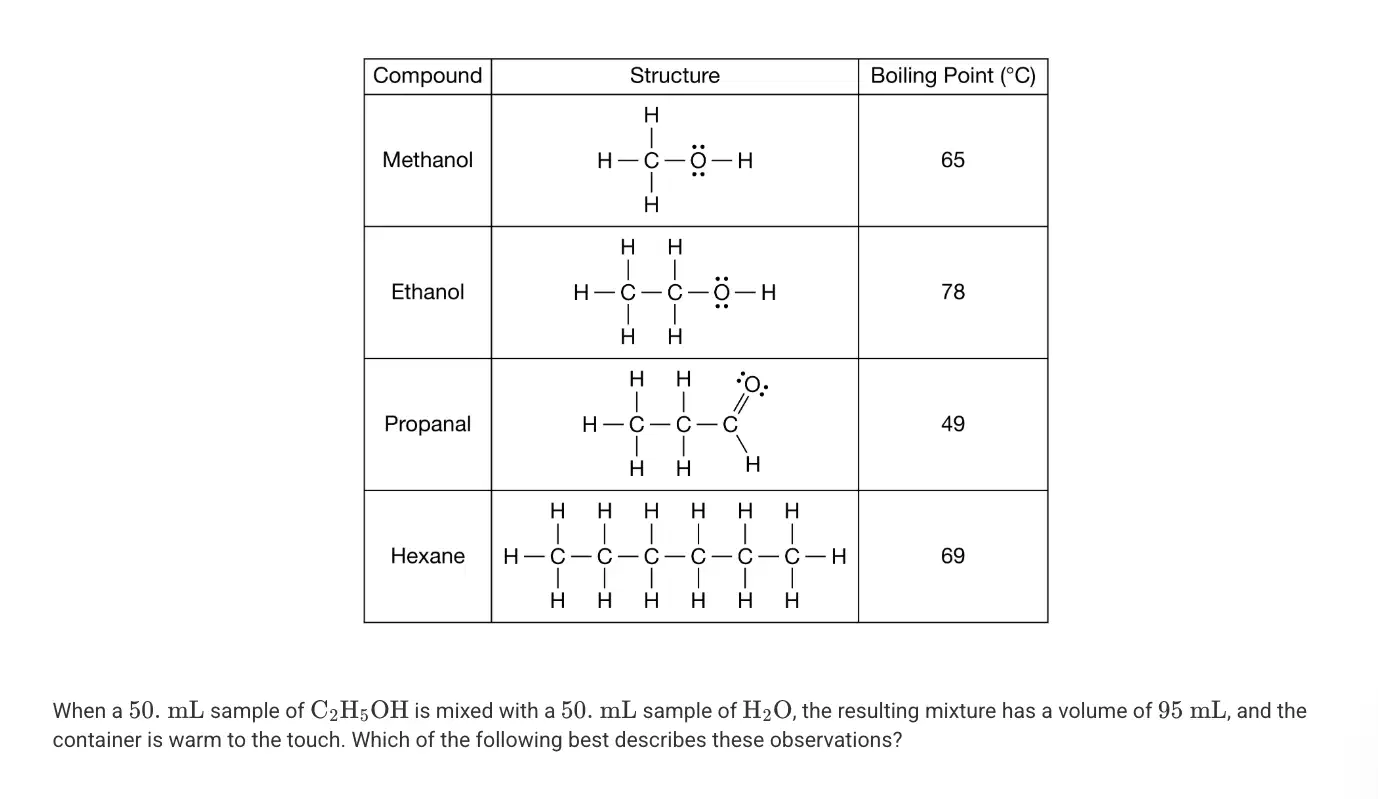
79.
A. A chemical reaction occurs, as evidenced by the volume of the resultant mixture being less than the total volume of the initial components.
B. A chemical change occurs, as evidenced by the formation of new covalent bonds releasing more energy than is absorbed by the breaking of the existing covalent bonds.
C. A physical change occurs, and the solvation process is exothermic.
D. A physical change occurs, and the solvation process is endothermic.
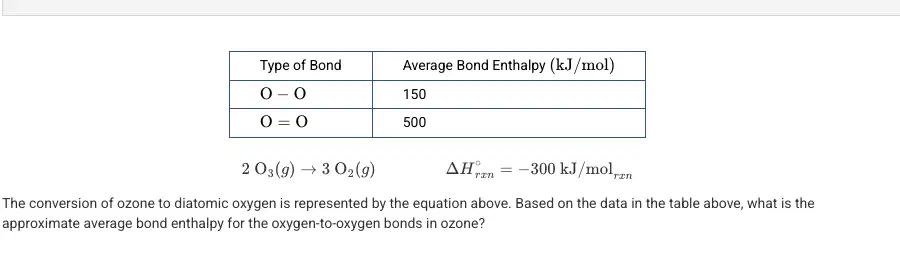
Q80
(a)
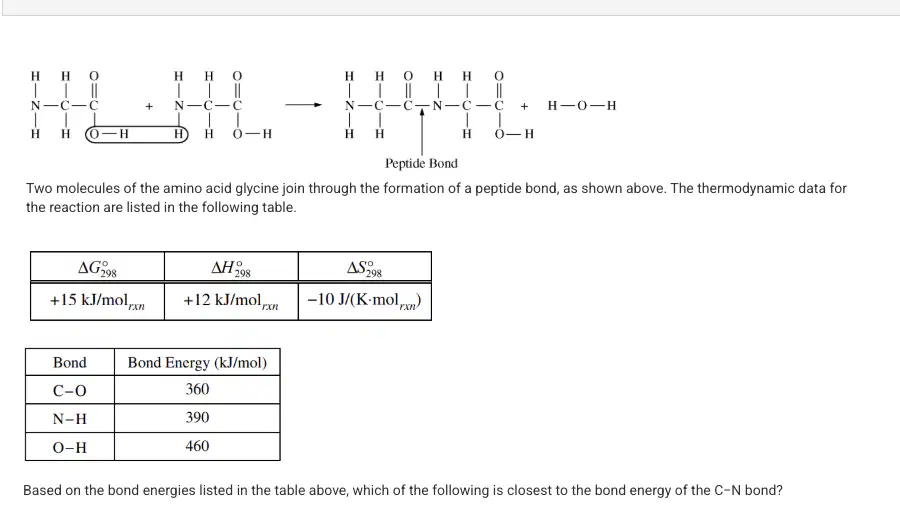
Q81
(a)
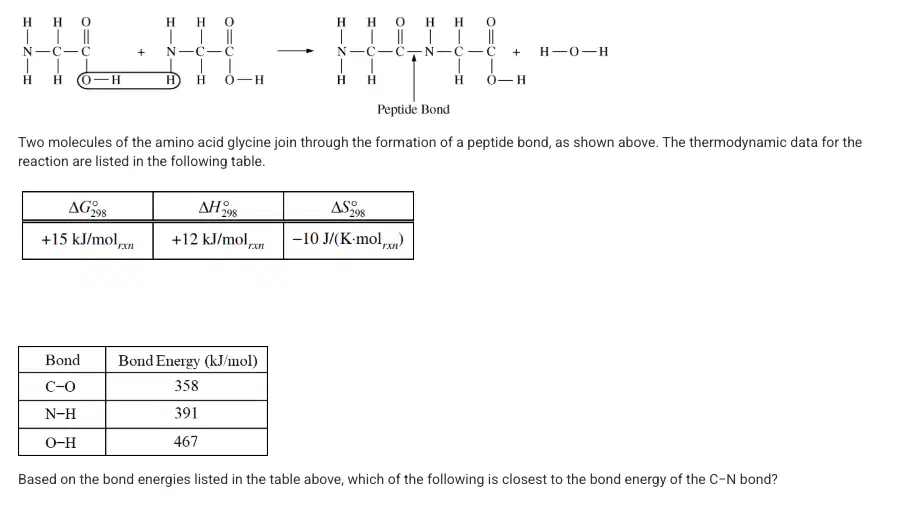
Q82
(a)
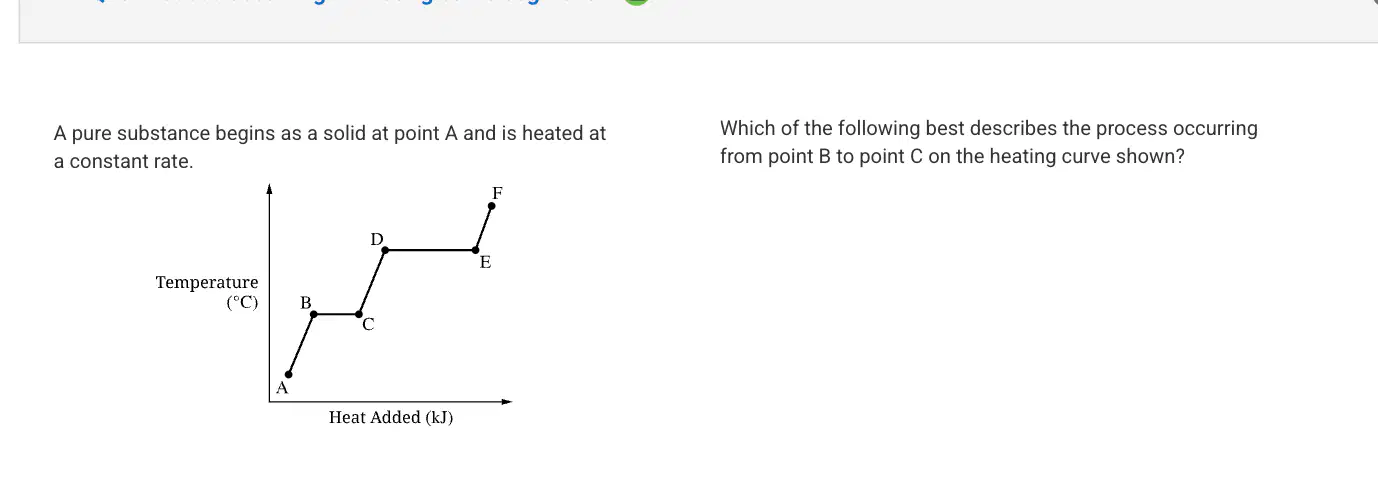
Q83
A.The average kinetic energy of the particles in the system is increasing as the substance melts.
B.The average kinetic energy of the particles in the system is increasing as the substance boils.
C.The potential energy of the particles in the system is increasing as the substance melts.
D. The potential energy of the particles in the system is increasing as the substance boils.
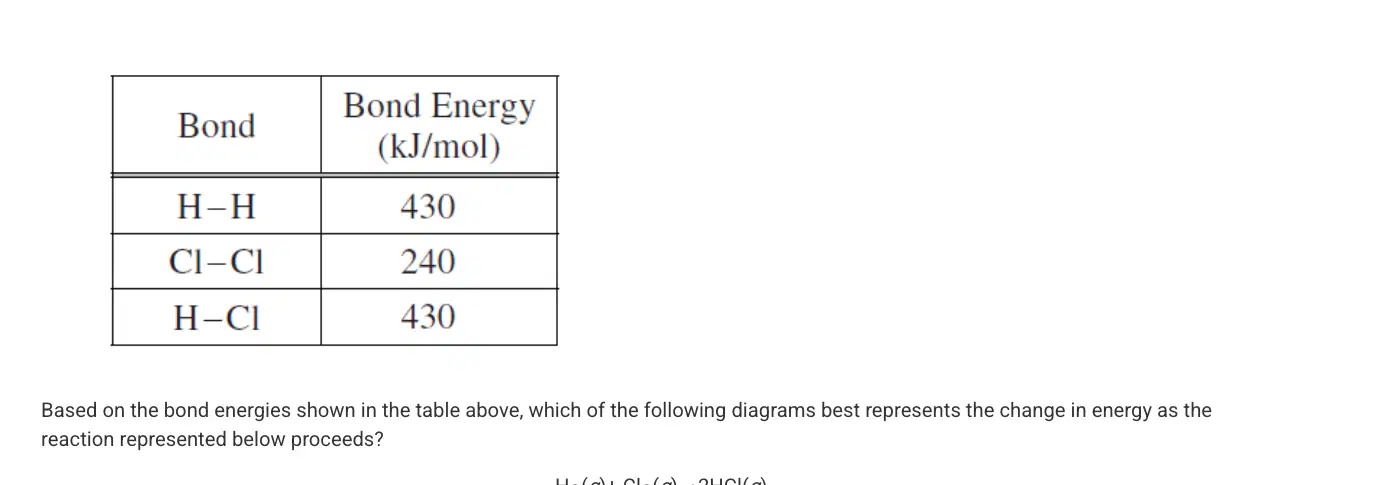
84.
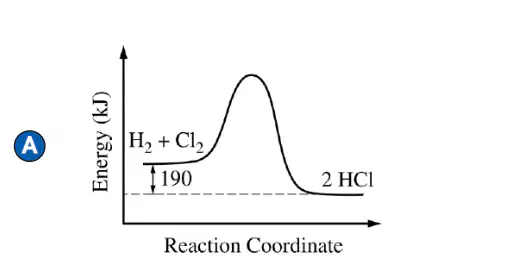
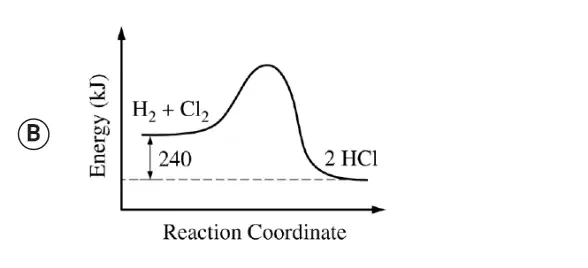
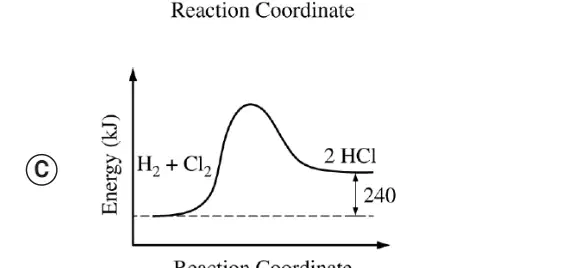
C.
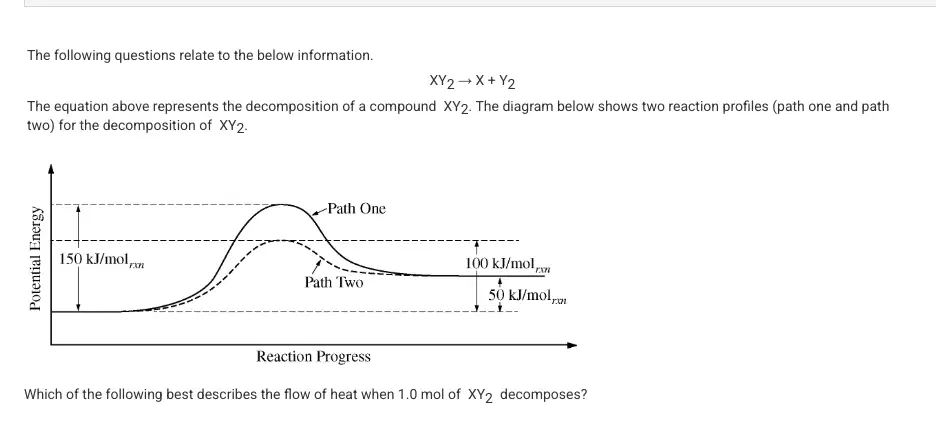
85.
A.50 kJ of heat is transferred to the surroundings.
B.50 kJ of heat is transferred from the surroundings.
C.100 kJ of heat is transferred to the surroundings.
D.100 kJ of heat is transferred from the surroundings.
Q87
(a)

Q88
(a)

89.
A.
Sample and sample were of the same substance, but the volume of sample was greater than that of sample .
B. Sample and sample were of the same substance, but the specific heat of sample was less than that of sample .
C.Sample and sample were of different substances, but the amount of energy needed to melt the ice in sample was greater than in sample .
D. Sample X and Z sample were of different substances, and the specific heat of sample X was less than sample Z
90.
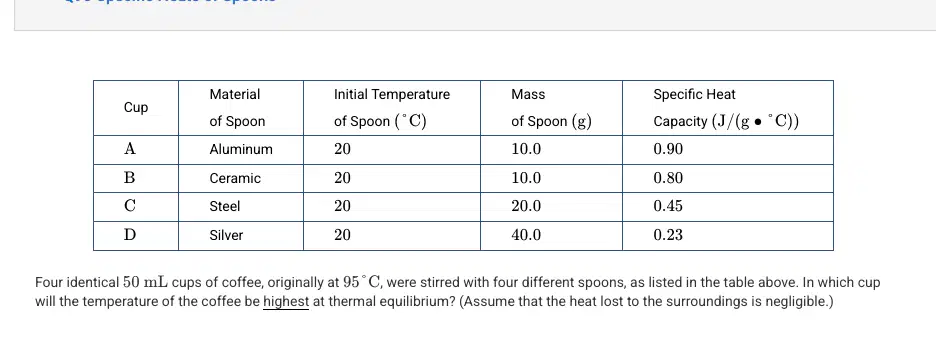
A. CUP A
B.CUP B
C.CUP C
D. CUP D
91.

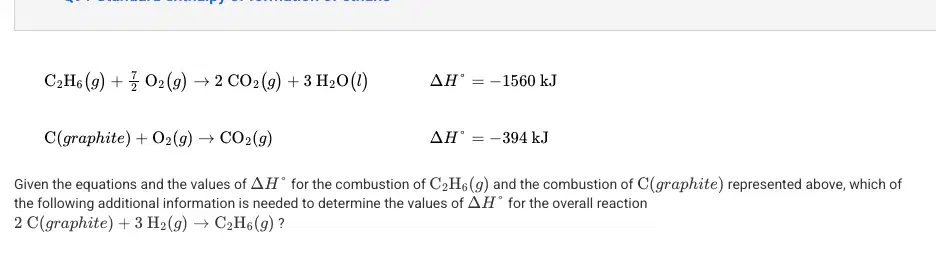
A.
A.

B.
B.

C.
C.
D.
92.
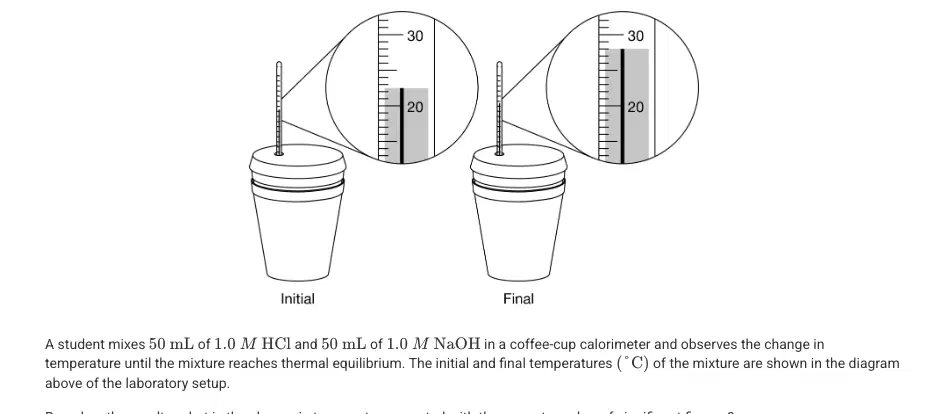
A. 5.5 C
B. 5.50 C
C. 5.800 C
D. 6 C

93.
(a)
94.
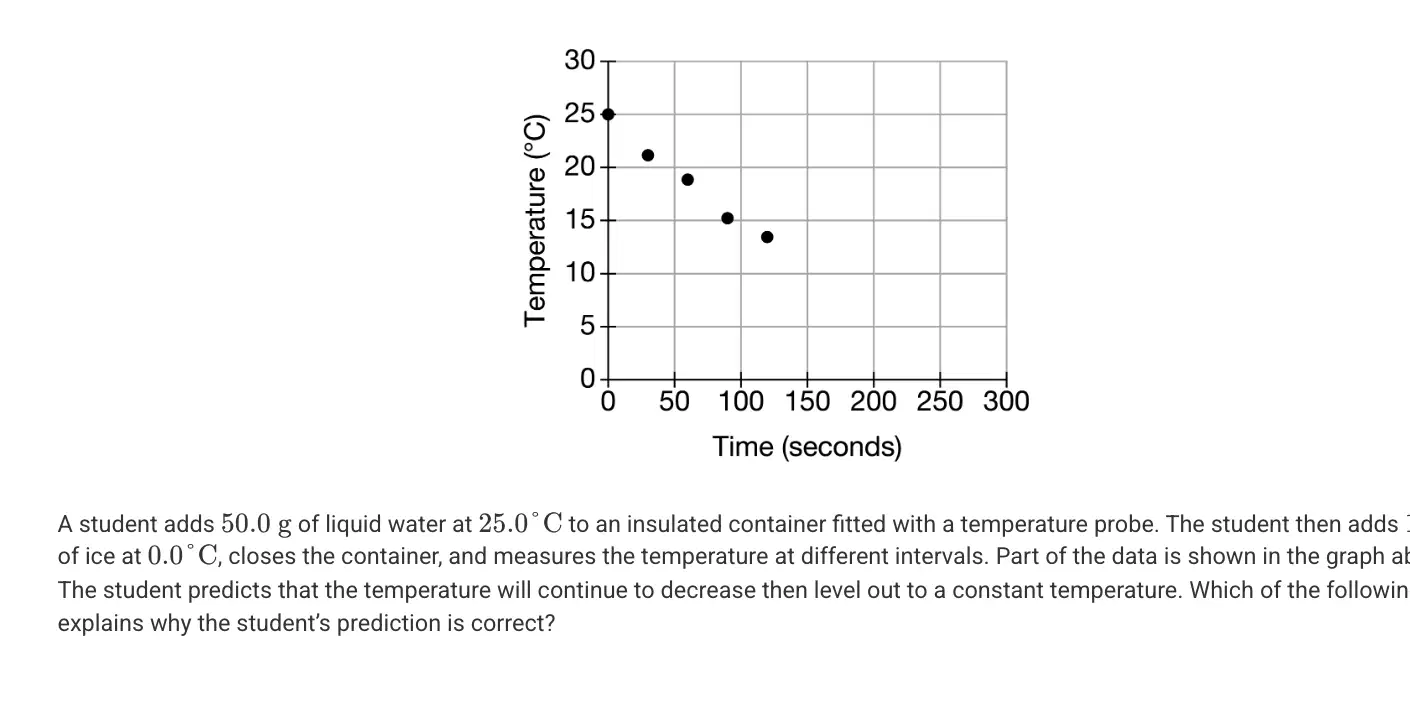
A.The H20 molecules initially in the ice and the molecules initially in the liquid will have the same average kinetic energy
B.The transfer of energy between the molecules in the ice and liquid water stops once all the molecules are in the liquid phase.
C.Once all of the molecules are in the liquid phase, the individual molecular speeds either increase or decrease until all the particles have the same speed.
D.Once all of the molecules are in the liquid phase, collisions between them virtually stop as they reach an equilibrium distance from their neighboring molecules.

