
Resource Type


Subjects
6th Grade Graphing and Shading Solutions Quizzes
Master graphing and shading solutions for inequalities with our comprehensive Grade 6 quiz collection on Wayground. These interactive practice questions help students assess their understanding of plotting inequality solutions on number lines and coordinate planes with instant feedback and self-paced assessment tools.

18 questions
Compound Inequalities

Quiz
•
6th Grade
15 questions
Writing and Graphing Inequalities
Quiz
•
6th Grade

20 questions
Solutions and Inequalities
Quiz
•
6th Grade

89 questions
Writing and Graphing Inequalities
Quiz
•
6th Grade

22 questions
Unit 3 Review: Comparing, Ordering, and Graphing Rational Number
Quiz
•
6th Grade

41 questions
Review Quiz (Decimals and Graphing)
Quiz
•
6th Grade
20 questions
Solutions to Algebraic Equations and Algebraic Inequalities
Quiz
•
6th Grade
17 questions
Inequalities: Solutions and Graphing
Quiz
•
6th - 7th Grade
10 questions
Solving and Graphing Inequalities
Quiz
•
6th - 8th Grade
14 questions
Writing and Graphing Inequalities
Quiz
•
6th - 8th Grade
18 questions
Inequalities
Quiz
•
6th - 11th Grade
17 questions
Inequalities Pt. III: Compound Inequalities {Day 1}
Quiz
•
6th - 12th Grade
Explore 6th Grade Graphing and Shading Solutions Quizzes
Graphing and shading solutions for Grade 6 inequalities requires students to develop strong visual representation skills that bridge algebraic concepts with coordinate plane understanding. These comprehensive quiz collections through Wayground help students master the essential techniques of plotting inequality boundaries, determining appropriate shading regions, and interpreting solution sets on number lines and coordinate grids. The practice questions systematically build understanding by progressing from simple one-variable inequalities on number lines to more complex two-variable systems, providing immediate feedback that reinforces correct graphing procedures and identifies common misconceptions about boundary line types and shading directions. Wayground's extensive library draws from millions of teacher-created inequality graphing resources, enabling educators to locate precisely targeted assessment materials through robust search and filtering capabilities that align with state mathematics standards. Teachers can customize quiz difficulty levels to support differentiated instruction, selecting from various question formats that range from basic boundary identification to complex solution verification problems. The platform's flexible digital delivery system allows seamless integration into classroom instruction, homework assignments, and remediation sessions, while comprehensive analytics help educators identify specific areas where students struggle with graphing techniques, boundary determination, or solution interpretation, supporting targeted intervention strategies that strengthen mathematical reasoning skills.
FAQs
What aspects of graphing inequalities are taught in Grade 6?
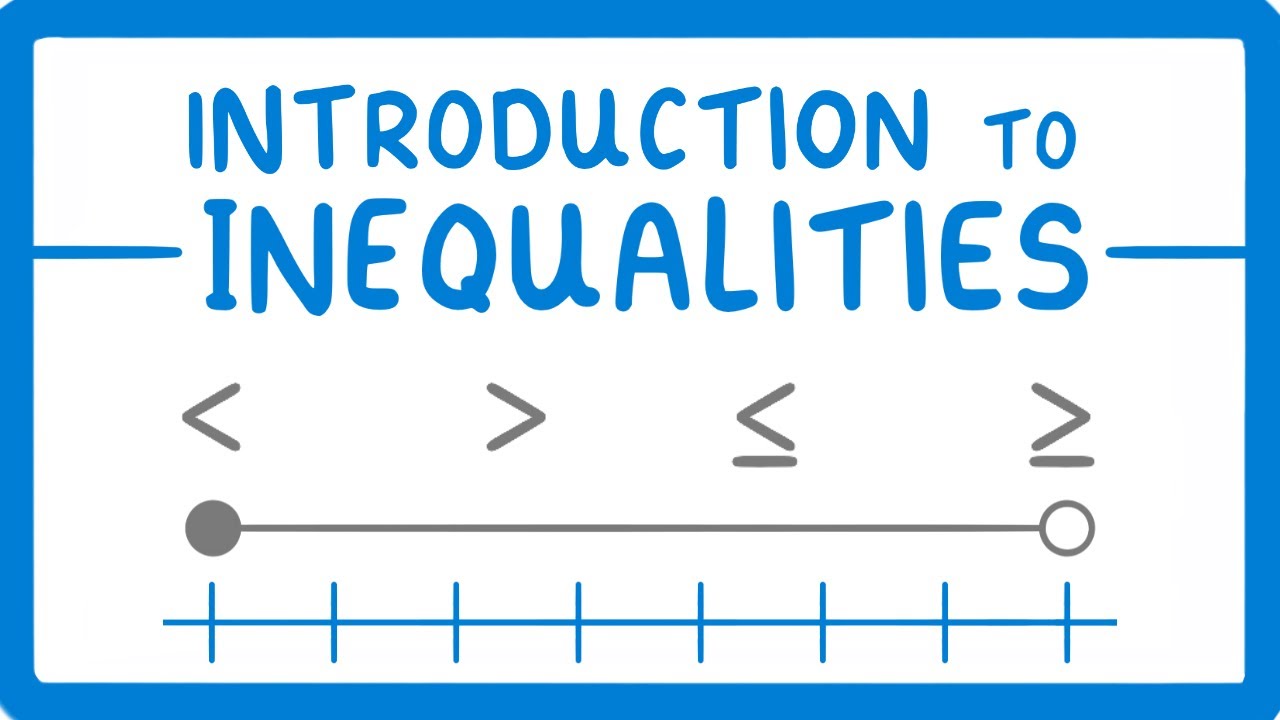
In Grade 6, the focus is on graphing solutions to one-variable inequalities, such as x > 3 or y ≤ -1, on a number line. Key skills include using open and closed circles correctly and shading in the proper direction to represent all possible solutions.
How can I introduce graphing inequalities on a number line to 6th graders?
Start by connecting inequality symbols to familiar language, like "greater than" (>) or "at least" (≥). Use a number line to visually demonstrate how a closed circle includes the number itself, while an open circle does not. This helps students build a conceptual link between the algebraic inequality and its graphical representation.
What are common mistakes 6th graders make when graphing inequalities?
The two most frequent errors are confusing open and closed circles (e.g., using an open circle for ≤) and shading the number line in the wrong direction. Consistent practice with both graphing and interpreting graphs helps correct these misconceptions.
What types of problems help 6th graders practice graphing inequalities?
The best practice includes a mix of tasks. Provide quizzes that ask students to: 1) Graph a given inequality on a number line. 2) Write the inequality that matches a given graph. 3) Determine if a specific number is a solution to an inequality.
How can I use these Grade 6 inequality quizzes with my students?
These quizzes can be used as printable PDFs for hands-on practice or assigned as a digital activity on Wayground. The printable format is excellent for developing the motor skills of drawing number lines and shading, while the digital format provides immediate feedback. All quizzes come with a full answer key.
How does this topic align with Grade 6 math standards?
Graphing on a number line directly addresses Common Core standard 6.EE.B.8, which requires students to write and recognize inequalities and represent their solutions on a number line. Mastering this is a crucial foundation for solving more complex inequalities in later grades.

Accessibility
Features
Wayground Super
School & District
Wayground for Business
Create a quiz
Create a presentation
Wayground AI
Subjects
Mathematics
Social Studies
Science
Physics
Chemistry
Biology
About
Our Story
Wayground Blog
Media Kit
Careers
Support
F.A.Q.
Help & Support
Privacy Policy
Terms of Service
Teacher Resources
2026 Wayground


Get our app

