Search Header Logo
Amendments 11-27

Amendments 11-27

Assessment

Presentation

Social Studies

10th - 12th Grade

Medium

Created by

David Cruz

Used 9+ times

FREE Resource

17 Slides • 27 Questions

1
Amendments 11-27

media

2

Amendment 11

  • States cannot be sued in federal court by one of its citizens, a citizen of another state, or by a foreign country

  • This amendment established the legal doctrine of "sovereign immunity", which protects government entities or officers acting in their official capacity from being sued over the performance of their duties. 

  • It was adopted in 1795 in response to a 1793 U.S. Supreme Court case, Chisholm v. Georgia.

3

Amendment 12

  • Election of the President and Vice-President

  • Use of electoral college to use separate ballots in voting for president and vice-president

  • 270 out of 538

  • Electoral Votes 100 in senate+435 in House of Reps +3 votes from D.C.

4

Amendment 13

  • Known as Civil War Amendment

  • Outlaws the practice of slavery in the United States

  • The 13th Amendment is perhaps the most important amendment in American history. Ratified in 1865, it was the first of three "Reconstruction amendments" that were adopted immediately following the Civil War.

5

Multiple Choice

prohibits a citizen of one state or a citizen of another country from suing another state in federal court.
1
Amendment 15
2
Amendment 17
3
Amendment 13
4
Amendment 11

6

Multiple Choice

Former slaves were now American citizens (and should be treated equally regardless of race, gender, ethnicity, or sexual orientation).
1
Amendment 13
2
Amendment 17
3
Amendment 14
4
Amendment 19

7

Multiple Choice

Requires members of the Electoral College to cast two separate ballots: one for president and one for vice-president.
1
Amendment 15
2
Amendment 12
3
Amendment 11
4
Amendment 22

8

Multiple Choice

prohibits a citizen of one state or a citizen of another country from suing another state in federal court.
1
Amendment 15
2
Amendment 17
3
Amendment 13
4
Amendment 11

9

Multiple Choice

These people are not allowed to sue U.S. states:
1
immigrants
2
citizens of foreign countries
3
people who live in that state
4
people under the age of 25

10

Multiple Choice

Which amendment banned slavery?
1
13th Amendment
2
20th Amendment
3
15th Amendment
4
27th Amendment

11

Multiple Choice

Question image
Prevents citizens from suing a state
1
11th 
2
21st 
3
17th 
4
12th 

12

Amendment 14

  • Also known as Civil War Amendment

  • Originally meant to protect the rights of freed slaves

  • Now protects all citizens’ life, liberty or property without due process

  • All have equal protection under the law

  • Section 1 contains four major clauses: the Citizenship Clause, the Privileges & Immunities Clause, the Due Process Clause, and the Equal Protection Clause.

13

Amendment 15

  • Last of the three Civil War Amendment

  • No person shall be denied the right to vote because of race ( Gender not included)

  • Many states found ways to circumvent the amendment's purpose 

  • Poll taxes, literacy tests, etc. worked against

  • Women not included

14

Amendment 16

  • Congress can collect income tax

  • The impetus for the 16th Amendment was an 1894 U.S. Supreme Court case, Pollock v. Farmers' Loan & Trust Co., which held that an income tax on property was the equivalent of a direct tax and thus prohibited under Article I, section 9 of the Constitution.

  • It has become the lightning rod for challenges by "tax protestors", citizens who believe that the amendment was not correctly ratified.

15

Amendment 17

  • 2 Senators from each state are directly elected by the people

  • Before this amendment's adoption in 1913, senators were elected by state legislatures, which led to perceived corruption in state politics and a movement to allow citizens to directly elect their senators. 

  • Gave people a greater voice

  • Expanded the vote

16

Multiple Choice

Created the Income Tax
1
Amendment 11
2
Amendment 16
3
Amendment 14
4
Amendment 18

17

Multiple Choice

US citizens of each state elect US Senators instead of the state legislature from that state
1
Amendment 11
2
Amendment 17
3
Amendment 14
4
Amendment 27

18

Multiple Choice

The Reconstruction Amendment(s):
1
13th Amendment
2
14th Amendment
3
15th Amendment
4
All of the above

19

Multiple Choice

The Reconstruction Amendment(s):
1
13th Amendment
2
14th Amendment
3
15th Amendment
4
All of the above

20

Multiple Choice

The 13th, 14th, and 15th Amendments arose during the time period ___.
1
right after the Civil War.
2
during the Civil Rights movement.
3
before the Civil War.
4
after the Declaration of Independence was written.

21

Multiple Choice

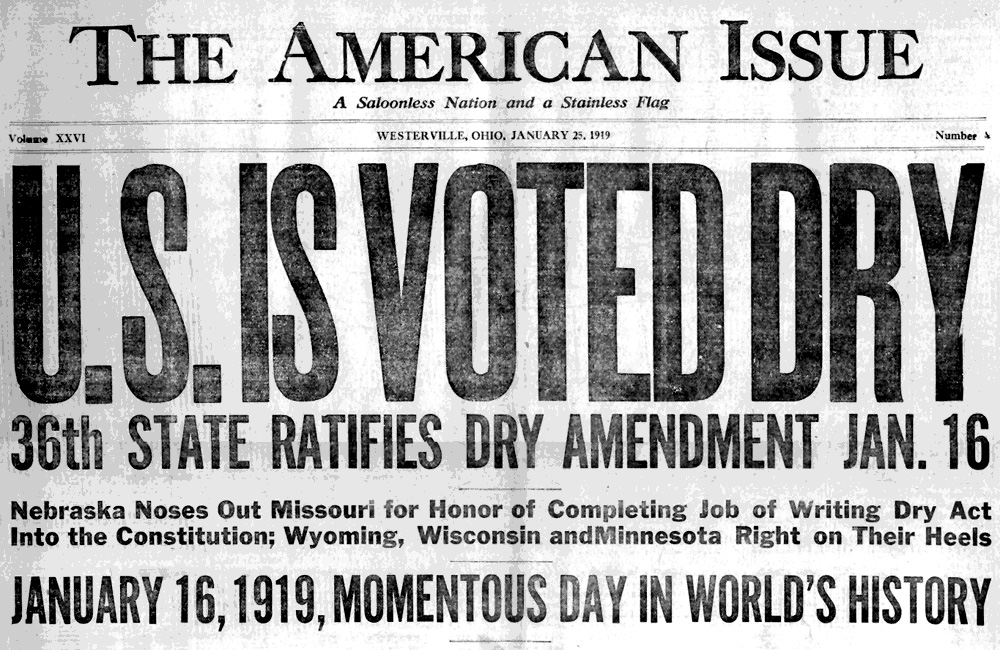
The 18th Amendment banned ___.
1
drinking alcohol.
2
selling alcohol.
3
using cigarettes.

22

Multiple Choice

Question image
Instituted prohibition in the United States 
1
18th
2
20th
3
15th
4
26th

23

Multiple Choice

Question image
Provided for the direct election of state senators
1
17th
2
19th
3
15th
4
21st

24

Multiple Choice

Question image
Create a national income tax
1
16th 
2
18th
3
23rd
4
12th

25

Multiple Choice

Question image
Provides full suffrage for all men in the United States 
1
15th
2
19th
3
13th
4
25th

26

Multiple Choice

Question image
Provided equal rights and equal protection under the law for all Americans 
1
14th
2
22nd
3
15th
4
19th

27

Amendment 19

  • Women’s Suffrage

  • The right to vote cannot be denied because of gender

  • The amendment overruled an 1875 U.S. Supreme Court case, Minor v. Happersett, which had held that the 14th Amendment did not require states to allow women to vote.

28

Amendment 20

  • “Lame-Duck” Amendment

  • President takes office January 20th

  • Congress begins new term January 3rd

  • Outgoing officials have little influence and do not accomplish much 

  • If president-elect dies before taking office, vice-president elect becomes president

  • Before it took effect, there was no exact date set for when Congress must convene or for the beginning and ending of terms of service. This amendment removed that uncertainty.

29

Amendment 21

  • Repeals the 18th Amendment 

  • Only amendment to repeal an amendment

  • It invalidated the federal laws banning alcohol and returned to the states the power to set their own alcohol regulations.

30

Amendment 22

  • President cannot serve more than 2 full terms

  • Passed as a response to FDR’s 4 terms in office (1933 – 1945)

  • Before the adoption of this amendment in 1951, there were no legal restrictions on how many terms a president could serve

31

Amendment 23

  • Allows the citizens of the Washington D.C. to vote for president and vice president

  • 3 presidential electors

  • Adopted in 1961, this amendment granted residents of the District of Columbia the right to participate in presidential and vice-presidential elections

32

Amendment 24

  • Prohibits the use of poll taxes in federal elections

  • Poll taxes used to keep low-income minorities from voting

  • The 24th Amendment, ratified in 1964, was intended to prevent southern states from forcing poor voters to choose between paying an often unaffordable tax and losing their right to vote. 

  • This amendment was necessary due to a 1937 U.S. Supreme Court decision, Breedlove v. Suttles, which had found poll taxes to be constitutional.

33

Amendment 25

  • If the president dies or cannot lead, vice-president takes office

  • If the vice-president dies or resigns, the president cannot appoint a replacement

  • Subject to Congressional consent

  • The 25th amendment was adopted in 1967. Although the need to clarify the rules of succession had been obvious for decades, it wasn't until the assassination of President John F. Kennedy that this amendment finally gained the momentum to pass.

34

Amendment 26

  • No one over the age of eighteen can be denied the right to vote by virtue of age

  • This amendment, adopted in 1971, lowered the voting age from 21 to 18. The movement to finally pass it grew out of the perceived unfairness of 18 to 20-year-old men being eligible to be drafted into service in the Vietnam War, but ineligible to vote.

35

Amendment 27

  • Any pay raise Congress gives it’s members does not take effect until a new election has taken place.

  • Proposed in 1789, passed in 1992

  • The 27th Amendment was proposed in 1789 as part of the original Bill of Rights; however, it wasn't adopted for over 200 years. 

36

Multiple Choice

Question image
Prevents Congress from voting itself a pay raise during its current term
1
27th
2
25th
3
28th
4
23rd

37

Multiple Choice

Question image
Lowers the voting age in the United States to 18
1
26th 
2
27th
3
23rd
4
22nd

38

Multiple Choice

Question image
Clarifies what happens in case of the death, removal or resignation of the President or Vice-President
1
25th 
2
26th
3
22nd
4
23rd

39

Multiple Choice

Question image
Abolished poll taxes in the United States 
1
24th
2
23rd
3
25th
4
17th

40

Multiple Choice

Question image
Provides presidential electoral votes for residents of Washington D.C. 
1
23rd 
2
25th
3
26th
4
21st

41

Multiple Choice

Question image
Limits the President to serving two terms in office
1
22nd
2
26th
3
27th
4
20th

42

Multiple Choice

Question image
Repealed the 18th amendment and ended prohibition in the United States
1
21st
2
22nd
3
23rd
4
20th

43

Multiple Choice

Question image
Moved the inauguration of the President from March to January
1
20th
2
22nd
3
23rd
4
24th

44

Multiple Choice

Question image
Provided full female suffrage in the United States 
1
19th
2
21st
3
15th
4
16th

Amendments 11-27

media

Show answer

Auto Play

Slide 1 / 44

SLIDE