Space Science Part 3: The Universe
Presentation
•
Science
•
10th Grade
•
Practice Problem
•
Hard
Standards-aligned
Abby Fancsali
Used 13+ times
FREE Resource
16 Slides • 4 Questions
1
Space Science Part 3: The Universe
By Abby Fancsali
2
The Night Sky
Watching the stars was easier before modern cities
Lights and pollution make it hard to see
Throughout History, people built structures to help follow the movement of the sun and the moon
Stonehenge in England
Every star generates its owns light which is reflected through the atmosphere
Stars seen outside of the atmosphere don't "twinkle" the way they do on Earth
3
Measuring distance in space
Unit of astronomical distance is the light-year (ly)
The distance light travels in one year
9.5 × 10¹² km
4
Fill in the Blank
The nearest star to the Earth beyond the sun is proxima centauri, located 4.2 light years away. Express this distance in Kilometers
5
Origin of Stars
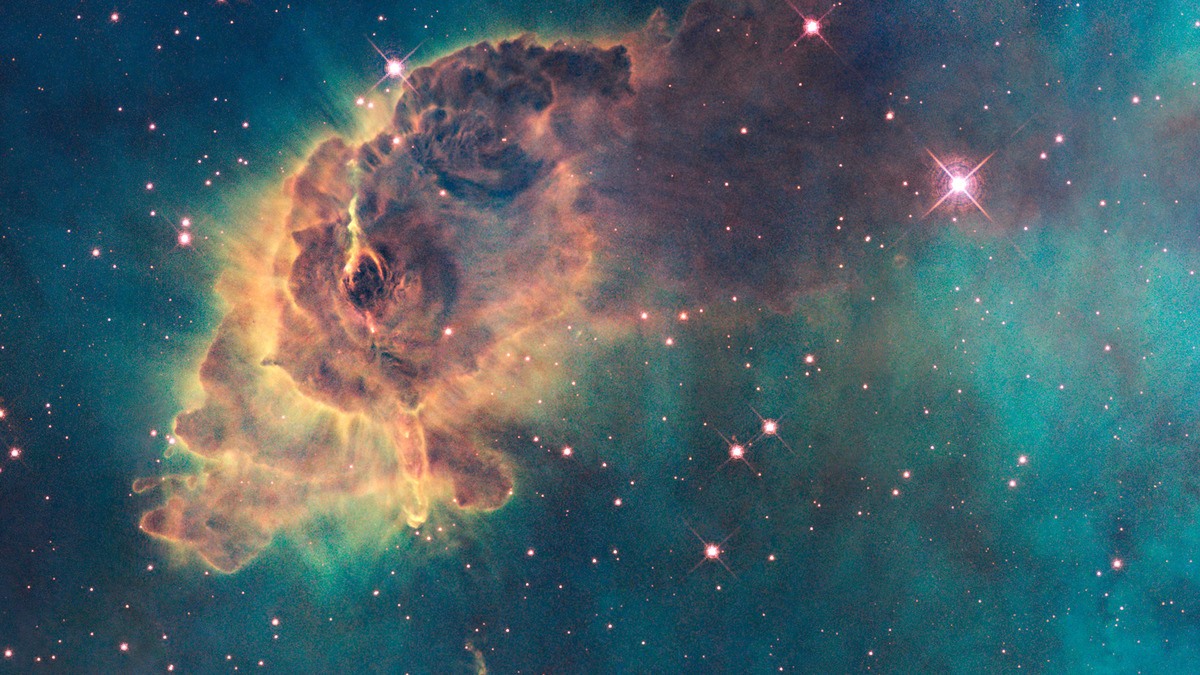
Stars come from nebulae, swirling clouds of hydrogen
Nebulae have very little mass and don't exert much gravity
As atoms in the stars move, they are slowly brought closer and closer together and form a protostar
Still smaller than a star,
Protostars tend to shrink and pull matter closer together, raising the pressure and temperature to the point that eventually nuclear reactions take place, making it a full grown star
Radiation forces cause the star to expand, gravity causes the star to contract
6
Evolution and Death of Stars
All Stars "burn" nuclear fuel
When that fire burns out, the star dies
Stars go through several stages before their death
Stages depend on the mass of the star
Medium sized stars: As helium contracts, the core heats up and expands to become a Red Giant
Our sun will do this in about 5 billion years
7
Evolution and Death of Stars
Stars go through several stages before their death
Stages depend on the mass of the star
Smaller sized stars: Masses are not hot enough to fuse carbon, so they shrink
While shrinking, they lose particles and leave behind the core, which is called a White Dwarf
will eventually burn out and change into a stellar remnant and change colors from white to yellow to red to black
8
Evolution and Death of Stars
Stars go through several stages before their death
Stages depend on the mass of the star
Binary Stars: Some white dwarf stars "pair up and exert a pull on each other
One star may pull hydrogen from the other and ignite fusion
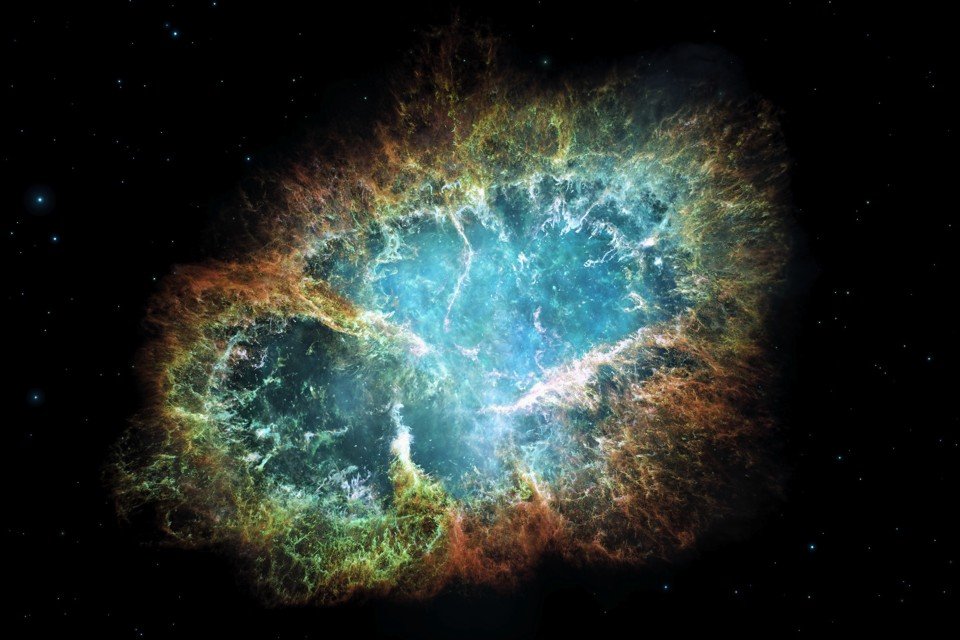
Nova: the thermonuclear explosion of a star
9
Supernovae
Larger stars don't go through the different dwarf stages
As larger stars contract, heat is generated, allowing carbon nuclei to fuse in the core and release heavier elements until iron is formed
Contraction pauses until all carbon is fused, then continues
Fusing beyond iron requires more energy than the star can release, causing the star to collapse into a Black hole
Gravity in a black hole is so strong nothing can escape it
10
11
Multiple Choice
What determines if a star becomes a white dwarf, neutron star, or black whole?
Size
Shape
Types of Elements in the star
The age of the star
12
Multiple Choice
Gases in a nebula come together to form what?
red dwarfs
protostars
black holes
white dwarfs
13
Multiple Choice
Smaller stars turn in to these as they age
nova
supernova
black holes
white dwarfs
14
Galaxies
A Galaxy is a large group of stars, planetary nebulae, and interstellar gas/dust held together by gravity
We exist in the Milky Way Galaxy
In good conditions we can see the outline of the Milky Way with our eyes
Galaxies come in three main shapes
elliptical
spiral
irregular
15
Elliptical Galaxies
The most Common type of galaxy in the universe
Sphere shaped, with most stars crowded towards the center
Contain little gas or dust
Are see through, and usually yellow
primarily older stars
Smaller than other types of Galaxies
16
Spiral Galaxies
Have different arrangements of stars
Have some sort of hub with in them
Most have a black hole in the center
17
Irregular Galaxies
As galaxies move in space, they may collide with each other and distort each other into unusual shapes
18
Irregular Galaxies
As galaxies move in space, they may collide with each other and distort each other into unusual shapes
19
The Big Bang
Until the 1920's, scientists thought the Milky way the entire Universe
1924: Edwin Hubble used a powerful telescope to see the Andromeda galaxy
1931: Fr. Georges Lemaitre proposes the Big Bang theory
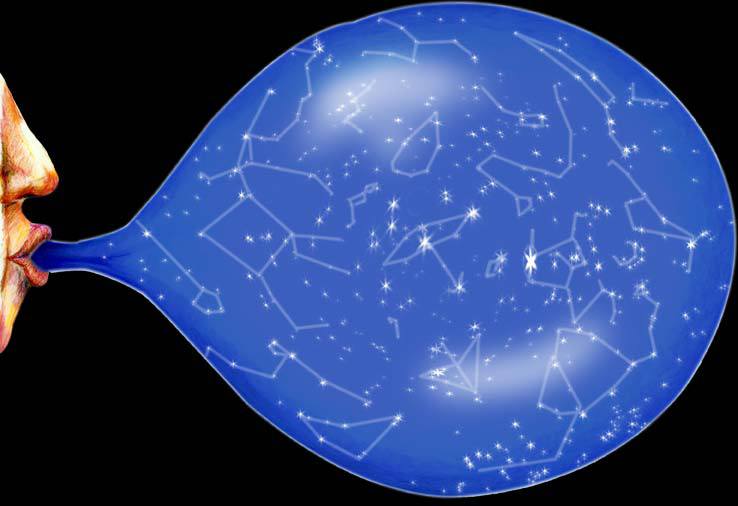
says that at there was one point where the universe exploded into being and began to grow, and it continues to do so
A cosmic egg
His idea was originally rejected as being too extreme, but was proven correct and accepted
20
Space Science Part 3: The Universe
By Abby Fancsali
Show answer
Auto Play
Slide 1 / 20
SLIDE
Similar Resources on Wayground
18 questions
Plants
Lesson
•
6th - 8th Grade
14 questions
B1 Lesson 2 Plant Cells
Lesson
•
10th Grade
16 questions
Chemical reactions and energy
Lesson
•
9th Grade
16 questions
Photosynthesis
Lesson
•
9th Grade
15 questions
Dehydration Synthesis and Hydrolysis
Lesson
•
10th Grade
14 questions
Properties of Ionic Compounds
Lesson
•
10th Grade
13 questions
Mitosis
Lesson
•
10th Grade
12 questions
Enzymes
Lesson
•
10th Grade
Popular Resources on Wayground
8 questions
Spartan Way - Classroom Responsible
Quiz
•
9th - 12th Grade
15 questions
Fractions on a Number Line
Quiz
•
3rd Grade
14 questions
Boundaries & Healthy Relationships
Lesson
•
6th - 8th Grade
20 questions
Equivalent Fractions
Quiz
•
3rd Grade
3 questions
Integrity and Your Health
Lesson
•
6th - 8th Grade
25 questions
Multiplication Facts
Quiz
•
5th Grade
9 questions
FOREST Perception
Lesson
•
KG
20 questions
Main Idea and Details
Quiz
•
5th Grade
Discover more resources for Science
10 questions
Exploring the Evolution of the Peppered Moth
Interactive video
•
6th - 10th Grade
35 questions
DNA Structure and Replication
Quiz
•
10th Grade
10 questions
Exploring Trophic Levels and Food Pyramids
Interactive video
•
6th - 10th Grade
10 questions
Symbiotic Relationships
Lesson
•
9th - 12th Grade
17 questions
Sex-Linked, Co and Incomplete Dominance
Quiz
•
9th - 12th Grade
20 questions
Biology - Intro to Genetics
Quiz
•
10th Grade
10 questions
Exploring Earth's Spheres and Their Interactions
Interactive video
•
6th - 10th Grade
25 questions
Types of Chemical Reactions and Balancing Equations
Quiz
•
10th Grade