Search Header Logo
  1. Resource Library
  2. Science
  3. Chemistry
  4. Chemical Reactions
  5. Self Paced: Chemical Reactions Part 1
Self paced: Chemical reactions Part 1

Self paced: Chemical reactions Part 1

Assessment

Presentation

Science

7th - 9th Grade

Easy

NGSS
MS-PS1-5, MS-PS1-2, MS-PS1-1

+2

Standards-aligned

Created by

STEPHANIE SLUSS

Used 8+ times

FREE Resource

13 Slides • 28 Questions

1

​Chemical Equations

Today you will:

  1. Review chemical changes

  2. Learn parts of a chemical equation

  3. Learn how to apply LOCOM to chemical equations

Some text here about the topic of discussion

2

The next slide is a reaction- it is a twist on one we did in class...

​Watch the video and see if you can figure out what kind of change is taking place.

3

4

Open Ended

What kind of a change was that and why?

5

How can we tell when a chemical reaction has occured?

Remember these?

color change change in odor

Production of a gas ( bubbles) formation of a precipitate

Energy Production ​

​Write these on your paper.....

media

6

Draw

Circle the signs you saw in the alka seltzer reaction?

7

media

8

Multiple Choice

A real world example of color change is

1

Train rusting

2

Patina on the statue of liberty

3

apple turning brown

4

all of these are real world examples

9

media

10

media

11

Draw

What are the bubbles? Circle these on the slide

12

Multiple Choice

We know that there was a chemical reaction occurring when 2 clear liquids were mixed together. That is because we show the production of a _____________.

1

solid.

2

precipitate.

3

gas.

13

Multiple Select

You know that a chemical reaction is occurring here because you see __________________ . (Pick 3)

1

purple color

2

smoke

3

ice formation

4

fire

5

a yellow precipitate

14

Models are important in Science

How do scientists model atoms?

Some text here about the topic of discussion

15

Draw

Draw a model of Lithium. It has 3 protons, 4 neutrons and 3 electrons

16

Chemical Equation: models chemical reactons and shows how the atoms are rearranged.

media

17

Draw

This equation models what happens when Hydrogen and oxygen come together to make water. Circle water.

18

Multiple Choice

How do scientist model chemical reactions?

1

chemical equations

2

Bohr models

3

They dress the atosm up adn put them on a runway

4

music and lots of clay

19

media
media

20

Draw

Circle the reactants. what you start with

21

Draw

Circle the products. What you end with

22

Multiple Choice

Question image

What are the reactants in this reaction?

1

H2 and O2

2

H2

3

O2

4

H2O

23

Multiple Choice

Question image

The reactants in the image above are:

1

CH4 and 2 O2

2

2 H2O and CO2

3

All of these are reactants

4

All of these are products

24

Multiple Choice

What is the left part of a chemical equation called?

2H2 + O2 ---> 2H2O

1

Reactants

2

Yields

3

Products

4

Chemical equation

25

Multiple Choice

What is the right part of a chemical equation called?

2H2 + O2 ---> 2H2O

1

Reactants

2

Yields

3

Products

4

Chemical Equation

26

Multiple Choice

Complete the sentence.


During a chemical reaction, atoms ________.

1

can appear

2

can disappear

3

get rearranged

4

stop moving and vibrating

27

Multiple Choice

Matter can not be created nor destroyed: it can only be
1
Destroyed a little bit
2
Invisible
3
Transformed, changed
4
None of the above

28

​Law of Conservation of Matter

Matter can be transformed but it is never created or destroyed.

​glow party memories...

media

29

​What does this have to do with equations?

If you start with 100 grams of reactants you will end with 100 grams of products.

Some text here about the topic of discussion

30

Multiple Choice

If reaction starts with 20g of reactants it should produce 
1
a total of 40g of products
2
a total of 10g of products
3
a total of 80 g of products
4
a total of 20g of products

31

Multiple Choice

Jamie weighs a glass of water and observes its weight to be 12 ounces. Jamie then adds 6 ice cubes to the glass of water. Each ice cube weighs one ounce. After all of the ice cubes have melted, what will be theapproximate weight of the glass of water?
1
2
12 
3
18 ounces

32

Multiple Choice

The Law of Conservation of Mass States

1

Energy cannot be created nor destroyed, it can only change form.

2

Mass cannot be created nor destroyed, it can only change form.

3

Mass can be created or destroyed, it cannot change form.

33

Multiple Choice

According to the Law of Conservation of Mass, what happens to the wood and oxygen when it is burned?

1

The wood disappears.

2

It stays the same chemically.

3

The atoms in the wood and oxygen rearrange and form smoke and ash.

4

Nothing.

34

Multiple Choice

A 55-gram egg is placed in a pot. After the egg is boiled, which is most likely the mass of the egg?
1
50 
2
55 

35

Multiple Choice

 Hint: Read this twice.....

In a reaction A + B ----> C,  reactant A has 5g and product  C has 9g. How many grams does reactant B should have?

1
4g
2
5g
3
9g
4
14g

36

Multiple Choice

Question image

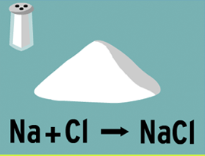
When sodium and chlorine combine to form sodium chloride, sodium chloride is the:

1

Originator

2

Reactant

3

Product

4

Valence wielder

37

Multiple Choice

Jason poured 500 grams of water into a container and tightly sealed it. The water was allowed to freeze. Which is most likely true about the ice that formed?
1
The mass of the ice is the same as the mass of the water.
2
The mass of the ice is greater than the mass of the water.
3
The ice formed is a different substance than the water.
4
The ice formed is the same temperature as the water.

38

Multiple Choice

Question image
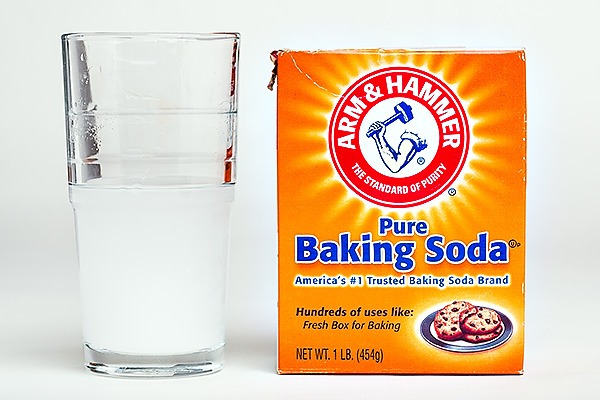
Anthony is performing an experiment. He adds 0.25 grams of baking soda to 5 grams of water and stirs. Anthony watches as the baking soda dissolves in the water. If Anthony weighs the water and baking soda solution, what will its mass be?
1
4.75 grams
2
5.0 grams
3
5.25 grams
4
7.5 grams

39

Poll

Question image

How do you feel about labeling a chemical equation?

I am a labelling expert. People will come from everywhere to get my help

I get it but would like more practice

I sort of get it but need more help to really understand

I have no idea how to do any of this... What is an equation

40

Poll

Question image

How do you feel about applying the Law of conservation of matter to equations

i totally get it. Ask me anything

I understood some problems but not all of them

I am pretty confused, s....o....s....s...o....s....

41

​1. Now, fill out the key words on your notes...

​2. Then, label the eqution and answer the "today I learned" portion...

Some text here about the topic of discussion

​Chemical Equations

Today you will:

  1. Review chemical changes

  2. Learn parts of a chemical equation

  3. Learn how to apply LOCOM to chemical equations

Some text here about the topic of discussion

Show answer

Auto Play

Slide 1 / 41

SLIDE