

Q3 exam review with slides

Presentation
•
Biology
•
9th Grade
•
Easy
+10
Standards-aligned

Renata Stojanova
Used 7+ times
FREE Resource
57 Slides • 42 Questions
1

Urey-Miller
Experiment
•
In 1953, chemists Stanley Miller
and Harold Urey tried recreating
conditions on early Earth to see if
organic molecules could be
assembled from inorganic
molecules under these
conditions.
• Tried their own chemical soup.
•
ORGANIC COMPOUNDS, SUCH
AS AMINO ACIDS WERE
PRODUCED! THIS COULD HAVE
ENABLED LIFE TO EMERGE.
2

Theory of
Biogenesis
3

RNA World Hypothesis
4

Endosymbiotic Theory
5

6
Multiple Choice
7
Multiple Choice
Miller/Urey and other scientists studying the origin of life have shown that:
Formation of life on early Earth required material from space
Simple cells can be produced in a laboratory using spontaneous generation
Oxygen and water were present in the atmosphere to support life
Organic molecules like amino acids and nucleotides could be produced from abiotic/inorganic molecules
8
Multiple Choice
The theory of endosymbiosis explains
how eukaryotic cells develop from prokaryotic cells
how prokaryotic cells develop from eukaryotic cells
how bacteria live
why cells rely on one another
9
Multiple Choice
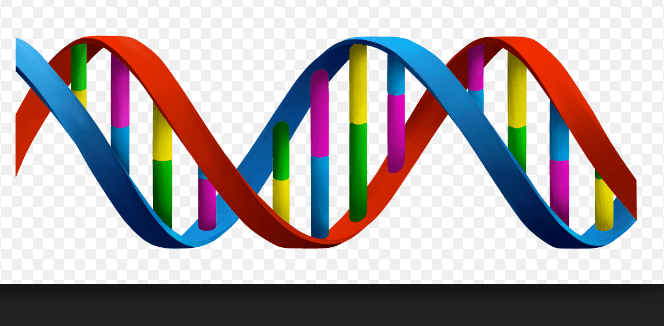
10
Multiple Choice
The theory of endosymbiosis is about
simple microorganism engulfing other simple microorganisms and learning to live together
how prokaryotic cells develop prom eukaryotic cells
simple microorganism engulfing other simple microorganisms and self-destructing
life having to come from life
11

Evolution
•The process of
gradual
and accumulating
change in DNA
in living organisms
over time.
12

Darwin’s natural selection
• Natural selection is the
process by which organisms
in nature with variations most
suited to their local
environment survive and
reproduce thus leaving more
offspring.
• Survival of the fittest.
• One mechanism that leads
to evolution.
13

Four conditions for natural selection!
1.Variation = there are differences between individuals in a
population
2.Heritability = parents pass on their traits onto their kids
3.Overproduction (struggle to survive) = more are made than
survive. This is due to pressures in their surroundings.
4.Reproductive Advantage = those that have the
adaptations to survive the pressures of their environment,
will continue to live, reproduce and pass on their genes.
14

15

Evolution needs CHANGES!
• Specifically, changes in ALLELE frequency!
16

Mechanisms
that lead to
Evolution
Natural
Selection
Gene
flow
Genetic
drift
Mutations
17

MUTATIONS
❖Mutations are
random changes in a
DNA sequence.
18

In addition to mutations...
❖The events shown in the
visual also bring about
changes and variation!
19

Genetic drift
• Change due to a random event.
• It has a greater effect on smaller
populations.
• Can lead to a “bottleneck effect” – a
change in allele frequency following a
drastic reduction in the size of a
population.
• Can also lead to "founder's effect"
which occurs when a new colony is
started by a few members of the
original population. This small
population size means that the colony
may have reduced genetic variation
from the original population.
20

Gene flow
• Change in allele frequency due to migration of
organisms from one existing to another existing
population.
21

22
Multiple Choice

23
Multiple Choice
24
Multiple Choice

25
Multiple Choice
death of the organism in which they develop
genetic variation needed for a population to evolve
benefits for the individual, not for the population
Hardey-Weinberg equilibrium within a population
26
Multiple Choice
Extinction
Gene flow
Genetic drift
Natural Selection
27
Multiple Choice

Mutations lead to evolution by
bringing changes to the allele frequency due to changes in DNA sequences
bringing changes to the allele frequency as a result of migration of certain individuals in or out of a population
bringing changes to the allele frequency as a result of a chance (random) event that changes the population
bringing changes to the allele frequency as a result of differences in survival of variations in a population
28
Multiple Choice
Genetic drift leads to evolution by
bringing changes to the allele frequency due to changes in DNA sequences
bringing changes to the allele frequency as a result of migration of certain individuals in or out of a population
bringing changes to the allele frequency as a result of a chance (random) event that changes the population
bringing changes to the allele frequency as a result of differences in survival of variations in a population
29
Multiple Choice
A sickness wipes out a large number of a colony of caterpillars. What is this an example of?
Survival of the fittest
Founder's effect (genetic drift)
Gene flow
Bottle-neck effect (genetic drift)
30
Multiple Choice
A small group of ants separated from the colony and made their own kingdom in a new area. What is this an example of?
Survival of the fittest
Founder's effect (genetic drift)
Gene flow
Bottle-neck effect (genetic drift)
31

C
EVIDENCE FOR
EVOLUTION
32

Intermediate (transitional species)
show intermediate stages/slow
transition in the evolution of
many different groups of modern
species.
"connecting links"
33

Biogeography
1.Similarities and differences
between organisms?
2.Similar = share a common
ancestor
3.Different = since they live in
different environment, they
must have evolved in
different ways to better
adapt to their habitats
34

35

Comparative Anatomy
•Comparing body parts to find relatedness.
•Ex. the front limbs of amphibians, reptiles, birds, and
mammals contain the same basic bones.
36

Homologous Traits
• Similar structures that
are shared by
related species and
that have
been inherited from
a common ancestor
are
called homologous s
tructures.
• They point to
common ancestry.
37

Vestigial structures
• Leftover structures from
ancestors that no longer
serve a purpose in
modern species.
• Tell a story about
ancestry.
• Ex: tail bone in
humans, hip joint in
whales, etc.
38

Comparative embryology
• Similar patterns of
embryological develop
ment provide
further evidence
that organisms
have descended from
a common ancestor.
39

Molecular Biology
• MOST RELIABLE EVIDENCE
FOR EVOLUTION
• Using modern technology
to analyze DNA (a
molecule) samples and
make conclusions about
relatedness between
species.
Unknown
species
Dog
Fox
Wolf
40
Multiple Choice
A biologist is comparing two samples of DNA to find how related the two species are. He is relying on the field of
comparative anatomy
molecular biology
fossil record
biogeography
comparative embryology
41
Multiple Choice
A biologist is comparing two samples of human sternum bones to find how related the two species are. He is relying on the field of
comparative anatomy
molecular biology
fossil record
biogeography
comparative embryology
42
Multiple Choice
A marine biologist is analyzing the bone structure of a human arm and a whale. She is noticing that the are quite similar in structures, even though they serve different functions. These two structures must be
analogous
vestigial
homologous
heterologous
43
Multiple Choice
A whale has a hip joint. What is an explanation for this?
It may be a vestigial structure leftover from an ancestors who actually had hips.
It may be a homologous structure leftover from an ancestors who actually had hips.
It may be a analogous structure leftover from an ancestors who actually had hips.
44
Multiple Choice
Which evidence show patterns of change in organisms from early life to modern life?
homologous structures
transitional fossils
vestigial structures
proteins
45

5 trends in human evolution!
46

Trends in Hominid
Evolution
• Brain and skull size
47

48

Trends in Hominid
Evolution
• Jaw size
49

Trends in Hominid
Evolution
• Tool use
50

Trends in Hominid
Evolution
• Tool use
51

Trends in Hominid
Evolution
• Language
52
Multiple Choice
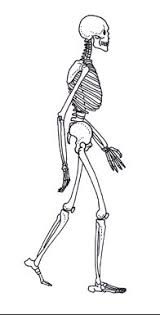
The ability to walk upright on two legs is called:
bipedalism
quadropedalism
bicyclepedalism
tripedalism
53
Multiple Choice
What happened to skull size in humans over time?
Skulls decreased in size
Skulls increased in size
54


Taxonomy 101
Initial classification based on physical
similarities.
Modern classification schemes look
beyond overall similarities and differences
and group organisms based on
evolutionary relationships.
First steps of classifying the living world
was a two – word naming system called
binomial nomenclature invented by
Carolus Linnaeus.
55

DOMAIN
KINGDOM
PHYLUM
CLASS
ORDER
FAMILY
GENUS
SPECIES
DEAR KING PHILIP
CAME OVER FOR
GREAT SPAGHETTI
BROADEST AND MOST INCLUSIVE GROUP
56

57

Changing Classification
58
Multiple Choice
The two-word naming system
binomial naming
binomial nomenclature
monomial nomenclature
dinomial nomenclature
59
Multiple Choice
How many domains are there?
3
6
1
2
60


Bacteria
Archaea
Eukarya
• Members are unicellular
and prokaryotic bacteria.
• Ecologically diverse, ranging
from free-living soil organisms to
deadly parasites.
• Some photosynthesize, while
others do not.
• Some are aerobic (need oxygen
to survive), while others
are anaerobic and are killed
by oxygen.
• Contains one
kingdom: Eubacteria
• Members are unicellular
and prokaryotic.
• They are extremophiles (live in
some extreme environments)—
in volcanic hot springs, brine
pools, and black organic mud
totally devoid of oxygen. Many
of these bacteria can survive only
in the absence of oxygen.
• Contains one
kingdom: Archaebacteria
• Fake bacteria
o Members
are unicellular or multicellular o
rganisms made of
eukaryotic cells.
o Includes the kingdoms of Protista,
Fungi, Plantae, Animalia
61


Animalia
◦
Members of the kingdom Animalia are
eukaryotic, multicellular and heterotrophic (eat
other organisms to get energy).
◦
Animal cells do not have cell walls.
◦
Most animals can move about, at least for some
part of their life cycle.
◦
There is incredible diversity within the animal
kingdom, and many species of animals exist in
nearly every part of the planet.
62


Plantae
◦
Members of the kingdom Plantae are
eukaryotic, multicellular, have cell walls that
contain cellulose, and are autotrophic (make
their own food).
◦
Autotrophic plants are able to carry on
photosynthesis using chlorophyll.
◦
Plants cannot locomote (they are nonmotile)—
they cannot move from place to place.
◦
Some textbooks may consider algae plants,
however, they are plant-like protists.
63


Fungi
◦
Members of the kingdom Fungi are
eukaryotic, heterotrophs (eat other
organisms to survive) with cell walls
containing chitin.
◦
Most fungi feed on dead or decaying
organic matter (decomposers).
◦
Mushrooms and other recognizable fungi
are multicellular, like the ghost fungus shown.
Some fungi—yeasts, for example—are
unicellular. So fungi can be multicellular or
unicellular.
64


The “Protists”: Unicellular
Eukaryotes
◦
The kingdom Protista has long been viewed by
biologists as a “catchall” group of eukaryotes that could
not be classified as fungi, plants, or animals.
◦
Most “protists” are unicellular, but one group, the brown
algae, is multicellular.
◦
Some “protists” are photosynthetic, while others are
heterotrophic.
◦
Some display characters that resemble those of fungi,
plants, or animals.
◦
Single-celled organisms found in pond water are
examples of protists.
65
Multiple Choice

Bacteria
Archaea
Eukarya
66
Multiple Choice

Unicellular
Multicellular
67
Multiple Choice
What does "Philip" stand for in "Dear king Philip came over for great spaghetti"?
phobium
philic
phamily
phylum
68
Multiple Select
Eukaryotic cells are cells found in organisms in the domain(s)
Eukarya
Archaea
Bacteria
69
Multiple Select
Which kingdoms have some organisms that can make their own food (autotrophic)?
Animalia
Plantae
Protista
Fungi
70
Multiple Choice

Archaebacteria
Fungi
Eubacteria
Protista
71
Multiple Choice
Which kingdom matches the following: multicellular, motile?
Plantae
Animalia
Protista
Fungi
72
Multiple Choice
Which kingdom matches the following: unicellular, multicellular, decomposers?
Plantae
Animalia
Protista
Fungi
73
Multiple Choice
Which kingdom matches the following: unicellular, heterotrophic, cell walls?
Plantae
Animalia
Protista
Fungi
74


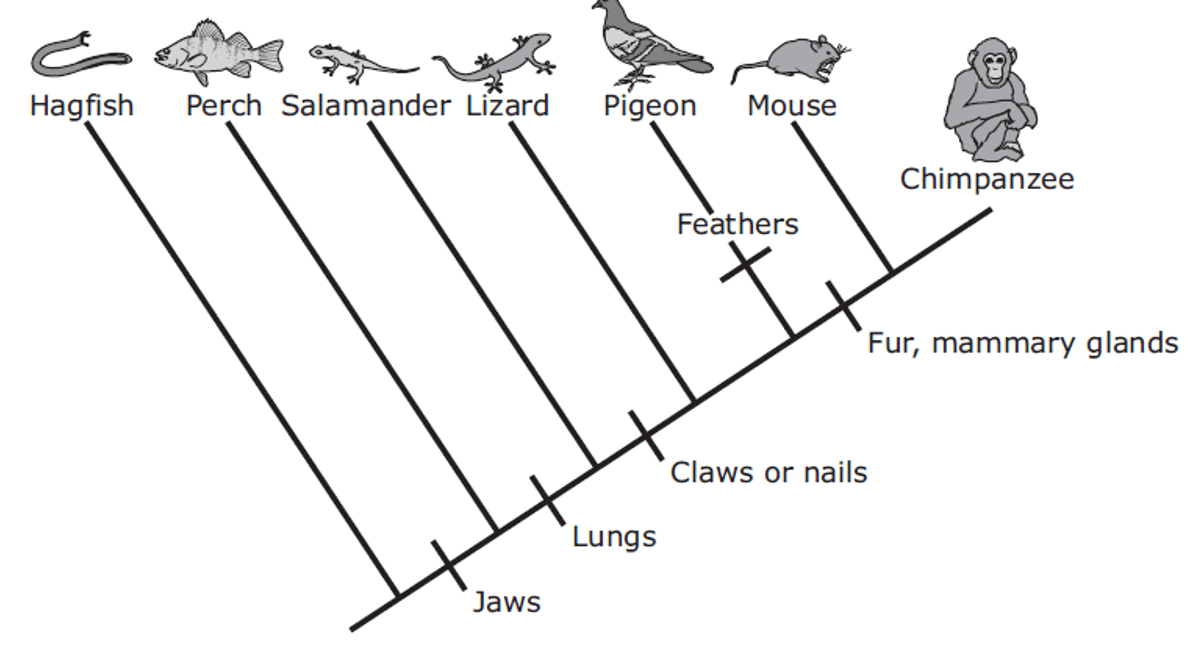
Parts of a cladogram:
• Root
• Branches
• Nodes = splitting/speciation event
• Groups/clades
• Ancestral lineage
• Traits
• Ancestral = traits appearing in the
earliest common ancestor
• Derived = traits appearing in the
latest ancestor
T
I
M
E
75


Parts of a
cladogram:
• Traits
• Ancestral = traits
appearing in
the earliest
common ancestor
• Derived = traits
appearing in
the latest ancestor
T
I
M
E
76
Multiple Choice
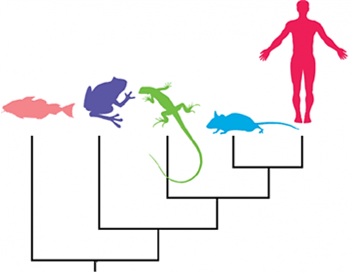
What is the human most closely related to?
Fish
mouse
Salamander
Human
77
Multiple Choice

Where is the alligator and T. rex's common ancestor?
Point A
Point B
Point C
Point D
78
Multiple Choice
79

Plant Tissues
80


Organs of a plant!
1. Roots = anchor and absorb nutrients from
ground
2. Stems = provide support, stability and allow
transportation of nutrients from roots to
everything else in a plant
3. Leaves = site of photosynthesis and
transpiration
4. Flowers = reproduction!
81

143431
82

Transportation & Transpiration
Roots absorb it from the soil.
Stems use their vascular tissues to move it
to the leaves, flowers, buds, etc.
◦ Xylem transports water
◦ Phloem transports food
Leaves are entry and exit points for the
gases and water (transpiration) needed by
plants.
◦ They have openings called stomata that are
surrounded by guard cells which control if the
stomata is open or closed.
83


84
Multiple Choice
The dermal tissue of plants is responsible for
transporting water
protection and preventing water loss
storage
transporting food
85
Multiple Choice
Stems contains vascular tissues such as xylem and phloem which allow _______________ of water and nutrients.
absorbance
transport
storage
use
86
Multiple Choice
A fruit is essentially the mature______________ of a pistil.
pollen tube
stigma
ovule
ovary
87
Multiple Choice
The cambium is a meristematic tissue, which means it is responsible for plant
growth
transpiration
photosynthesis
protection
88
Multiple Choice

Letter C is the
Ovule
Stamen
Pistil
Anther
89
Multiple Choice
The oxygen produced through photosynthesis will leave the leaves of plants through the openings called
guard cells
stomata
xylem
phloem
90
Multiple Choice
Transpiration refers to the ____ of water through a leaf’s pore called a _______
gain; stomata
gain; guard cell
loss; stomata
loss; guard cell
91


How does ATP really work?
92


93

Photosynthesis
Cellular Respiration
Goal
Make sugars
Convert sunlight (solar energy) into glucose
(chemical energy).
Break down sugars to obtain energy in the form of
ATP
Chemical formula
CO2 + H2O + solar energy
C6H12O6 + O2
C6H12O6 + O2
CO2 + H2O + ATP energy
Energy
absorbs
releases
Cellular location
Chloroplast
Mitochondria
94


Cellular respiration can be:
1. Aerobic = happening in
the presence of oxygen
2. Anaerobic = happening
in the absence of
oxygen
◦
Make a much smaller
amount of ATP
◦
Also called
fermentation
95


1. Carbon cycles
between the
atmosphere, living
organisms,
oceans/seas,
ground.
2. Carbon cycles in
many forms
including CO2,
carbohydrates,
fossil fuels, etc.
96


3. Combustion (burning) of fossil fuels
such as coal, gas, petroleum, in
vehicle and factories greatly
contributes to release of CO2 in the
atmosphere.
4. Fossil fuels (full of carbon) originate
in the ground. They are made from
dead organisms that have been
buried and exposed to pressure for
millions of years.
5. In addition to combustion, cellular
respiration done by all organisms
releases some carbon in the
atmosphere in the form of CO2.
97


6. Photosynthesis is
the main way to
absorb excess
carbon from the
atmosphere.
98

99

▪Evaporation and
transpiration = turn liquid
water to gas (water vapor)
by gaining energy
▪Precipitation = water
falling down as rain,
snow, hail, etc.
▪Condensation = water
vapor turning to liquid
due to losing energy.
Urey-Miller
Experiment
•
In 1953, chemists Stanley Miller
and Harold Urey tried recreating
conditions on early Earth to see if
organic molecules could be
assembled from inorganic
molecules under these
conditions.
• Tried their own chemical soup.
•
ORGANIC COMPOUNDS, SUCH
AS AMINO ACIDS WERE
PRODUCED! THIS COULD HAVE
ENABLED LIFE TO EMERGE.
Show answer
Auto Play
Slide 1 / 99
SLIDE
Similar Resources on Wayground

99 questions
La Familia: Lesson
Presentation
•
9th Grade
89 questions
Genetics Vocabulary
Presentation
•
9th Grade
92 questions
8.2.3-Newton's 2nd Law of Motion
Presentation
•
9th Grade
90 questions
Great Depression
Presentation
•
8th Grade
95 questions
Chapter 10: Principles of Evolution
Presentation
•
10th Grade
93 questions
F5(W) Shopping Therapy L26
Presentation
•
9th - 10th Grade
95 questions
History of life, evolution, classification
Presentation
•
9th Grade
97 questions
G-8..PLANT NUTRITION..2021
Presentation
•
8th Grade
Popular Resources on Wayground
10 questions
Safety Day 2026 – Student Review

Quiz
•
9th Grade
21 questions
Continents and Oceans
Quiz
•
6th Grade
20 questions
Parts of Speech
Quiz
•
5th Grade
16 questions
Subject & Predicate
Quiz
•
5th Grade
25 questions
Multiplication Facts
Quiz
•
5th Grade
12 questions
Map Skills
Quiz
•
3rd Grade
22 questions
Continents and Oceans
Quiz
•
5th Grade
15 questions
Rounding Decimals
Quiz
•
5th Grade
Discover more resources for Biology
20 questions
Cell Transport
Quiz
•
9th - 12th Grade
25 questions
photosynthesis and cellular respiration
Quiz
•
9th Grade
20 questions
Cell Cycle
Quiz
•
9th Grade
8 questions
DNA vs. RNA
Presentation
•
9th - 12th Grade
14 questions
Ecological Succession: Primary and Secondary
Quiz
•
9th Grade
20 questions
Characteristics of Life
Quiz
•
9th - 10th Grade
12 questions
Cell Cycle
Quiz
•
9th Grade
20 questions
Cell Organelles
Quiz
•
9th Grade