Search Header Logo
Biochemistry Pre-test

Biochemistry Pre-test

Assessment

Presentation

Biology

9th - 12th Grade

Medium

NGSS
HS-LS1-6, HS-LS1-1, HS-PS1-4

+7

Standards-aligned

Created by

David Jones

Used 6+ times

FREE Resource

0 Slides • 50 Questions

1

Multiple Choice

Question image

Which subatomic particle is not in the nucleus?

1

proton

2

neutron

3

electron

2

Multiple Choice

Which is not a particle in an atom?

1

electron

2

megatron

3

proton

4

neutron

3

Multiple Choice

The amino acid tryptophan has a chemical formula of C11H12N2O2. Which element isn't present in this molecule?

1

hydrogen

2

calcium

3

oxygen

4

nitrogen

4

Multiple Choice

Which is a Carbohydrate's monomer?
1
Sugar
2
Amino acids
3
Monosacharide
4
Nucleotide

5

Multiple Choice

Which two bio molecules have only Carbon, Hydrogen, and Oxygen?
1
Carbs/Nucleic Acids
2
Lipids/Carbs
3
Proteins/Nucleic Acids
4
Carbs/Proteins

6

Multiple Choice

A type of biological molecule that includes fats, oils, hormones, waxes, and components of cellular membranes ...
1
lipids
2
proteins
3
carbohydrates
4
nucleic acids

7

Multiple Choice

Question image
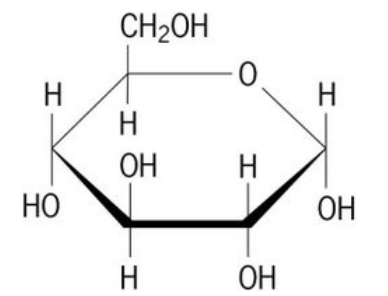
Glucose is an example of a
1
Carbohydrate
2
Lipid
3
Protein
4
Nucleic Acid

8

Multiple Choice

What is the purpose of an enzyme?

1

give permission for the reaction

2

raise activation energy

3

speed up reactions

4

control how many reactions occur

9

Multiple Choice

What happens when enzymes are heated to a high temperature?
1
The enzymes die.
2
The shapes of the enzyme are altered or denatured
3
The enzymes' amino acid sequence changes.
4
The enzymes remain the same

10

Multiple Choice

Question image
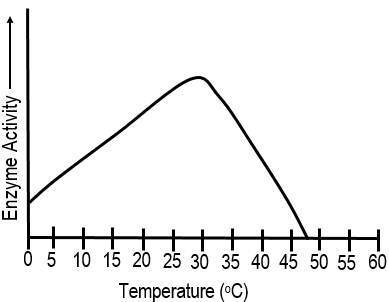
Based on the graph, what temperature does this enzyme work best? 
1
15 C
2
40 C
3
30 C
4
47 C

11

Multiple Choice

Most enzymes are composed of .....

1

Lipids

2

Carbohydrates

3

Proteins

4

Nucleic Acids

12

Multiple Choice

Where do substrates bind on an enzyme?
1
voltage-gated channels
2
surface receptor
3
calcium channels
4
active site

13

Multiple Choice

What type of bond is formed when atoms share electrons?

1

Covalent bond

2

Ionic bond

3

Hydrogen bond

4

van der Waals force

14

Multiple Choice

Imagine you're a scientist working on a new experiment. What would you call the energy needed to kickstart your chemical reaction?

1

Activation energy

2

Enzyme

3

Catalyst

4

Substrate

15

Multiple Choice

What is the starting material in a chemical reaction called?

1

Reactant

2

Product

3

Activation energy

4

Catalyst

16

Multiple Choice

Imagine you are in a chemistry lab. You observe a reaction where electrons are transferred from one atom to another. What type of bond is being formed in this scenario?

1

Ionic bond

2

Covalent bond

3

Hydrogen bond

4

van der Waals force

17

Multiple Choice

Imagine you are a scientist studying substances. How would you define an element in your research?

1

A substance that cannot be broken down into simpler substances by chemical means

2

A substance composed of two or more different elements chemically combined

3

Atoms of the same element that have different numbers of neutrons

4

Substances formed as a result of a chemical reaction

18

Multiple Choice

What are substances that release hydrogen ions (H+) in water called?

1

Acids

2

Bases

3

pH

4

Buffers

19

Multiple Choice

You are making a cup of tea. You add sugar and stir until it completely dissolves. What would you call this type of homogeneous mixture where sugar (one substance) is dissolved in tea (another substance)?

1

Solution

2

Mixture

3

Solute

4

Solvent

20

Multiple Choice

Question image
Which statement best describes the graph shown?
1
Reaction B occurs at a slower rate.
2
The original reaction is catalyzed.
3
Less energy is needed to start reaction B.
4
More energy is released by the original reaction.

21

Multiple Choice

Acetylcholine is an important chemical signal in the nervous system. It is  broken down into other chemicals by cholinesterase.Cholinesterase is which of the following?
1
enzyme
2
hormone
3
lipid
4
organelle

22

Multiple Choice

Question image
The specific reactants that an enzyme acts on are called
1
catalysts
2
substrates
3
proteins
4
amino acids

23

Multiple Choice

Question image
Which phrase best describes an exothermic chemical reaction?
1
releases more energy than it absorbs
2
forms products with higher bond energy than reactants
3
does not absorb any energy
4
is in a state of equilibrium

24

Multiple Choice

Question image
DNA and RNA are two types of
1
proteins
2
lipids
3
carbohydrates
4
nucleic acids

25

Multiple Choice

Question image
An altered form of the protein collagen causes a condition where bones break easily. Which of the following are components of collagen?
1
fatty acids
2
amino acids
3
nucleic acids
4
monosaccharides

26

Multiple Choice

Question image
Fats, oils, and cholesterol are all types of
1
fatty acids
2
lipids
3
hormones
4
cell membranes

27

Multiple Choice

Question image
Which category of carbon-based molecules includes sugars and starches?
1
proteins
2
carbohydrates
3
unsaturated fatty acids
4
phospholipids

28

Multiple Choice

Question image
Carbon is unique due to the carbon atom’s
1
hydrogen bonding strength
2
ionic compounds
3
six outer unpaired electrons
4
bonding properties

29

Multiple Choice

Question image
In the lock-and-key model of enzyme function shown in the figure, what is happening in step 2?
1
The active sites are restructuring the enzyme
2
The substrates are beginning to bind to the enzyme
3
The catalyzed reaction is releasing a product.
4
The enzyme is causing new bonds to form between the substrates.

30

Multiple Choice

Question image
Which aspect of a chemical reaction is affected by enzymes?
1
rate
2
direction
3
pH
4
equilibrium

31

Multiple Choice

Question image
The activation energy needed for a chemical reaction is decreased by a
1
reactant
2
product
3
catalyst
4
substrate

32

Multiple Choice

Question image
Chemical reactions that absorb more energy than they release are called
1
exothermic
2
catalyzed
3
endothermic
4
activated

33

Multiple Choice

Identify the products in this reaction: 6H2O + 6CO2  C6H12O6+ 6O2.
1
6H2O and 6CO2
2
6CO2 and C6H12O6
3
6H2O, C6H12O6, and 6O2
4
C6H12O6 and 6O2

34

Multiple Choice

Question image
Substances are changed into different substances when bonds break and form during
1
ion formation
2
chemical equilibrium.
3
chemical reactions
4
hydrogen bonding

35

Multiple Choice

Question image
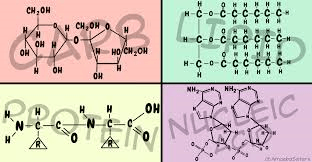
What elements are common to all 4 biomolecules?
1
Carbon, hydrogen, nitrogen
2
Carbon, Nitrogen, Phosphorus
3
Carbon, Hydrogen, Oxygen
4
Carbon, Hydrogen, Phosphorus

36

Multiple Choice

Question image
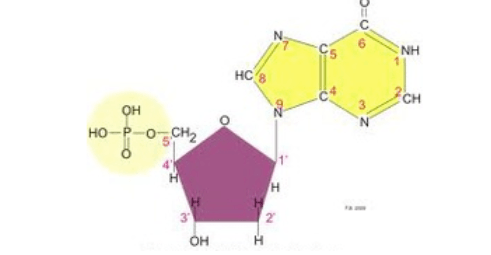
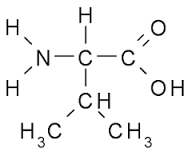
Which biomolecule is this a picture of?
1
Protein
2
Nucleic Acid
3
Lipid
4
Carbohydrate

37

Multiple Choice

Question image
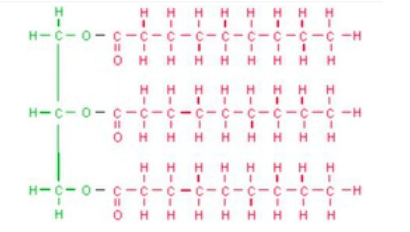
Which biomolecule is this a picture of?
1
Protein
2
Nucleic Acid
3
Lipid
4
Carbohydrate

38

Multiple Choice

Question image
Which biomolecule is this a picture of?
1
Protein
2
Nucleic Acid
3
Lipid
4
Carbohydrate

39

Multiple Choice

Question image
Carbon, Hydrogen, Oxygen and Nitrogen are elements in what biomolecule?
1
Carbohydrate
2
Lipid
3
Protein
4
Nucleic acid

40

Multiple Choice

What is the monomer of a Lipid?

1
Amino Acid
2
Nucleotide
3
Glycerol and Fatty Acids
4
Monosaccharide

41

Multiple Choice

Question image

What is the monomer of a protein?

1
Amino acid
2
Nucleotide
3
Monosaccharide
4
Fatty acid

42

Multiple Choice

Question image

What is the monomer of a nucleic acid?

1
Nucleotide
2
Amino Acid
3
Polysaccharide
4
Lipid

43

Multiple Choice

What is the monomer of a carbohydrate?

1
Amino Acid
2
Nucleotide
3
Monosaccharide
4
Fatty Acid

44

Multiple Choice

What elements are in a nucleic acid?

1

CHO

2

CHOP

3

CHONP

4

CHON

45

Multiple Choice

Question image

What elements are in a protein?

1

CHO

2

CHOP

3

CHON

4

CHONP

46

Multiple Choice

What elements are in a Lipid

1
Carbon, Hydrogen, Oxygen, Nitrogen
2
Carbon, Hydrogen, Oxygen
3
Carbon, Hydrogen, Oxygen, Phosphorus
4
Carbon, Hydrogen, Oxygen, Sulfur

47

Multiple Choice

What elements are in a carbohydrate

1

CHO

2

CHON

3

CHOP

4

CHONP

48

Multiple Choice

Bases release which ions ?

1

hydroxide ions

2

no ions

3

hydrogen ions

4

hydroxide and hydrogen ions

49

Multiple Choice

Question image
Attractions between water molecules are called
1
Covalent bonds
2
Ionic bonds
3
Polar bonds
4
Hydrogen bonds

50

Multiple Choice

The process of removing water in order to form a bond between monomers is called....
1
Dehydration Synthesis
2
Hydrolysis
Question image

Which subatomic particle is not in the nucleus?

1

proton

2

neutron

3

electron

Show answer

Auto Play

Slide 1 / 50

MULTIPLE CHOICE