Search Header Logo
CA Remediation AKS 1a/b & 4

CA Remediation AKS 1a/b & 4

Assessment

Presentation

Science

9th - 12th Grade

Medium

NGSS
HS-PS1-8, MS-PS1-1

Standards-aligned

Created by

Marissa Brown

Used 4+ times

FREE Resource

15 Slides • 29 Questions

1

AKS 1a/b & 4a-c Remediation

2

​Chapter 10.1 "Radioactivity" Learning Objectives

  • Explain what happens during nuclear decay

  • Identify and explain the three main types of nuclear radiation

  • Describe how the different types of nuclear radiation affect atoms

3

​Nuclear Decay

  • Radioactivity: Natural process where an unstable atomic nucleus emits charged particles and energy

  • Radioisotope: Atom with an unstable nucleus

  • Nuclear Decay: Atoms (radioisotopes) of one element spontaneously change into atoms of a different element (e.g., U-238 decays to Th-234)

4

Multiple Choice

Radioactivity

1

Any atom containing an unstable nucleus

2

Process where an unstable atomic nucleus emits charged particles

3

Atoms of one element change into atoms of a different element or elements

4

Total protonic reversal (shout out to "Ghost Busters")

5

Multiple Choice

Radioisotope

1

Any atom containing an unstable nucleus

2

Process where an unstable atomic nucleus emits charged particles

3

Atoms of one element change into atoms of a different element or elements

4

Total protonic reversal (shout out to "Ghost Busters")

6

media

7

Multiple Choice

Nuclear Decay

1

Any atom containing an unstable nucleus

2

Process where an unstable atomic nucleus emits charged particles

3

Atoms of one element change into atoms of a different element or elements

4

Total protonic reversal (shout out to "Ghost Busters")

8

​Types of Nuclear Radiation

  • Nuclear Radiation: Charged particles and energy emitted from nuclei of radioisotopes

  • Three Types of Nuclear Radiation:

    • Alpha Particles

    • Beta Particles

    • Gamma Rays

9

Multiple Choice

Nuclear Radiation is best defined as

1

Charged particles and energy emitted from nuclei of radioisotopes

2

Non-charged particles and energy emitted from nuclei of radioisotopes

3

Charged particles and energy retained in nuclei of radioisotopes

4

Non-charged particles and energy emitted from nuclei of radioisotopes

10

Multiple Choice

Which is NOT a type of Nuclear Radiation?

1

Alpha Particles

2

Beta Particles

3

Gamma Rays

4

C Rays

11

​Alpha Decay

  • Alpha Particle: Positively charged atomic particle with two protons and two neutrons (e.g., like Helium without the two electrons)

  • Alpha Decay: Nuclear decay that releases alpha particles = a nuclear reaction (expressed similarly to a balanced chemical reaction)

  • Alpha particles are the least penetrating type of nuclear radiation

media

12

Multiple Choice

Alpha Particles can be stopped by a single piece of paper.

1

True

2

False

13

Multiple Choice

Alpha particles are weak, but they travel long distances.

1

True

2

False

14

​Beta Decay

  • Beta Decay: Thorium-234 nucleus experiences Beta Decay, where one of its neutrons decomposes into one proton and one electron, creating

  • The new proton stays trapped in Thorium's nucleus and the electron is released as negatively charged radiation called Beta Particles

  • Beta Particle: An electron emitted by an unstable nucleus

    • Electrons negatively charged assigned a -1 Atomic Number

    • Electrons have negligible mass compared to Protons = 0 Mass Number

  • Beta Particles are more penetrating than Alpha Particles (smaller mass and faster speed)

15

media

16

Multiple Choice

Beta Particles cannot be stopped even by a thick sheet of metal.

1

True

2

False

17

​Gamma Decay

  • Nuclear Radiation emitted from an unstable nucleus in the form of Gamma Rays (not charged particles like Alpha and Beta Particles)

  • Gamma Radiation has no mass and no charge

  • Gamma Rays are energy waves that travel through space at the speed of light (see Electromagnetic Spectrum)

  • During Gamma Decay, mass of the atom stays the same, but the energy of the nucleus decreases.

  • Often happens during/alongside Alpha or Beta Decay

18

media

19

Multiple Choice

Gamma Rays are much more penetrating than Alpha or Beta Particles.

1

True

2

False

20

Multiple Choice

In Gamma Decay, the nucleus _____________ energy.

1

increases

2

decreases

3

maintains the same energy

4

it's the electrons that decrease in energy not the nucleus

21

Multiple Choice

Question image
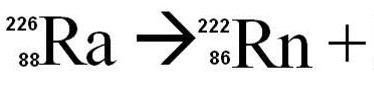
Complete the nuclear equation and determine the type of decay that is occurring in this reaction. 
1
alpha
2
beta
3
gamma
4
none

22

Multiple Choice

Question image
What type of decay?
1
alpha
2
beta
3
gamma

23

Multiple Choice

Question image
Arrange in order of increasing ability to penetrate matter.
1
Beta, gamma, alpha
2
Alpha, gamma, beta
3
Gamma, beta, alpha
4
Alpha, beta, gamma

24

Multiple Choice

Balance the following equation:
146C --> 0-1e + ________
1
145B
2
146C
3
147N
4
42He

25

Multiple Choice

Question image
Which type of nuclear radiation is being emitted here?
1
Alpha
2
beta
3
gamma 
4
none

26

Multiple Choice

Question image
What particle completes this reaction?
1
alpha particle
2
beta particle
3
gamma particle
4
neutron

27

Multiple Choice

Question image

Identify the missing variable in the following reaction.

1
2
3

28

Multiple Choice

Question image

Identify the missing variable in the following reaction.

1
2
3

29

media

Radiometric Dating and Half-life

The time it takes for a radioactive isotope to decay is measured using a term called half-life.

The half-life of a radioactive substance is the time it takes for half of its unstable atoms to break
down into daughter products
.

Isotopes that are extremely unstable decay quickly

media

30

Multiple Choice

The half-life of Carbon-14 is 5,730 years. Carbon-14 decays into Nitrogen-14.

After 5,730 years, how much of the sample would become Nitrogen-14?

Hint: Half-life represents the time required for half of the substance to decay.

1

25%

2

50%

3

75%

4

100%

31

media

The half-life of the radioactive isotope is a critical factor. It determines the timescale over which decay occurs and helps determine the appropriate dating method.

Half-Life

32

What is a Half Life?

  • The rate that an element decays never changes

  • Half Life: the amount of time it takes for half of a radioactive element to decay

Ohio Grade 8 | Lesson 6.3

media

33

Fill in the Blank

Question image

After 4 Half-lives, what will the percentage of radioactive material be?

34

Multiple Choice

Question image

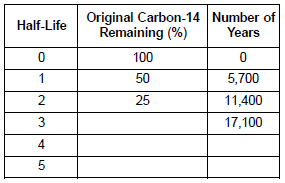
After 22,800 years, approximately what percentage of the original carbon-14 remains?

1

15%

2

12.5%

3

6.25%

4

3.125%

35

Multiple Choice

Question image
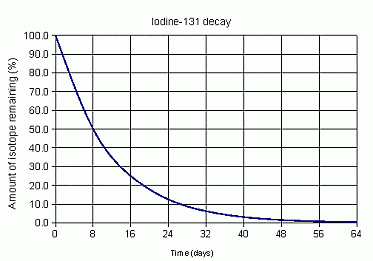
What is the half-life of iodine-131?
1
32 days
2
8 days
3
16 days
4
24 days

36

Multiple Choice

The % of the parent isotope remaining after 1 Half Life.

1

50%

2

25%

3

12.5%

4

6.25%

37

media
media

ISOTOPES

Atoms with the same number of protons and a

different number of neutrons

38

media
media

ISOTOPE NOTATION:

39

Multiple Choice

Question image
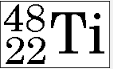
How many protons does this isotope of titanium have?
1
48
2
22
3
26
4
70

40

Multiple Choice

Question image
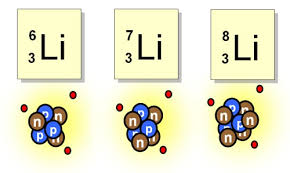
which atom has  4 neutrons?
1
Li-6
2
Li-7
3
Li-8
4
they have the same # of neutrons

41

Multiple Choice

How many neutrons does the isotope below have?     89 36Kr
1
53
2
36
3
89
4
125

42

Multiple Choice

Question image
Carbon has an atomic number of 6 and an atomic mass of 12. Which elements are considered isotopes of carbon?
1
Carbon-12
2
Carbon-13
3
Carbon-14
4
Both Carbon-13 and Carbon-14

43

Multiple Select

Atomic mass = ______ + _______

1

Electrons

2

Neutrons

3

Protons

4

Nucleus

44

Multiple Choice

Isotopes of the same element have the same number of

1

Electrons

2

Protons

3

Neutrons

4

Elements

AKS 1a/b & 4a-c Remediation

Show answer

Auto Play

Slide 1 / 44

SLIDE