
Structure and Function

Presentation
•
Biology
•
9th Grade
•
Hard

James Gonzalez
FREE Resource
18 Slides • 13 Questions
1

Structure &
Function of DNA
Today I will: Identify components of DNA, explain how the nucleotide sequence specifies
some traits of an organism, and examine scientific explanations for the origin of DNA
2


Prokaryotes vs. Eukaryotes
Every cell contains genetic material in the form of DNA.
In prokaryotic cells, the DNA is contained within a singular,
circular chromosome and exposed to the rest of the cell.
3
Multiple Choice
Where is DNA located in prokaryotic cells?
the nucleus
linear outside of the cell
in a circular chromosome, free-floating in the cytoplasm
no where
4


Prokaryotes vs. Eukaryotes
In eukaryotes, the nucleus contains the genetic material
of the cell, also in the form of DNA.
While only eukaryotes keep their DNA in a nucleus, it is
important to understand that every cell uses DNA.
Nucleus
5


Eu = Do
Contains a nucleus and
membrane bound organelles
Prokaryotes Eukaryotes
Pro = No
Nucleus or membrane
bound organelles
6
Multiple Choice
Do prokaryotic cells have a nucleus?
Yes
No
7
Multiple Choice
Do eukaryotic cells have a nucleus?
Yes
No
8


DNA stands for DeoxyriboNucleic Acid
A nucleic acid is a long repeating chain of nucleotides.
9
Multiple Choice
What are the subunits (materials) that make up a nucleic acid called?
nucleotides
amino acids
sugars
fats
10


Nucleic Acids
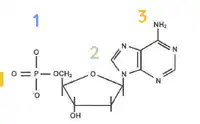
Every nucleotide has 3basic parts:
1
2
3
The phosphate group
2.
A deoxyribose sugar
3.
One of the 4 nitrogenous bases
11
Labeling
Label the parts of the nucleic acid
phosphate group
a nitrogenous base
deoxyribose sugar
12

Nitrogen Bases
The 4 nitrogen bases in DNA are:
A
Adenine
T
Thymine
G
Guanine
C
Cytosine
Why do you think they are called the nitrogen bases?
Because they all contain the element nitrogen!
13
Multiple Choice
What element do all the nitrogen bases contain?
sulfur
nitrogen
helium
phosphorous
14


DNA Structure
Two chains of nucleic acids join together to form a
double-stranded molecule of DNA.
These two strands spiral around one another to create a
shape that scientists call a double helix.
15
Fill in the Blanks
What is the shape of a DNA molecule called?
16


DNA Structure
The outside of the DNA is called the sugar-phosphate backbone.
This gives the DNA its shape and structure.
17


DNA Structure
The nitrogen bases are on the inside of the double helix.
This is how the information is coded in the DNA.
18
Multiple Choice
Where is the INFORMATION in a DNA molecule stored?
double helix
the inside, with the nitrogen bases
outside, with the backbone
19


The Biggest Genome
20


The information in DNA is a blueprint for every cell. The
information is found in the sequence of nitrogen bases.
This information is used to make proteins according to a
universal genetic code.
21


Genetic Code
Every cell uses the information in DNA to make proteins in the same
way.
The DNA is translated using the genetic code where a specific
sequence of nitrogen bases codes for an amino acid in the protein being
made.
All living things use the SAME
genetic code!
22
Multiple Choice
What does the sequence of nitrogen bases in DNA code for?
nothing
carbohydrates
proteins
lipids
23

The Genetic Code is common to all…
From the fish in the sea,
To the mold on the wall!
24
Multiple Choice
Do all living organisms use the same genetic code?
Yes, the genetic code is common to all
No
25


Chromosomes
DNA is not found in many little pieces. Instead, large amounts of
DNA are packaged together into chromosomes.
Human cells hold 46 chromosomes that contain thousands of genes.
26
Multiple Choice
What is DNA packaged as inside the body?
nothing, its just long DNA strands
carbohydrates
enzymes
Chromosomes
27


Genes are the sections of DNA that are used to
make proteins in the cell.
DNA
RNA
Protein
28
Multiple Choice
What are the genes in your DNA?
sections of DNA used to make proteins
another word for DNA
they don't exist
used to make carbohydrates
29


DNA Base Pairing
The nitrogen bases between the two strands of DNA pair
together in a very specific way.
A pairs with T
C pairs with G
30


How can you remember which
letters pair together?
Apples in the Tree
Cars in the Garage
31
Drag and Drop
Structure &
Function of DNA
Today I will: Identify components of DNA, explain how the nucleotide sequence specifies
some traits of an organism, and examine scientific explanations for the origin of DNA
Show answer
Auto Play
Slide 1 / 31
SLIDE
Similar Resources on Wayground

25 questions
Body Organization
Presentation
•
9th Grade
20 questions
DNA Review
Presentation
•
9th Grade
25 questions
5 Types of Reactions-Lesson
Presentation
•
9th Grade
25 questions
Intro to Bacteria
Presentation
•
9th - 10th Grade
24 questions
ZERO CONDITIONAL
Presentation
•
9th Grade
28 questions
Intro to Viruses
Presentation
•
9th Grade
28 questions
Cell Organelles
Presentation
•
9th Grade
26 questions
DNA Day 1
Presentation
•
9th Grade
Popular Resources on Wayground
10 questions
How much do you know about our Portrait of an Eagle?

Quiz
•
10th Grade
10 questions
Fast Food Slogans
Quiz
•
6th - 8th Grade
21 questions
Continents and Oceans
Quiz
•
6th Grade
20 questions
Parts of Speech
Quiz
•
5th Grade
16 questions
Subject & Predicate
Quiz
•
5th Grade
25 questions
Multiplication Facts
Quiz
•
5th Grade
12 questions
Map Skills
Quiz
•
3rd Grade
22 questions
Continents and Oceans
Quiz
•
5th Grade
Discover more resources for Biology
20 questions
Characteristics of Life
Quiz
•
9th - 10th Grade
10 questions
Exploring the 4 Major Macromolecules and Their Functions

Interactive video
•
9th - 12th Grade
20 questions
Cell Transport
Quiz
•
9th - 12th Grade
25 questions
photosynthesis and cellular respiration
Quiz
•
9th Grade
16 questions
Population Ecology
Quiz
•
9th - 12th Grade
20 questions
Cell Organelles
Quiz
•
9th Grade
18 questions
Water Properties
Quiz
•
9th Grade
36 questions
U3 Review Cell Cycle and Specialization Quiz
Quiz
•
9th Grade