

10.17 Review

Presentation
•
Science
•
9th - 12th Grade
•
Easy

Samantha Kasper
Used 4+ times
FREE Resource
53 Slides • 29 Questions
1
2

3
4
Multiple Choice
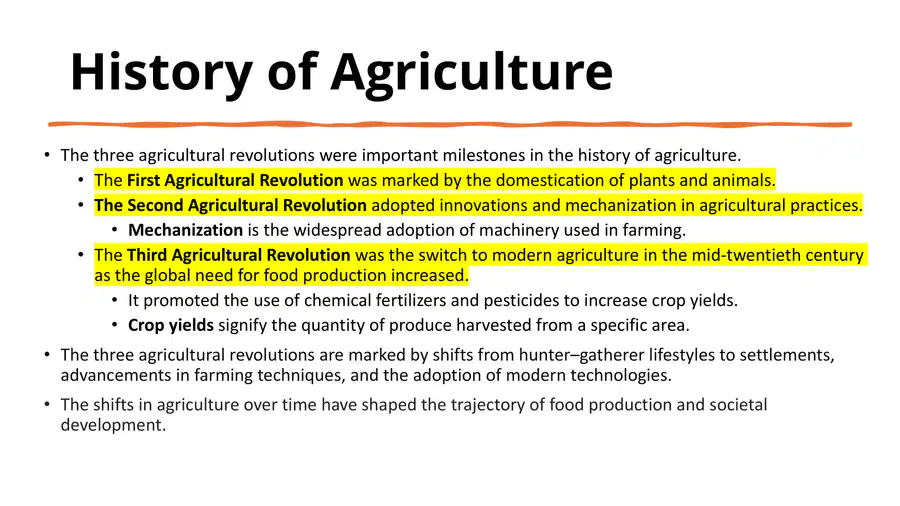
What major change occurred during the First Agricultural Revolution?
Invention of the plow and irrigation systems
Widespread use of chemical fertilizers and GMOs
Transition from hunting-gathering to farming and domestication
Mechanization of farming during the Industrial Revolution
5
Multiple Choice
What best describes the Second Agricultural Revolution?
The development of farming in ancient Mesopotamia using irrigation
The widespread use of biotechnology and GMOs in modern farming
The shift from hunting and gathering to settled agriculture
The adoption of improved farming tools, crop rotation, and selective breeding during the Industrial Revolution
6
Multiple Choice
Which of the following best describes the Third Agricultural Revolution (Green Revolution)?
The invention of the plow and early irrigation systems
The use of crop rotation and selective breeding during the Industrial era
The global spread of hunting and gathering
The introduction of high-yield crops, chemical inputs, and mechanization
7
8
9
Match
Match the following
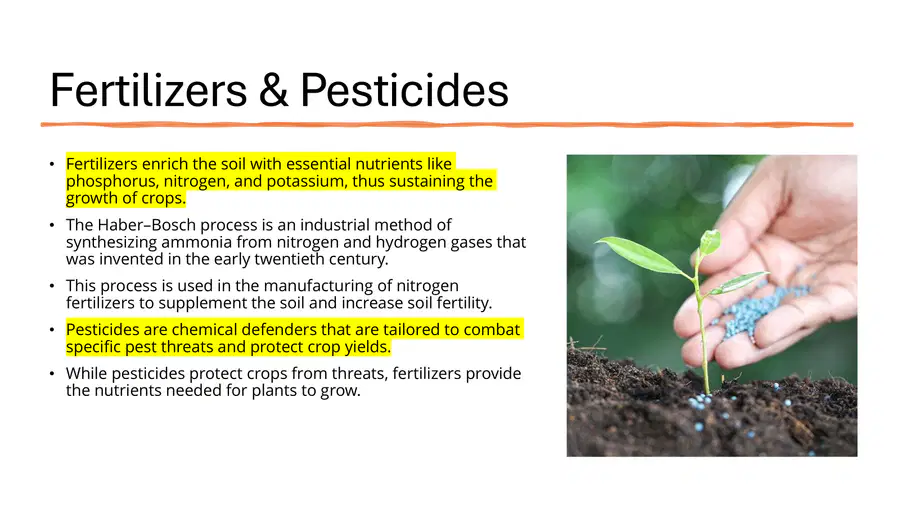
Provides nutrition like nitrogen and phosphorus to the soil
Allows for accurate mapping and monitoring of fields
Provides consistent and efficient method for watering crops
Kill and repel insect pests
Fertilizer
GPS and precision farming
Central pivot irrigation
Pesticides
Fertilizer
GPS and precision farming
Central pivot irrigation
Pesticides
10
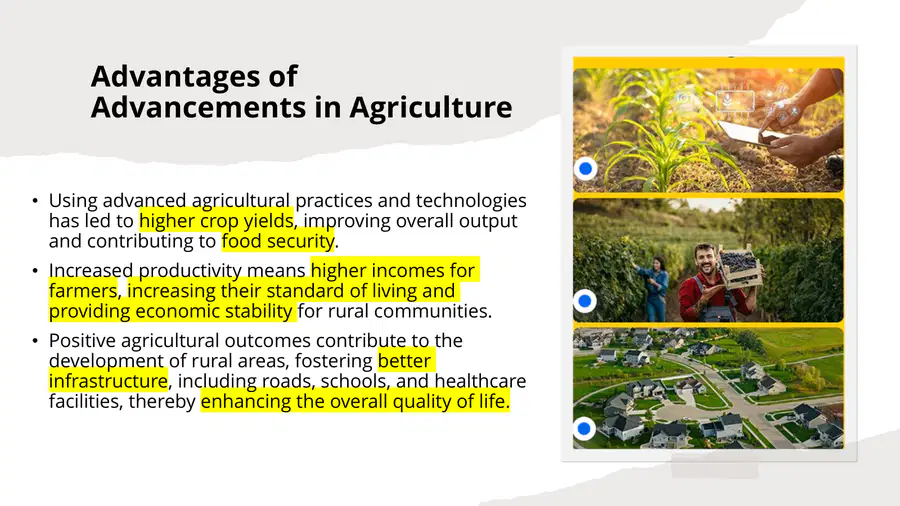
11

12
Multiple Select
Which of the following are challenges caused by increased agriculture? (Select two answers)
Excessive fertilizer use leads to pollution
Increased agricultural productivity leads to higher incomes in rural communities
Intensive agriculture contributes to water depletion
Higher crop yields increase food security
13

14
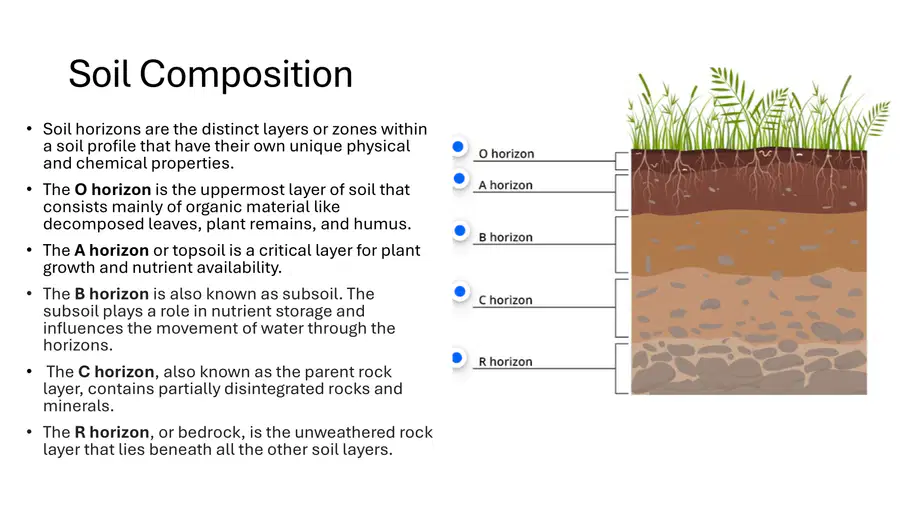
15
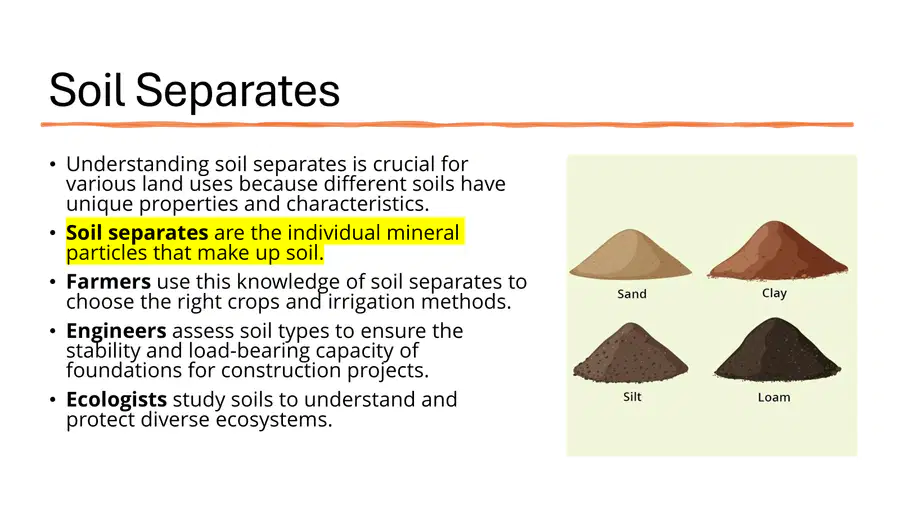
16

17
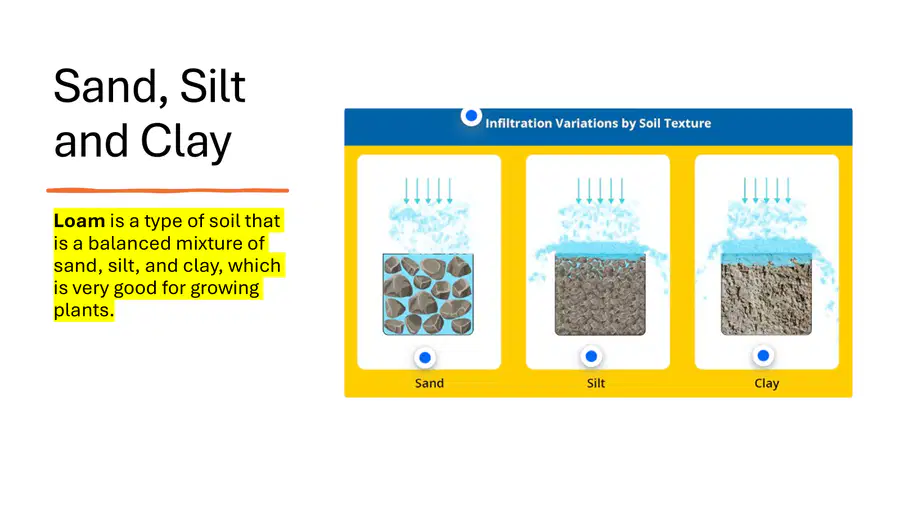
18
19
Multiple Choice
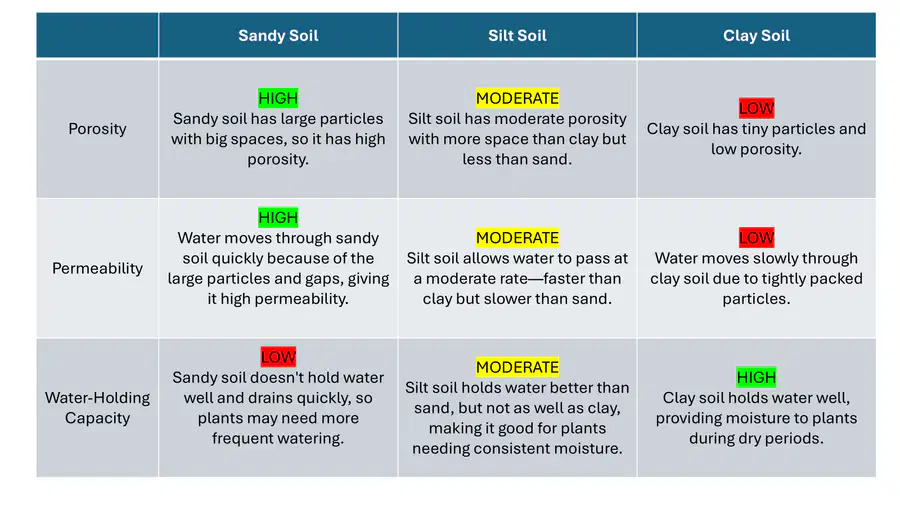
You’re planning a herb garden with plants like lavender and rosemary, which prefer dry, well-drained soil. Which soil type is most suitable?
sand
silt
clay
20
Multiple Choice
You’re planting cabbage and broccoli, which need steady moisture and thrive in nutrient-rich soils. Which soil type is most suitable?
sand
silt
clay
21
22
23
24
25
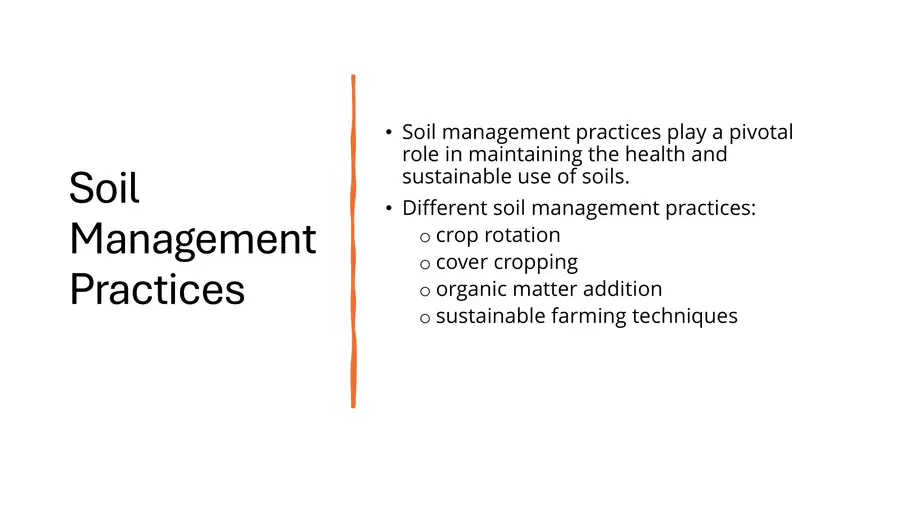
Match
Match the following
Adding decomposed plant and animal material to soil to improve structure and nutrient content.
Practices that maintain long-term agricultural productivity while minimizing environmental impact.
Planting different crops in a sequence to improve soil health and prevent pests.
Growing specific plants to protect soil from erosion and improve soil fertility.
organic matter addition
sustainable farming techniques
crop rotation
cover cropping
organic matter addition
sustainable farming techniques
crop rotation
cover cropping
26
Multiple Select
Which of the following are characteristics of fertile soil? (Select all that apply)
High nutrient content
Sufficient organic matter
Good drainage and aeration
Balanced pH level suitable for plant growth
27
Multiple Select
Why is maintaining soil fertility important for the environment? SELECT ALL THAT APPLY
Fertile soils help to clean and store water
Fertile soils provide a healthy home for plant growth
Fertile soils support many living organisms
28

29
30
Reorder
Reorder the following
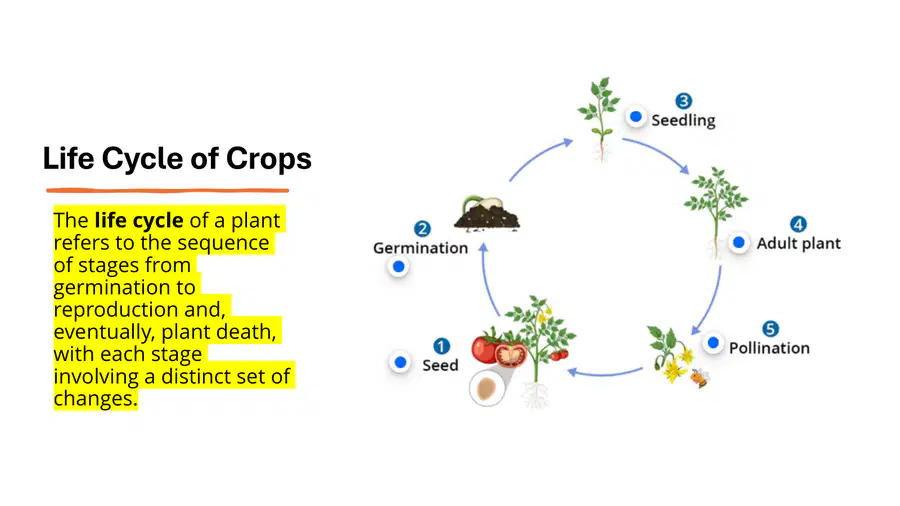
Seeds that are planted contain nutrients and genetic material for early growth.
During germination, seeds absorb water and begin to sprout.
A tiny sprout emerges from the seed, breaks through the soils, and develops roots and leaves to become a seedling.
The adult plant has sturdy stems, more leaves, and produces flowers.
The flowers on a plant undergo pollination, which is when pollen is transferred to the pistil of a flower.
31

Examples:
Marigold (Tagetes spp.)
Petunia (Petunia spp.)
Zinnia (Zinnia elegans)
Sunflower (Helianthus annuus)
Lettuce (Lactuca sativa)
32

Examples:
Carrot (Daucus carota) – if left to flower Foxglove (Digitalis purpurea)
Parsley (Petroselinum crispum)
Hollyhock (Alcea rosea)
Onion (Allium cepa) – in some conditions
33
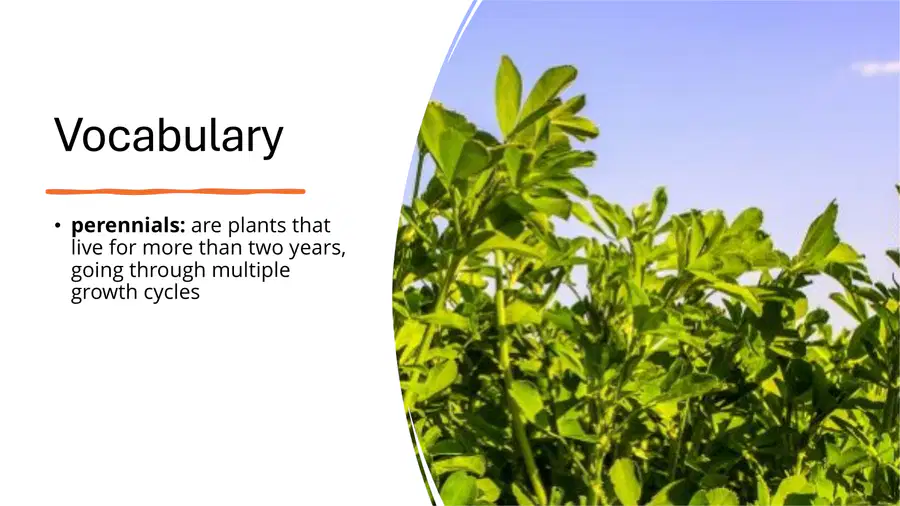
Examples:
Lavender (Lavandula spp.)
Peony (Paeonia spp.)
Hosta (Hosta spp.)
Asparagus (Asparagus officinalis)
Raspberry (Rubus idaeus)
34
Match
Match the following
Sunflower – Grows, blooms, sets seed, and dies all in one season.
Lavender – Lives and blooms for many years; often used for its fragrant oils.
Carrot – Forms roots in the first year, flowers and seeds in the second year if left unharvested.
annual
perennial
biennial
annual
perennial
biennial
35
36
Categorize
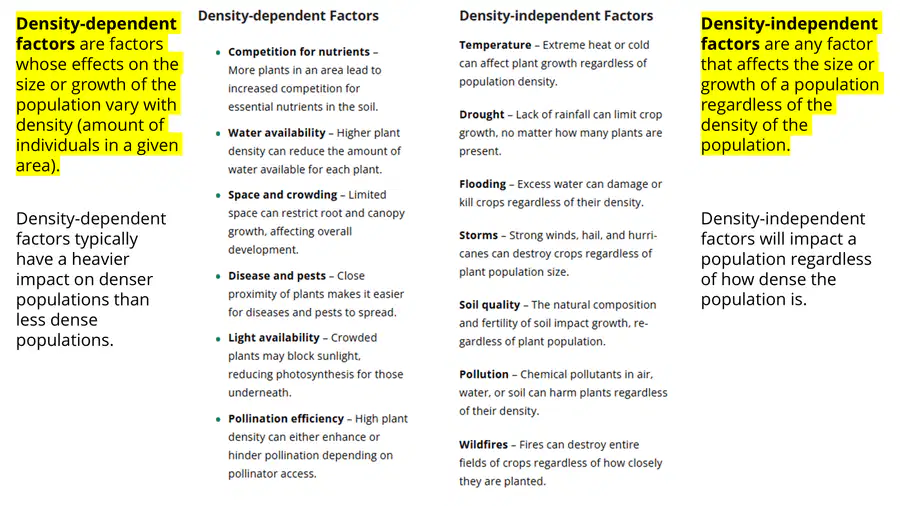
competition
disease
space
pollution
flooding
wildfire
Organize these options into the right categories
37
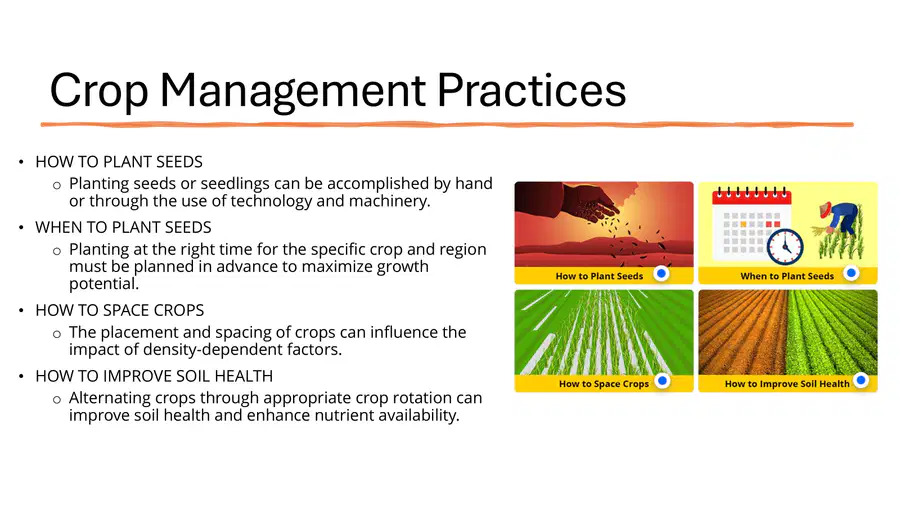
38
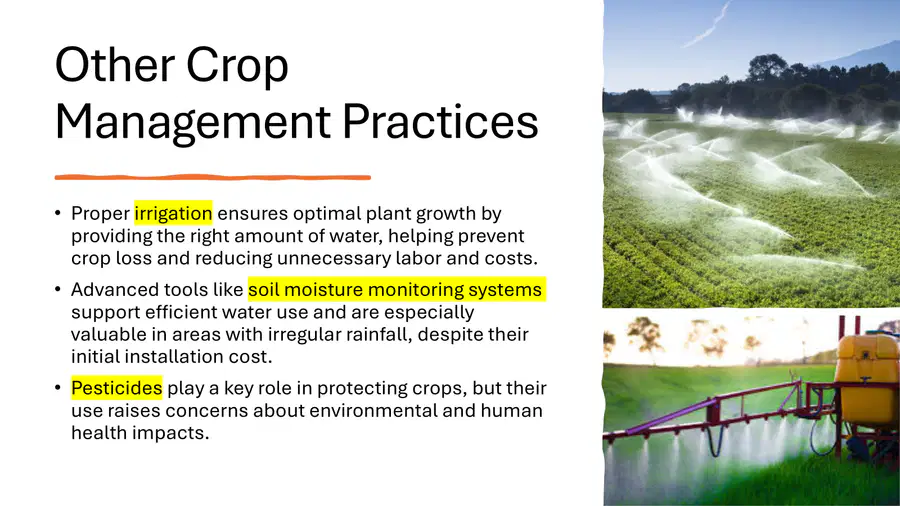
39
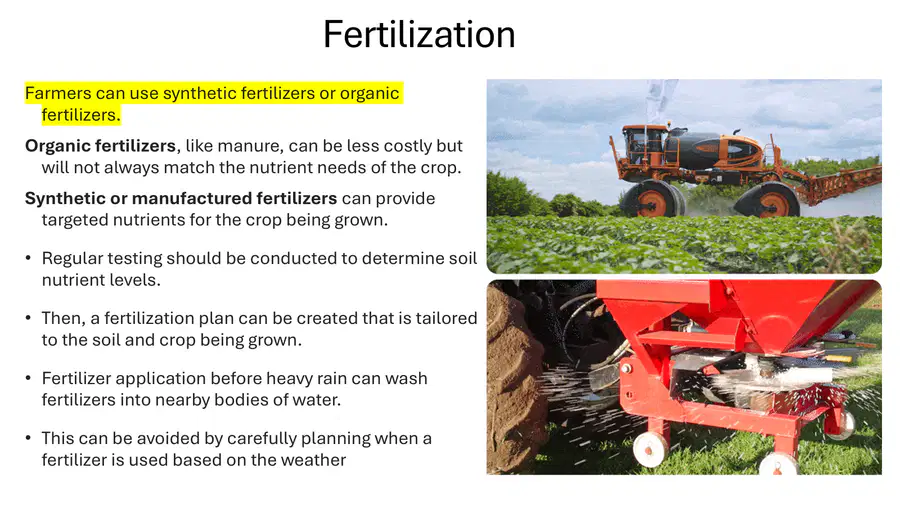
40

41
Multiple Choice
Which of the following best describes the purpose of fertilization in crop management?
To increase the soil’s nutrient levels and improve crop yield
To protect crops from pests and diseases
To ensure crops have enough sunlight for photosynthesis
42
Multiple Choice
What is the primary benefit of proper spacing when planting crops?
It encourages excessive root competition, leading to stronger plants
It prevents overcrowding, ensuring each plant gets enough nutrients, sunlight, and air
It increases the chances of plant diseases by creating open spaces for pathogens
43

44

45

46
Multiple Choice
The most important step in IPM is identifying the type of pest you are trying to control.
TRUE
FALSE
47
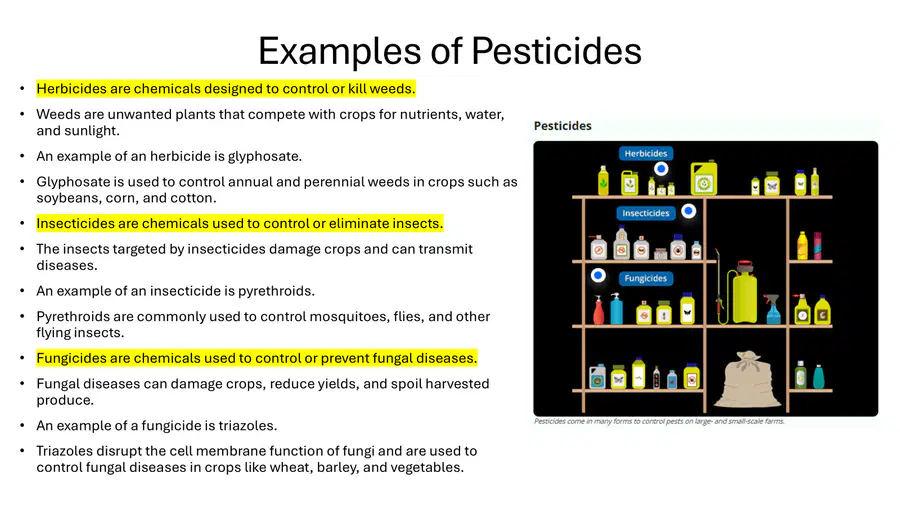
48
49

50
Multiple Choice
How do integrated pest management (IPM) techniques contribute to sustainable agriculture?
IPM increase reliance on synthetic fertilizers.
IPM eliminates all forms of pest control.
IPM prevents the death of beneficial pollinator species
51
52
53

54
Multiple Choice
Which of the following is the best example of Integrated Pest Management (IPM) in action?
Spraying chemical pesticides weekly regardless of pest presence
Using genetically modified seeds only to resist pests
Releasing ladybugs to control aphids after monitoring pest levels and applying mulch to discourage weeds
55

56
Multiple Choice
Which of the following is a benefit of IPM?
57

58
59
60
61
62
Multiple Choice
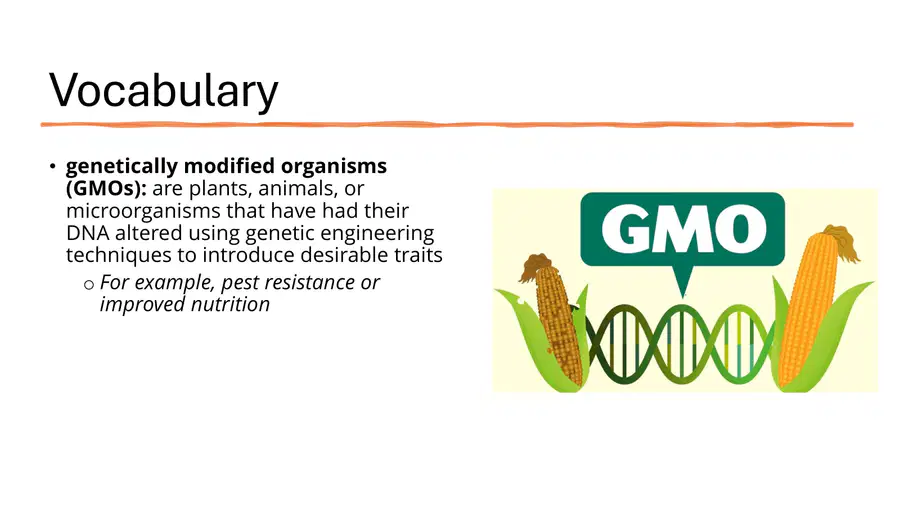
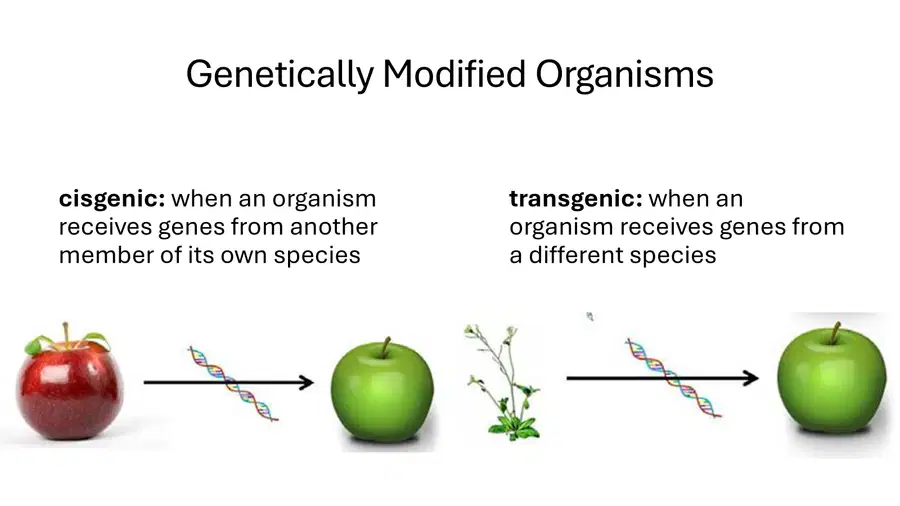
What does GMO stand for?
Greatly Mutated Organism
Genetically Modified Organism
Globally Manufactured Organism
63
Multiple Choice
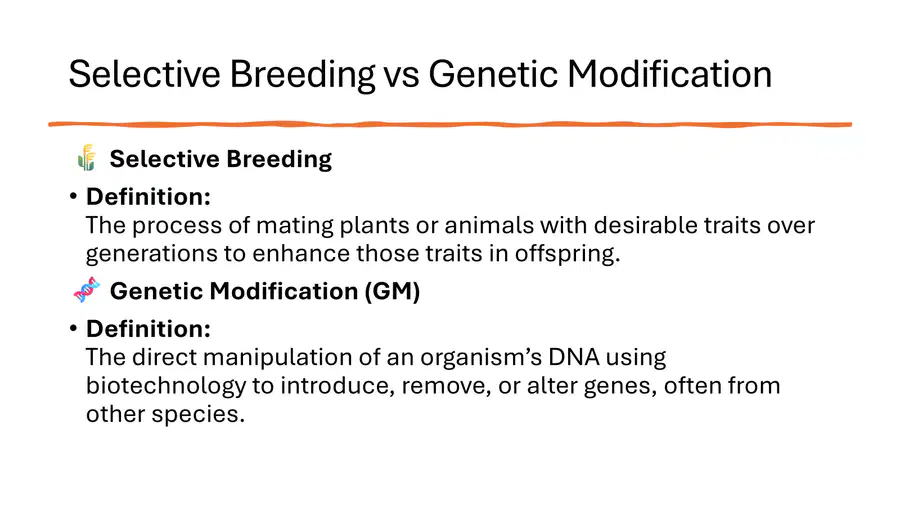
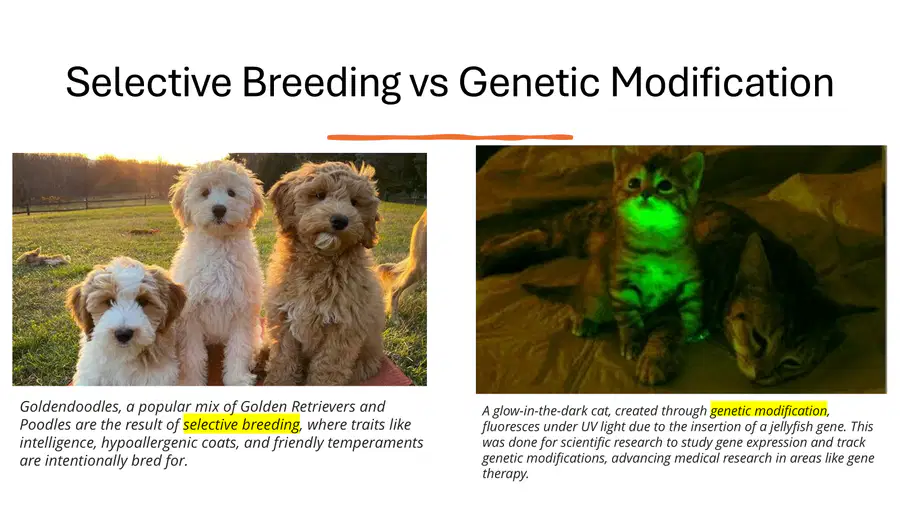
What is the primary difference between genetic modification (GMO) and selective breeding in agriculture?
GMOs involve altering an organism's genetic material through direct manipulation of its DNA, while selective breeding involves choosing parent organisms with desirable traits to breed.
Selective breeding is faster than genetic modification because it involves direct genetic changes.
GMOs are created by natural methods, while selective breeding is an artificial process.
Selective breeding is a modern technique, while genetic modification has been used for thousands of years.
64
65
66
67
Multiple Choice
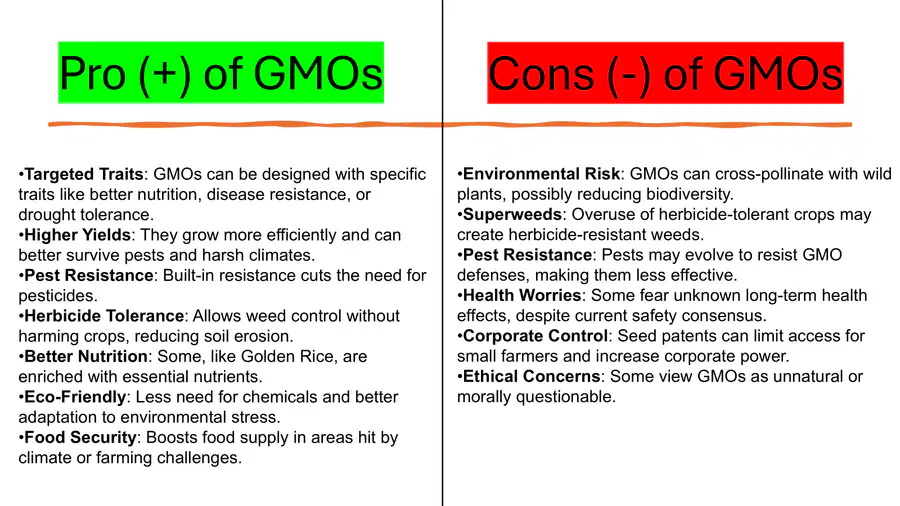
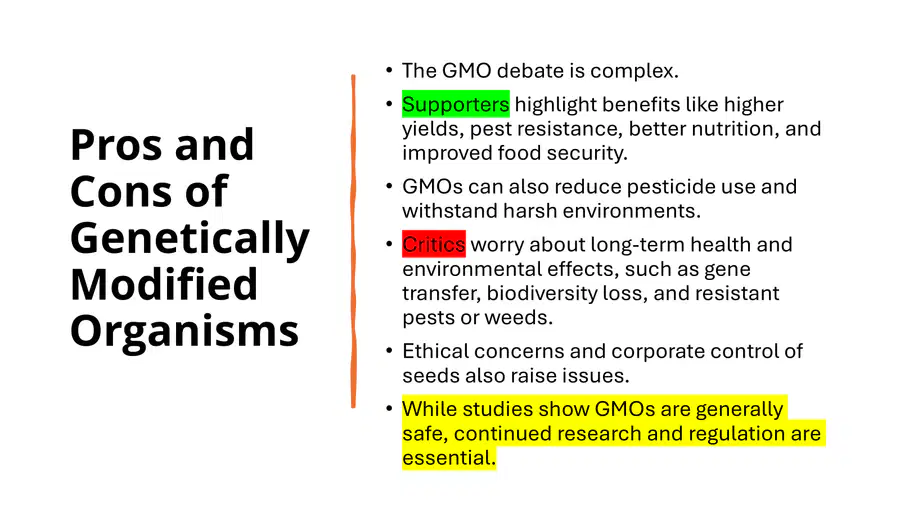
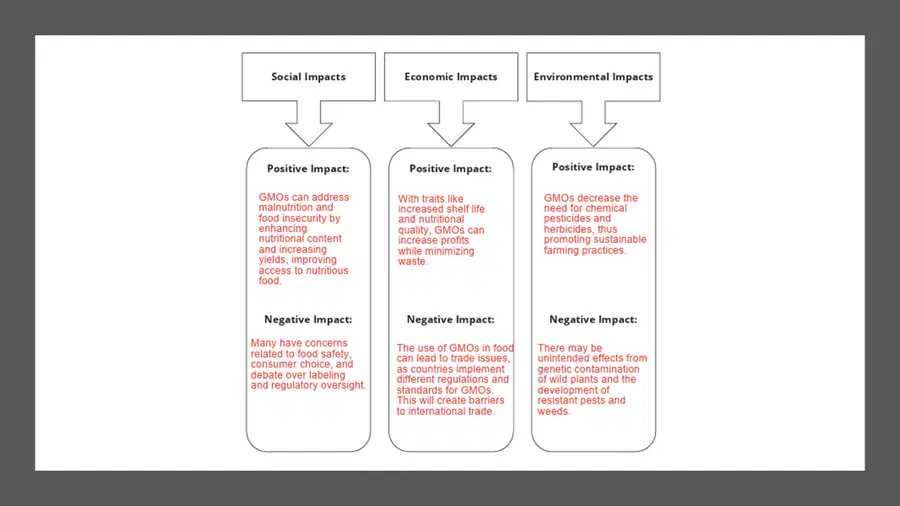
Which of the following is a major benefit (+) of genetically modified crops?
Increased pesticide use
Higher crop yields
Reduced nutritional content
68
Multiple Choice
Which of the following is a major limitation (-) of genetically modified crops?
They always increase biodiversity
They can lead to herbicide-resistant weeds and cross-pollination issues
They completely eliminate the need for pesticides
69

70
71
72
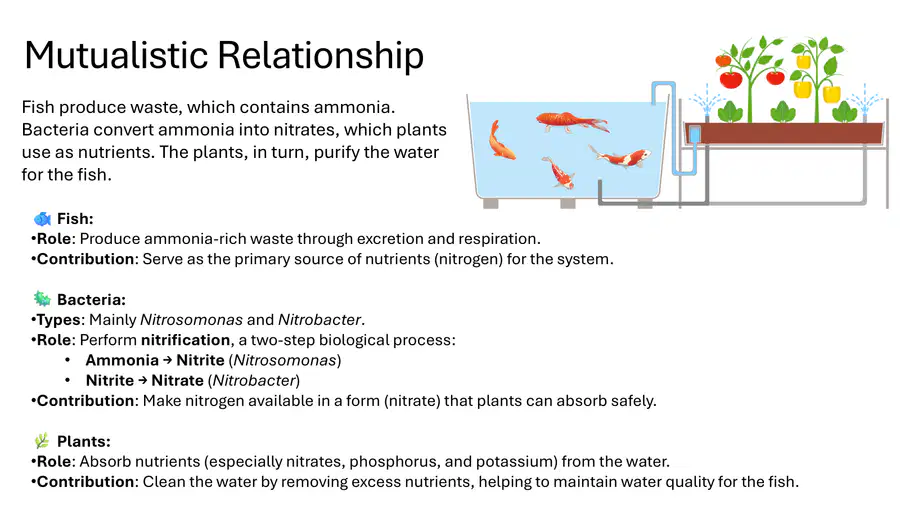
73

74
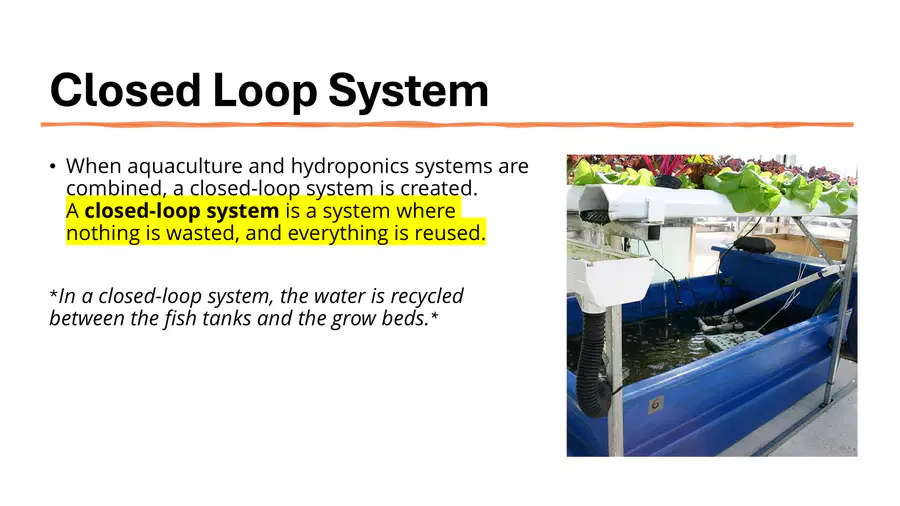
75
Multiple Choice
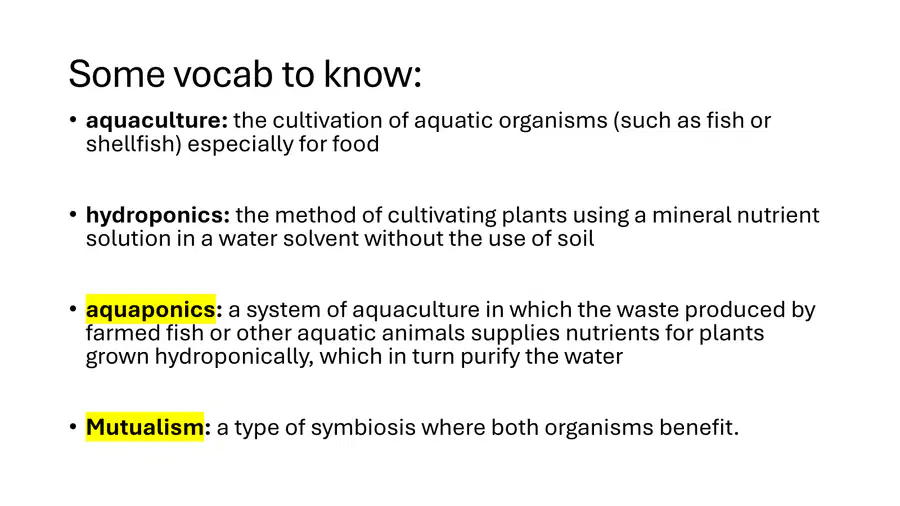
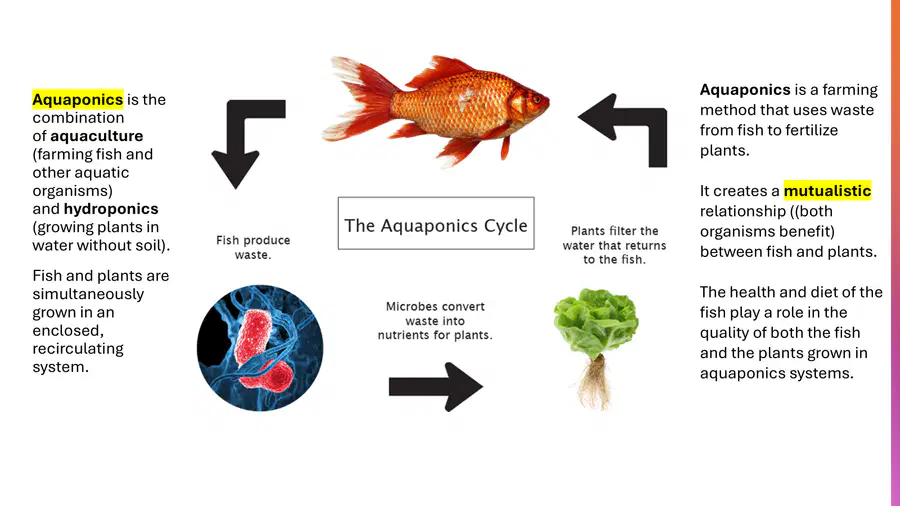
Aquaponics relies on what type of symbiotic relationship between the plants, fish and bacteria?
76
Multiple Choice
What role do the fish play in an aquaponic system?
77
Multiple Choice
What role do the plants play in an aquaponic system?
78
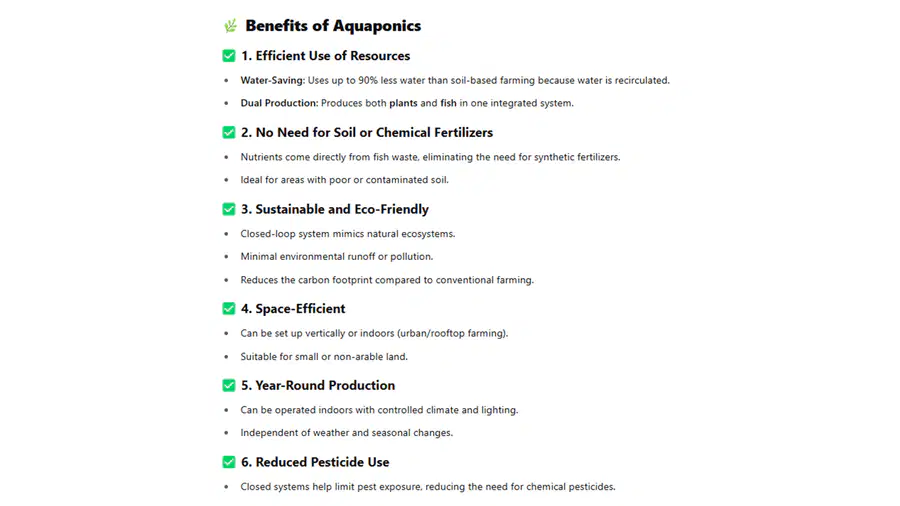
79
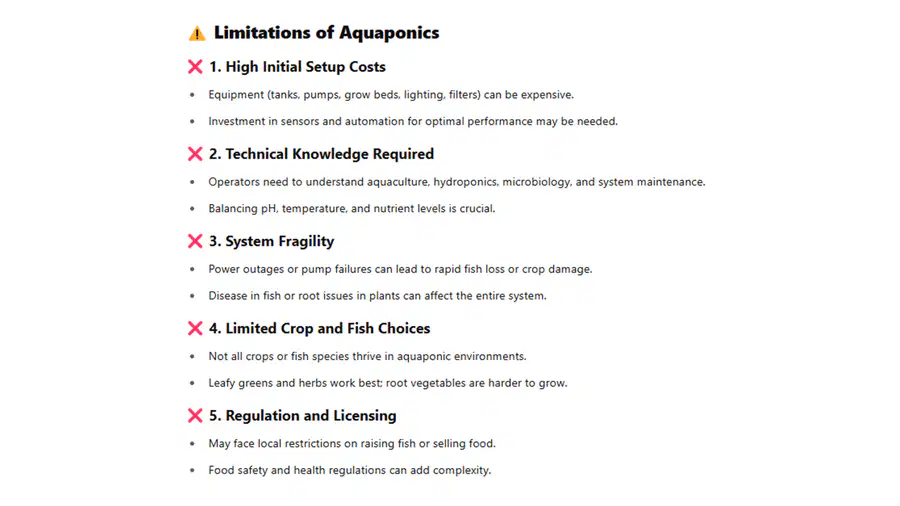
80
Multiple Choice
Which of the following is a benefit of aquaponics?
Reduces the need for chemical fertilizers by using fish waste as nutrients
Requires a large amount of water compared to traditional farming
Depends on a large land area for implementation
81
Multiple Choice
Which of the following is a limitation (-) of aquaponics?
It requires only a small initial investment
It is highly energy-efficient and doesn’t require additional water sources
It requires significant setup costs and technical knowledge to maintain
82
Poll

How are you feeling for the quiz? If you are below a "3" reach out to me for some 1-on-1 help!
1😳
2😬
3🙂
4😎
5🤩
Show answer
Auto Play
Slide 1 / 82
SLIDE
Similar Resources on Wayground

78 questions
Unit 2 Competition AP Psychology
Presentation
•
10th - 12th Grade
78 questions
Unit 2 AP Psychology
Presentation
•
10th - 12th Grade
73 questions
LAST CHANCE Biology SOL Review!!!
Presentation
•
9th - 12th Grade
81 questions
AKS 9 Unit Review
Presentation
•
8th - 12th Grade
76 questions
Powers Unit 5 Notes Final
Presentation
•
9th - 12th Grade
79 questions
Molecular genetics
Presentation
•
KG
79 questions
PRESENT PERFECT TENSE
Presentation
•
9th - 12th Grade
77 questions
Midterm Review Honors Chemistry Fall 2021
Presentation
•
10th - 12th Grade
Popular Resources on Wayground
16 questions
Grade 3 Simulation Assessment 2

Quiz
•
3rd Grade
19 questions
HCS Grade 5 Simulation Assessment_1 2526sy
Quiz
•
5th Grade
10 questions
Cinco de Mayo Trivia Questions

Interactive video
•
3rd - 5th Grade
17 questions
HCS Grade 4 Simulation Assessment_2 2526sy
Quiz
•
4th Grade
24 questions
HCS Grade 5 Simulation Assessment_2 2526sy
Quiz
•
5th Grade
13 questions
Cinco de mayo
Interactive video
•
6th - 8th Grade
20 questions
Math Review
Quiz
•
3rd Grade
30 questions
GVMS House Trivia 2026
Quiz
•
6th - 8th Grade
Discover more resources for Science
100 questions
Biology EOC Review
Quiz
•
9th - 12th Grade
38 questions
Biology EOC Review Game
Quiz
•
10th Grade
25 questions
Biology EOC review Quiz
Quiz
•
9th - 12th Grade
20 questions
Human Impact on the Environment Review #2
Quiz
•
9th Grade
20 questions
Balancing Chemical Equations
Quiz
•
9th Grade
11 questions
EOC Domain 1: Cells
Presentation
•
9th - 10th Grade
14 questions
EOC Domain 2: Genetics
Presentation
•
9th - 10th Grade
10 questions
Exploring the Human Respiratory System
Interactive video
•
6th - 10th Grade