

ES-6.2-The Nature of Volcanic Eruptions

Presentation
•
Science
•
9th - 12th Grade
•
Practice Problem
•
Medium
Standards-aligned

Jacob W
Used 3+ times
FREE Resource
7 Slides • 7 Questions
1
Multiple Choice
BELLRINGER:
Which volcanic eruption is described as the largest and most destructive in U.S. history, occurring on May 18, 1980?
Mount St. Helens
Kilauea
Mount Rainier
Mount Shasta
2
3
Multiple Choice
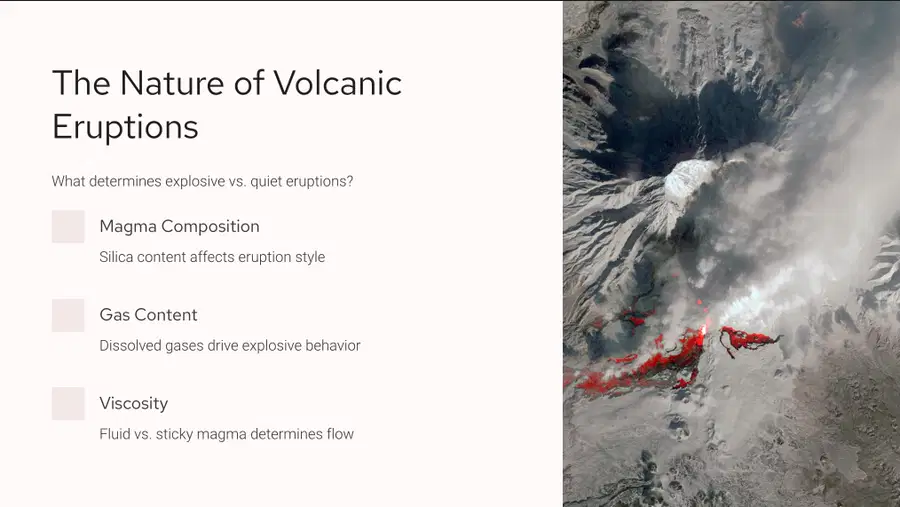
Which of the following factors plays a significant role in determining whether a volcanic eruption will be explosive or quiet?
Magma composition
Amount of rainfall
Wind speed
Sunlight exposure
4
5
6
Multiple Choice
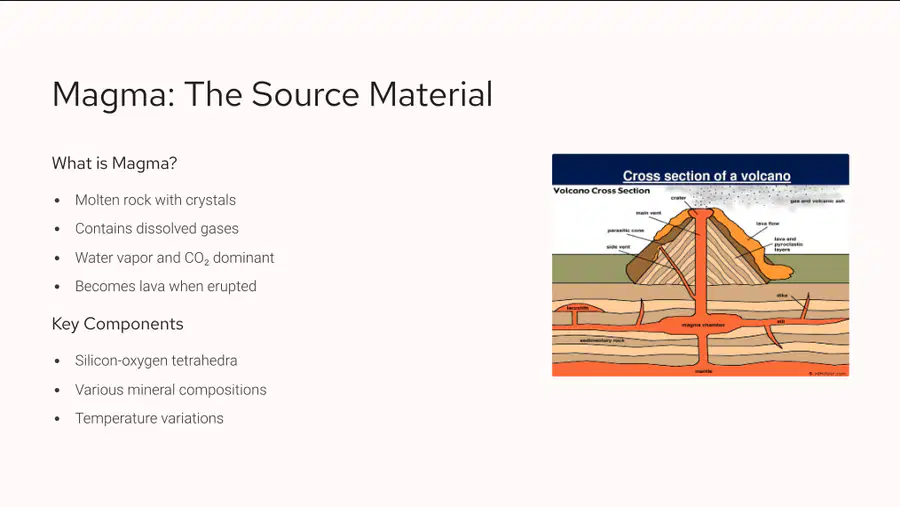
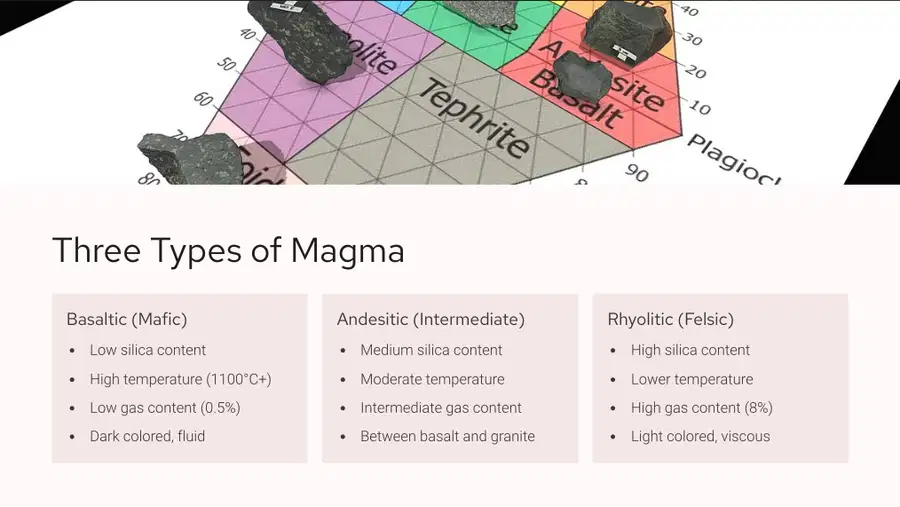
Which type of magma is characterized by high silica content, lower temperature, and high gas content?
Basaltic (Mafic)
Andesitic (Intermediate)
Rhyolitic (Felsic)
Ultramafic
7
8
Multiple Select
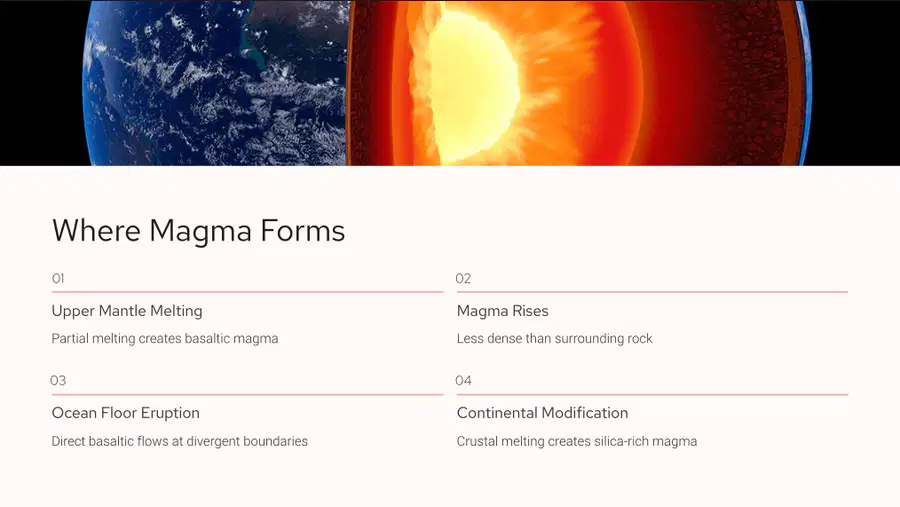
Which of the following are places or processes where magma forms?
Upper mantle melting
Magma rises
Ocean floor eruption
Continental modification
9
10
Fill in the Blanks
11
12
Open Ended
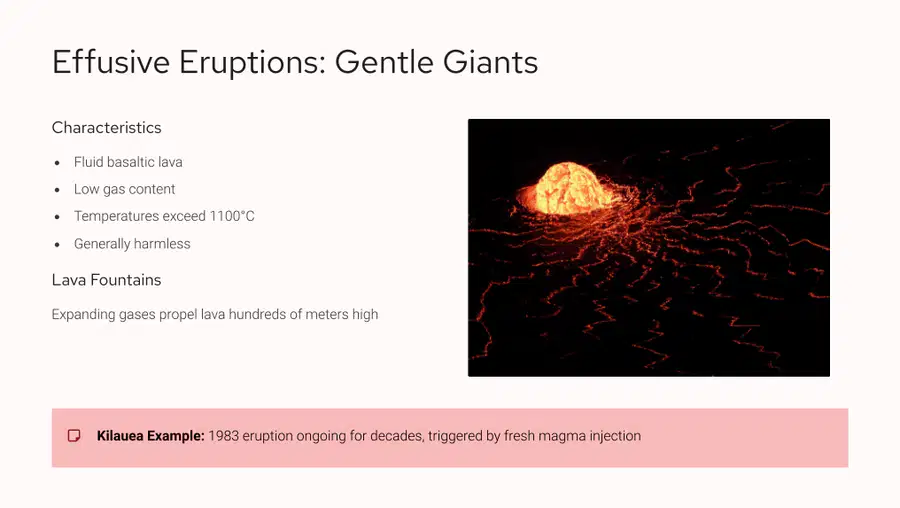
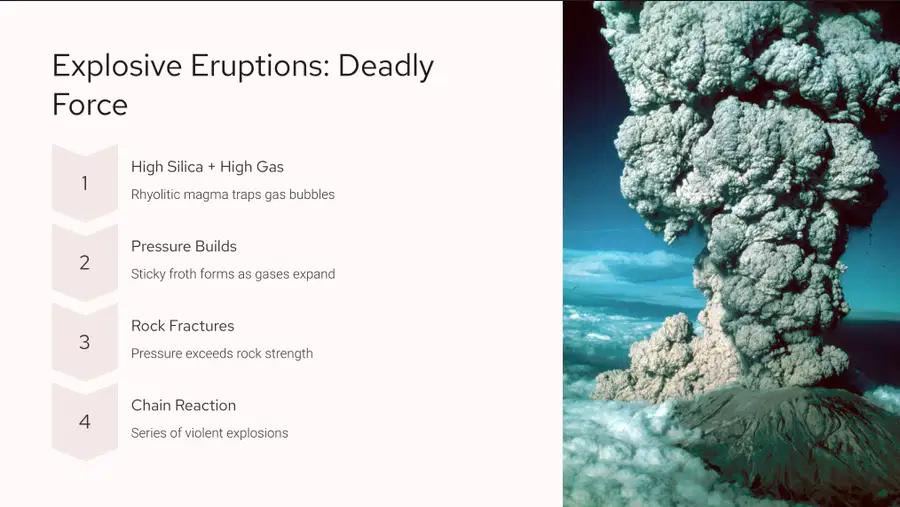
Compare the characteristics and hazards of effusive eruptions and explosive eruptions.
13

14
Multiple Choice
What is a critical factor that determines the style of a volcanic eruption?
Amount of rainfall
Viscosity and gas content of magma
Presence of vegetation
Wind speed
BELLRINGER:
Which volcanic eruption is described as the largest and most destructive in U.S. history, occurring on May 18, 1980?
Mount St. Helens
Kilauea
Mount Rainier
Mount Shasta
Show answer
Auto Play
Slide 1 / 14
MULTIPLE CHOICE
Similar Resources on Wayground

13 questions
Types of Air, Soil, and Water Pollution
Presentation
•
9th - 12th Grade
11 questions
ITAA Unit 4: webpage layout
Presentation
•
9th - 12th Grade
10 questions
Conflict Resolution
Presentation
•
9th - 12th Grade
10 questions
Earth Sciences: Plate Boundaries
Presentation
•
9th - 12th Grade
12 questions
HotSpots
Presentation
•
9th - 12th Grade
13 questions
Fossil fuels and pollution
Presentation
•
9th - 12th Grade
13 questions
Air and Land Pollution
Presentation
•
9th - 12th Grade
13 questions
Fossil Fuels and Energy
Presentation
•
9th - 12th Grade
Popular Resources on Wayground
10 questions
Factors 4th grade

Quiz
•
4th Grade
10 questions
Cinco de Mayo Trivia Questions

Interactive video
•
3rd - 5th Grade
13 questions
Cinco de mayo
Interactive video
•
6th - 8th Grade
20 questions
Math Review
Quiz
•
3rd Grade
20 questions
Main Idea and Details
Quiz
•
5th Grade
20 questions
Context Clues
Quiz
•
6th Grade
20 questions
Inferences
Quiz
•
4th Grade
19 questions
Classifying Quadrilaterals
Quiz
•
3rd Grade
Discover more resources for Science
100 questions
Biology EOC Review
Quiz
•
9th - 12th Grade
38 questions
Biology EOC Review Game
Quiz
•
10th Grade
25 questions
Biology EOC review Quiz
Quiz
•
9th - 12th Grade
20 questions
Human Impact on the Environment Review #2
Quiz
•
9th Grade
20 questions
Balancing Chemical Equations
Quiz
•
9th Grade
9 questions
EOC Domain 4: Evolution
Presentation
•
9th - 10th Grade
14 questions
EOC Domain 2: Genetics
Presentation
•
9th - 10th Grade
10 questions
EOC Domain 3: Taxonomy
Presentation
•
9th - 10th Grade