Search Header Logo
Atoms Introduction

Atoms Introduction

Assessment

Presentation

Science

9th - 12th Grade

Practice Problem

Medium

Created by

Alexis Simpson

Used 3+ times

FREE Resource

52 Slides • 14 Questions

1
media

2

media

3

media

4

media

5

media

6

media

7

media

8

media

9

Fill in the Blanks

Type answer...

10

media

11

media

12

media

13

media

14

media

15

media

16

media

17

media

18

Multiple Choice

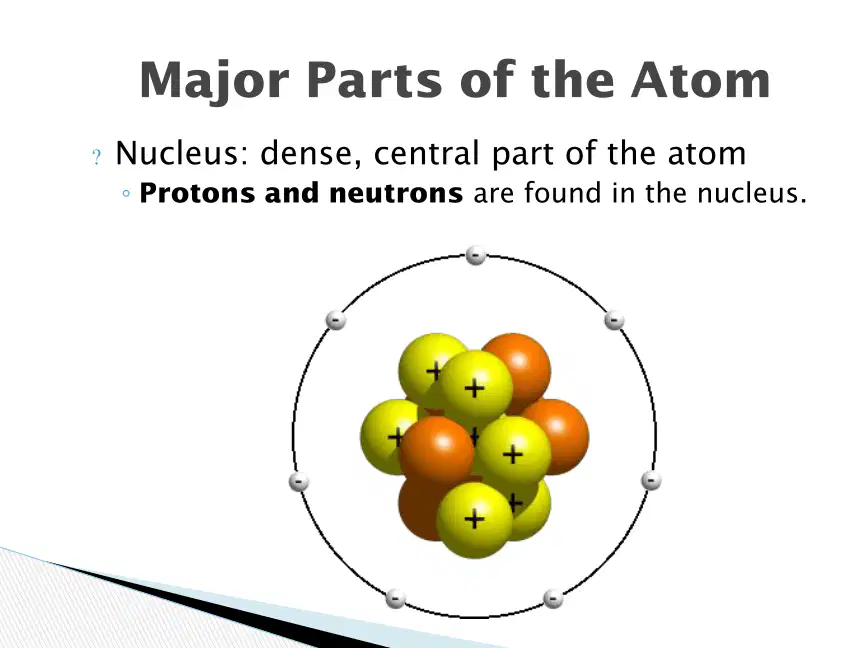
Which subatomic particles are found in the nucleus of an atom?

1

Protons and neutrons

2

Electrons and protons

3

Neutrons and electrons

4

Only protons

19

media

20

Multiple Choice

What is the main difference between the nucleus and the electron cloud in an atom?

1

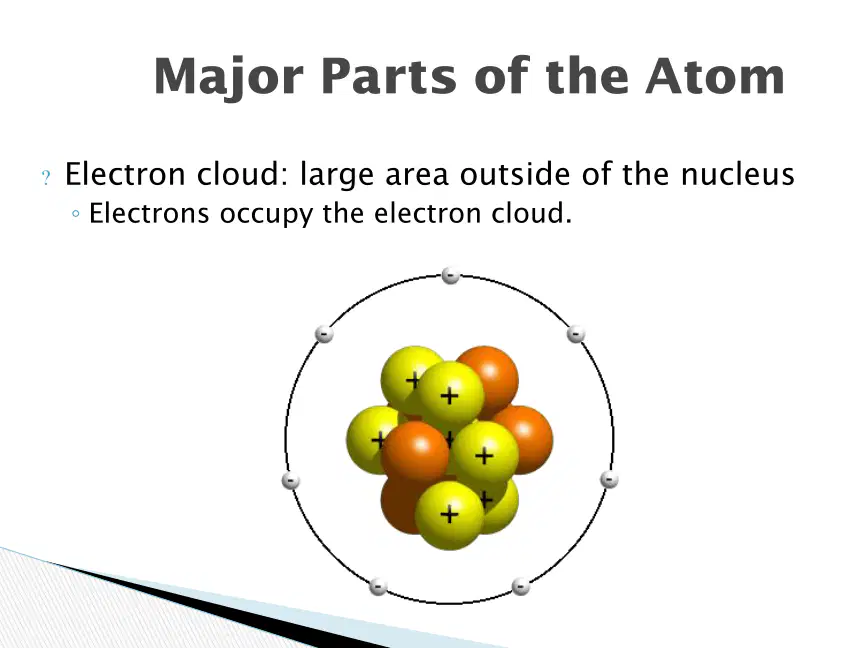
The nucleus is dense and central, while the electron cloud is a large area outside the nucleus.

2

The nucleus contains electrons, while the electron cloud contains protons and neutrons.

3

The nucleus is negatively charged, while the electron cloud is positively charged.

4

The nucleus is tiny, while the electron cloud is large and dense.

21

media

22

Fill in the Blanks

Type answer...

23

Multiple Choice

Which of the following statements about subatomic particles is correct?

1

Protons have a positive charge and are large.

2

Neutrons have a negative charge and are tiny.

3

Electrons have a positive charge and are large.

4

Protons have no charge and are tiny.

24

media

25

media

26

media

27

Fill in the Blanks

Type answer...

28

media

29

Open Ended

An atom has 24 protons. What element is it?

30

media

31

Multiple Choice

Which of the following statements is true about neutral atoms?

1

They have equal numbers of protons and electrons.

2

They have more protons than electrons.

3

They have more electrons than protons.

4

They have no protons.

32

media

33

Multiple Choice

How do you calculate the number of neutrons in an atom if you know its mass number and atomic number?

1

Subtract the atomic number from the mass number.

2

Add the atomic number to the mass number.

3

Multiply the atomic number by the mass number.

4

Divide the mass number by the atomic number.

34

media

35

Fill in the Blanks

Type answer...

36

media

37

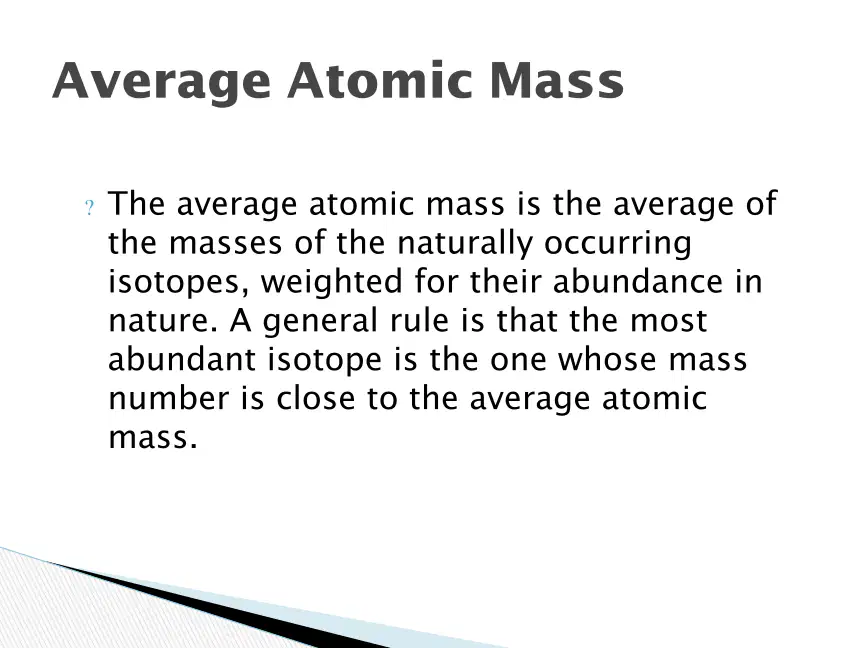
Multiple Choice

Which of the following best describes atomic mass?

1

The average mass of all isotopes of an element.

2

The sum of protons and neutrons in an atom.

3

The number of protons in an atom.

4

The number of neutrons in an atom.

38

media

39

media

40

Multiple Choice

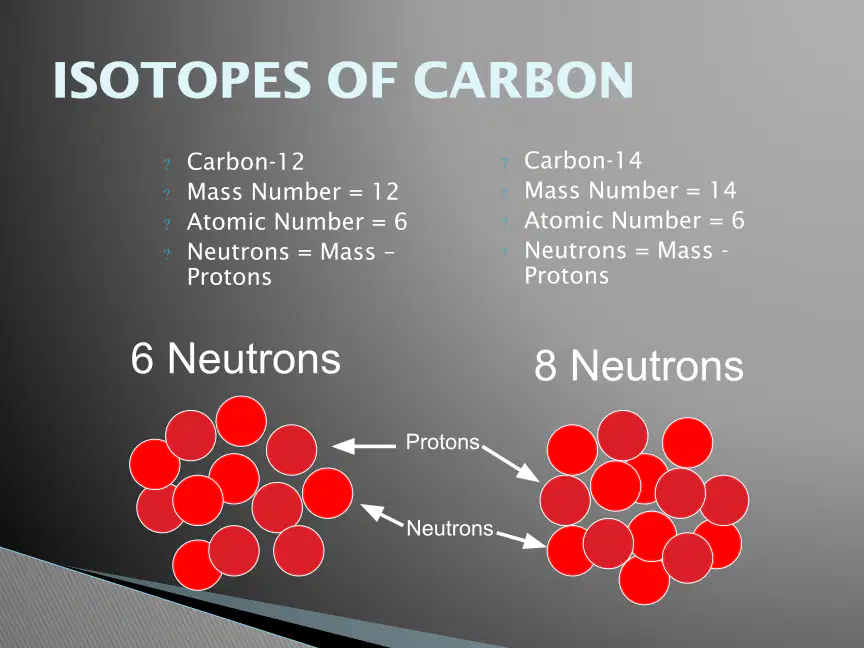
What would be the Isotope of Carbon-16

1

Protons: 8

Neutrons: 8

2

Protons: 6

Electrons: 10

3

Protons: 6

Neutrons: 10

4

Protons: 8

Electrons: 8

41

media

42

media

43

media

44

media

45

Fill in the Blanks

46

media

47

media

48

media

49

media

50

media

51

media

52

media

53

media

54

media

55

media

56

media

57

media

58

media

59

media

60

Categorize

Options (2)

Becomes an Ion

Becomes a different element

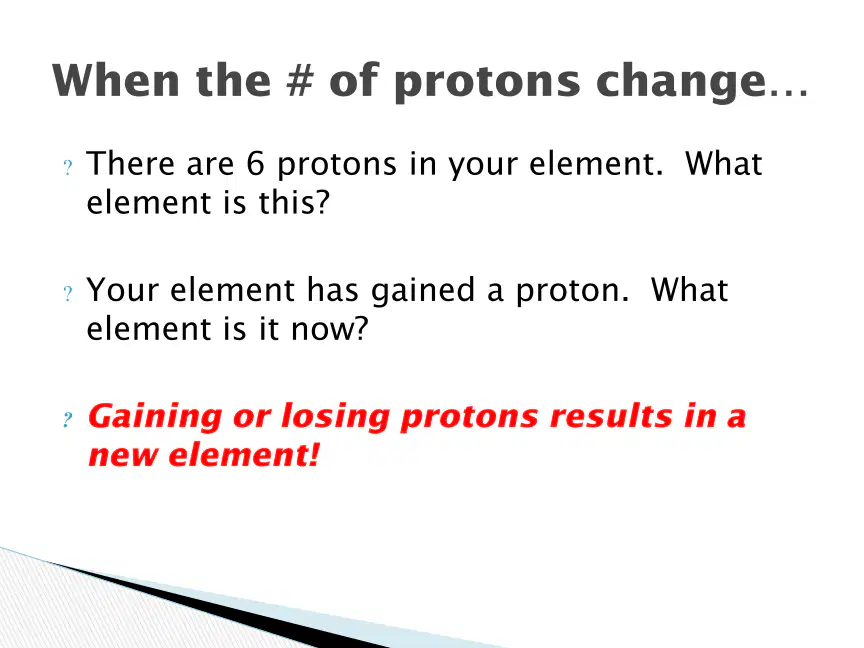
What happens when the number of _______ change?

Electrons
Protons

61

media

62

media

63

media

64

media

65

media

66

media
media

Show answer

Auto Play

Slide 1 / 66

SLIDE