Akanksha Foundation Scales Weekly Teacher Engagement with Wayground
From Weekly Teacher Goals to Real Classroom Insight
At Akanksha Foundation, technology isn’t a “nice to have.” It’s part of a long-term commitment to digital proficiency, innovative teaching, and better learning outcomes for students from underserved communities.
With 27 schools across Pune, Mumbai, and Nagpur, Akanksha has spent years building the foundations: devices, infrastructure, teacher capability, and a culture of experimenting with tools that make learning more accessible and engaging.
So when Wayground became one of the most-used tools among teachers (even before purchasing), the next question wasn’t “Should we adopt it?” It was “How do we scale it well, measure it properly, and use the data to improve learning week by week?”
The Weekly Accountability Challenge
Akanksha’s team wanted to do something very practical: track teacher usage weekly, set clear targets, and send reminders based on whether goals were achieved.Each week, teachers are given usage goals. Leadership tracks progress and sends reminders. The intent is simple: keep digital practice active and consistent.
But tracking that weekly engagement wasn’t always straightforward.Some teachers weren’t appearing in dashboard views. Custom weekly date ranges didn’t always align with reporting needs. Mobile exports added friction.
In short: adoption was happening, but tracking it at scale needed a smoother data workflow.
A support moment that unlocked clarity
The conversation started with a simple, urgent question: “Where is the real usage data?”
The breakthrough came through a simple audit: confirming which teachers were properly added under managed premium access.
Once aligned, the full usage picture became clearer.
To match Akanksha’s weekly reporting cycle, Wayground provided structured weekly exports covering exact date ranges, ensuring leadership could confidently track teacher activity, student responses, and engagement patterns. What was once fragmented became measurable
Why Akanksha chose Wayground
Akanksha’s decision wasn’t based on novelty. It was based on proof, Akanksha teachers don’t adopt tools lightly. They explore, compare, and choose what works.
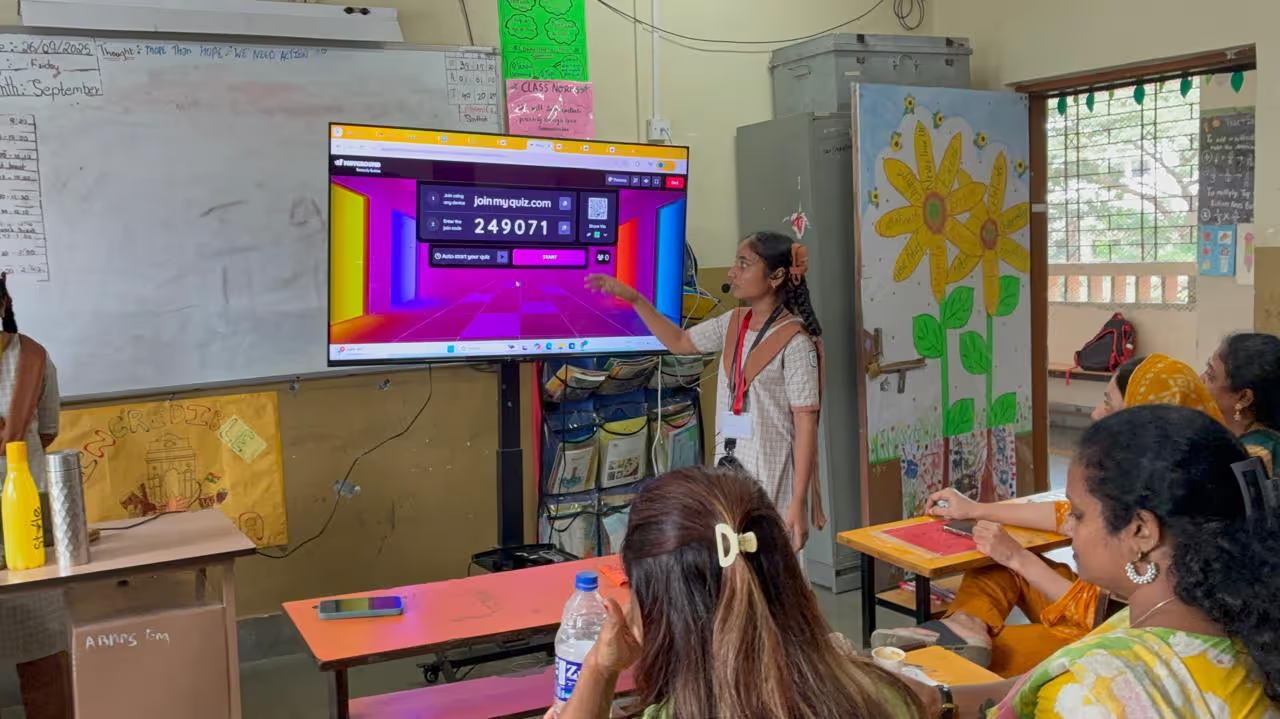
Wayground stayed because it delivers on three fronts:
- AI That Saves Time; Teachers upload a document or textbook page and generate questions in seconds. Planning time drops. Instructional focus increases
- Data That Drives Decisions: If Question 3 stumps half the class, teachers know instantly. They reteach only what’s needed or support a small group — no guesswork.
- Accommodations That Empower Learners; Read-aloud features and flexible pacing allow students, including those who need extra support, to learn independently. Teachers observe more participation and confidence.
How teachers use Wayground in real classrooms
Across Akanksha schools, Wayground isn’t used in just one way. Teachers are experimenting and expanding.
- Faster content creation with AI
Teachers use AI features to turn documents or chapter photos into quizzes in seconds. Instead of writing questions manually, they focus on giving the right instructions and refining the output. - Building reading practice with passages
Language teachers especially value passages for skill-based testing and paper preparation. It helps students practice comprehension in a format closer to what they’ll see in assessments. - Using data to reteach, differentiate, and target misconceptions
A common teaching move at Akanksha looks like this:
- Run a quick activity
- Check which questions students struggled with
- Reteach only what’s needed, or support a specific group rather than repeating the whole lesson
Supporting diverse learners with accommodations
%201.avif)
Teachers reported strong value in features that let students learn at their own pace, especially for learners who need additional support.
Read-aloud and pacing supports reduce the need for teachers to individually read instructions to each student, allowing students to work independently and confidently. “When the child is learning at its own pace… it becomes easier for teachers. The child uses the read-aloud feature and takes time to understand.”
Culture building: goals, best practices, and teacher recognition
Akanksha didn’t treat rollout as a one-time training. They built habits around it:
- Weekly usage goals and accountability
- Sharing internal best practices (for example, how teachers run teacher-paced sessions)
- Encouraging teachers to explore beyond basics, from AI to presentation to interactive formats
- Running friendly challenges (like a two-week activity challenge) and recognizing teachers who excel
This created a practical loop: usage leads to examples, examples lead to better practice, and better practice increases adoption. Akanksha is clear about what they can already see, and what they still want to measure more deeply.
Implementation realities and what’s next
Adoption was easy because teachers were already comfortable with the platform.
The real challenge is operational: device access at the right time, in the right classroom, within a short period (often around a 40-minute lesson). Akanksha sees one-to-one access as a longer-term goal that may take a few years to fully solve at scale.
For Akanksha Foundation, Wayground isn’t just a classroom tool. It’s part of a broader system: access, teacher capacity, weekly accountability, and a consistent push toward more inclusive, data-informed teaching.
They’re not done exploring. But the early story is clear: when teachers can create faster, see misconceptions instantly, and support diverse learners with accommodations, better learning routines start to scale