How Falling Creek Middle School Rebuilt Their PLCs
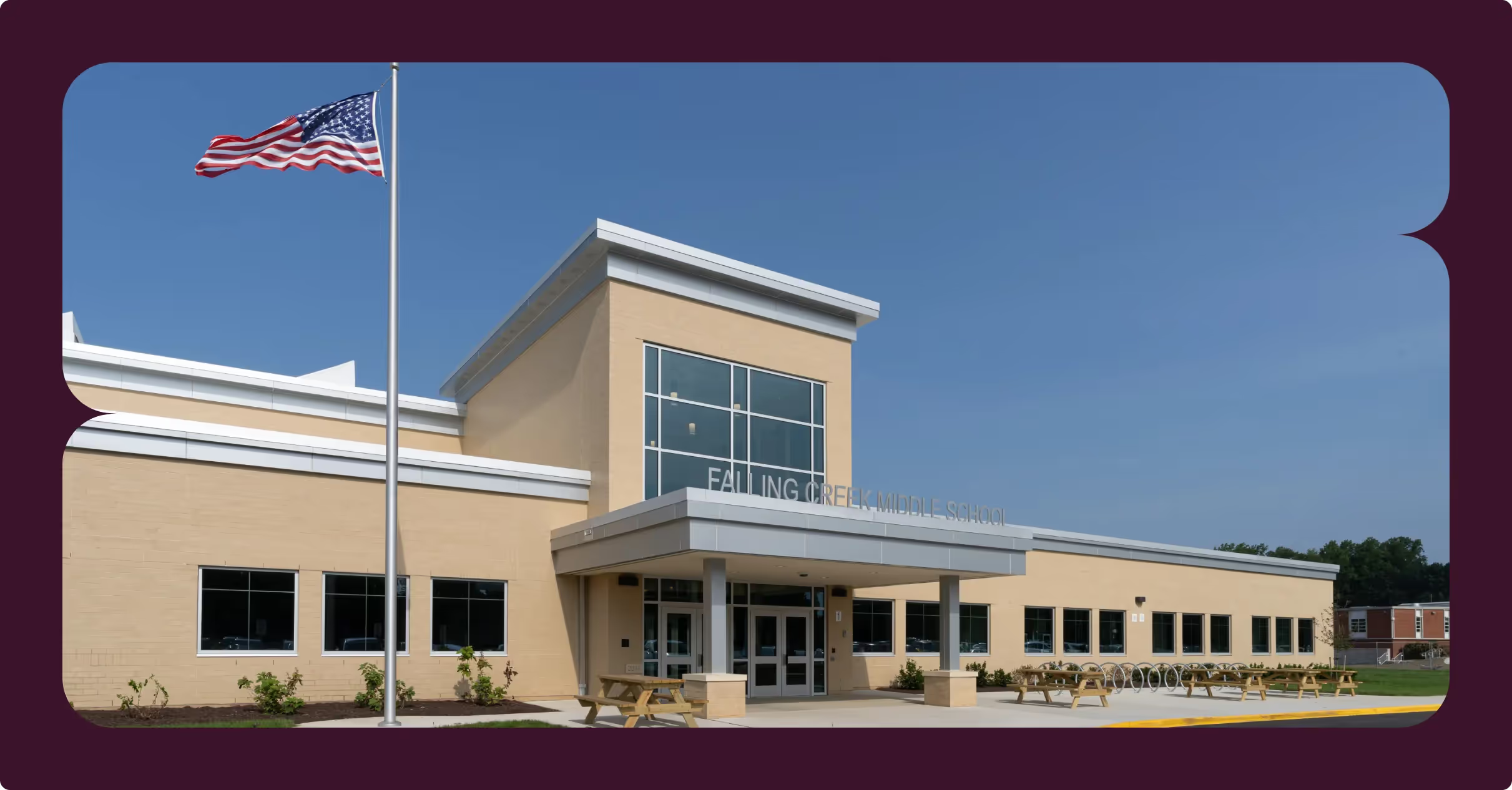
Falling Creek Middle School in Chesterfield County Public Schools in central Virginia has been revitalizing its PLC structure to prioritize acting on data to better support more students. We spoke with Instructional Designer Ursula Rockefeller to find out how Falling Creek makes it work.
Fast Facts at Falling Creek
- 1,500 students in grades 6–8
- Serving Chesterfield County, Virginia
- 60% multilingual learners
- Wayground customer since 2024
Challenges
Educators at Falling Creek Middle School were using the PLC (professional learning community) structure to improve collaboration and become a data-driven community, but a few barriers stood in their way.
PLCs at Falling Creek included teachers from the same grade who teach the same subject, but they were all using a combination of assessment tools. One teacher might make a quiz using a Google Form, then another would use a traditional paper test. These tools didn’t always integrate, which made it difficult to share assessments with other teachers.
This patchwork approach was a challenge when trying to review data across classrooms or identify trends. Without a bird’s-eye view, educators struggled to see if instruction was working and if they were reaching all students. As a diverse Title I school with about 60% of students identified as multilingual learners, this was especially critical.
While the school did collect data, PLCs didn’t always know how to act on it. Educators spent their PLC time gathering data instead of sharing wins and implementing strategies. Teachers were committed to meeting students’ needs but lacked the tools to administer accommodations and differentiate instruction effectively.
As an intentional first step, the school restructured PLC meetings to meet twice per week for 45 minutes. One meeting is dedicated to data and one to planning, giving teachers a chance to digest and act on what they’ve learned between meetings. “I know teachers at other schools are like, ‘What? Meet twice a week?’ But it really makes all the difference in the world,” said Ursula Rockefeller, instructional designer at Falling Creek.
Solution
Teachers at Falling Creek had been using Wayground (formerly Quizizz) since 2024 and decided to adopt Wayground’s Common Assessments soon after. “I’ve always loved working with Wayground, so doing the Common Assessments was a no-brainer,” Rockefeller said. “Teachers were already comfortable using the application. Now they’re just going to take it up a notch.”
Teachers began using Wayground for formative assessments, exit tickets, and differentiated materials. Wayground’s ease of use, built-in accommodations, and gamified features made it a natural fit for daily classroom use. “Teachers are all about ‘What can I do that’s really quick and easy and simple?’ And [Wayground] does that for them,” said Rockefeller.
The best part is that all teachers in a group can use the same assessments to compare data more easily, making PLC time more valuable. “It gives them the information they need to have an in-depth discussion on the results from their assessment,” Rockefeller explained. If one teacher had all good results, colleagues can ask what they did differently, giving teachers the opportunity to learn from one another.
PLC discussions involve digging deep into the data, asking questions like:
- How did students do by question?
- How did students perform by Virginia Standards of Learning (SOL)?
- What are the results for students with disabilities? Multilingual students?
- What are the results by teacher?
By analyzing the data across multiple lenses, teachers can take action to meet students’ needs. If all multilingual students struggled, teachers look at which questions they got wrong and discuss how to reteach relevant concepts. In another example, the reading coach noticed a group of students struggling with vocabulary. She used the data in Wayground to identify these students and made a plan to pull them out of class to work on vocabulary for 15-20 minutes. These gaps would have been missed if not for Common Assessments.
Results
Falling Creek Middle School is seeing the impact of simplified assessments and clearer data. “Having these detailed results from the assessments lets us reach more students,” said Rockefeller. “We saw the percentage of students passing Formative and Summative Assessments go up over time. It’s going to take a few more years to get it to where we would want it to be, but it’s a step in the right direction.”
In addition to easily creating standards-aligned assessments, Ursula Rockefeller’s favorite part of Wayground is the accommodations. Accommodations in Common Assessments include supports like translated instructions, simplified language, or extended time that are applied automatically for students who need them. “Because we’re a Title I school, being able to provide the accommodations to help our kids out makes a big difference,” said Rockefeller. “It’s so powerful.”
Wayground also empowers teachers to show that what they’re doing is working. “If administrators come in to ask what we’re doing, we can give them concrete data that says this is how it’s helped,” said Rockefeller. Wayground is helping Falling Creek support district priorities for a data-driven culture.
Rockefeller is seeing the benefits of restructuring PLC time to make it worthwhile for everyone. She has built meeting templates and a toolkit to get all staff on the same page with PLC goals and priorities. Rockefeller is keen to share her learning with others. Her advice to someone trying to strengthen their PLC practice? “Don’t try to do it all in a short period of time. It takes time. It’s not going to happen overnight. Don’t be afraid to try something and fail because that’s how we learn.”