Free Printable Active Transport Worksheets for Year 9
Explore Wayground's comprehensive collection of Year 9 active transport biology worksheets, featuring free printables and practice problems with answer keys to help students master cellular membrane processes and energy-dependent transport mechanisms.
Explore printable Active Transport worksheets for Year 9
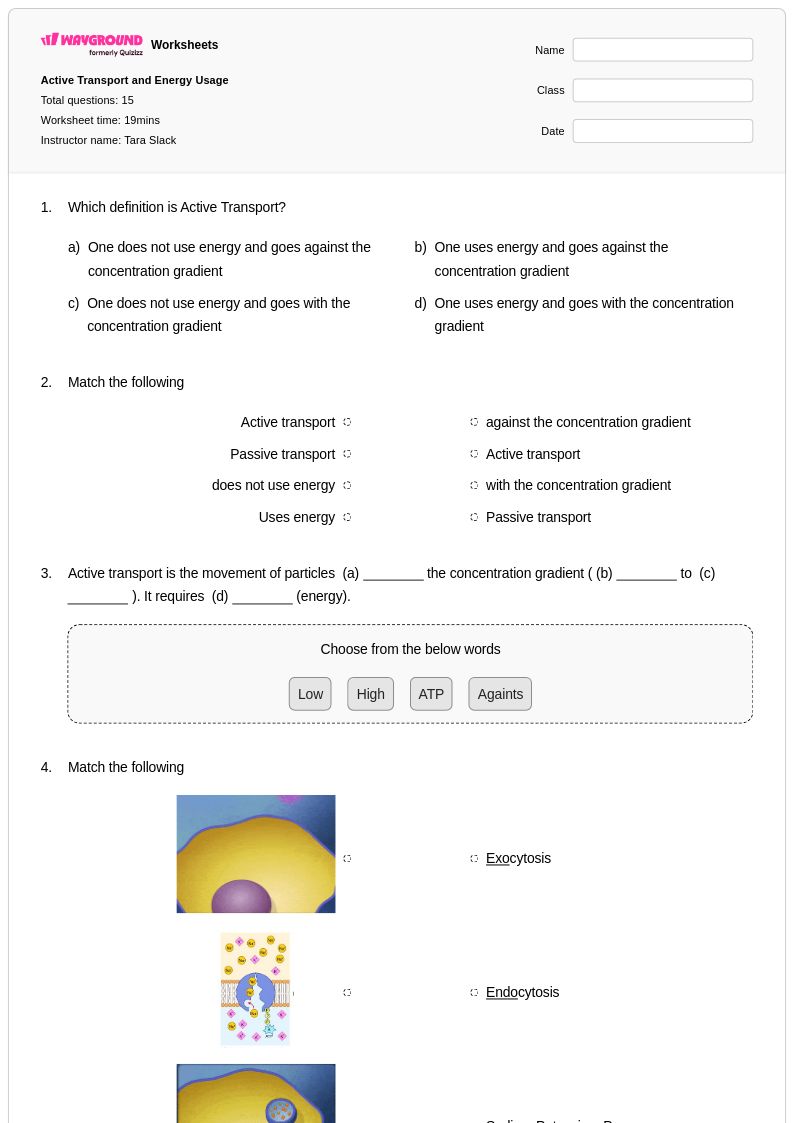
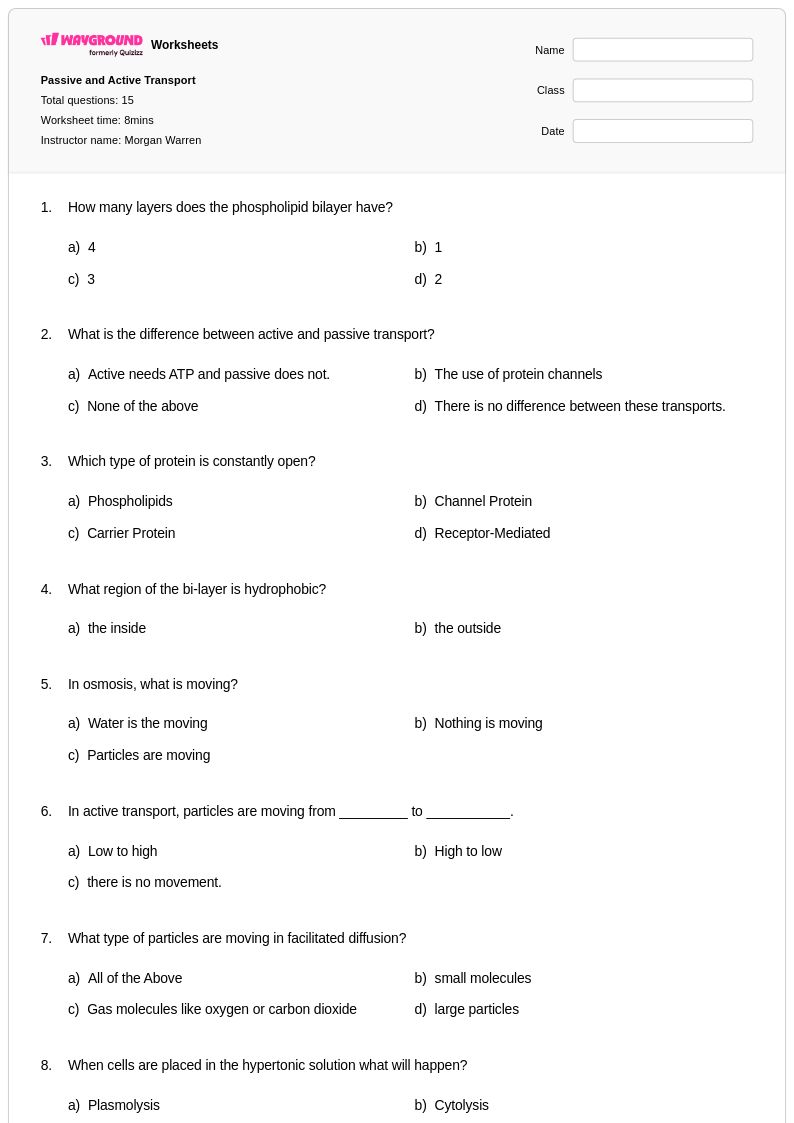
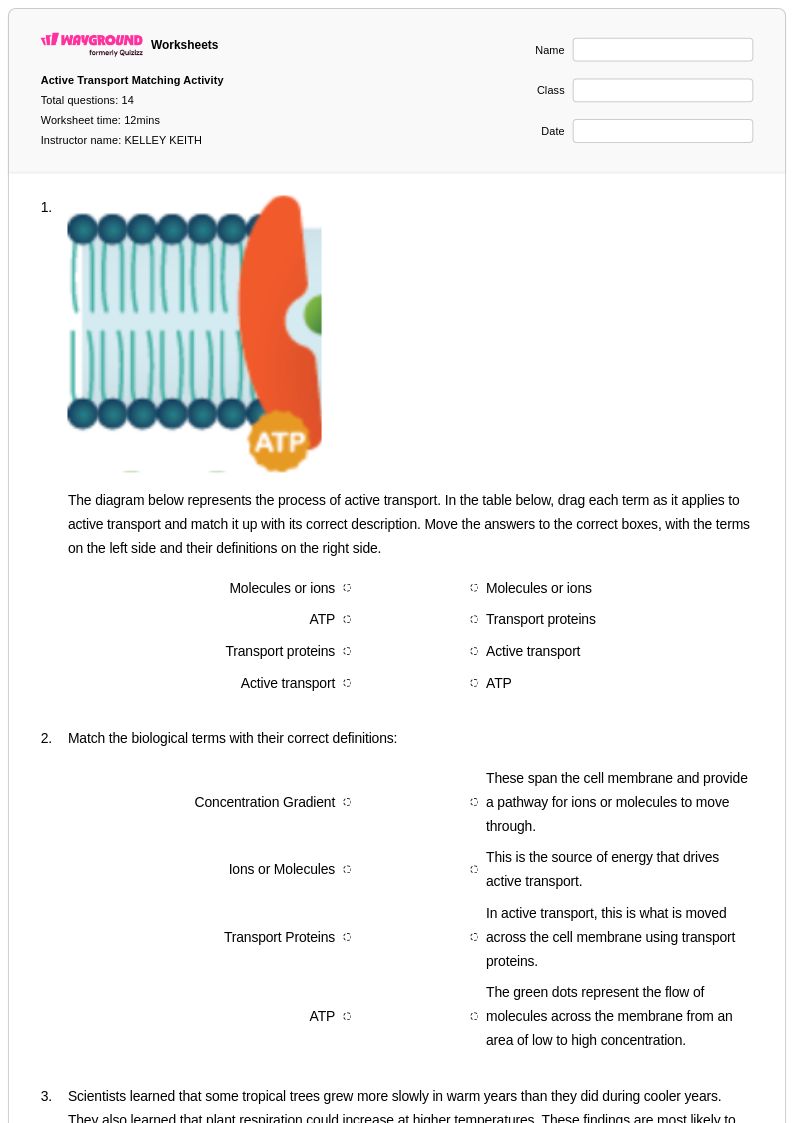
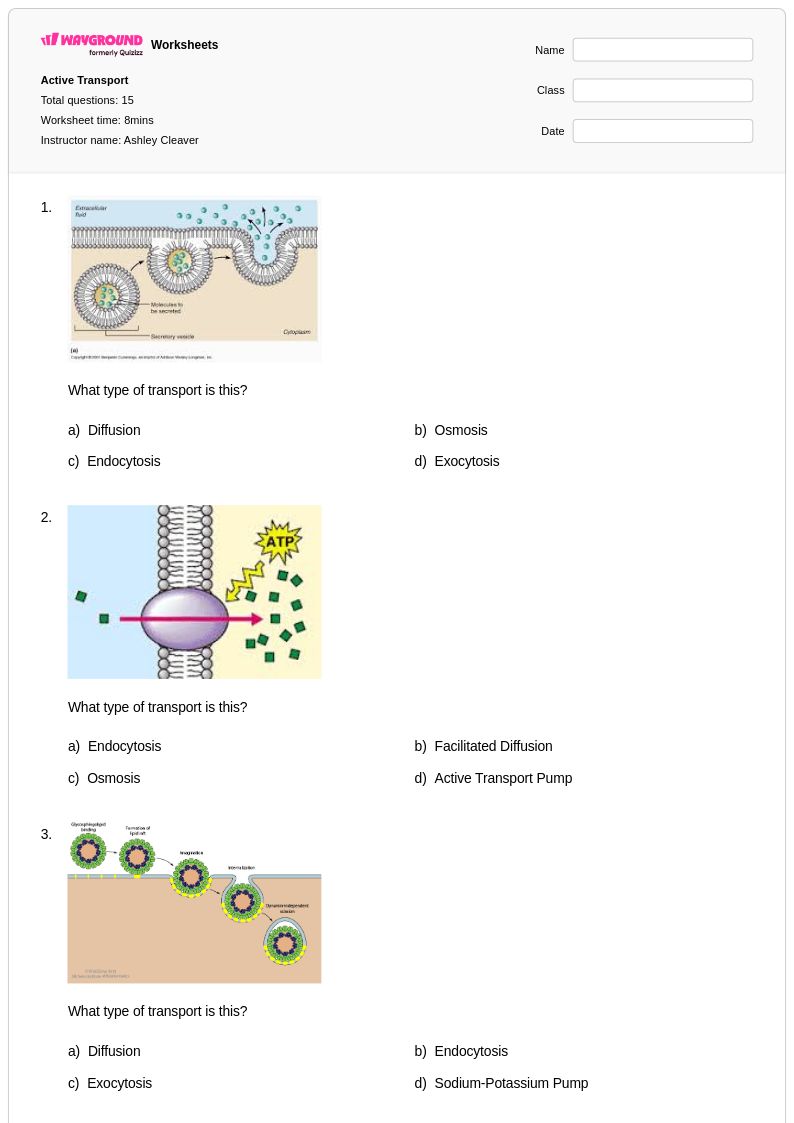
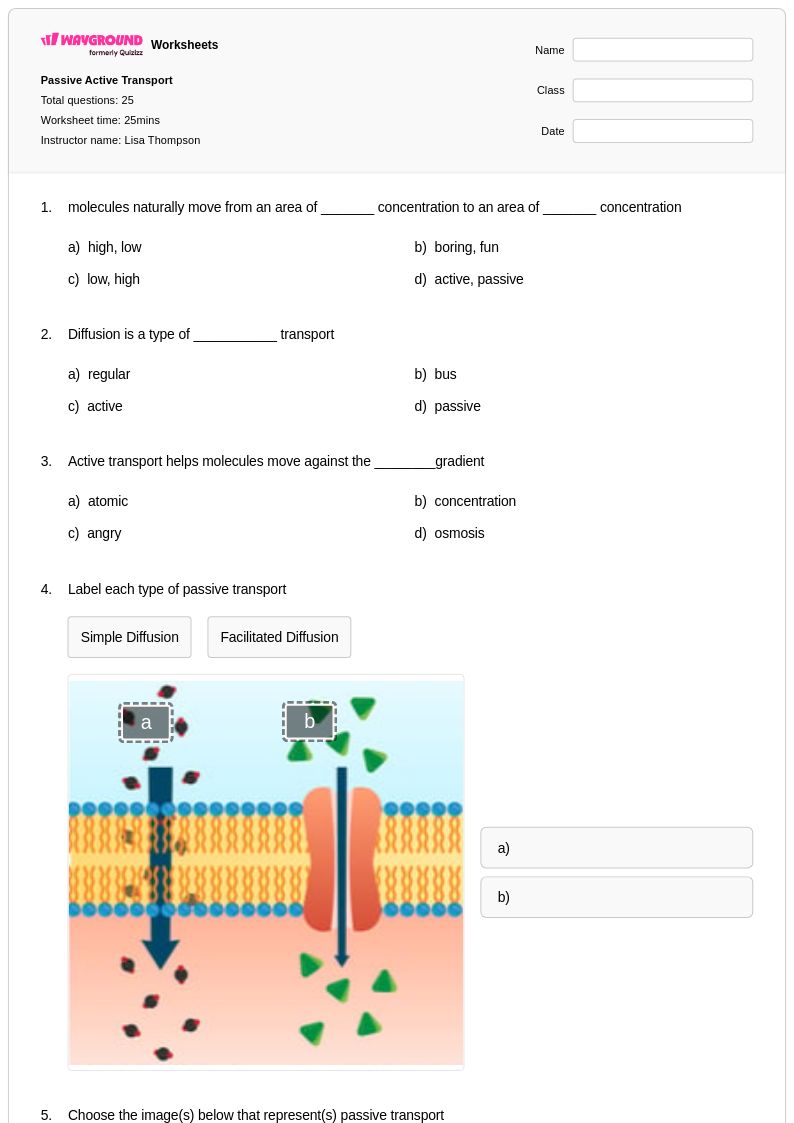
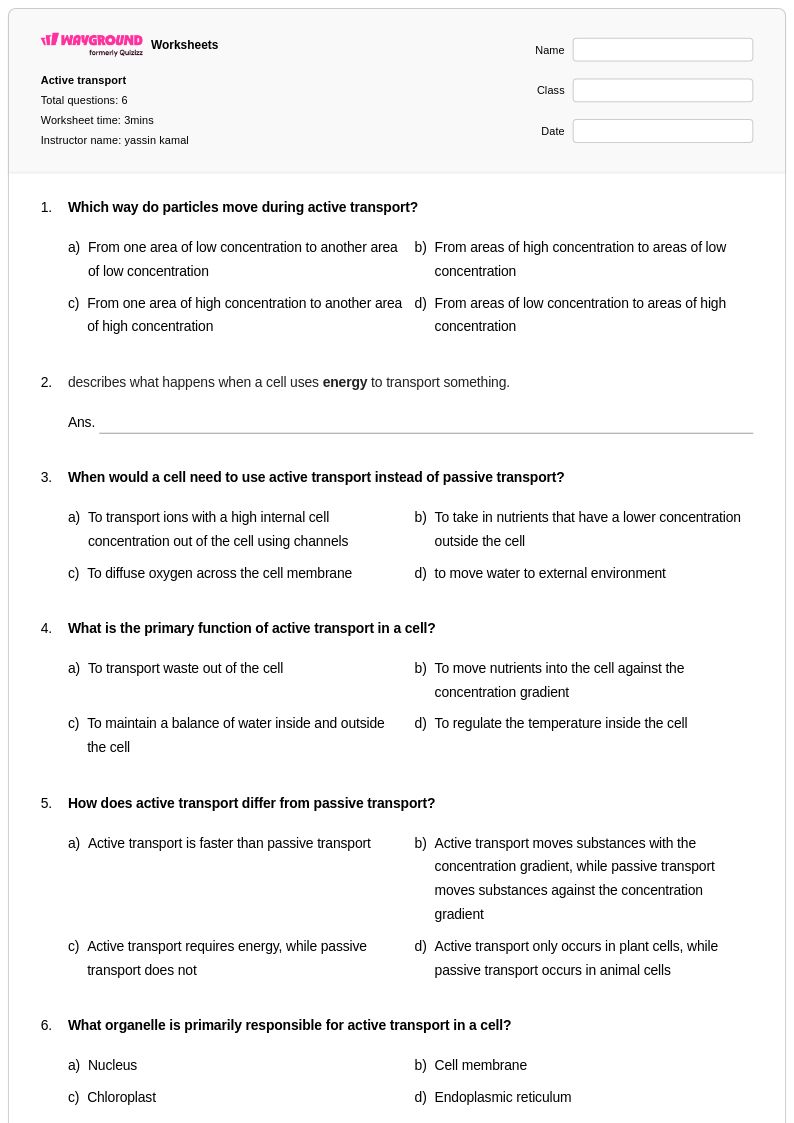
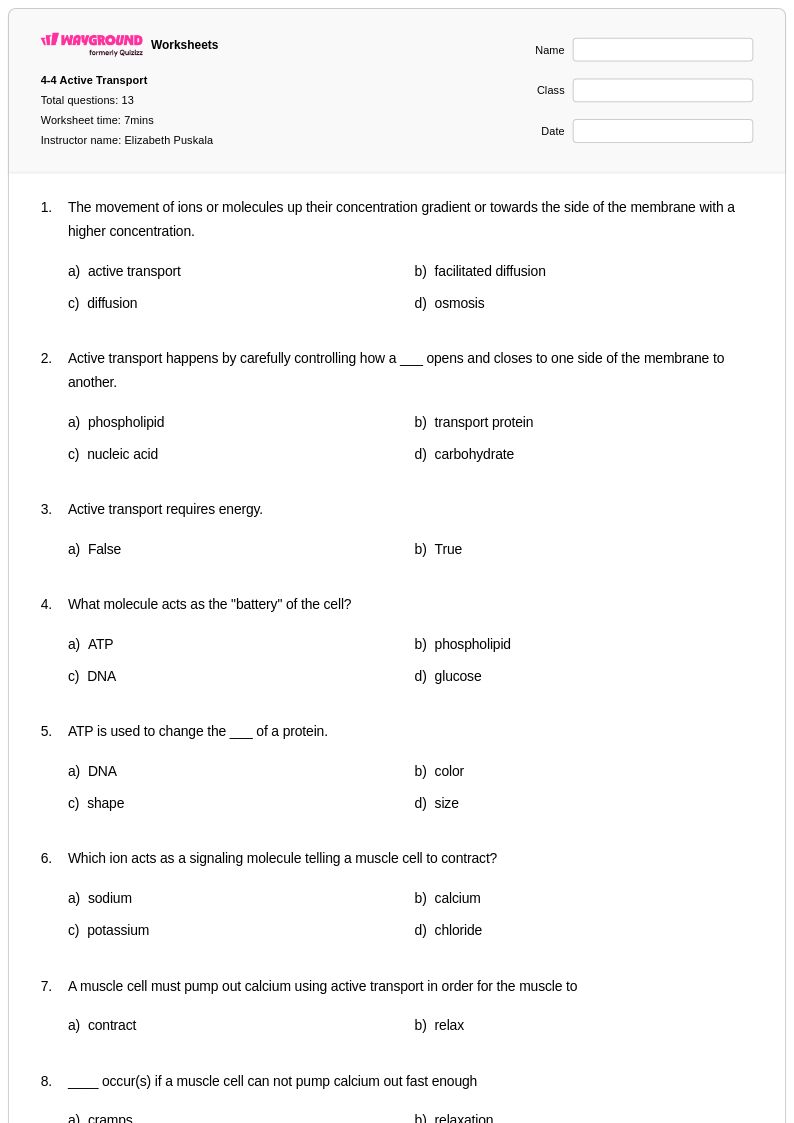
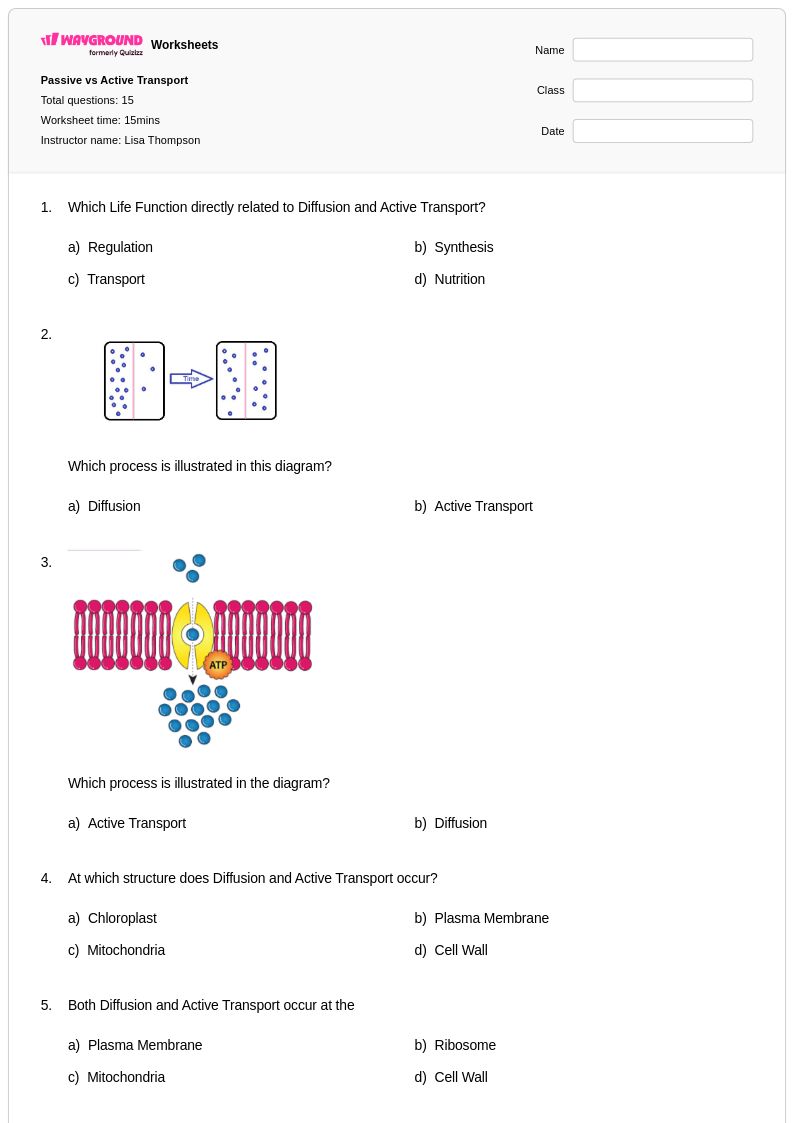
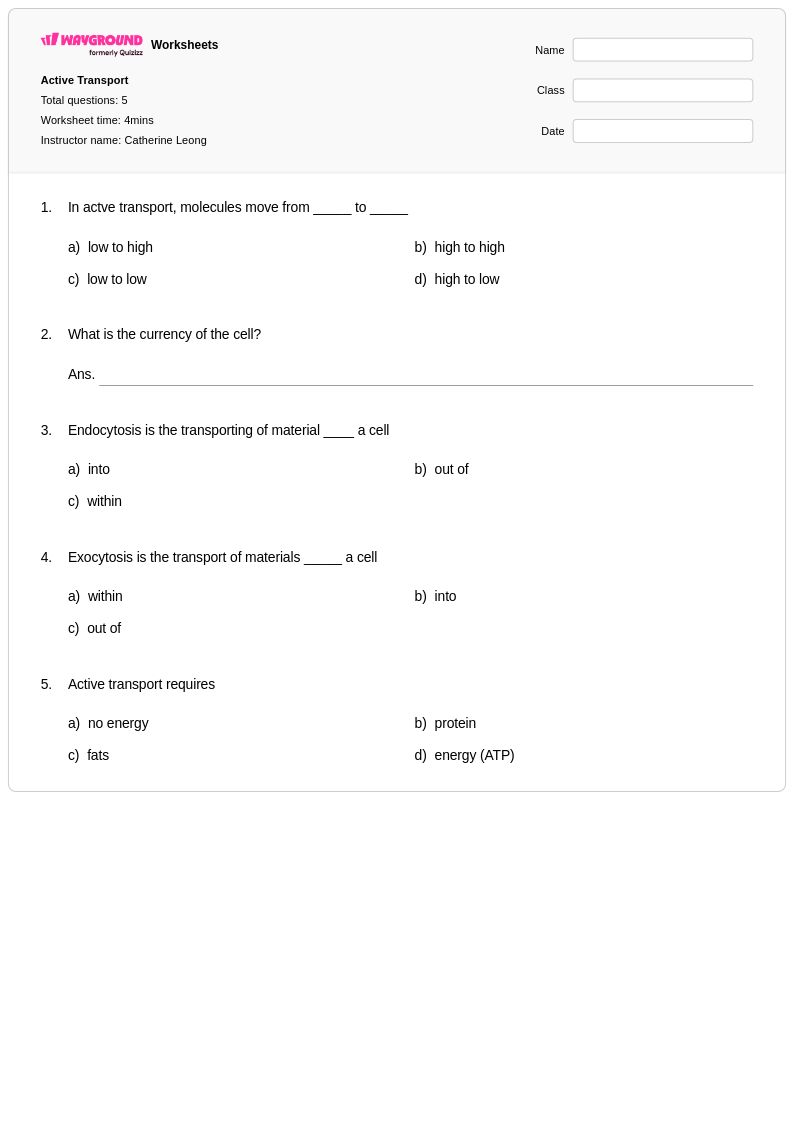
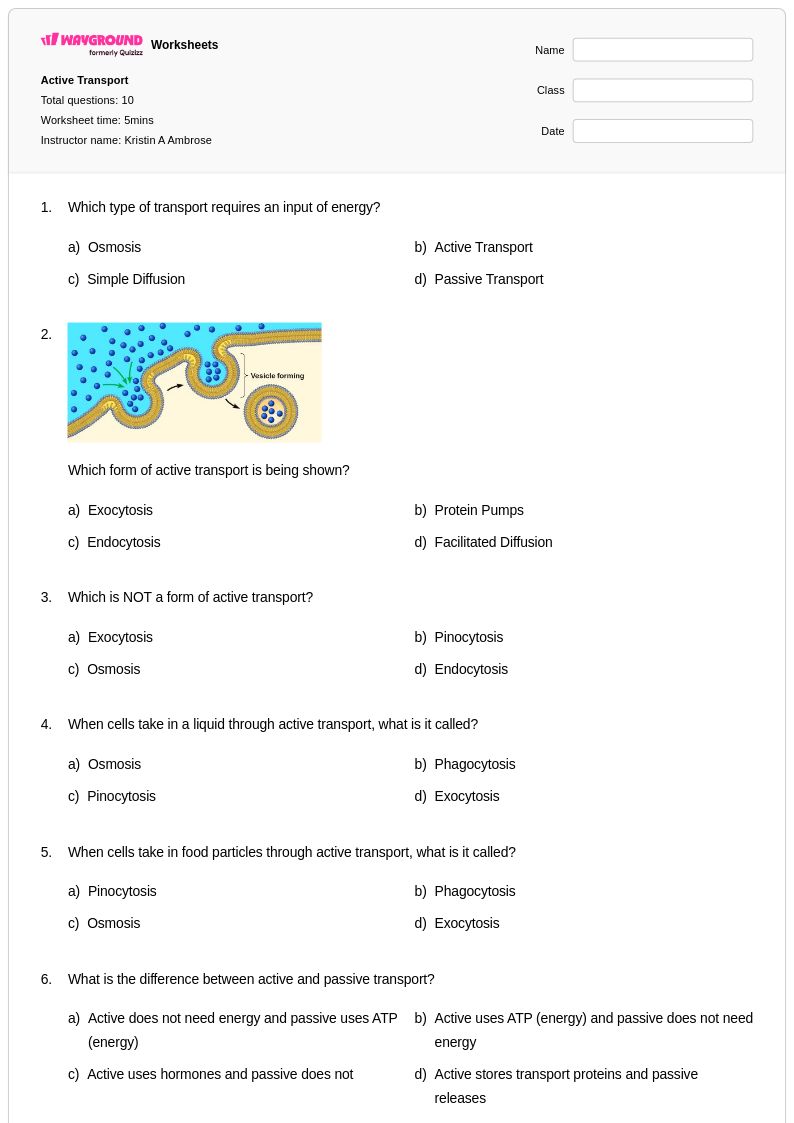
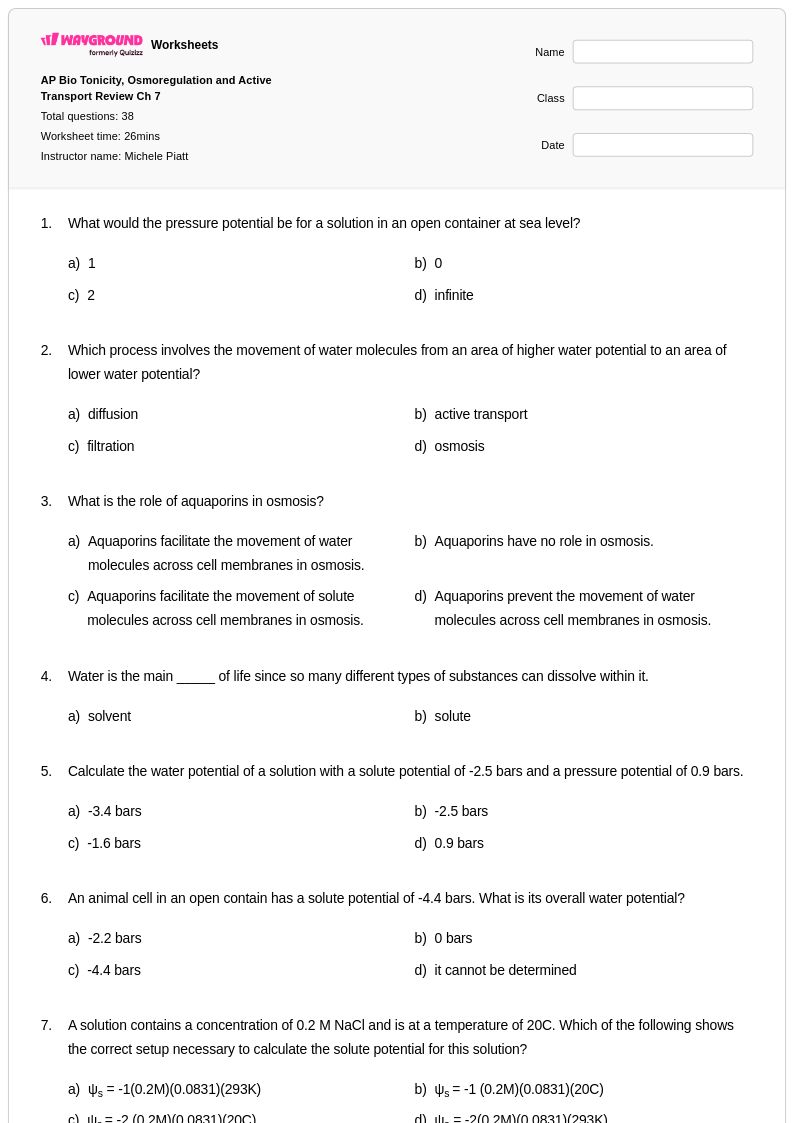
Active transport worksheets for Year 9 students available through Wayground (formerly Quizizz) provide comprehensive coverage of this fundamental cellular process that moves substances against concentration gradients using cellular energy. These expertly designed practice problems help students master the mechanisms of active transport, including primary active transport through ATP-powered pumps and secondary active transport via cotransporters and antiporters. Students work through scenarios involving sodium-potassium pumps, calcium pumps, and glucose transporters while analyzing energy requirements and directional movement across cell membranes. Each worksheet includes detailed answer keys and free printable resources that reinforce understanding of how cells maintain homeostasis by actively moving ions, nutrients, and waste products against their natural diffusion patterns.
Wayground (formerly Quizizz) empowers teachers with millions of teacher-created active transport resources that can be easily searched, filtered, and customized to meet diverse Year 9 biology classroom needs. The platform's standards-aligned worksheet collections support both remediation for struggling students and enrichment opportunities for advanced learners, with differentiation tools that allow educators to modify content complexity and pacing. Teachers can access these materials in both digital and printable pdf formats, making lesson planning more efficient whether conducting in-person labs, remote learning sessions, or hybrid instruction. The flexible customization features enable educators to blend multiple worksheet types for comprehensive skill practice, helping students build confidence in distinguishing active transport from passive processes while developing critical thinking skills essential for advanced biology coursework.
FAQs
How do I teach active transport to biology students?
Start by ensuring students have a solid grasp of concentration gradients and passive transport before introducing active transport, since the contrast is essential for conceptual clarity. Use the sodium-potassium pump as your primary model — it concretely illustrates how ATP powers carrier proteins to move ions against their gradients. Pair direct instruction with labeled diagram activities where students trace the movement of molecules and identify energy inputs, which helps anchor the abstract process to a visual framework.
What practice exercises help students understand active transport?
The most effective practice tasks ask students to compare and contrast active and passive transport, identify specific transport proteins like sodium-potassium pumps and carrier proteins, and analyze how cells use ATP to maintain homeostasis. Scenario-based problems — where students determine whether a described cellular process requires energy or not — push beyond memorization into applied reasoning. Practice problems that include real-world cellular examples, such as nerve impulse transmission or intestinal nutrient absorption, are especially useful for building transferable understanding.
What mistakes do students commonly make when learning about active transport?
The most common misconception is that molecules simply 'want to move' in a particular direction, leading students to confuse active transport with diffusion. Students frequently struggle to articulate why energy is required, often unable to connect ATP expenditure to the work of moving substances against a concentration gradient. Another frequent error is conflating transport proteins used in active transport with channel proteins used in facilitated diffusion — reinforcing the structural and functional differences between carrier proteins and channels directly addresses this.
How do I differentiate active transport instruction for students at different levels?
For introductory biology students, focus on the core concept — substances moving from low to high concentration using cellular energy — and use the sodium-potassium pump as a single, well-developed example. For more advanced students, extend into secondary active transport, co-transport mechanisms, and quantitative analysis of ATP costs. Wayground supports individual student accommodations including read aloud, reduced answer choices, and extended time, which can be configured per student without affecting the rest of the class, making differentiation practical during the same worksheet session.
How do I use Wayground's active transport worksheets in my classroom?
Wayground's active transport worksheets are available as free printable PDFs for traditional classroom distribution and in digital formats for technology-integrated instruction, including the option to host them as a quiz directly on Wayground. Each worksheet includes a complete answer key, so teachers can use them for independent practice, guided review, or formative assessment without additional prep. The collection includes materials spanning introductory and AP-level content, allowing teachers to select or combine resources based on their curriculum stage and student readiness.
How is active transport different from passive transport, and how do I help students tell them apart?
Active transport moves substances against their concentration gradient and requires ATP energy, while passive transport moves substances along their gradient and requires no cellular energy input. Students retain this distinction best when they work through comparative activities that explicitly list the direction of movement, energy requirement, and proteins involved for both processes side by side. Worksheet problems that present a cellular scenario and ask students to classify the process — and justify their reasoning — are particularly effective at catching and correcting confusion between the two.