Free Printable Male Reproductive System Worksheets for Year 9
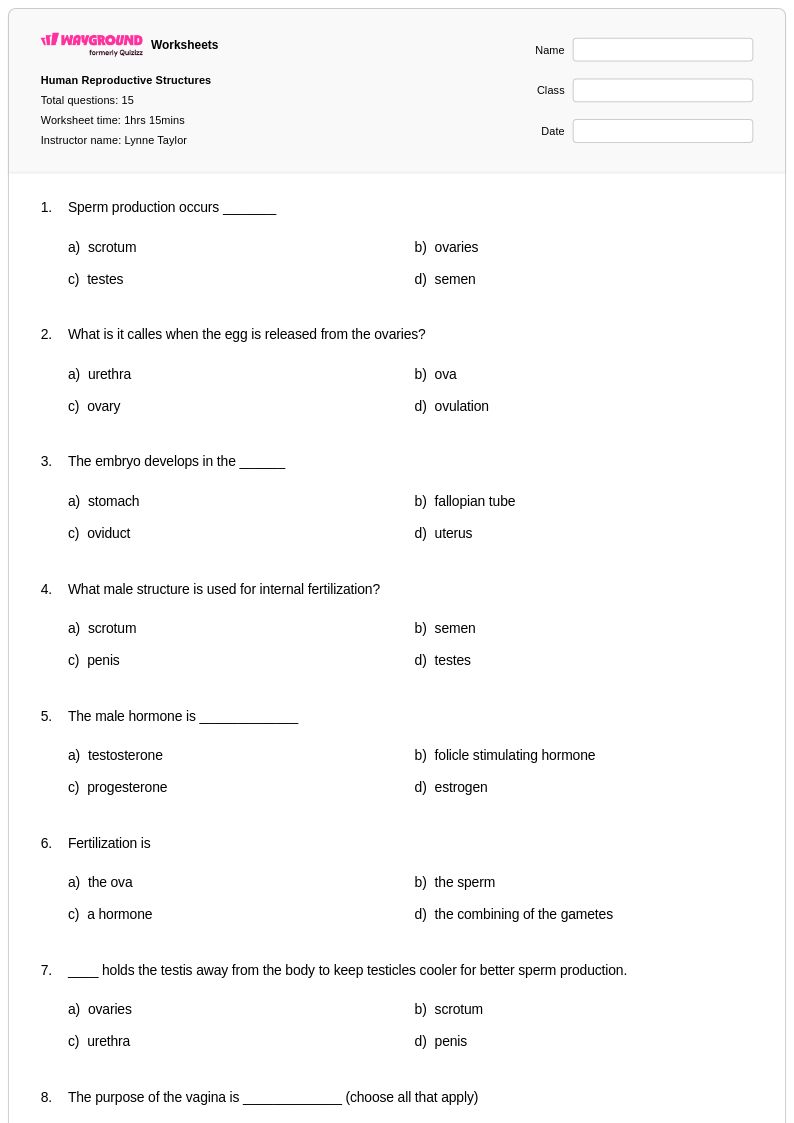
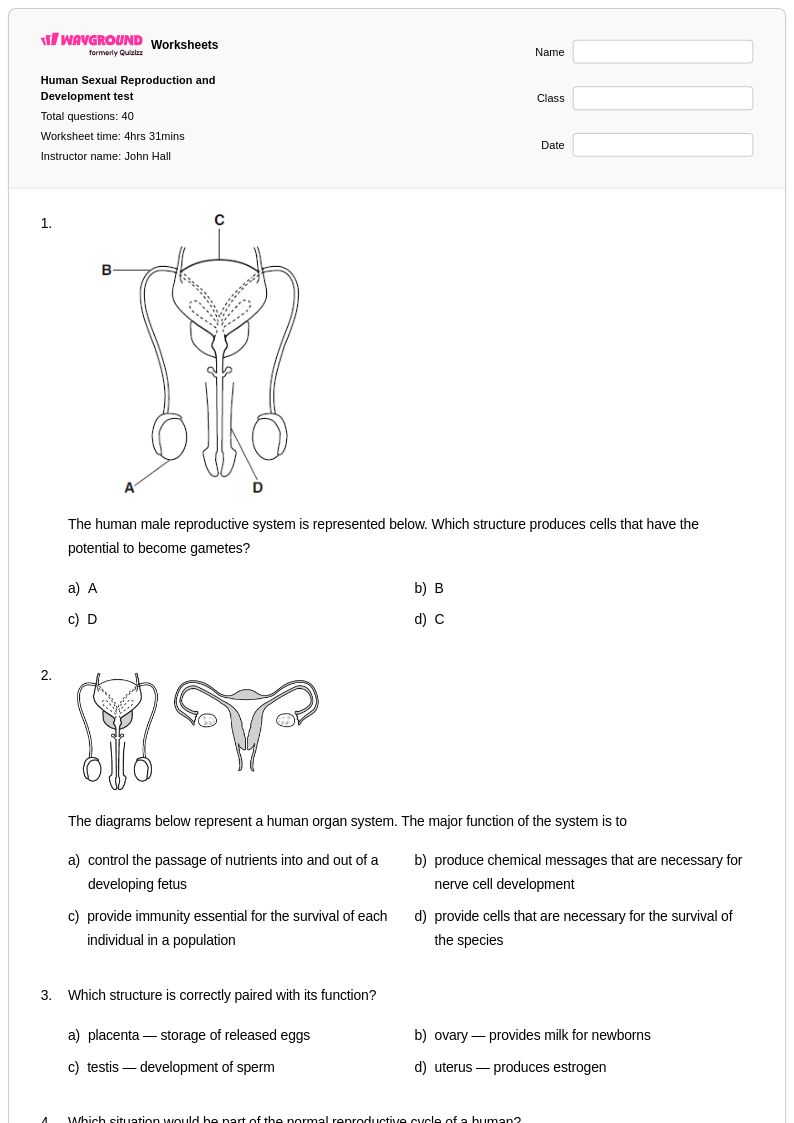
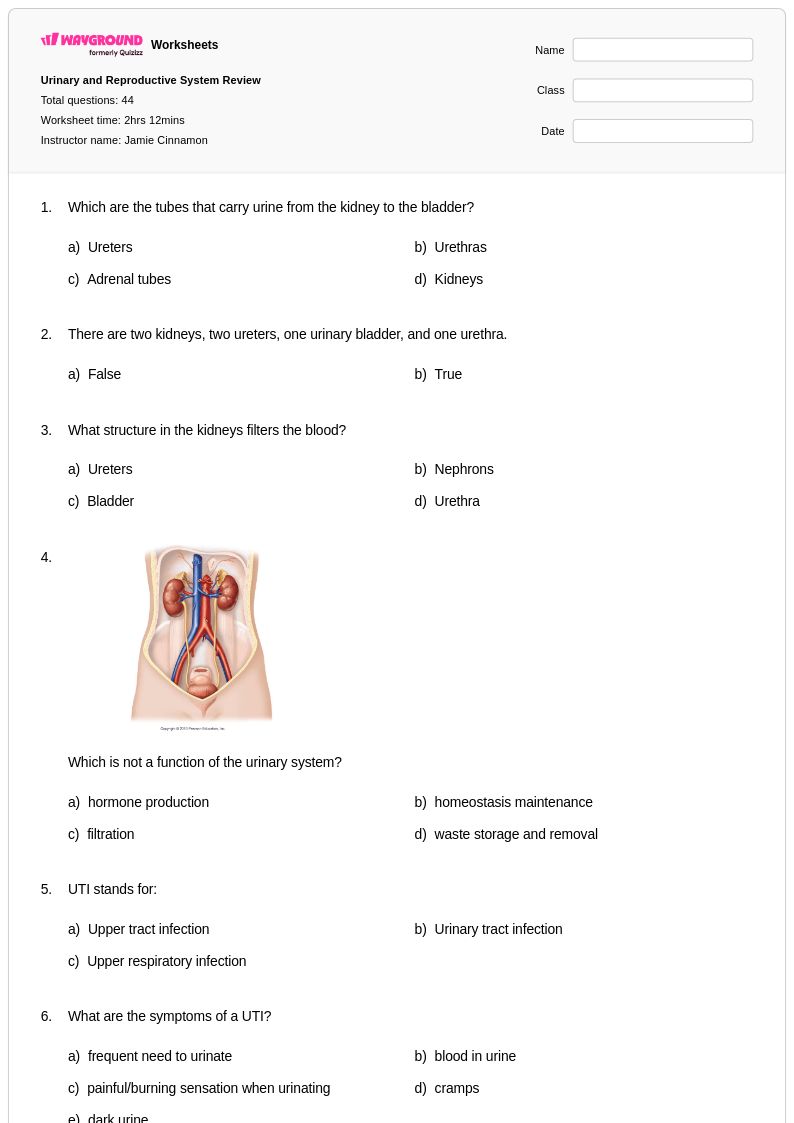
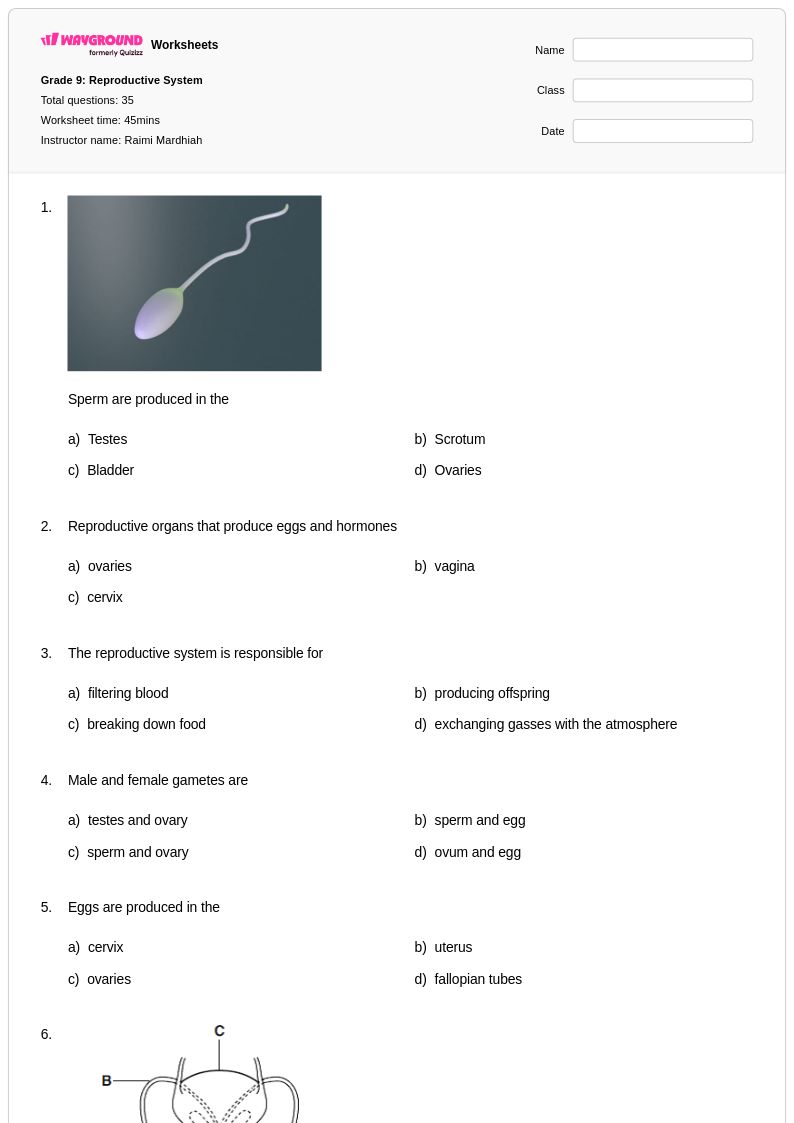
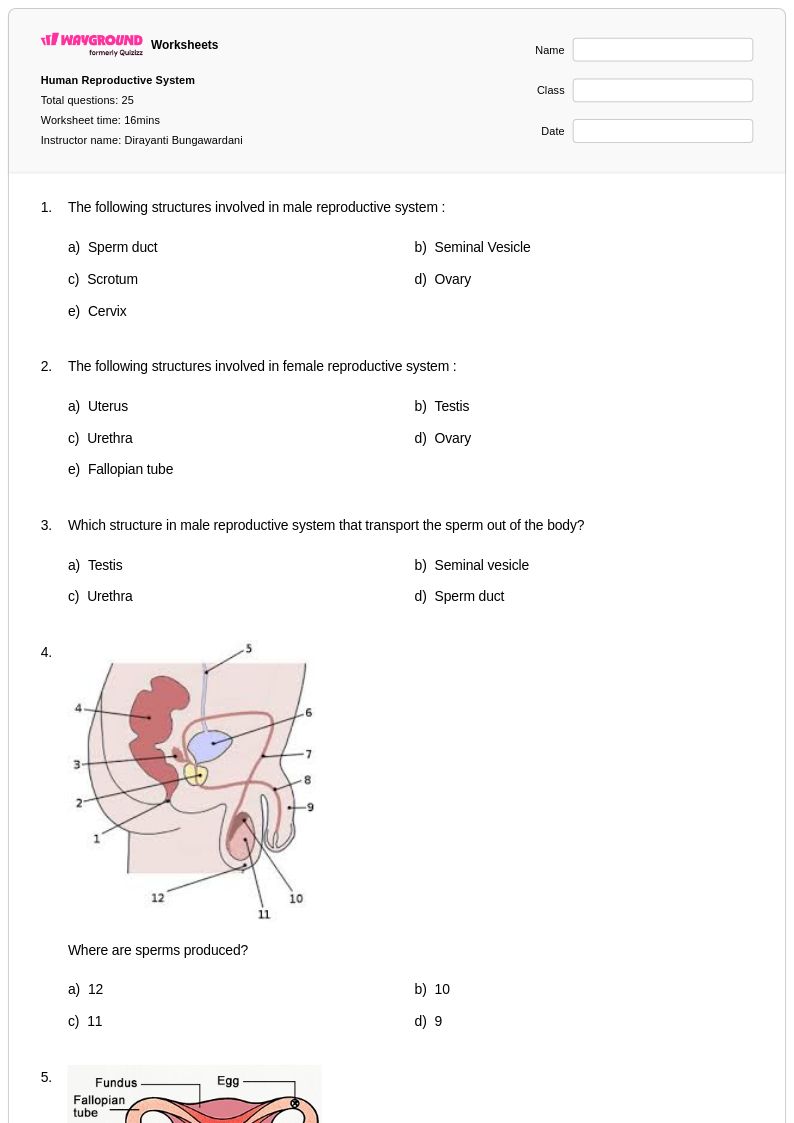
Explore Wayground's free Year 9 male reproductive system worksheets and printables that help students master anatomy, functions, and processes through comprehensive practice problems with detailed answer keys.
Explore printable Male Reproductive System worksheets for Year 9
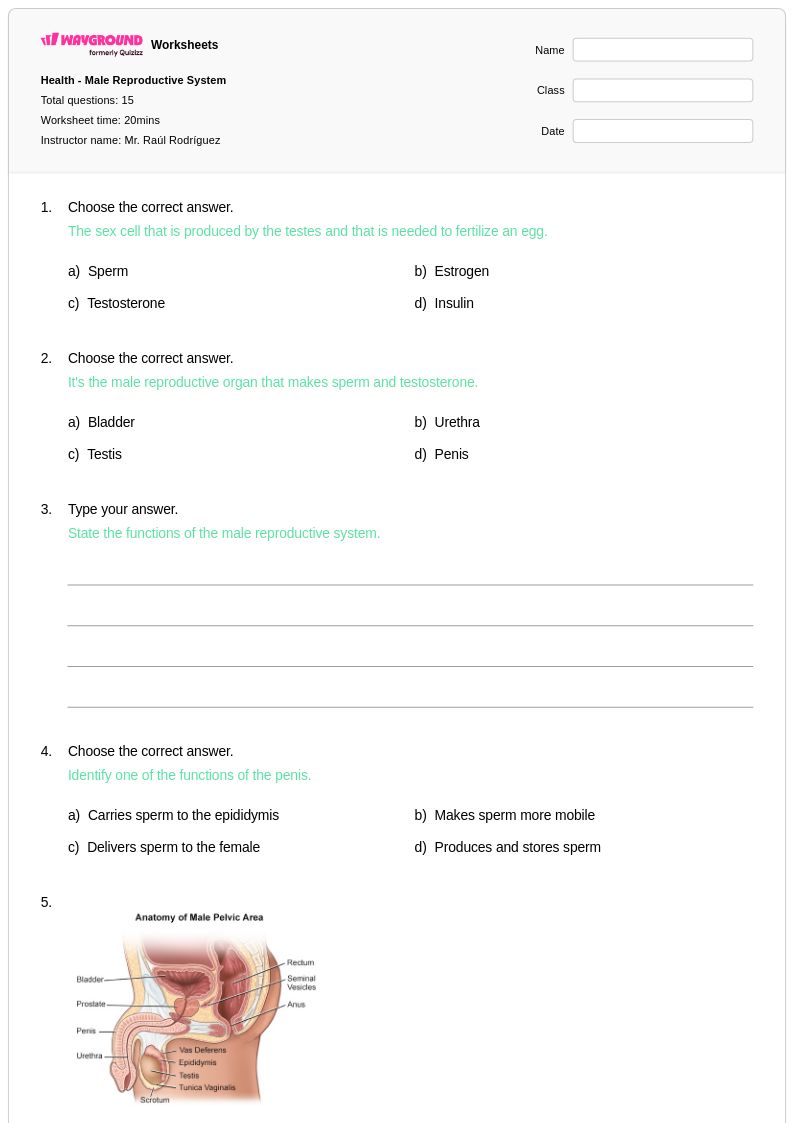
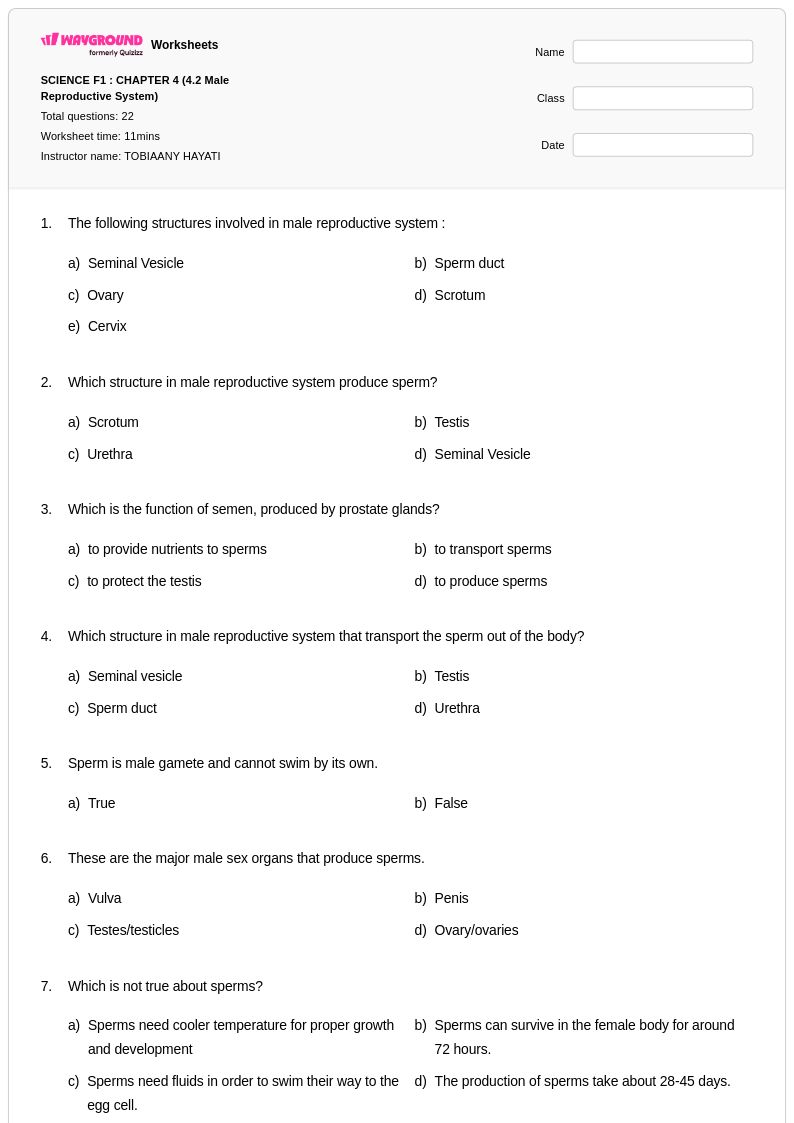
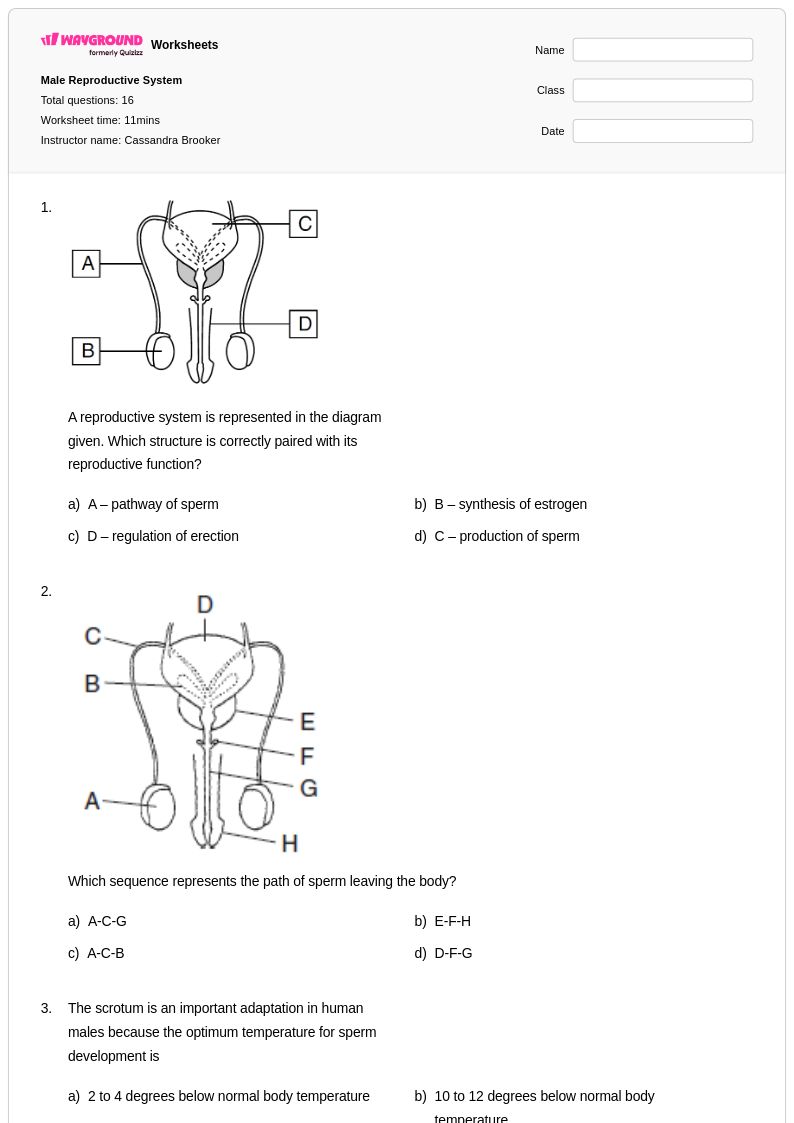
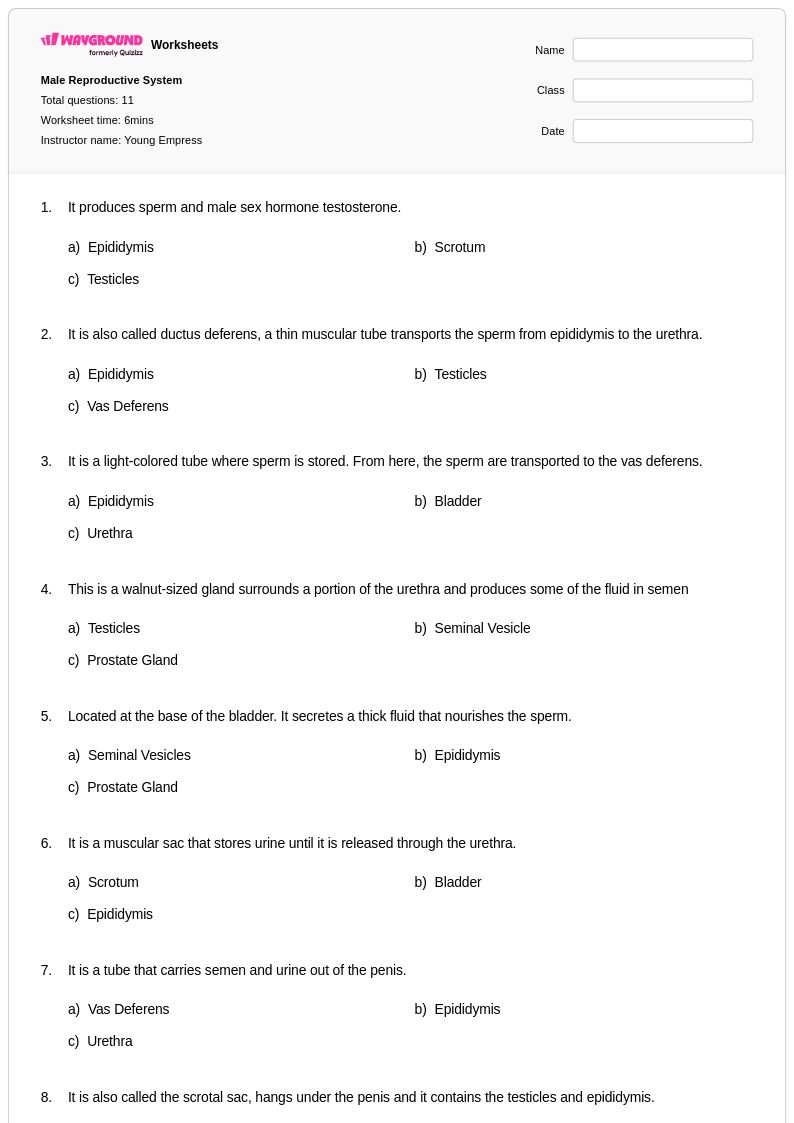
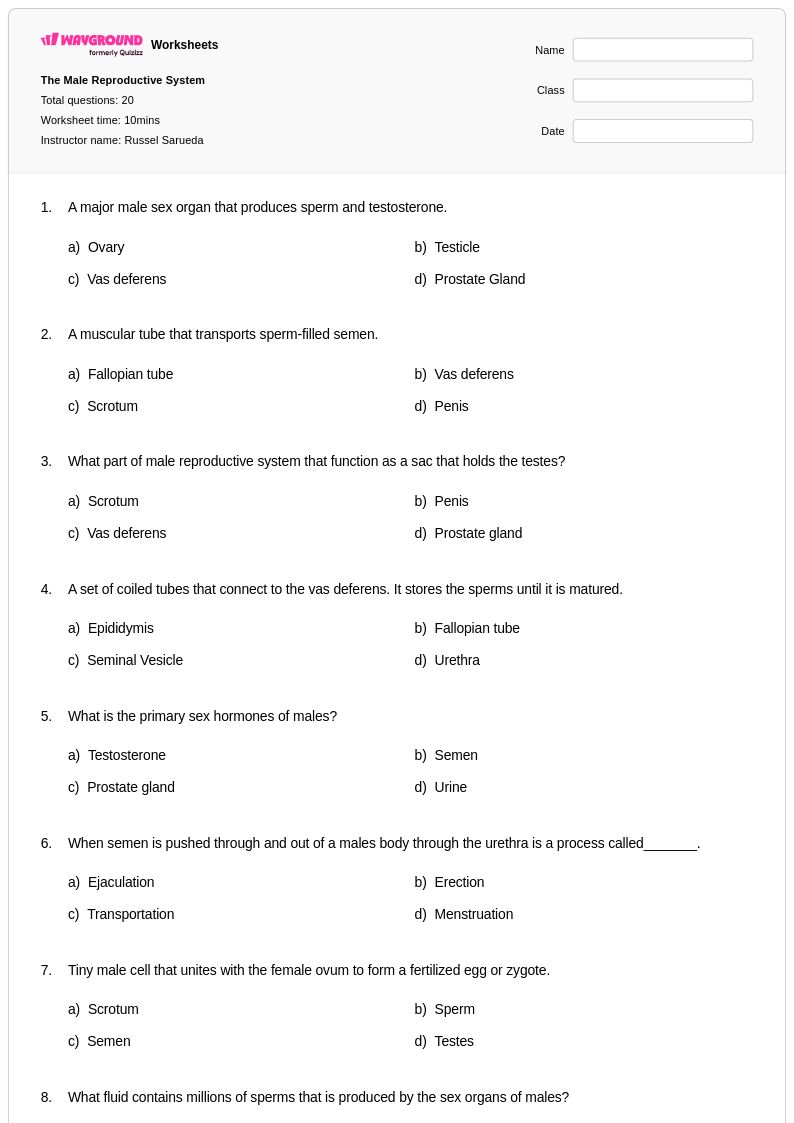
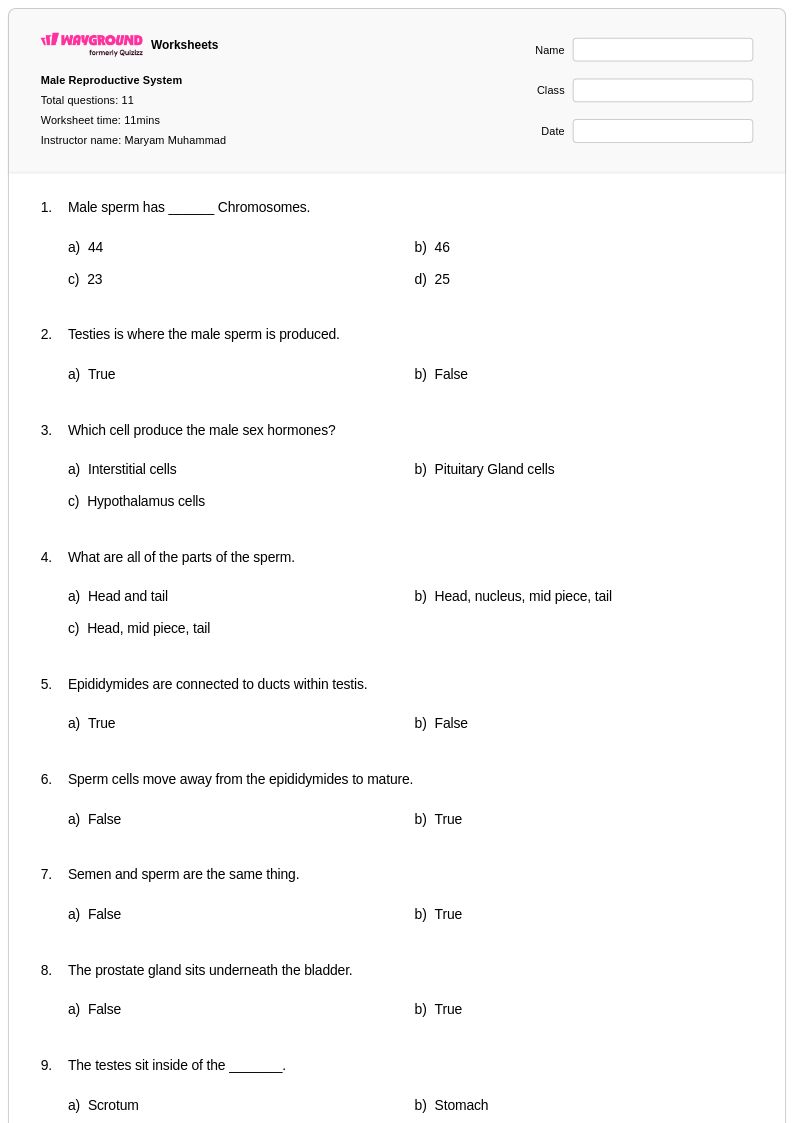
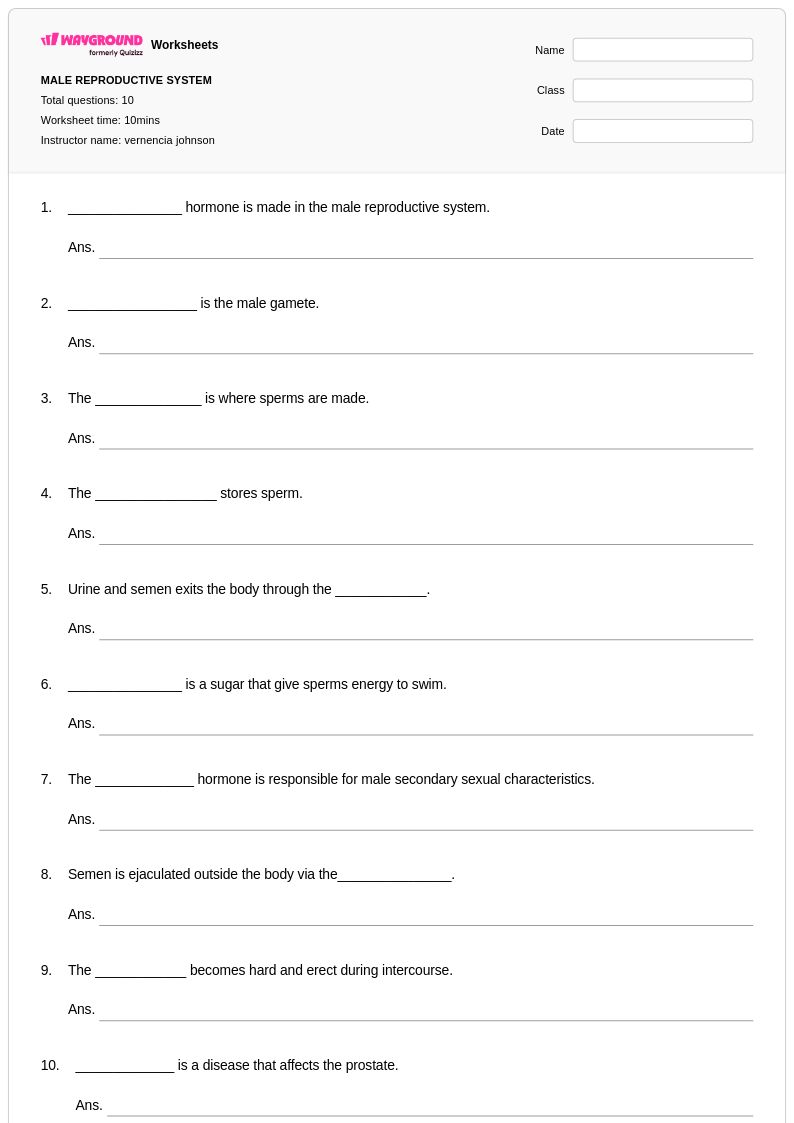
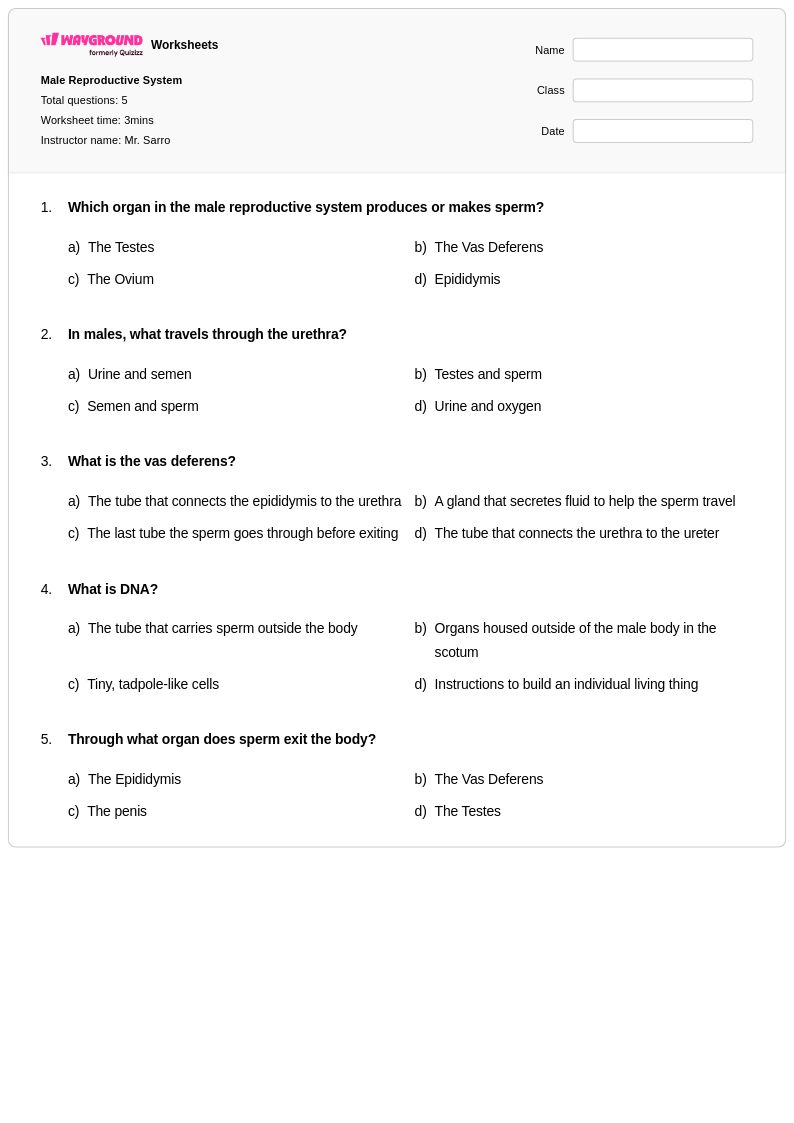
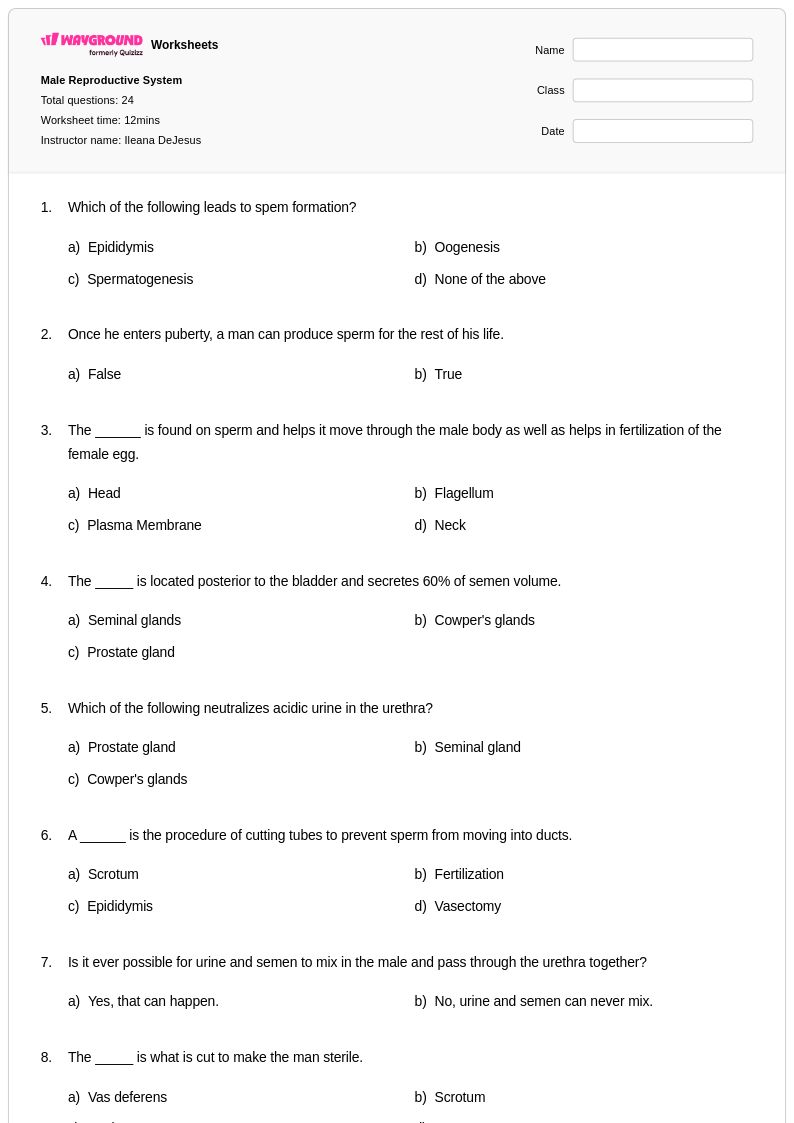
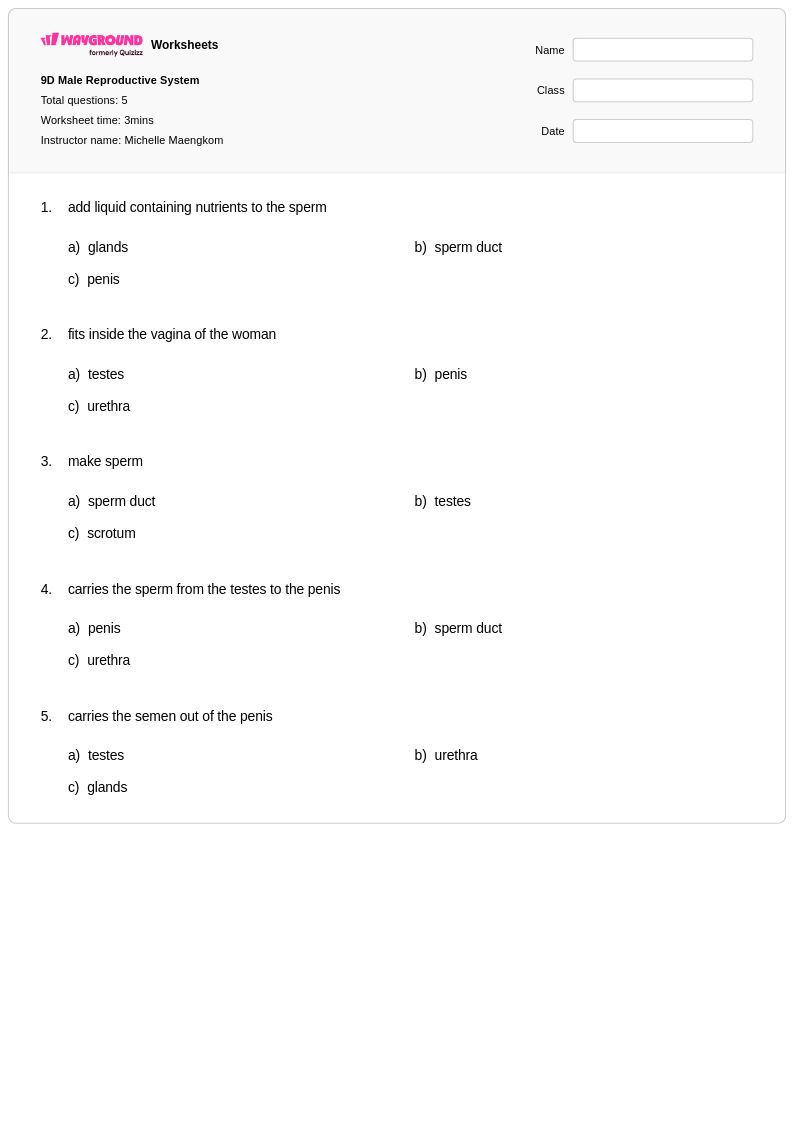
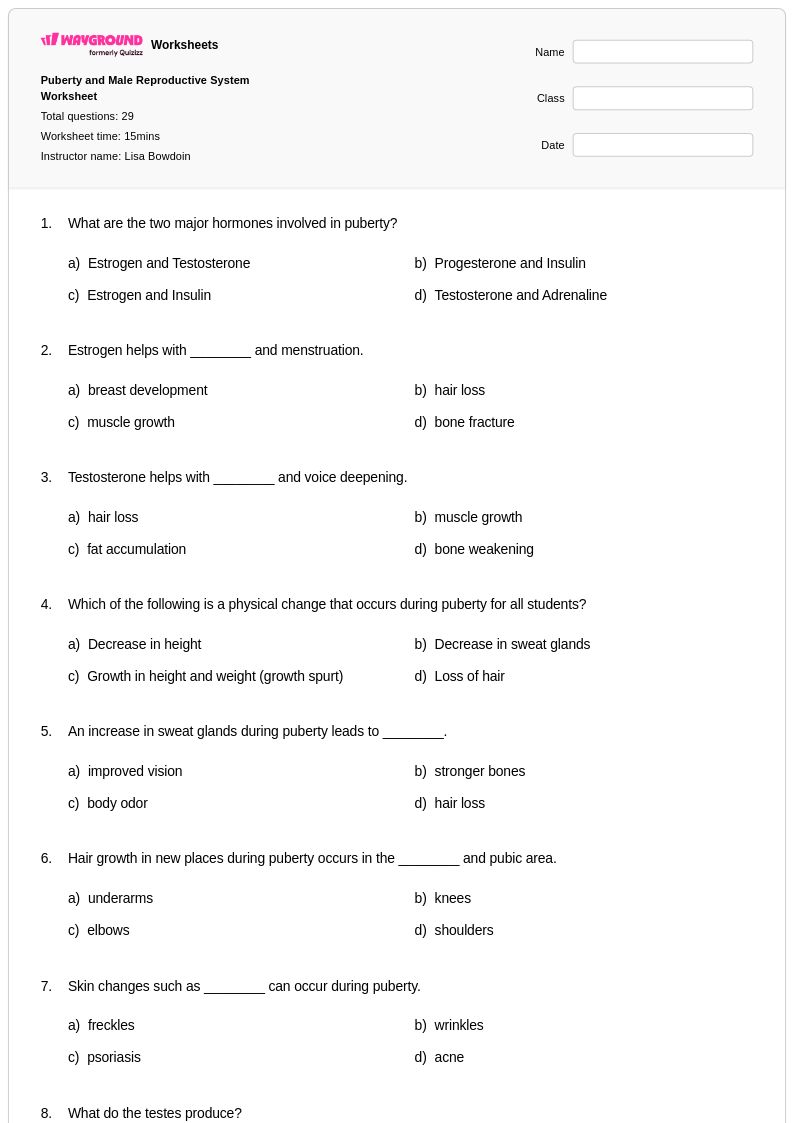
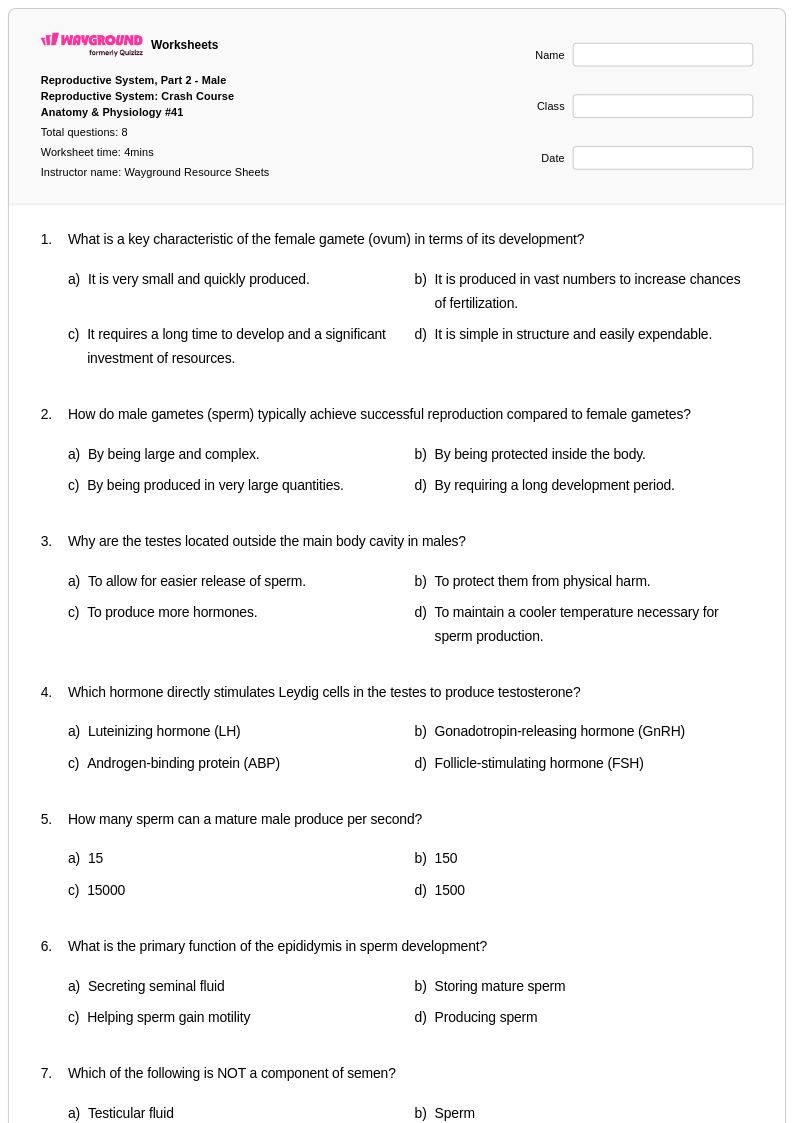
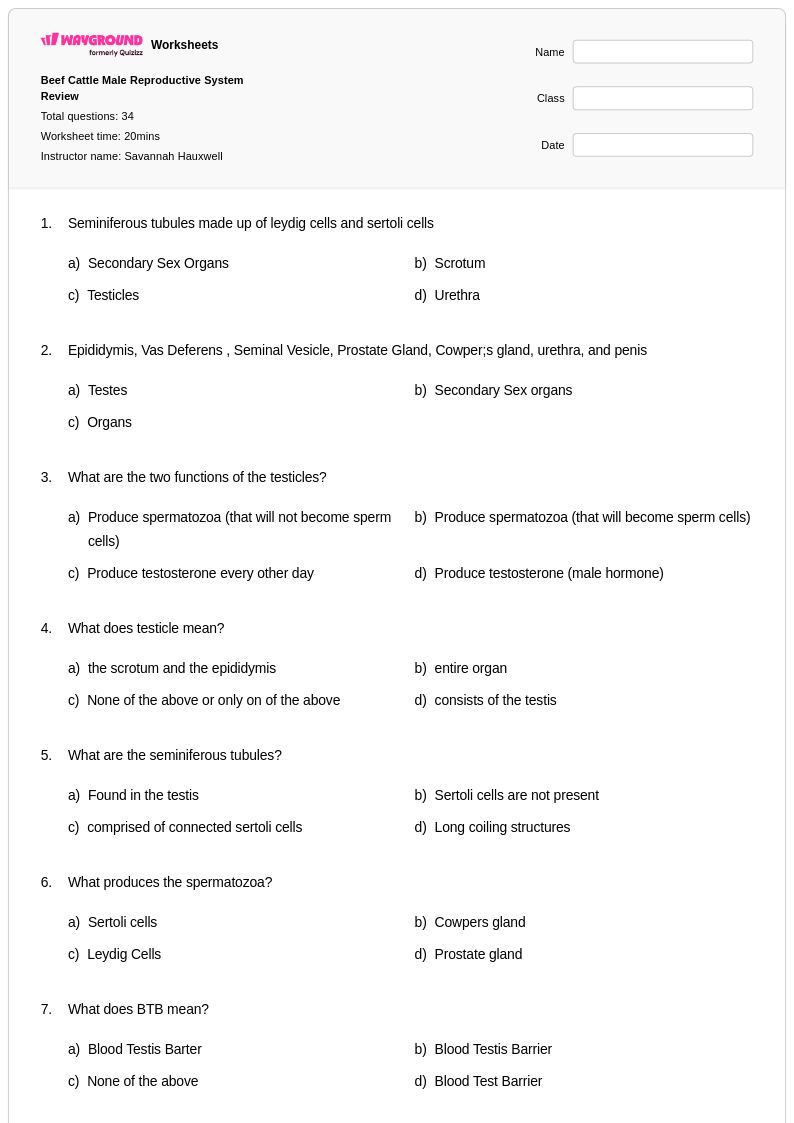
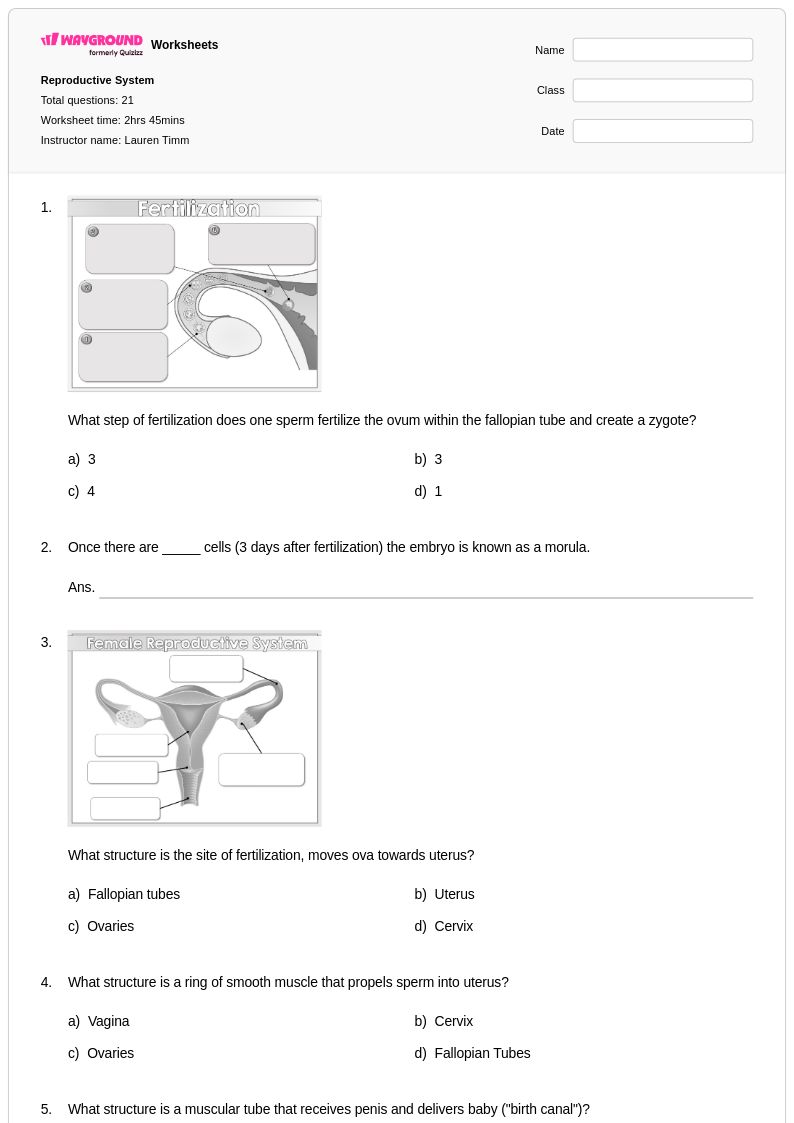
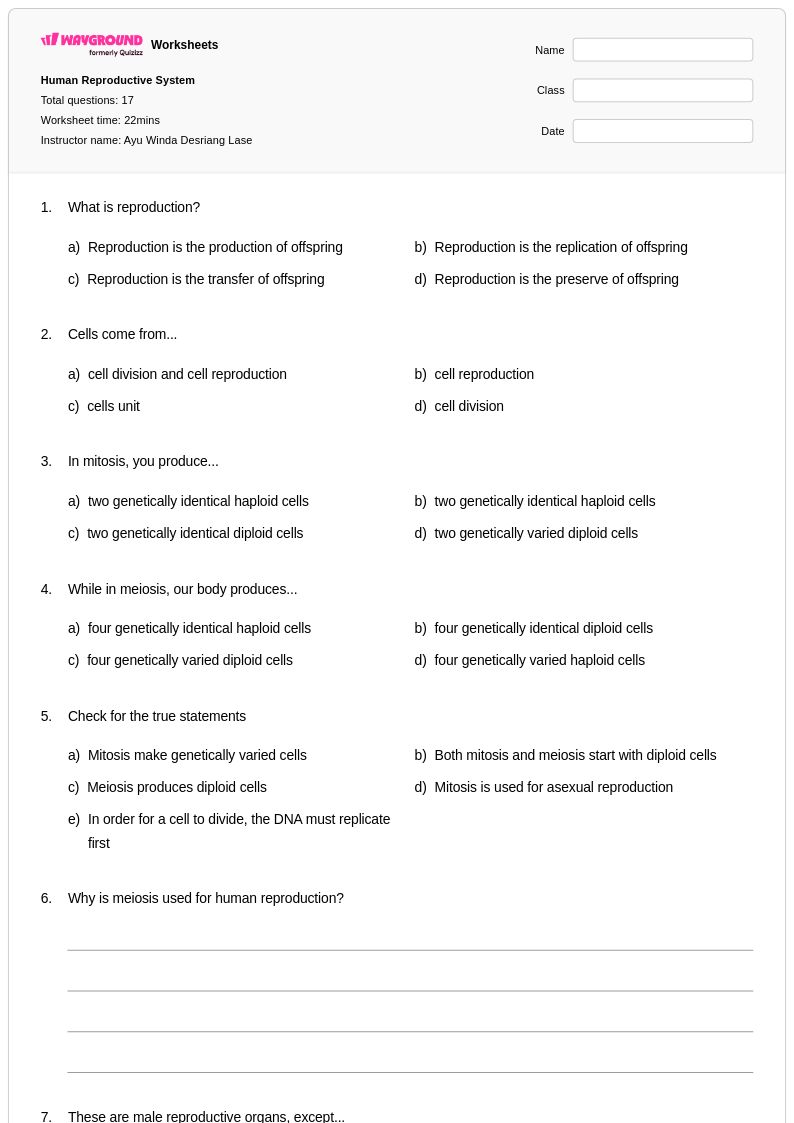
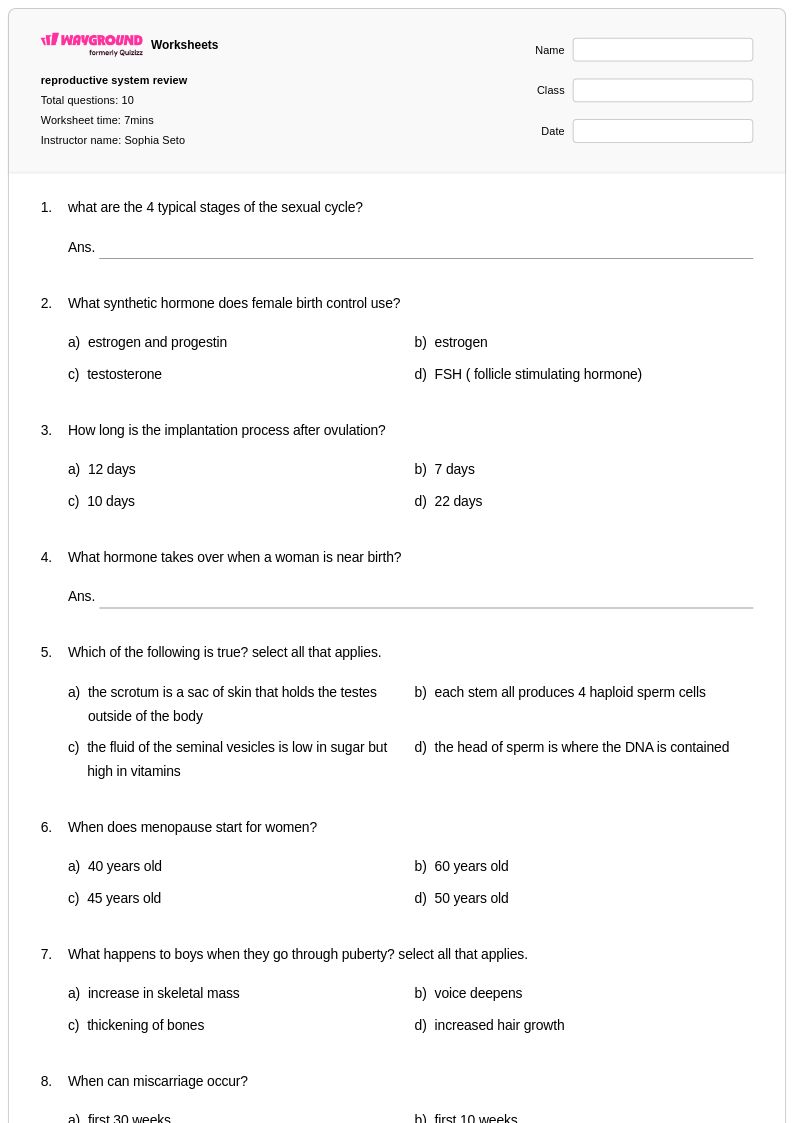
Male reproductive system worksheets for Year 9 students available through Wayground (formerly Quizizz) provide comprehensive coverage of this essential biology topic, helping students master the anatomical structures, physiological processes, and hormonal regulations involved in male reproduction. These educational resources strengthen critical thinking skills through detailed practice problems that explore topics such as the structure and function of the testes, epididymis, vas deferens, seminal vesicles, prostate gland, and penis, while also examining the production and maturation of sperm cells and the role of hormones like testosterone, FSH, and LH. Students benefit from varied question formats including labeling diagrams, matching structures to functions, analyzing hormonal feedback loops, and explaining the pathway of sperm from production to ejaculation. Each worksheet comes with a comprehensive answer key and is available as a free printable pdf, making it easy for educators to incorporate these materials into their lesson plans and provide students with immediate feedback on their understanding of male reproductive anatomy and physiology.
Wayground (formerly Quizizz) supports biology teachers with an extensive collection of male reproductive system worksheets created by millions of educators worldwide, offering robust search and filtering capabilities that allow instructors to quickly locate materials aligned with specific curriculum standards and learning objectives. The platform's differentiation tools enable teachers to customize worksheets based on individual student needs, whether for remediation of foundational concepts or enrichment activities for advanced learners. These resources are available in both printable pdf format for traditional classroom use and digital formats for interactive learning experiences, providing flexibility for various teaching environments and student preferences. Teachers can efficiently plan comprehensive units on human reproduction by accessing materials that range from basic anatomical identification to complex physiological processes, supporting skill practice through diverse question types that accommodate different learning styles and help students develop a thorough understanding of male reproductive system functions and their role in human biology.
FAQs
How do I teach the male reproductive system in a biology class?
Teaching the male reproductive system is most effective when you sequence instruction from anatomy to physiology — starting with organ identification (testes, epididymis, vas deferens, seminal vesicles, prostate gland, and penis) before moving into processes like spermatogenesis and hormone regulation. Using labeled diagrams alongside process flowcharts helps students build a mental model of how structures and functions connect. Pairing direct instruction with labeling exercises and conceptual questions reinforces both recall and deeper understanding of how the reproductive and endocrine systems interact.
What types of practice activities help students learn male reproductive system anatomy?
Labeling exercises are among the most effective tools for reinforcing male reproductive anatomy, as they require students to actively retrieve and apply their knowledge of structure names and locations. Process diagrams that walk through spermatogenesis step by step help students understand the physiological sequence rather than memorizing isolated facts. Conceptual questions that ask students to explain the relationship between structures — such as how the epididymis connects to the vas deferens functionally — push students beyond surface-level recall.
What misconceptions do students commonly have about the male reproductive system?
One common misconception is that students conflate the roles of the testes and the epididymis, often assuming sperm are produced and matured in the same location. Students also frequently misunderstand the hormonal feedback loop, struggling to distinguish between the roles of FSH, LH, and testosterone in regulating spermatogenesis. Another error pattern is confusing the sequence of ducts — particularly the order in which sperm travel from the epididymis through the vas deferens and urethra — which can lead to incorrect answers on process-based assessments.
How do I use male reproductive system worksheets effectively in class?
Male reproductive system worksheets on Wayground are available as printable PDFs for traditional classroom use and in digital formats for technology-integrated or remote learning environments, giving teachers flexibility in how they deploy them. They can be hosted as a quiz directly on Wayground, which allows for real-time student response tracking. Use labeling worksheets as formative checks after initial instruction and reserve conceptual question sets for review sessions or pre-assessment before a unit exam. Answer keys are included with each resource, making self-assessment and teacher grading straightforward.
How can I differentiate male reproductive system worksheets for students with different learning needs?
Wayground supports several built-in accommodation tools that are particularly useful when teaching complex anatomy topics like the male reproductive system. Teachers can enable Read Aloud so students with reading difficulties hear questions and diagram labels read to them, and can reduce answer choices for students who need lower cognitive load on identification questions. Extended time settings can be configured per student for timed digital activities, and all accommodations are saved and reusable across future sessions without notifying other students.
At what grade level is the male reproductive system typically taught in biology?
The male reproductive system is most commonly introduced in middle school life science courses, typically around grades 6 through 8, with a foundational focus on anatomy and basic reproductive processes. It is revisited at greater depth in high school biology, where students are expected to understand spermatogenesis, hormonal regulation via the hypothalamic-pituitary-gonadal axis, and connections to genetics and heredity. The appropriate worksheet complexity should match this progression — simpler labeling tasks for middle school and more analytical, process-based questions for high school.