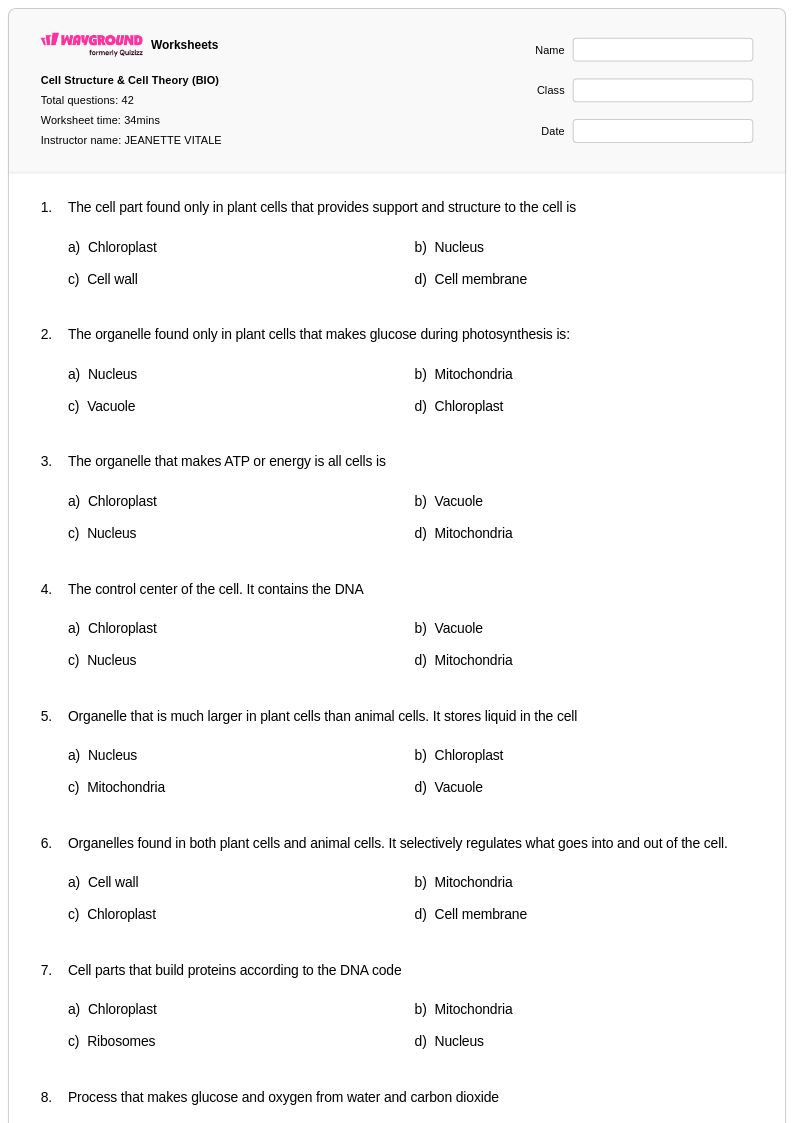
Free Printable Chloroplast Structure Worksheets for Year 9
Year 9 chloroplast structure worksheets from Wayground offer comprehensive printables and practice problems to help students master the components and functions of these essential organelles, complete with answer keys and free PDF downloads.
Explore printable Chloroplast Structure worksheets for Year 9
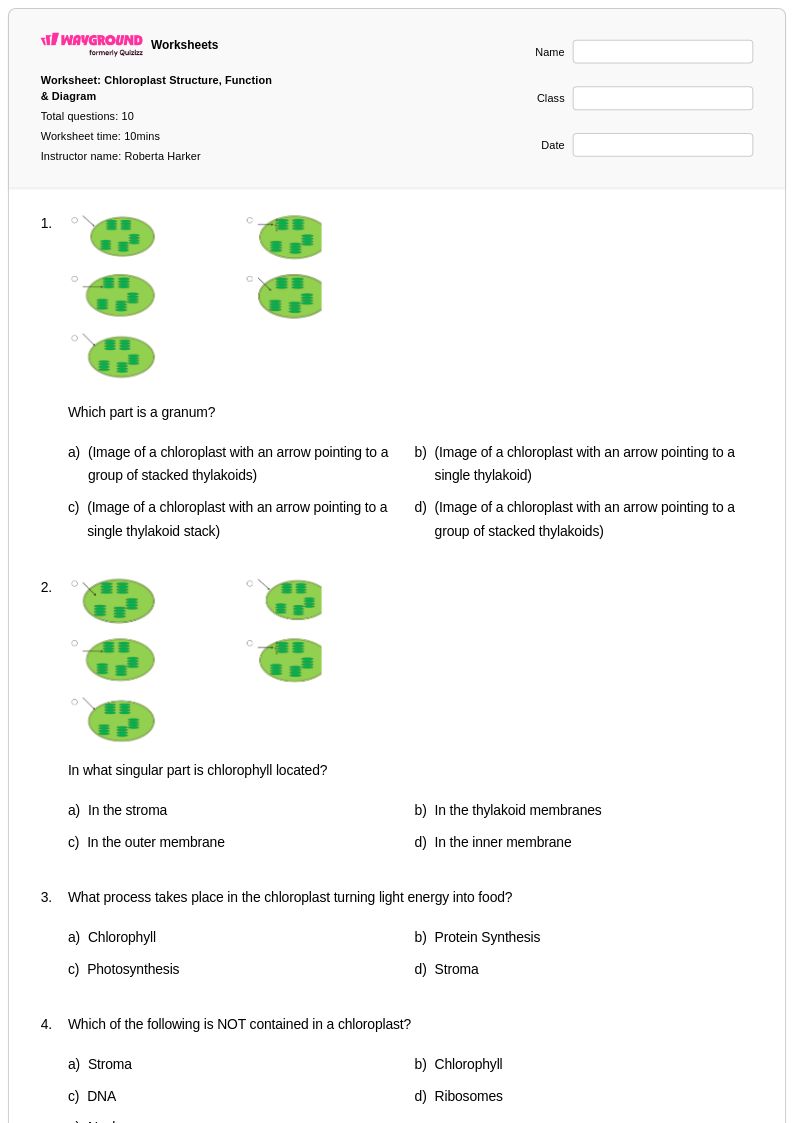
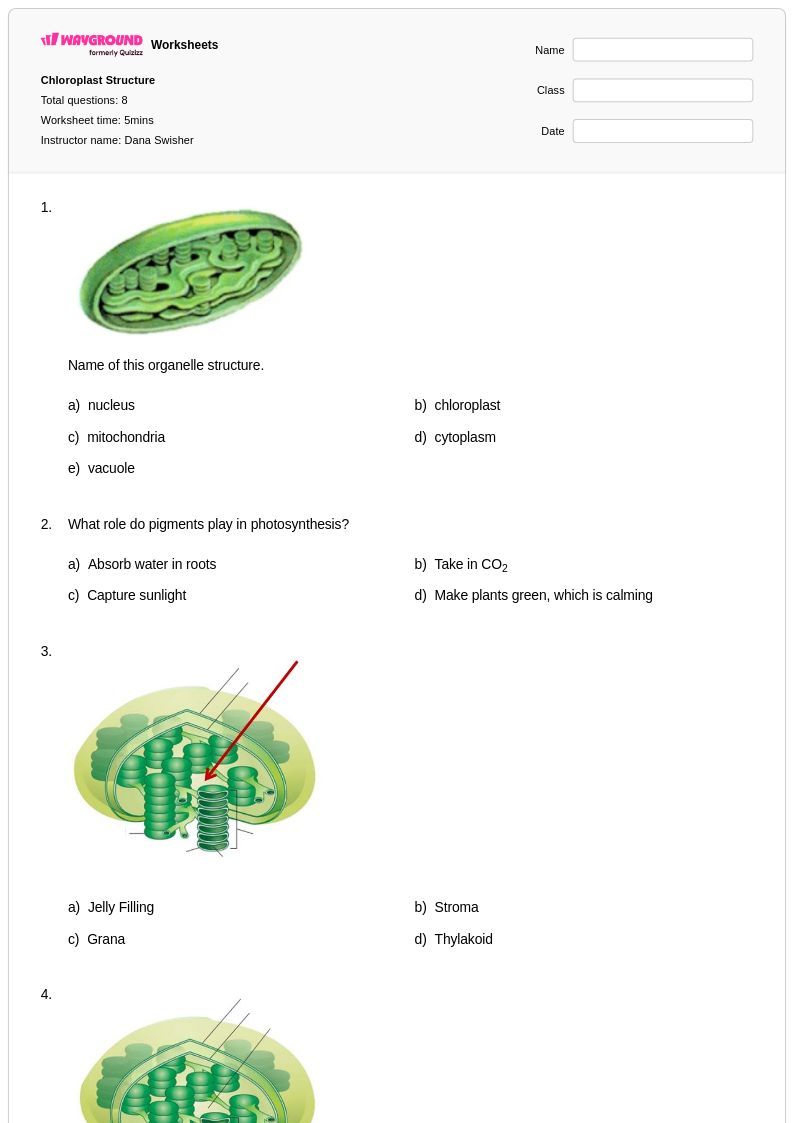
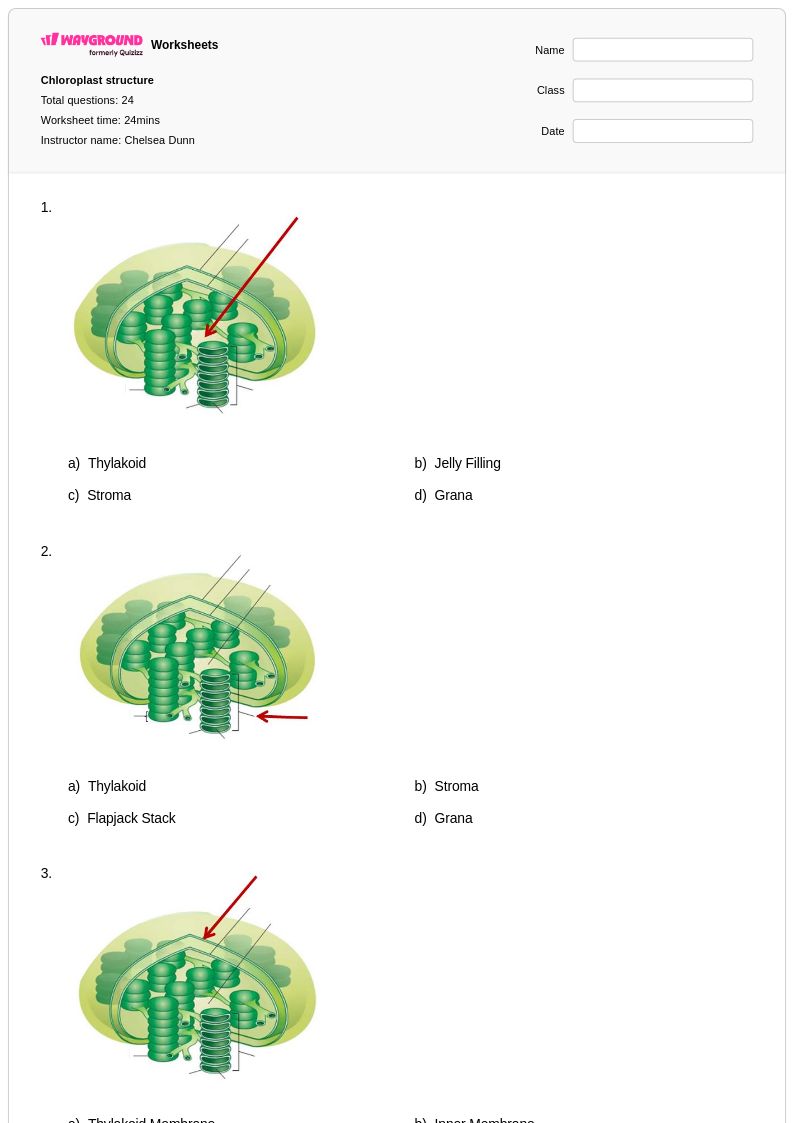
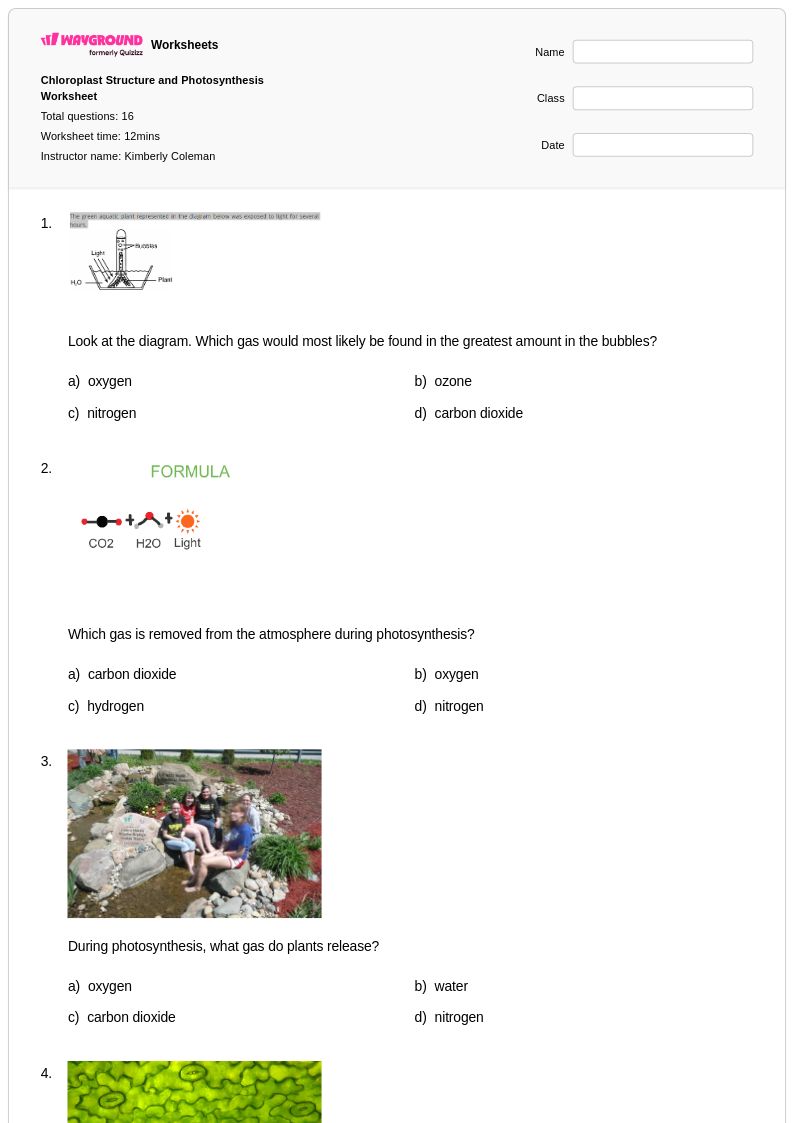
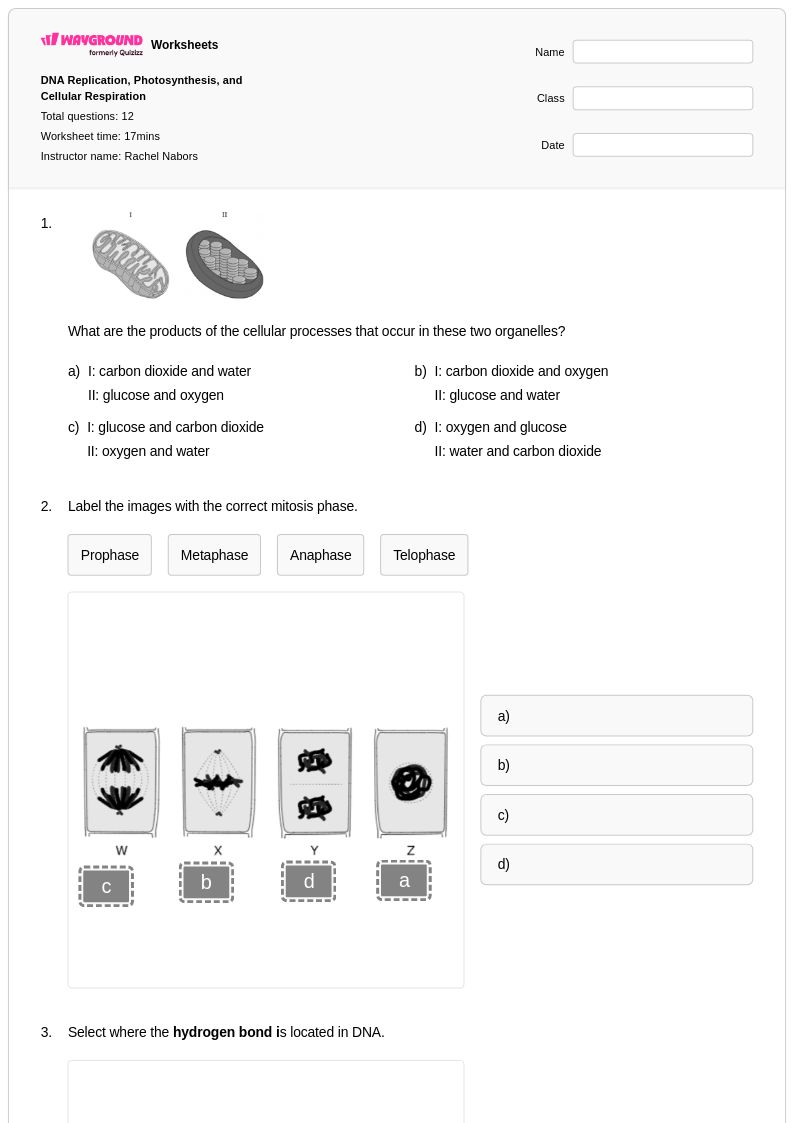
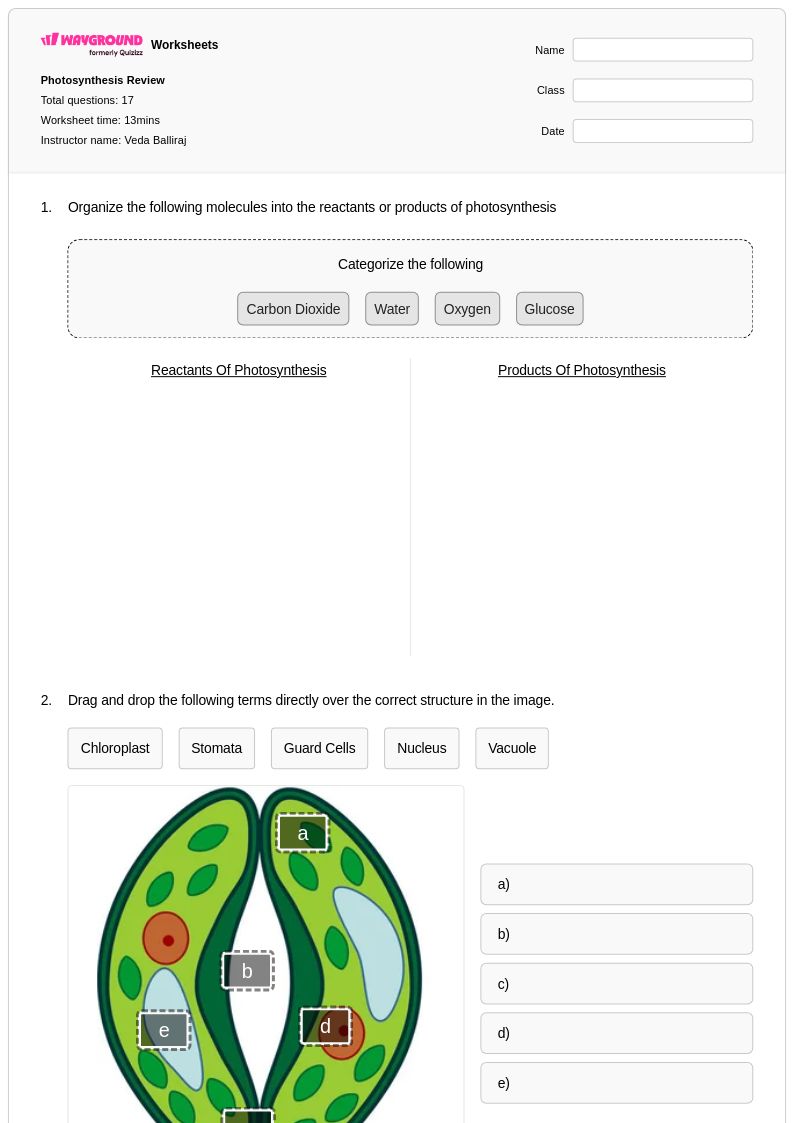
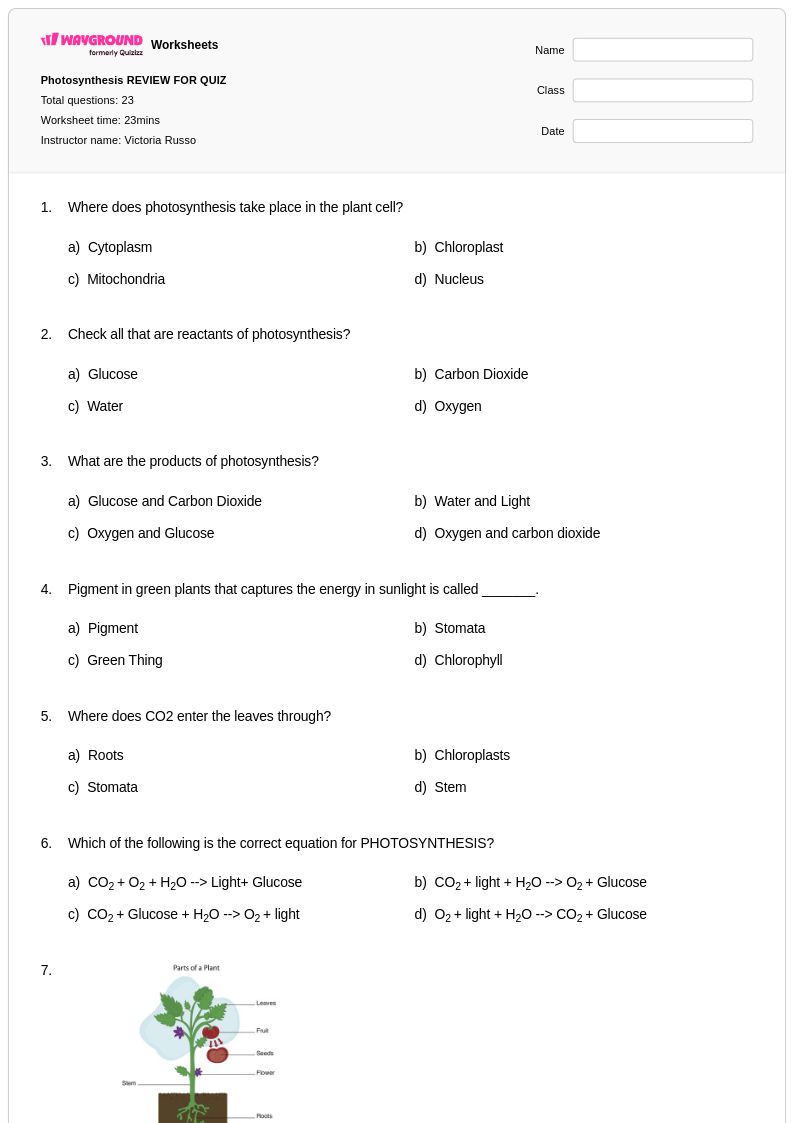
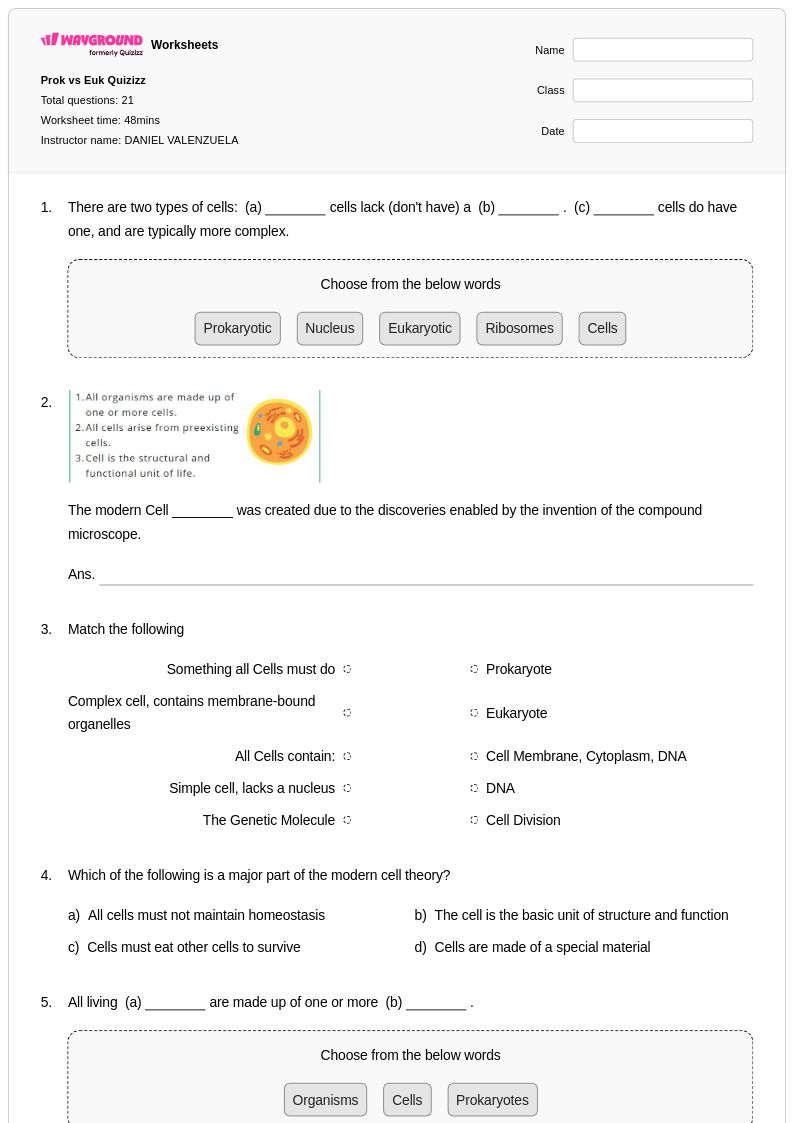
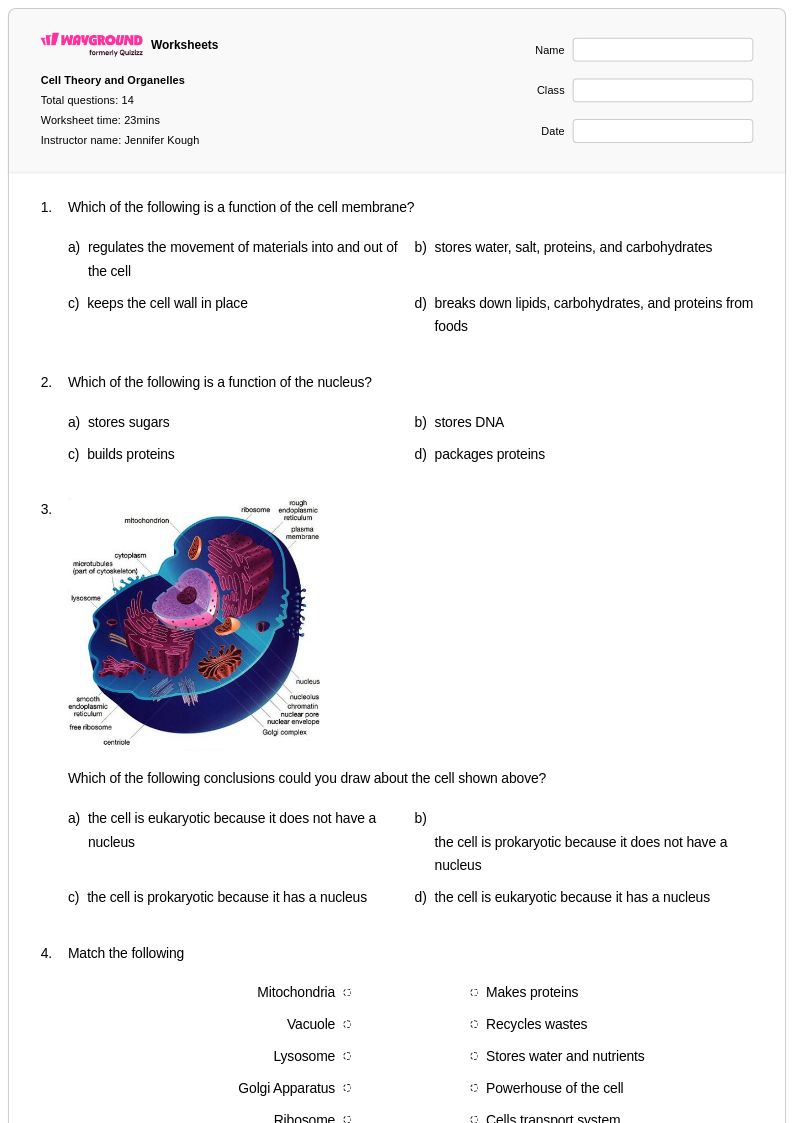
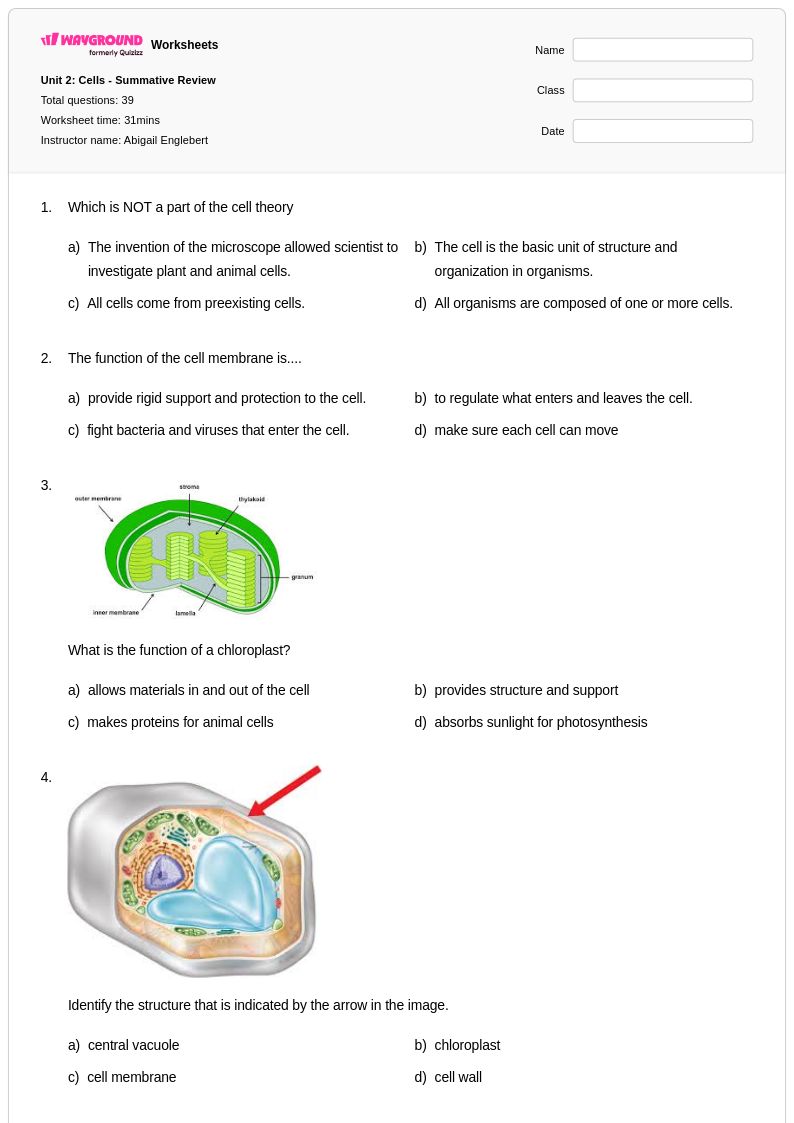
Year 9 chloroplast structure worksheets available through Wayground (formerly Quizizz) provide comprehensive coverage of this fundamental cellular biology concept, helping students master the intricate organization and components of these essential organelles. These educational resources focus on developing students' understanding of chloroplast anatomy, including the outer and inner membranes, thylakoid systems, stroma composition, and the spatial arrangement of photosynthetic machinery within plant cells. The worksheets strengthen critical skills in cellular identification, diagram labeling, structure-function relationships, and comparative analysis between chloroplasts and other organelles. Students engage with practice problems that range from basic identification exercises to complex analytical questions about how chloroplast organization facilitates photosynthesis, while teachers benefit from complete answer keys and free printable pdf formats that support both classroom instruction and independent study.
Wayground (formerly Quizizz) empowers educators with millions of teacher-created chloroplast structure resources that streamline lesson planning and enhance student learning outcomes in Year 9 biology classrooms. The platform's robust search and filtering capabilities allow teachers to quickly locate materials aligned with specific curriculum standards and learning objectives, while differentiation tools enable seamless adaptation of worksheets to accommodate diverse student needs and ability levels. Teachers can customize existing resources or create entirely new materials, accessing both printable and digital formats including downloadable pdfs that support flexible classroom management. These comprehensive worksheet collections facilitate targeted remediation for struggling students, provide enrichment opportunities for advanced learners, and offer systematic skill practice that reinforces understanding of chloroplast structure concepts across multiple learning modalities and assessment formats.
FAQs
How do I teach chloroplast structure to biology students?
Start by grounding students in why structure matters — each component of the chloroplast exists to support a specific step in photosynthesis. Introduce the outer and inner membranes, stroma, thylakoids, and grana in sequence, linking each part to its role in either the light-dependent or light-independent reactions. Diagram labeling activities are especially effective here because they force students to connect spatial organization with function, rather than memorizing vocabulary in isolation.
What worksheets or exercises help students practice identifying chloroplast components?
Diagram labeling exercises are the most direct way to practice chloroplast anatomy, requiring students to identify structures like the thylakoid membrane, grana stacks, and stroma from visual representations. Comparison activities that ask students to contrast chloroplast components and explain how each structural element contributes to photosynthesis deepen conceptual understanding beyond simple identification. Practice problems that connect structure to function — for example, explaining why grana are arranged in stacks — help students build the analytical skills expected on assessments.
What mistakes do students commonly make when learning chloroplast structure?
One of the most frequent errors is confusing the stroma with the thylakoid lumen — students often misplace where specific reactions occur because they haven't internalized the spatial layout of the organelle. Another common mistake is treating the outer and inner membranes as interchangeable, when in fact they differ in permeability and function. Students also frequently conflate grana and thylakoids, not recognizing that grana are stacks of thylakoid discs rather than a separate structure entirely.
How do I use Wayground's chloroplast structure worksheets in my classroom?
Wayground's chloroplast structure worksheets are available as free printable PDFs for traditional classroom use and in digital formats for technology-integrated environments, so they work equally well as in-class activities, homework assignments, or assessment preparation. Teachers can also host worksheets as a quiz directly on Wayground, enabling real-time student responses and immediate feedback. Each worksheet includes a complete answer key, making it straightforward to review student work or allow self-assessment.
How do I differentiate chloroplast structure instruction for students with varying ability levels?
For students who struggle with the volume of new vocabulary, reducing the number of labeled structures on a diagram at a time can lower cognitive load without removing rigor. On Wayground, teachers can apply individual accommodations such as reduced answer choices, extended time, and read-aloud support to specific students, while the rest of the class works through standard settings — and those accommodations carry over to future sessions automatically. For advanced learners, enrichment tasks that ask students to explain how a disruption to one structural component would affect the overall photosynthetic process push thinking beyond identification.
How does chloroplast structure connect to the light-dependent and light-independent reactions of photosynthesis?
The thylakoid membranes, where chlorophyll and other pigments are embedded, are the site of the light-dependent reactions — this is where light energy is converted into ATP and NADPH. The stroma, the fluid-filled space surrounding the thylakoids, is where the light-independent reactions (the Calvin cycle) take place, using those products to fix carbon dioxide into glucose. Understanding this spatial separation is essential because it explains why chloroplast structure is not arbitrary — each compartment is chemically and physically optimized for its specific reaction stage.