Free Printable Cardiovascular System Worksheets for Year 9
Year 9 Biology students can explore comprehensive cardiovascular system worksheets featuring printable PDFs, practice problems, and answer keys to master heart anatomy, blood circulation, and vessel functions through Wayground's free educational resources.
Explore printable Cardiovascular System worksheets for Year 9
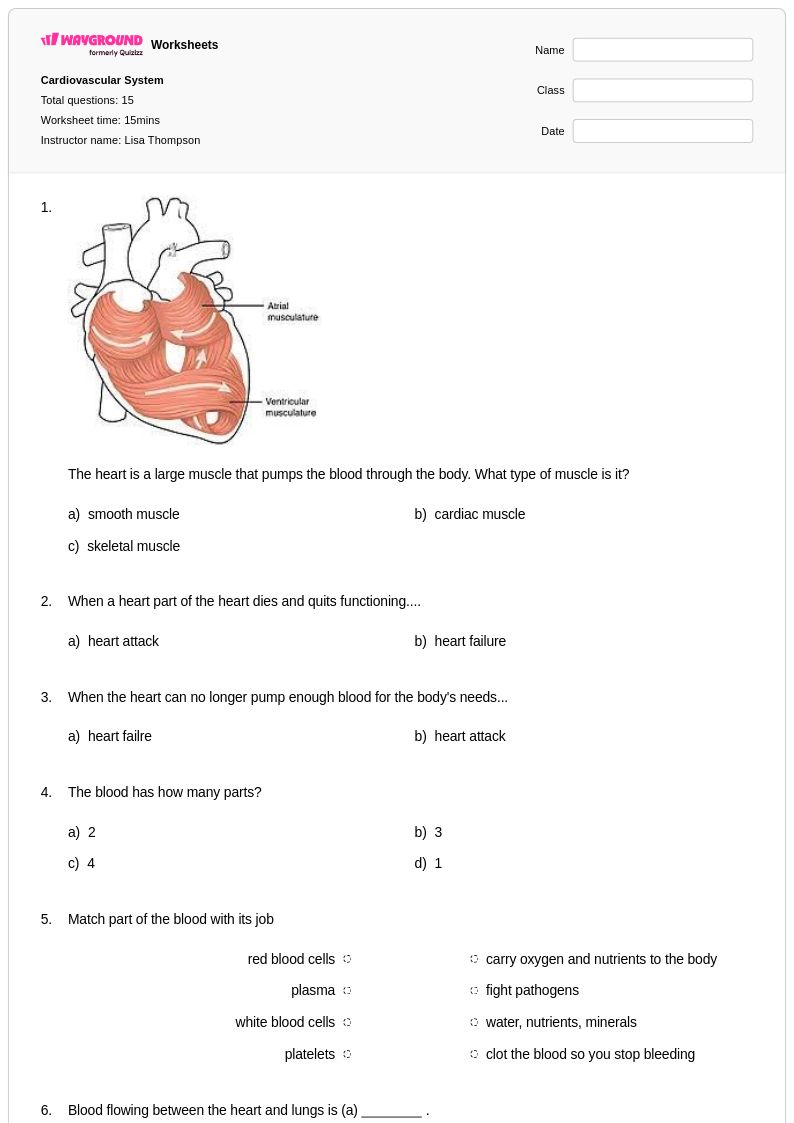
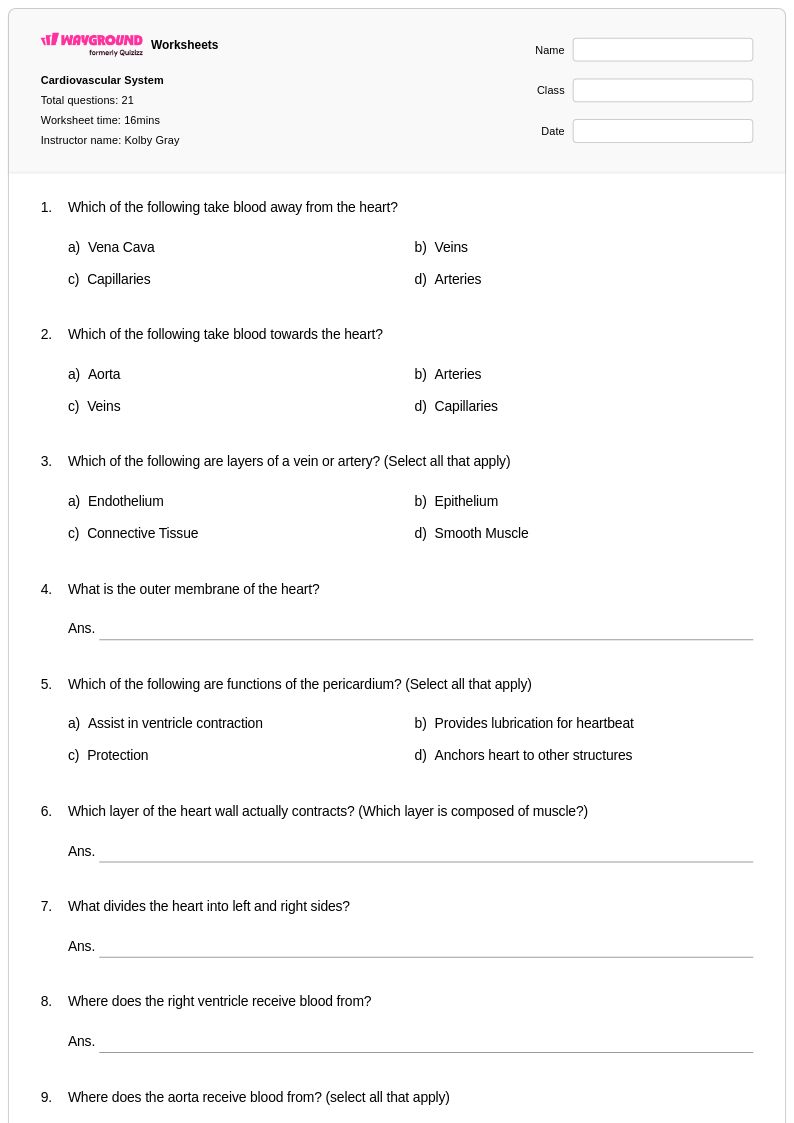
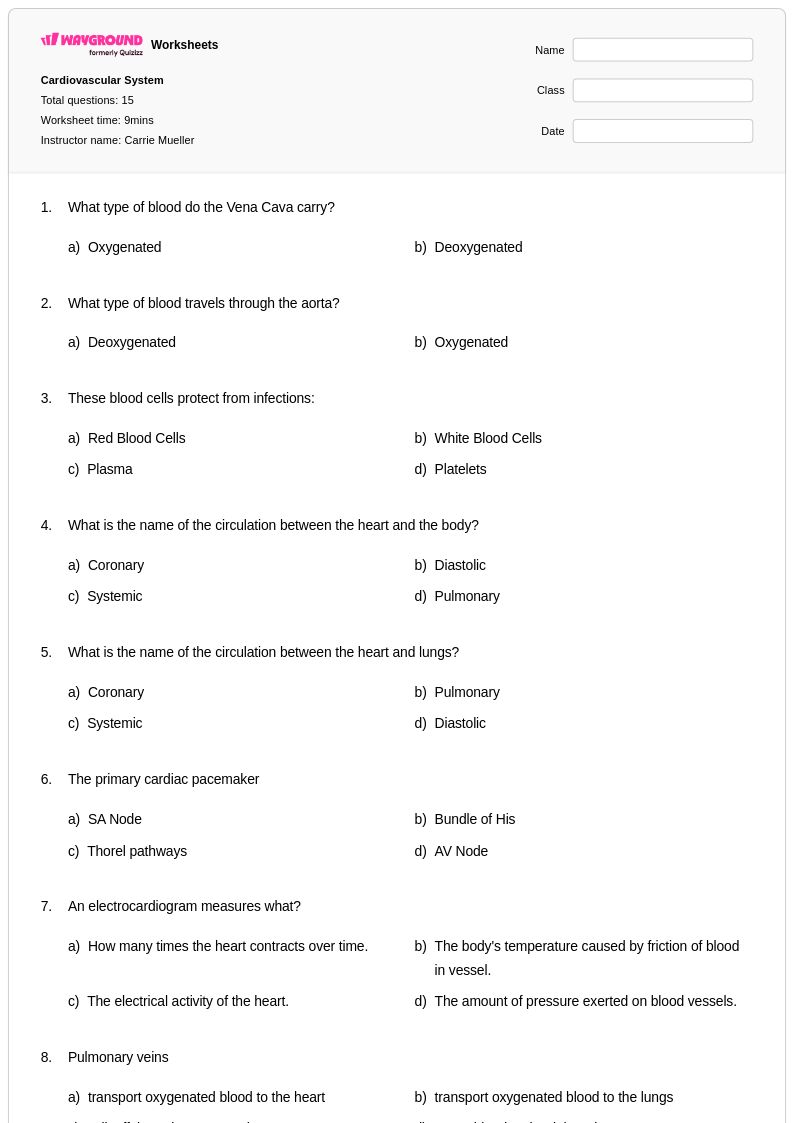
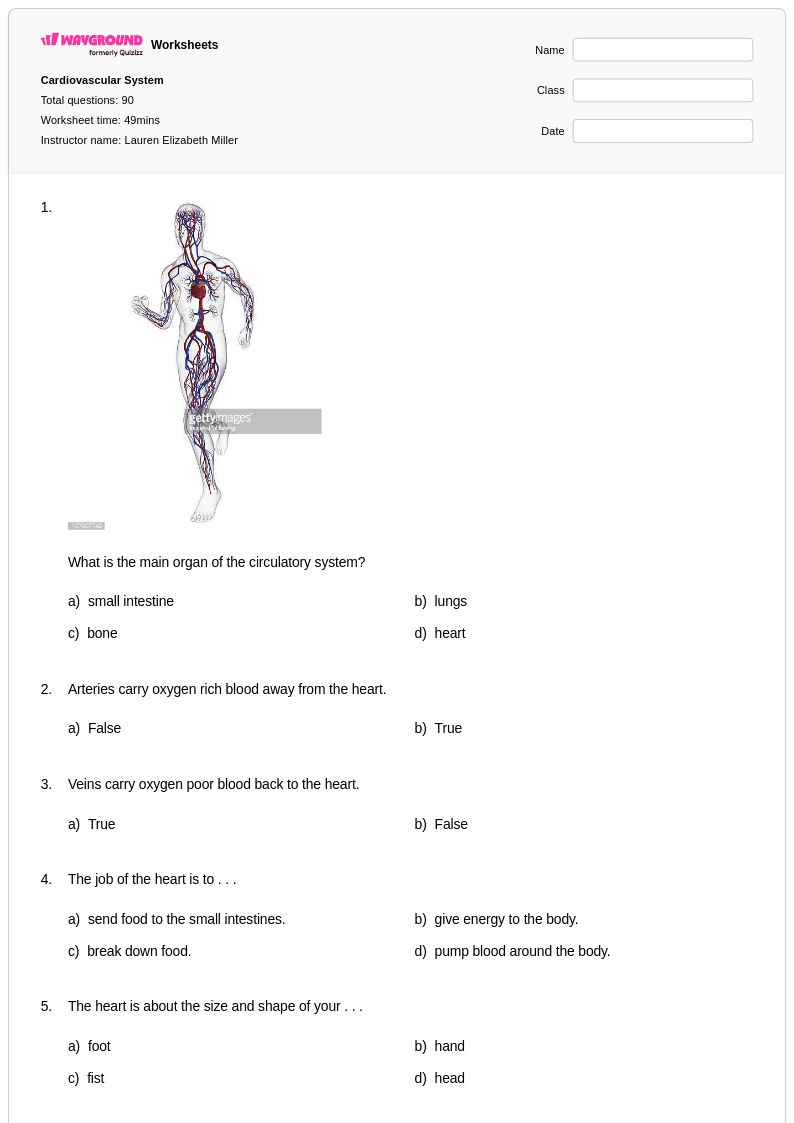
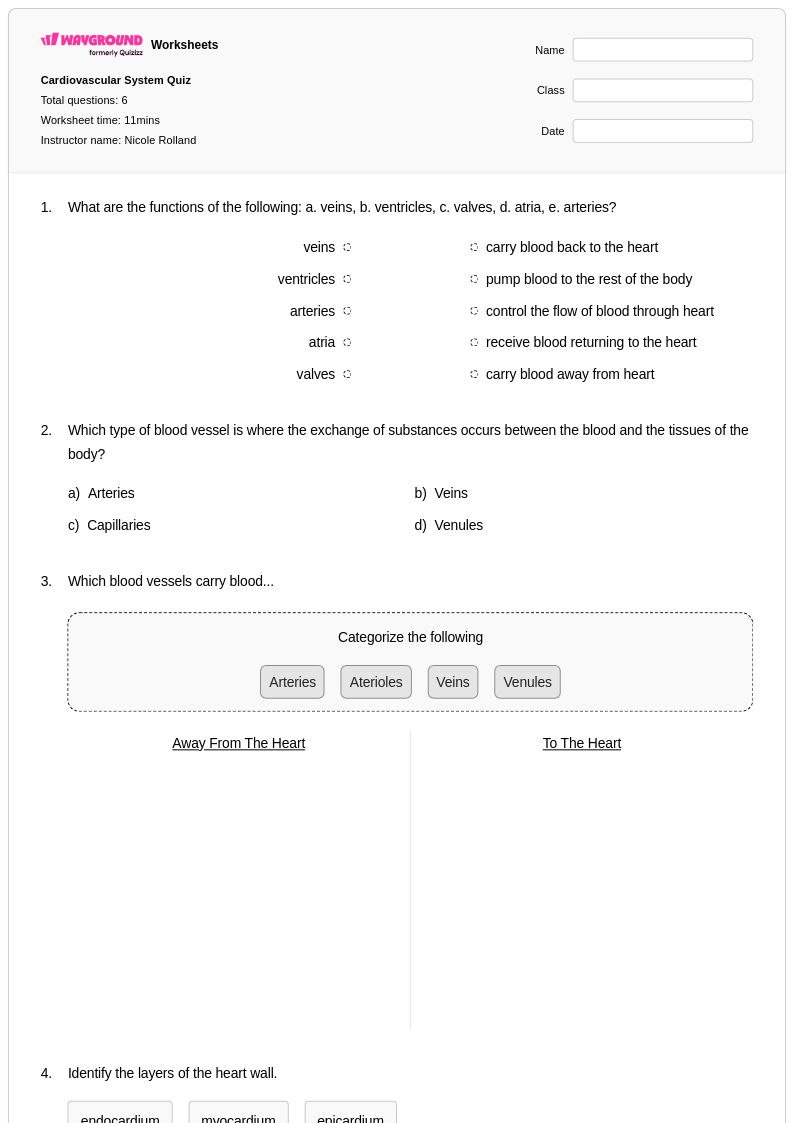
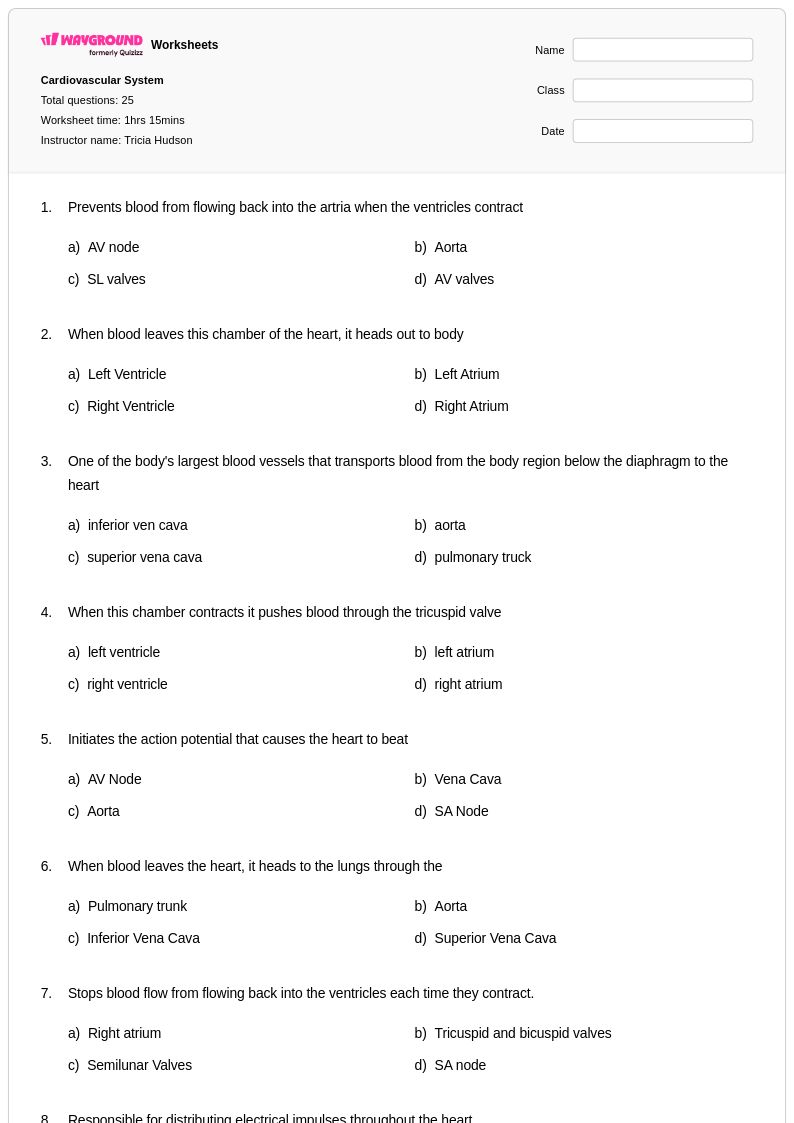
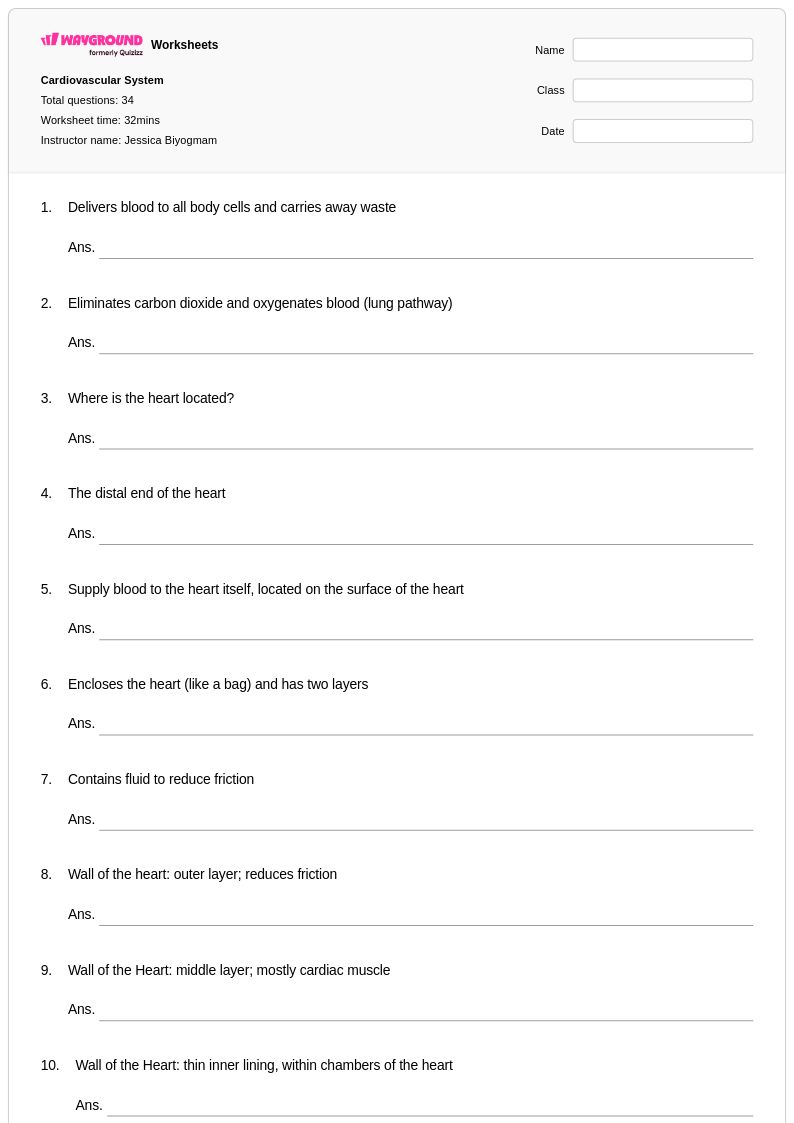
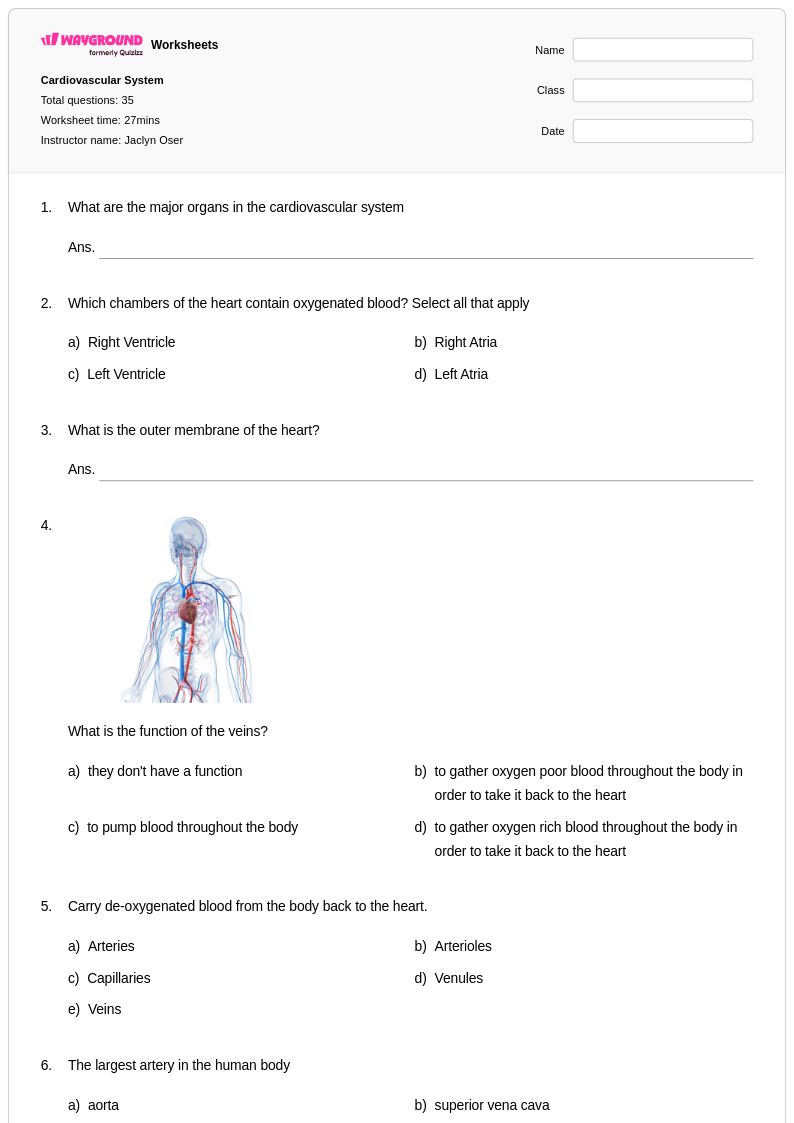
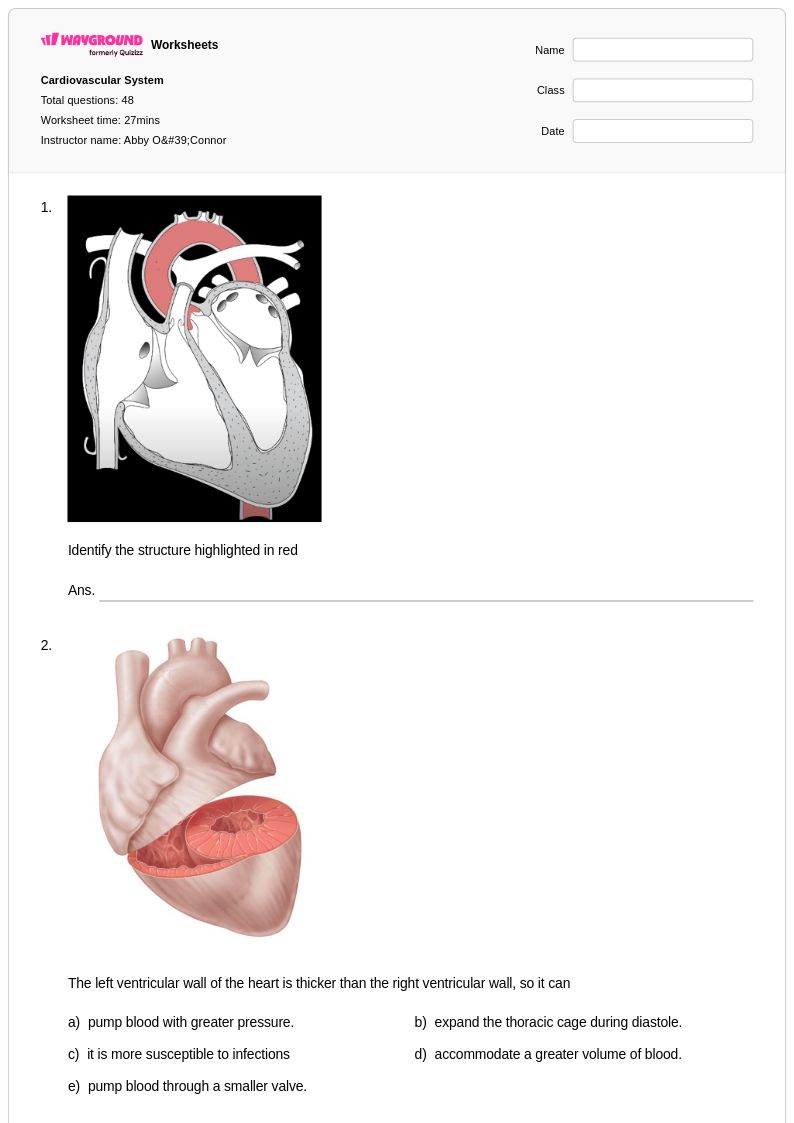
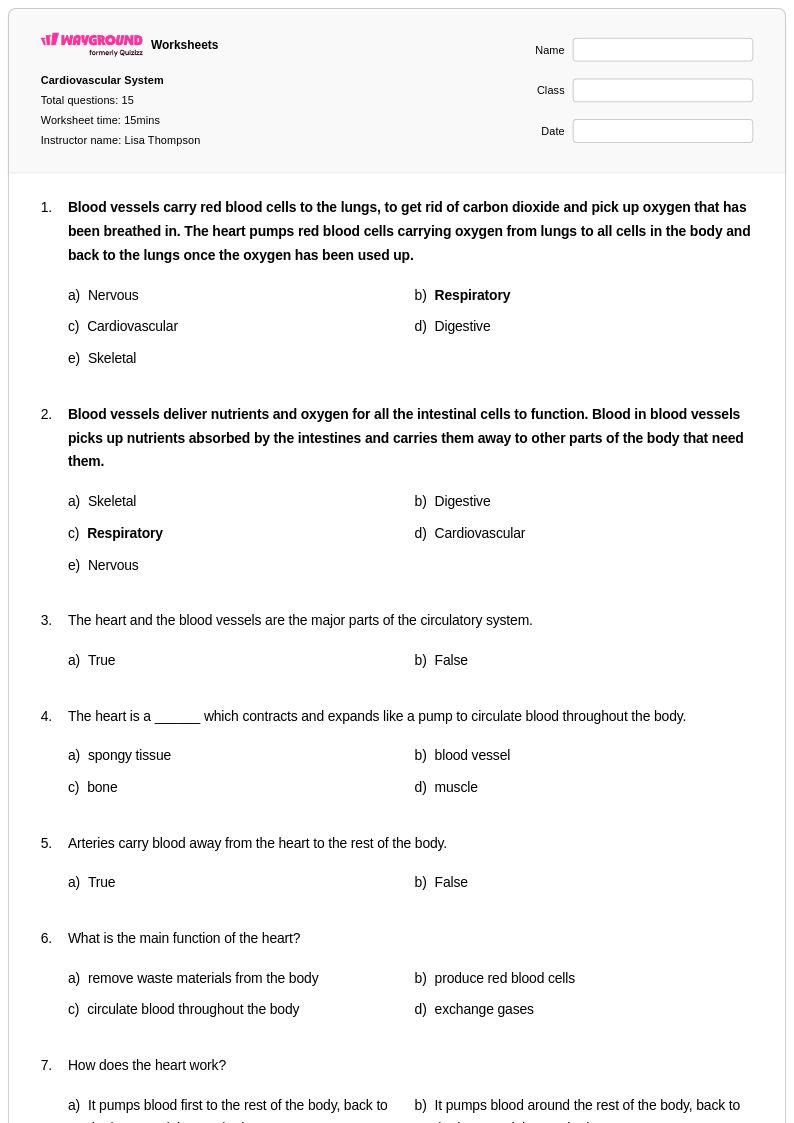
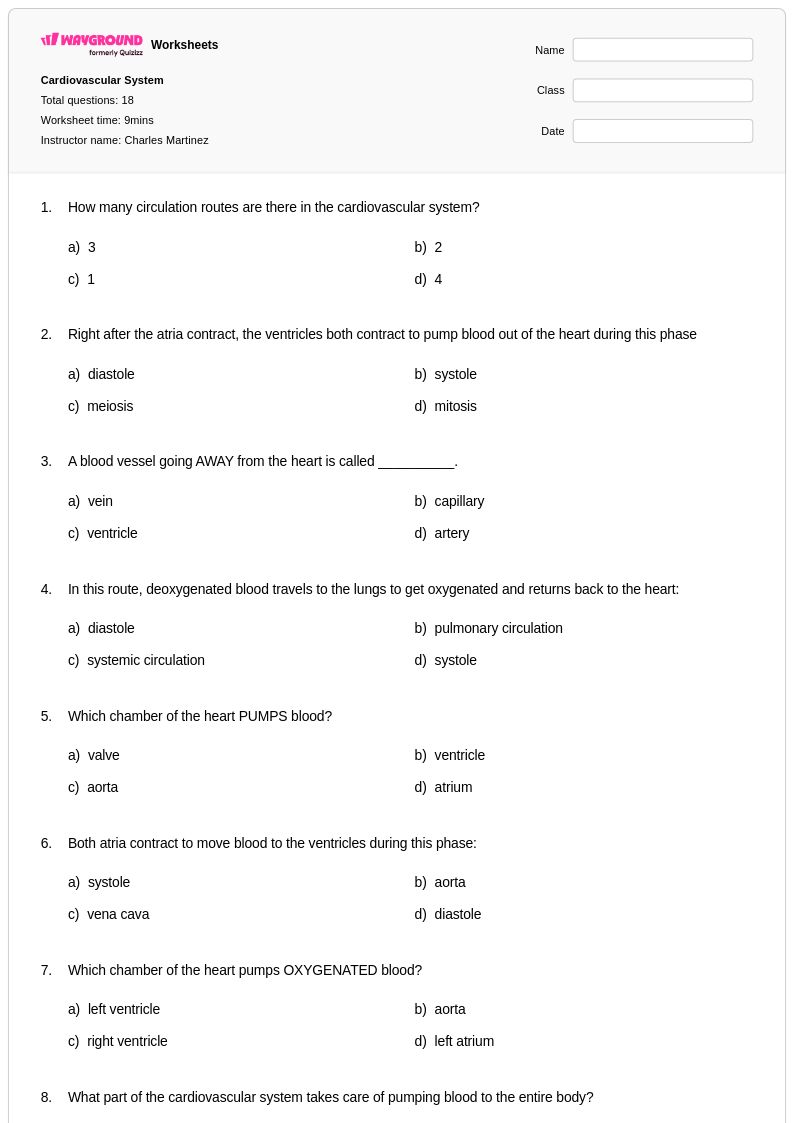
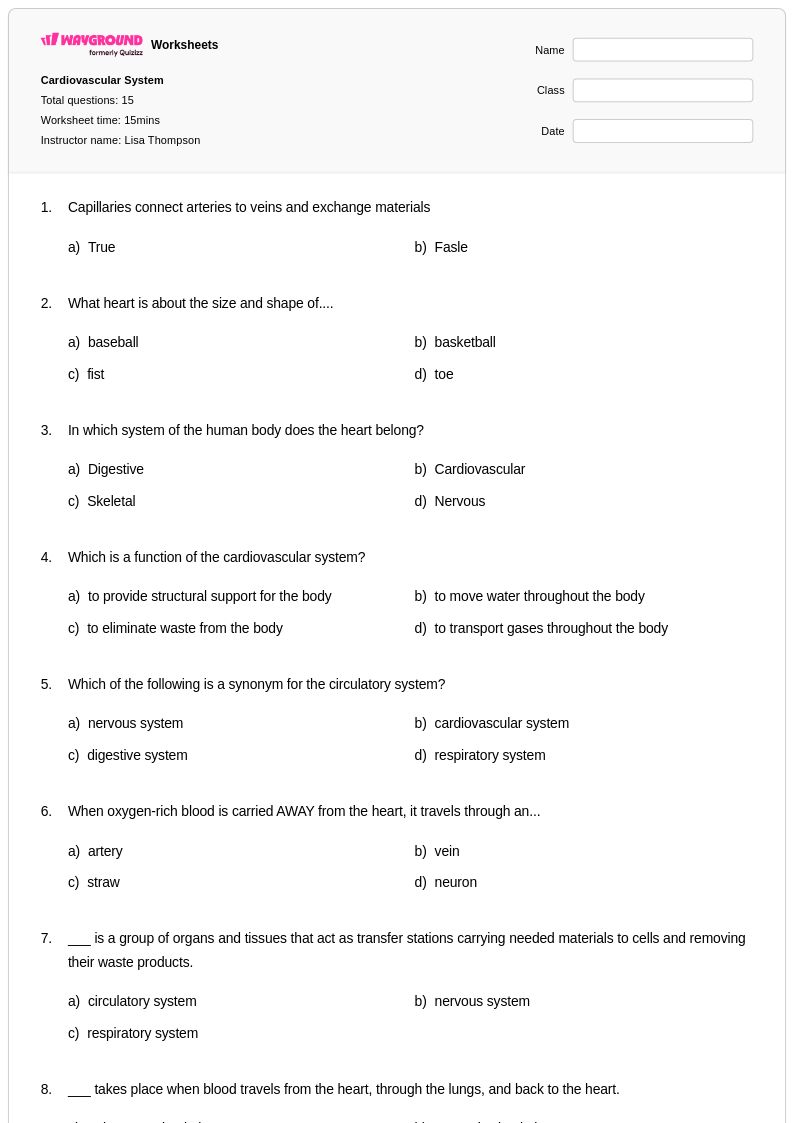
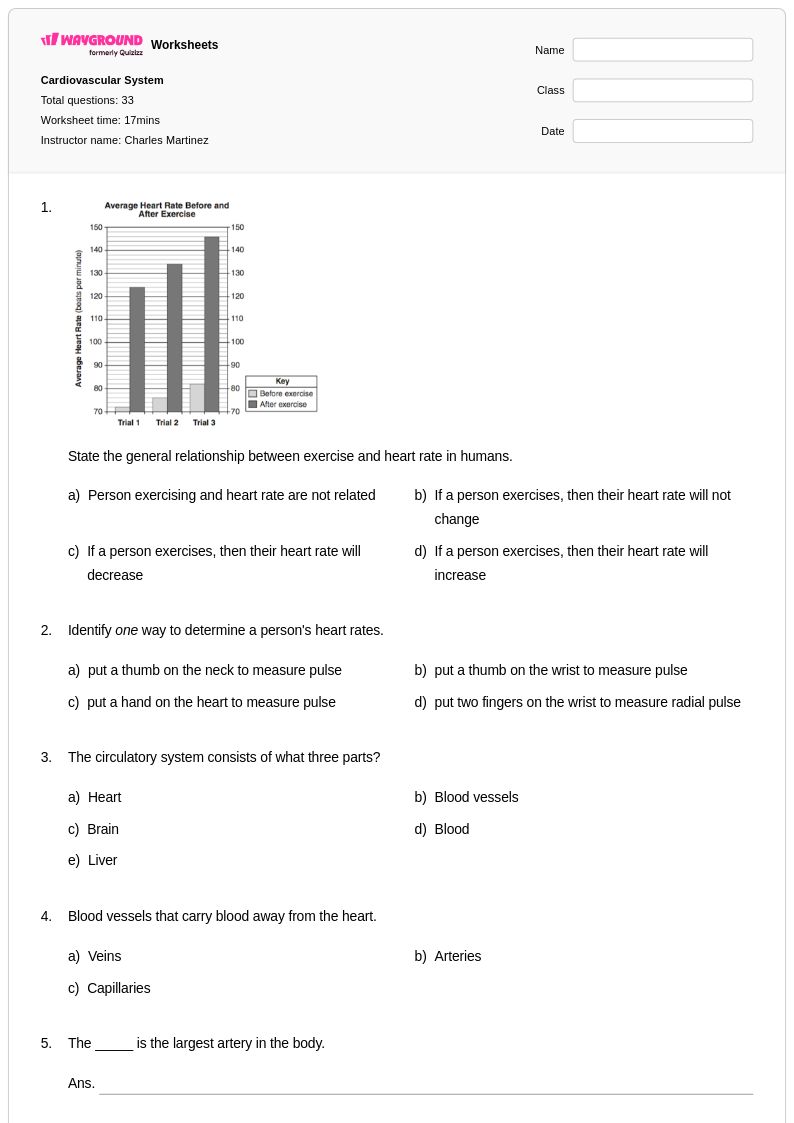
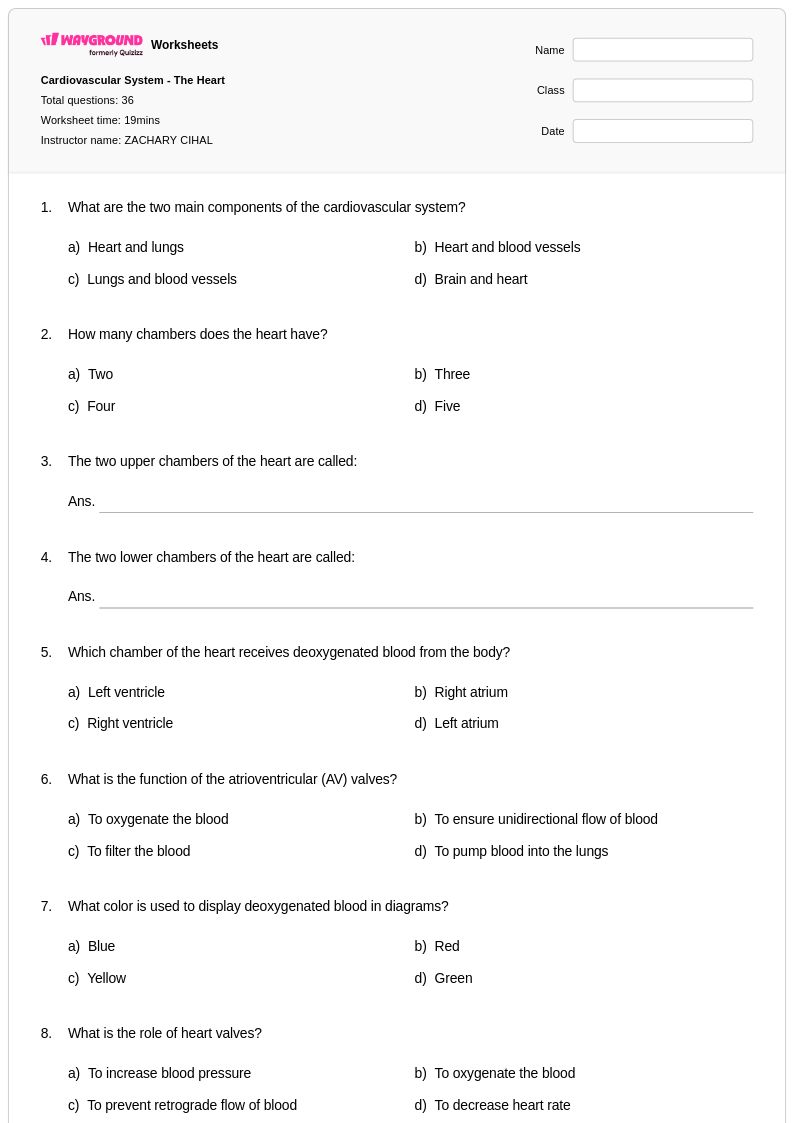
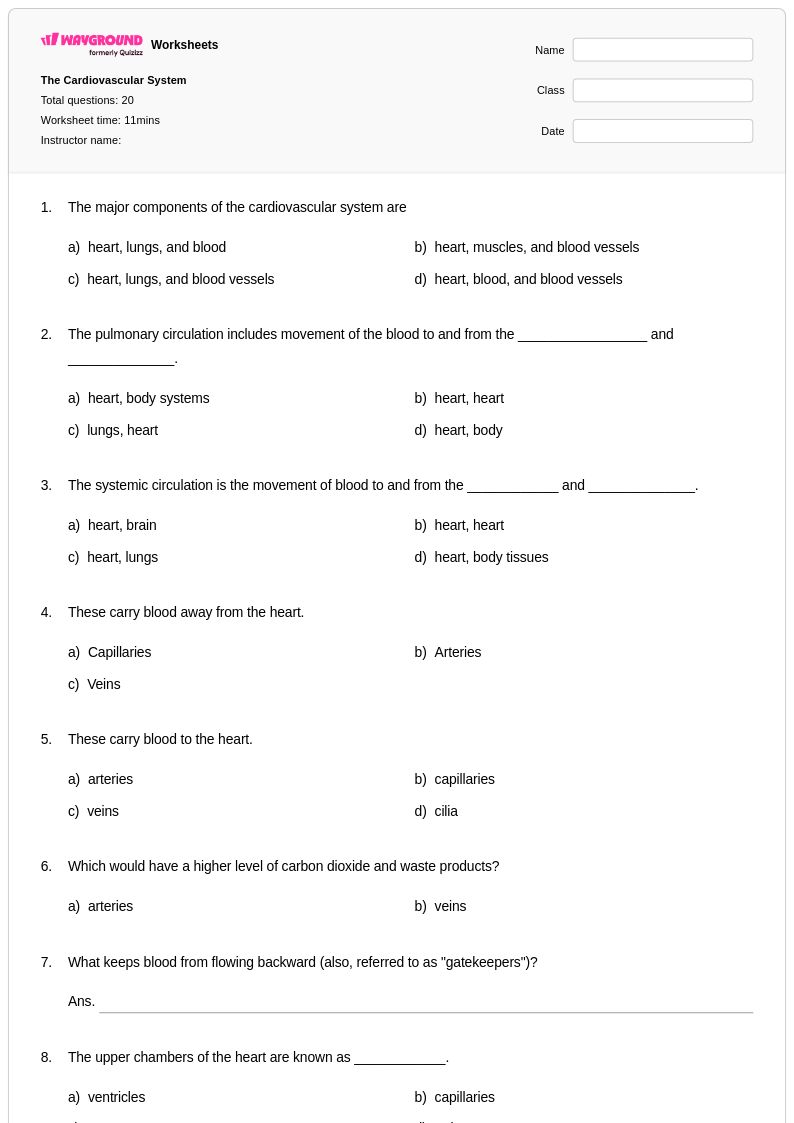
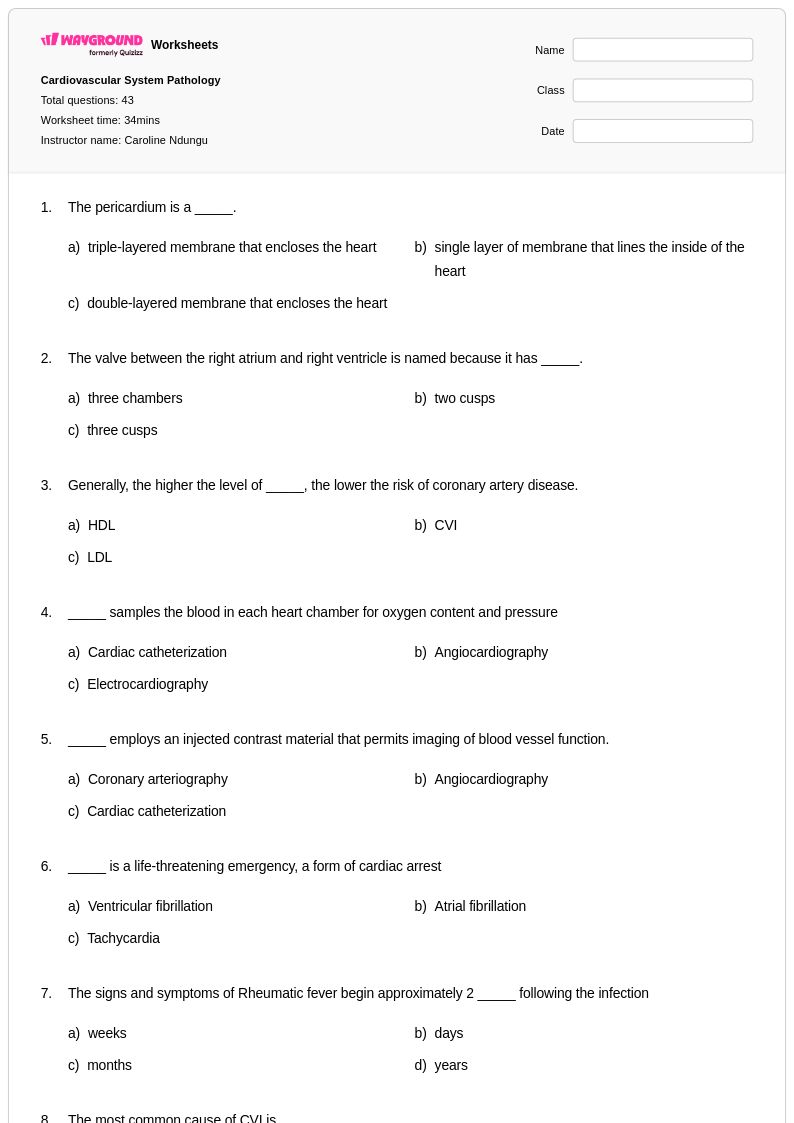
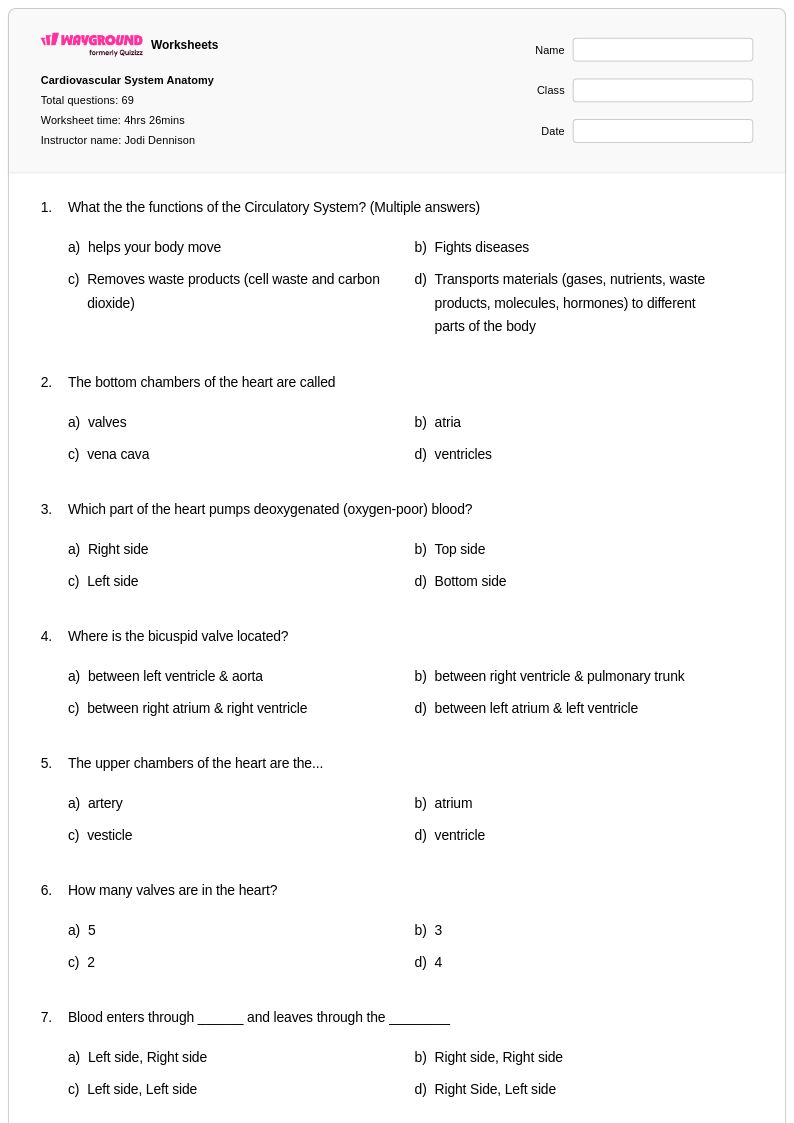
Year 9 cardiovascular system worksheets available through Wayground (formerly Quizizz) provide comprehensive coverage of heart anatomy, blood circulation, and cardiac function essential for high school biology students. These expertly designed resources strengthen students' understanding of complex physiological processes including the cardiac cycle, blood vessel structure, and the pathway of blood through pulmonary and systemic circulation. Students develop critical analysis skills as they work through practice problems involving heart rate calculations, blood pressure interpretations, and cardiovascular disease connections. Each worksheet includes detailed answer keys that support independent learning and self-assessment, while the free printable format ensures accessibility for diverse classroom environments and study preferences.
Wayground (formerly Quizizz) empowers educators with millions of teacher-created cardiovascular system resources that streamline lesson planning and enhance student engagement in Year 9 biology classrooms. The platform's robust search and filtering capabilities allow teachers to quickly locate materials aligned with specific learning standards and differentiate instruction based on individual student needs. Flexible customization tools enable educators to modify existing worksheets or combine elements from multiple resources, creating targeted practice opportunities for remediation or enrichment. Available in both printable pdf format and interactive digital versions, these cardiovascular system materials support diverse teaching approaches while providing consistent access to high-quality content that reinforces essential concepts about heart structure, blood flow dynamics, and the interconnected nature of circulatory system components.
FAQs
How do I teach the cardiovascular system to high school students?
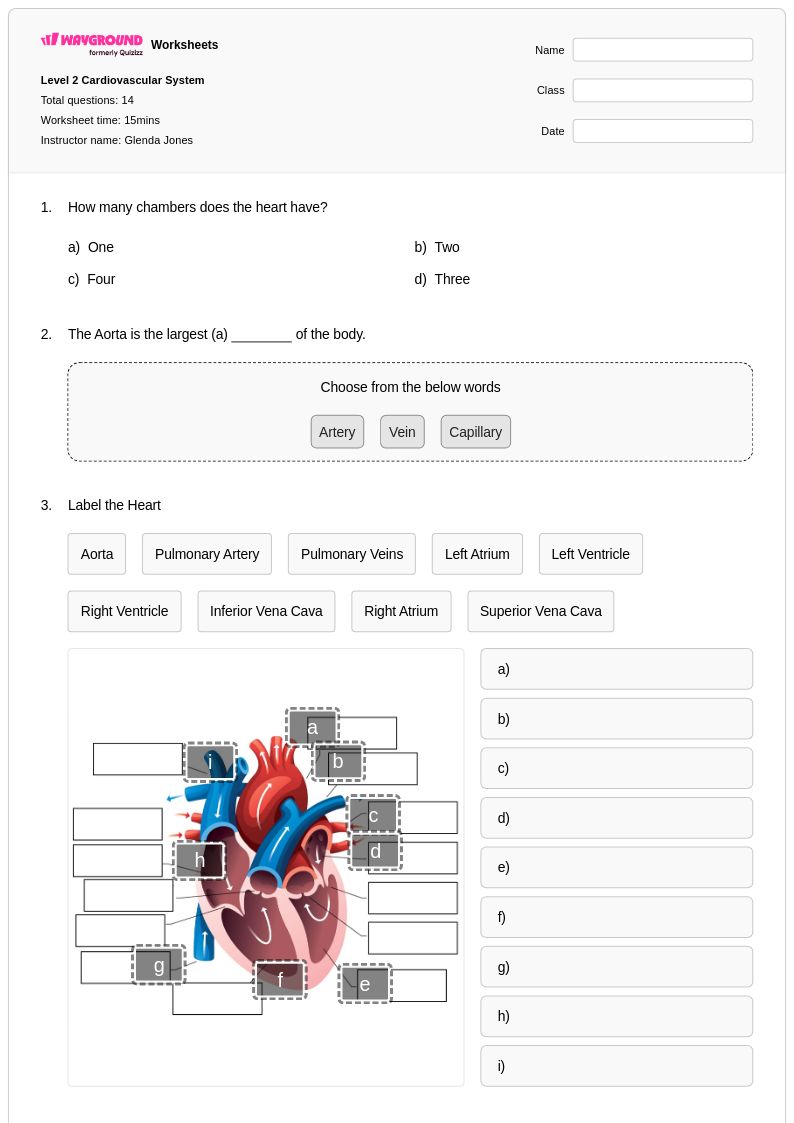
Start by grounding students in heart anatomy before moving to function — once they can label chambers, valves, and major vessels, they are ready to trace blood flow through pulmonary and systemic circuits. Use diagrams that require students to sequence the path of a red blood cell from the right atrium through the lungs and back to the body, as this builds both spatial understanding and procedural knowledge. From there, layer in cardiac cycle mechanics, blood pressure regulation, and homeostasis to show how structure and function are inseparable in the cardiovascular system.
What exercises help students practice cardiovascular system concepts?
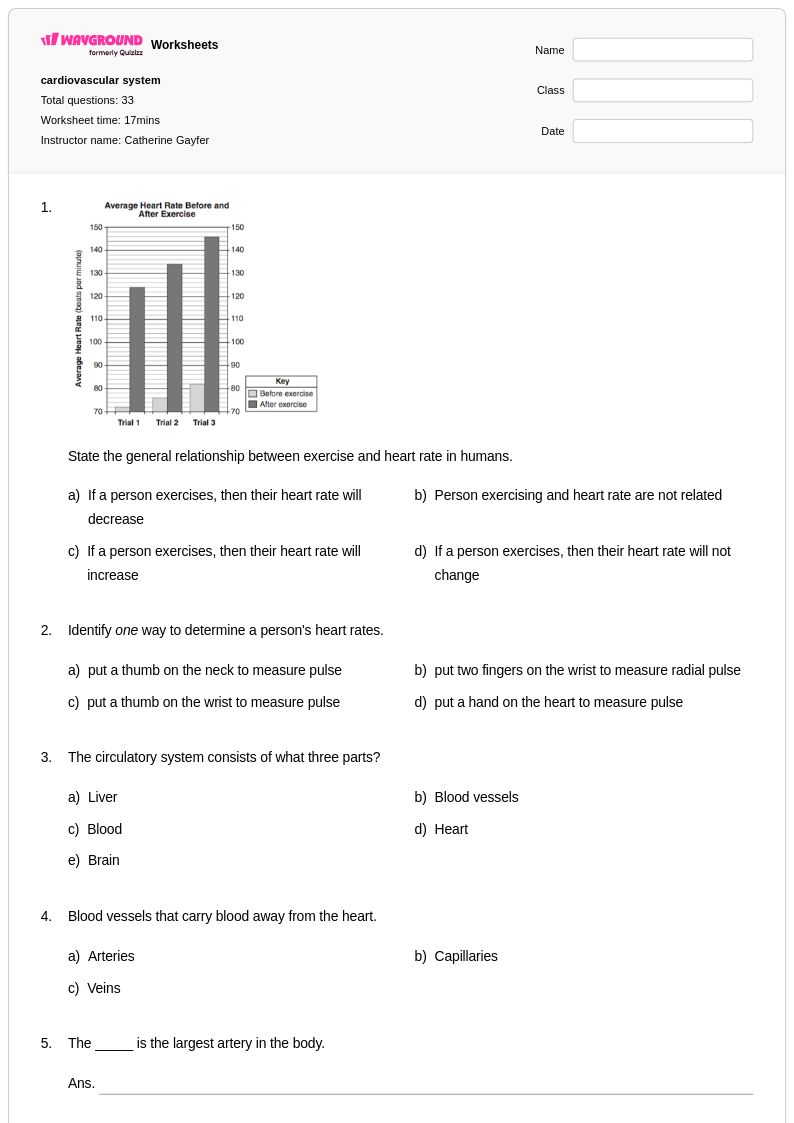
Effective practice exercises include labeling diagrams of the heart and major blood vessels, tracing blood flow through all four chambers in sequence, and analyzing electrocardiogram (ECG) readings to connect electrical activity to mechanical function. Students also benefit from problems that ask them to calculate or interpret cardiac output and explain how the cardiovascular system responds to changes in activity or health status. These varied formats build both factual recall and applied reasoning, which are both assessed on standardized biology exams.
What misconceptions do students commonly have about the cardiovascular system?
A persistent misconception is that the heart is a single pump — students often struggle to understand that the right and left sides of the heart perform separate jobs, with the right side driving pulmonary circulation and the left side driving systemic circulation. Many students also confuse veins with deoxygenated blood universally, not realizing that pulmonary veins carry oxygenated blood from the lungs to the heart. Addressing these errors explicitly with blood-flow tracing activities is one of the most effective ways to correct them before they become entrenched.
What mistakes do students make when analyzing ECG or blood pressure data?
Students frequently misread ECG waveforms by treating the P wave, QRS complex, and T wave as interchangeable signals rather than understanding each represents a distinct electrical event in the cardiac cycle. When interpreting blood pressure readings, students often cannot explain why systolic pressure is higher than diastolic or what physiological event each value represents. Targeted practice that requires students to match waveform components to their corresponding cardiac events — not just memorize labels — is the most reliable way to address these errors.
How can I use cardiovascular system worksheets in my classroom?
Cardiovascular system worksheets on Wayground are available as printable PDFs for traditional classroom use and in digital formats for technology-integrated or remote learning environments, making them flexible enough for any instructional setting. You can assign them as guided practice during instruction, independent work, homework, or review before assessments. Wayground also allows you to host worksheets as a digital quiz, giving you real-time insight into which concepts — such as blood flow sequencing or cardiac cycle interpretation — students have not yet mastered.
How do I support students who are struggling with cardiovascular system content?
For students who are behind, focus remediation on the foundational sequence first: heart anatomy, then blood flow direction, then function before moving to advanced topics like cardiac output or homeostasis. On Wayground, teachers can apply individual accommodations such as read-aloud support for students who need text read to them, reduced answer choices to lower cognitive load on difficult identification questions, and extended time for students who need it — all without notifying the rest of the class. These settings are reusable across sessions, so once configured for a student, they apply automatically going forward.
How do I connect cardiovascular system instruction to real-world health concepts?
Connecting cardiovascular structure and function to health outcomes — such as how hypertension affects vessel walls, how blockages cause heart attacks, or how aerobic exercise improves cardiac efficiency — gives students a meaningful reason to master the underlying biology. Worksheets that ask students to analyze case studies or explain the cardiovascular consequences of lifestyle factors bridge content knowledge and health literacy effectively. This approach is particularly valuable in courses that integrate anatomy and physiology with public health or personal wellness standards.