Free Printable Structure of a Cell Worksheets for Year 9
Year 9 Biology students can master cell structure fundamentals with our comprehensive collection of free printable worksheets, featuring detailed practice problems, visual diagrams, and complete answer keys for effective learning.
Explore printable Structure of a Cell worksheets for Year 9
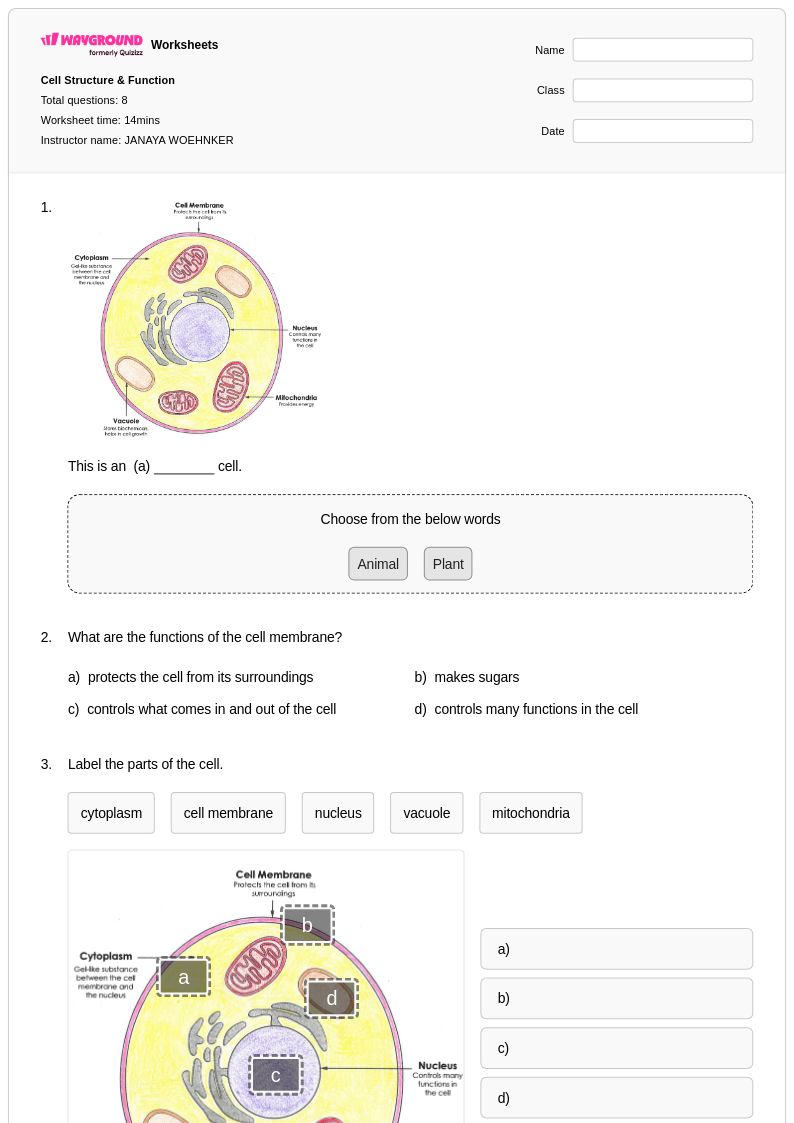
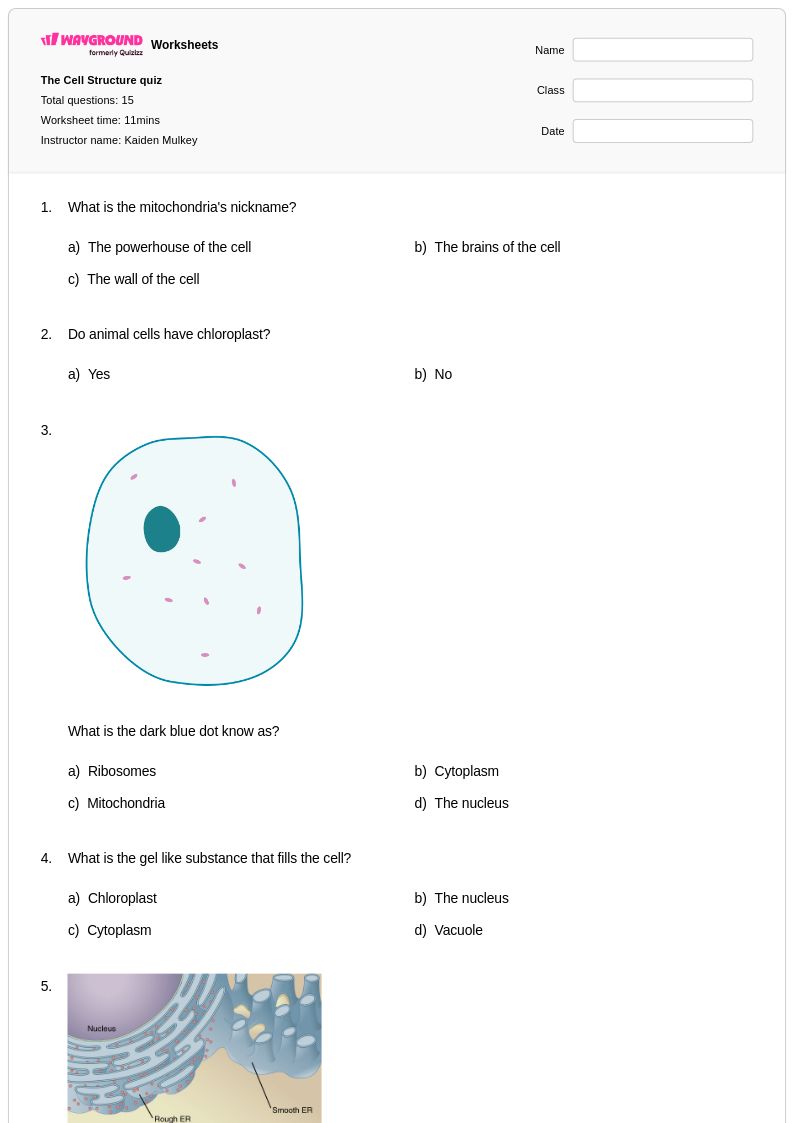
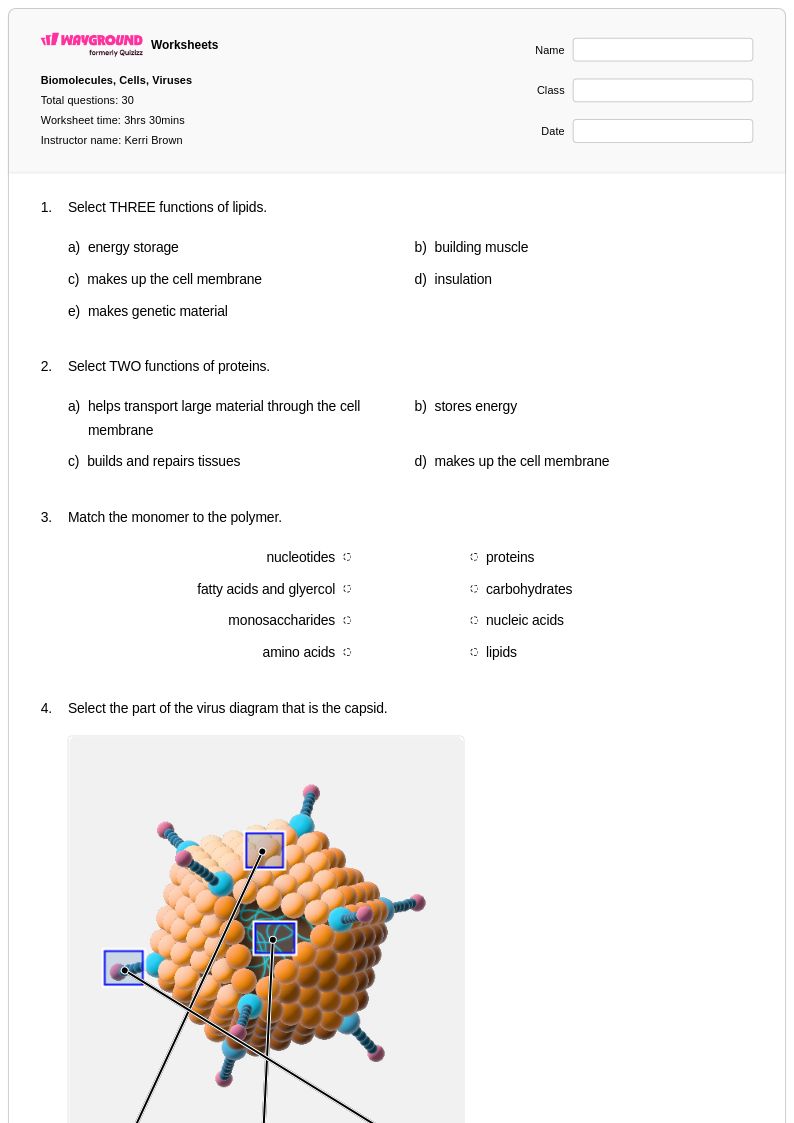
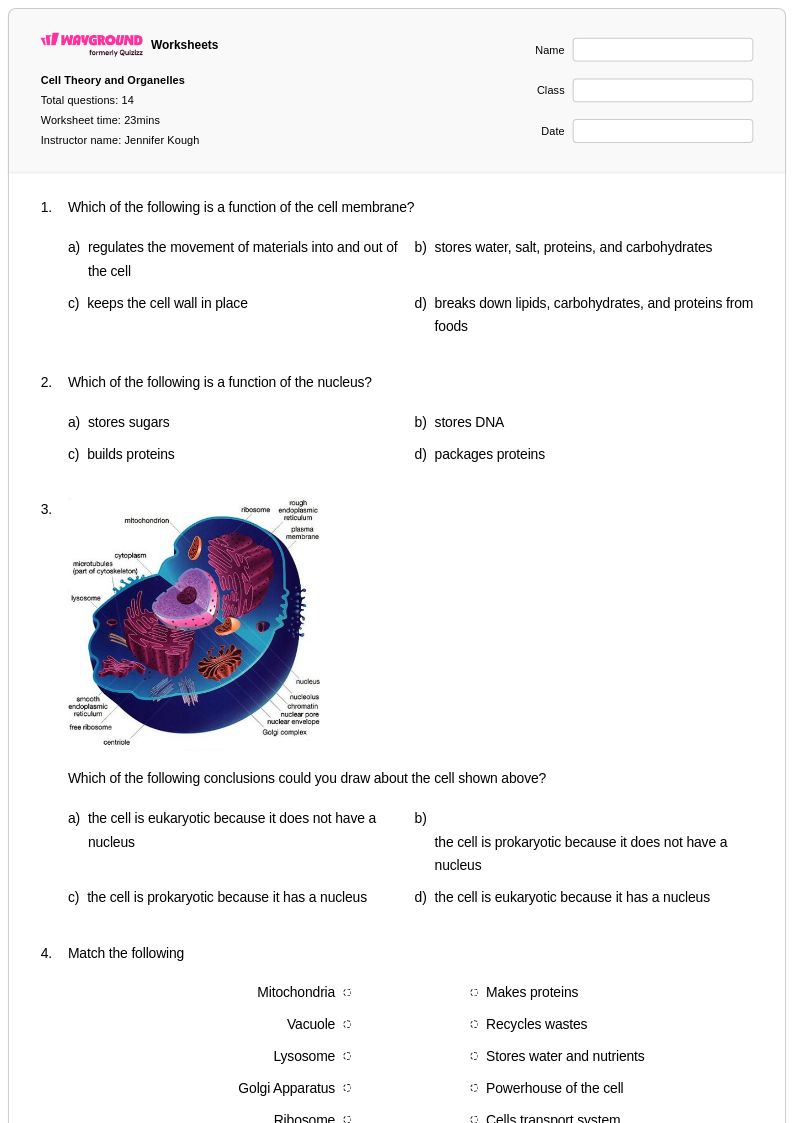
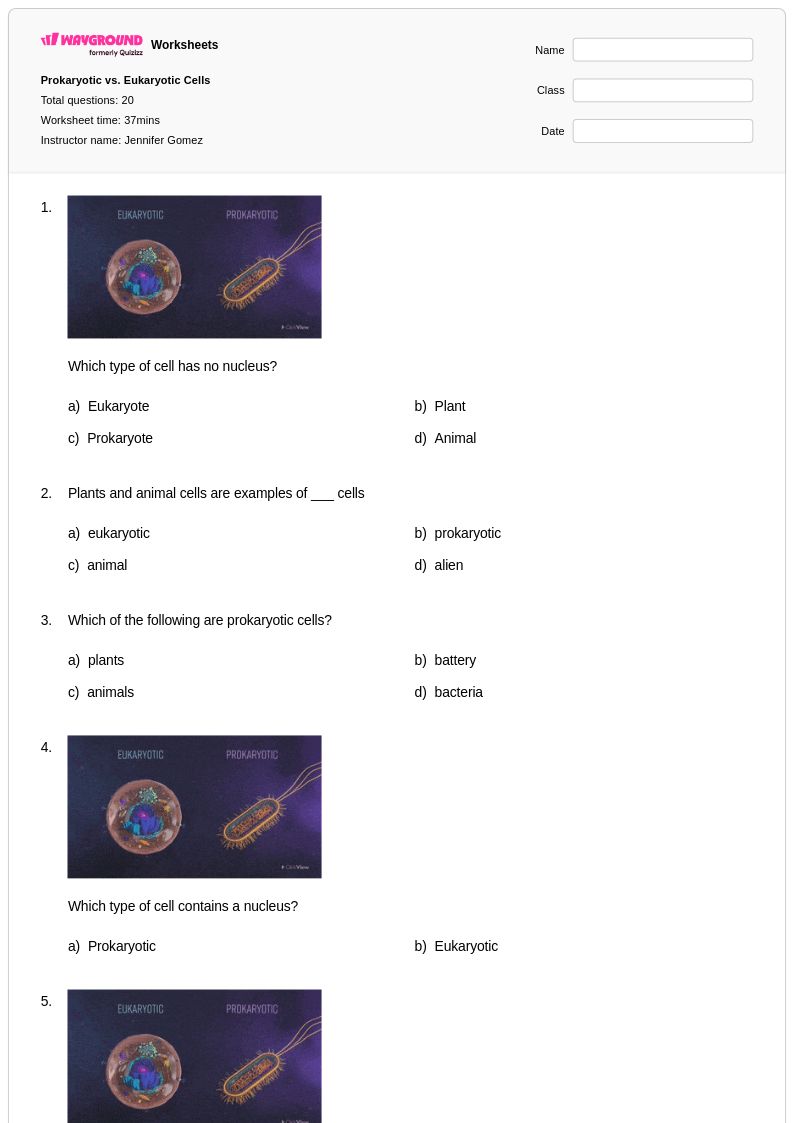
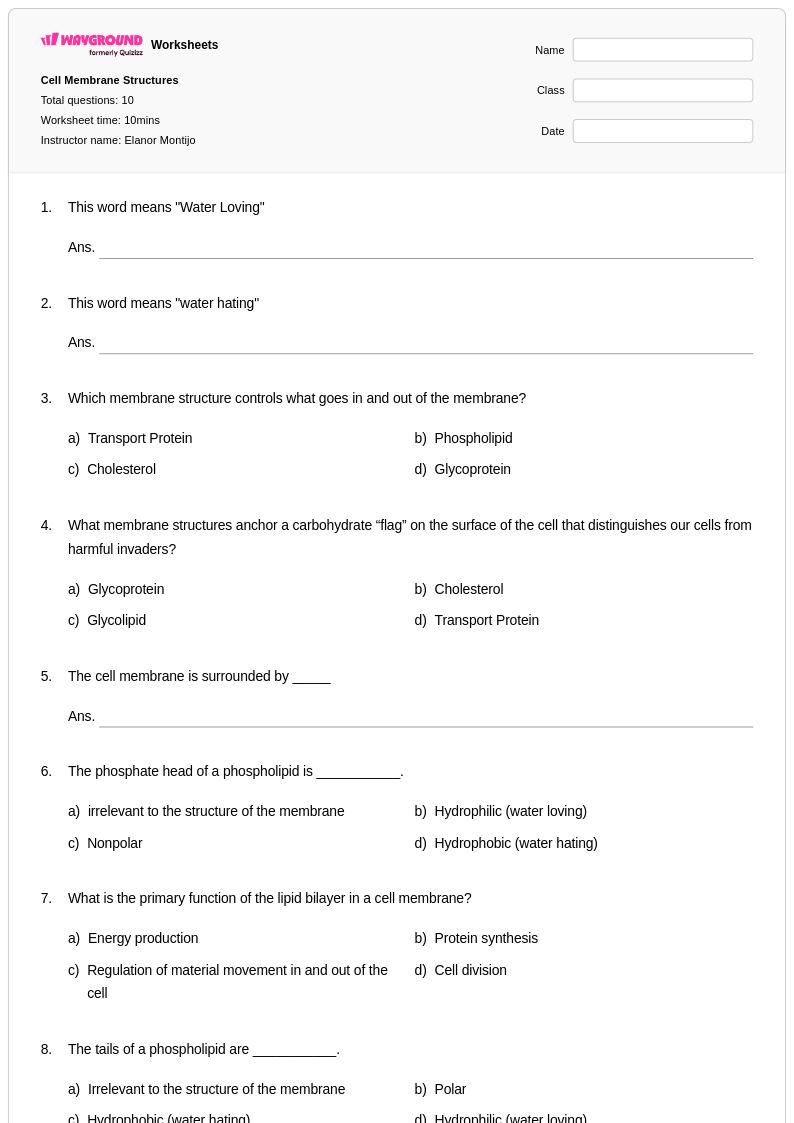
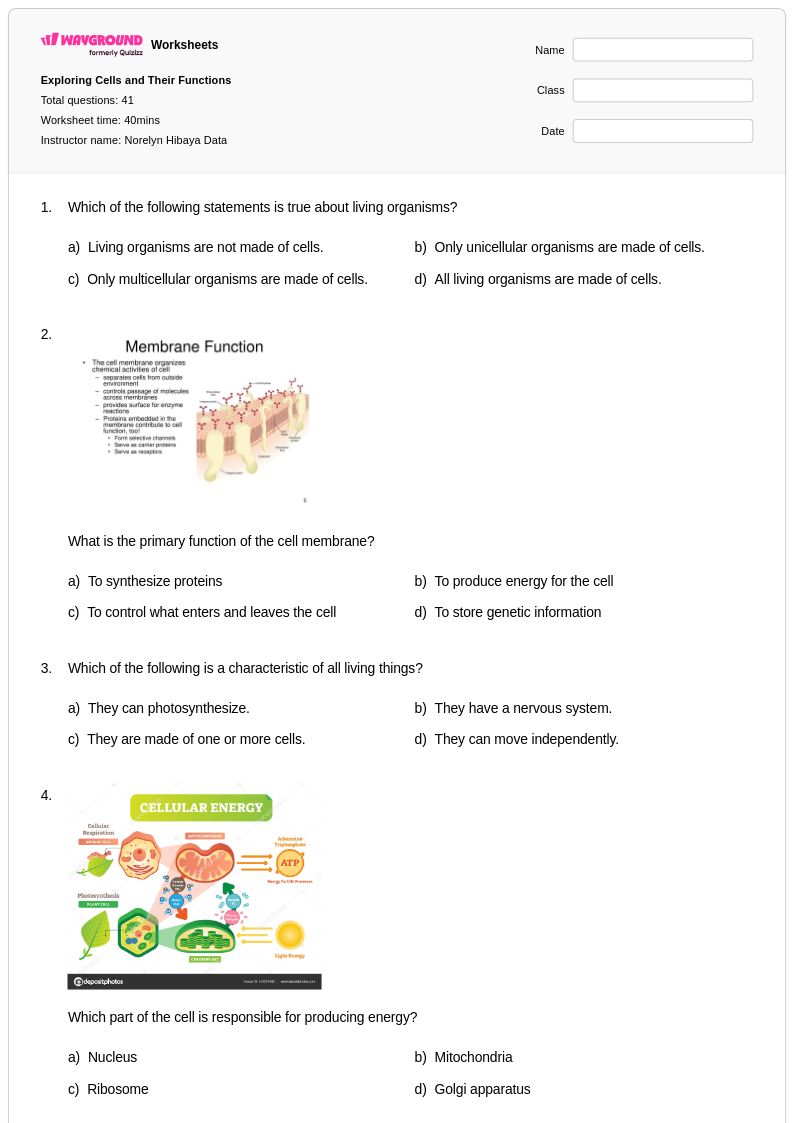
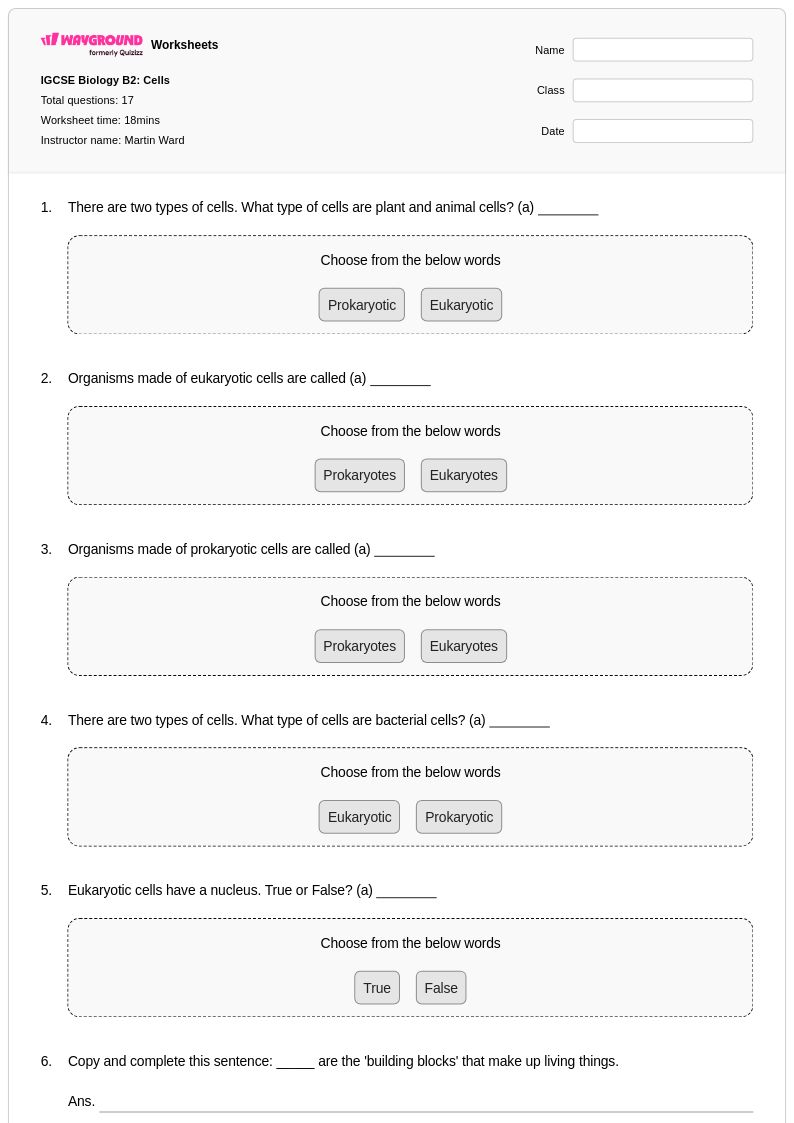
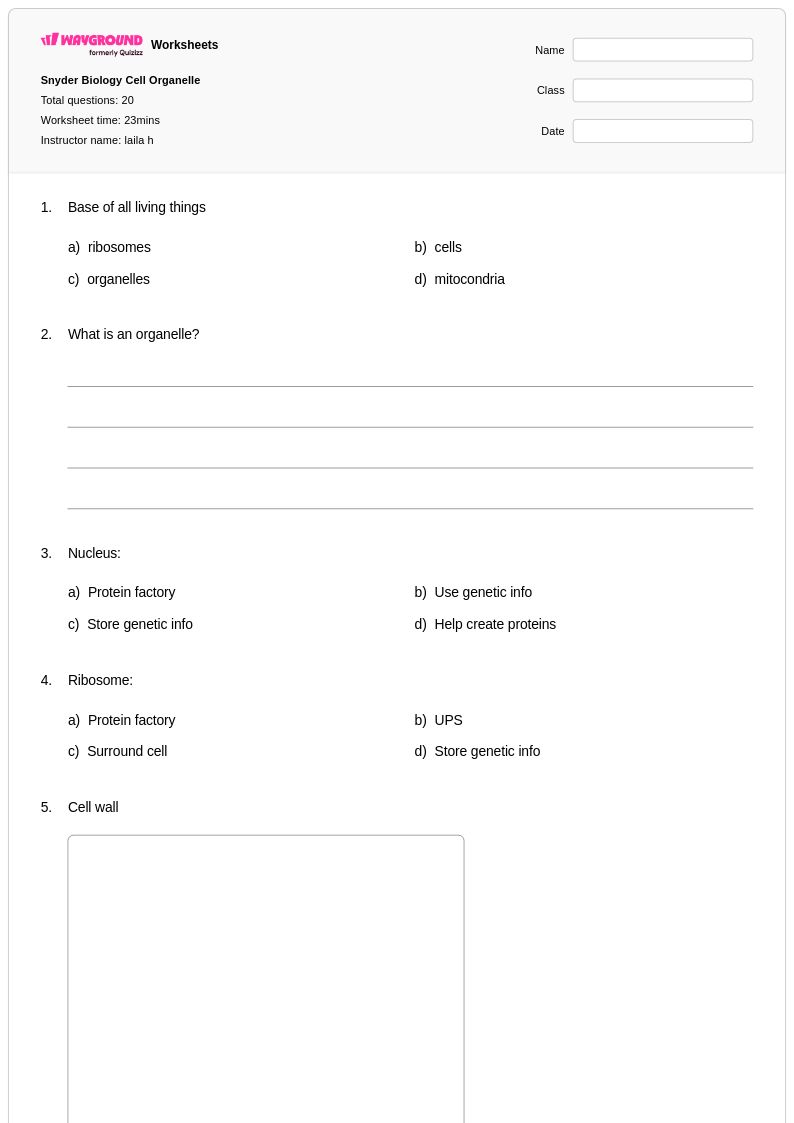
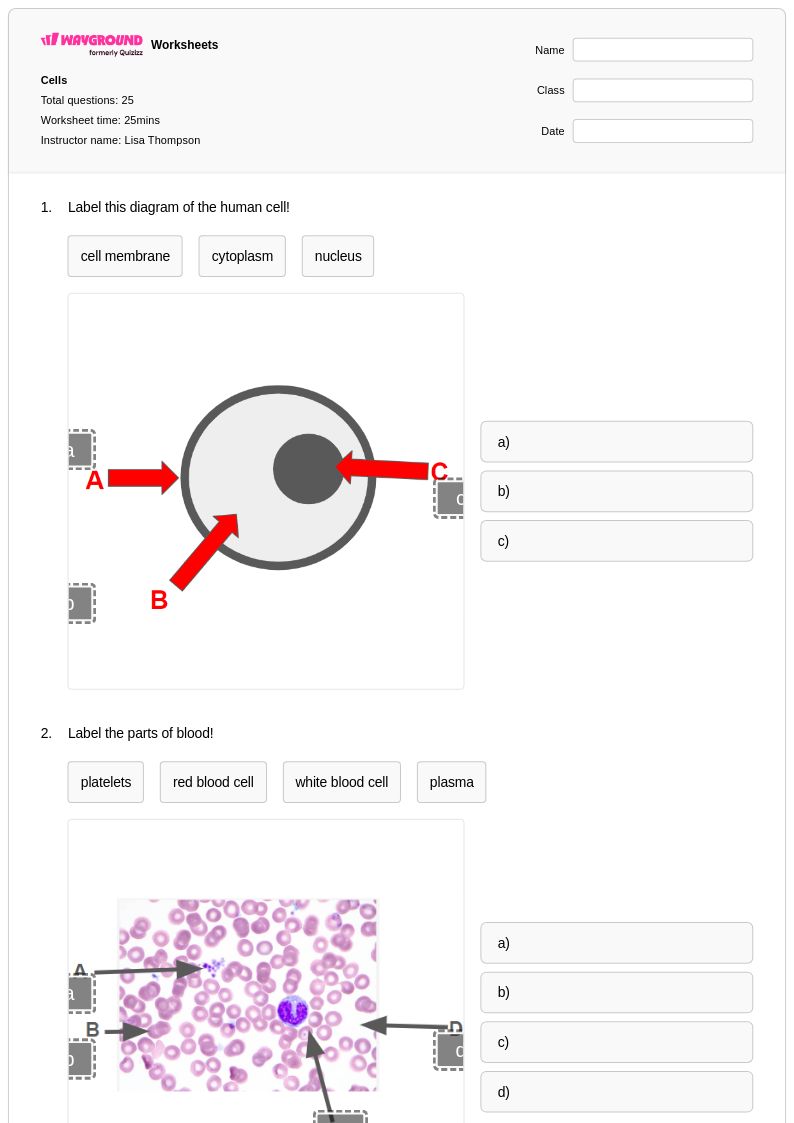
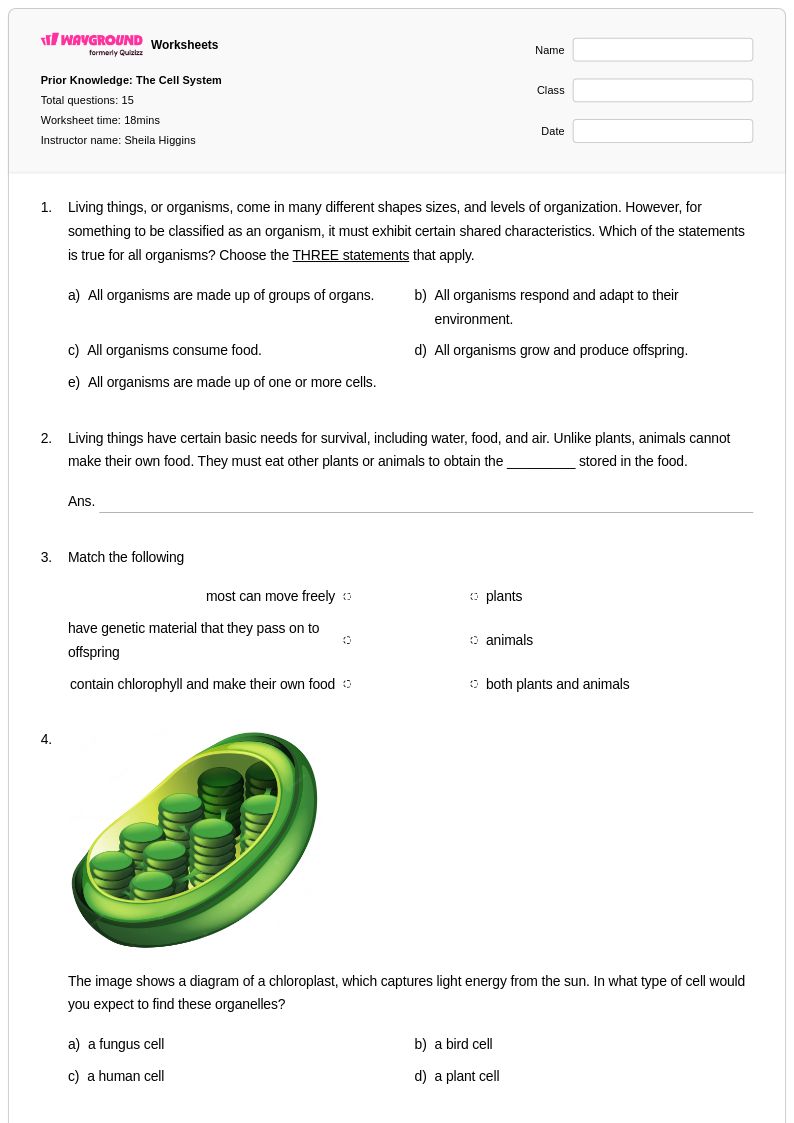
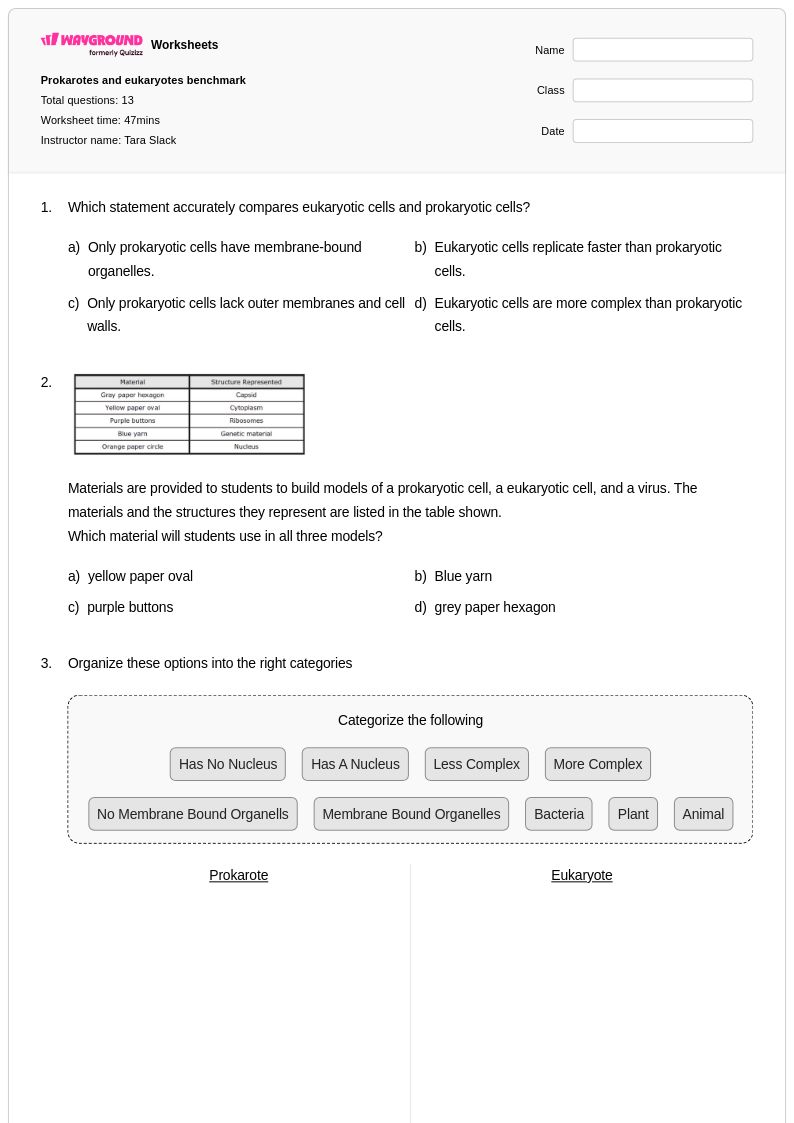
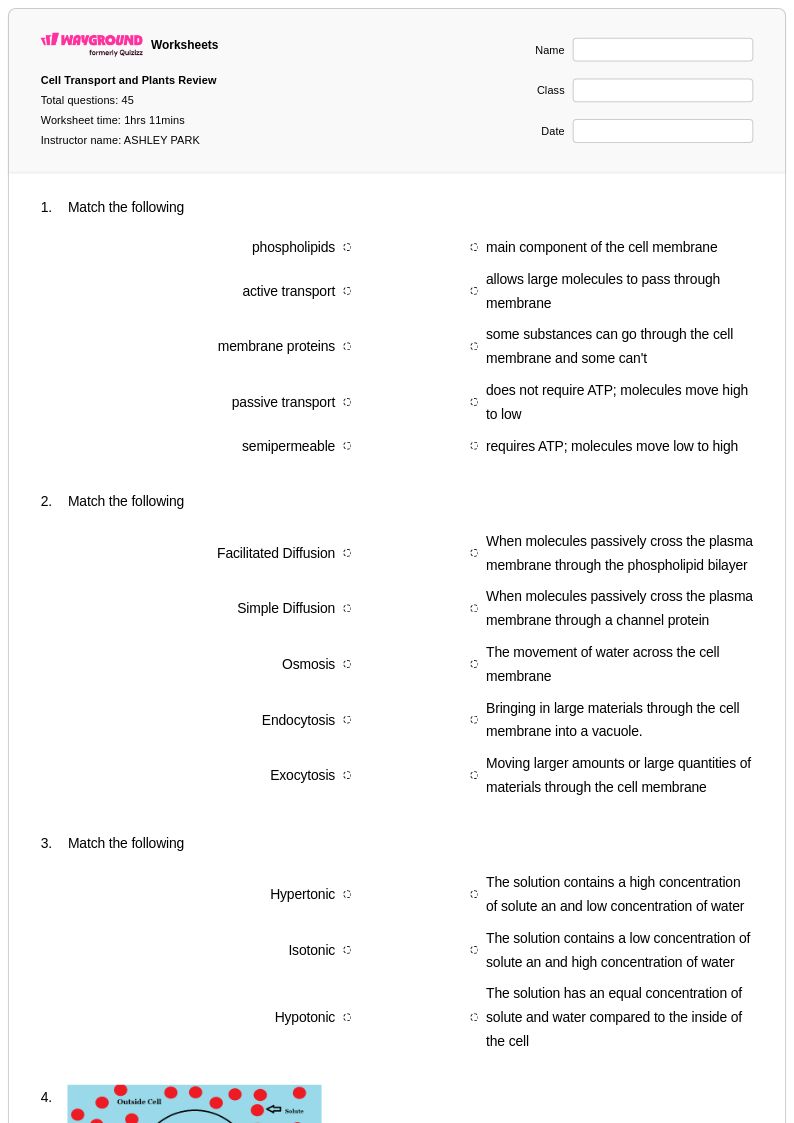
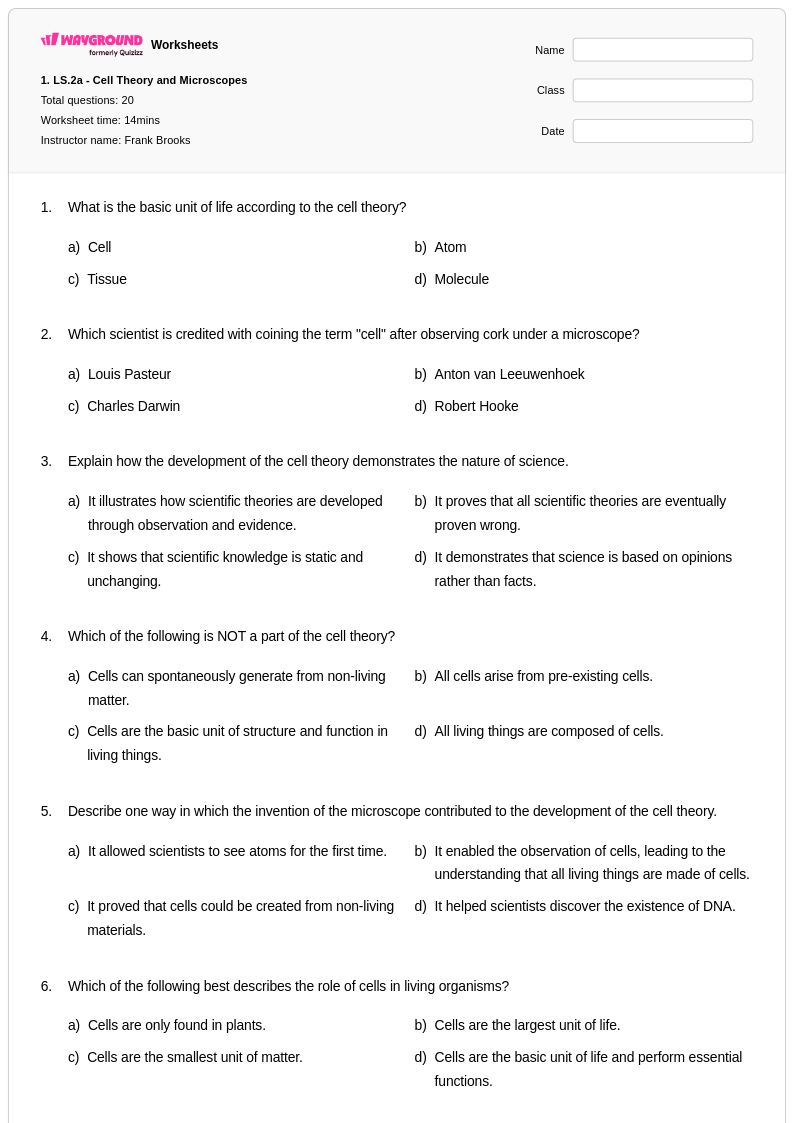
Structure of a Cell worksheets for Year 9 students through Wayground (formerly Quizizz) provide comprehensive coverage of cellular components and their functions, enabling students to master this fundamental concept in biology. These expertly designed worksheets guide students through detailed exploration of prokaryotic and eukaryotic cells, focusing on organelles such as the nucleus, mitochondria, endoplasmic reticulum, Golgi apparatus, ribosomes, and cell membranes. The practice problems strengthen critical skills including identifying cellular structures, understanding organelle functions, comparing plant and animal cells, and analyzing how cell structure relates to function. Each worksheet includes a complete answer key and is available as a free printable pdf, making it easy for educators to implement immediate assessment and provide students with self-checking opportunities that reinforce learning.
Wayground (formerly Quizizz) empowers teachers with an extensive collection of millions of teacher-created resources specifically designed for cellular biology instruction, featuring robust search and filtering capabilities that allow educators to quickly locate worksheets aligned with specific standards and learning objectives. The platform's differentiation tools enable teachers to customize content difficulty levels, ensuring that all Year 9 students can access appropriate challenges whether they need remediation support or enrichment activities. These flexible worksheets are available in both printable and digital formats, including downloadable pdfs, giving educators the versatility to adapt instruction for various classroom environments and individual student needs. Teachers can efficiently plan lessons, target specific skill gaps, and provide focused practice that builds student confidence in understanding cellular structures and their vital biological functions.
FAQs
How do I teach cell structure to middle or high school students?
Start by grounding students in the cell theory before introducing individual organelles and their functions. Using labeled diagrams alongside real microscope images helps students connect abstract vocabulary to visible structures. Comparing plant and animal cells side by side is an effective strategy for reinforcing similarities and differences, and having students color-code or label blank diagrams builds both recall and scientific vocabulary.
What exercises help students practice identifying cell organelles?
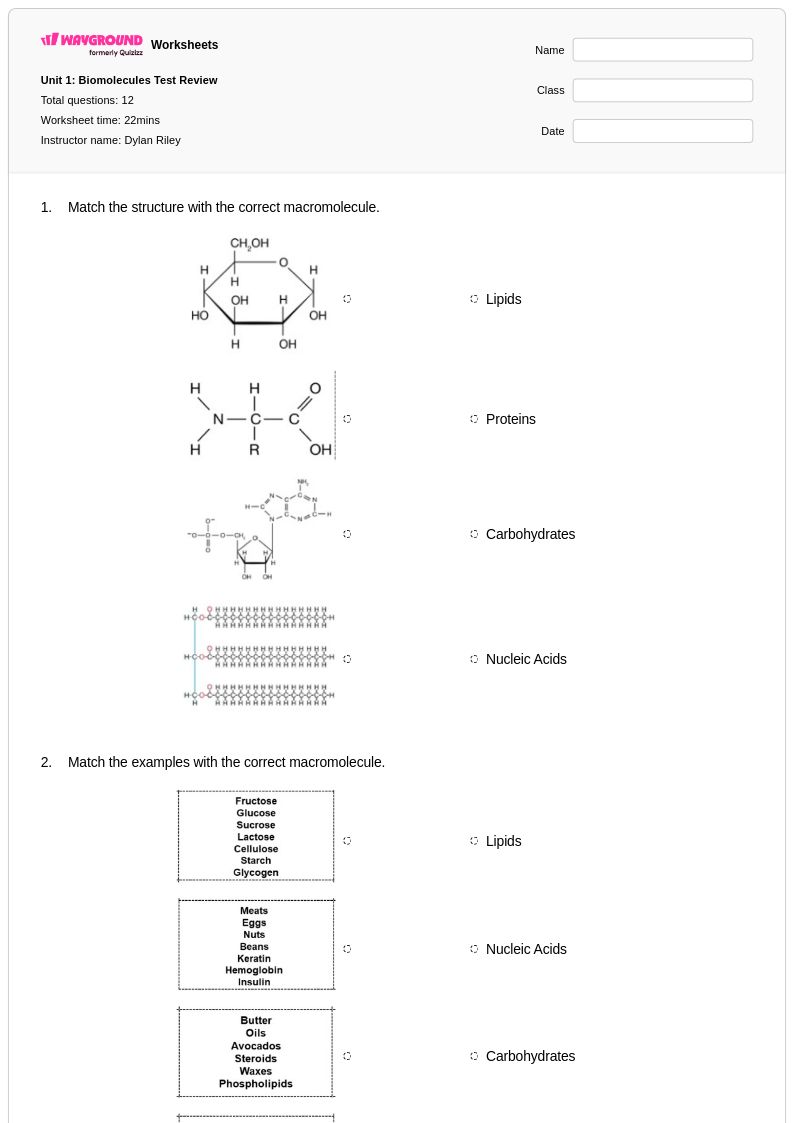
Labeling diagrams, matching organelles to their functions, and fill-in-the-blank practice problems are among the most effective exercises for reinforcing cell structure knowledge. Worksheets that require students to describe the role of each organelle in their own words push beyond rote memorization and develop deeper conceptual understanding. Repeated low-stakes practice with varied question formats helps students retain the names, locations, and functions of structures like the mitochondria, nucleus, and endoplasmic reticulum.
What mistakes do students commonly make when learning about cell structure?
One of the most common errors is confusing the cell membrane with the cell wall, particularly when students have not yet firmly distinguished plant from animal cells. Students also frequently misattribute functions, such as associating the nucleus with energy production rather than the mitochondria. Mixing up the rough and smooth endoplasmic reticulum is another persistent misconception, so targeted practice that explicitly contrasts these structures helps address it before assessments.
How can I differentiate cell structure worksheets for students at different skill levels?
For struggling students, worksheets with word banks, partially completed diagrams, or reduced answer choices reduce cognitive load while keeping the content rigorous. Advanced learners benefit from open-ended questions that ask them to explain how a disruption to one organelle would affect overall cell function. On Wayground, teachers can apply individual accommodations such as read aloud, extended time, and reduced answer choices to specific students, so the same worksheet can serve the full range of learners in one class without requiring separate materials.
How do I use Wayground's cell structure worksheets in my classroom?
Wayground's cell structure worksheets are available as printable PDFs for traditional classroom use and in digital formats for technology-integrated or remote learning environments. Teachers can also host worksheets as a quiz directly on Wayground, making it easy to collect student responses and track performance. The included answer keys allow for efficient grading, and the digital format supports flexible assignment as independent practice, homework, or a formative assessment activity.