Free Printable Cellular Respiration Worksheets for Year 9
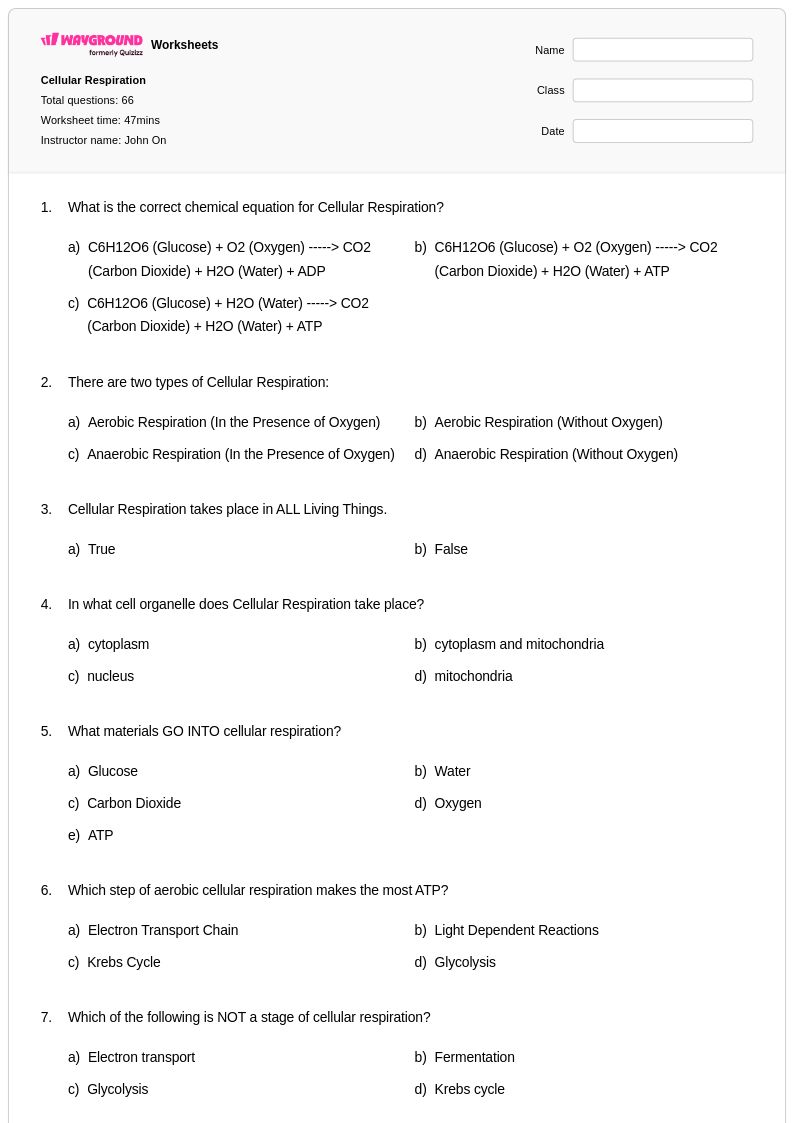
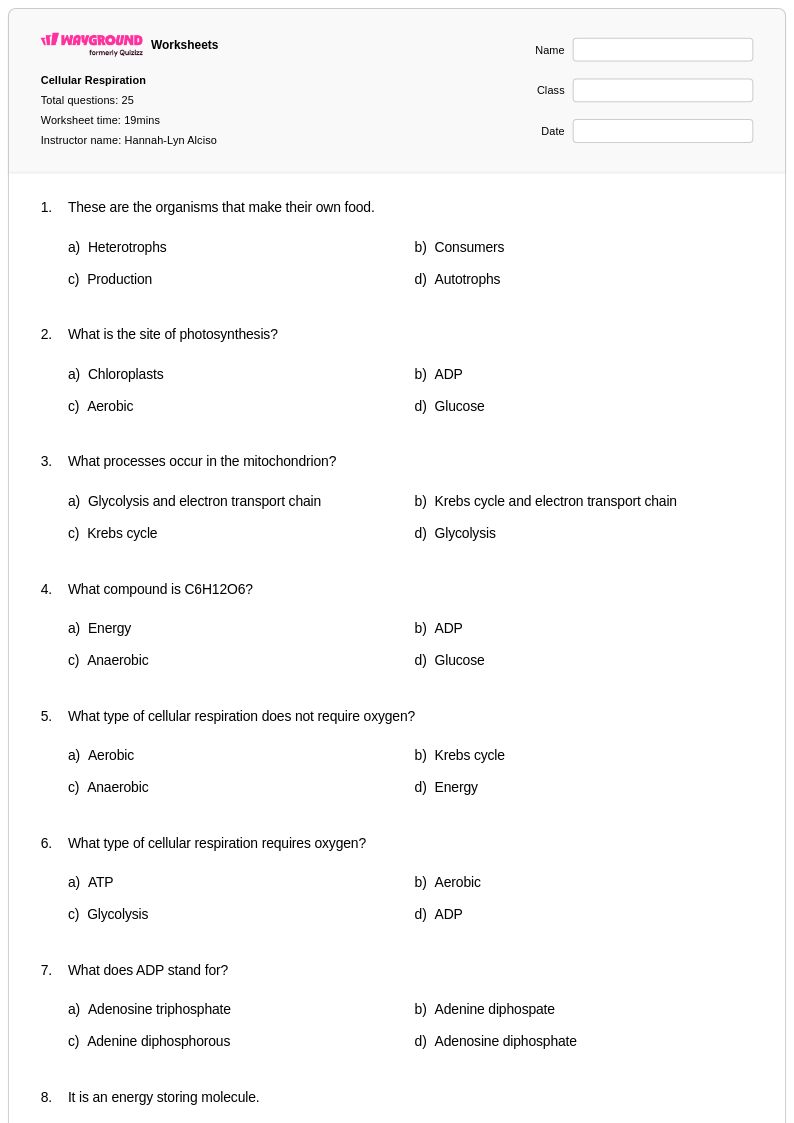
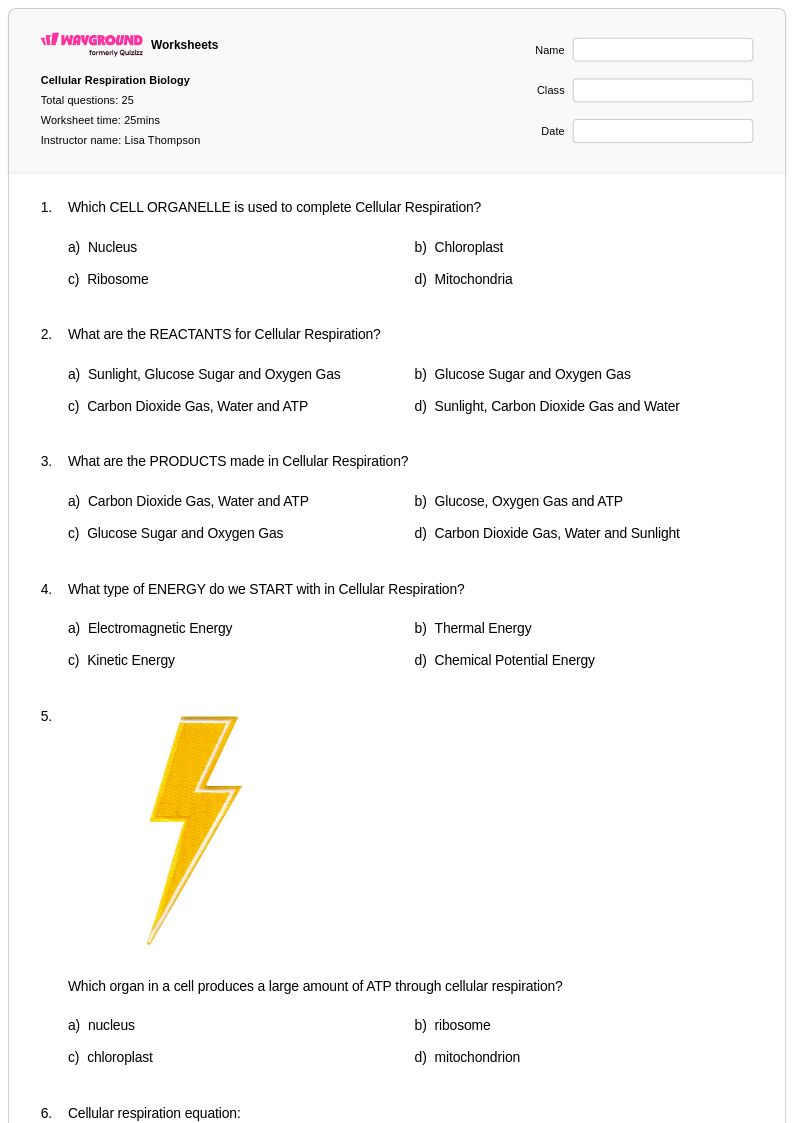
Year 9 cellular respiration worksheets with free printables and answer keys help students master ATP production, glycolysis, and mitochondrial processes through comprehensive practice problems and downloadable PDFs.
Explore printable Cellular Respiration worksheets for Year 9
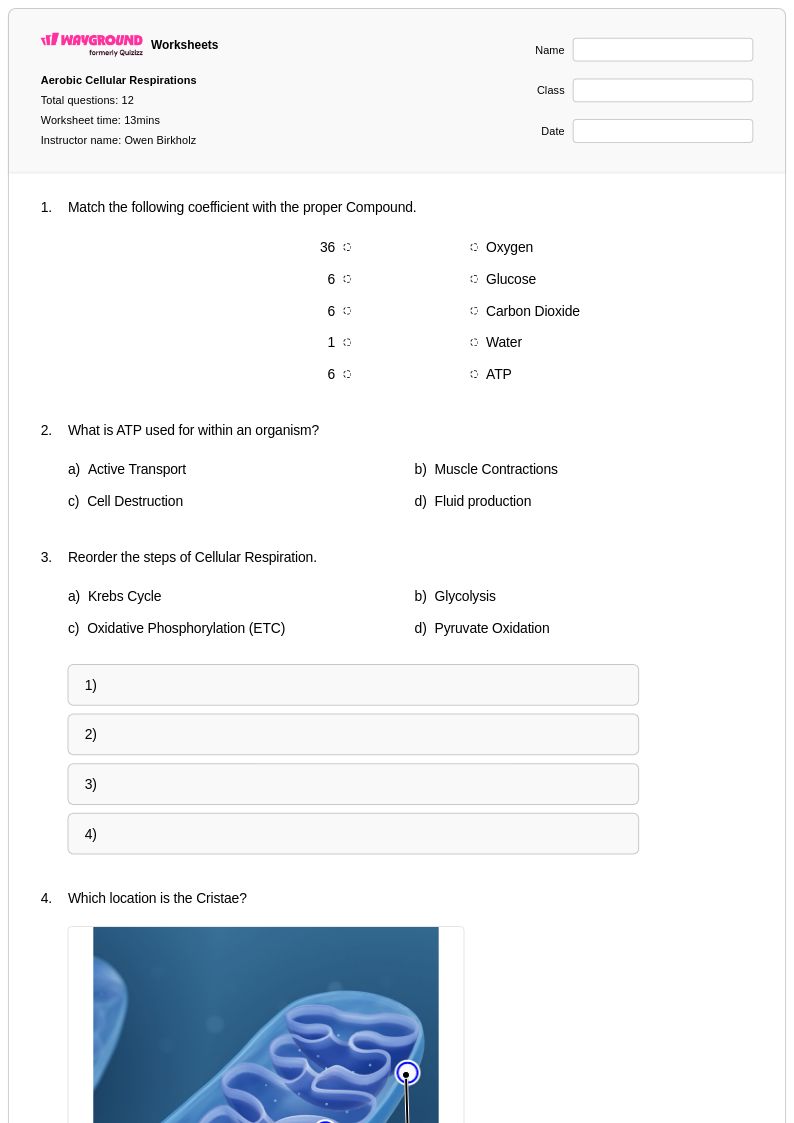
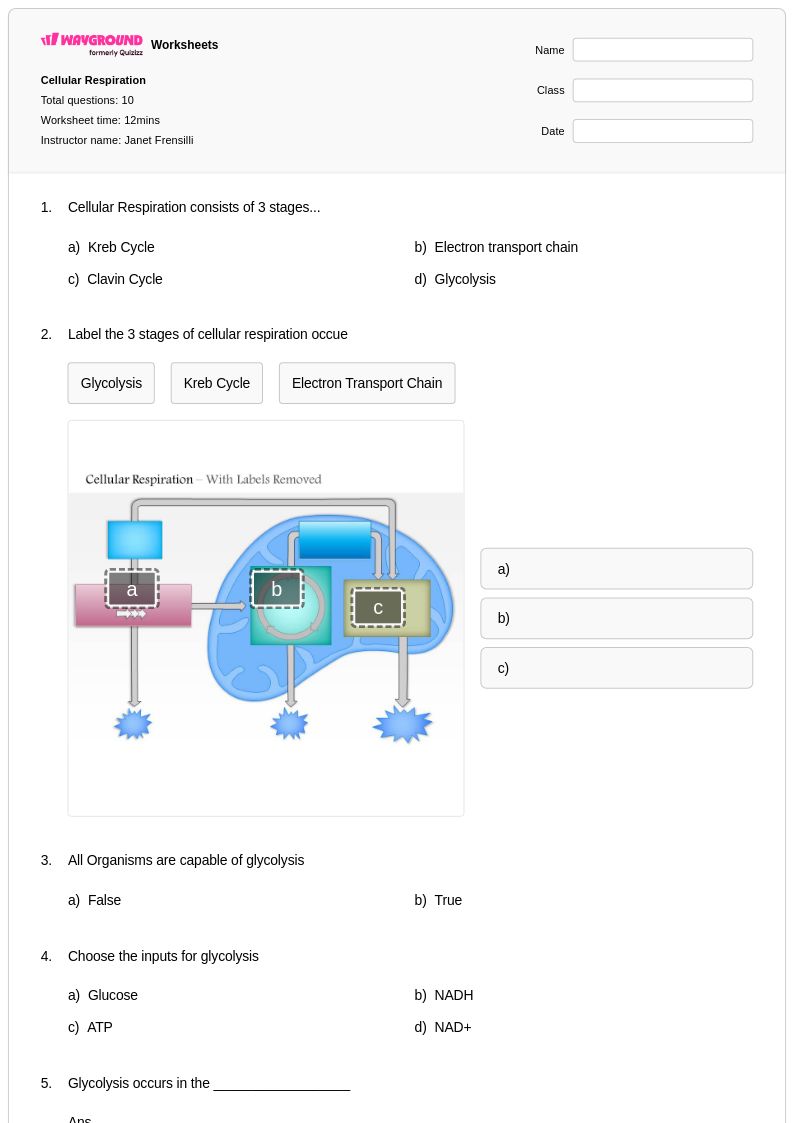
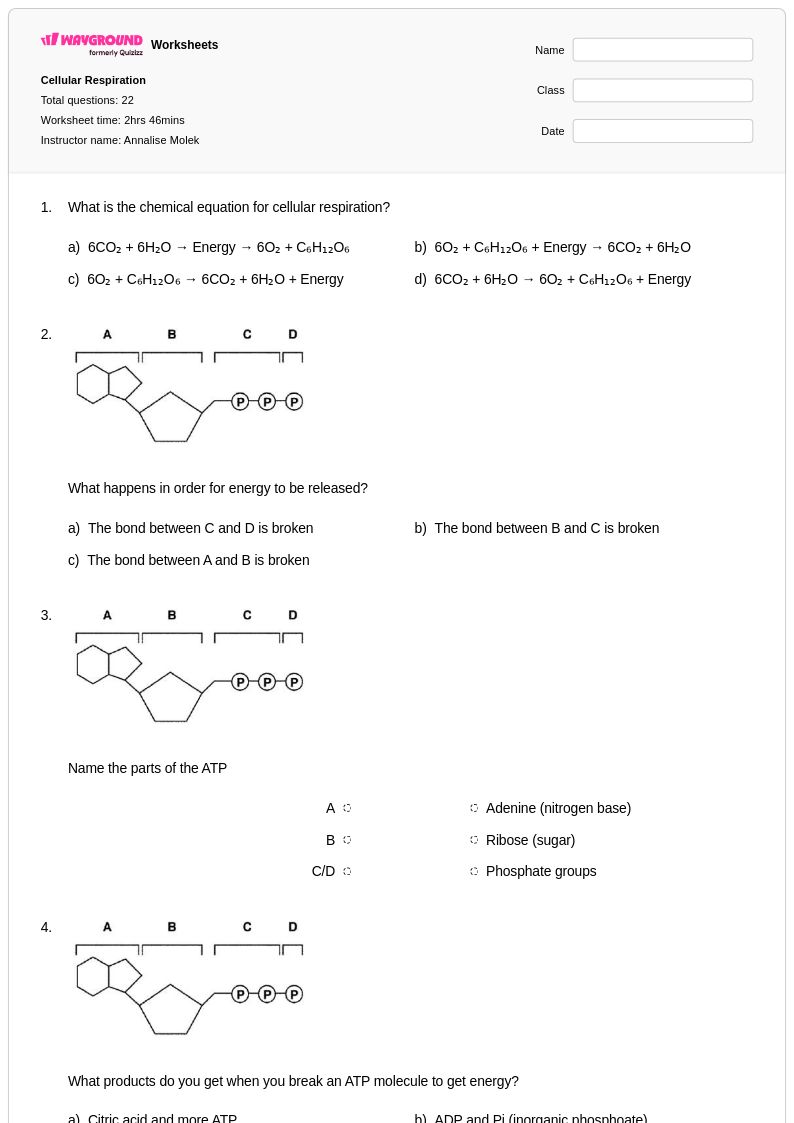
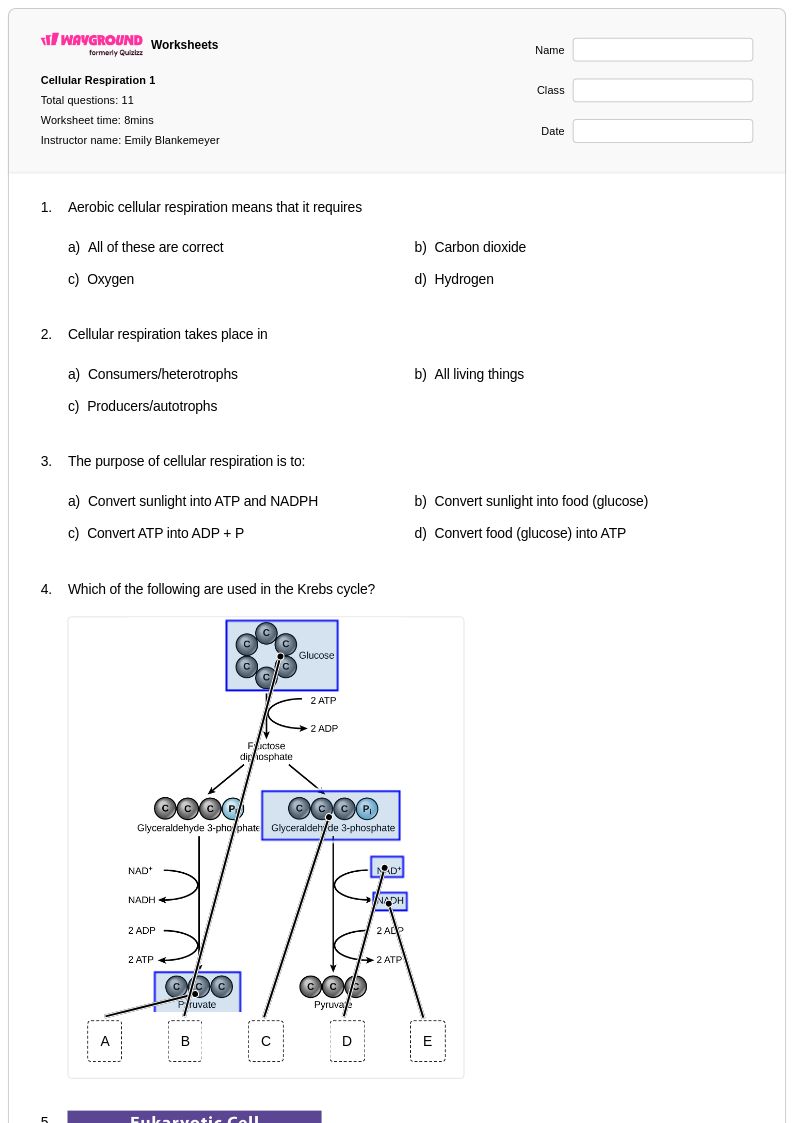
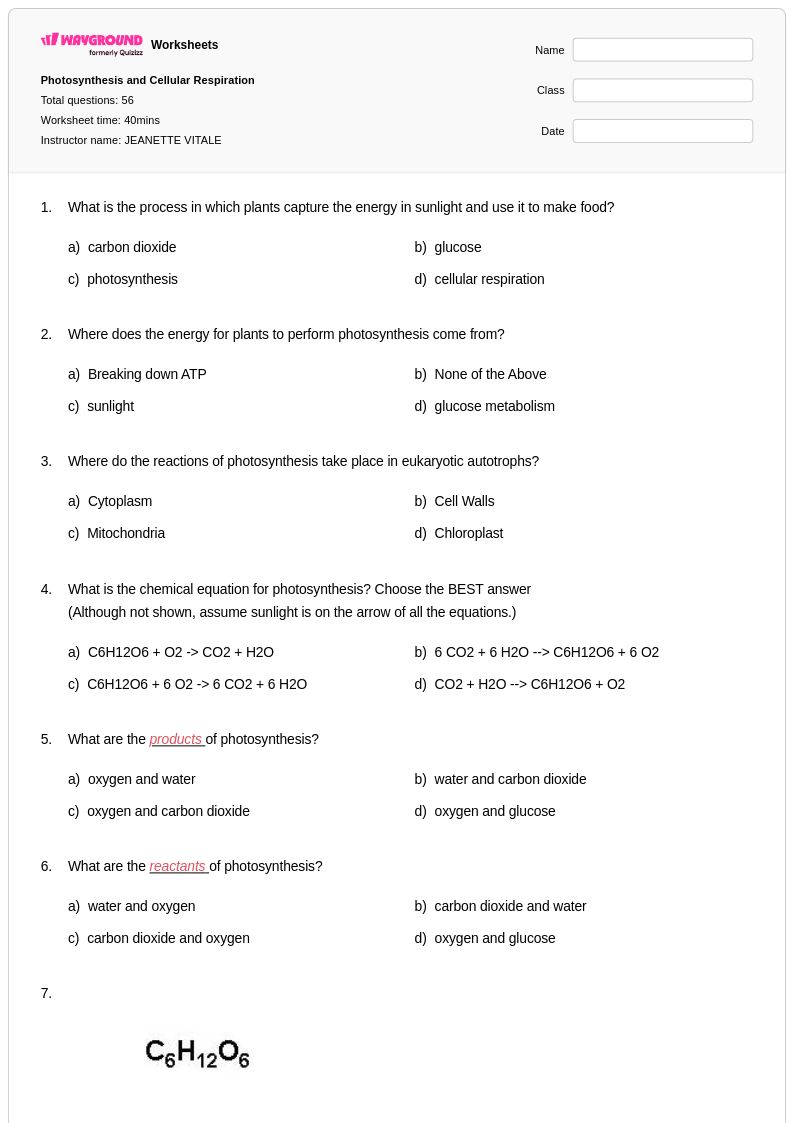
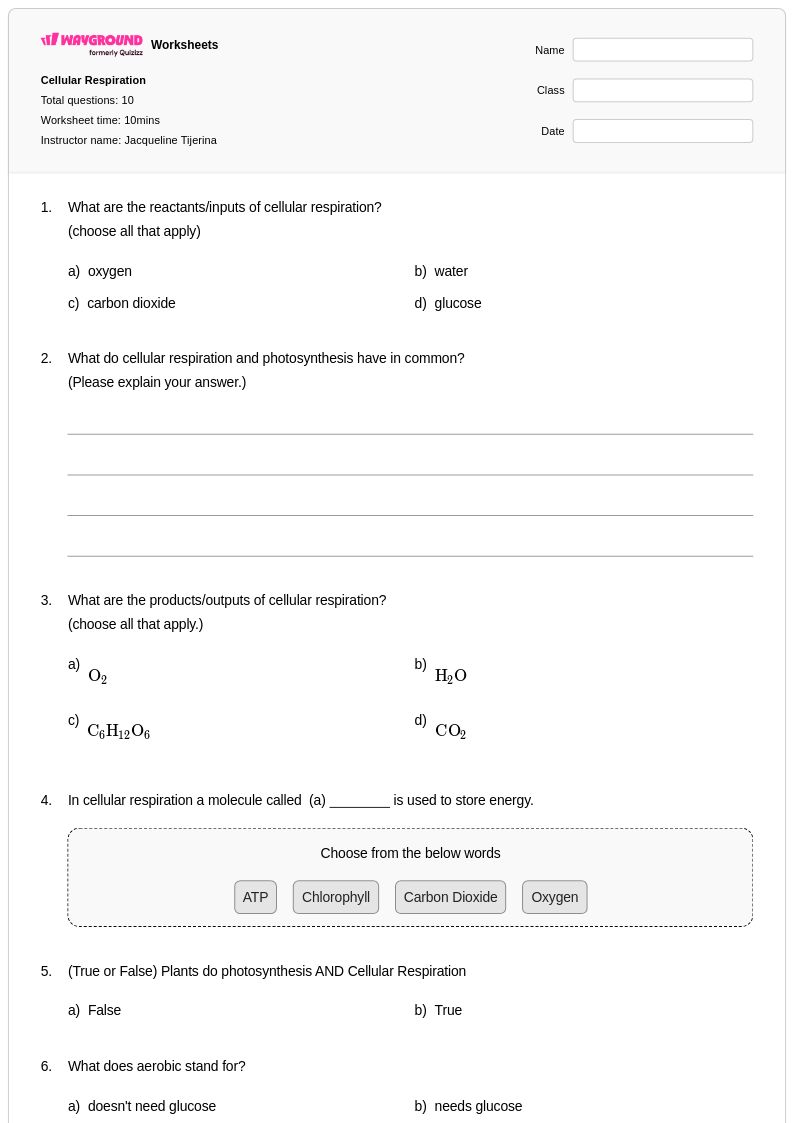
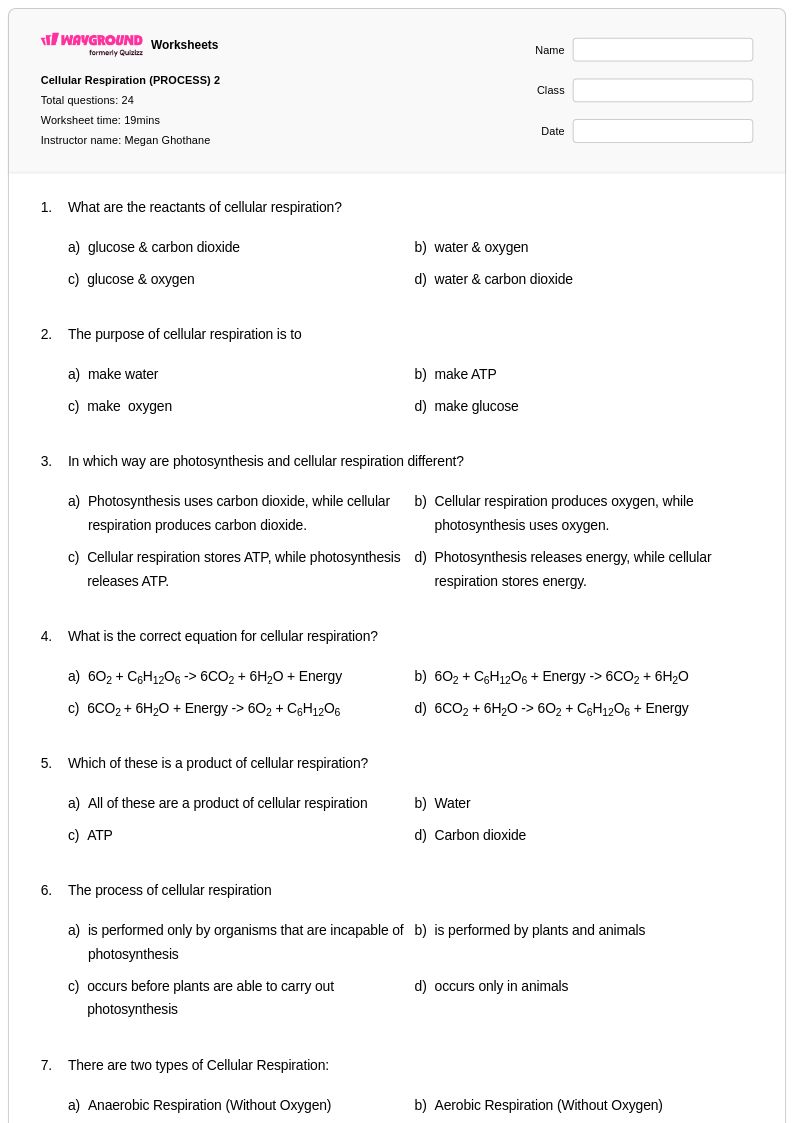
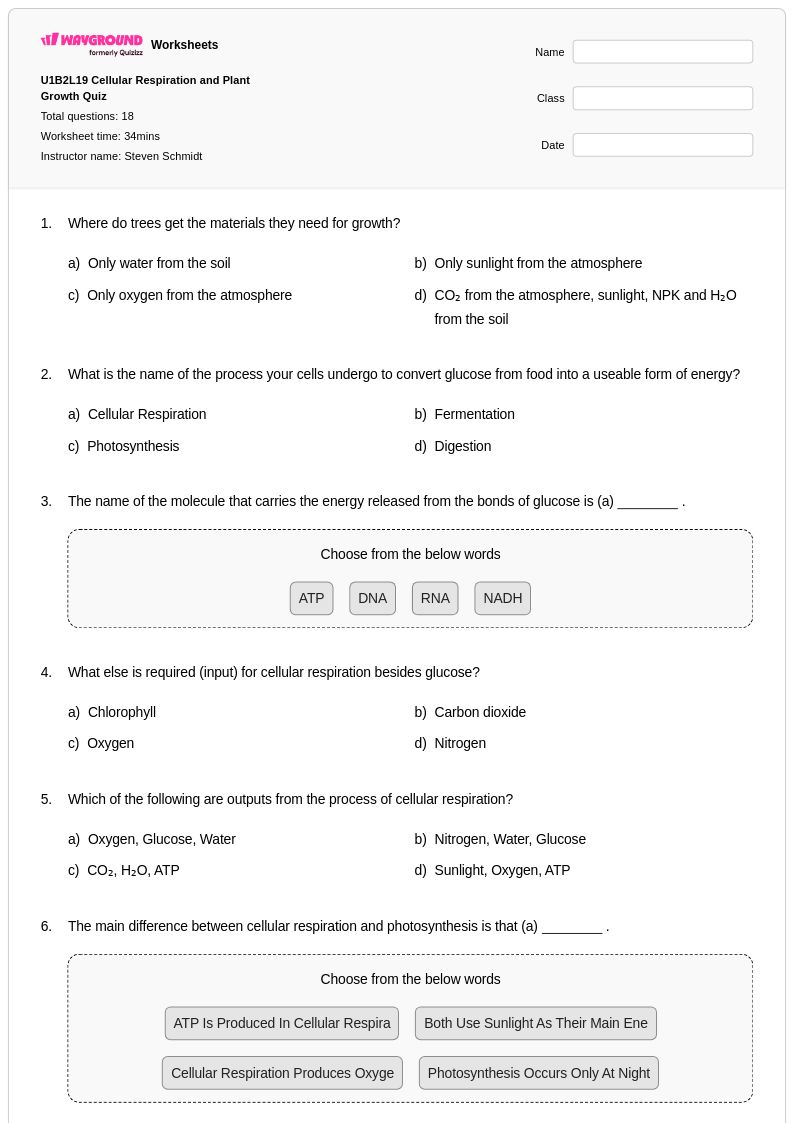
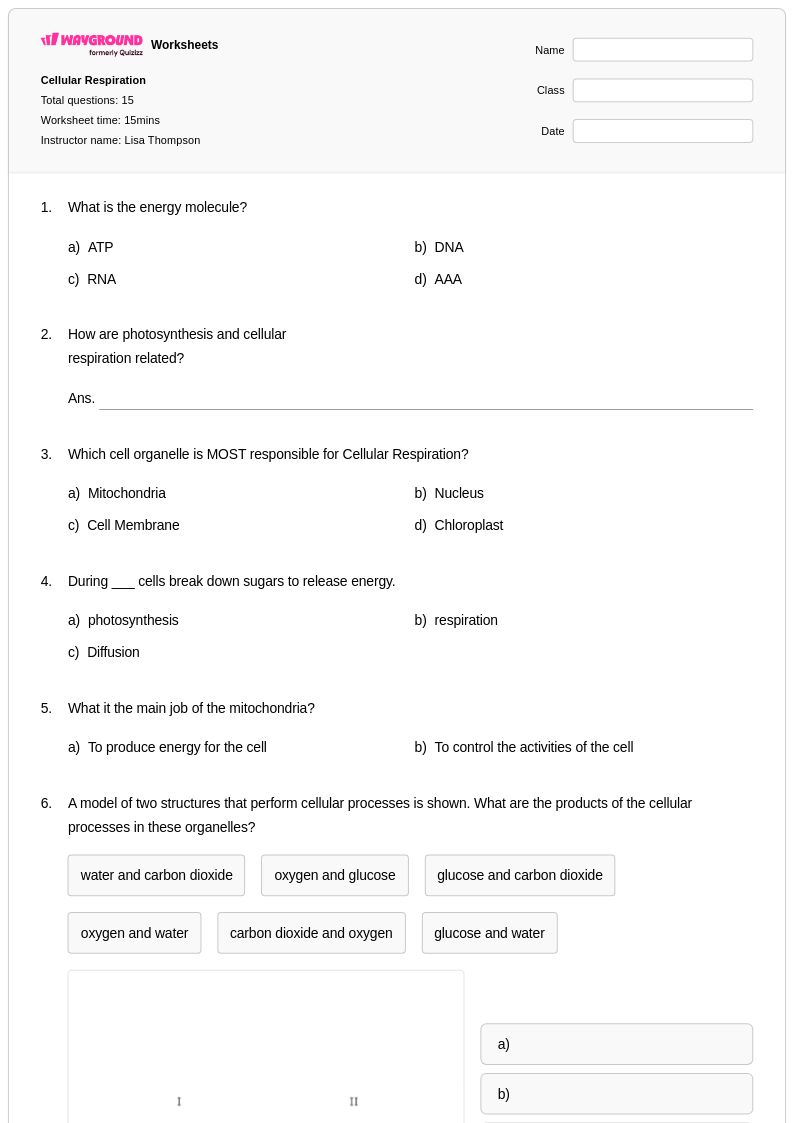
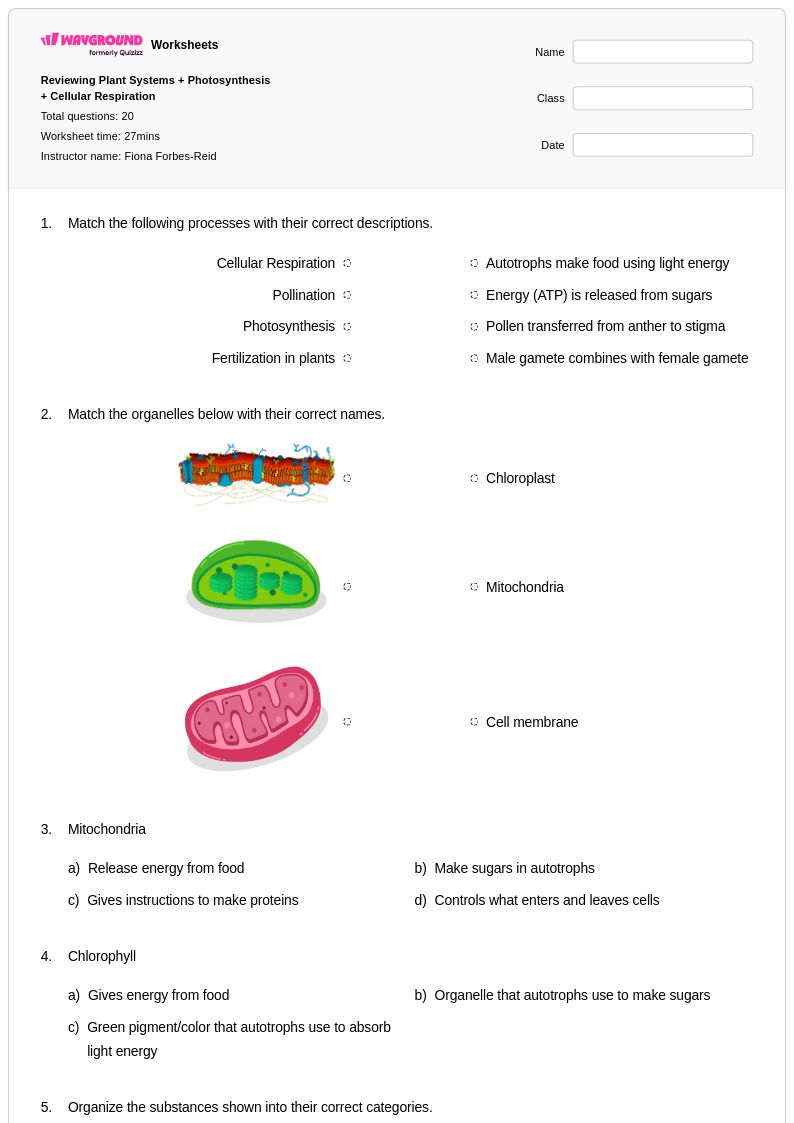
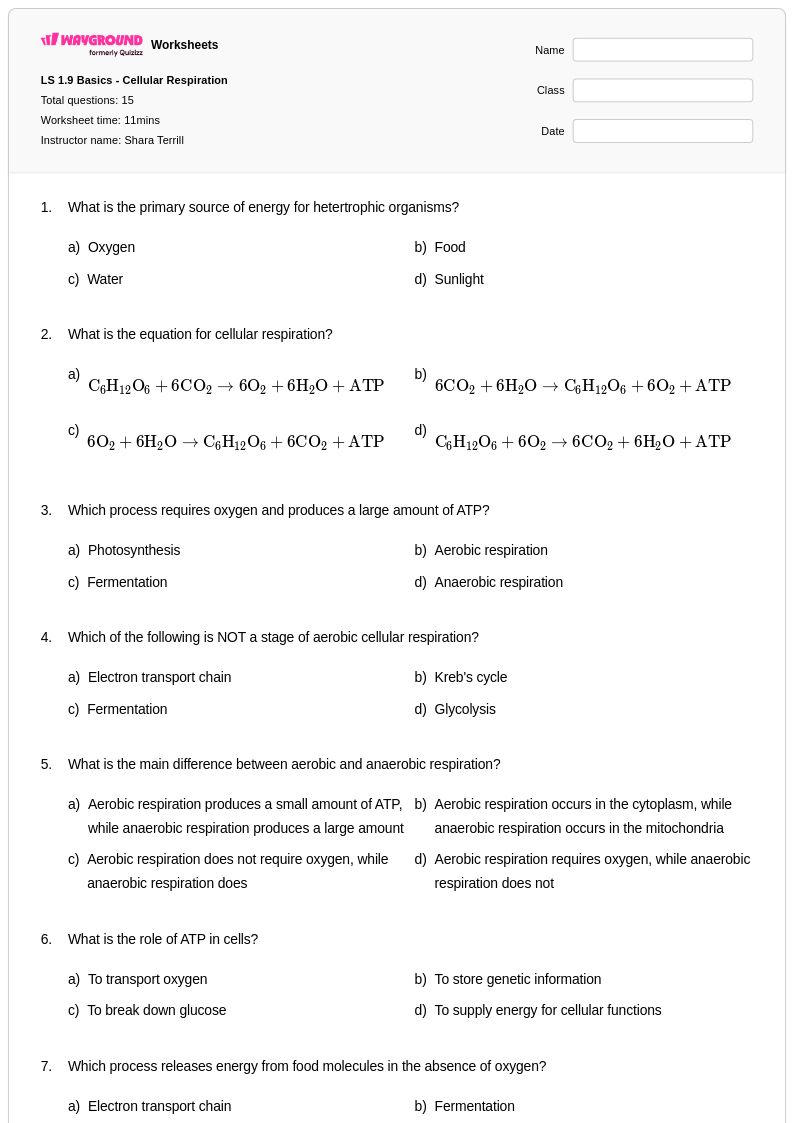
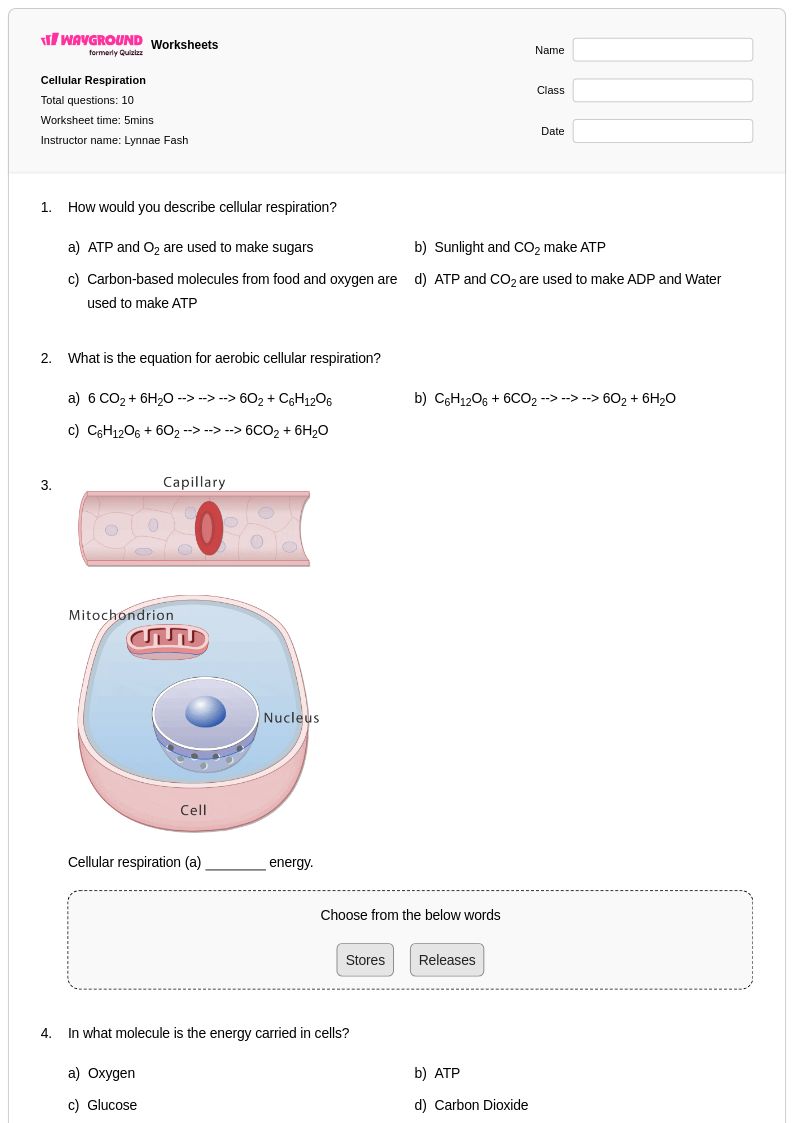
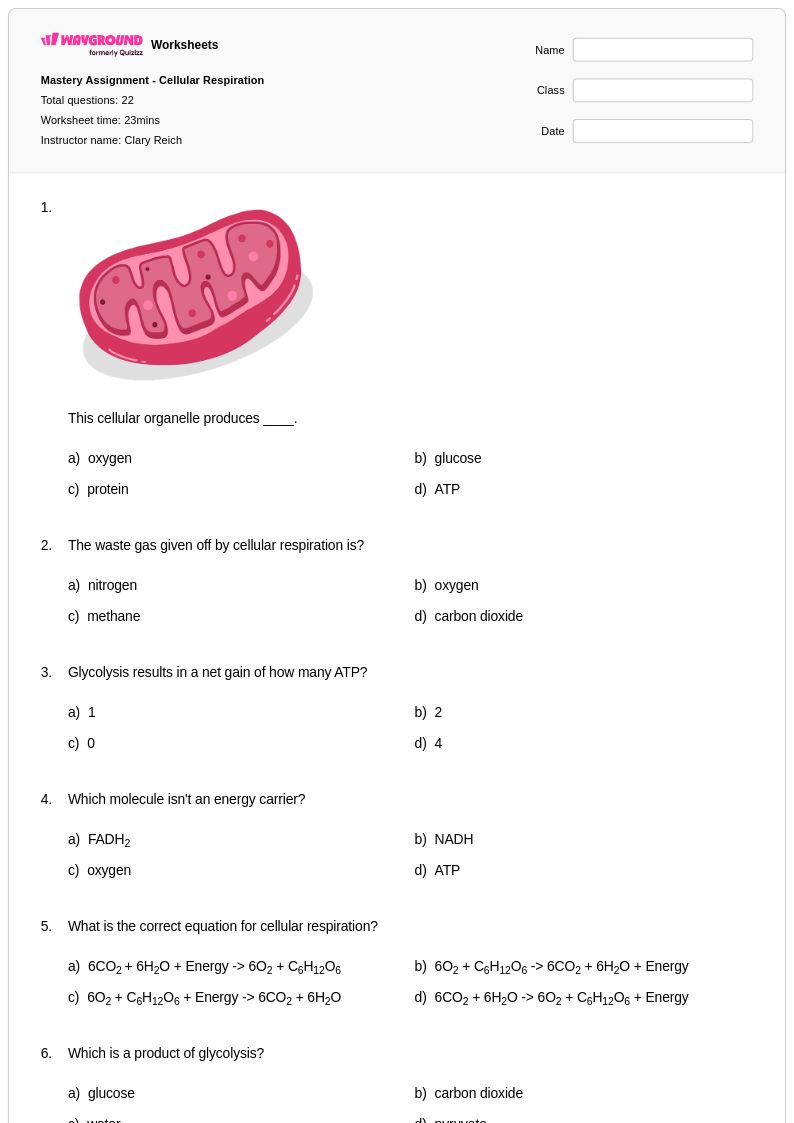
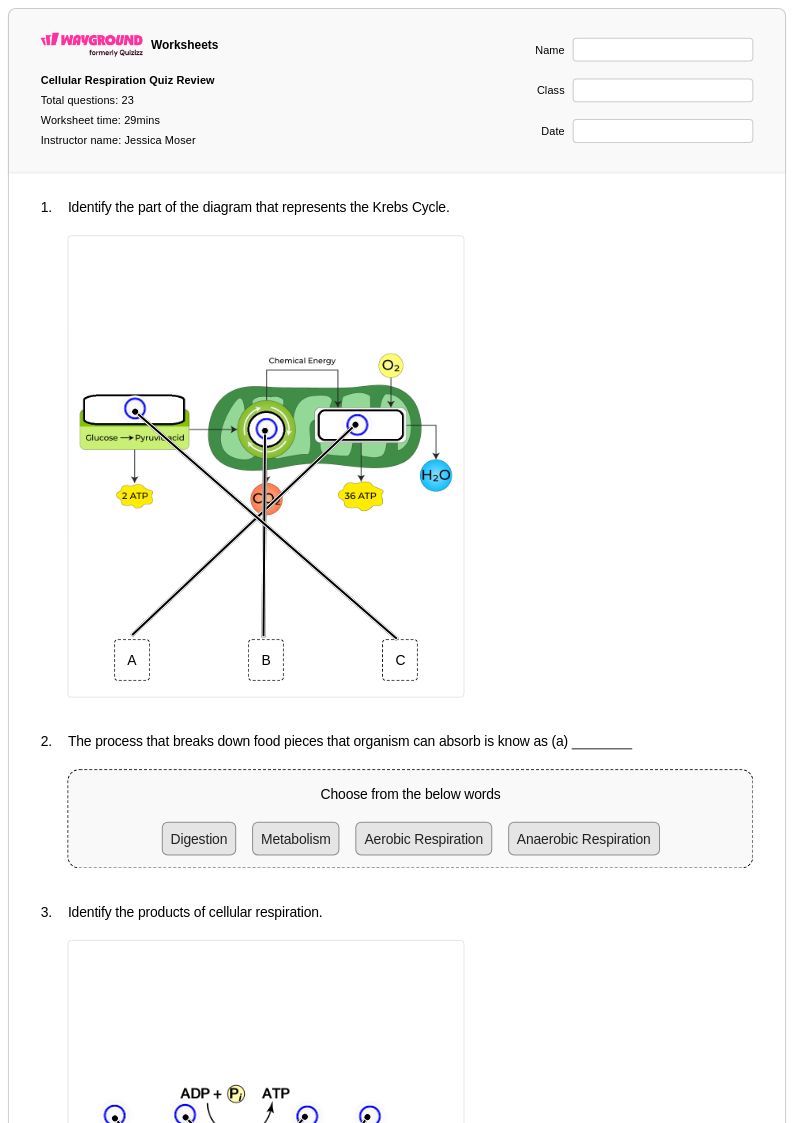
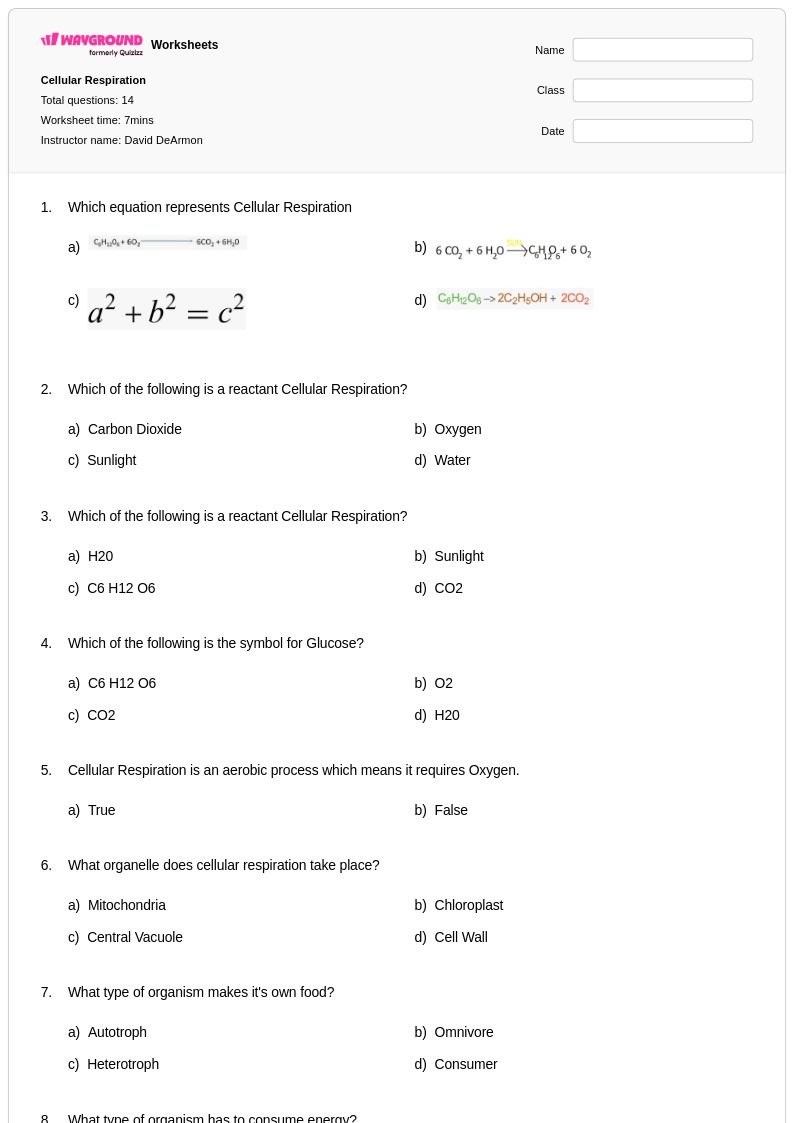
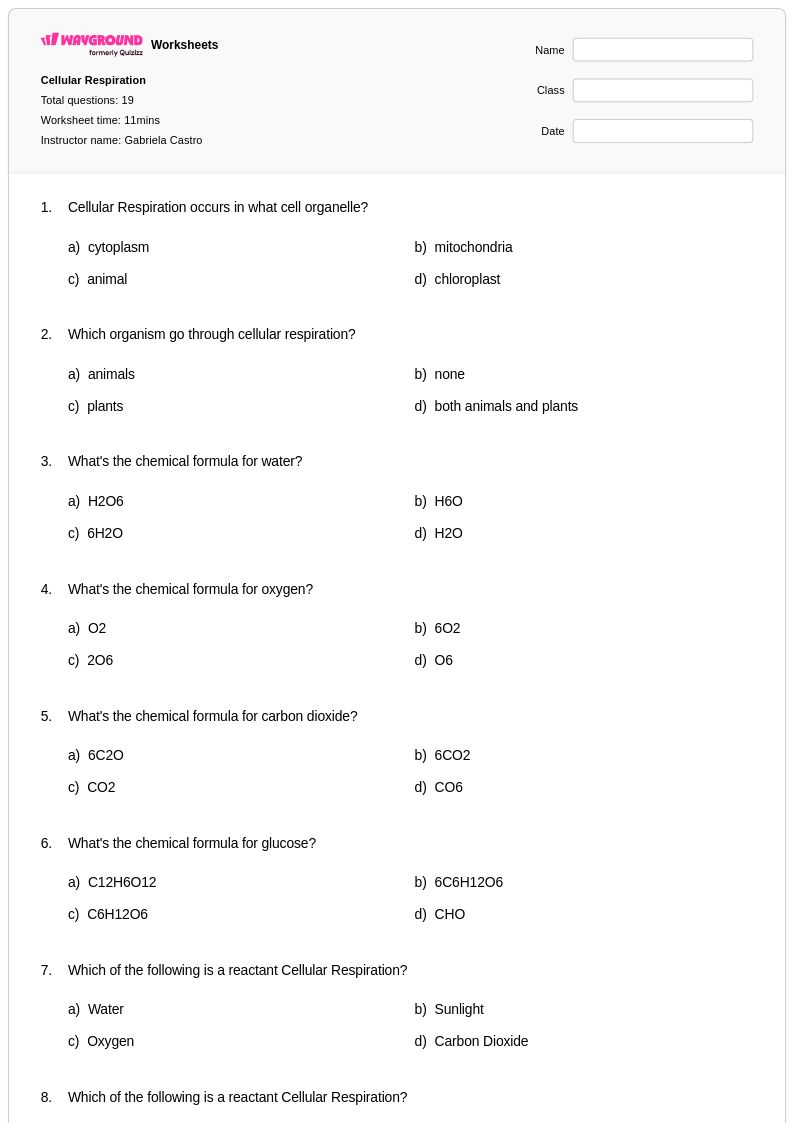
Cellular respiration worksheets for Year 9 students available through Wayground (formerly Quizizz) provide comprehensive coverage of this fundamental biological process that converts glucose and oxygen into usable energy for cells. These educational resources systematically guide students through the three main stages of cellular respiration: glycolysis, the Krebs cycle, and the electron transport chain, helping them understand how ATP is produced and utilized within living organisms. The worksheet collection strengthens critical thinking skills by incorporating practice problems that require students to analyze chemical equations, trace energy transformations, and compare aerobic and anaerobic respiration pathways. Each worksheet comes with a detailed answer key to support independent learning and self-assessment, and teachers can access these materials as free printables in convenient pdf format for seamless classroom integration.
Wayground (formerly Quizizz) empowers educators with an extensive library of millions of teacher-created cellular respiration resources specifically designed for Year 9 biology instruction. The platform's robust search and filtering capabilities allow teachers to quickly locate worksheets that align with specific curriculum standards and learning objectives, whether focusing on mitochondrial structure, energy yield calculations, or real-world applications of cellular respiration. Advanced differentiation tools enable instructors to customize worksheet difficulty levels and content focus areas to meet diverse student needs, supporting both remediation for struggling learners and enrichment opportunities for advanced students. These versatile resources are available in both printable and digital formats, including downloadable pdf versions, giving teachers the flexibility to implement cellular respiration practice activities across various instructional settings while streamlining lesson planning and assessment preparation.
FAQs
How do I teach cellular respiration to high school biology students?
Start by anchoring the concept to something students already understand: food provides energy, but cells must convert that energy into a usable form called ATP. Introduce the three stages sequentially — glycolysis in the cytoplasm, the citric acid cycle in the mitochondrial matrix, and the electron transport chain along the inner mitochondrial membrane — before showing how they connect as a continuous process. Using diagrams that trace glucose through each stage helps students visualize the flow of energy and matter rather than memorizing steps in isolation.
What worksheet exercises best help students practice cellular respiration?
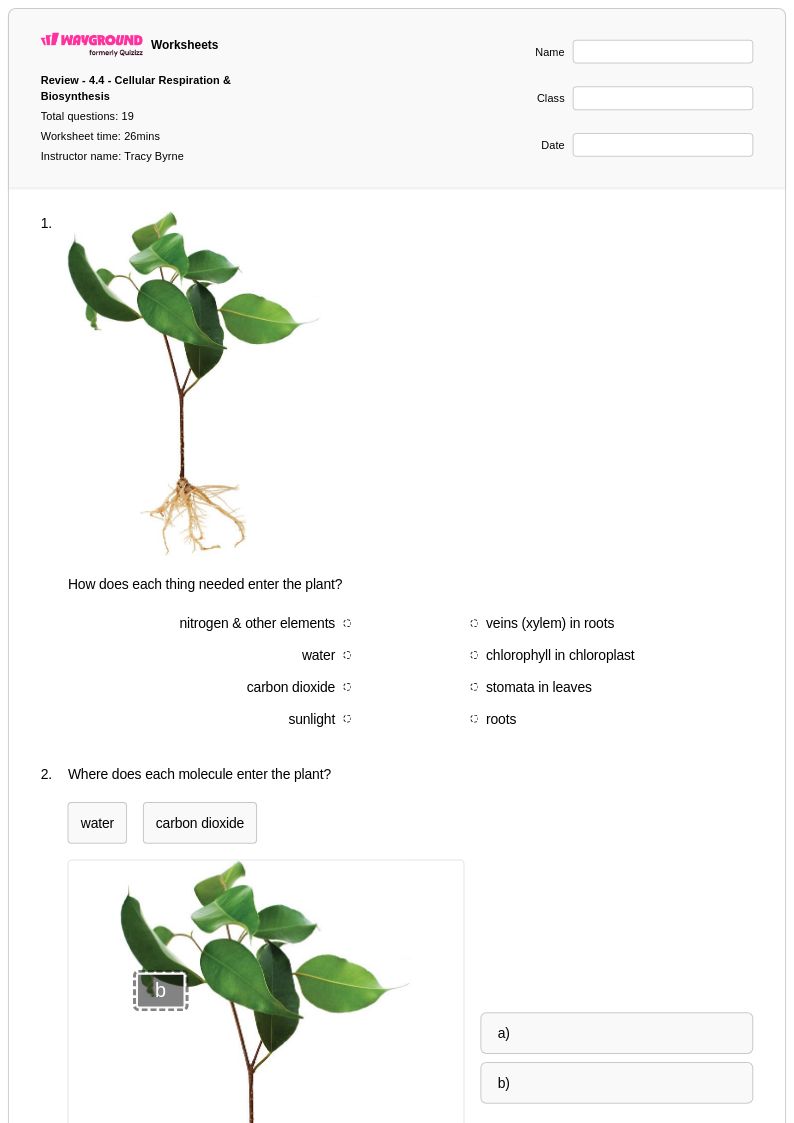
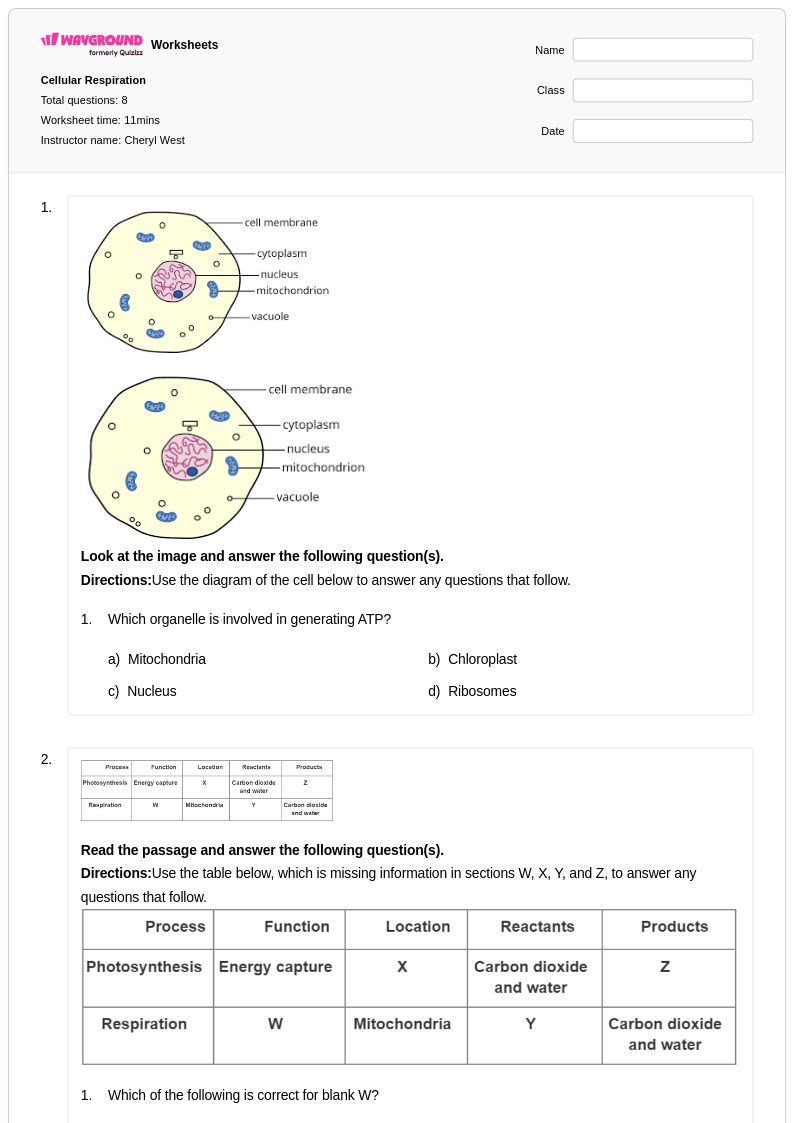
Effective practice exercises include tracing ATP yield at each stage, labeling mitochondria diagrams with the correct processes, and completing fill-in-the-blank equations for glycolysis and the citric acid cycle. Problems that ask students to compare inputs and outputs at each stage reinforce the logic of the pathway rather than rote recall. Practice problems that connect cellular respiration to photosynthesis also help students see the broader metabolic picture.
What are the most common misconceptions students have about cellular respiration?
One of the most persistent misconceptions is that cellular respiration and breathing are the same process — students often conflate gas exchange with the biochemical conversion of glucose to ATP. Another common error is believing that most ATP is produced during glycolysis, when in fact the electron transport chain generates the majority of ATP. Students also frequently confuse the locations of each stage, incorrectly placing the citric acid cycle in the cytoplasm rather than the mitochondrial matrix.
How do I differentiate cellular respiration instruction for students at different levels?
For foundational learners, focus on the overall equation and the role of ATP as cellular energy currency before introducing the three stages. Advanced students can engage with the specific enzyme reactions, coenzyme carriers like NAD+ and FAD, and the chemiosmosis mechanism of the electron transport chain. On Wayground, teachers can apply accommodations such as reduced answer choices and read-aloud support to individual students, making it possible to run differentiated practice within the same class session without disrupting other students.
How can I use cellular respiration worksheets to identify and correct student errors?
Targeted worksheets that isolate each stage of cellular respiration allow teachers to pinpoint exactly where a student's understanding breaks down — whether it's misidentifying where glycolysis occurs or miscounting net ATP yield. Answer keys included with these worksheets let teachers quickly audit student responses and identify patterns in errors across the class. Remediation is more effective when teachers can assign follow-up problems that specifically address the misconception rather than repeating the full lesson.
How do I use Wayground's cellular respiration worksheets in my classroom?
Wayground's cellular respiration worksheets are available as printable PDFs for traditional classroom use and in digital formats for technology-integrated environments, including the option to host them as a quiz directly on Wayground. Teachers can use them for direct instruction support, formative assessment, homework assignments, or targeted remediation of specific misconceptions about metabolic processes. Each worksheet comes with a complete answer key, making them practical for both independent student study and teacher-guided review sessions.