
12 Q
7th
20 Q
7th
20 Q
7th
25 Q
7th
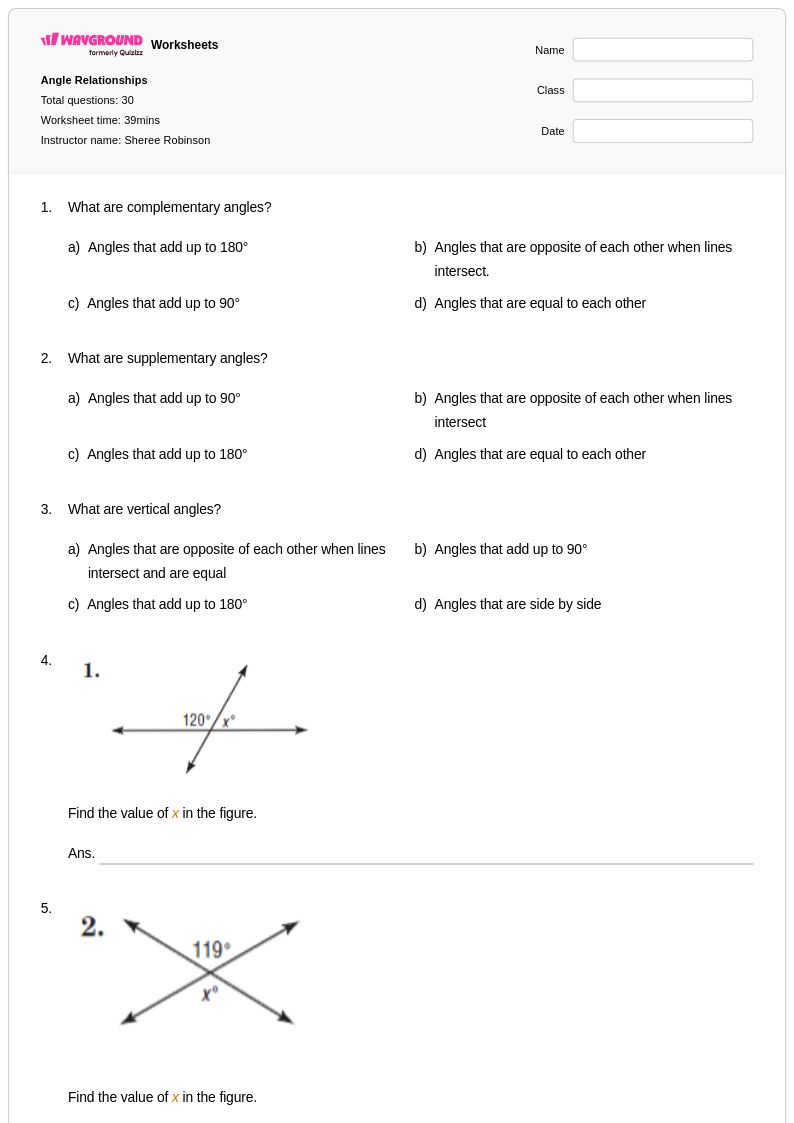
30 Q
7th
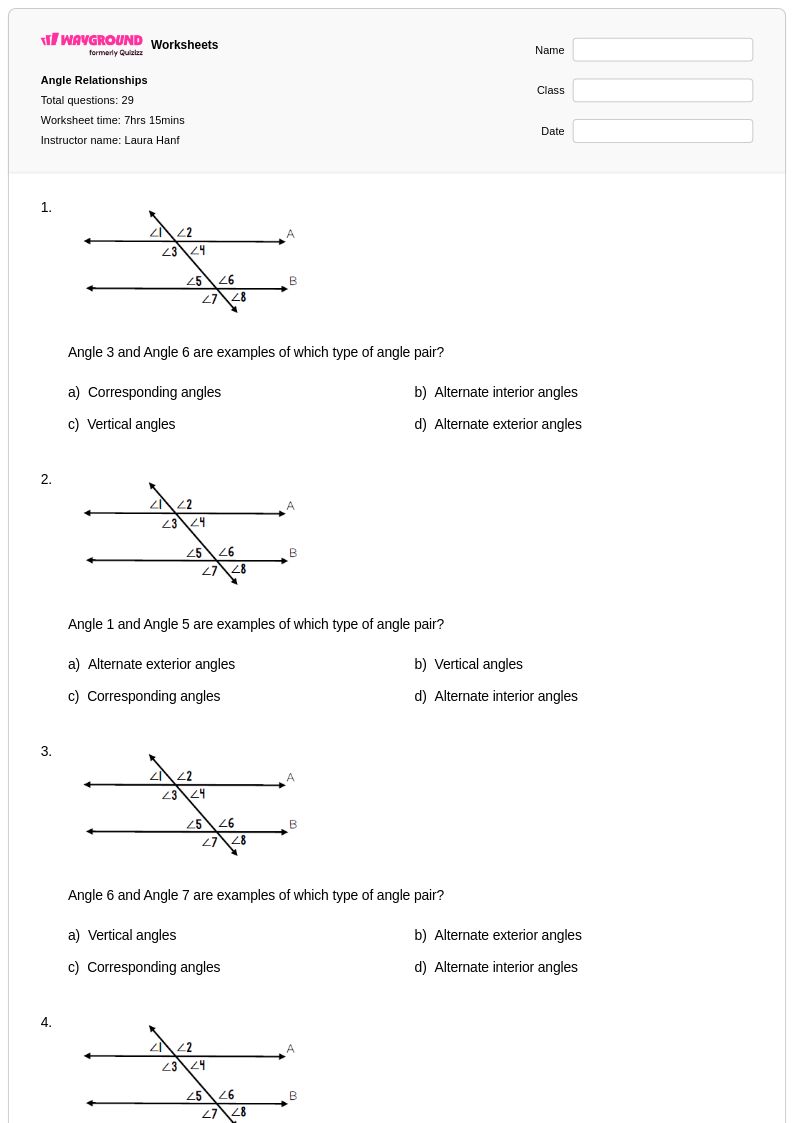
29 Q
6th - 8th
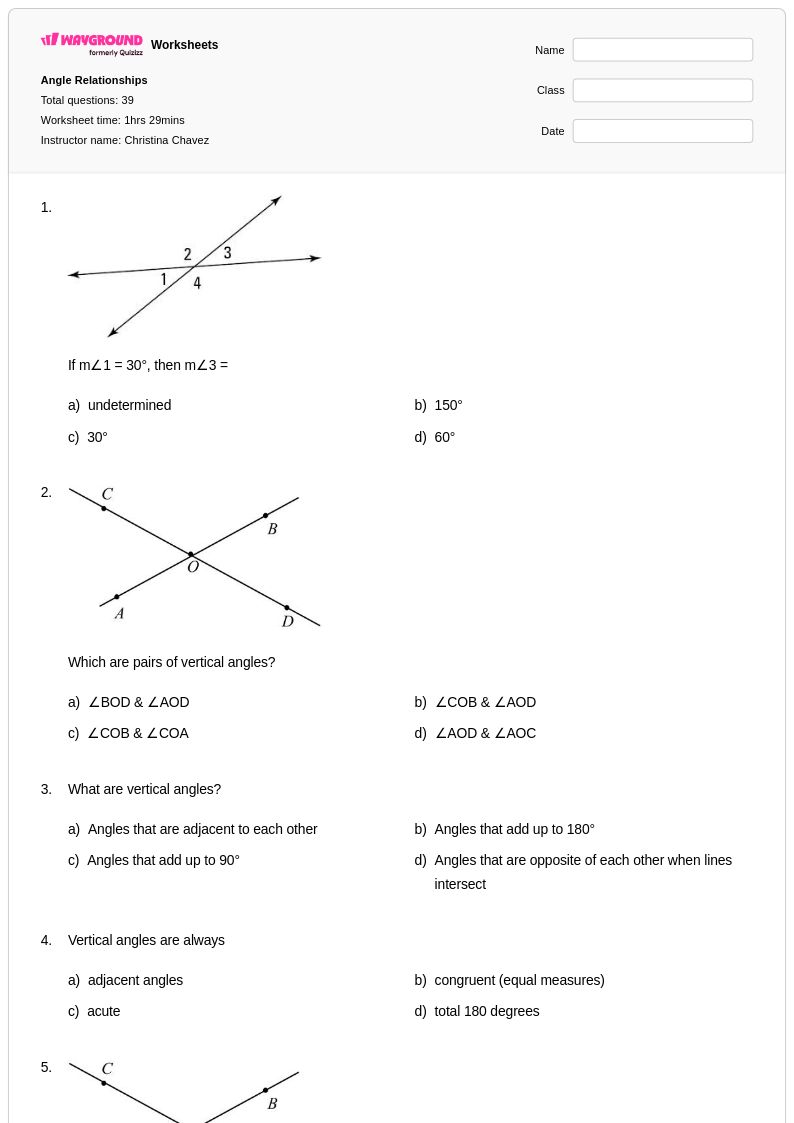
39 Q
7th - 8th
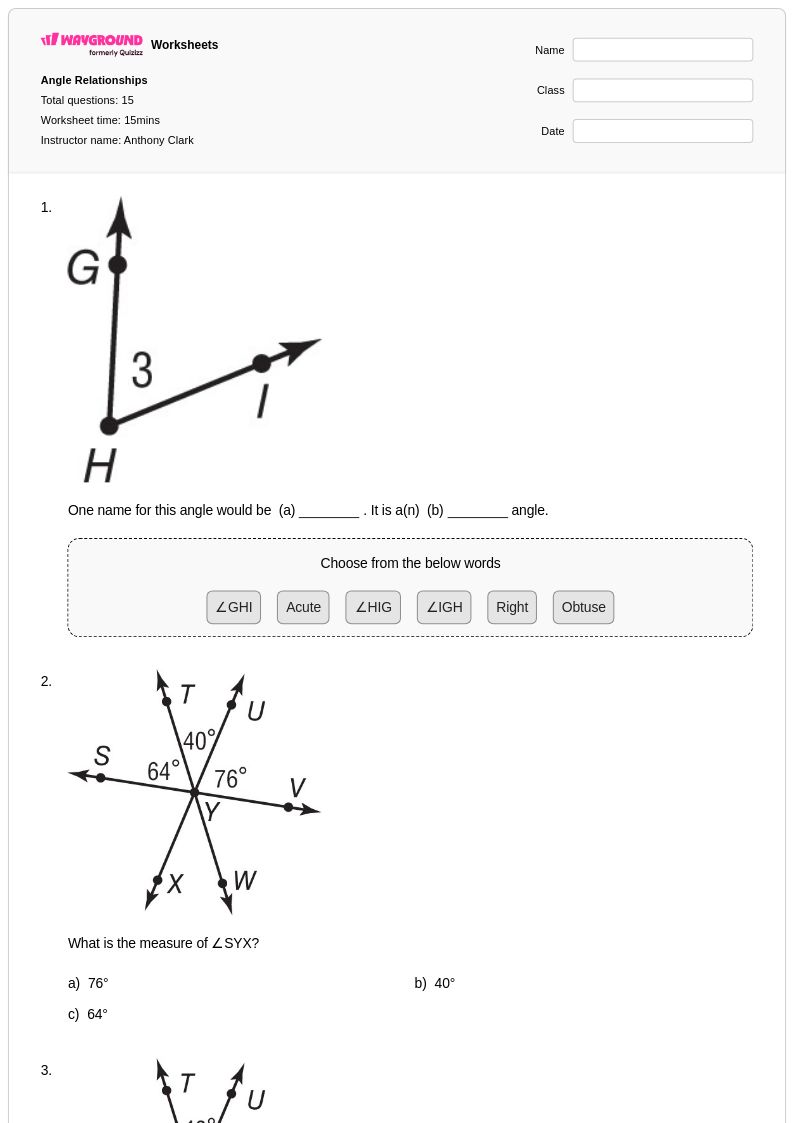
15 Q
7th - Uni
22 Q
7th - 8th
20 Q
7th - Uni
10 Q
6th - 10th
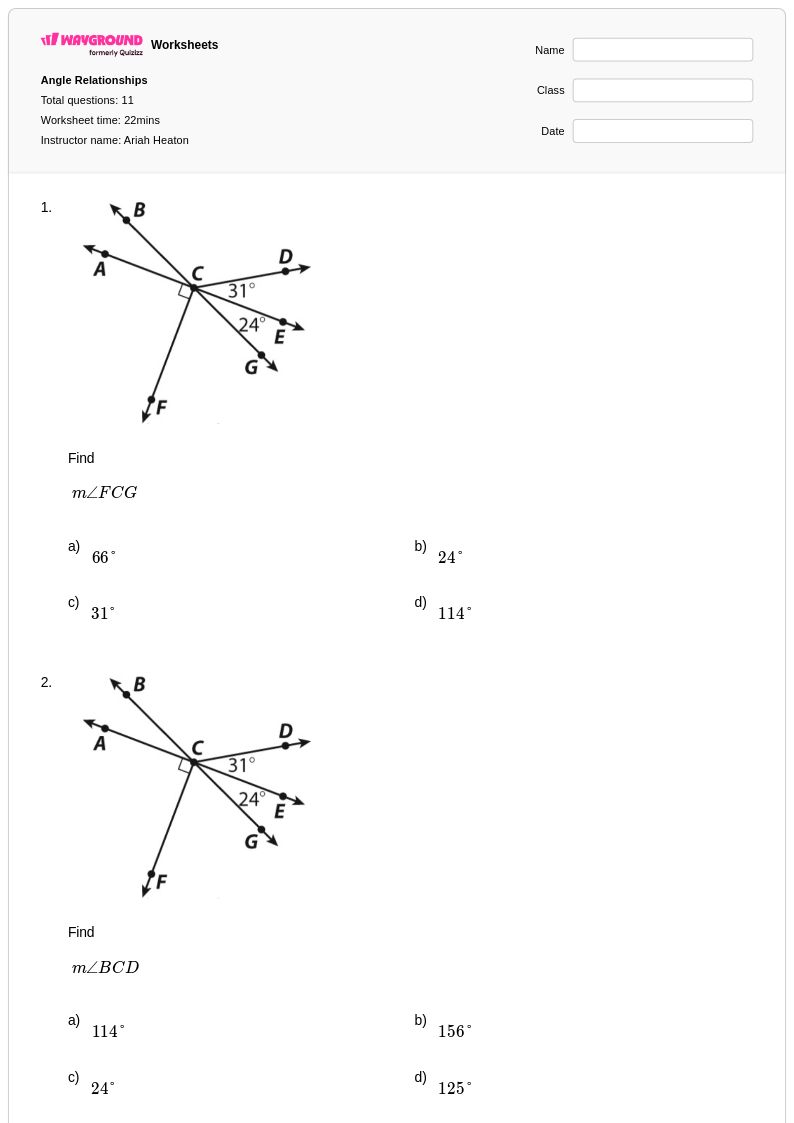
11 Q
7th
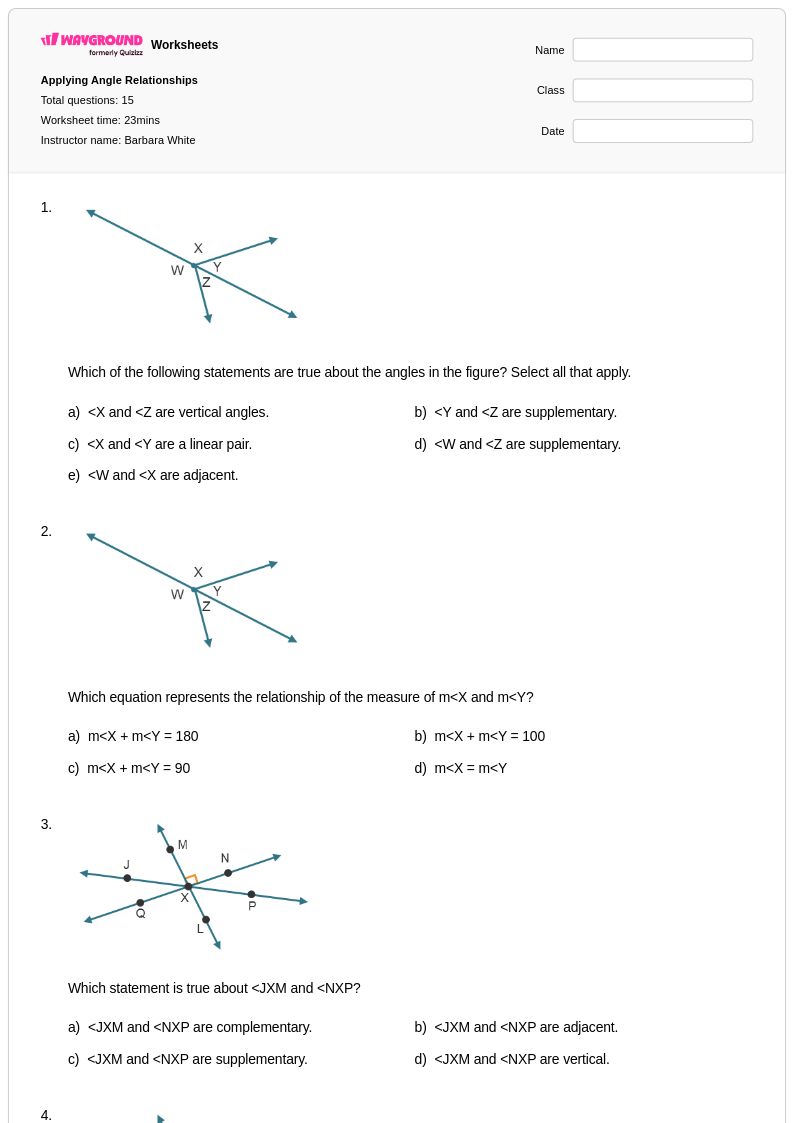
11 Q
7th
15 Q
7th
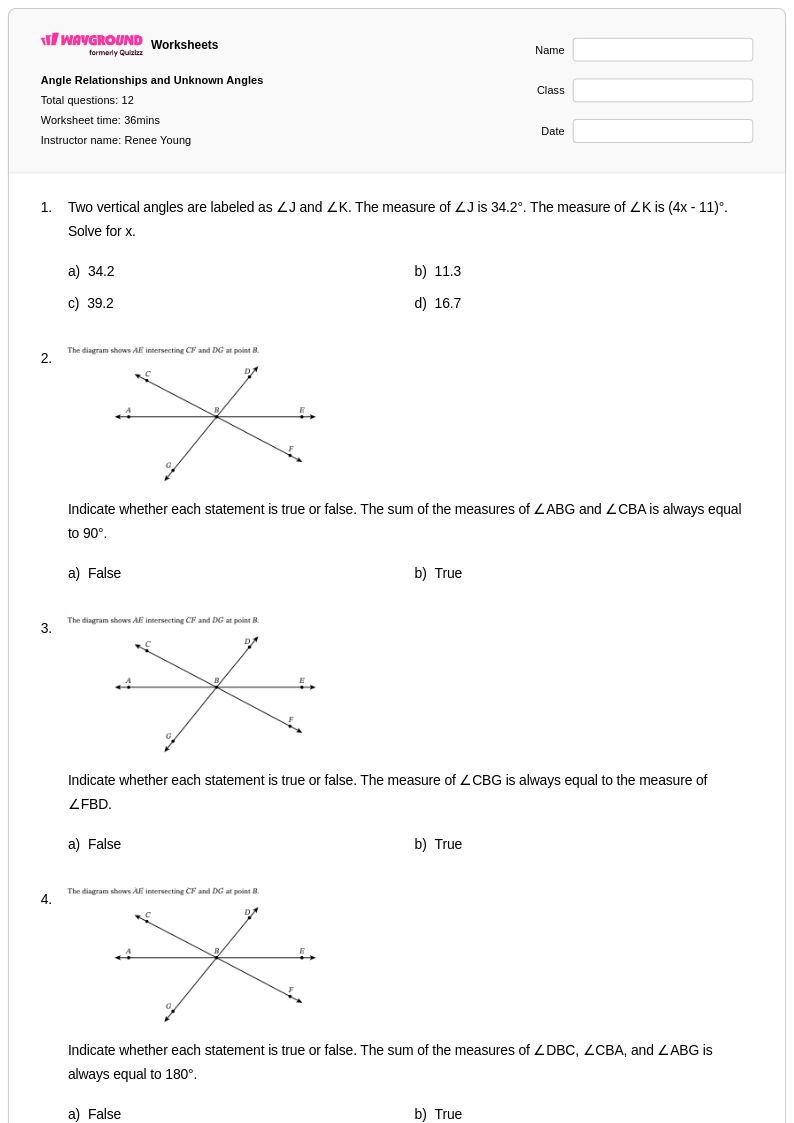
12 Q
7th
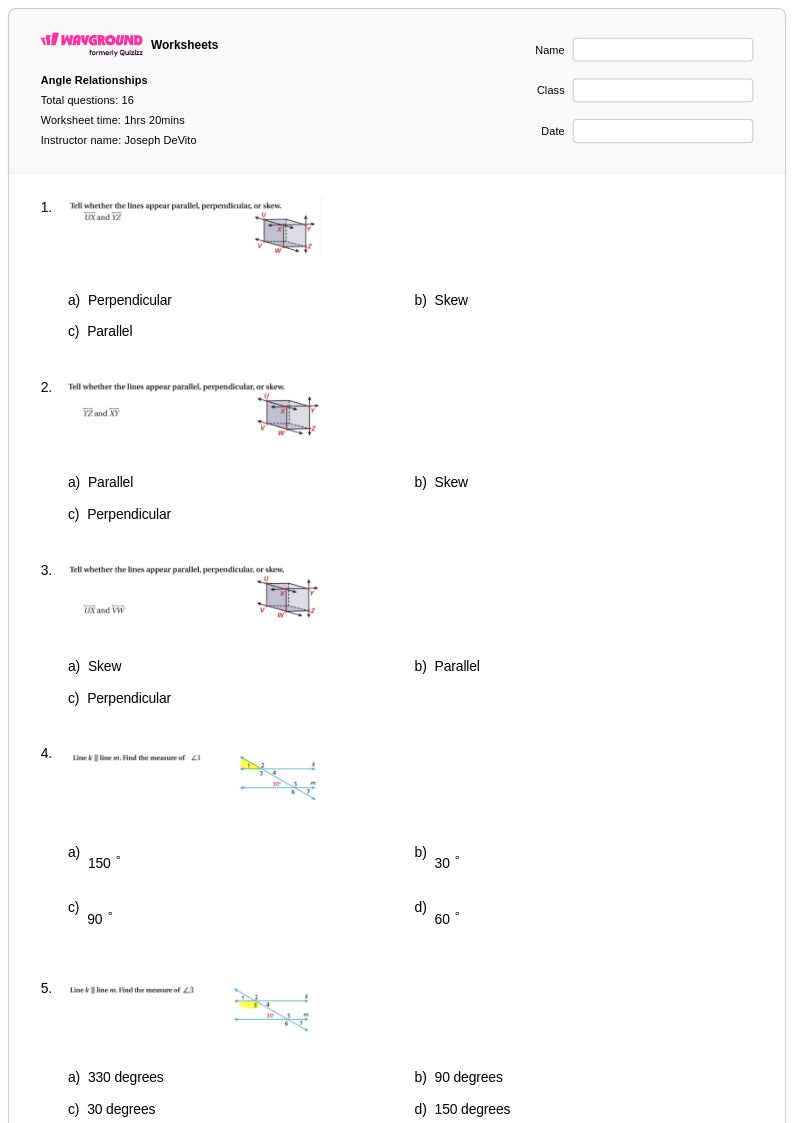
16 Q
7th - 8th
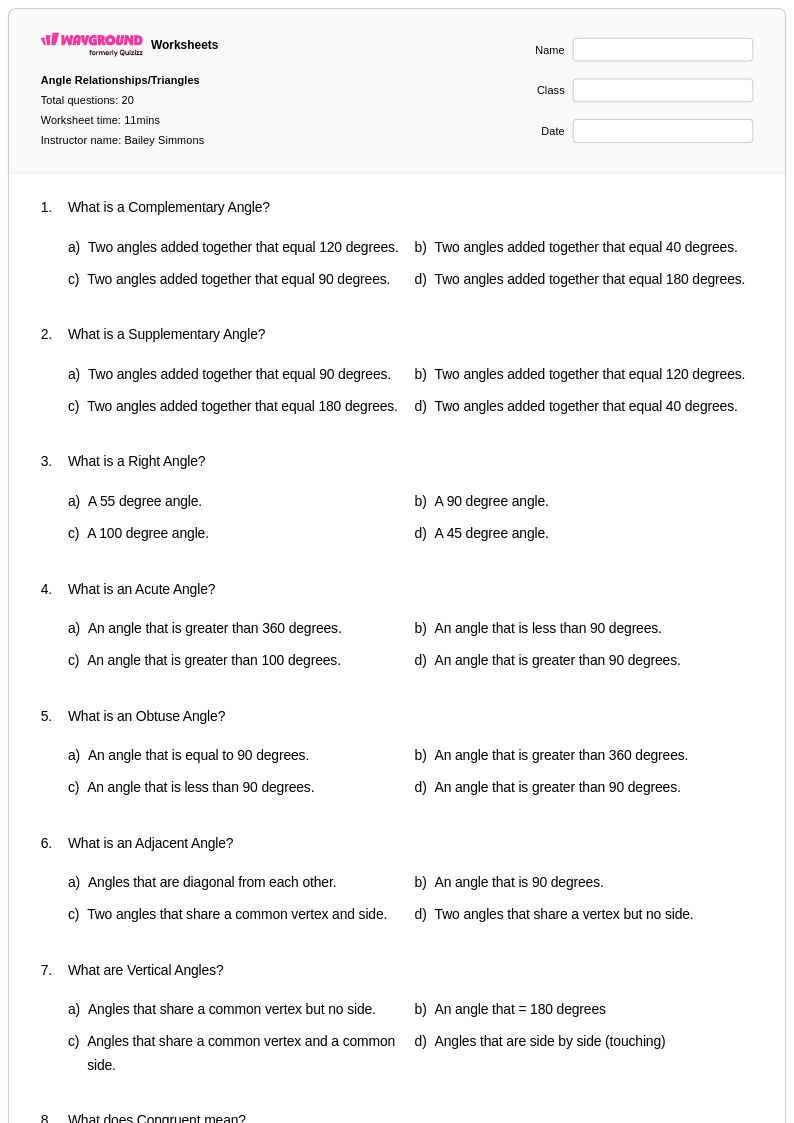
20 Q
7th
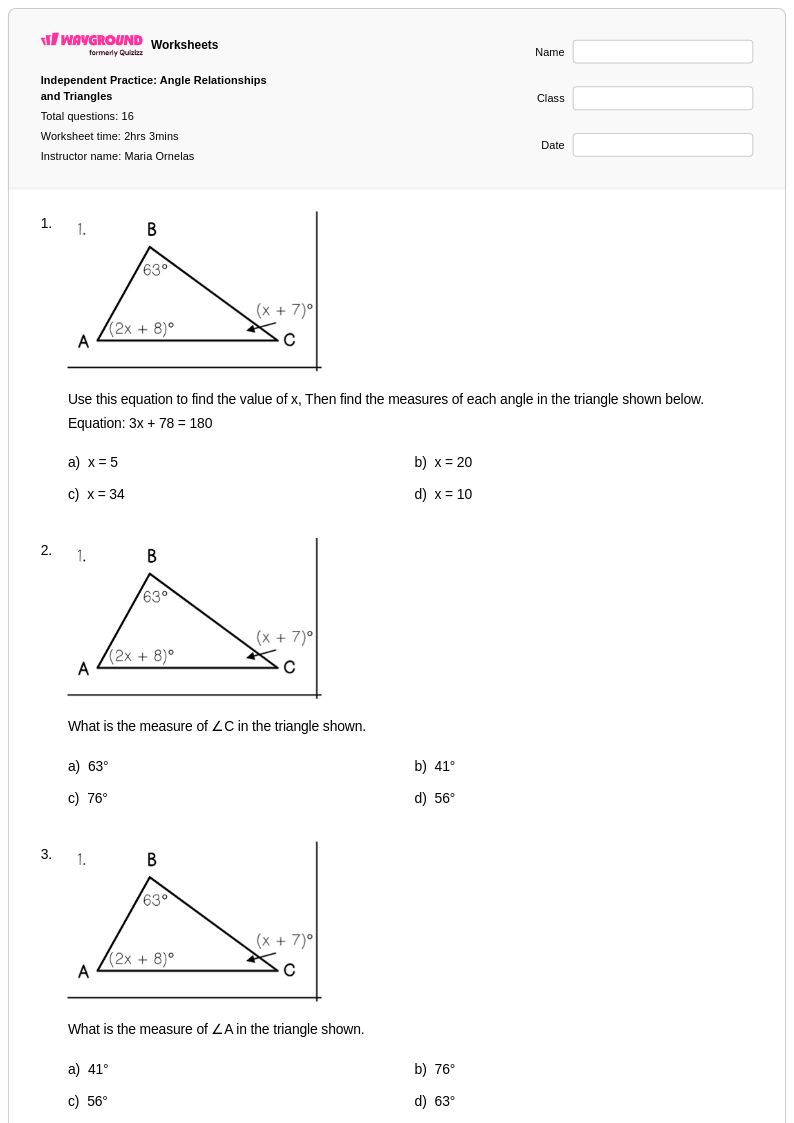
16 Q
7th
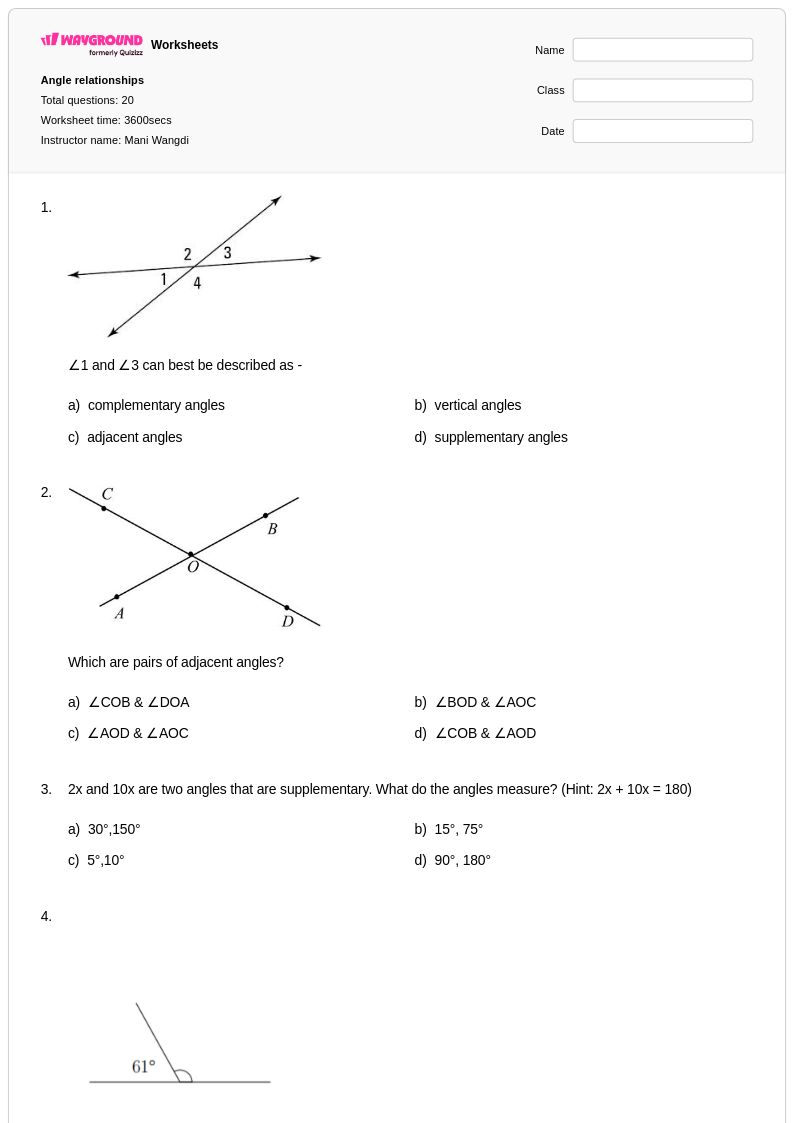
20 Q
6th - 8th
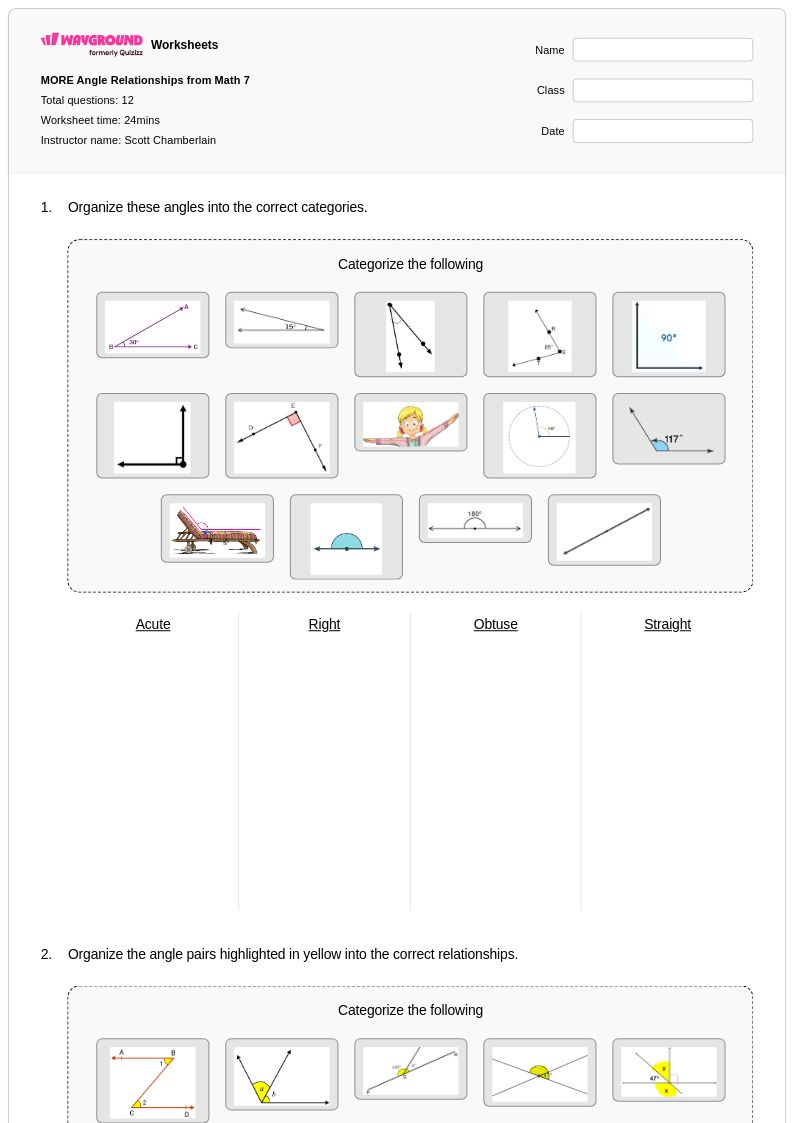
12 Q
6th - 8th
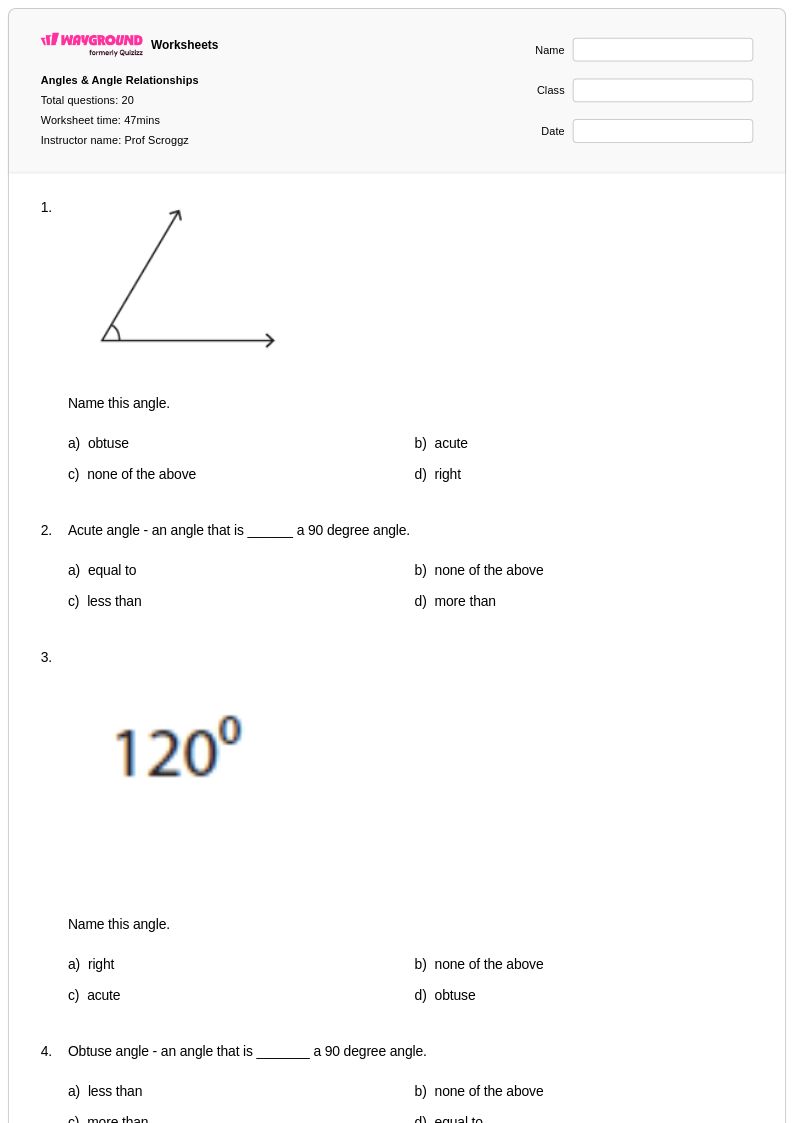
20 Q
5th - 7th
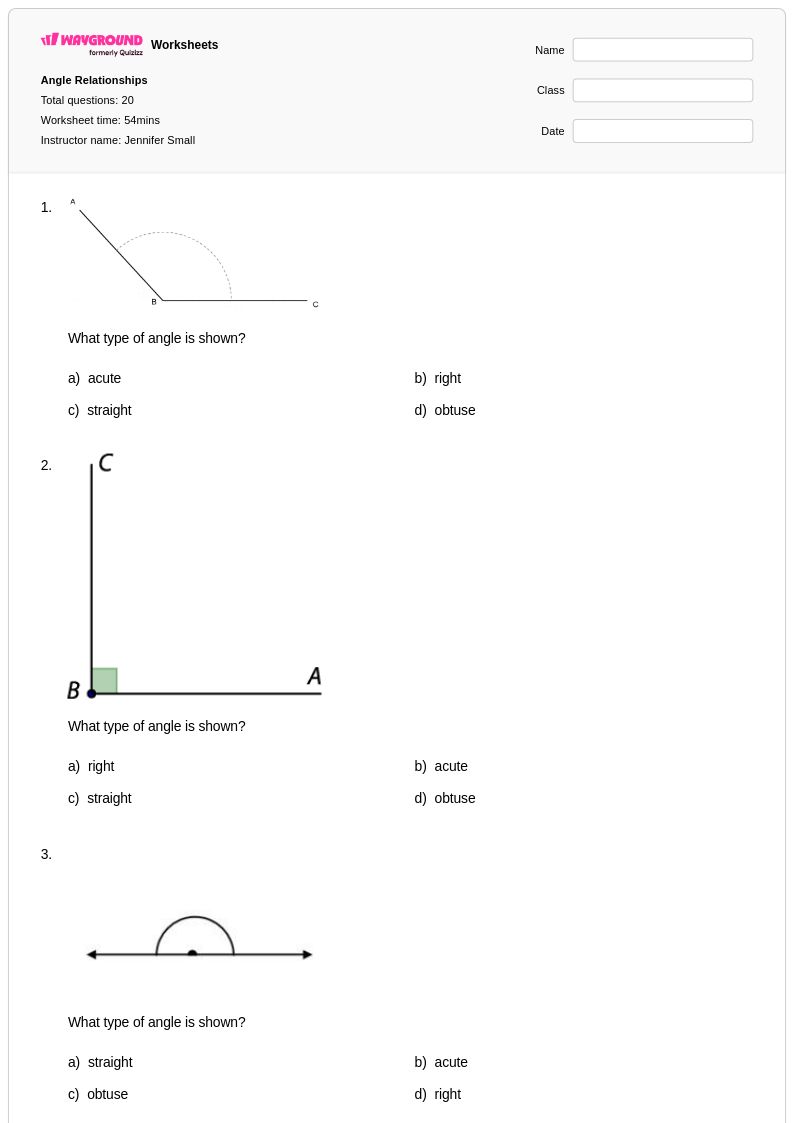
20 Q
6th - 8th
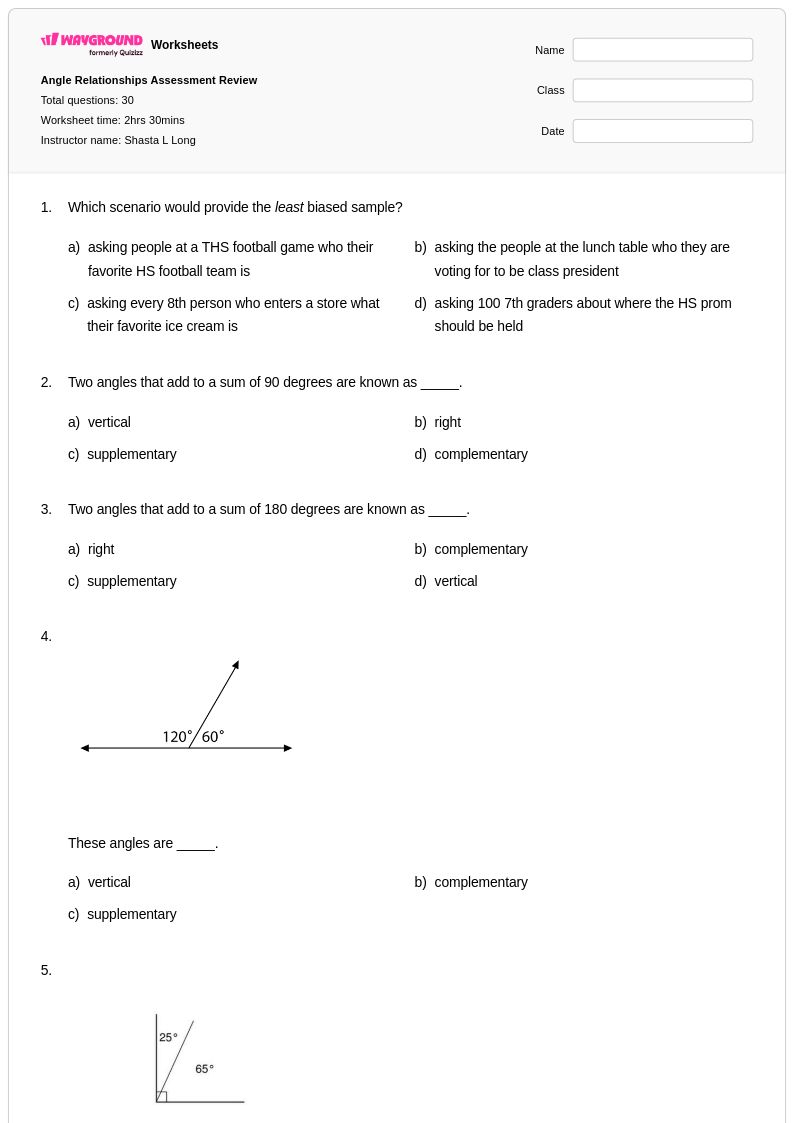
30 Q
6th - 8th
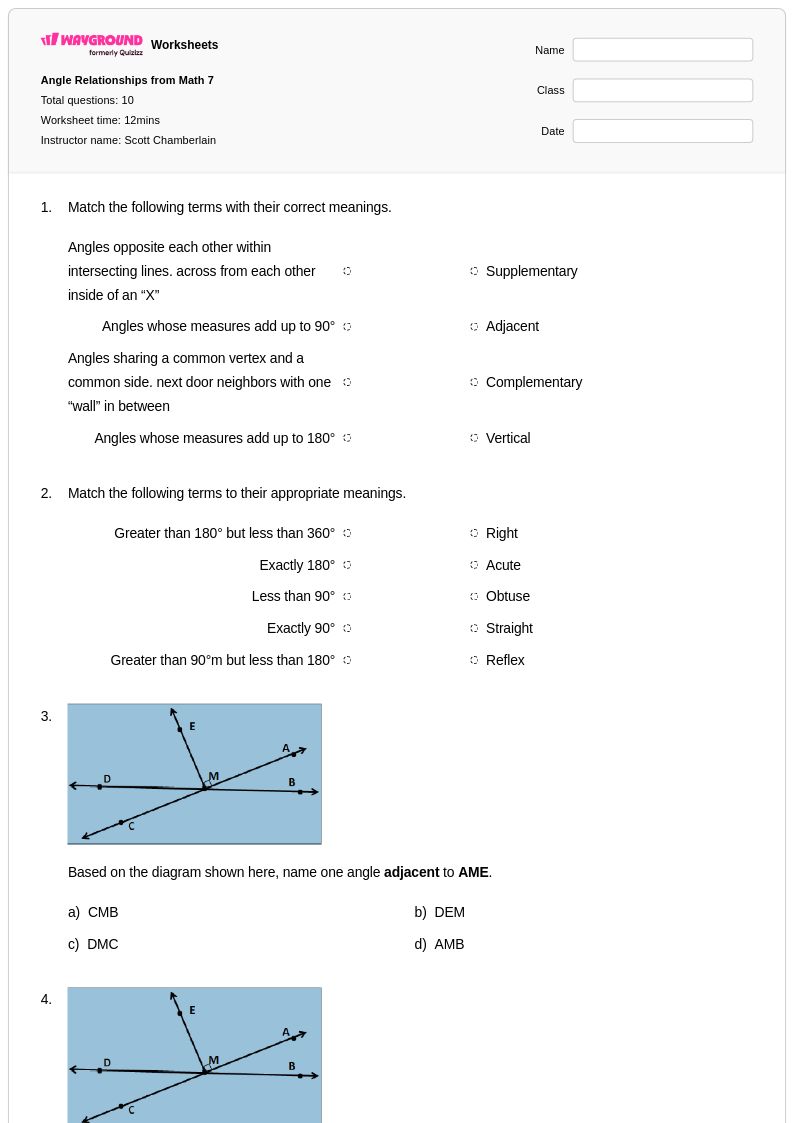
10 Q
6th - 8th
Explore Other Subject Worksheets for year 7
Explore printable Angle Relationships worksheets for Year 7
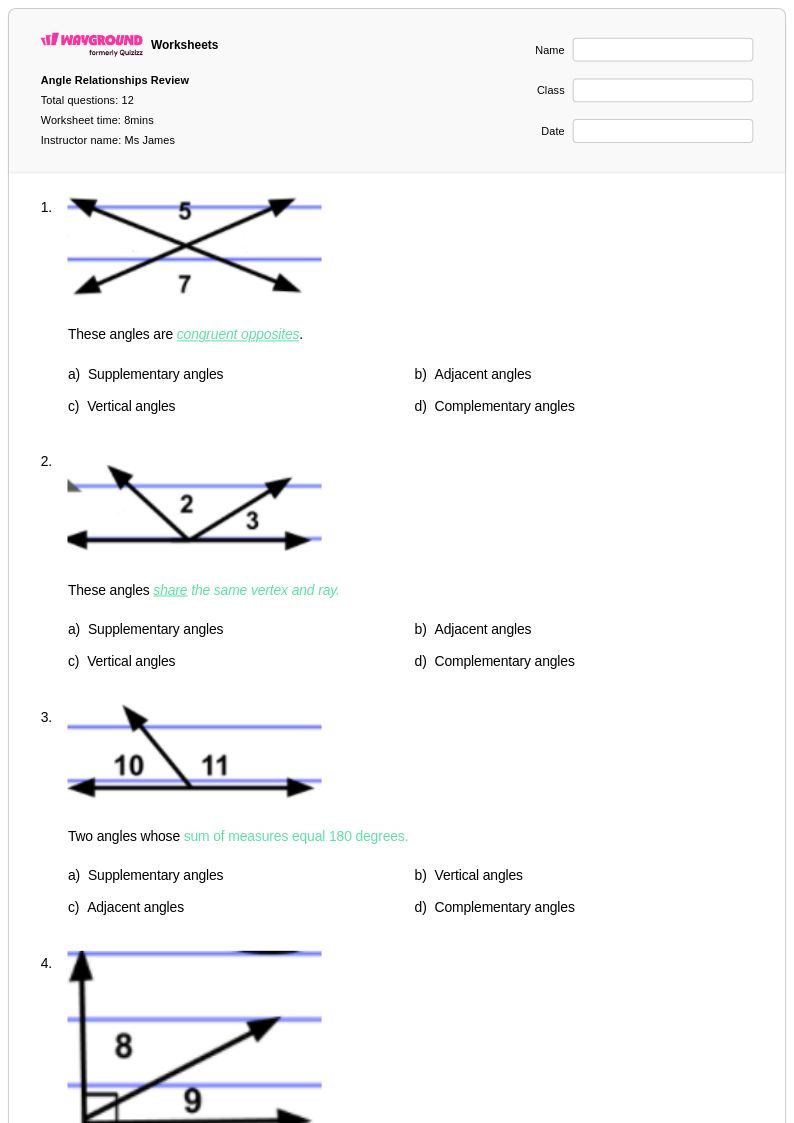
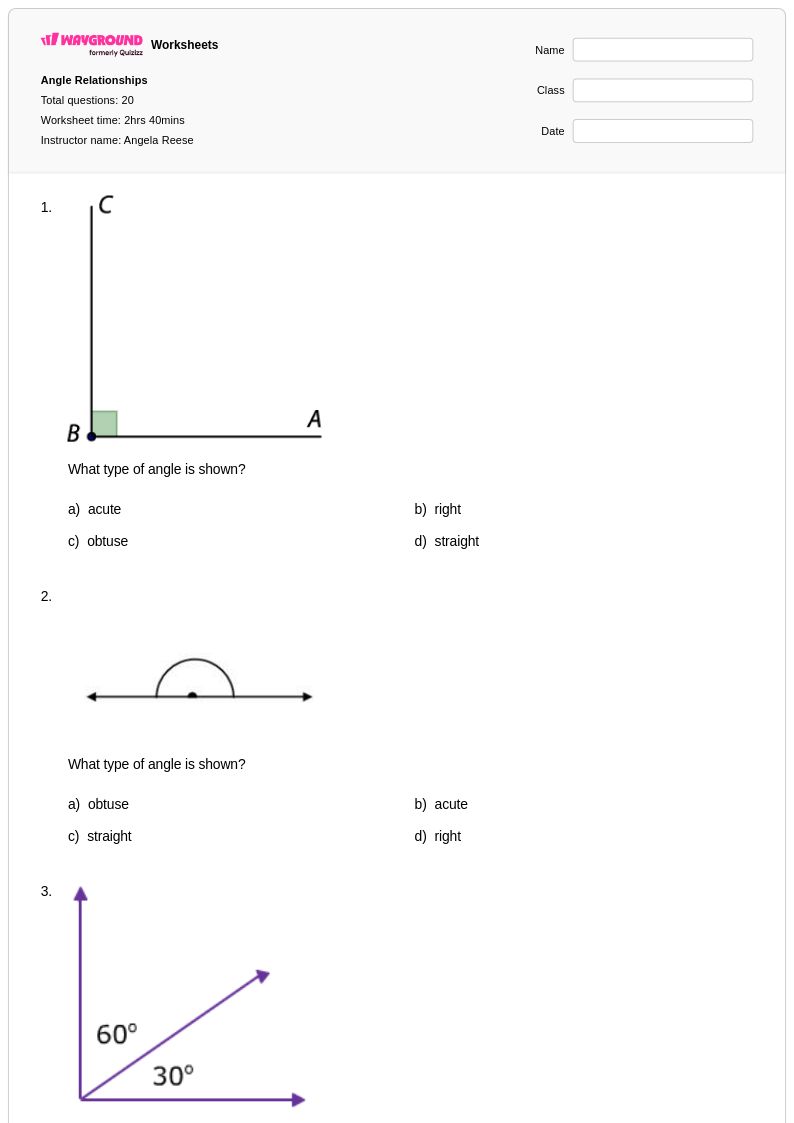
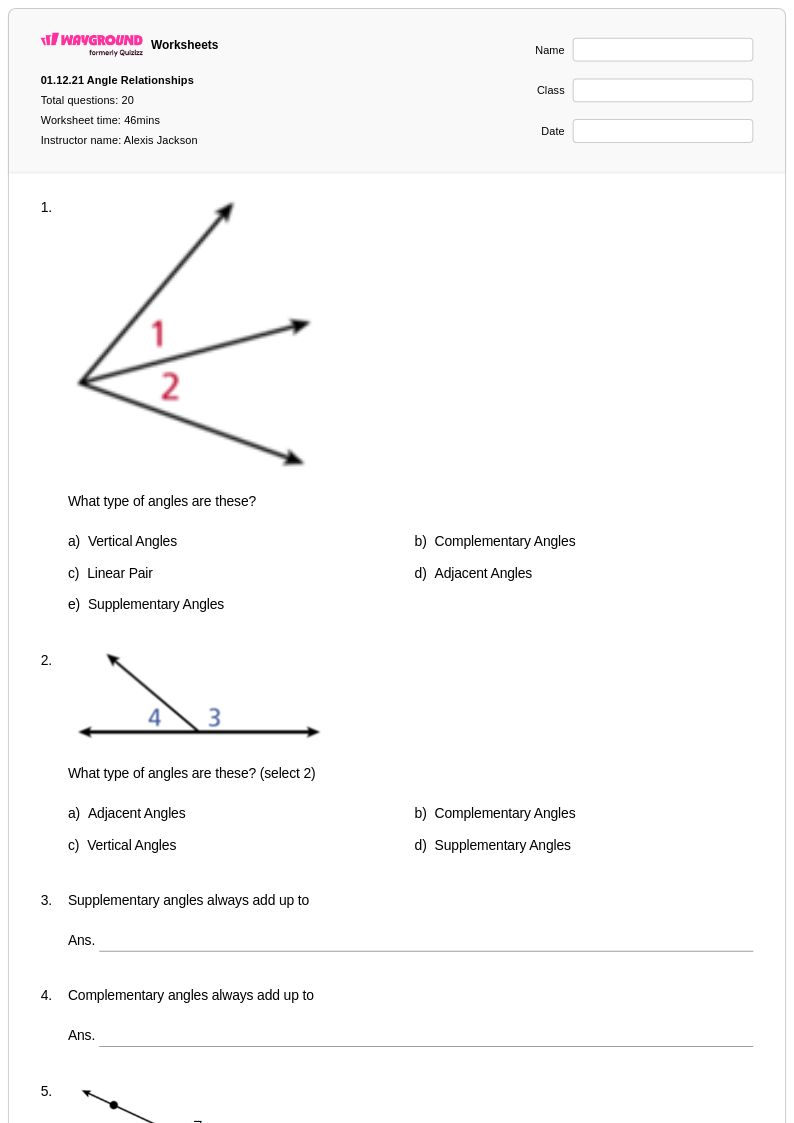
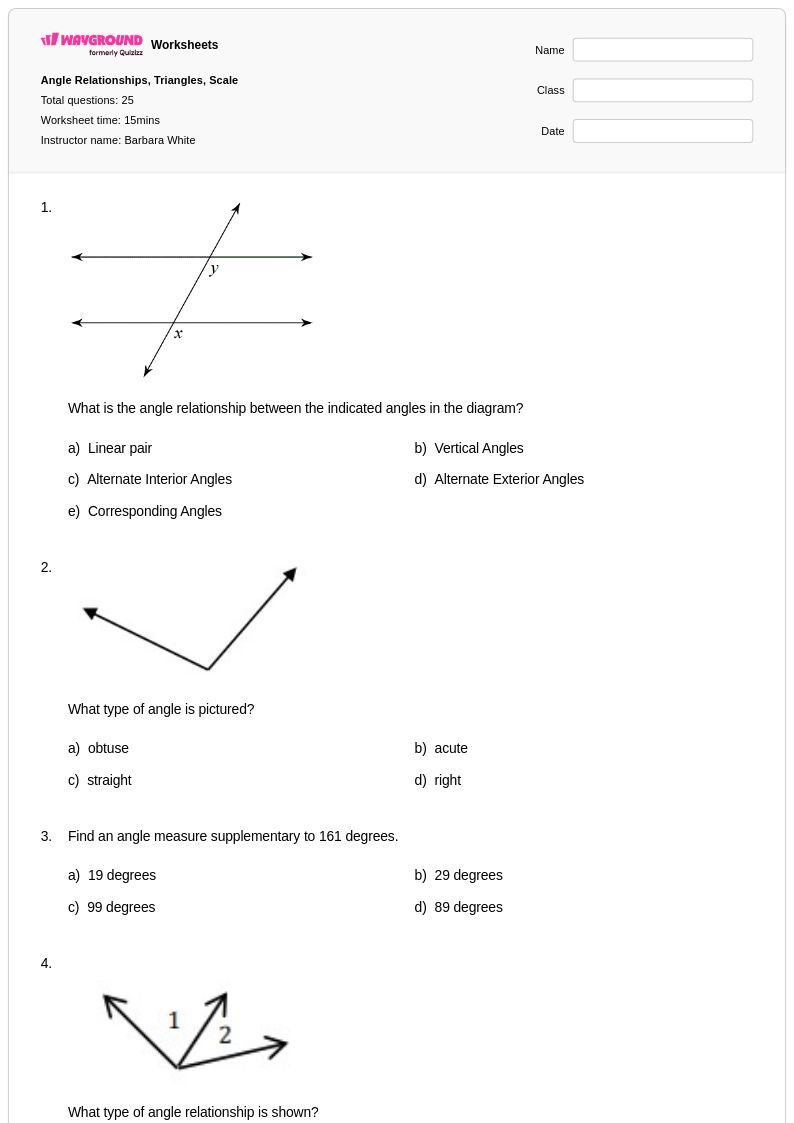
Angle relationships worksheets for Year 7 students available through Wayground (formerly Quizizz) provide comprehensive practice with the fundamental geometric concepts that form the foundation of advanced mathematical reasoning. These carefully designed resources help seventh-grade students master essential skills including identifying complementary and supplementary angles, working with vertical angles and linear pairs, and understanding the properties of angles formed by parallel lines cut by transversals. Each worksheet collection includes detailed answer keys and is available as free printables in convenient pdf format, allowing students to work systematically through practice problems that reinforce their understanding of angle measures, angle bisectors, and the relationships between adjacent and non-adjacent angles in various geometric configurations.
Wayground (formerly Quizizz) supports mathematics educators with an extensive library of millions of teacher-created angle relationships resources specifically aligned to Year 7 curriculum standards. The platform's robust search and filtering capabilities enable teachers to quickly locate worksheets that match their specific instructional needs, whether for initial concept introduction, skill reinforcement, or assessment preparation. These versatile materials are available in both printable pdf formats and interactive digital versions, with built-in differentiation tools that allow educators to customize content complexity and provide targeted practice for diverse learning levels. Teachers can seamlessly integrate these resources into their lesson planning for remediation sessions, enrichment activities, homework assignments, and classroom skill practice, ensuring that all students develop strong conceptual understanding of how angles interact within geometric figures and real-world applications.
FAQs
How do I teach angle relationships in Grade 7?
What angle relationship exercises are best for seventh graders?
What are common misconceptions about angles formed by a transversal?
How should I use a Grade 7 angle relationships worksheet?
Are Grade 7 angle relationships part of the Common Core progression?
How can I support students who struggle with angle relationship diagrams?
What grade do students learn complementary, supplementary, and vertical angles?