Free Printable Angular and Linear Velocity worksheets
Explore Wayground's comprehensive collection of angular and linear velocity worksheets featuring free printables, practice problems, and answer keys to help students master rotational motion concepts in physics.
Explore printable Angular and Linear Velocity worksheets
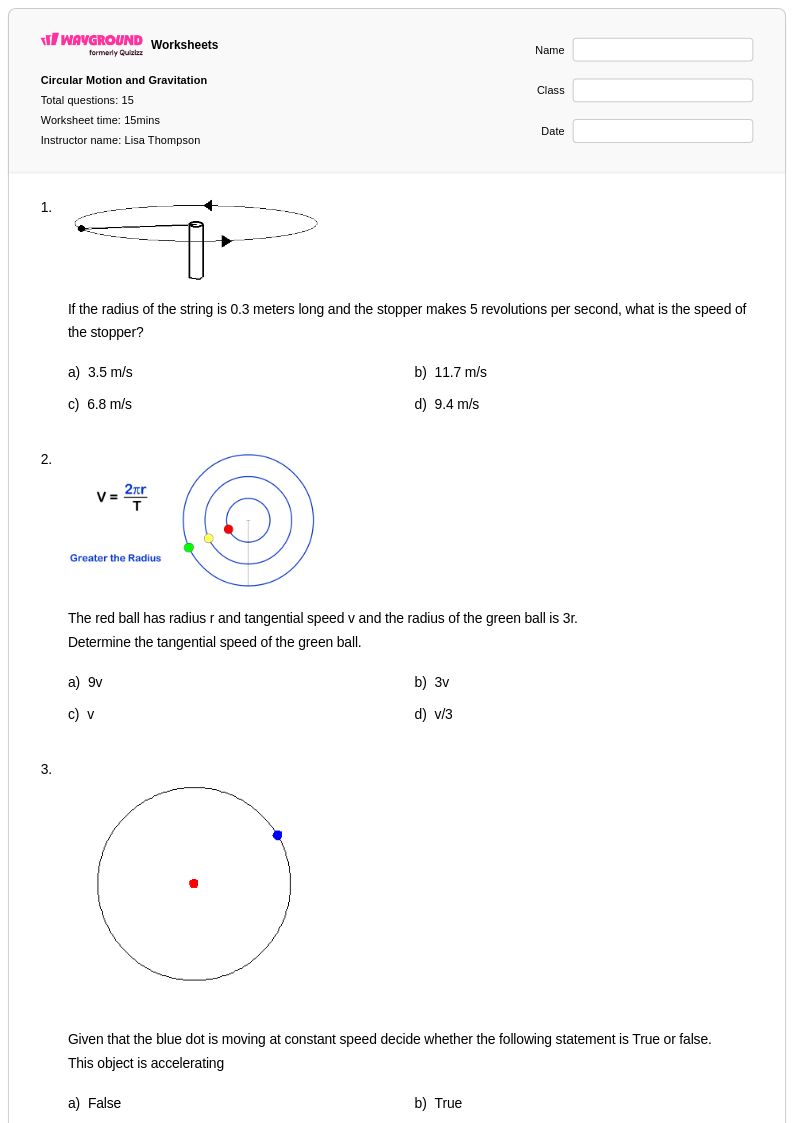
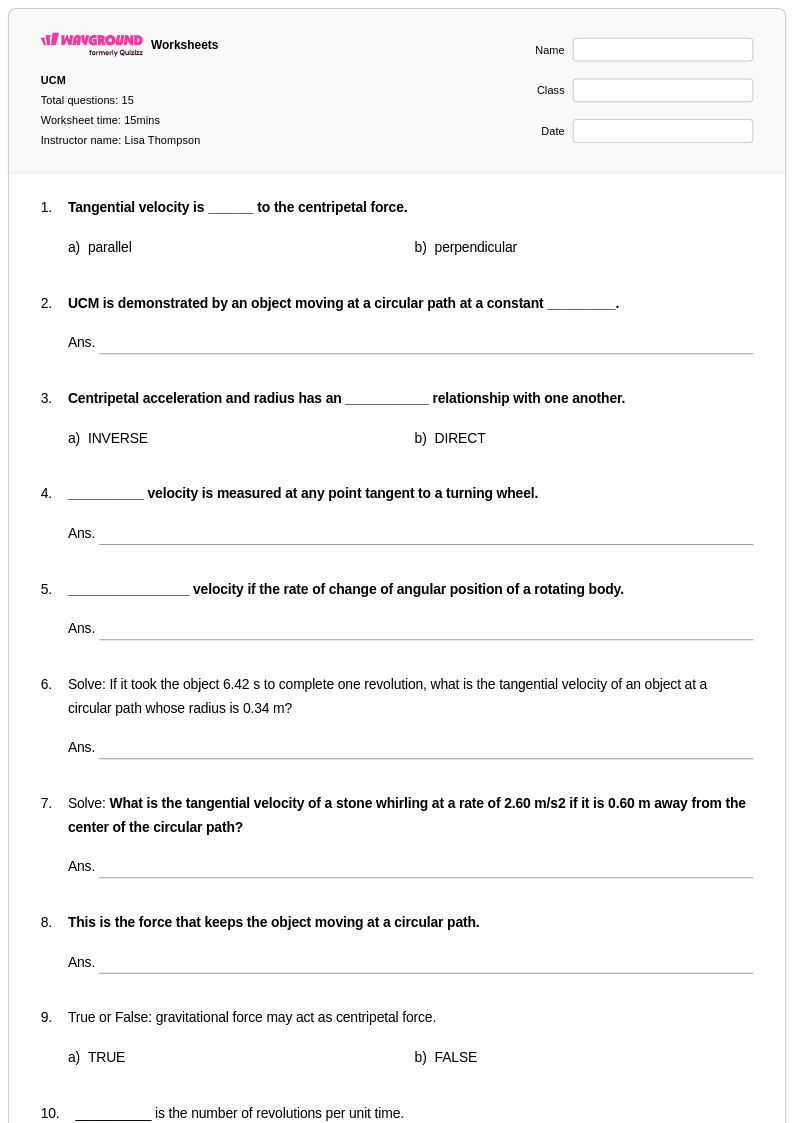
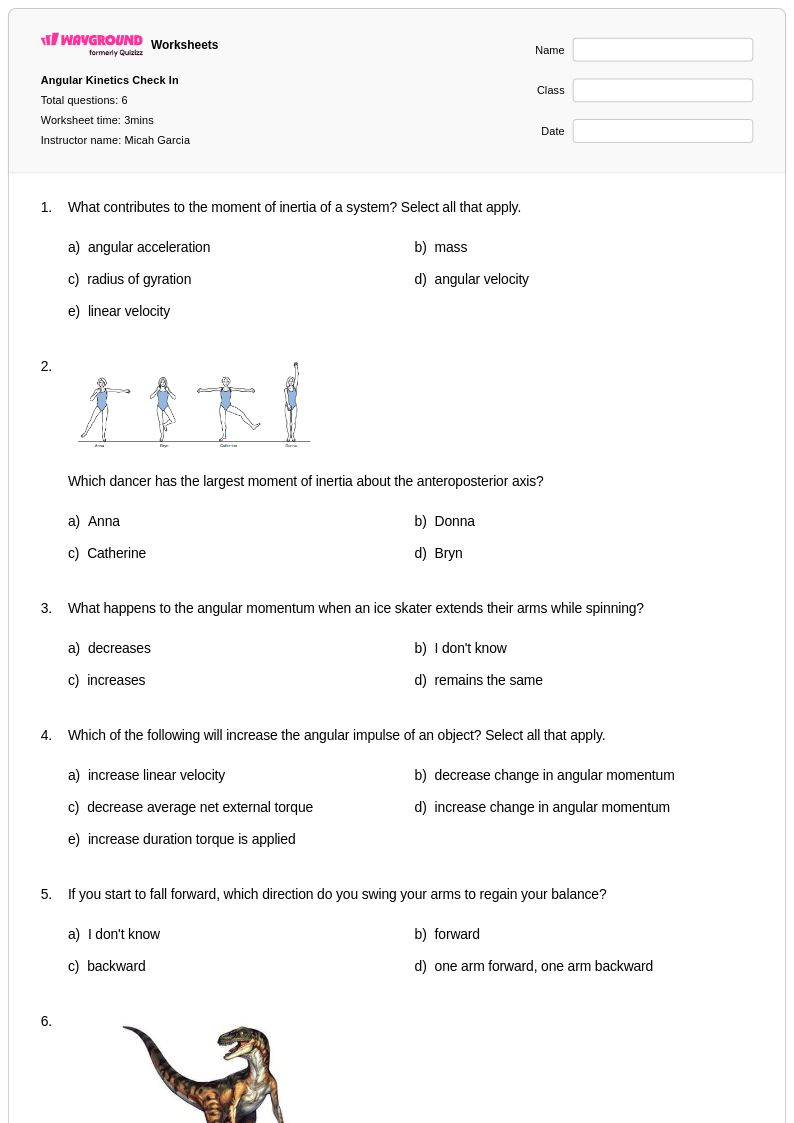
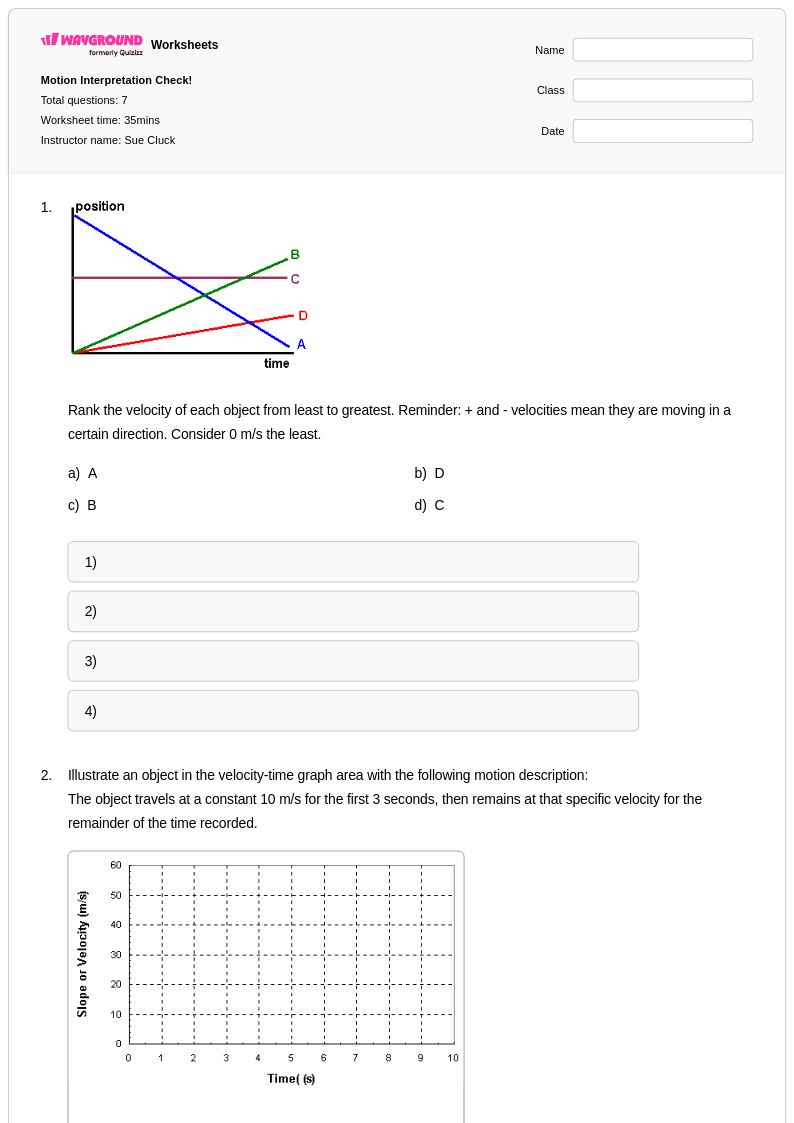
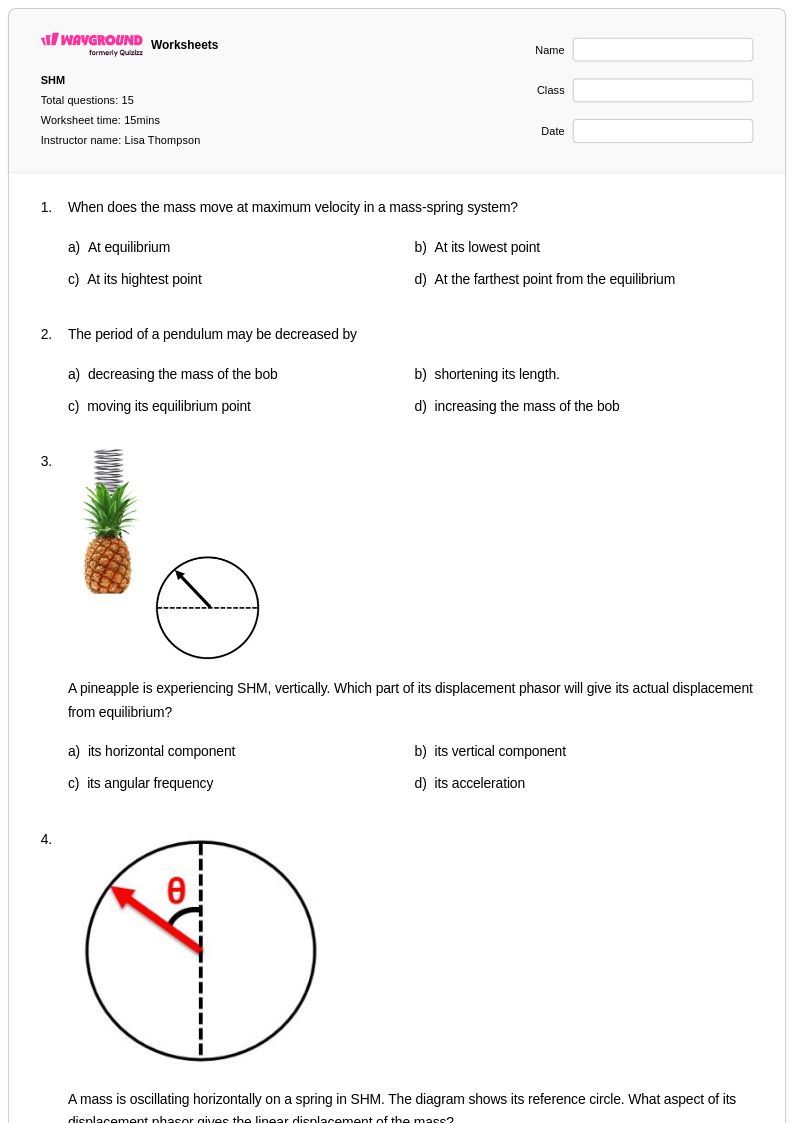
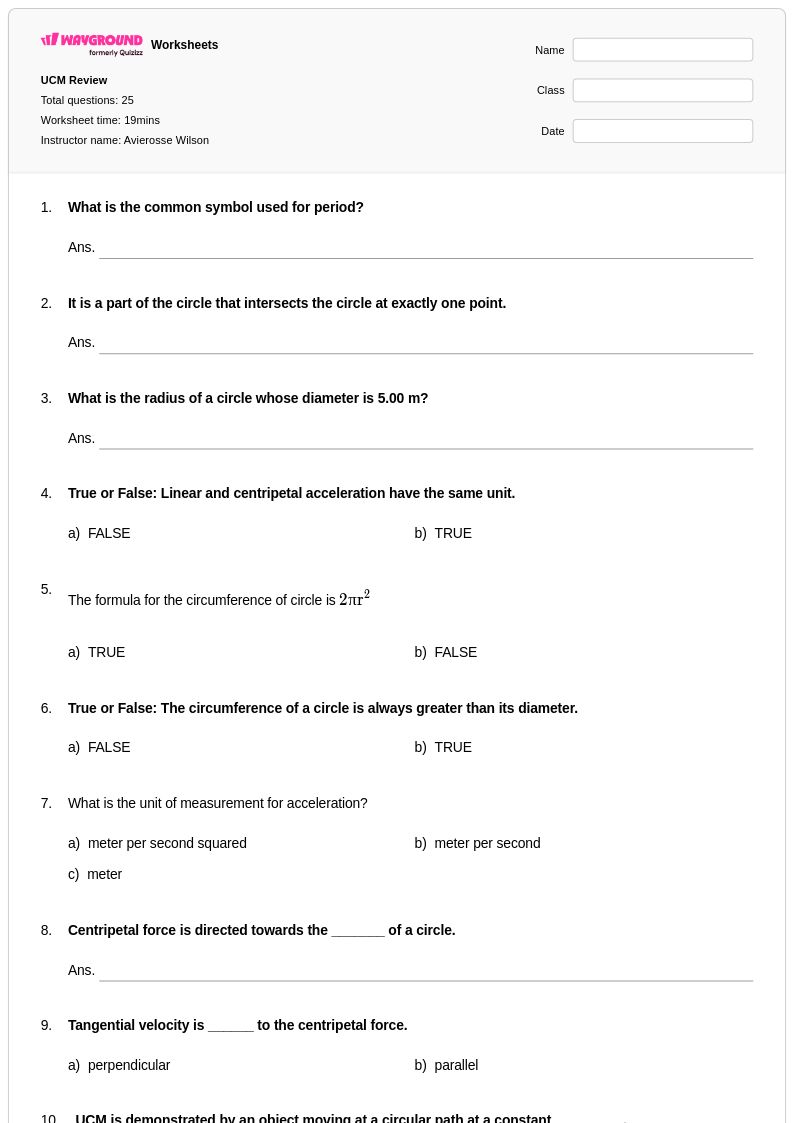
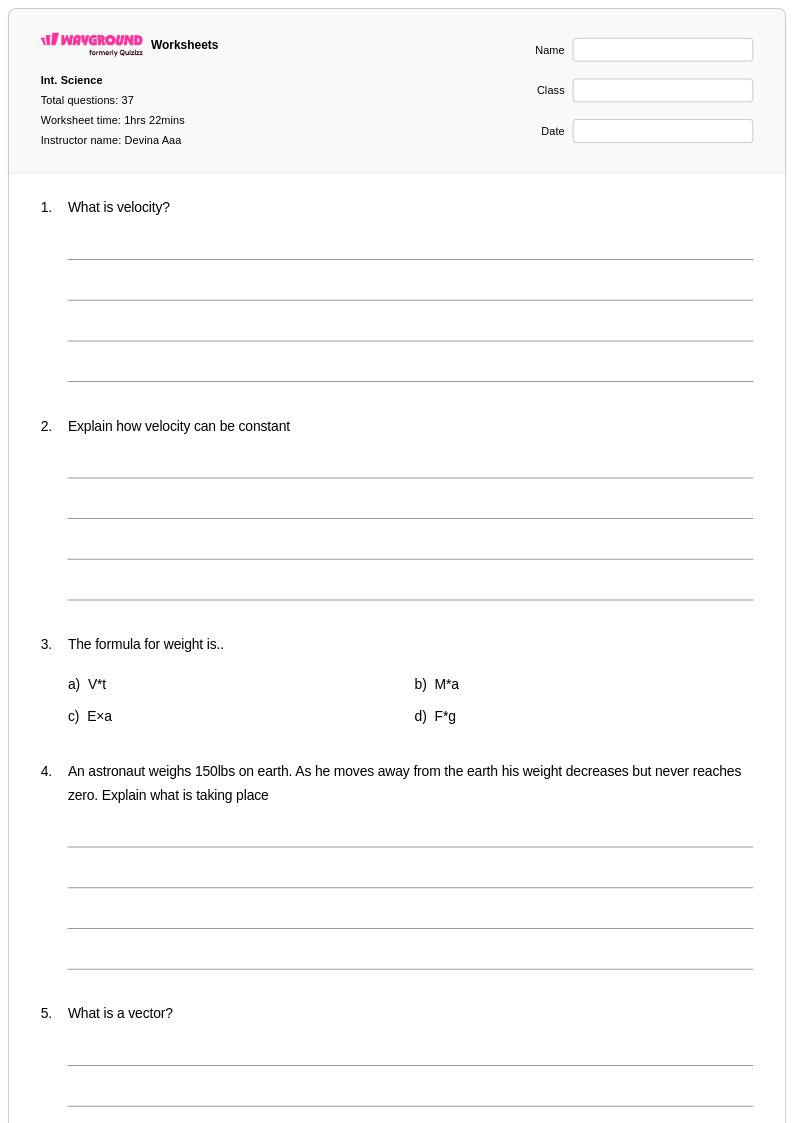
Angular and linear velocity worksheets available through Wayground (formerly Quizizz) provide comprehensive practice materials that help students master the fundamental relationships between rotational and translational motion in physics. These carefully designed worksheets strengthen critical skills including calculating angular velocity using radians per second, determining linear velocity at various points on rotating objects, and understanding the mathematical connections between these two types of motion through radius-dependent relationships. Students work through practice problems that cover real-world applications such as spinning wheels, rotating machinery, and orbital mechanics, while answer keys and detailed solutions support both independent study and classroom instruction. The collection includes free printables and pdf resources that systematically build understanding from basic concepts to complex problem-solving scenarios involving multiple rotating systems.
Wayground (formerly Quizizz) empowers educators with millions of teacher-created resources specifically focused on angular and linear velocity concepts, featuring robust search and filtering capabilities that allow instructors to quickly locate materials aligned with their curriculum standards and learning objectives. The platform's differentiation tools enable teachers to customize worksheets for varying skill levels, supporting both remediation for struggling students and enrichment opportunities for advanced learners through flexible problem sets and adjustable complexity levels. These resources are available in both printable and digital formats, including downloadable pdf versions, making them ideal for diverse instructional settings from traditional classrooms to remote learning environments. Teachers can seamlessly integrate these materials into lesson planning, use them for targeted skill practice sessions, or deploy them as assessment tools to gauge student understanding of rotational kinematics and the mathematical relationships governing circular motion.
FAQs
How do I teach the relationship between angular and linear velocity?
Start by establishing the concept of angular velocity in radians per second before connecting it to linear velocity through the relationship v = rω, where r is the radius and ω is the angular velocity. Use concrete, visual examples like spinning wheels or merry-go-rounds to show students that points farther from the center travel faster in linear terms even though they complete the same rotation. Once students grasp the radius-dependent nature of this relationship, they can apply it to more complex scenarios involving rotating machinery and orbital motion.
What practice problems best help students master angular and linear velocity calculations?
Students benefit most from problems that require them to convert between angular and linear velocity using v = rω across a range of contexts, including spinning wheels, rotating discs, and circular orbits. Effective practice sequences begin with single-step calculations where one variable is unknown, then progress to multi-step problems involving unit conversion between RPM, radians per second, and degrees per second. Including real-world applications like gear systems or planetary motion helps students see why the mathematical relationships matter beyond the worksheet.
What mistakes do students commonly make when calculating angular and linear velocity?
The most frequent error is confusing angular velocity with linear velocity and treating them as interchangeable, particularly when a problem involves a single rotating object. Students also commonly forget to convert angular velocity into radians per second before applying v = rω, especially when given values in RPM or degrees per second. Another persistent misconception is assuming that all points on a rotating object share the same linear velocity, when in fact linear velocity increases proportionally with distance from the axis of rotation.
How can I differentiate angular and linear velocity instruction for students at different skill levels?
For struggling students, begin with problems that isolate a single variable in v = rω and use familiar real-world contexts like clock hands or bicycle wheels before introducing abstract rotating systems. Advanced learners can be challenged with multi-object problems, unit conversion chains, and scenarios involving non-uniform circular motion. On Wayground, teachers can apply accommodations such as reduced answer choices and read-aloud support for individual students, while the rest of the class works through standard problem sets without disruption.
How do I use Wayground's angular and linear velocity worksheets in my classroom?
Wayground's angular and linear velocity worksheets are available as printable PDFs for traditional classroom distribution and in digital formats for technology-integrated or remote learning environments. Teachers can also host these materials directly as a quiz on Wayground, allowing students to complete problems interactively while the teacher monitors progress in real time. All worksheets include answer keys, making them suitable for independent practice, guided instruction, or formative assessment of rotational kinematics concepts.
How do I assess whether students truly understand the connection between angular and linear velocity?
Move beyond single-step calculation checks by giving students a rotating object scenario and asking them to predict and justify how linear velocity changes as the radius increases. Effective assessment tasks include asking students to compare linear velocities at two different points on the same rotating object, or to determine the angular velocity needed to achieve a specific linear velocity at a given radius. Errors in these multi-variable comparisons reveal whether students have genuinely internalized the radius-dependent relationship or are simply applying the formula mechanically.