
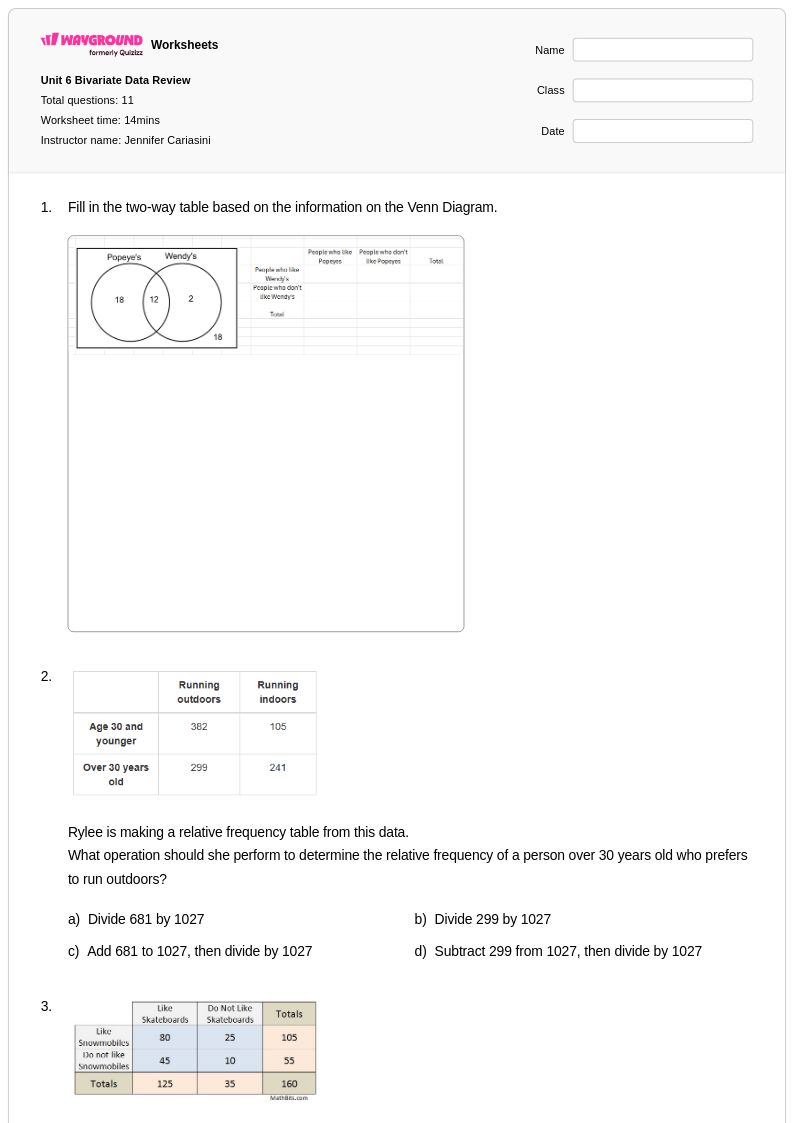
11 Q
9th - 12th
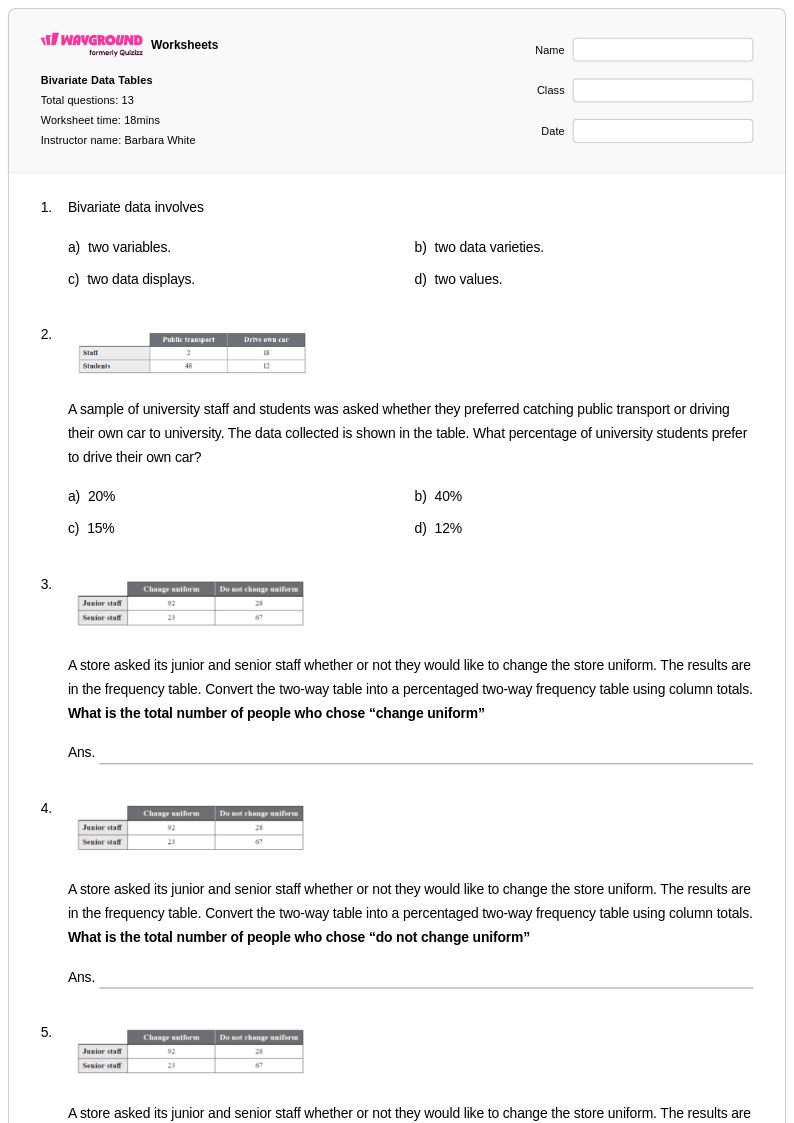
13 Q
11th - Uni
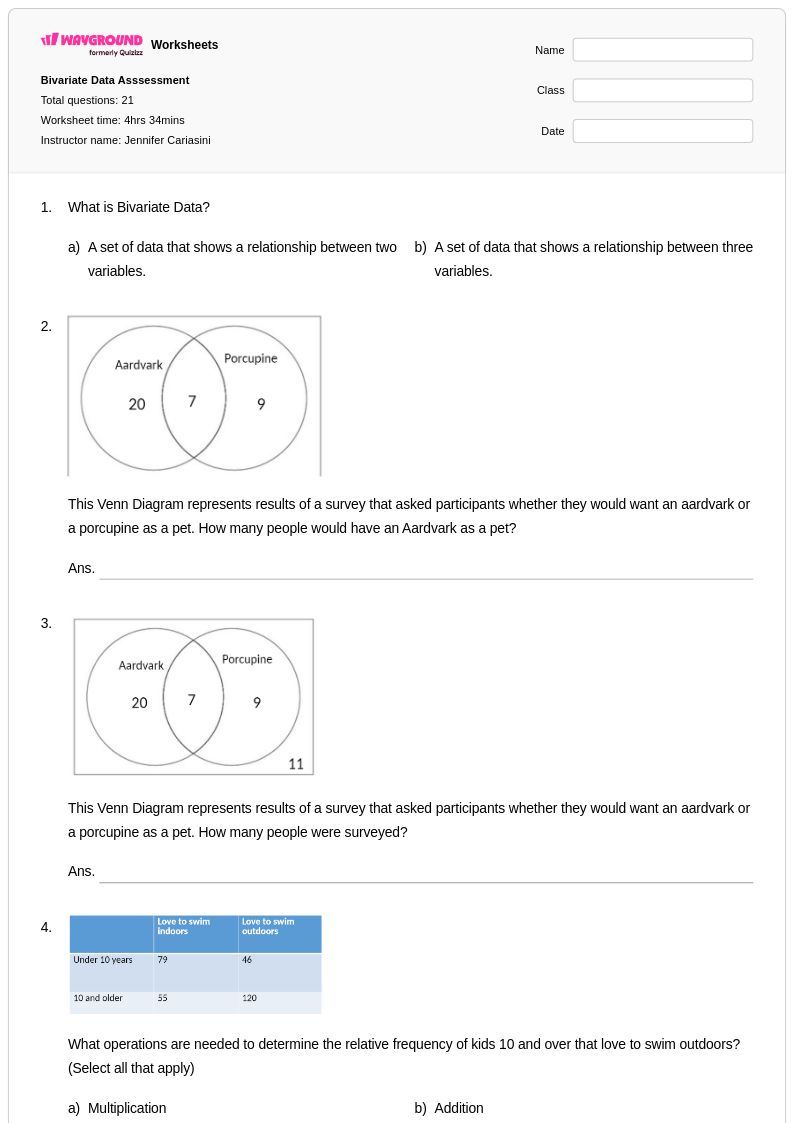
21 Q
9th - 12th
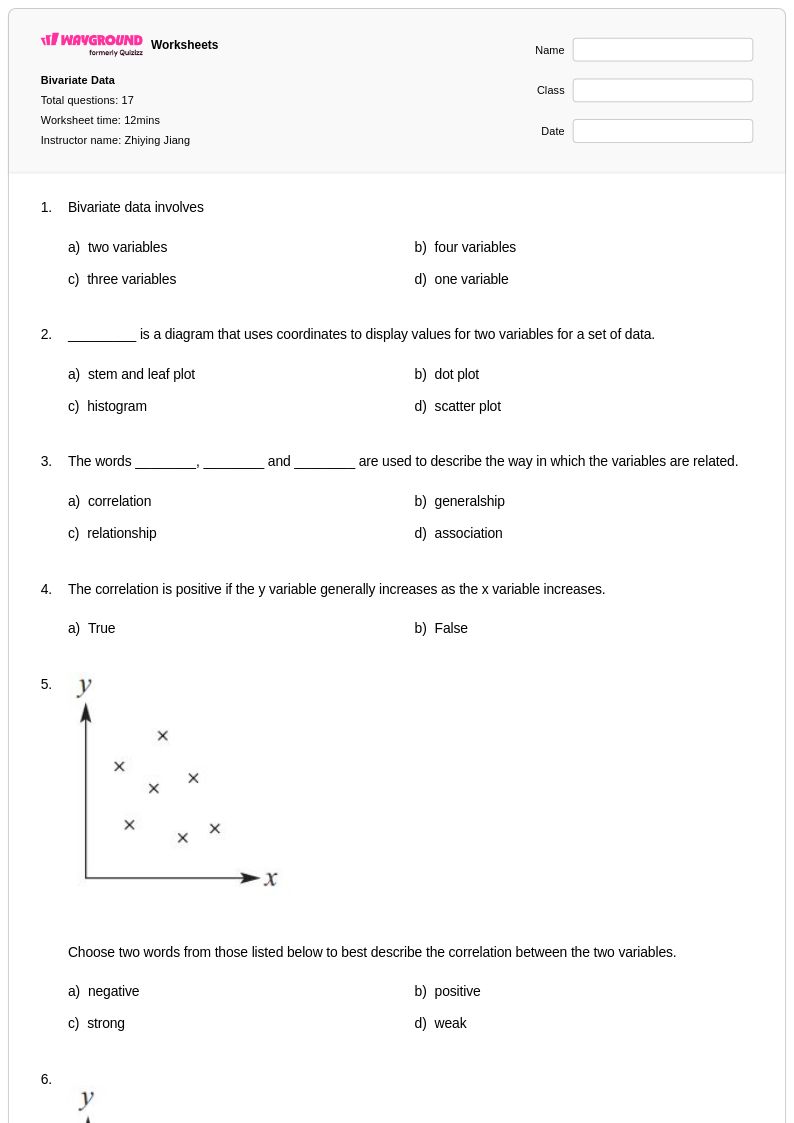
17 Q
10th
13 Q
11th - Uni
10 Q
8th - Uni
19 Q
8th - Uni
15 Q
11th
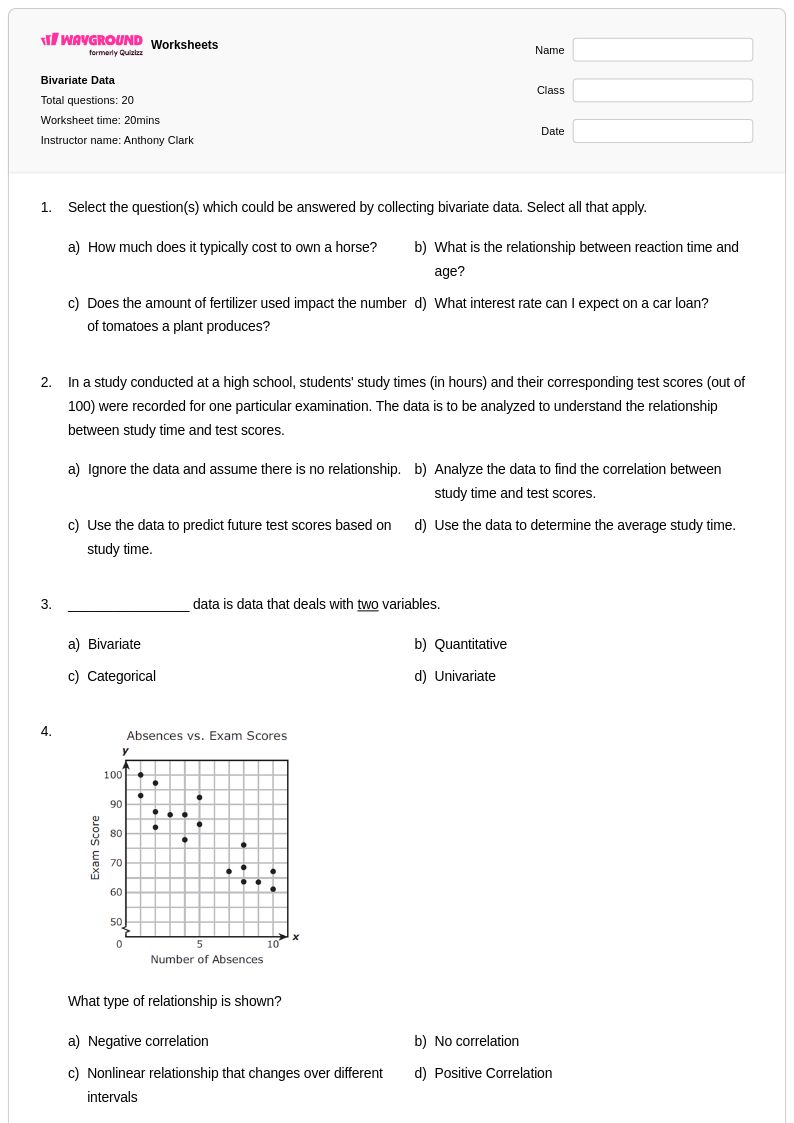
20 Q
9th - Uni
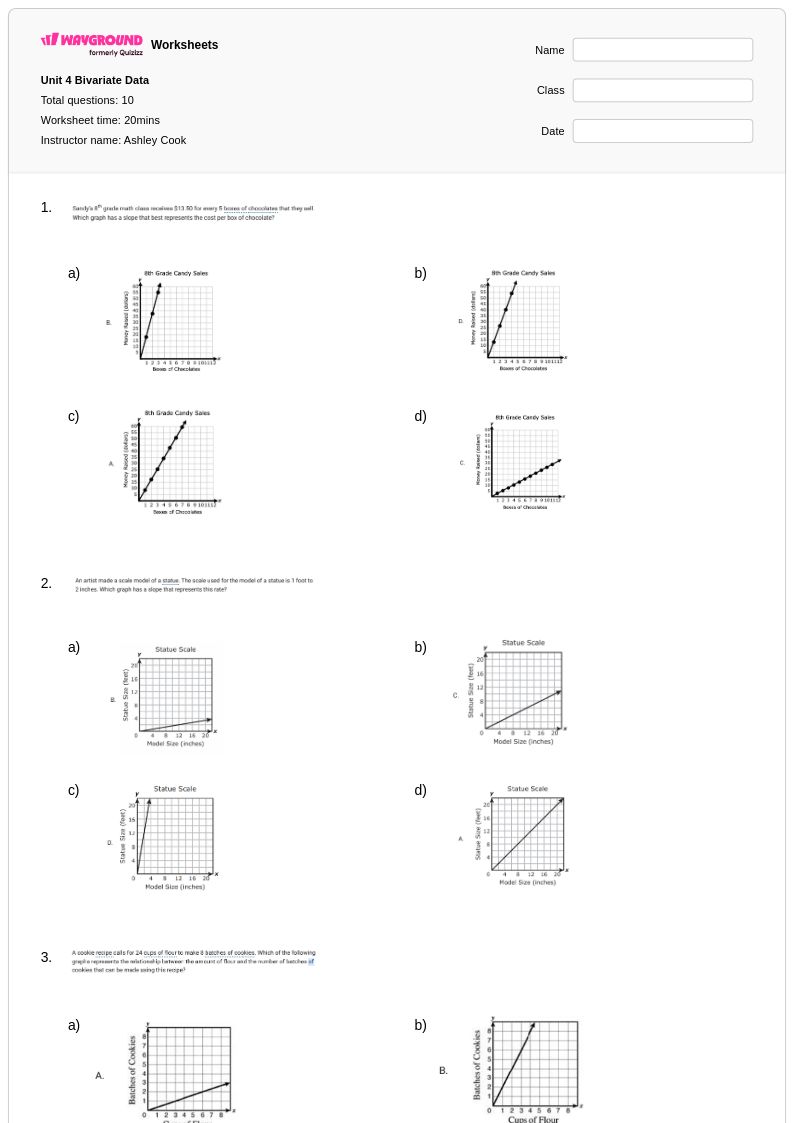
10 Q
8th
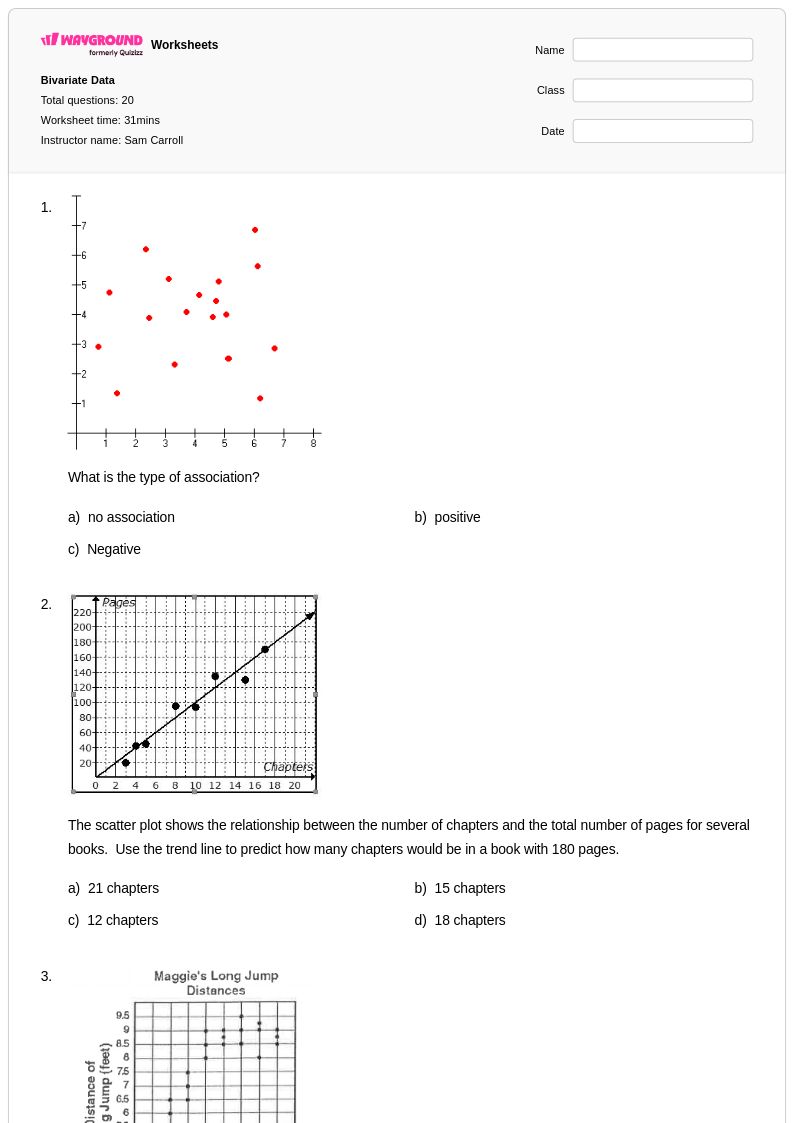
20 Q
9th - 11th
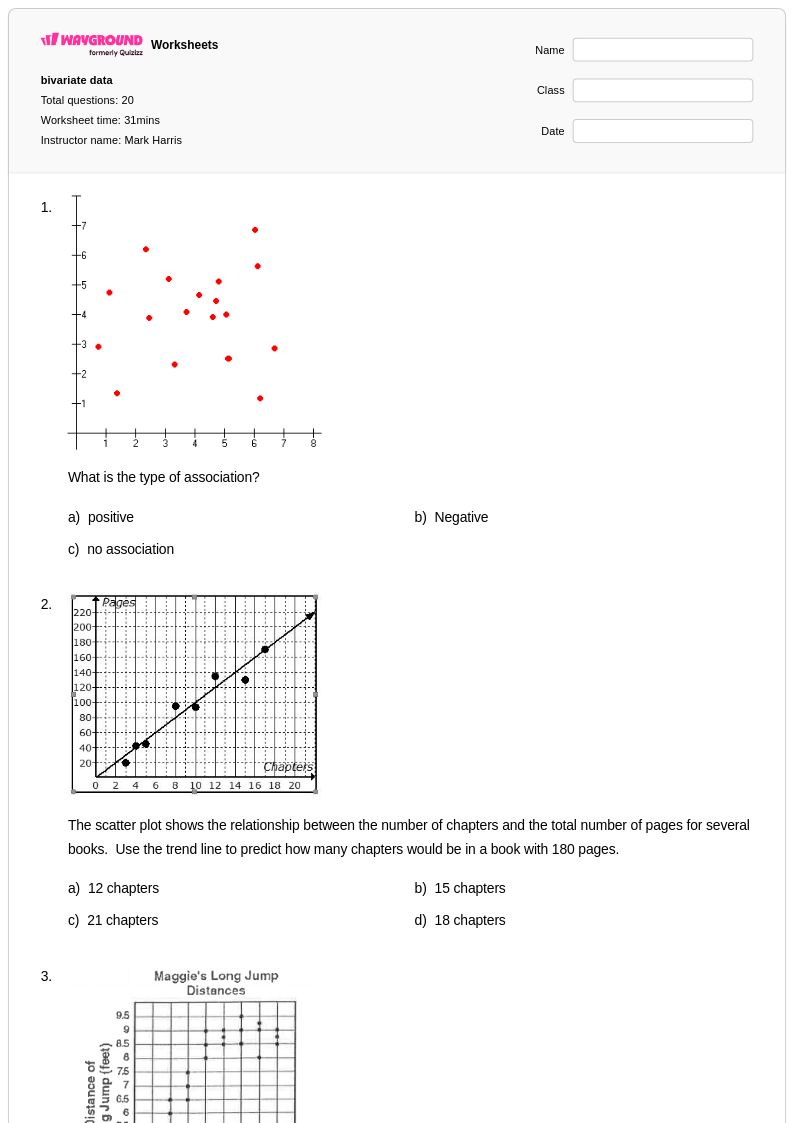
20 Q
11th
14 Q
8th - Uni
17 Q
10th
37 Q
8th
8 Q
10th - 11th
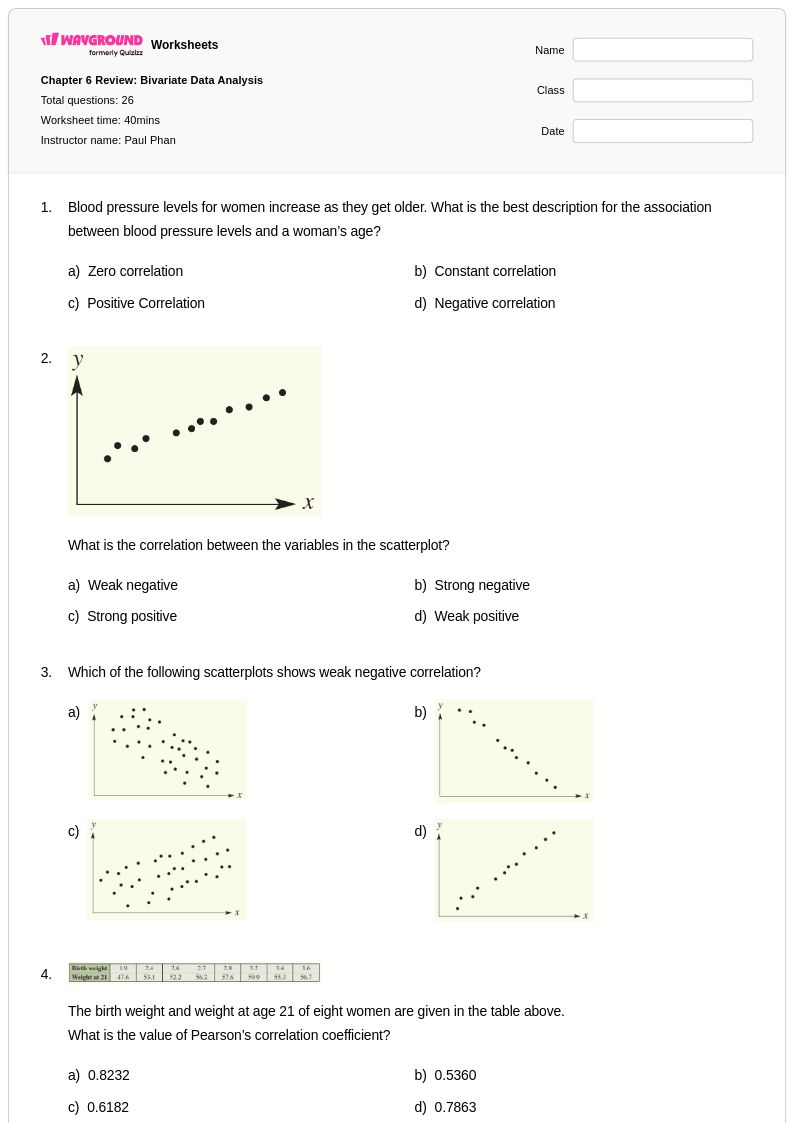
26 Q
12th
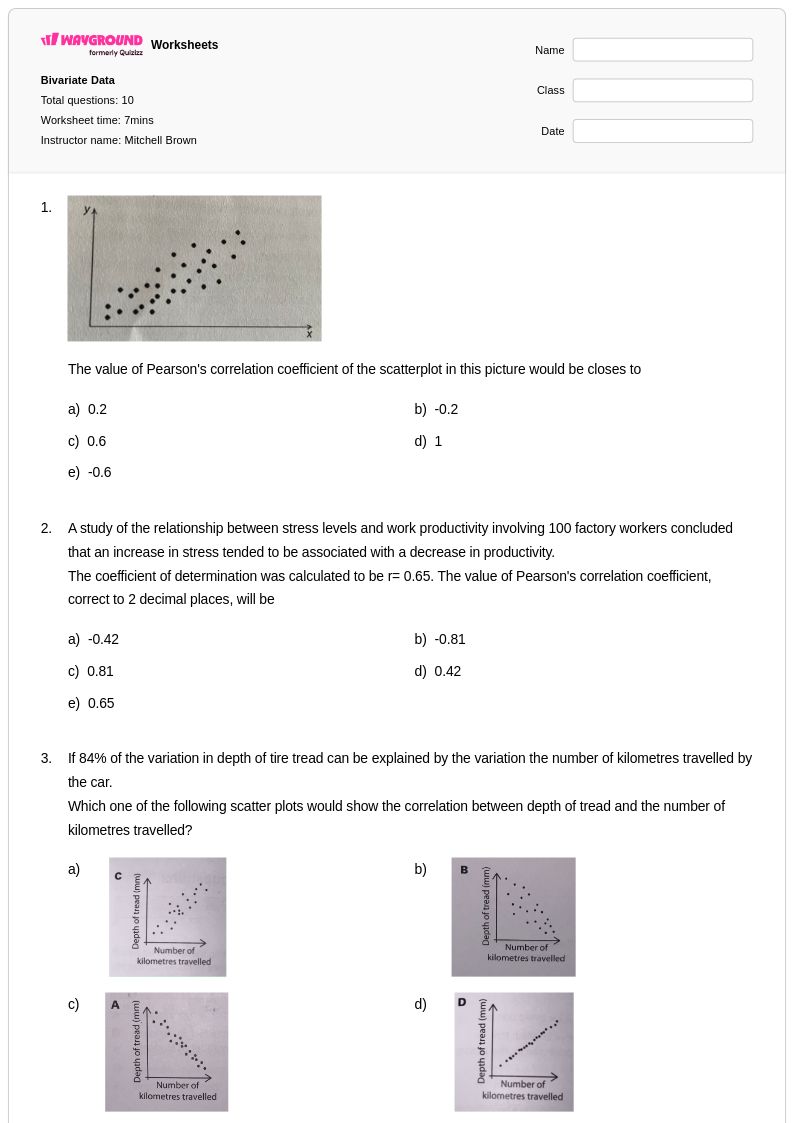
10 Q
11th
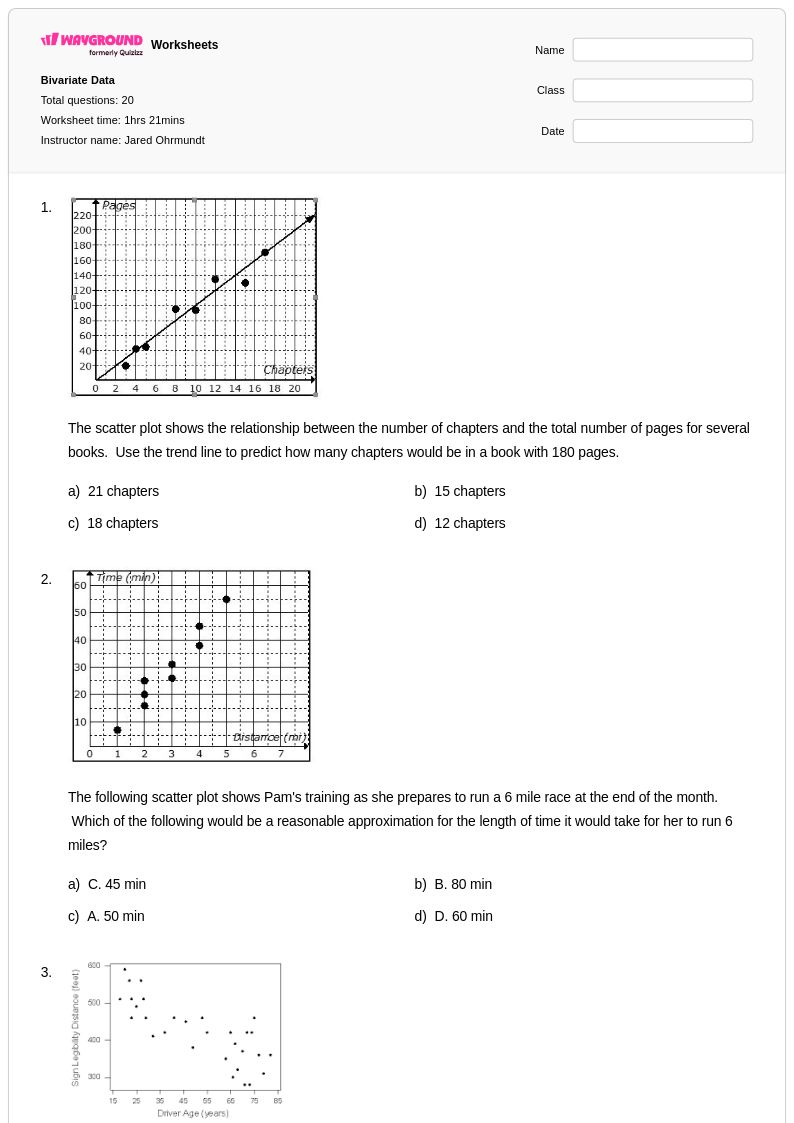
20 Q
8th
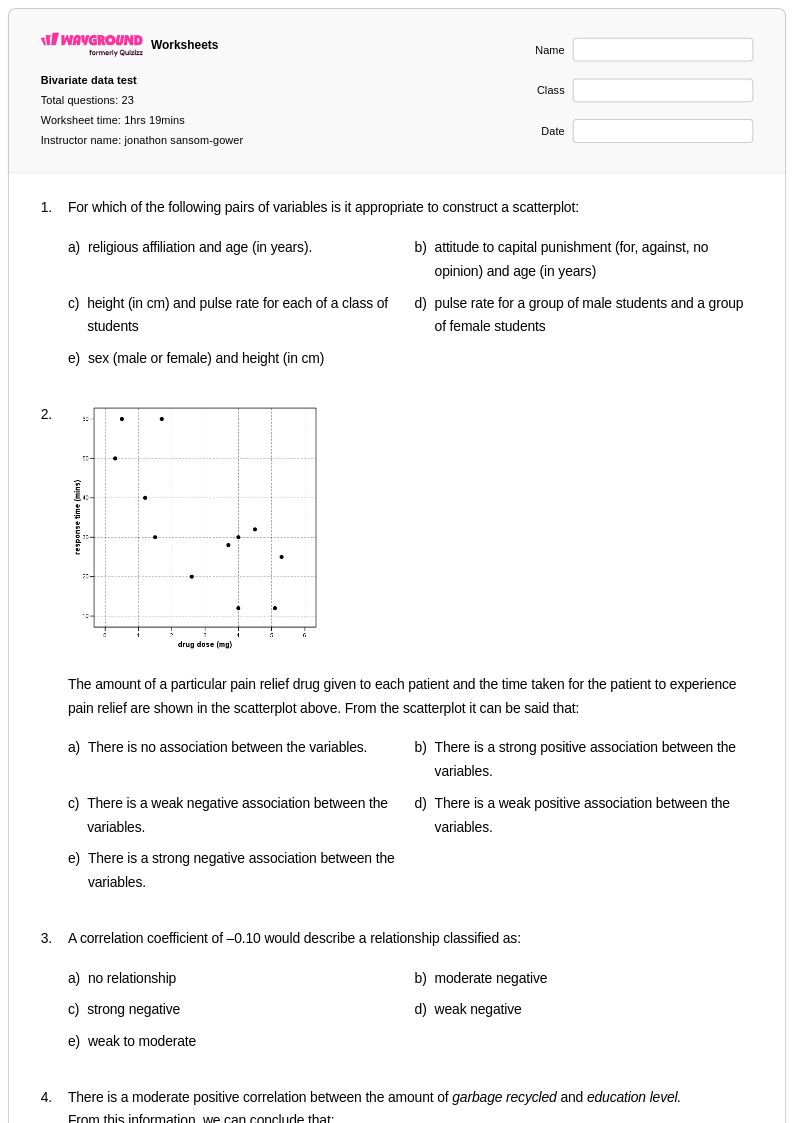
23 Q
10th - 12th
13 Q
10th
20 Q
6th - 8th
17 Q
8th - Uni
15 Q
8th
Explore Worksheets by Subjects
Explore printable Bivariate Data worksheets
Bivariate data worksheets available through Wayground (formerly Quizizz) provide comprehensive practice opportunities for students to master the analysis of relationships between two quantitative variables. These expertly crafted resources strengthen essential statistical skills including scatter plot interpretation, correlation coefficient calculation, line of best fit determination, and residual analysis. The practice problems systematically guide learners through identifying patterns in paired data sets, distinguishing between strong and weak correlations, and understanding the difference between correlation and causation. Each worksheet collection includes detailed answer keys and is available as free printable pdf resources, enabling students to work independently while building confidence in their ability to analyze complex statistical relationships and draw meaningful conclusions from bivariate datasets.
Wayground (formerly Quizizz) empowers educators with millions of teacher-created bivariate data worksheet resources that seamlessly integrate into any statistics curriculum through robust search and filtering capabilities. The platform's standards-aligned materials support differentiated instruction by offering varying levels of complexity, from introductory scatter plot analysis to advanced regression techniques, all available in both printable and digital pdf formats. Teachers can customize existing worksheets or create original materials using the platform's flexible tools, making lesson planning more efficient while ensuring targeted skill practice for remediation and enrichment activities. The extensive collection enables educators to provide consistent practice with correlation analysis, trend identification, and data interpretation across diverse learning environments, supporting both individual student needs and whole-class statistical literacy development.
FAQs
How do I teach students to analyze bivariate data?
What exercises help students practice bivariate data analysis?
What mistakes do students commonly make with bivariate data?
How can I use a bivariate data worksheet from Wayground?
How does bivariate data fit into Common Core math?
How can I differentiate bivariate data practice?