
15 Q
7th
17 Q
7th
14 Q
7th
20 Q
7th - Uni
20 Q
7th
15 Q
7th
20 Q
7th
16 Q
7th
10 Q
10th
20 Q
7th - Uni
20 Q
7th
20 Q
7th
24 Q
9th - 12th
15 Q
7th
13 Q
7th - Uni
25 Q
8th
20 Q
7th
13 Q
7th
18 Q
7th
10 Q
8th
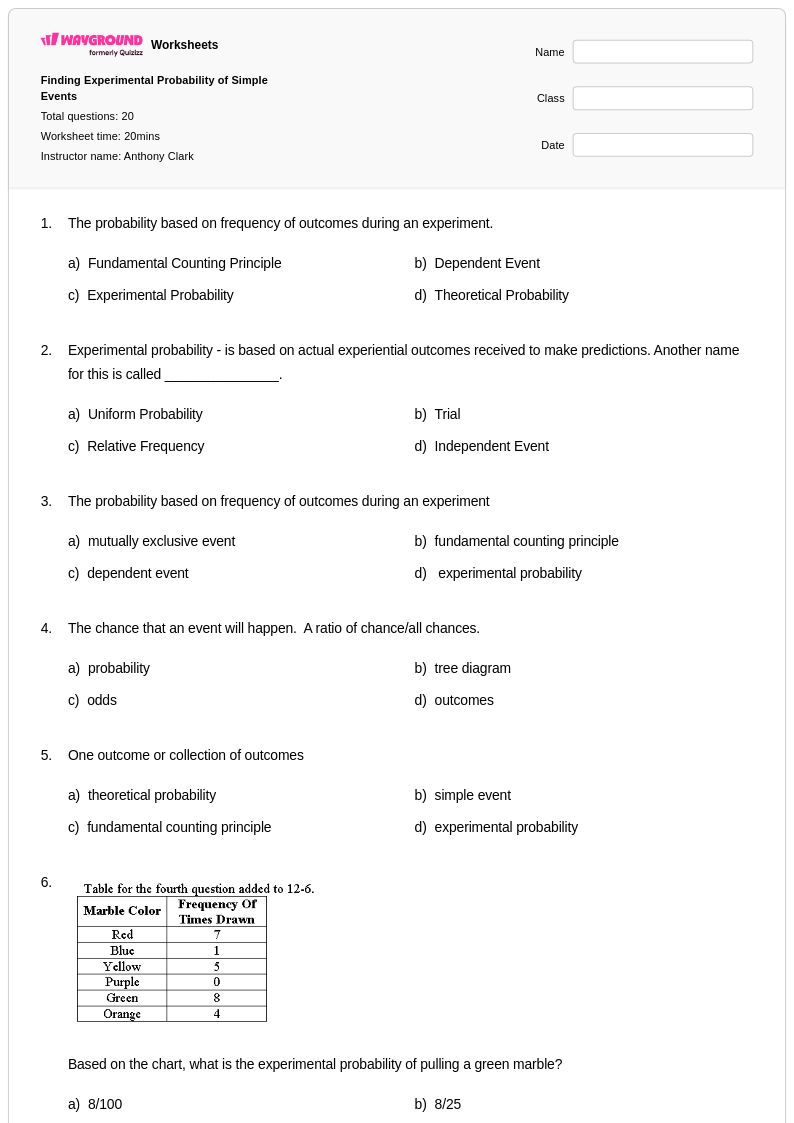
20 Q
7th - Uni
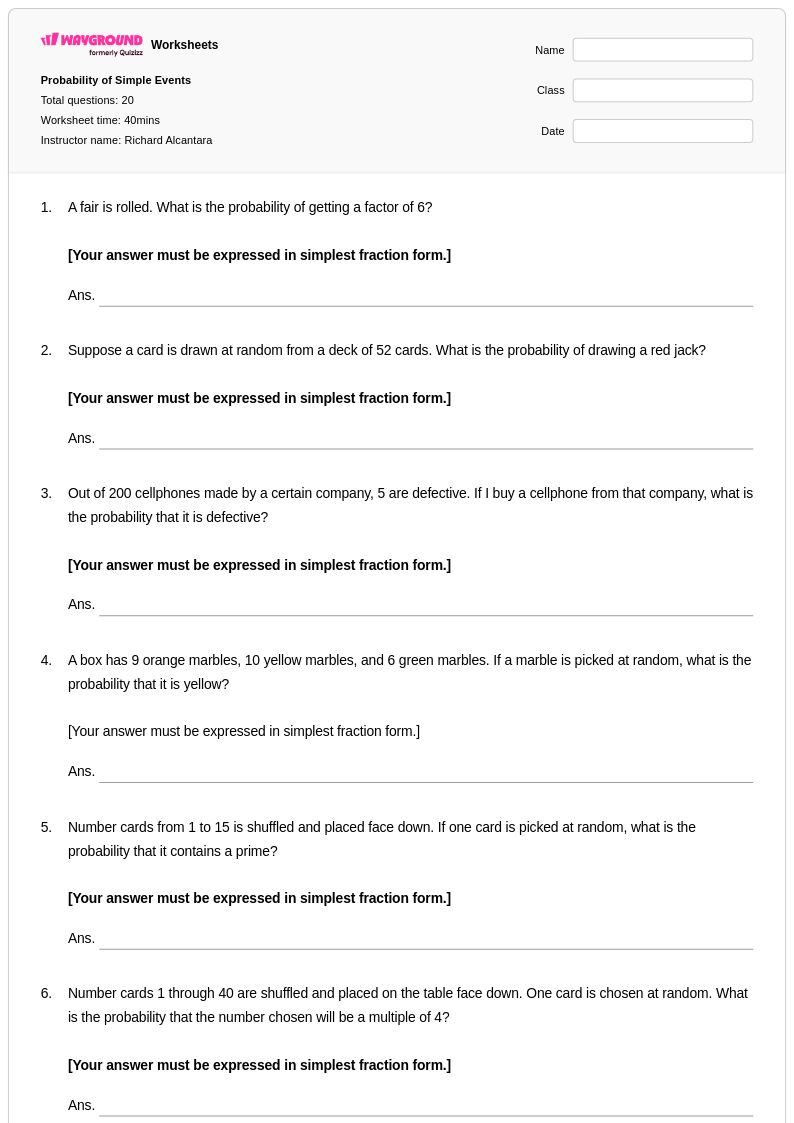
20 Q
10th
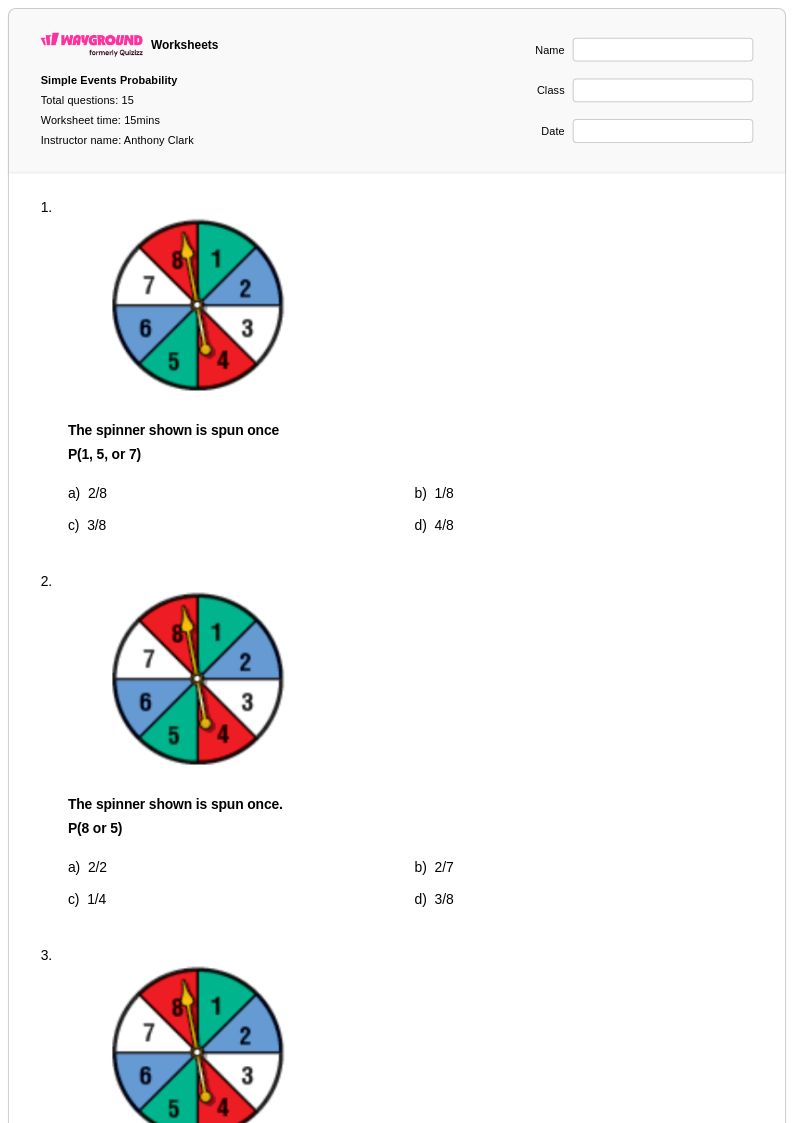
15 Q
7th - Uni
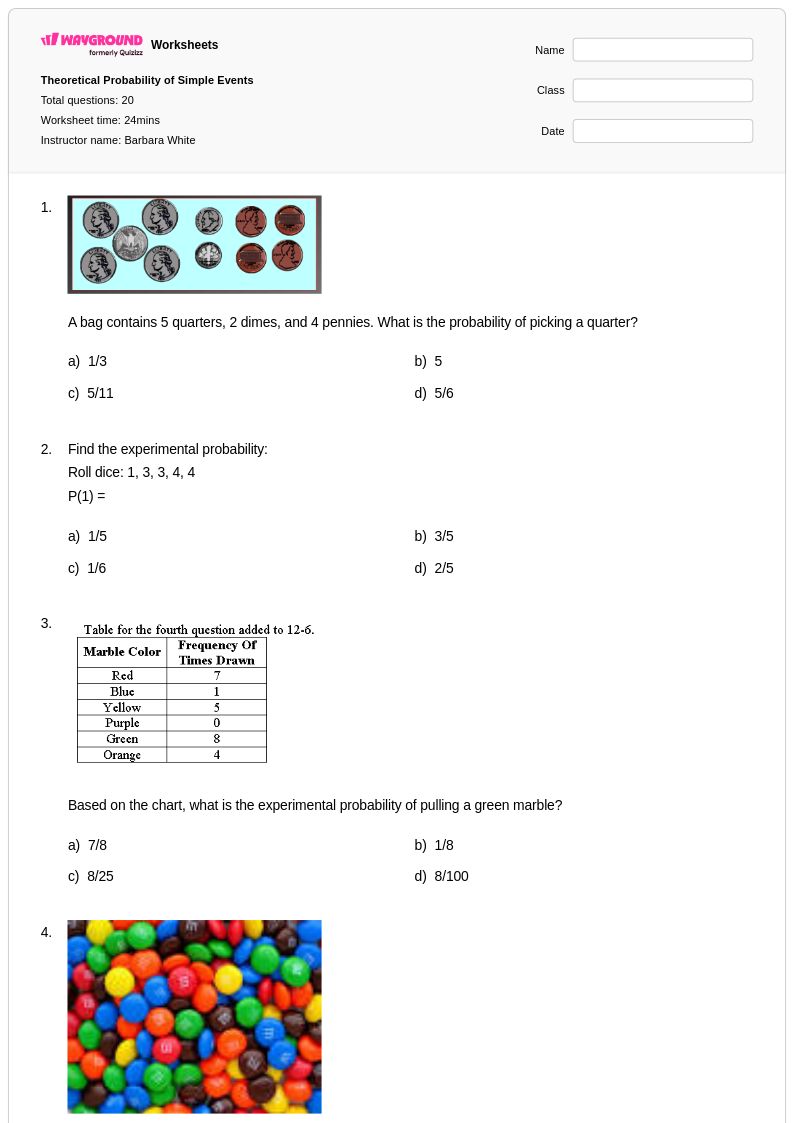
20 Q
7th
Explore Worksheets by Subjects
Explore printable Simple Events worksheets
Simple events worksheets available through Wayground (formerly Quizizz) provide students with essential foundational practice in understanding basic probability concepts and single-outcome scenarios. These comprehensive resources focus on developing critical mathematical reasoning skills by guiding learners through the identification and calculation of probabilities for individual events, such as rolling a specific number on a die, drawing a particular card from a deck, or selecting a colored marble from a bag. The worksheets strengthen students' ability to recognize sample spaces, identify favorable outcomes, and apply the fundamental probability formula while building confidence with fraction simplification and decimal conversion. Each resource includes detailed answer keys and step-by-step solutions, with materials available as free printables and pdf downloads that feature carefully scaffolded practice problems progressing from concrete visual representations to more abstract mathematical applications.
Wayground (formerly Quizizz) empowers educators with an extensive collection of millions of teacher-created simple events probability resources that streamline lesson planning and support diverse classroom needs. The platform's robust search and filtering capabilities allow teachers to quickly locate materials aligned with specific curriculum standards and learning objectives, while built-in differentiation tools enable seamless customization for students at varying skill levels. These flexible worksheets are available in both printable pdf format and interactive digital versions, making them ideal for traditional classroom instruction, homework assignments, remediation sessions, and enrichment activities. Teachers can efficiently modify difficulty levels, adjust problem types, and incorporate visual aids to ensure every student receives appropriate challenge and support while mastering the fundamental concepts of simple event probability through targeted skill practice and assessment.
FAQs
How do I introduce the concept of simple probability?
What skills do these simple events worksheets help students practice?
What is a common mistake students make when learning about simple events?
How can I use this Wayground worksheet with my class?
How does learning simple probability fit into the math curriculum?
How can I differentiate this topic for diverse learners?