
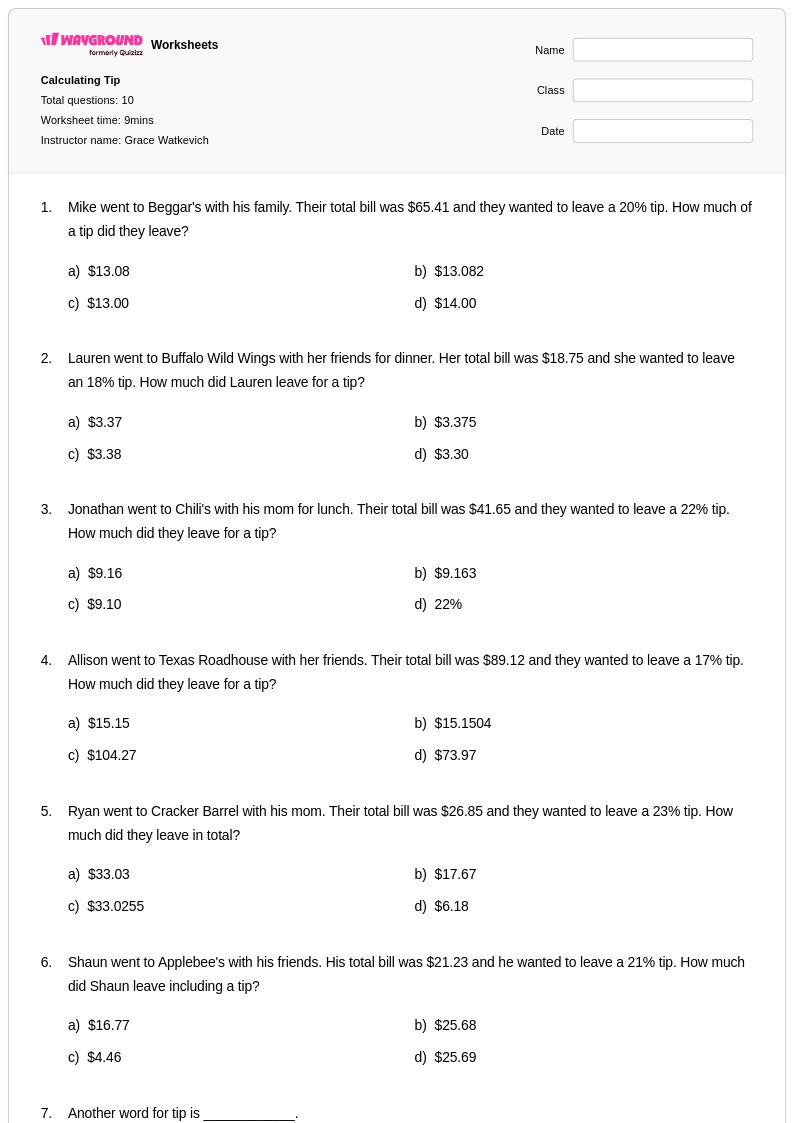
10 Q
7th
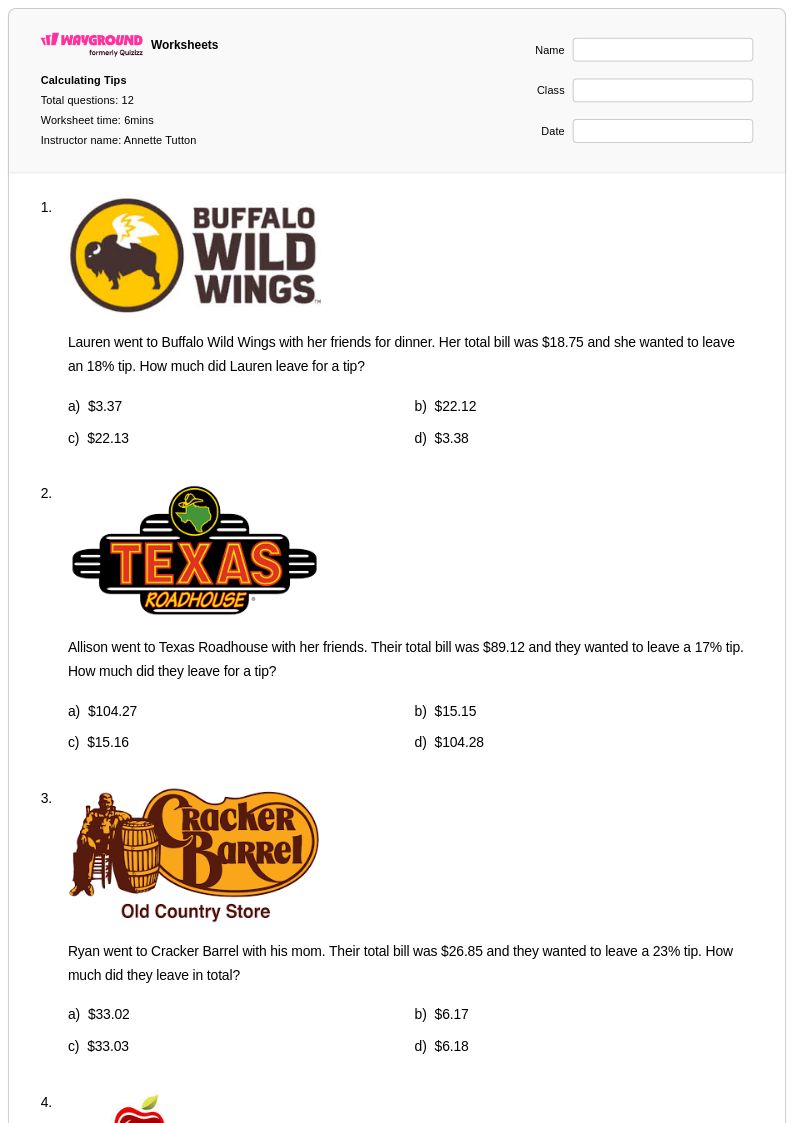
12 Q
12th
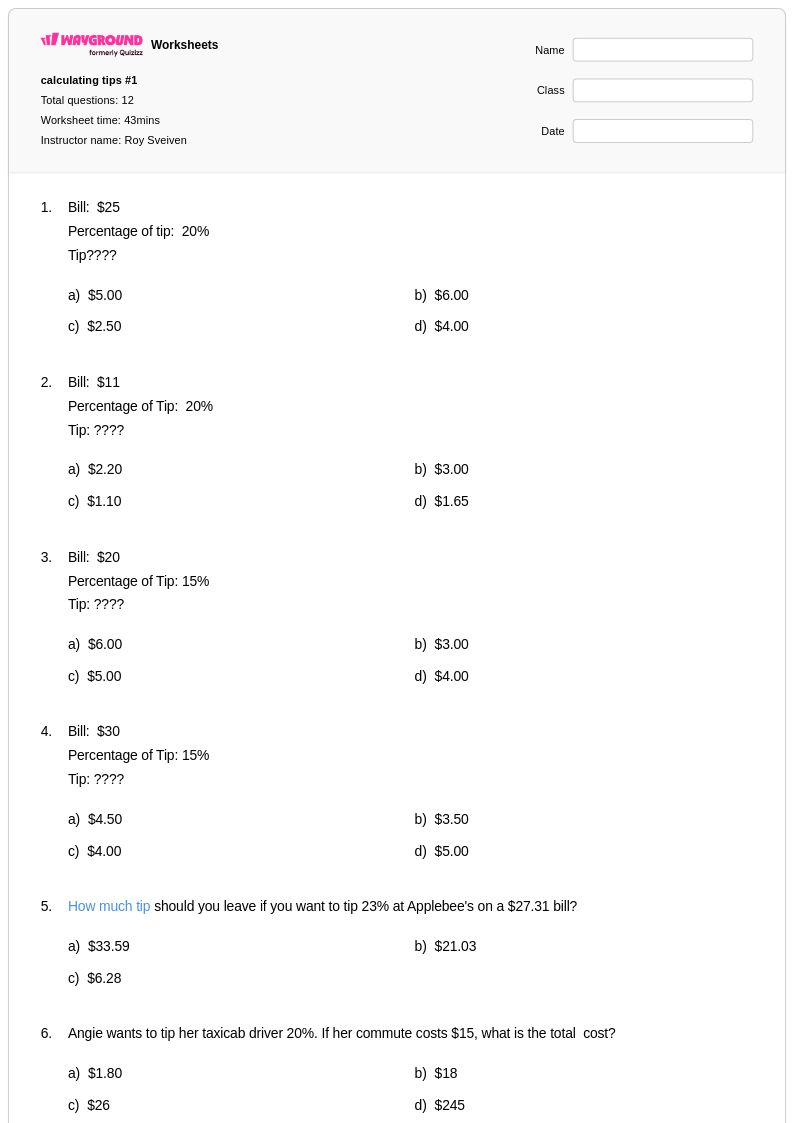
12 Q
12th
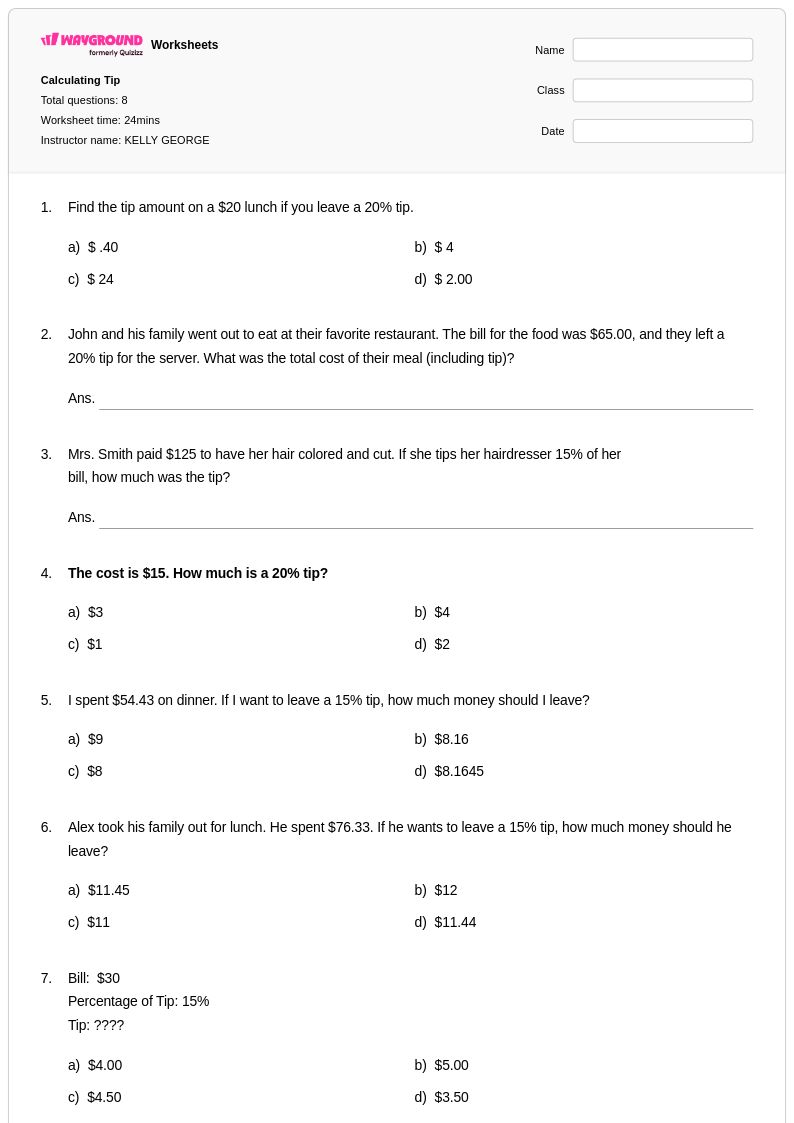
8 Q
KG - Uni
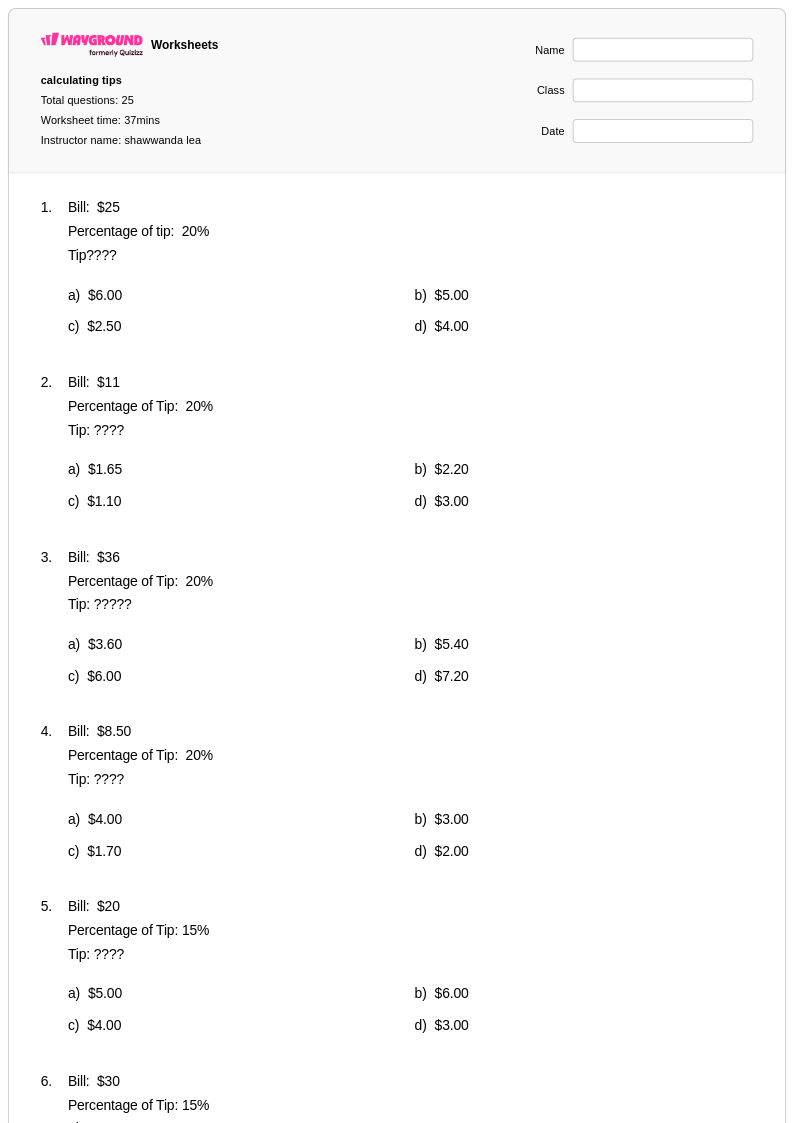
25 Q
7th - 12th
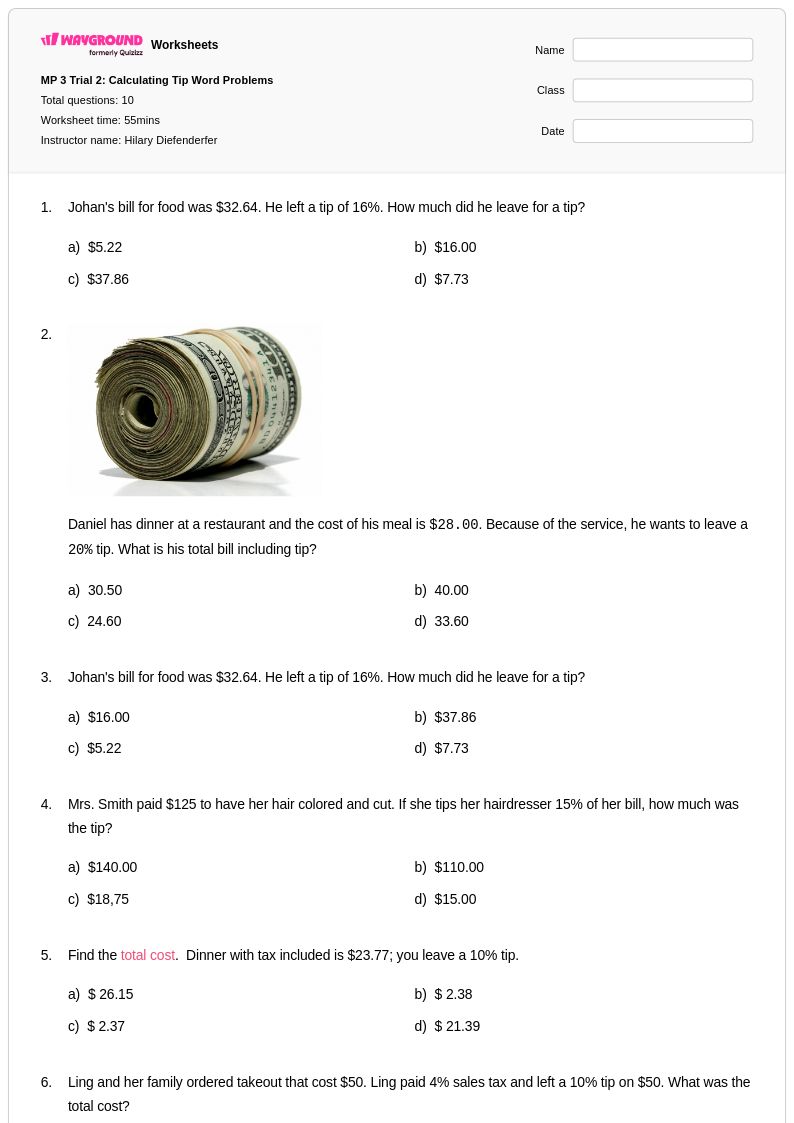
10 Q
12th
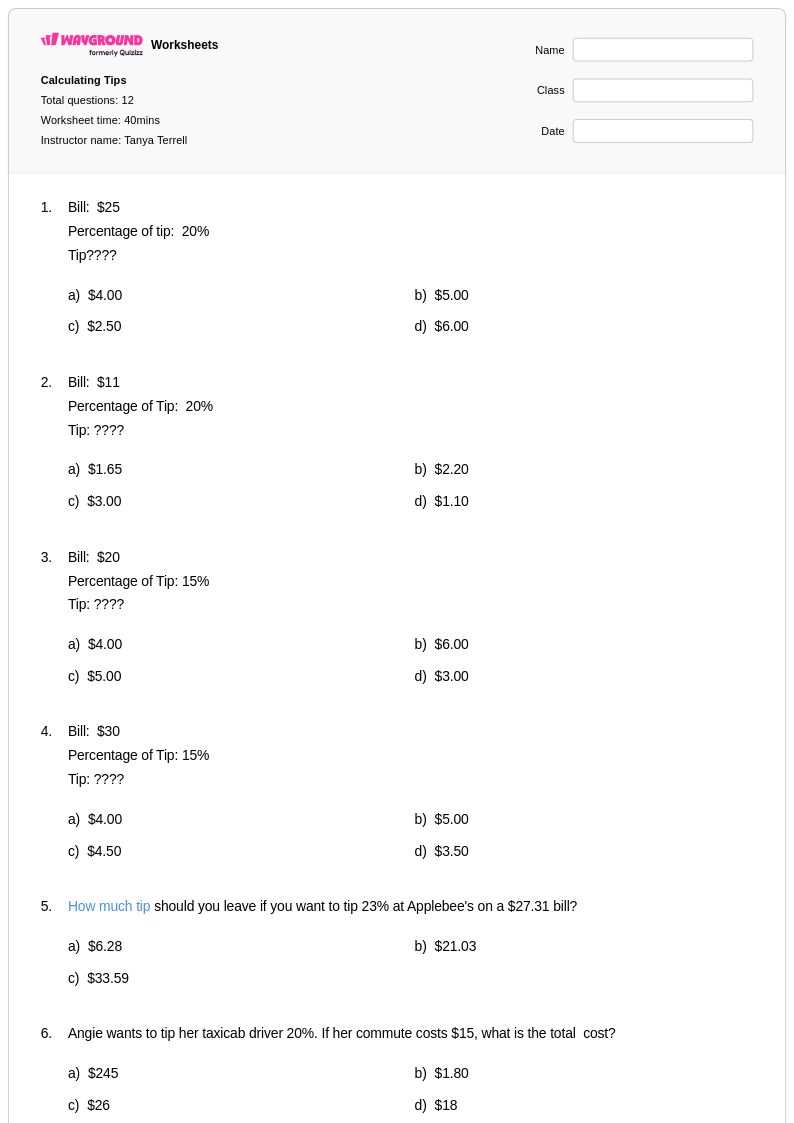
12 Q
8th
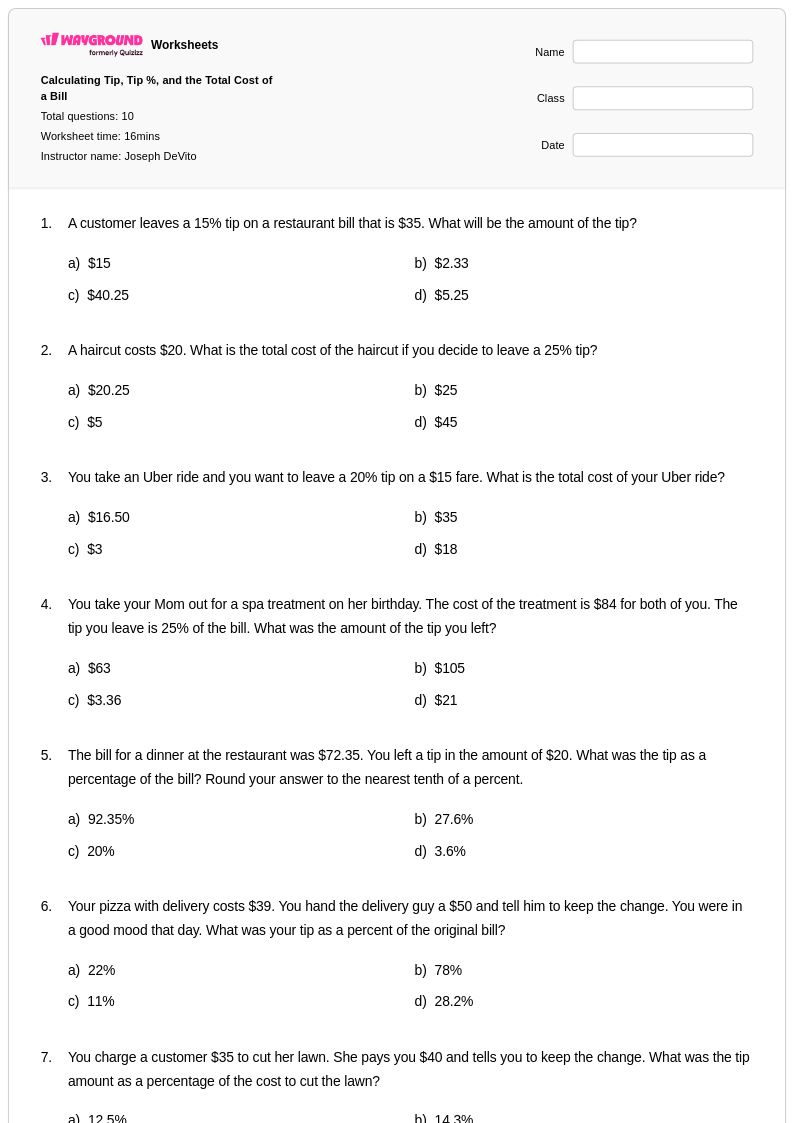
10 Q
7th
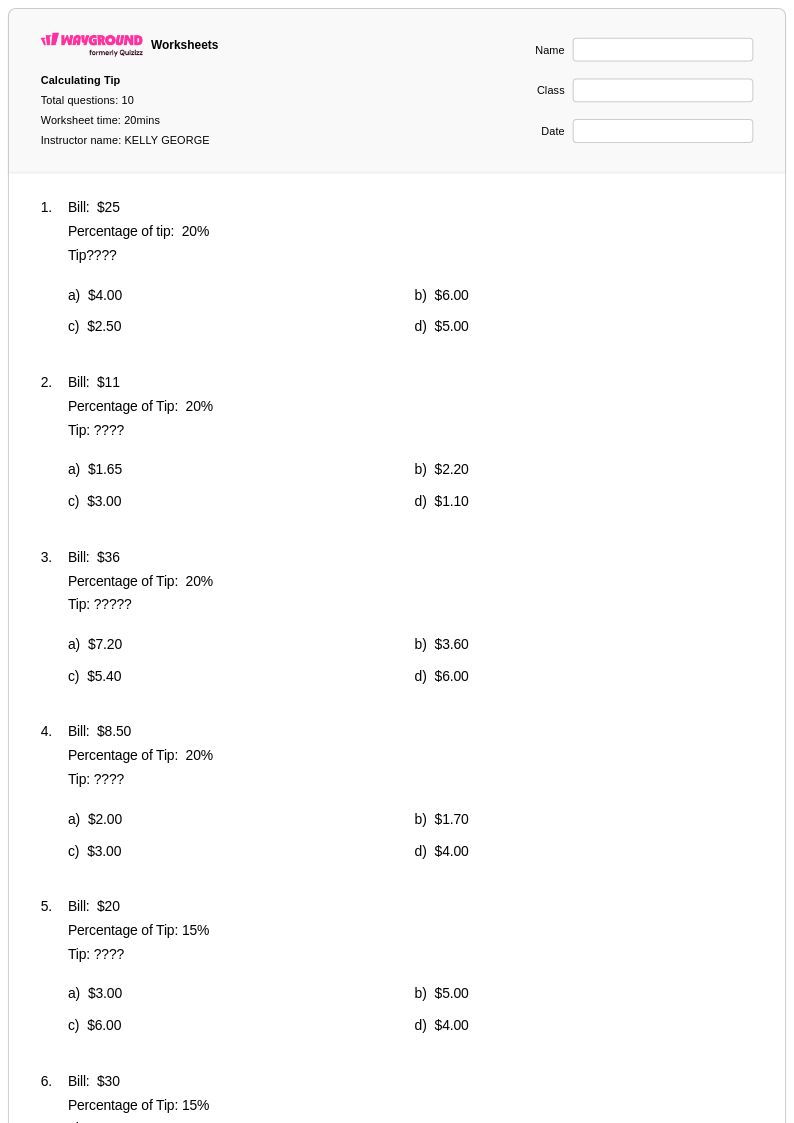
10 Q
7th
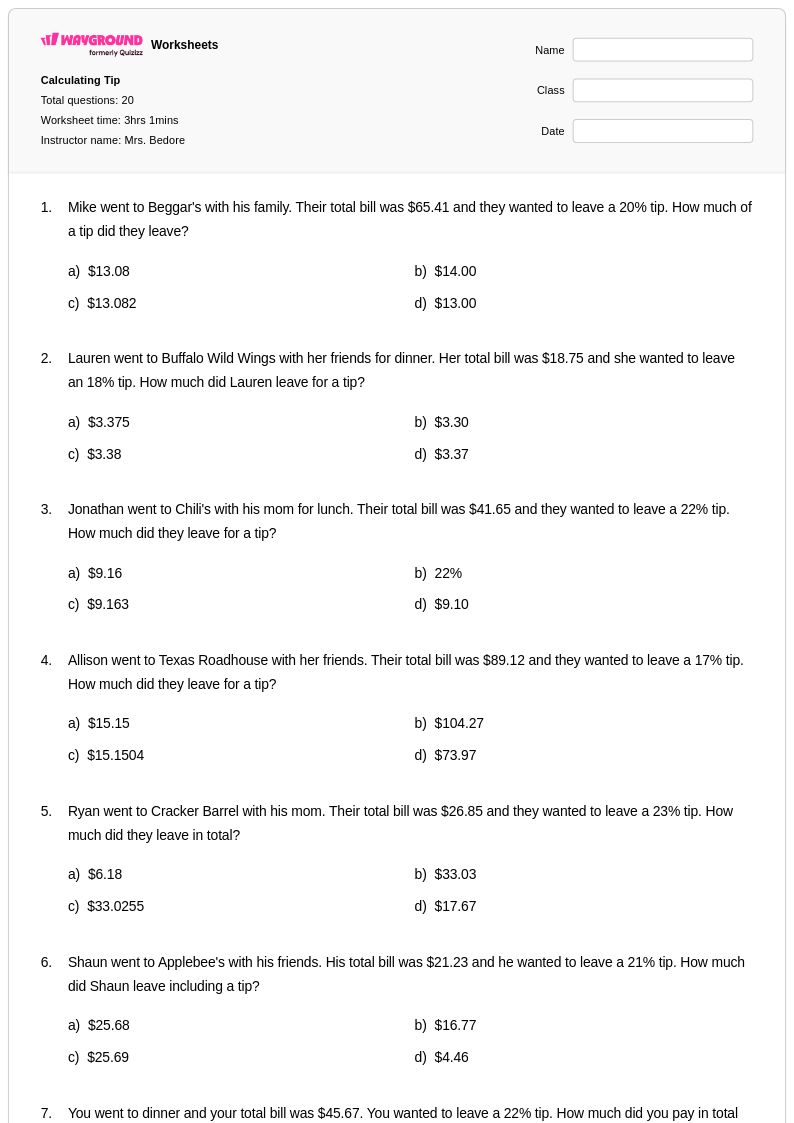
20 Q
11th
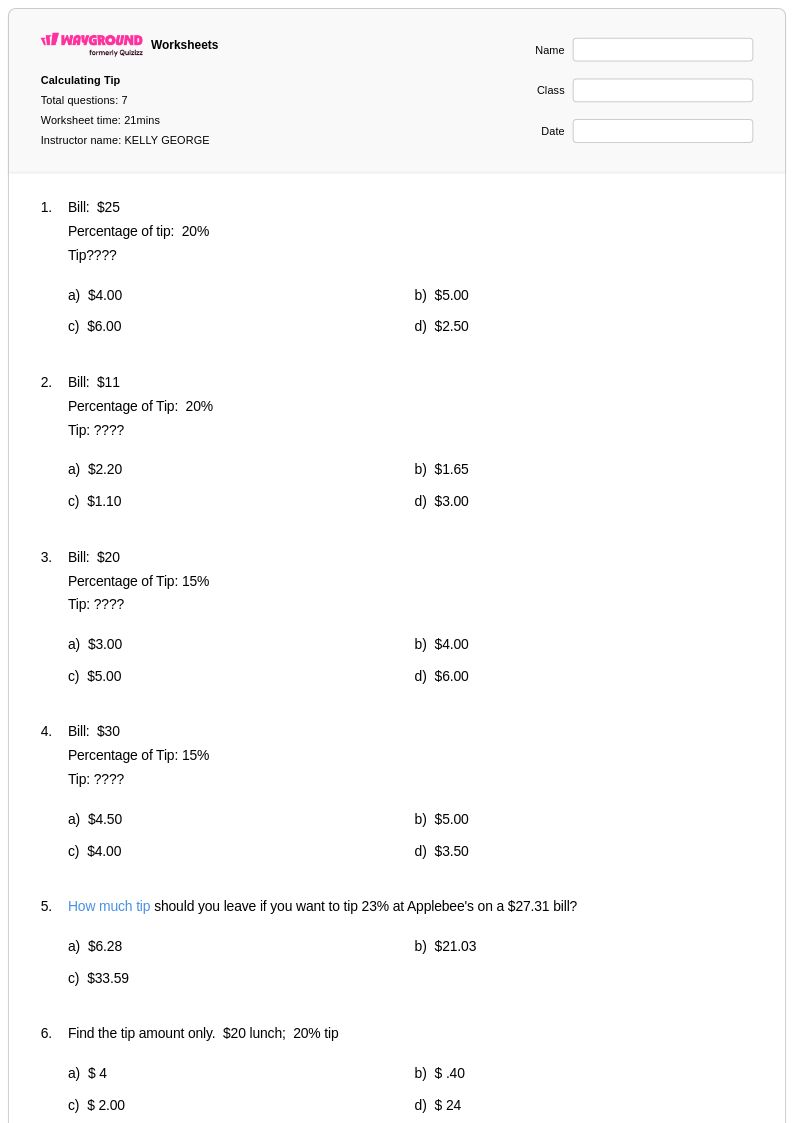
7 Q
7th
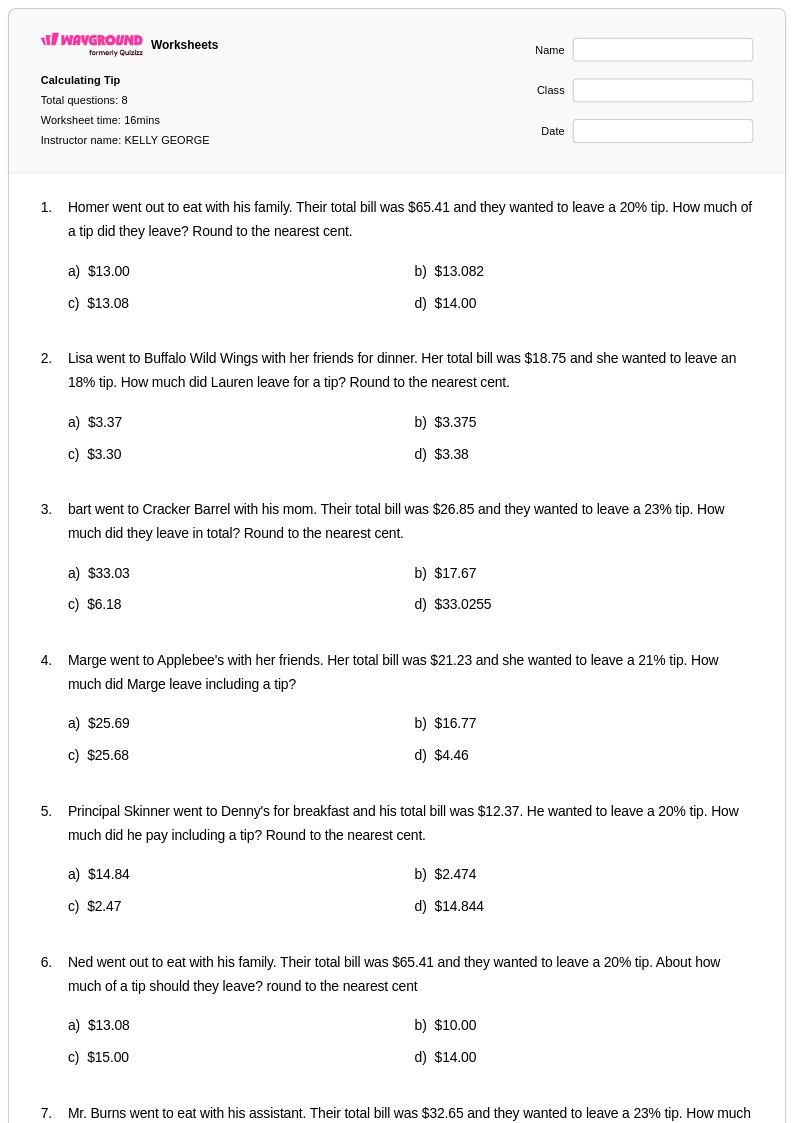
8 Q
7th
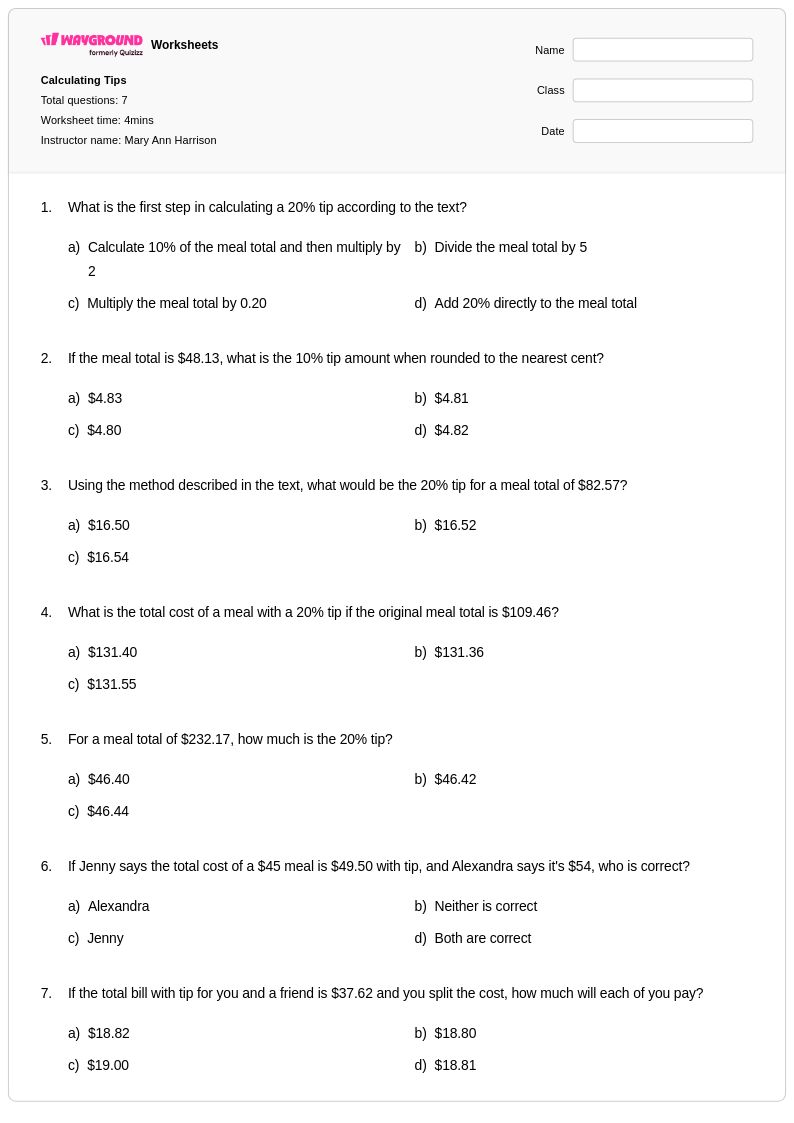
7 Q
11th
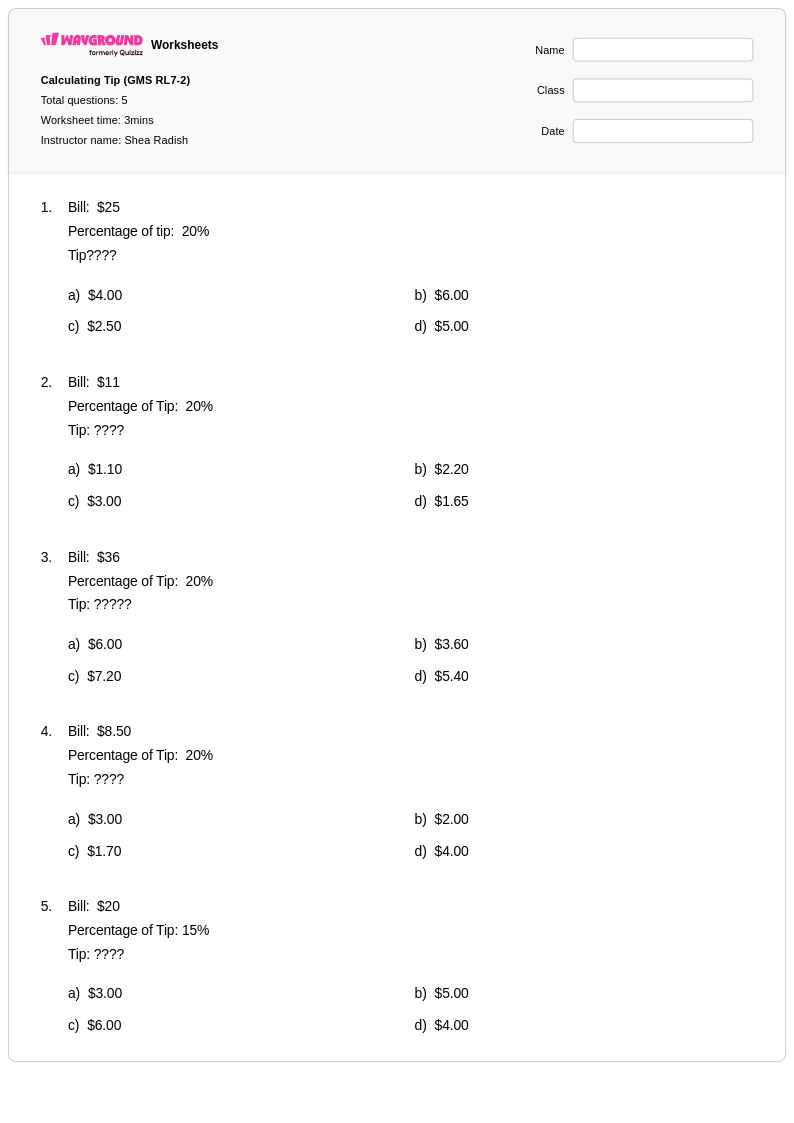
5 Q
6th - 8th
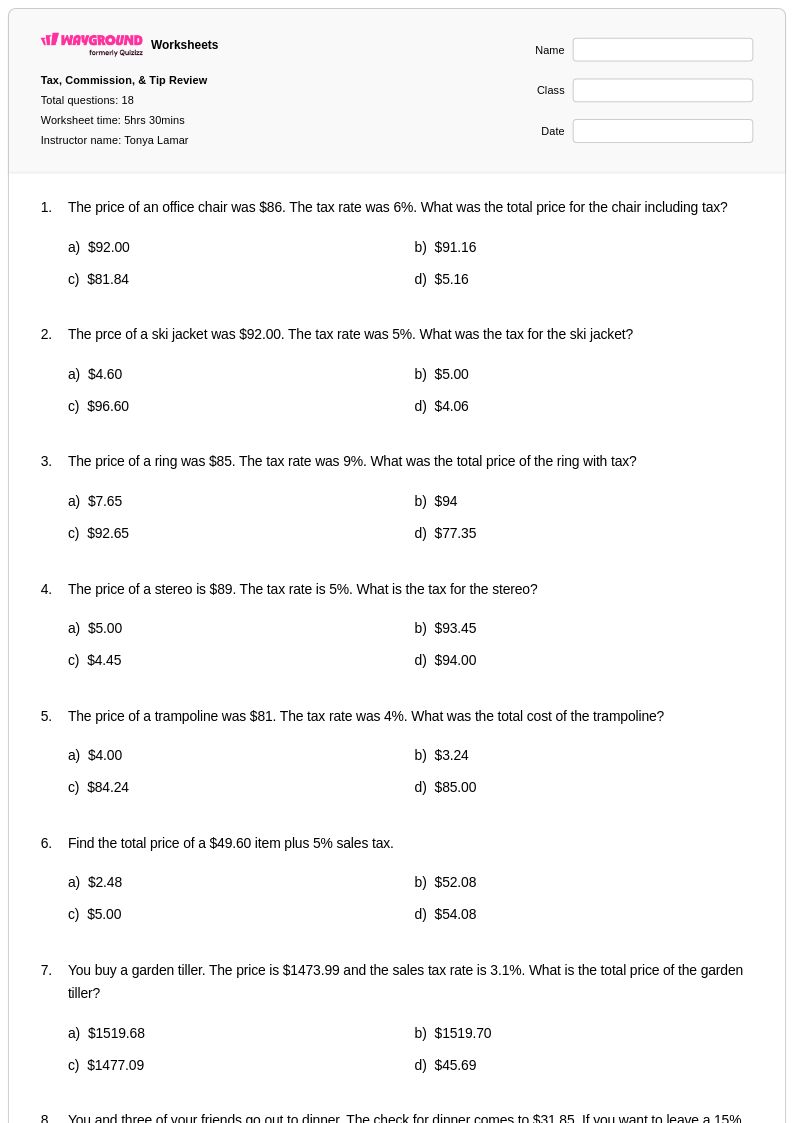
18 Q
7th
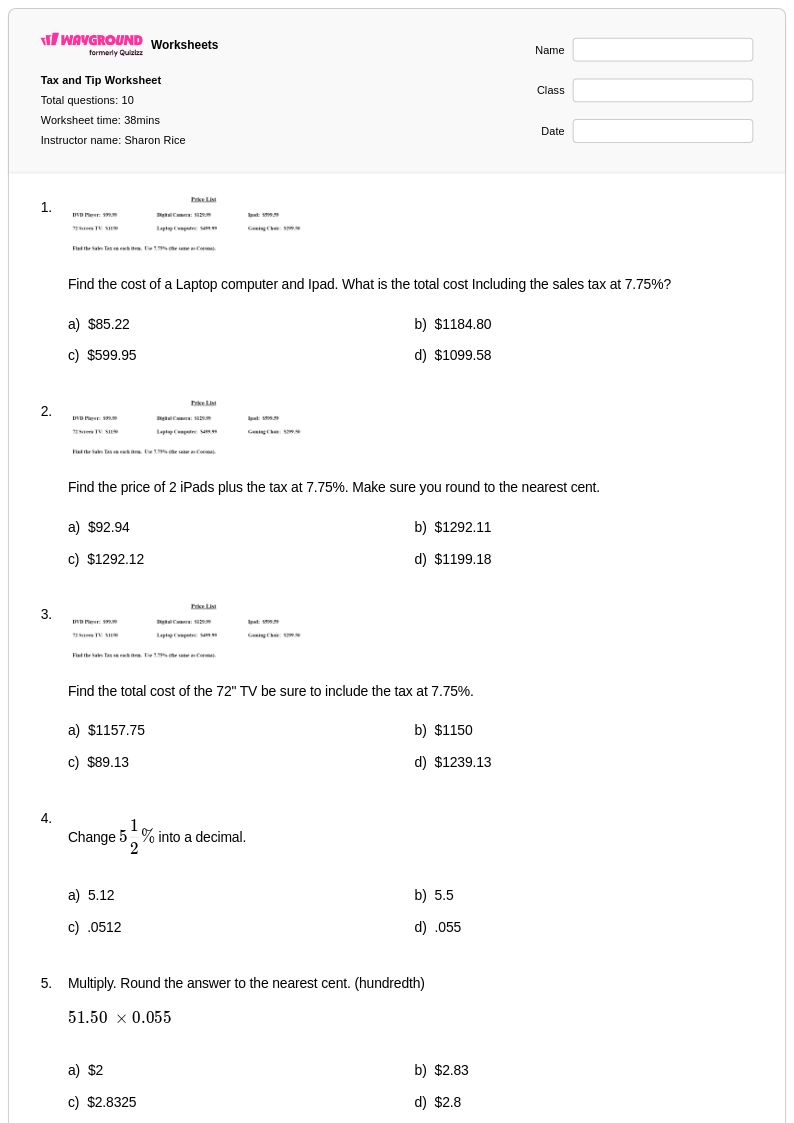
10 Q
7th
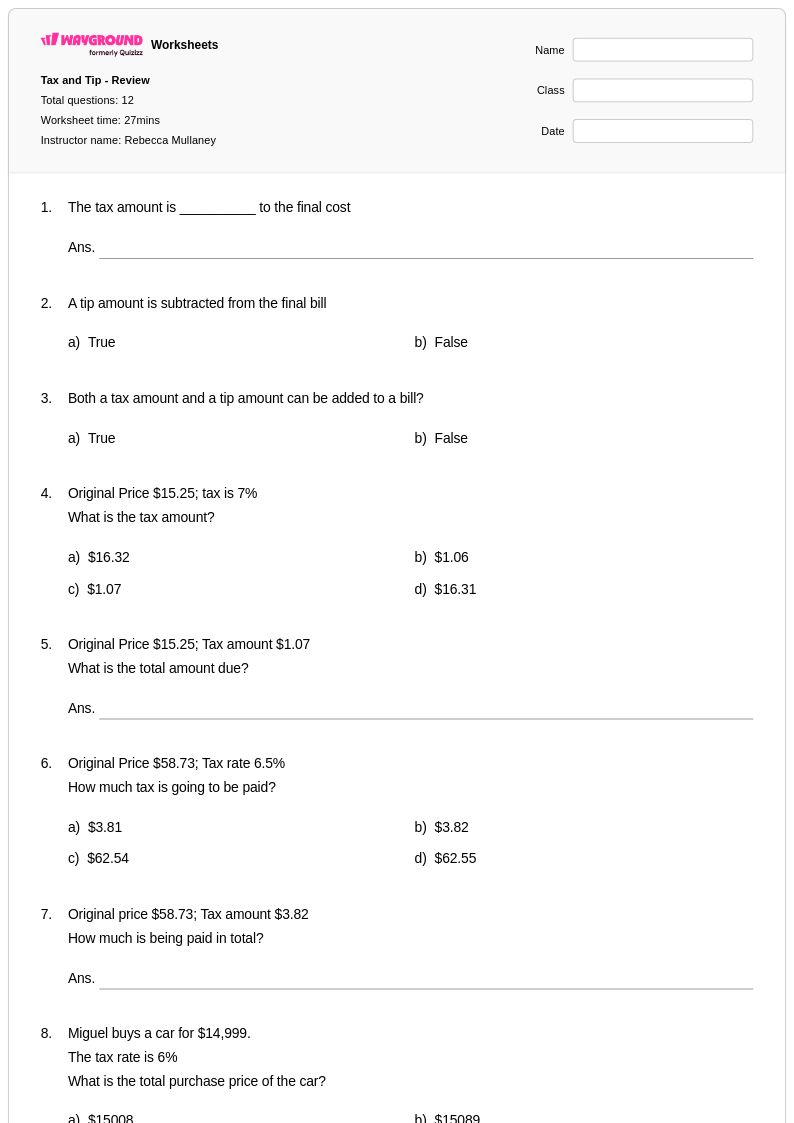
12 Q
6th - 7th
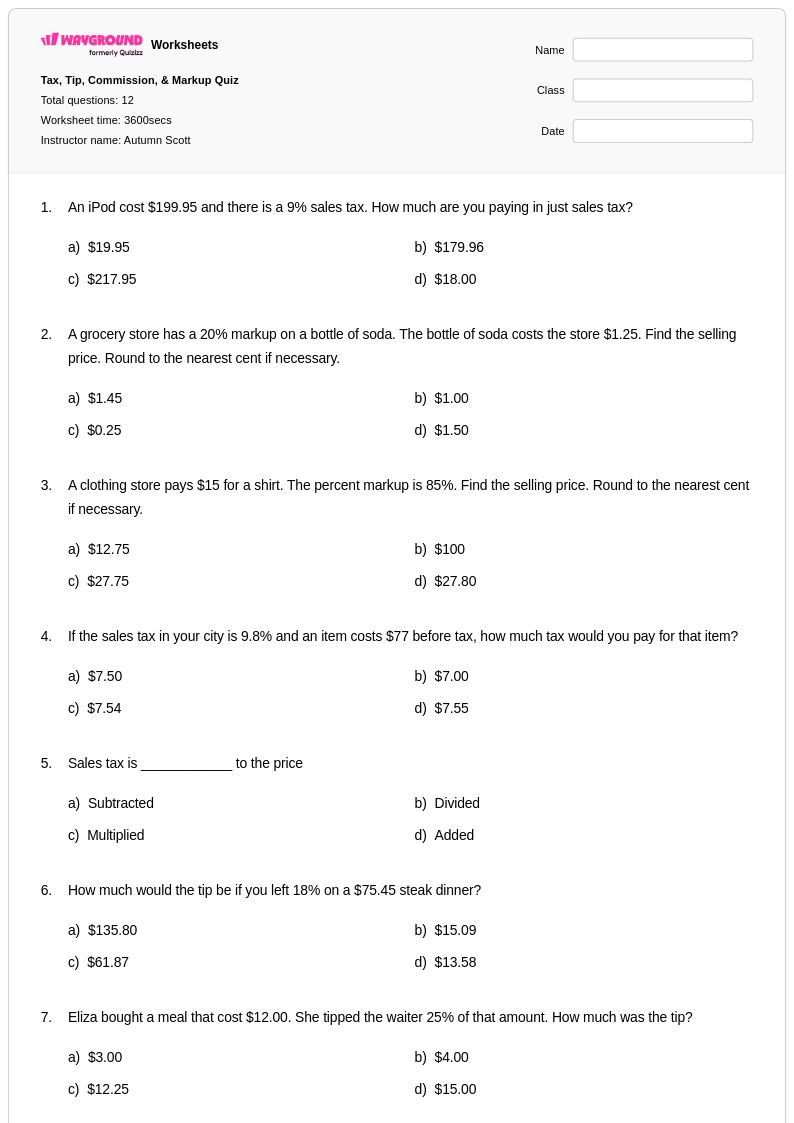
12 Q
7th
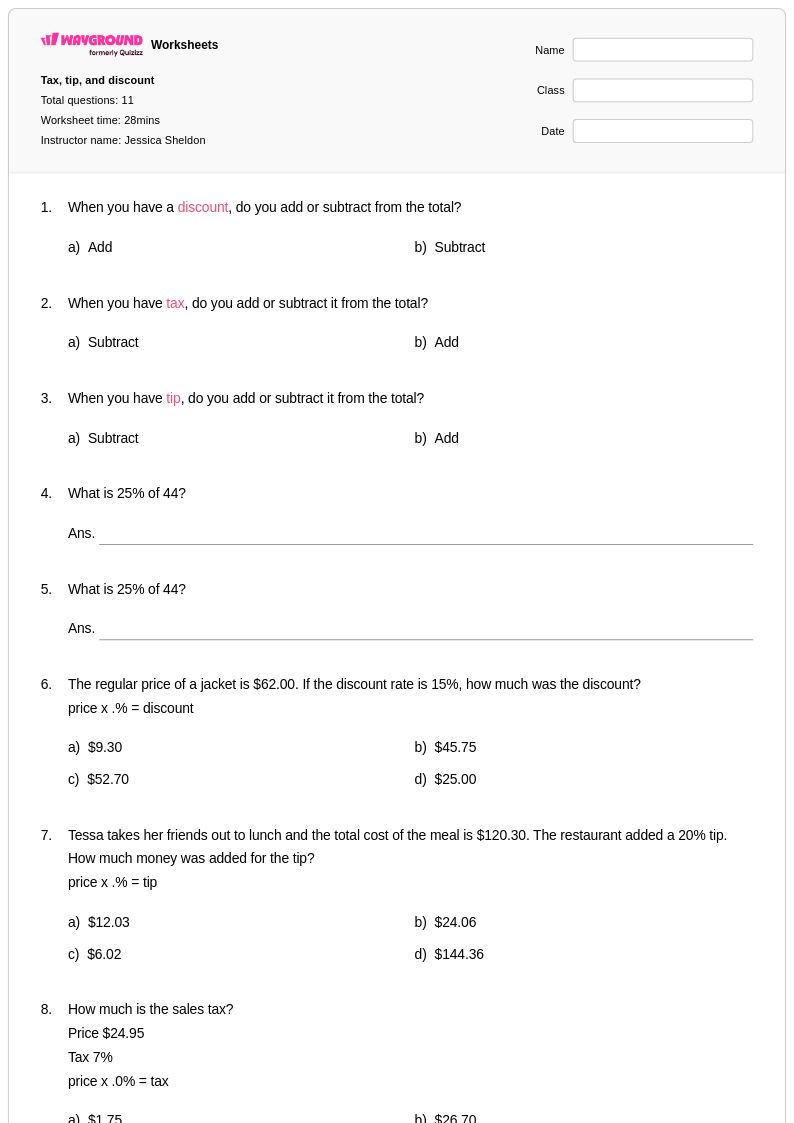
11 Q
6th - 7th
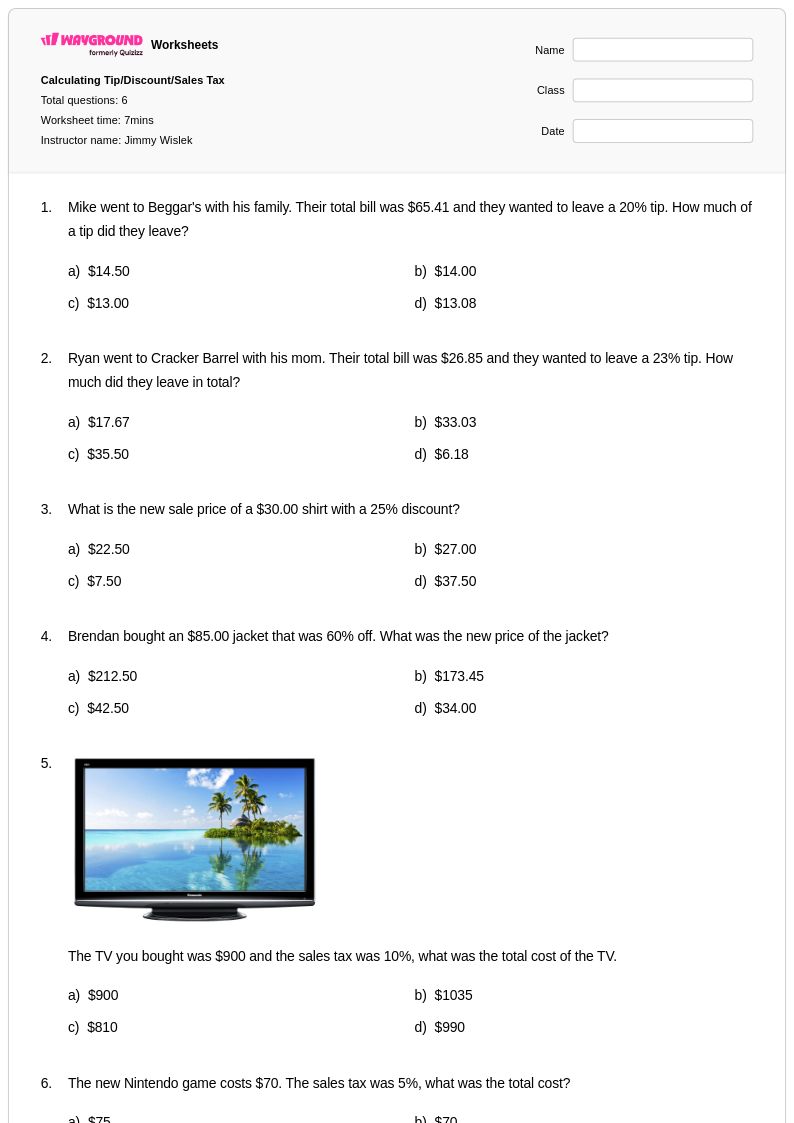
6 Q
7th
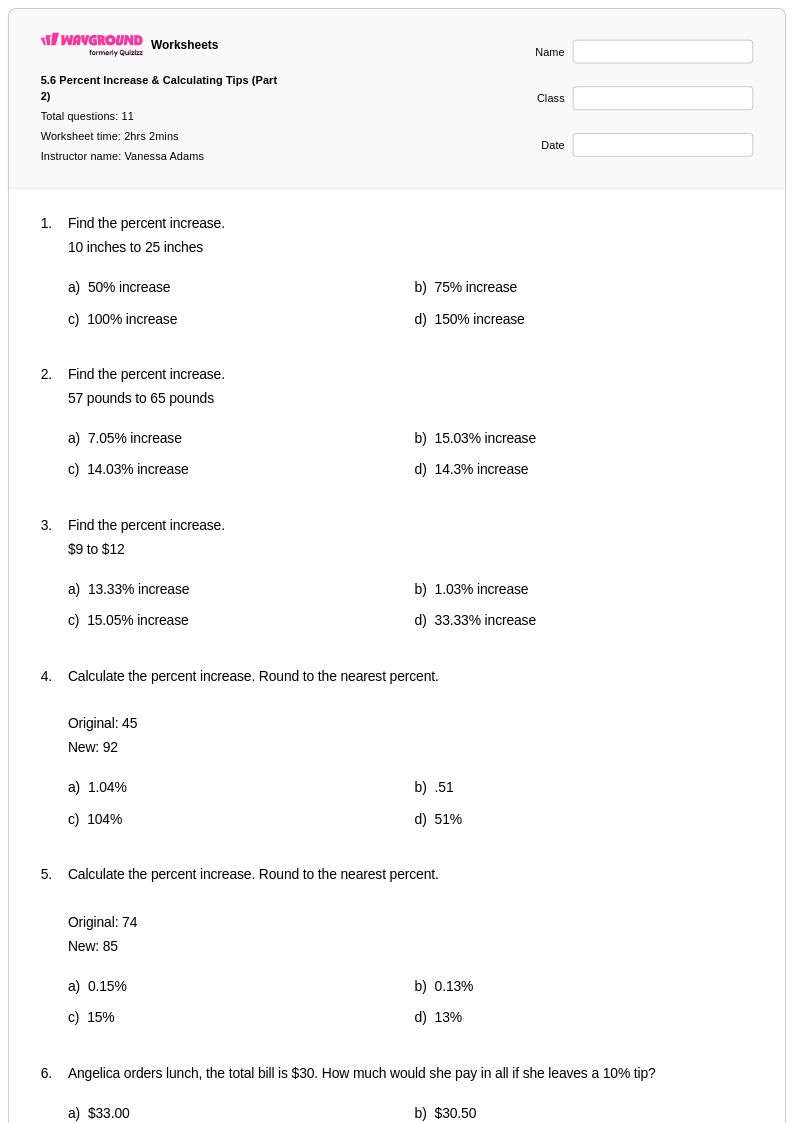
11 Q
6th - 7th
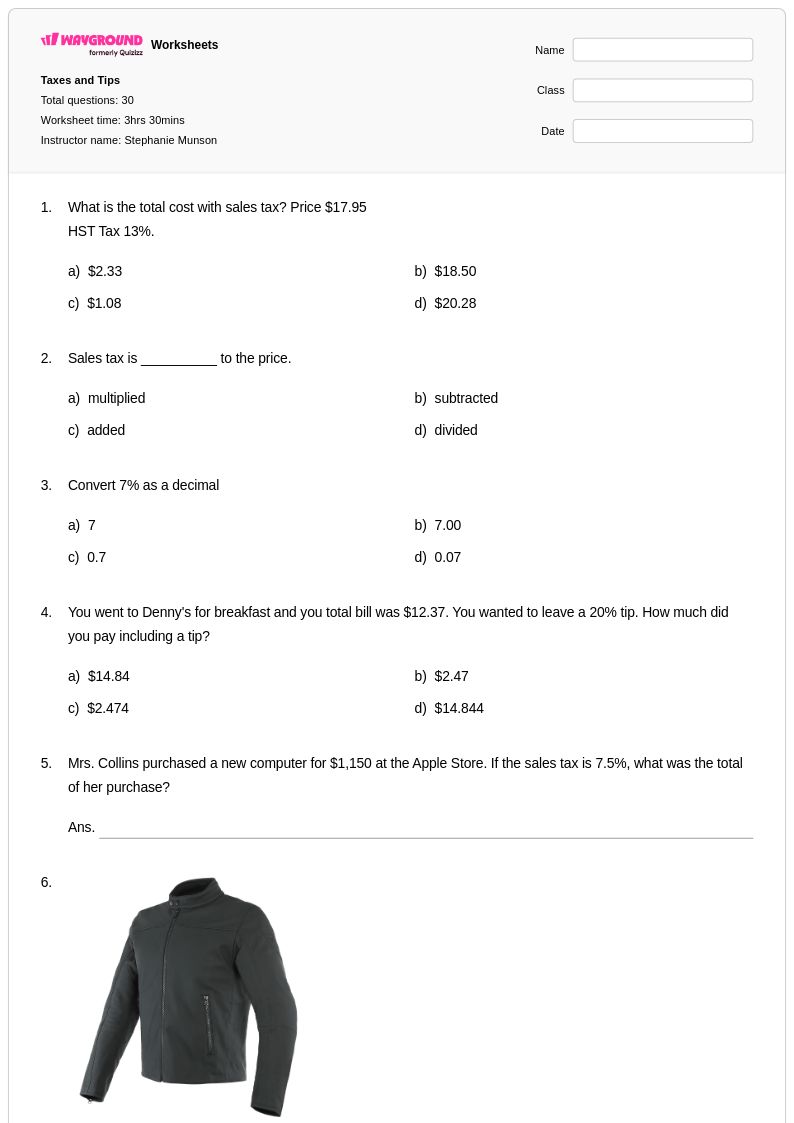
30 Q
7th
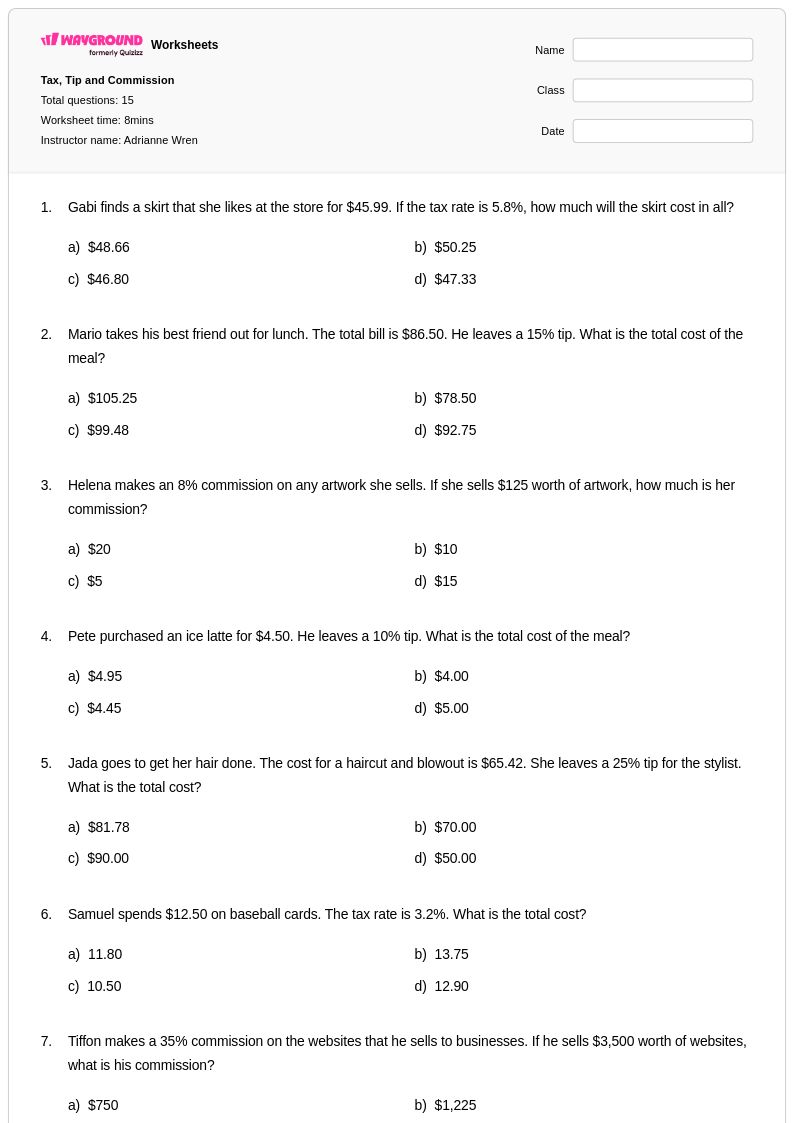
15 Q
7th
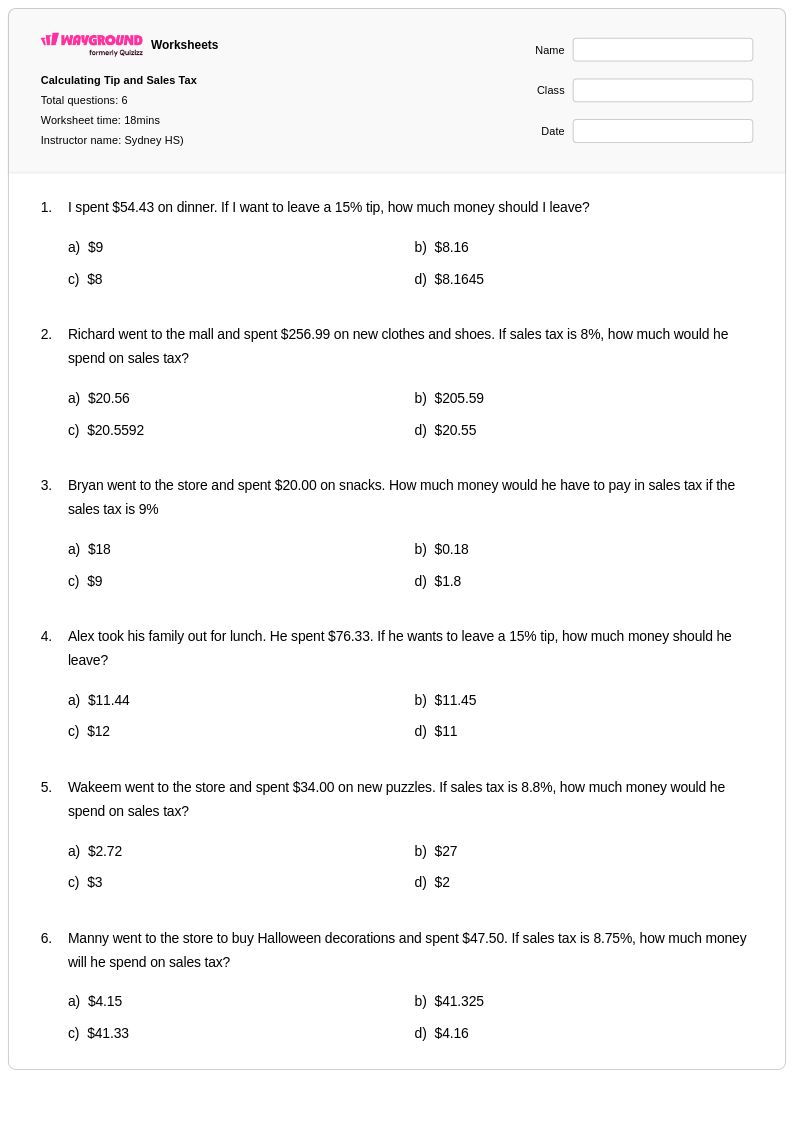
6 Q
9th
Explore Worksheets by Subjects
Explore printable Calculating Tip worksheets
Calculating tip worksheets available through Wayground (formerly Quizizz) provide students with essential practice in applying percentage calculations to real-world scenarios they will encounter throughout their lives. These comprehensive worksheets strengthen critical mathematical skills by teaching students how to determine appropriate gratuity amounts using various methods, including mental math strategies, percentage formulas, and proportional reasoning. Students work through carefully structured practice problems that progress from basic tip calculations using common percentages like 15% and 20% to more complex scenarios involving different service situations and tip rates. Each worksheet comes with a detailed answer key that allows students to verify their solutions and understand the step-by-step processes involved in accurate tip computation. These free printables serve as valuable resources for reinforcing the connection between classroom mathematics and practical financial literacy skills that students will use as consumers and in future careers.
Wayground (formerly Quizizz) supports mathematics educators with an extensive collection of teacher-created tip calculation worksheets drawn from millions of educational resources developed by experienced instructors. The platform's robust search and filtering capabilities enable teachers to quickly locate materials that align with specific learning objectives and mathematical standards, while built-in differentiation tools allow for seamless customization based on individual student needs and skill levels. These versatile worksheets are available in both printable pdf format for traditional classroom use and digital formats that support interactive learning environments. Teachers can efficiently modify existing worksheets or combine multiple resources to create targeted practice sets for remediation, enrichment, or regular skill maintenance, making lesson planning more effective and ensuring that all students receive appropriate challenge levels as they master this fundamental application of percentage mathematics.
FAQs
How do I teach students to calculate a tip?
What exercises help students practice calculating tips?
What mistakes do students commonly make when calculating tips?
How can I use a calculating tip worksheet in my classroom?
How does calculating tips fit into the Common Core math progression?
How can I differentiate tip calculation practice?