
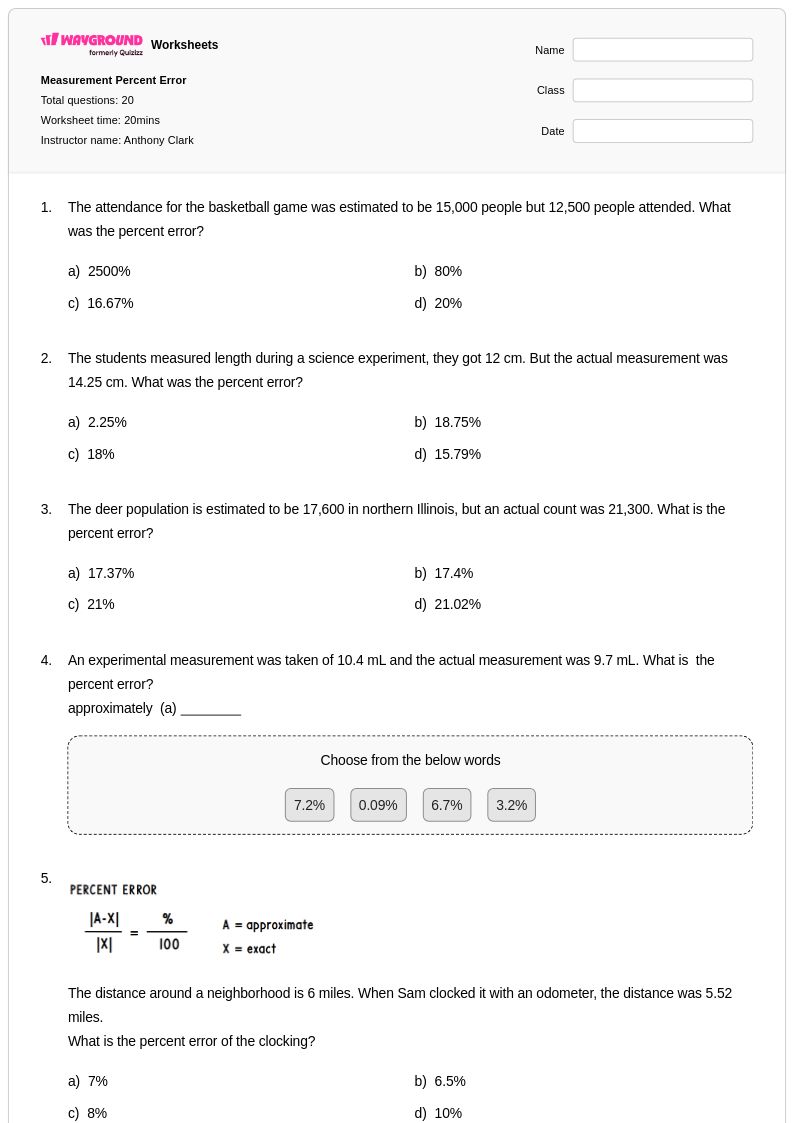
20 Q
7th - Uni
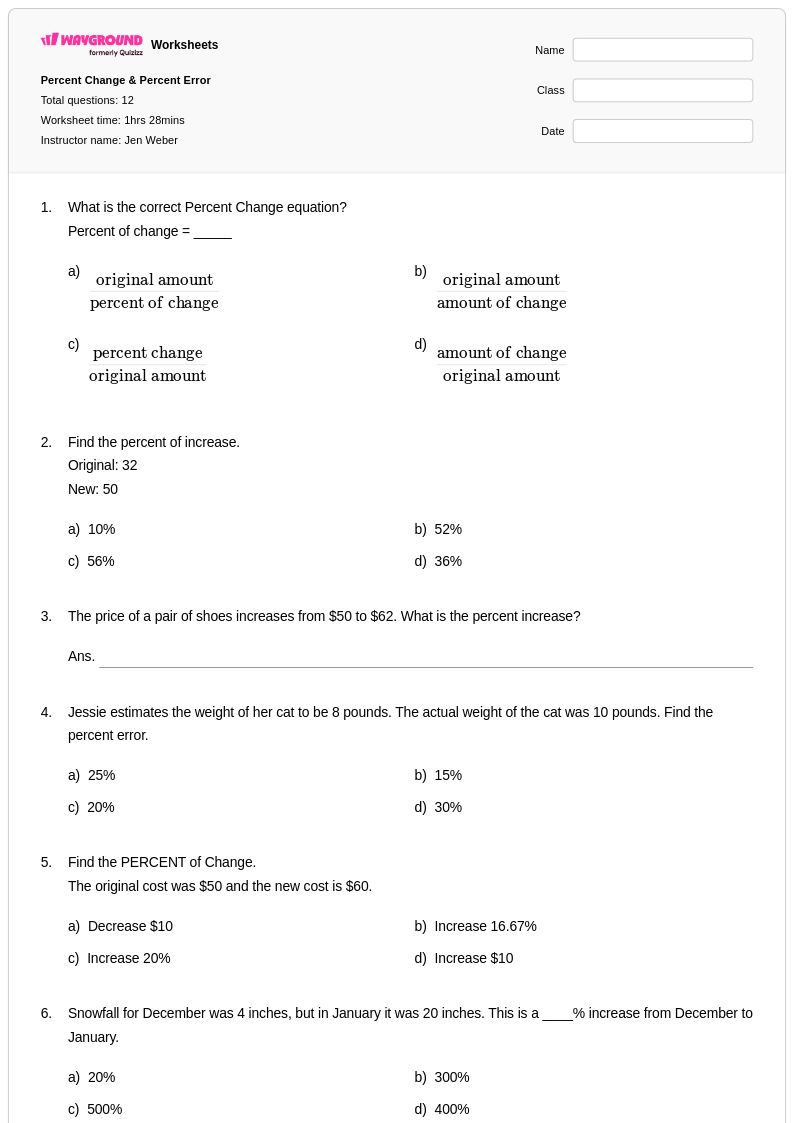
12 Q
7th
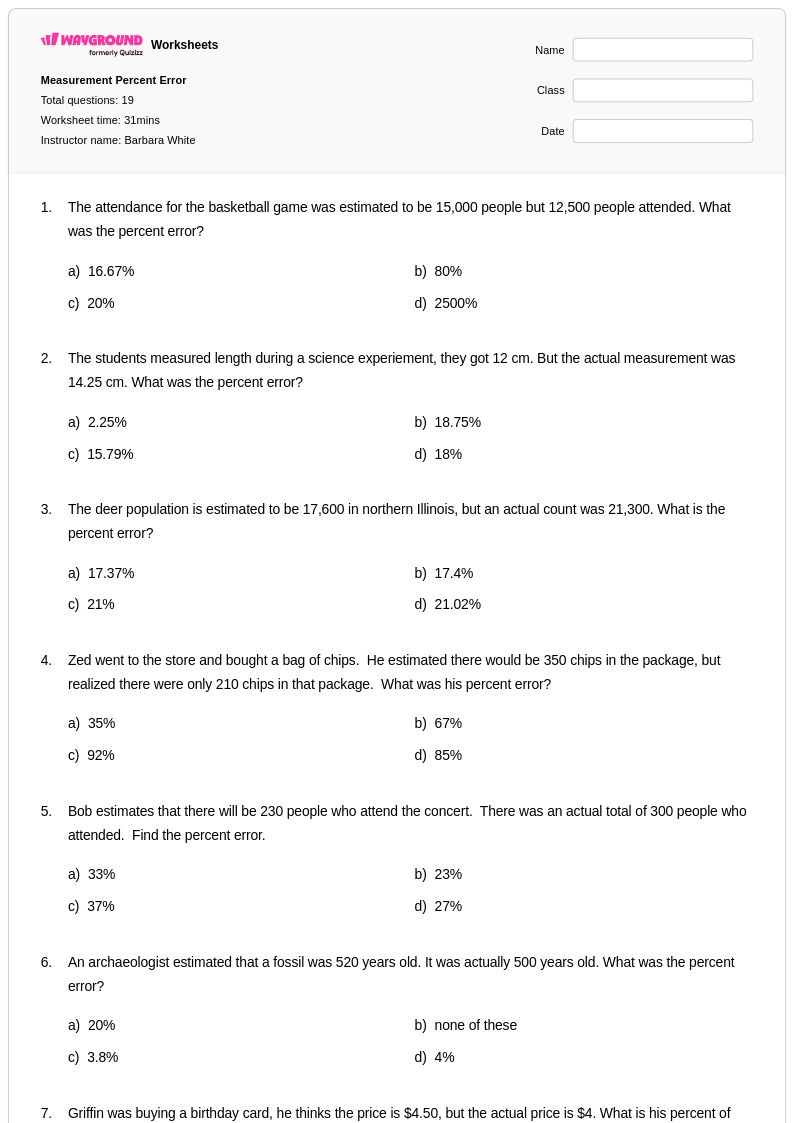
19 Q
7th
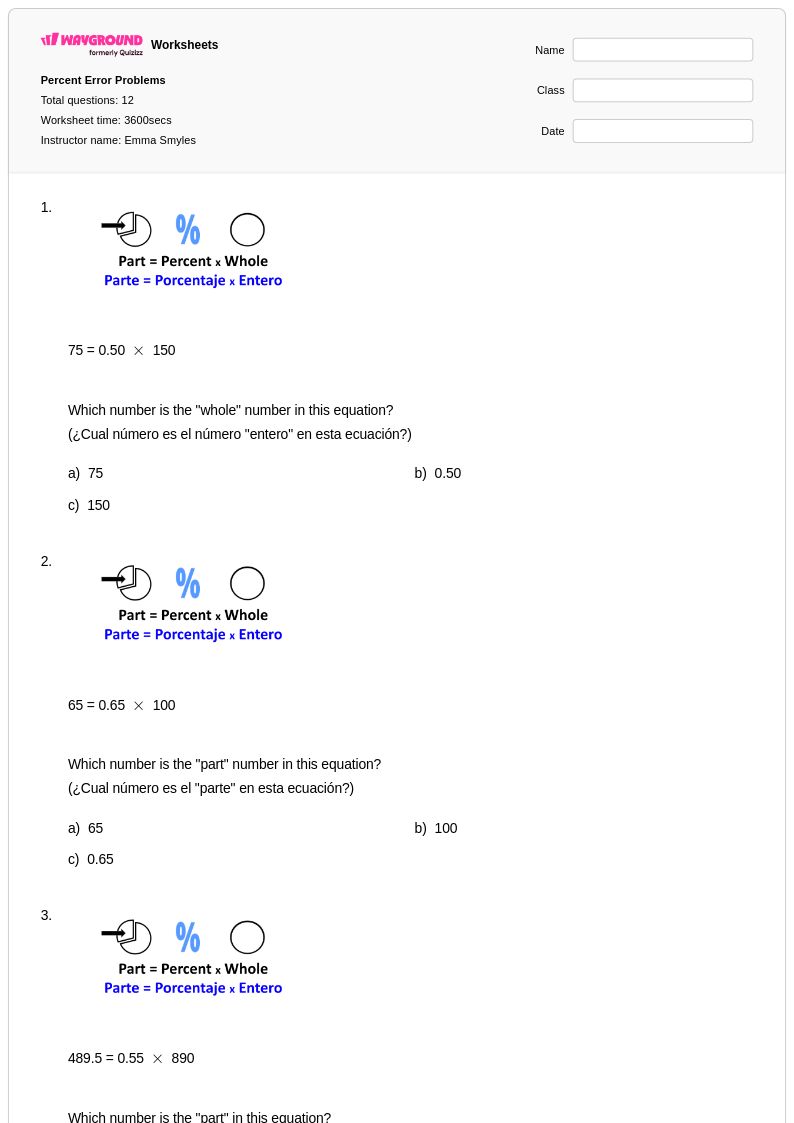
12 Q
7th
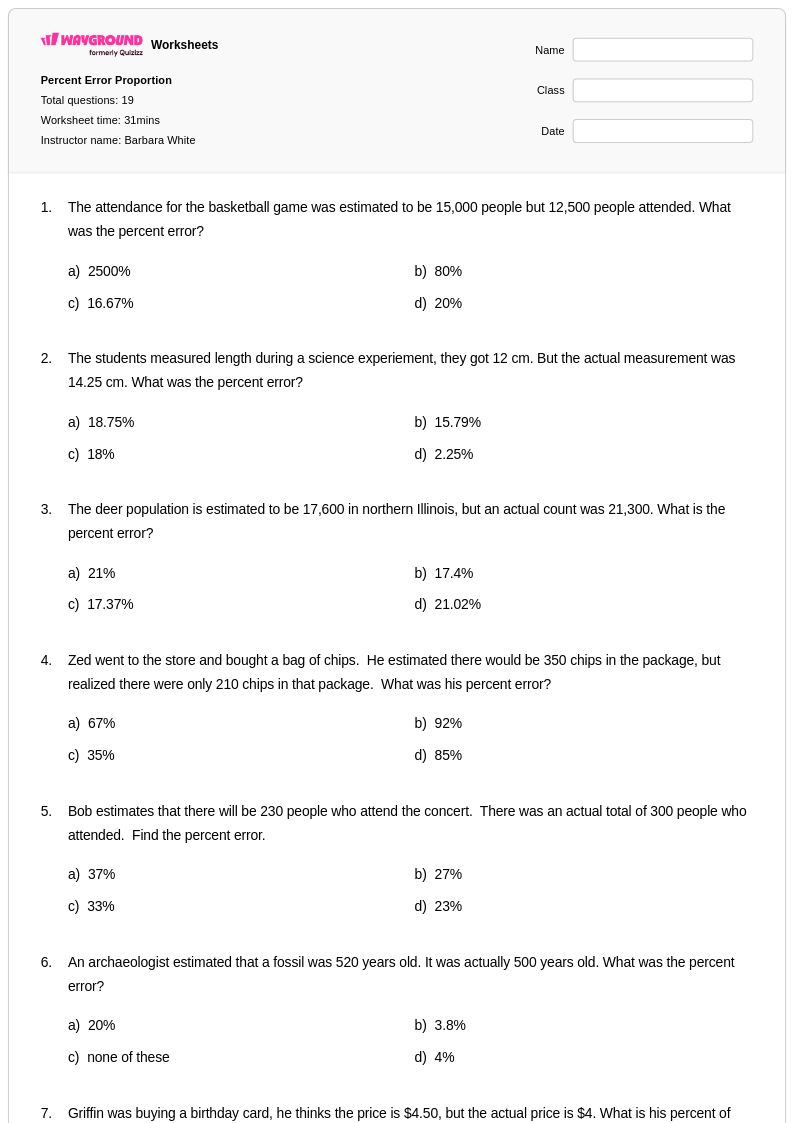
19 Q
7th
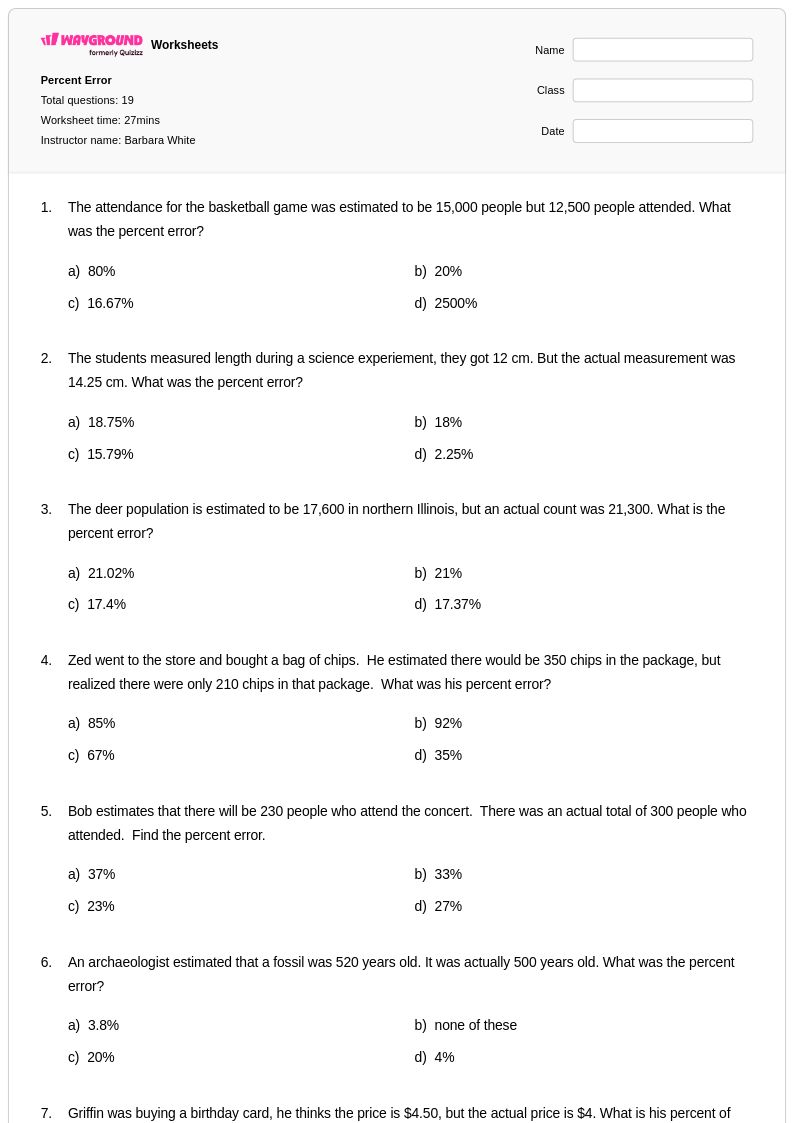
19 Q
7th
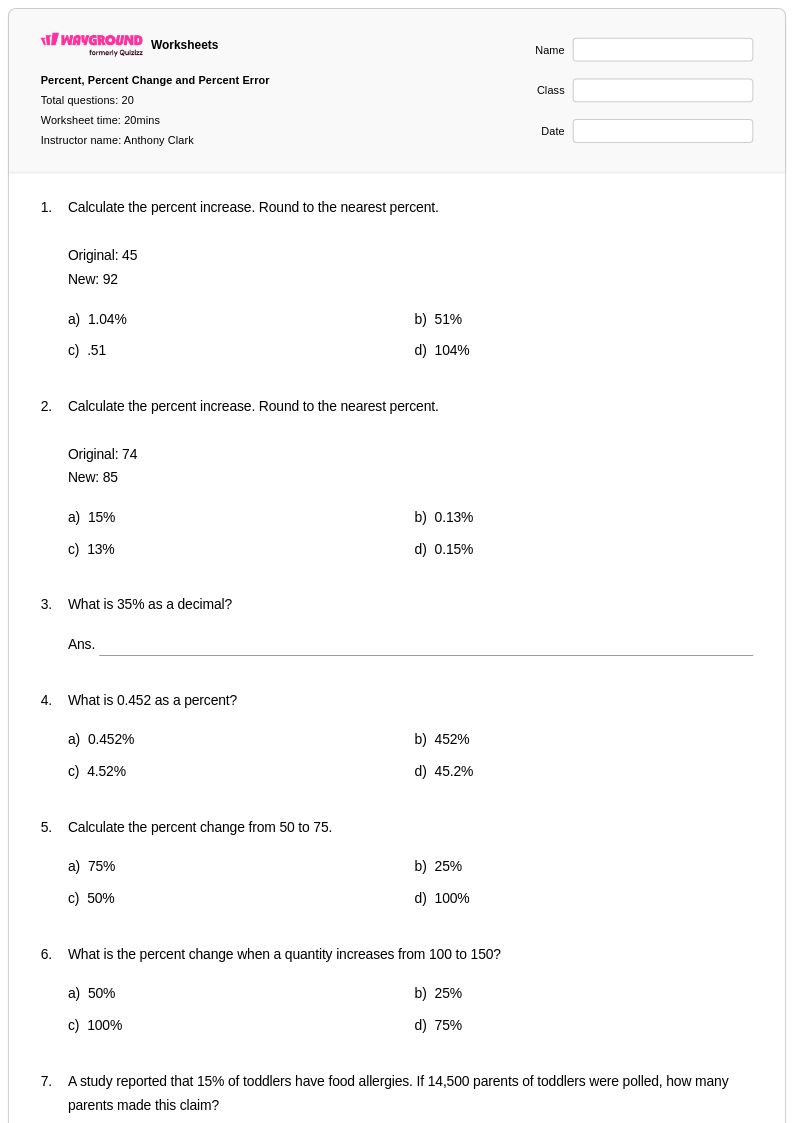
20 Q
7th - Uni
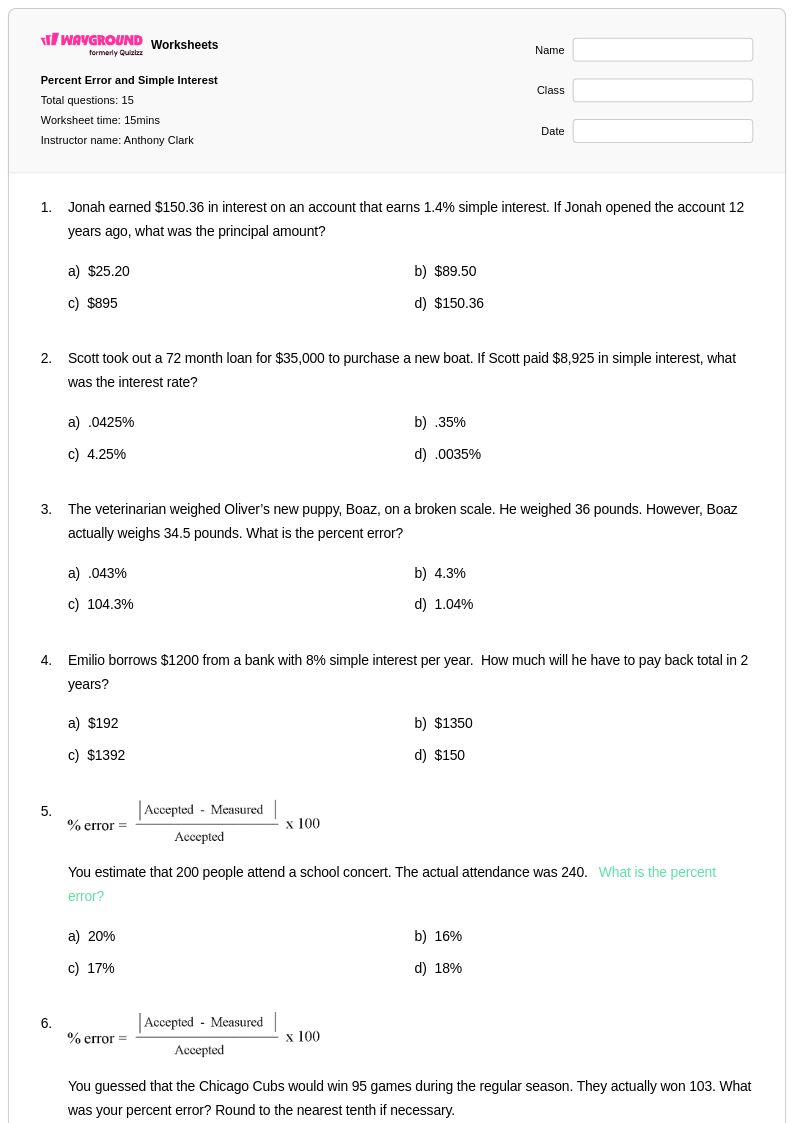
15 Q
7th - Uni
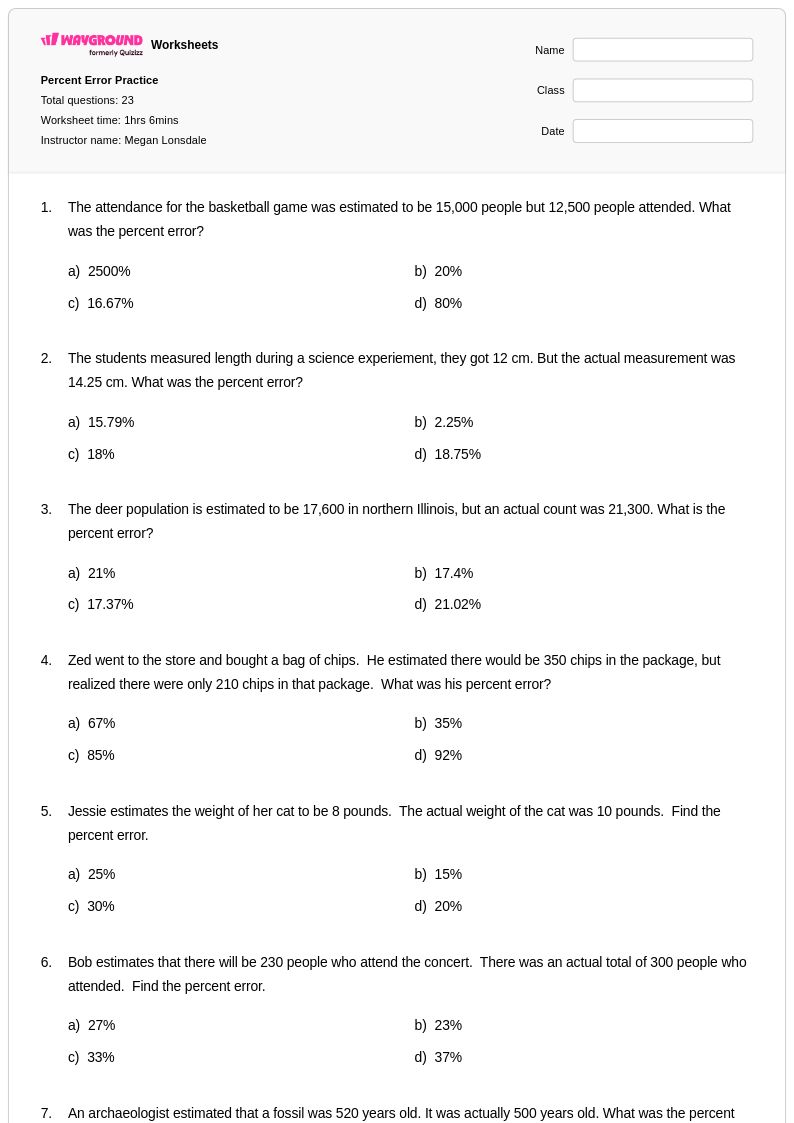
23 Q
6th - 9th
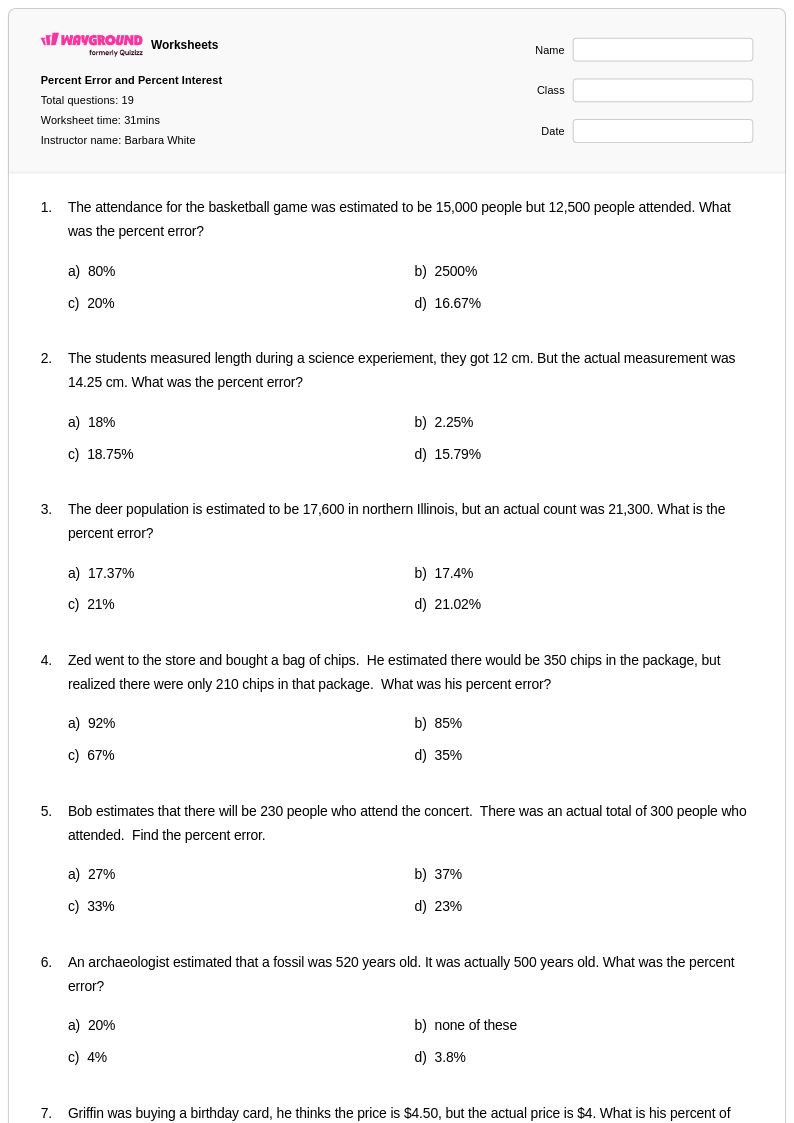
19 Q
7th
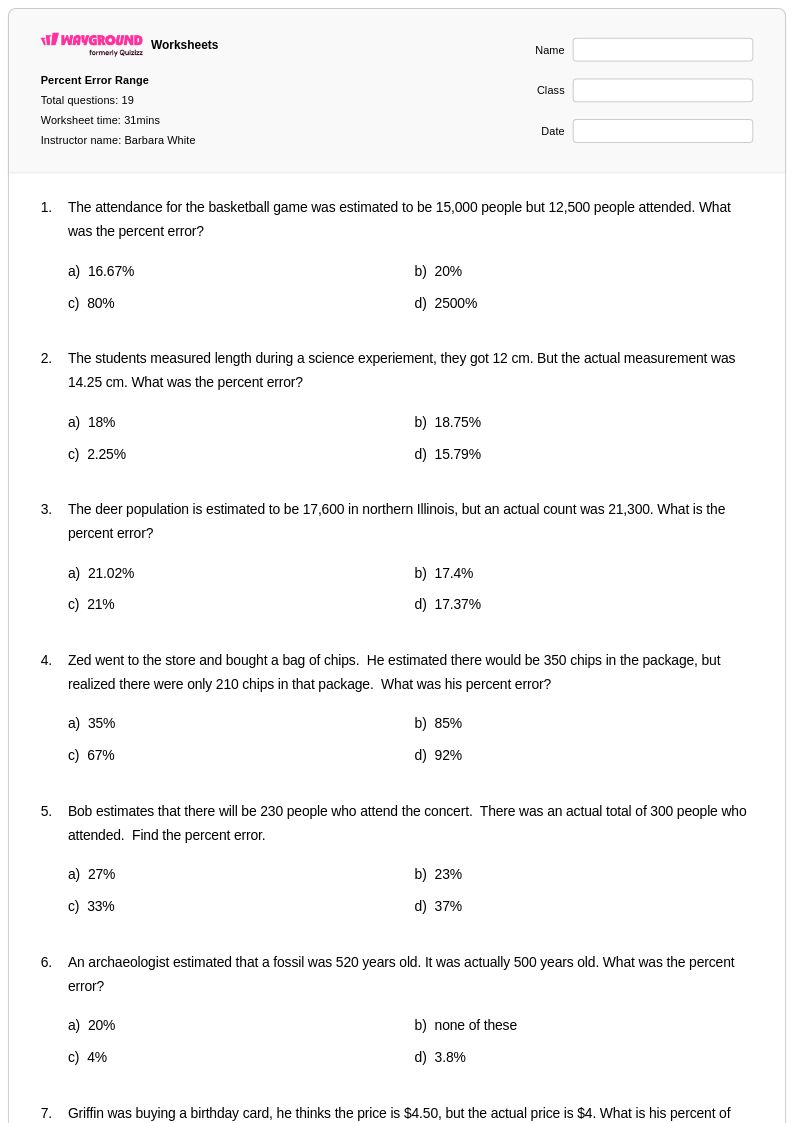
19 Q
7th
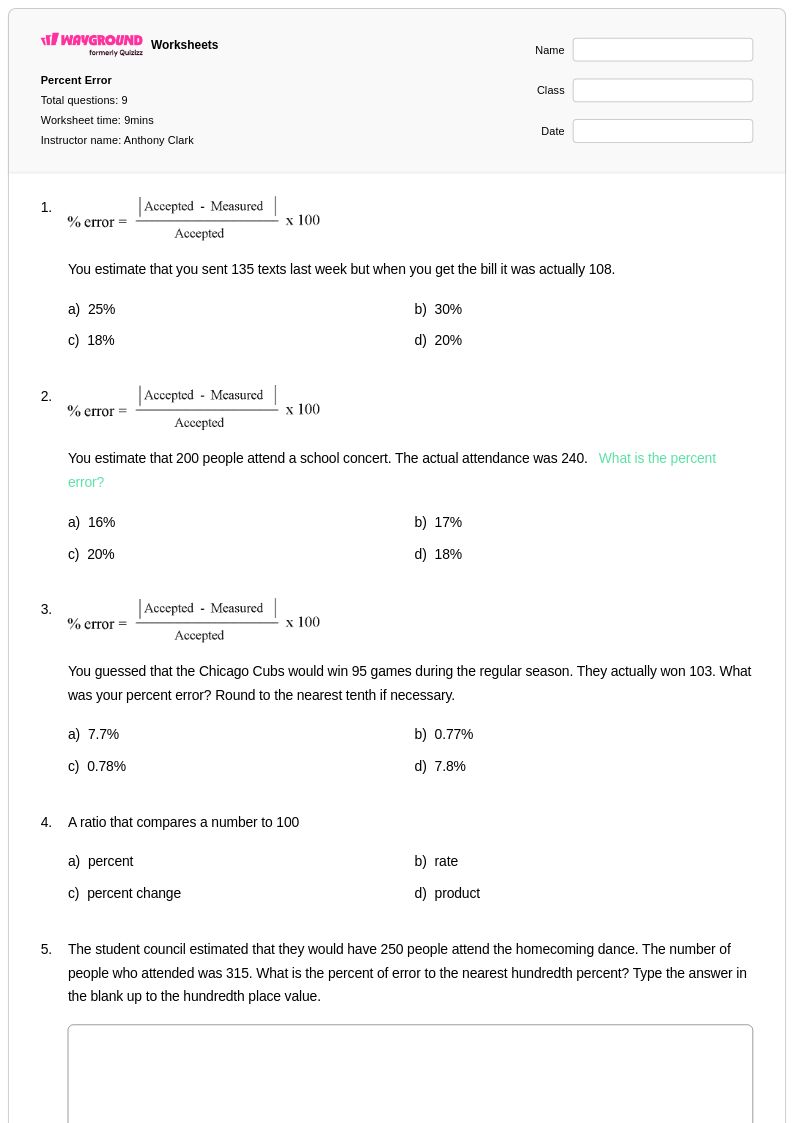
9 Q
7th - Uni
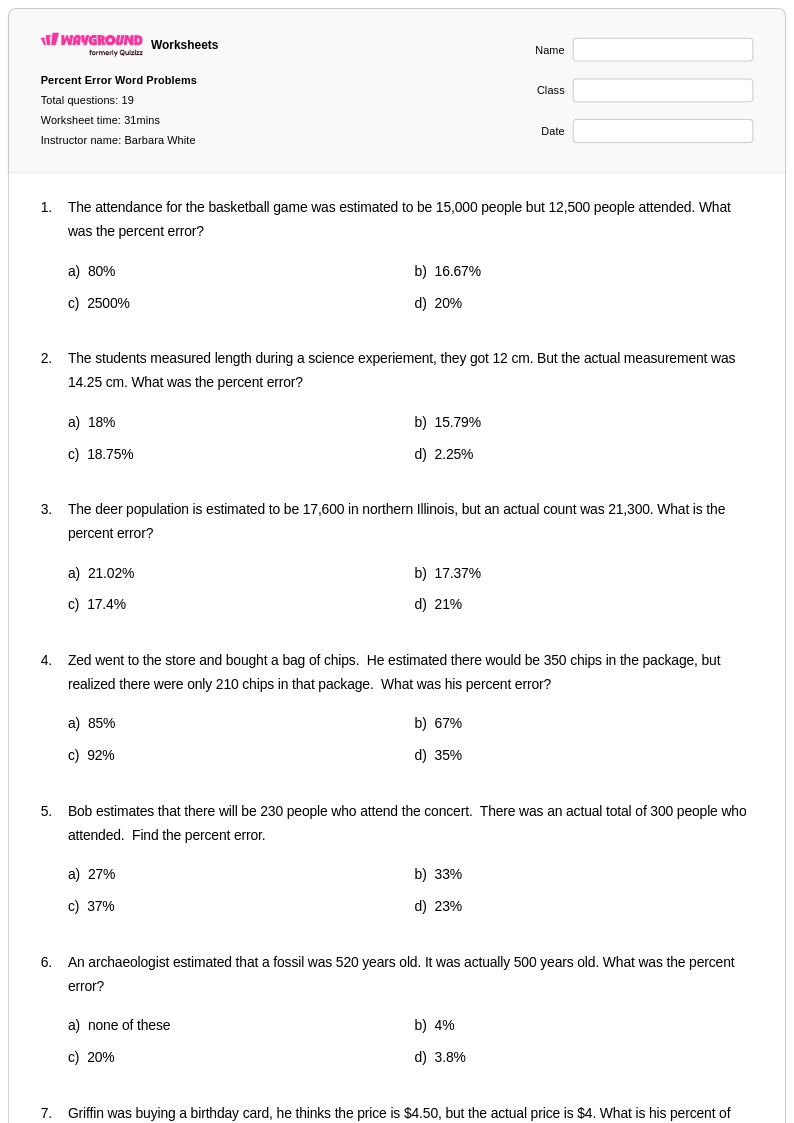
19 Q
7th
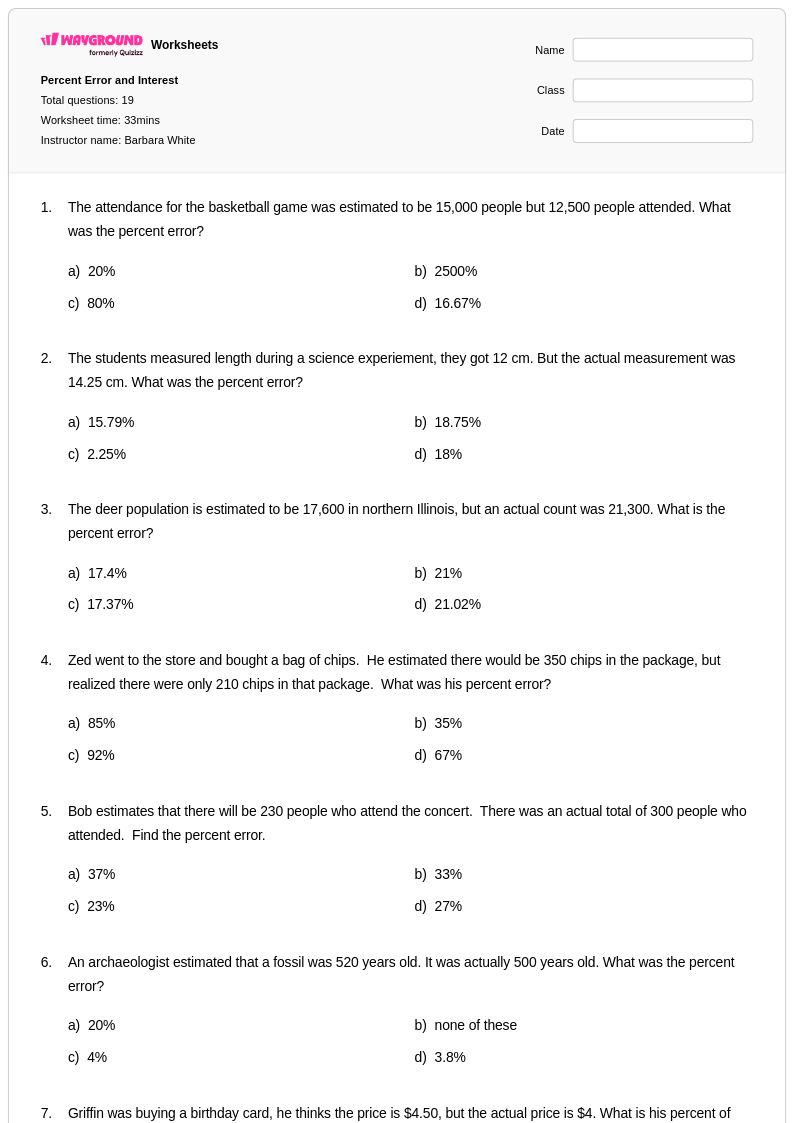
19 Q
7th
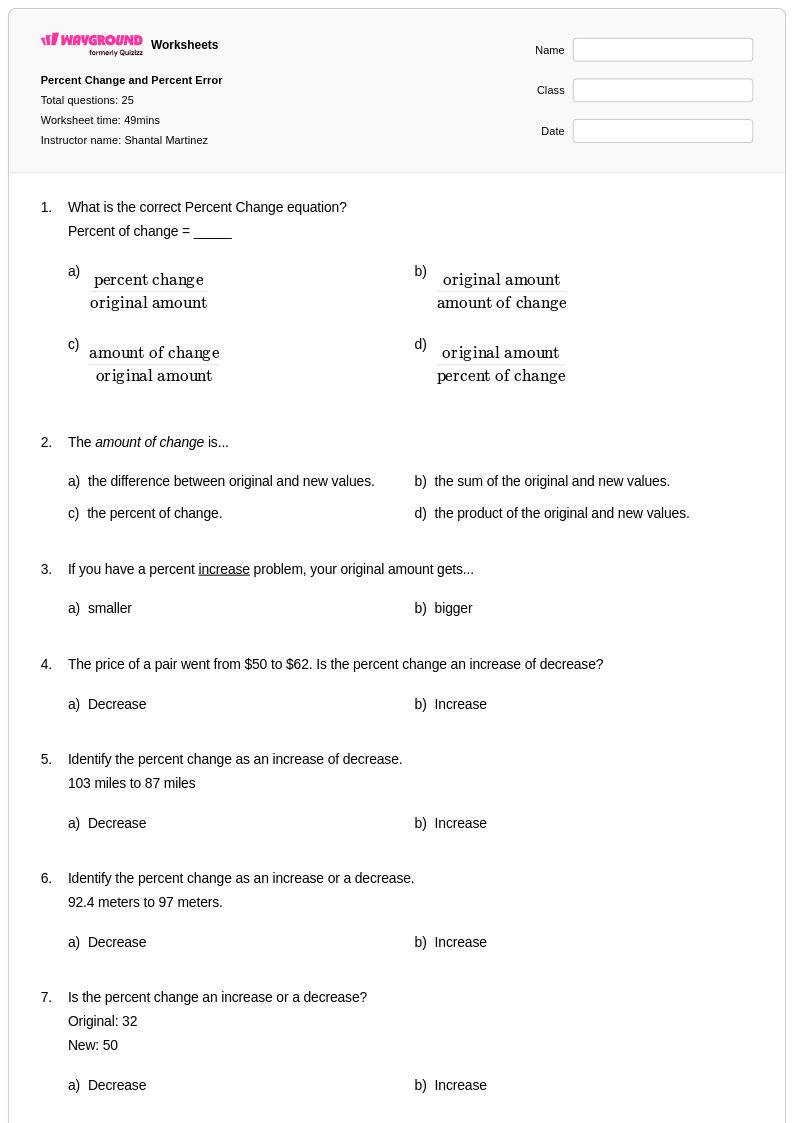
25 Q
7th
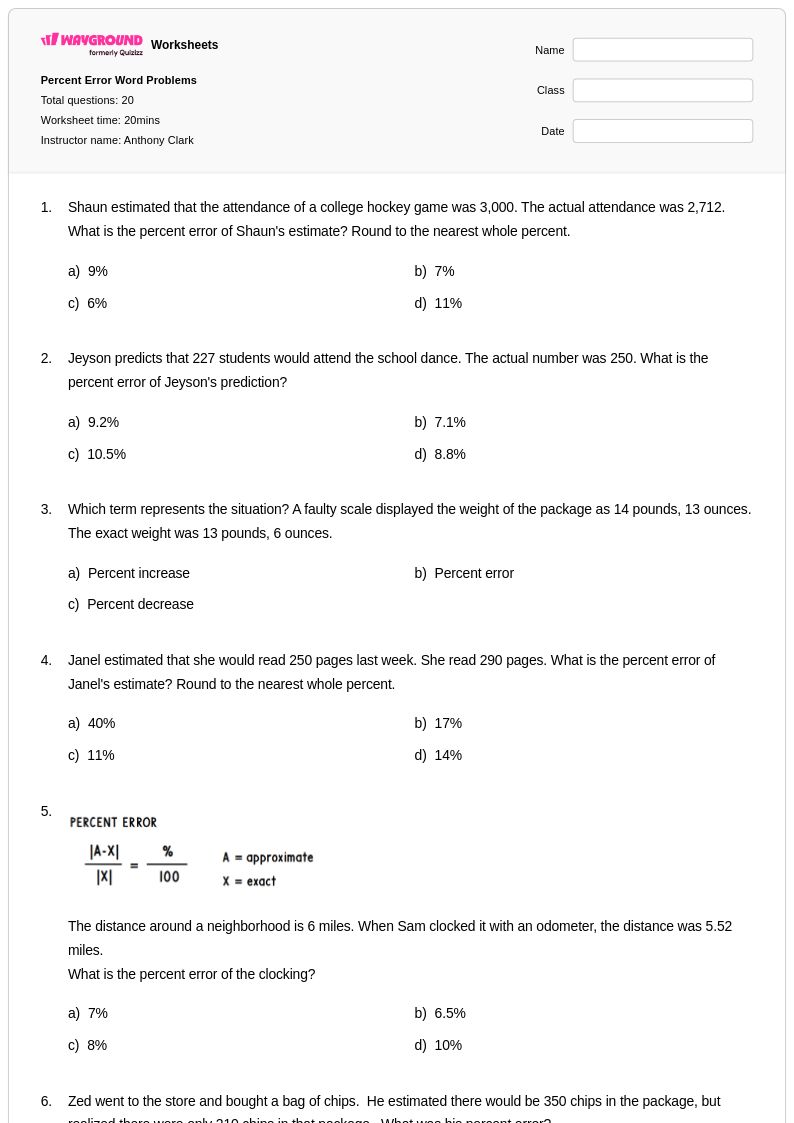
20 Q
7th - Uni
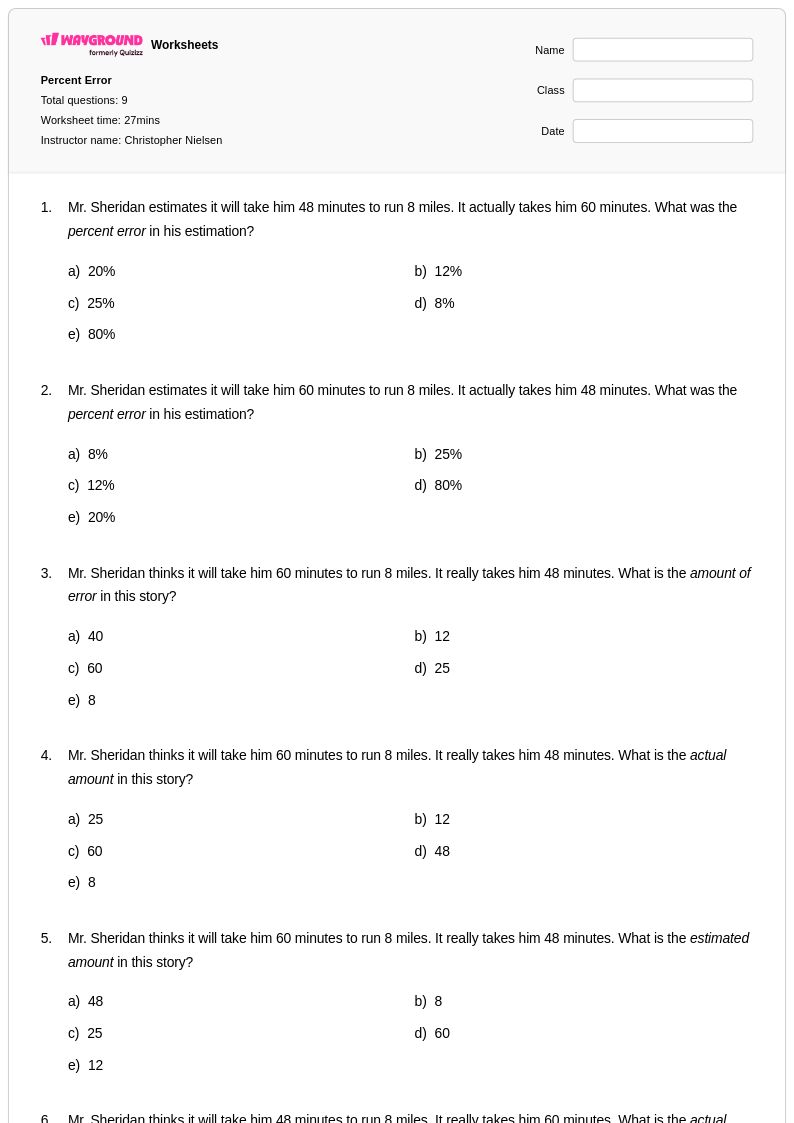
9 Q
7th
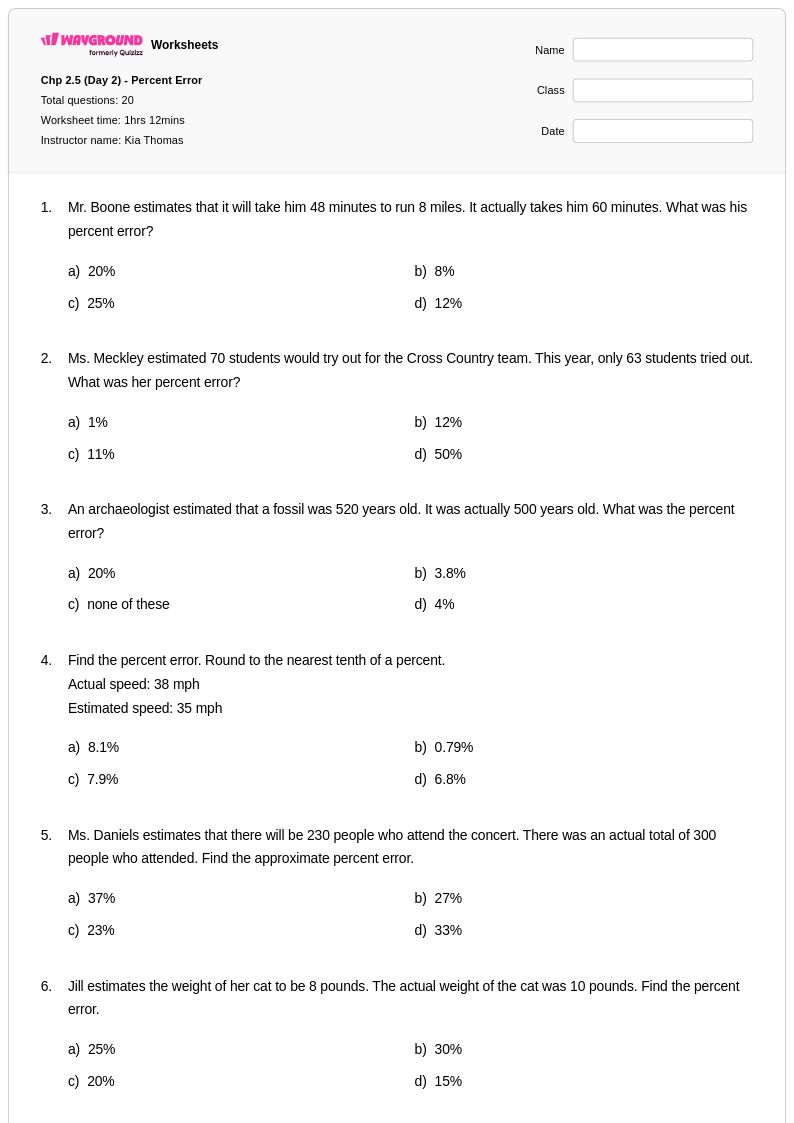
20 Q
7th
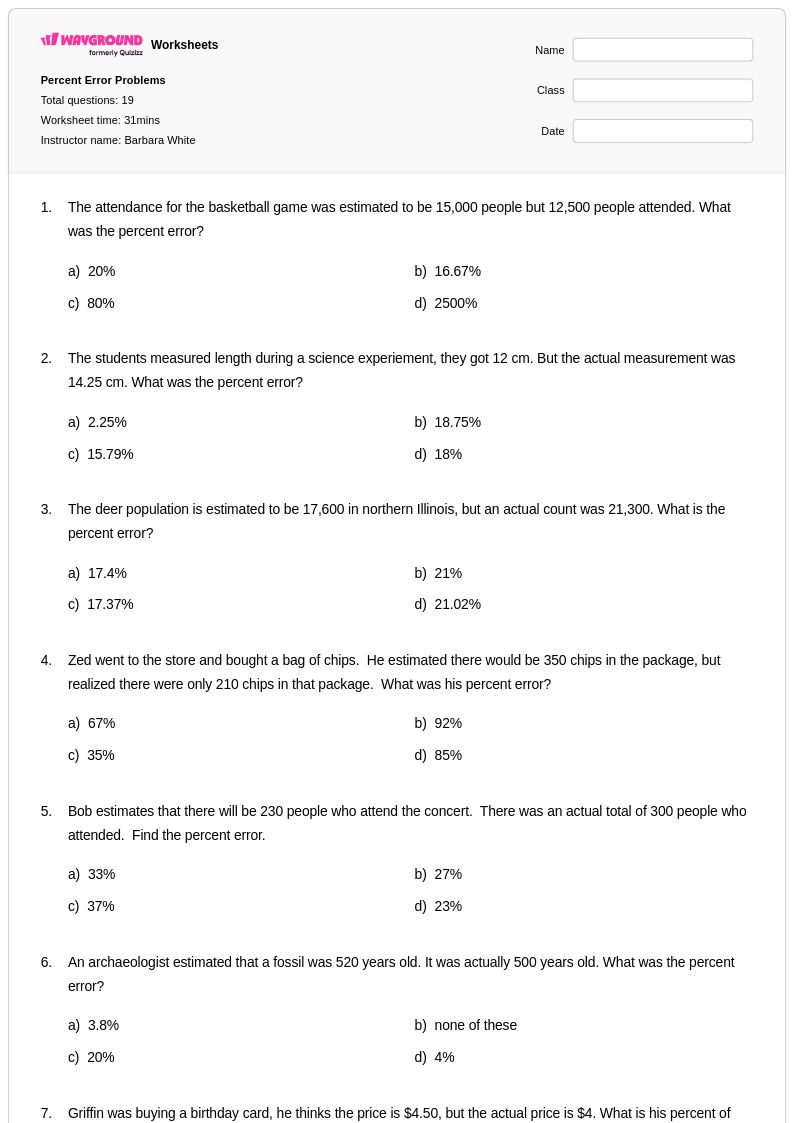
19 Q
7th
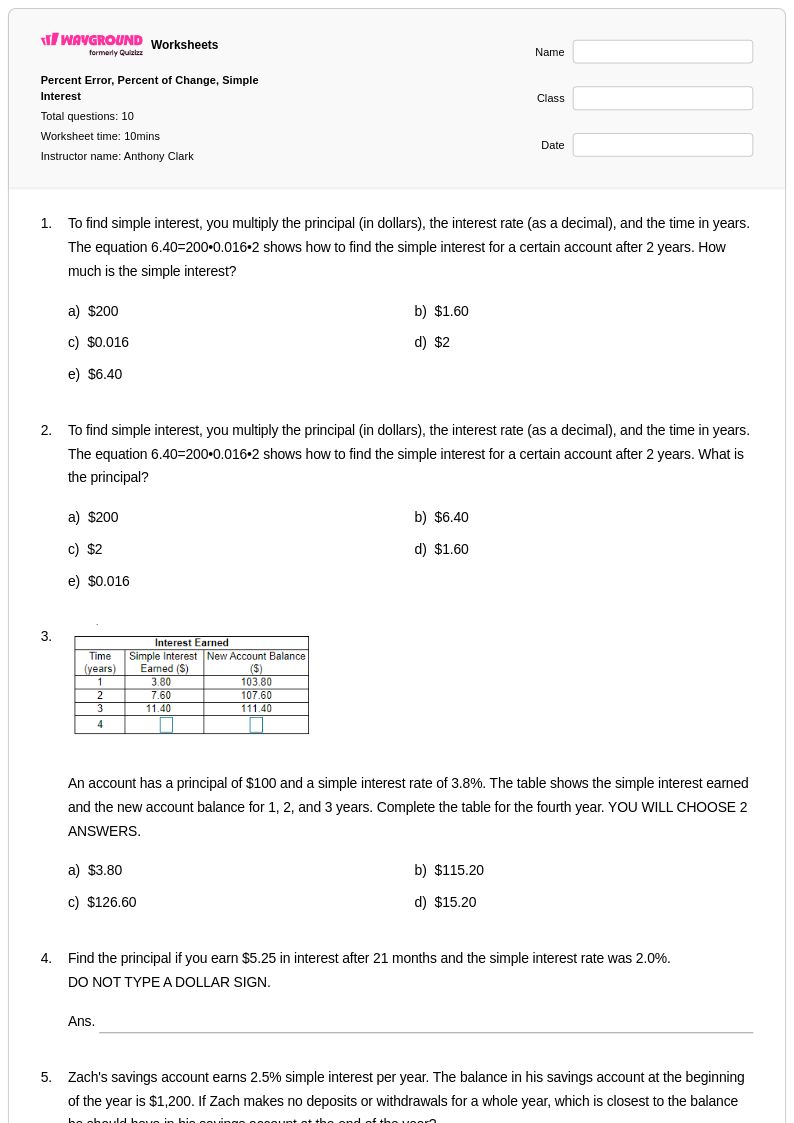
10 Q
7th - Uni
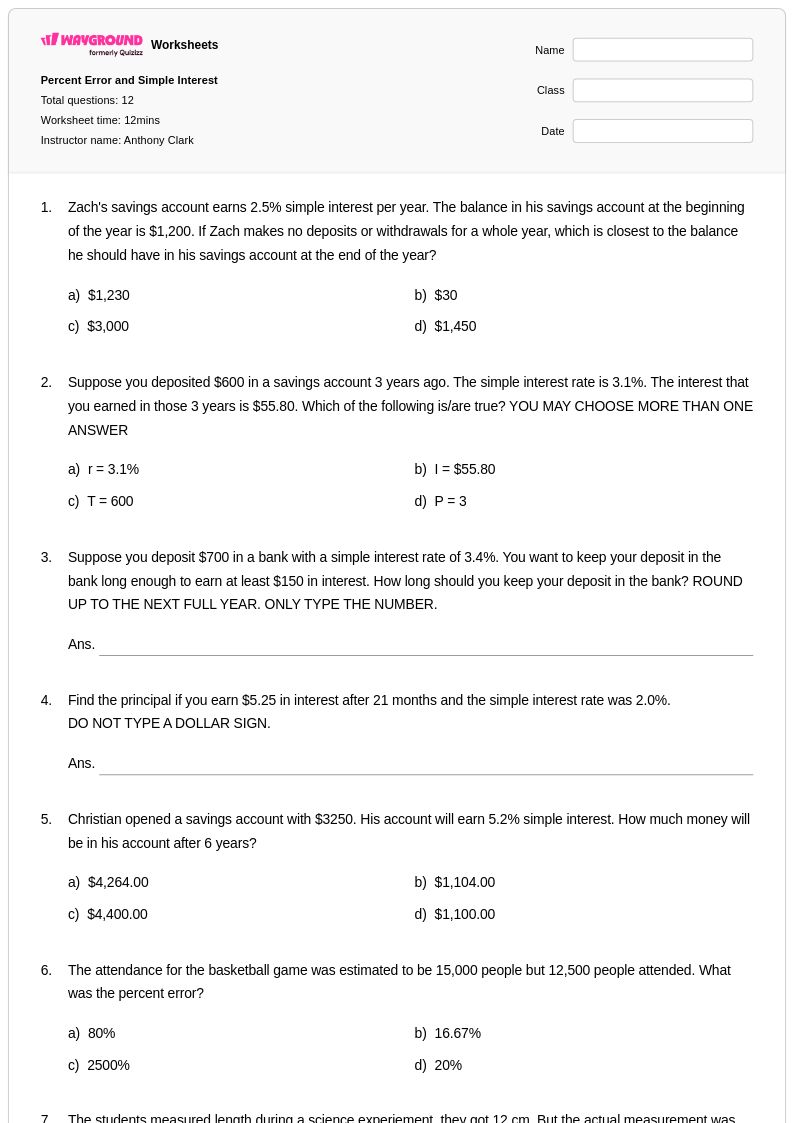
12 Q
7th - Uni
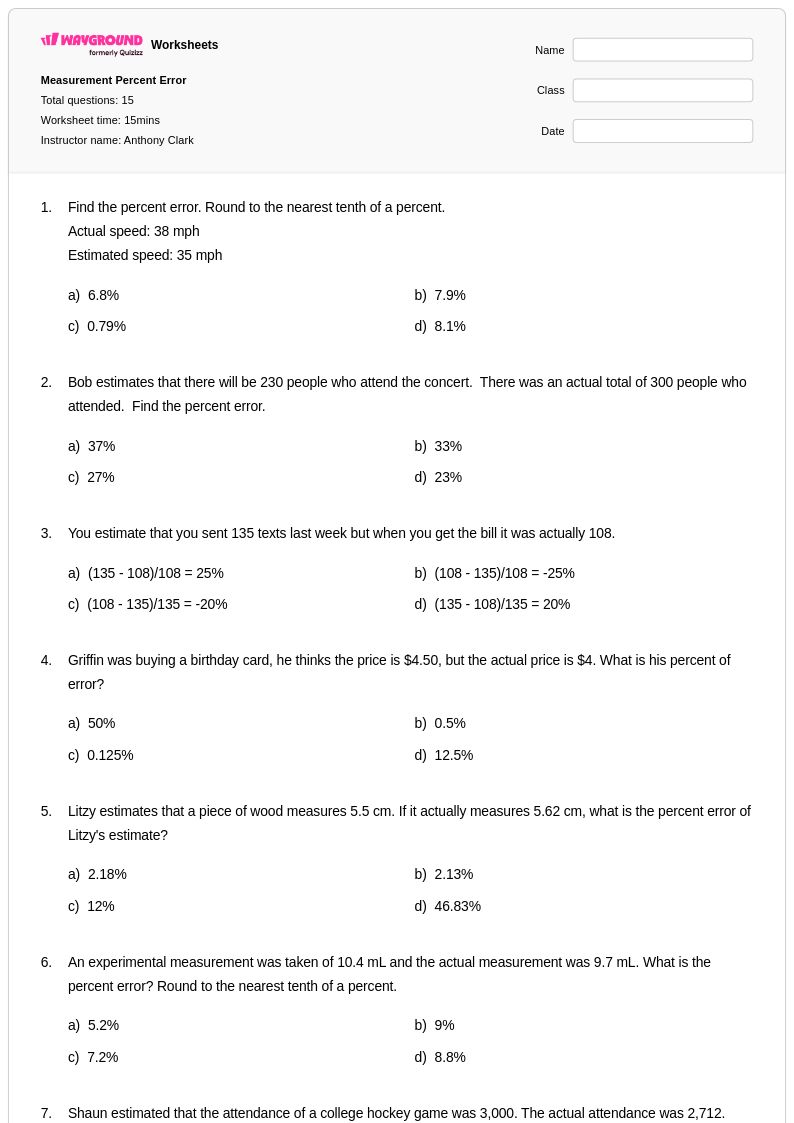
15 Q
7th - Uni
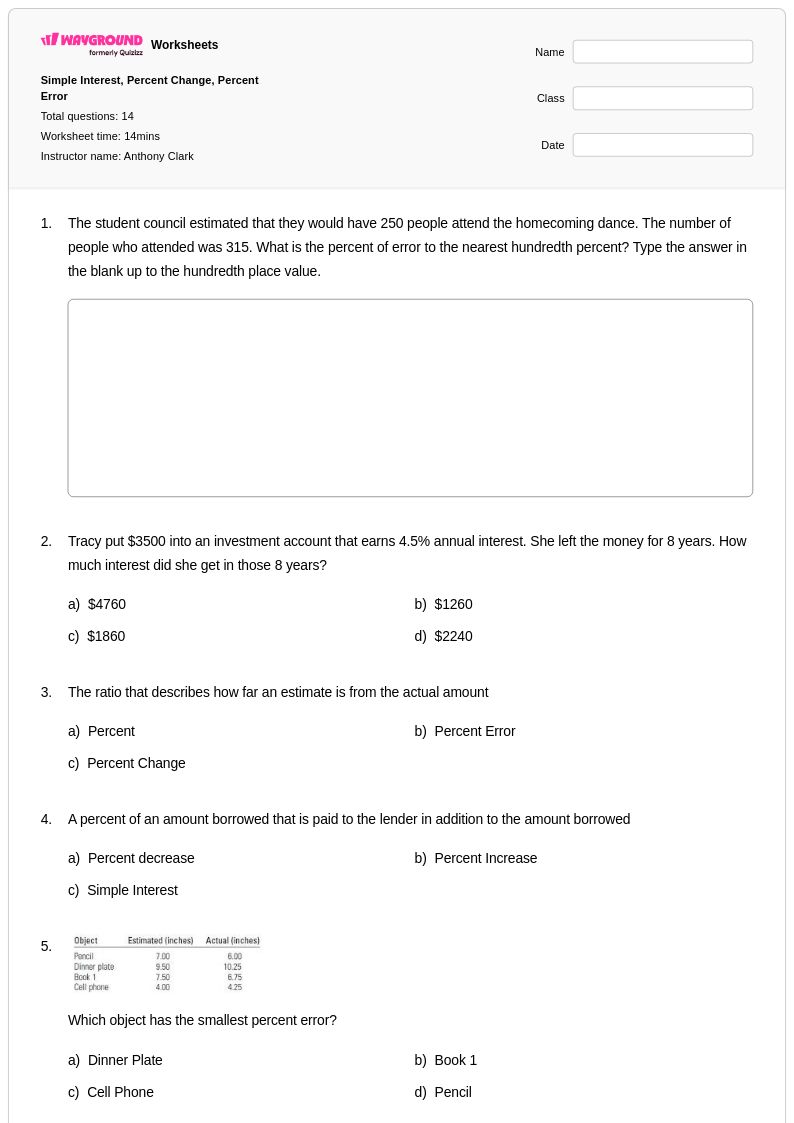
14 Q
7th - Uni
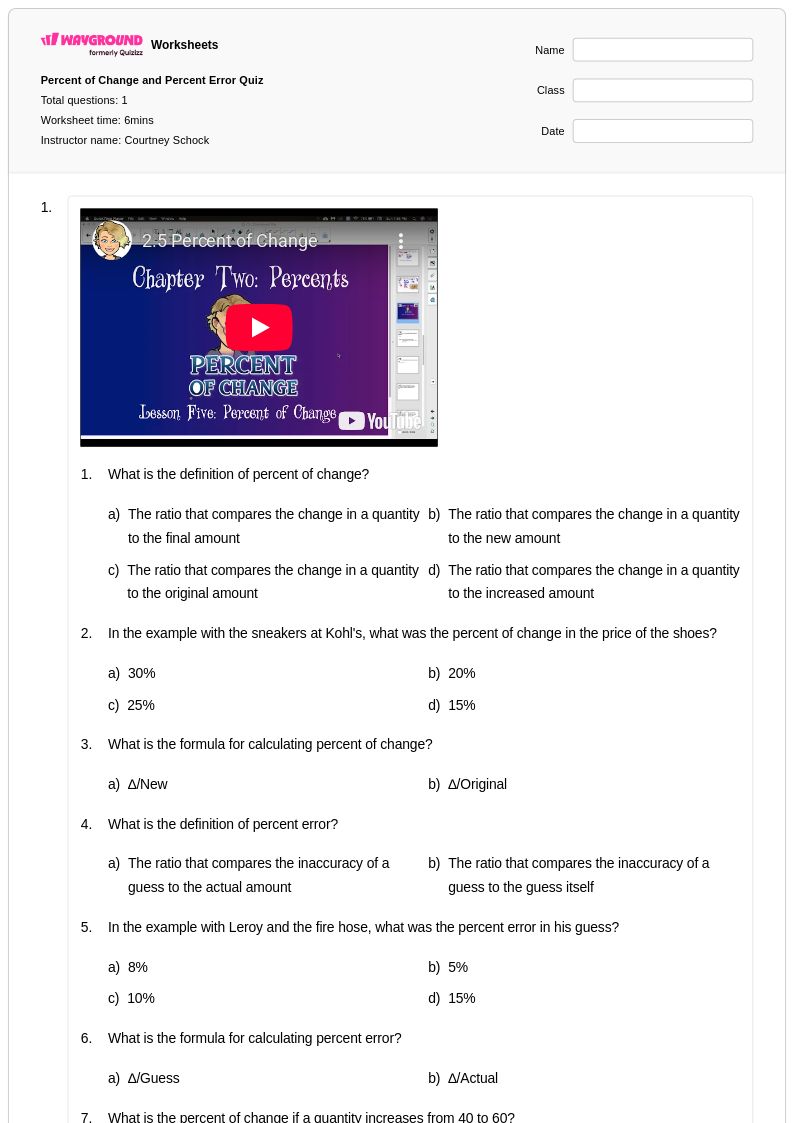
9 Q
7th
Explore Worksheets by Subjects
Explore printable Percent Error worksheets
Percent error worksheets available through Wayground (formerly Quizizz) provide students with essential practice in calculating the accuracy of measurements and experimental results by comparing observed values to accepted or theoretical values. These comprehensive worksheets strengthen critical mathematical skills including absolute value calculations, percentage conversions, and analytical reasoning that students need to evaluate data precision in both academic and real-world contexts. Each worksheet collection includes detailed answer keys and step-by-step solutions that guide students through the percent error formula, helping them understand when to apply this concept in laboratory settings, quality control scenarios, and statistical analysis. The free printables offer varied practice problems ranging from basic percent error calculations to more complex applications involving multiple measurements and data sets, ensuring students develop confidence in this fundamental mathematical skill.
Wayground (formerly Quizizz) empowers educators with access to millions of teacher-created percent error resources that can be easily searched and filtered to match specific classroom needs and standards alignment requirements. The platform's robust differentiation tools allow teachers to customize worksheets for diverse learning levels, providing both remediation support for students struggling with the concept and enrichment opportunities for advanced learners ready to tackle complex percent error applications. These versatile resources are available in both printable PDF format and interactive digital versions, giving teachers the flexibility to seamlessly integrate percent error practice into lesson planning, homework assignments, and assessment preparation. The comprehensive worksheet collections support effective instruction by offering teachers ready-to-use materials that can be quickly adapted for individual student needs, small group work, or whole-class skill practice sessions.
FAQs
How do I teach percent error?
What exercises help students practice calculating percent error?
What are the most common mistakes students make with percent error?
How can I use this percent error worksheet in my class?
How does percent error fit into the math curriculum?
How can I differentiate this topic for struggling students?