
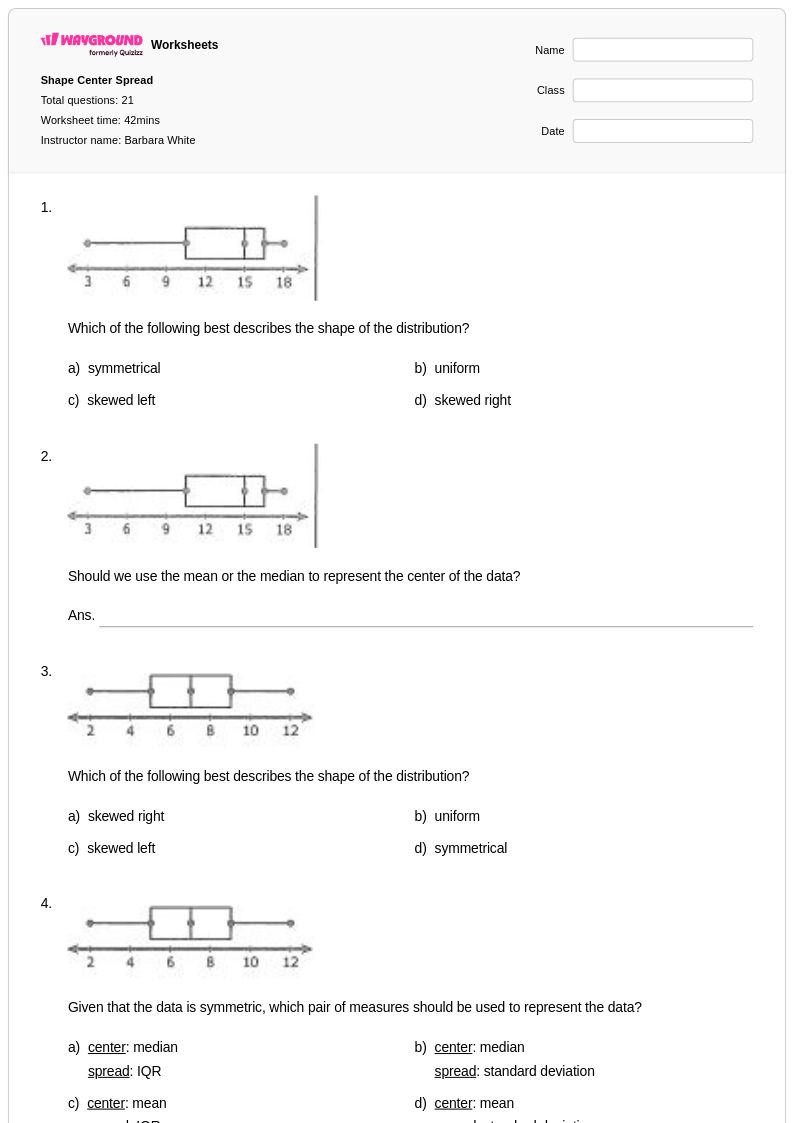
21 Q
6th - 9th
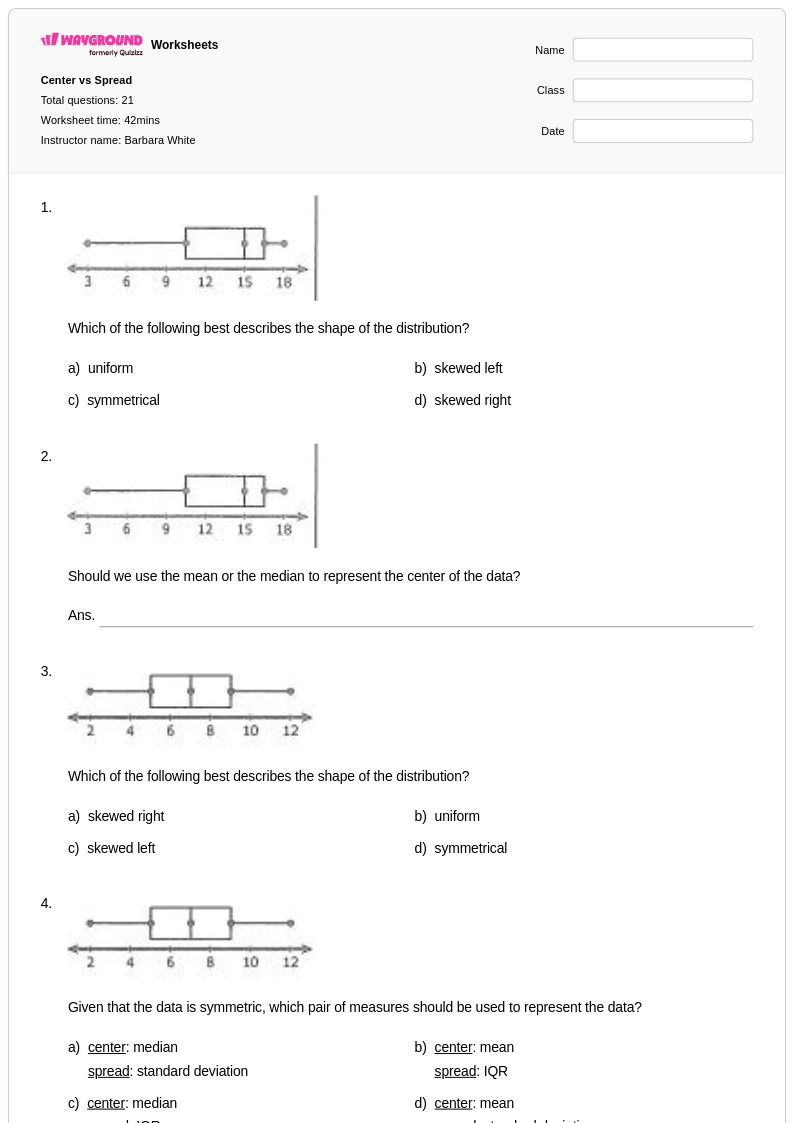
21 Q
6th - 9th
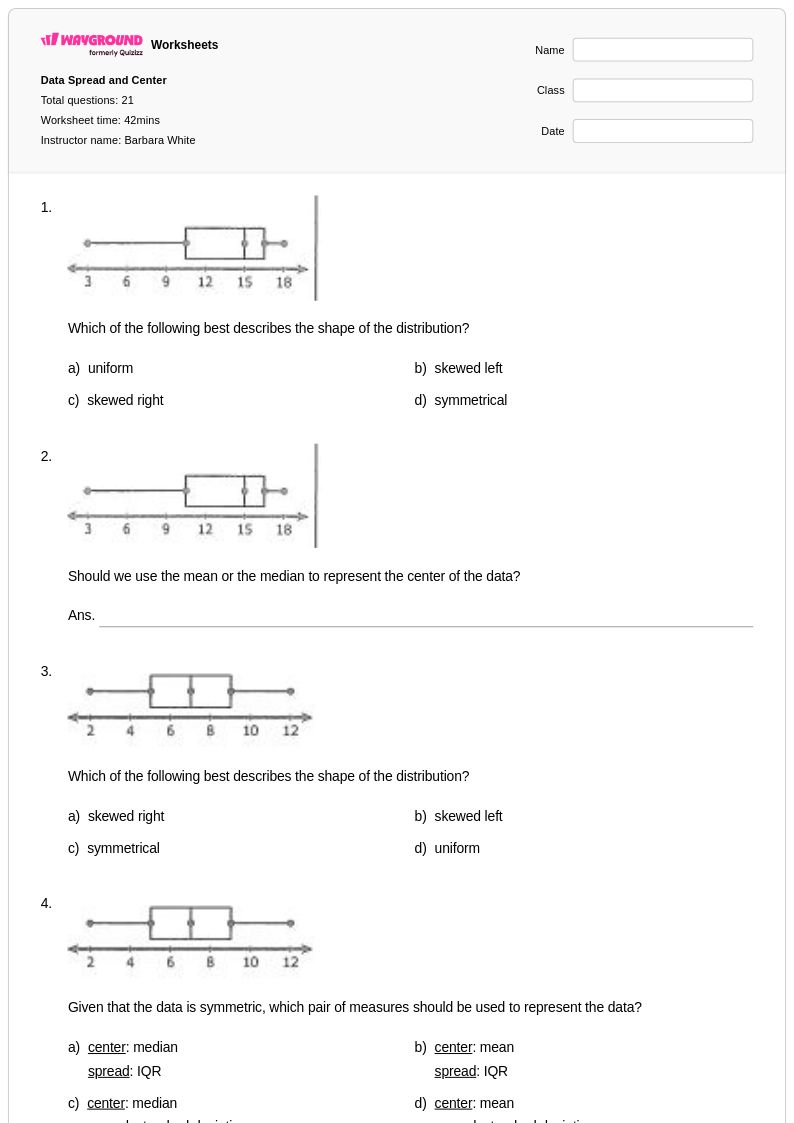
21 Q
6th - 9th
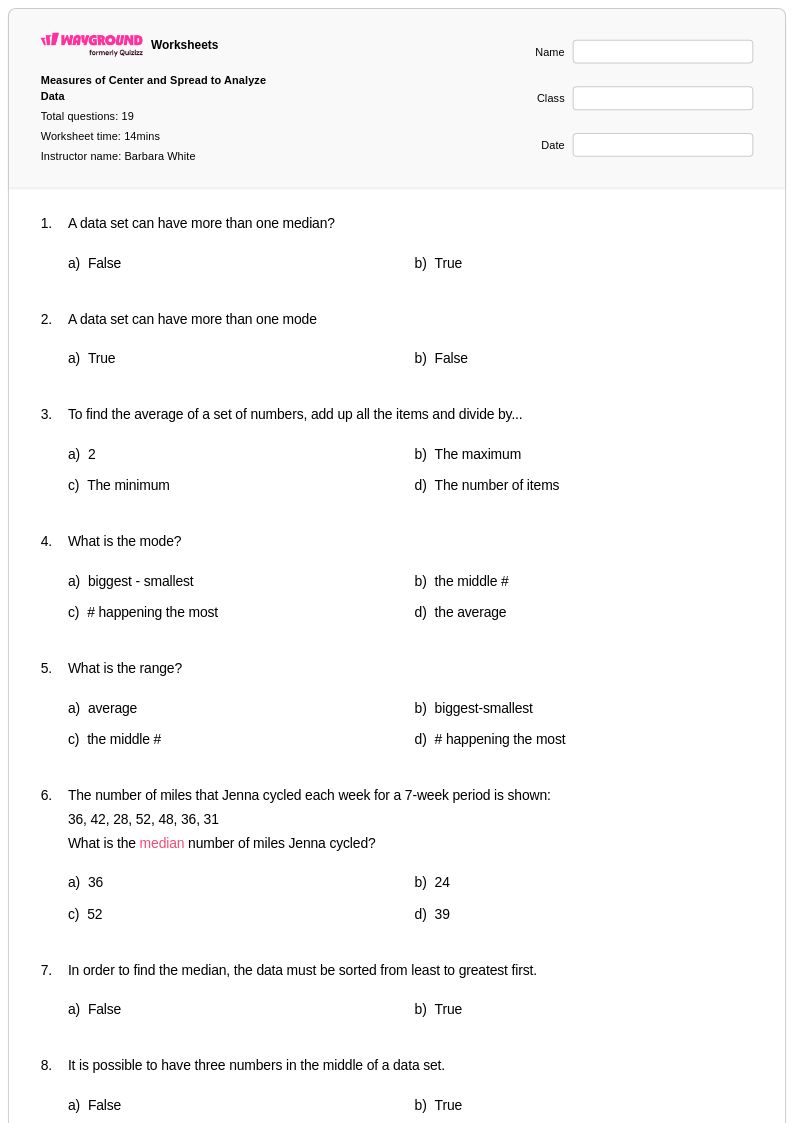
19 Q
6th - Uni
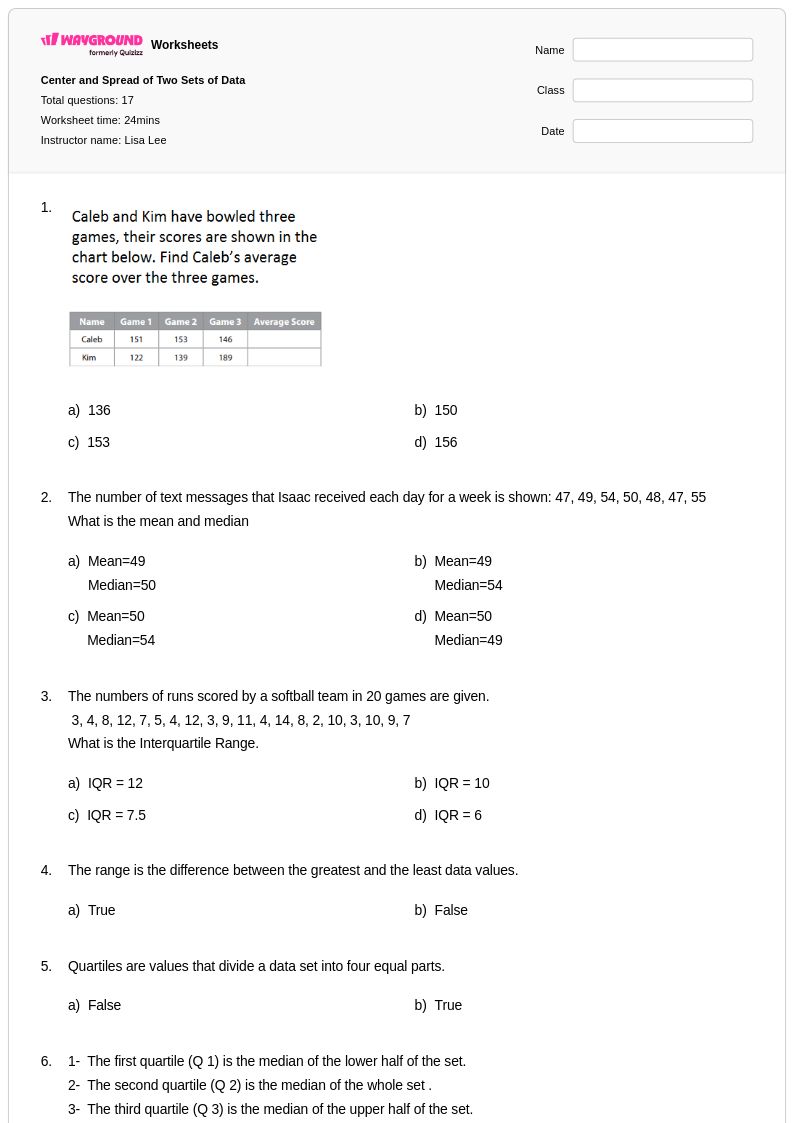
17 Q
6th - 9th
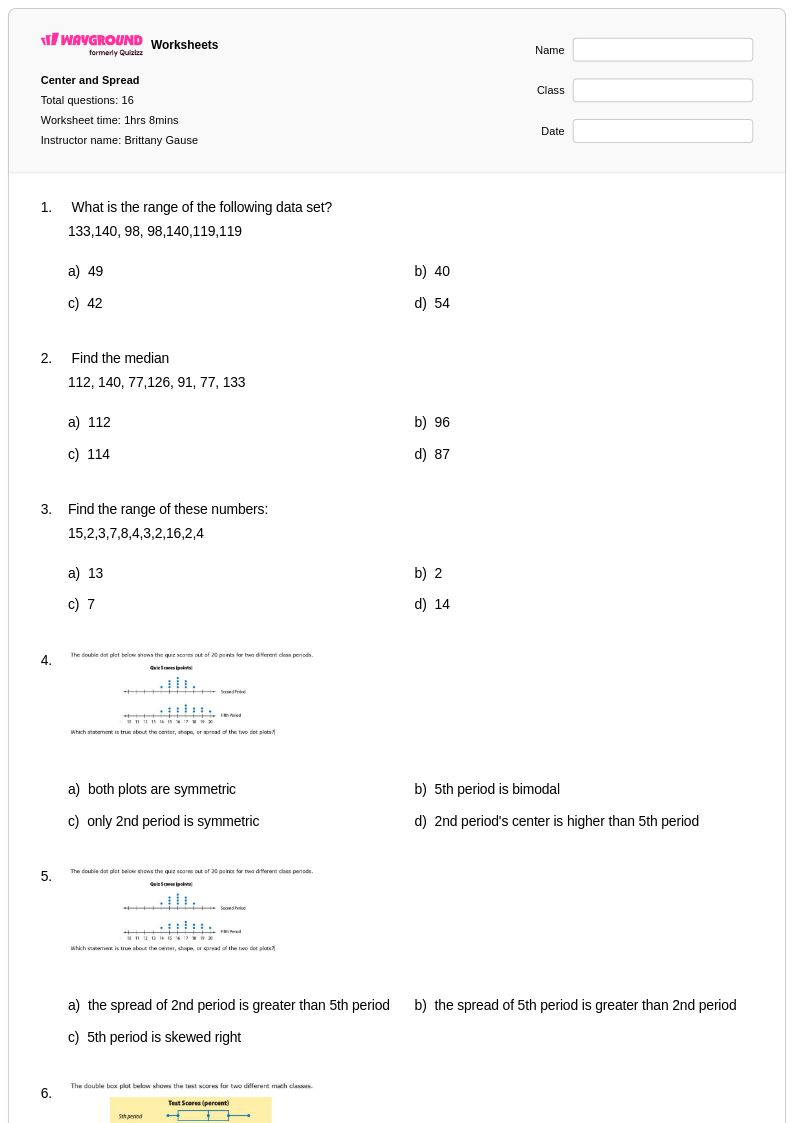
16 Q
6th
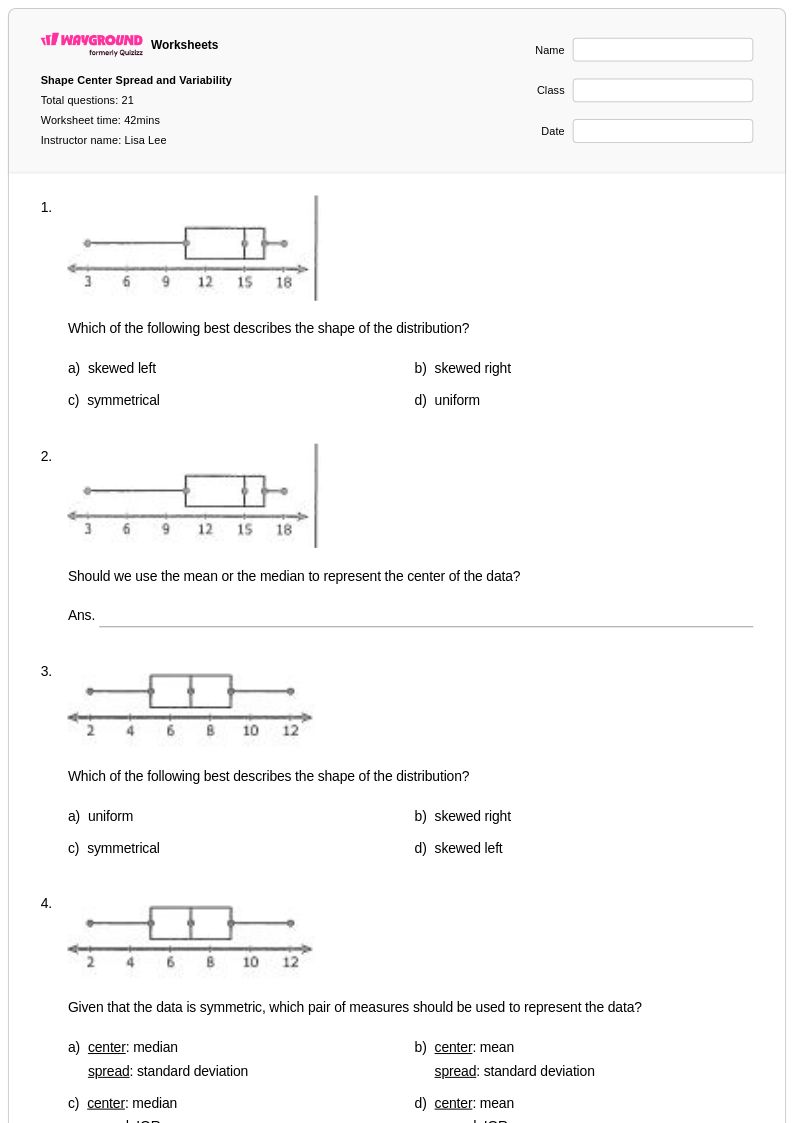
21 Q
6th - 9th
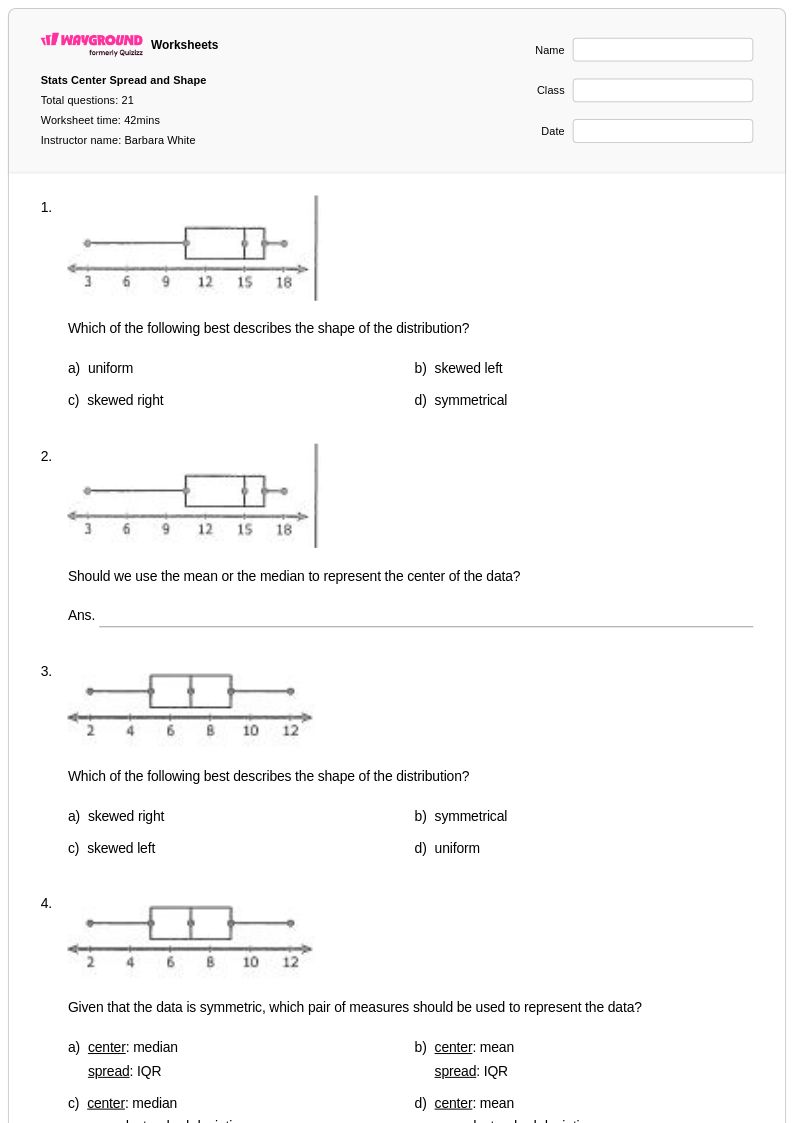
21 Q
6th - 9th
21 Q
6th - 9th
17 Q
6th
10 Q
5th - 12th
17 Q
6th - 9th
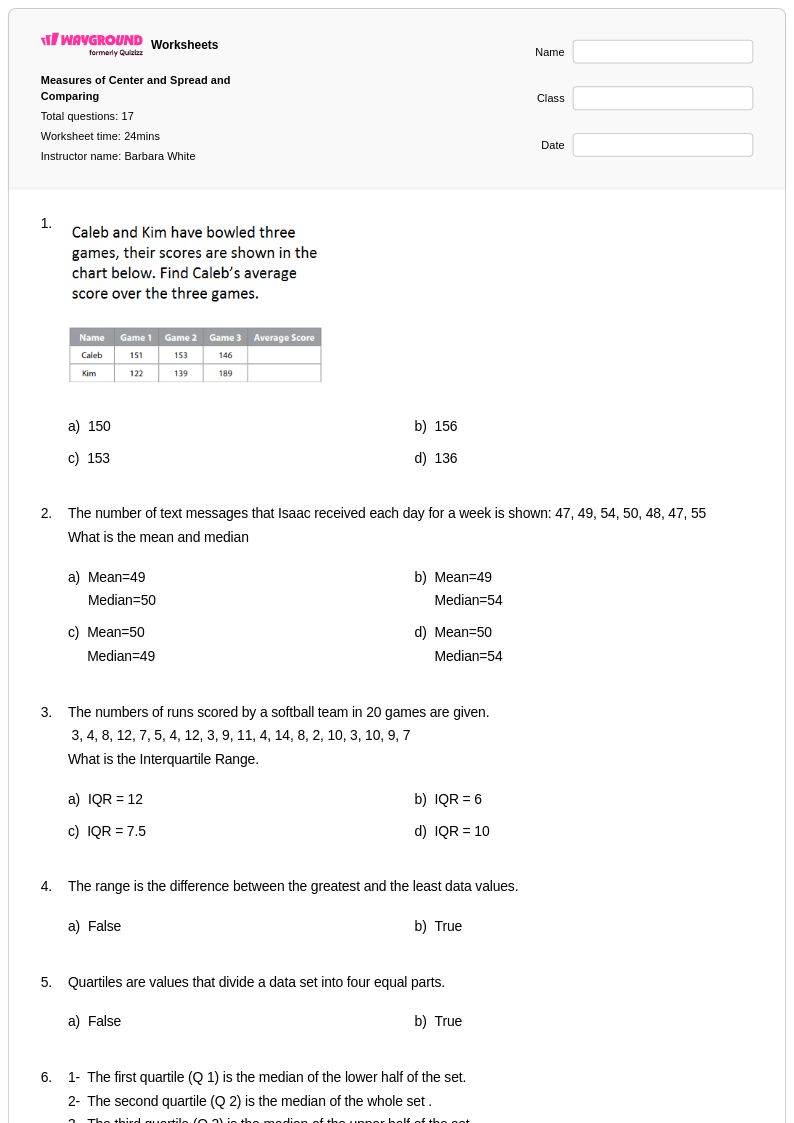
17 Q
6th - 9th
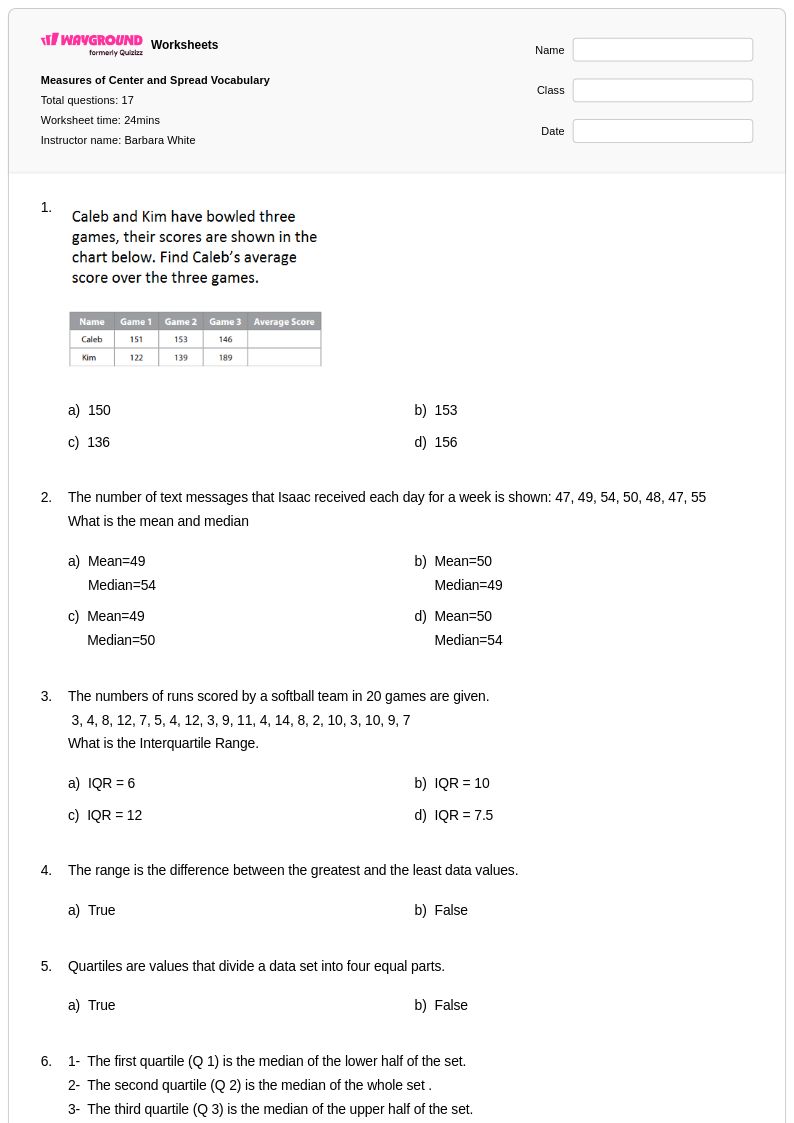
17 Q
6th - 9th
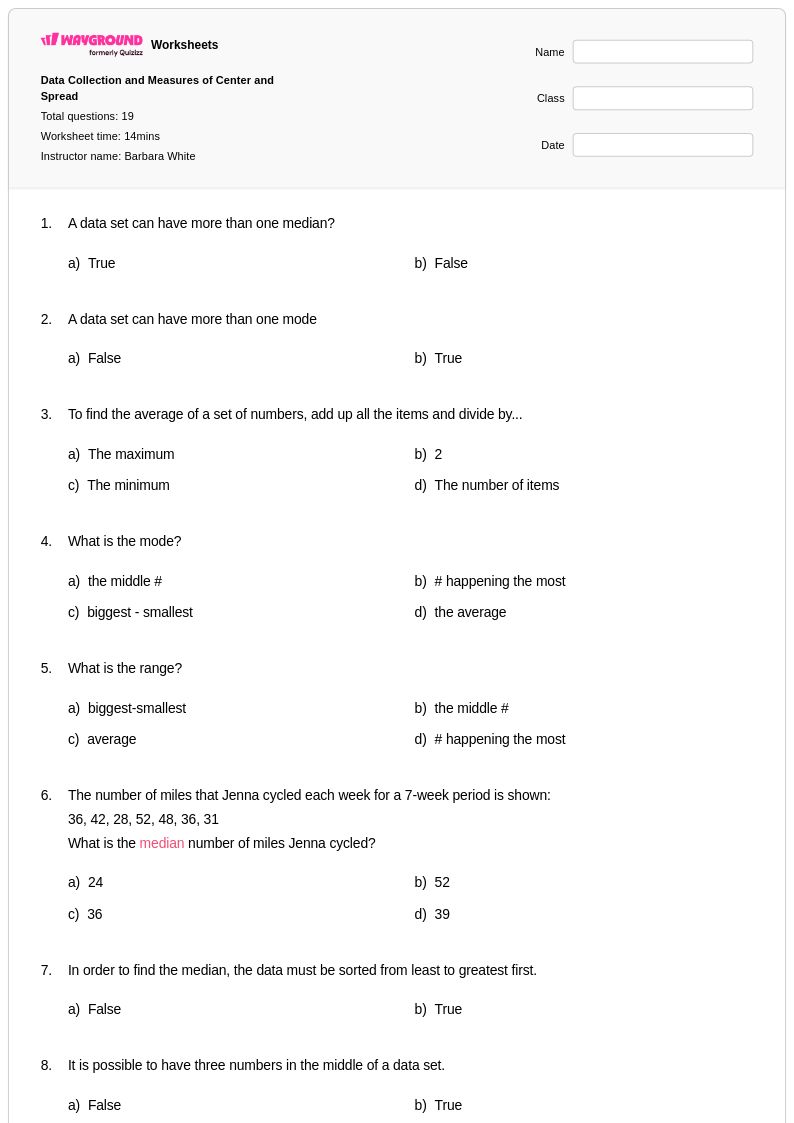
19 Q
6th - Uni
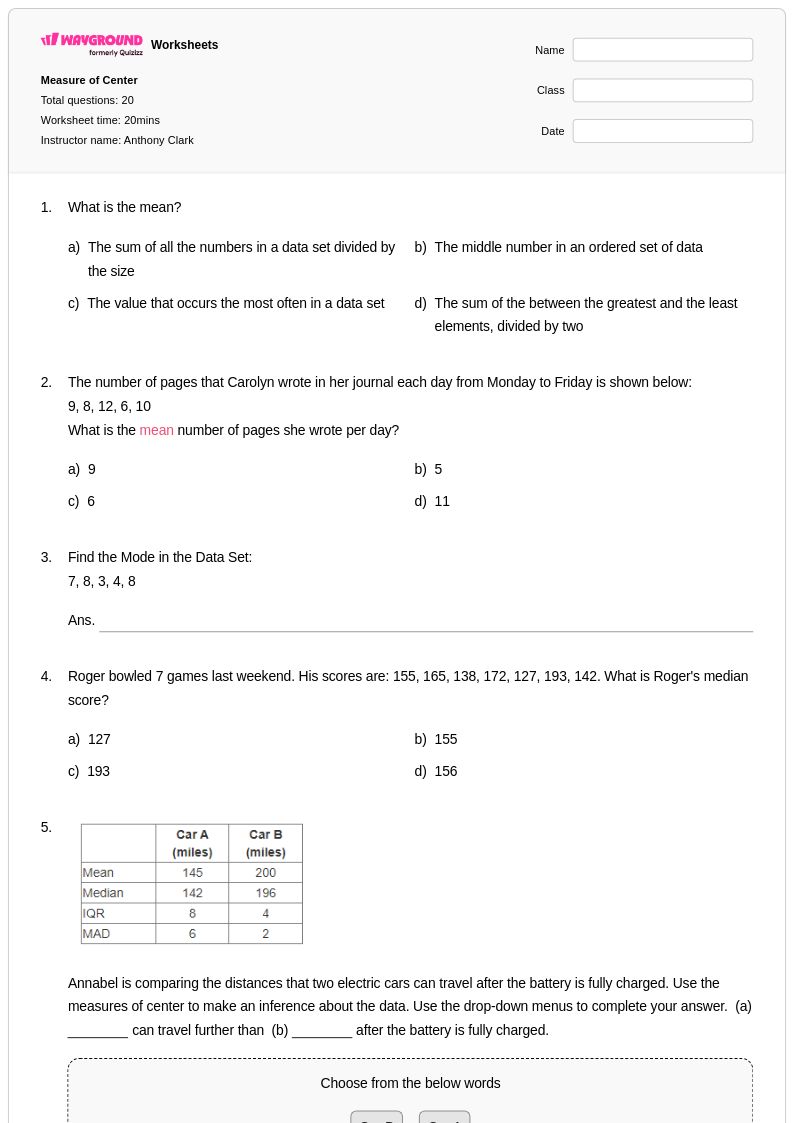
20 Q
6th - Uni
20 Q
6th - 8th
21 Q
6th - 9th
20 Q
6th - Uni
14 Q
6th - 7th
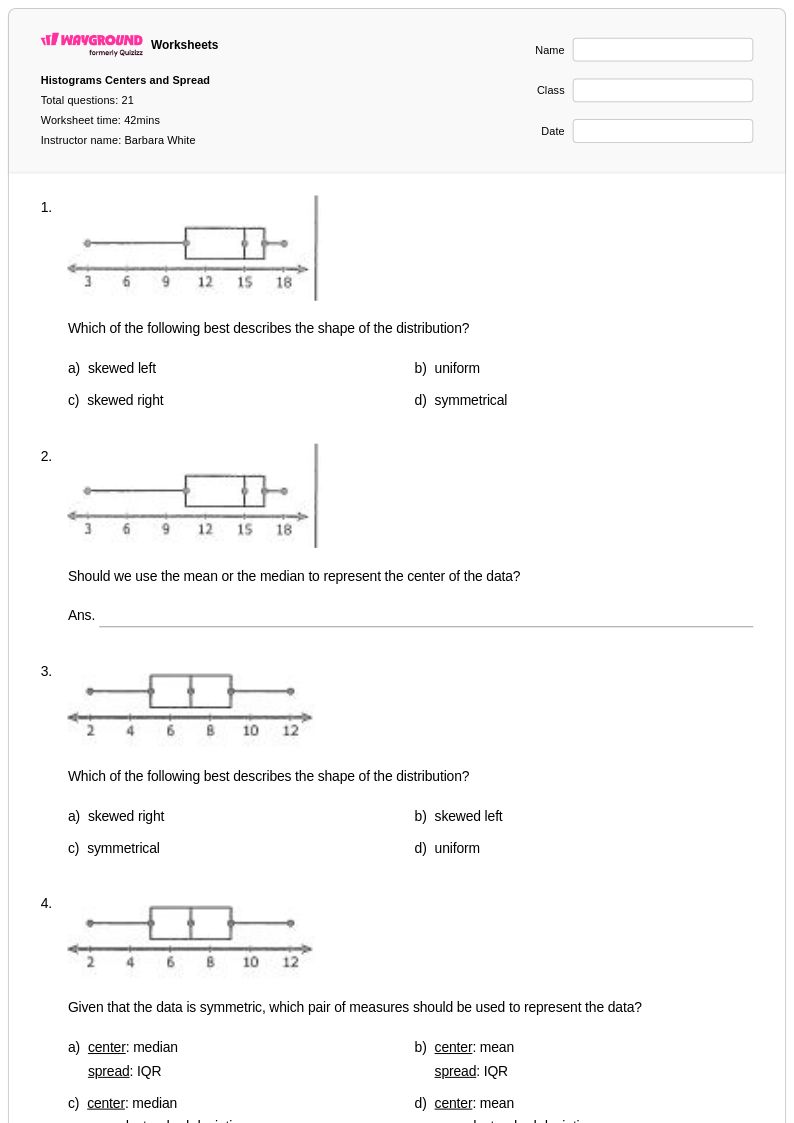
21 Q
6th - 9th
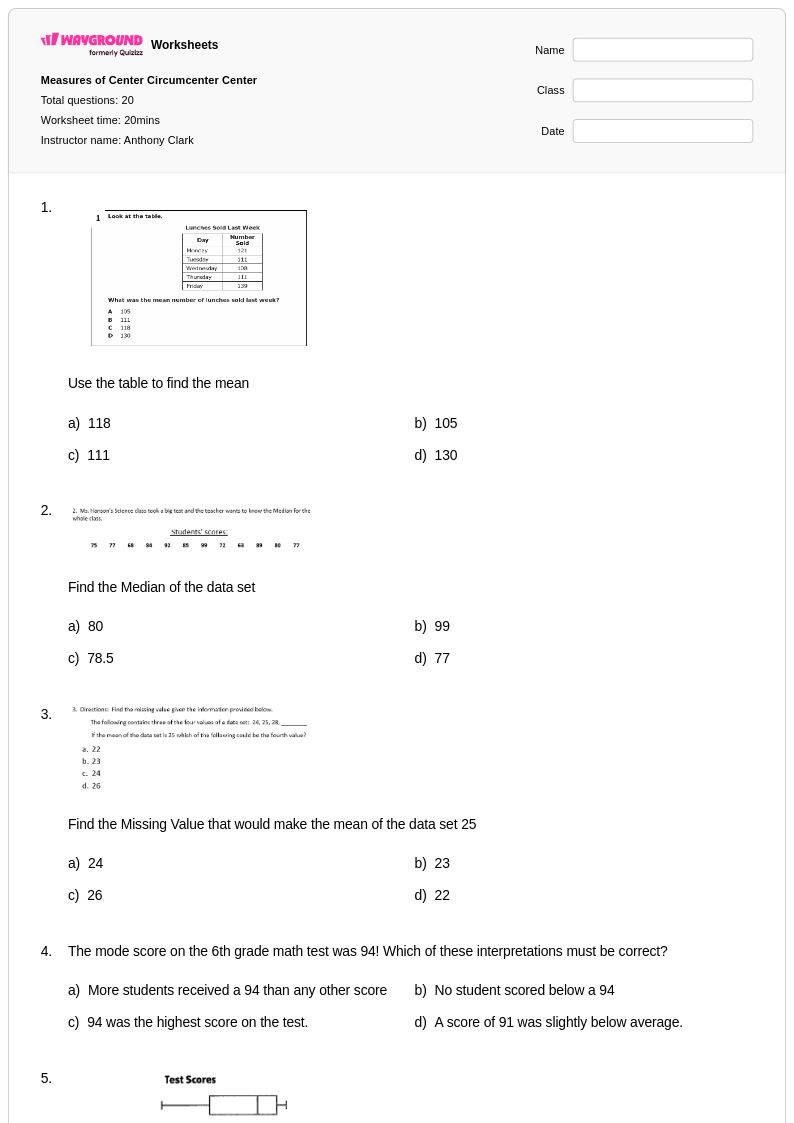
20 Q
6th - Uni
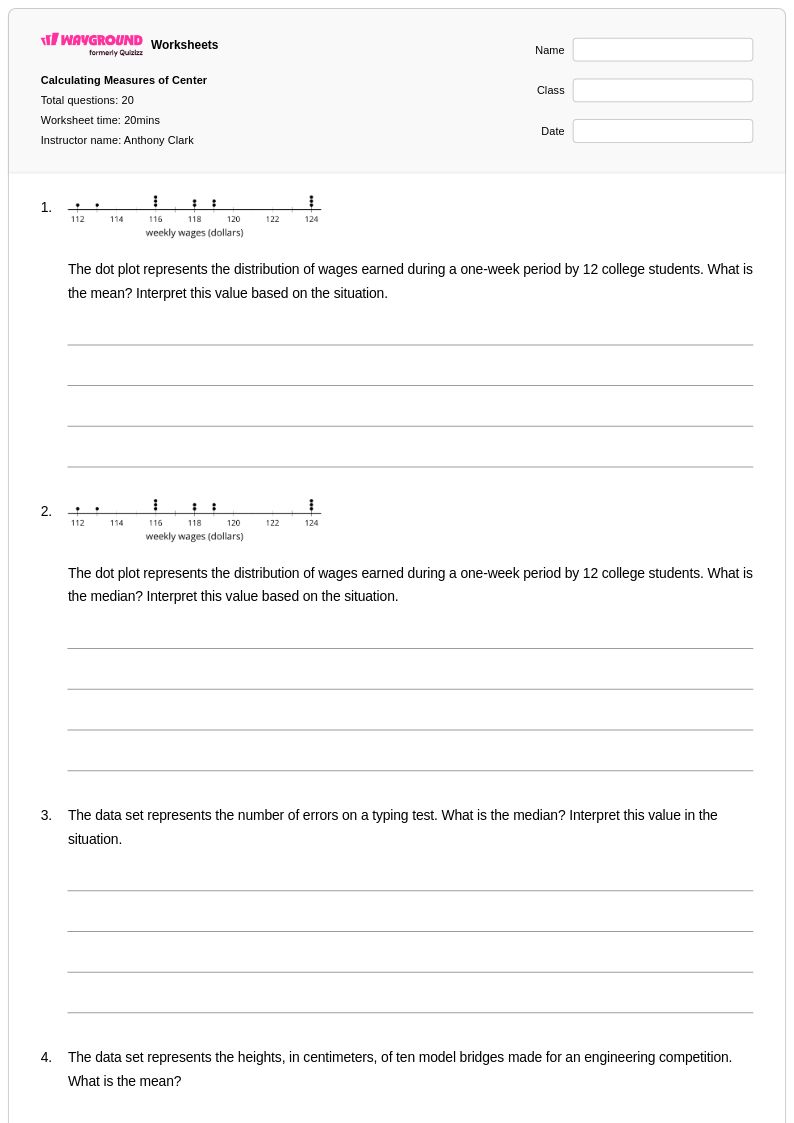
20 Q
6th - Uni
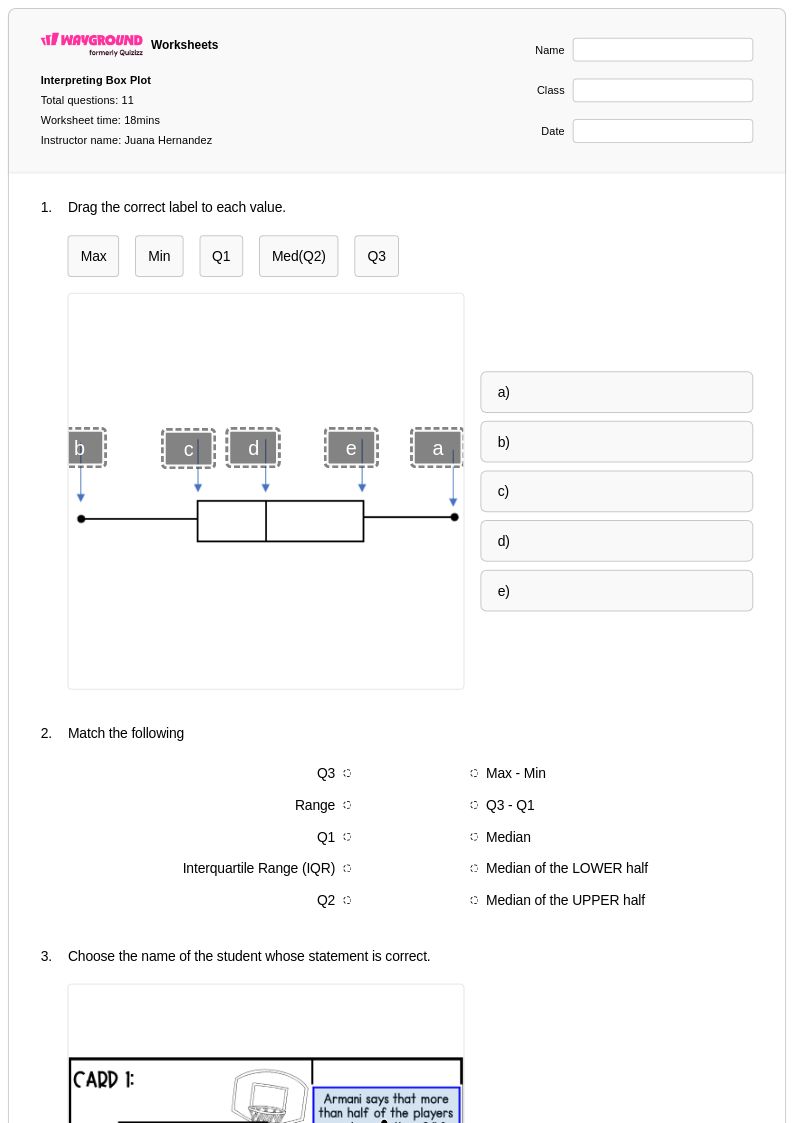
11 Q
6th
Explore Other Subject Worksheets for year 6
Explore printable Center and Spread worksheets for Year 6
Center and spread worksheets for Year 6 mathematics provide essential practice in understanding how data is distributed and what characterizes a dataset beyond simple averages. These comprehensive worksheet collections from Wayground (formerly Quizizz) focus on building foundational skills in identifying measures of central tendency including mean, median, and mode, while simultaneously developing understanding of variability through range and other spread indicators. Students work through carefully structured practice problems that progress from basic identification exercises to more complex analytical tasks, strengthening their ability to interpret data patterns and draw meaningful conclusions. Each worksheet collection includes detailed answer keys and is available as free printables in convenient pdf format, making it easy for educators to integrate these resources into daily instruction or homework assignments.
Wayground (formerly Quizizz) supports mathematics educators with an extensive library of millions of teacher-created center and spread worksheet resources that can be easily located through robust search and filtering capabilities. These professionally developed materials align with grade-level standards and offer exceptional differentiation tools that allow teachers to customize content difficulty, problem types, and visual representations to meet diverse student needs. The platform's flexible format options include both printable pdf worksheets and interactive digital versions, enabling seamless integration into various instructional settings from traditional classrooms to remote learning environments. Teachers can efficiently plan comprehensive units, target specific skill gaps through focused remediation, provide enrichment opportunities for advanced learners, and maintain consistent skill practice across multiple mathematical concepts, all while accessing real-time insights into student understanding and progress.
FAQs
How should I teach center and spread to sixth graders?
What exercises help Grade 6 students practice center and spread?
What mistakes do students make when finding center and spread?
How can I use a Grade 6 center and spread worksheet in class?
How does center and spread fit into the Grade 6 Common Core math progression?
How can I differentiate center and spread practice for mixed-ability sixth graders?
Is center and spread appropriate for Grade 6?