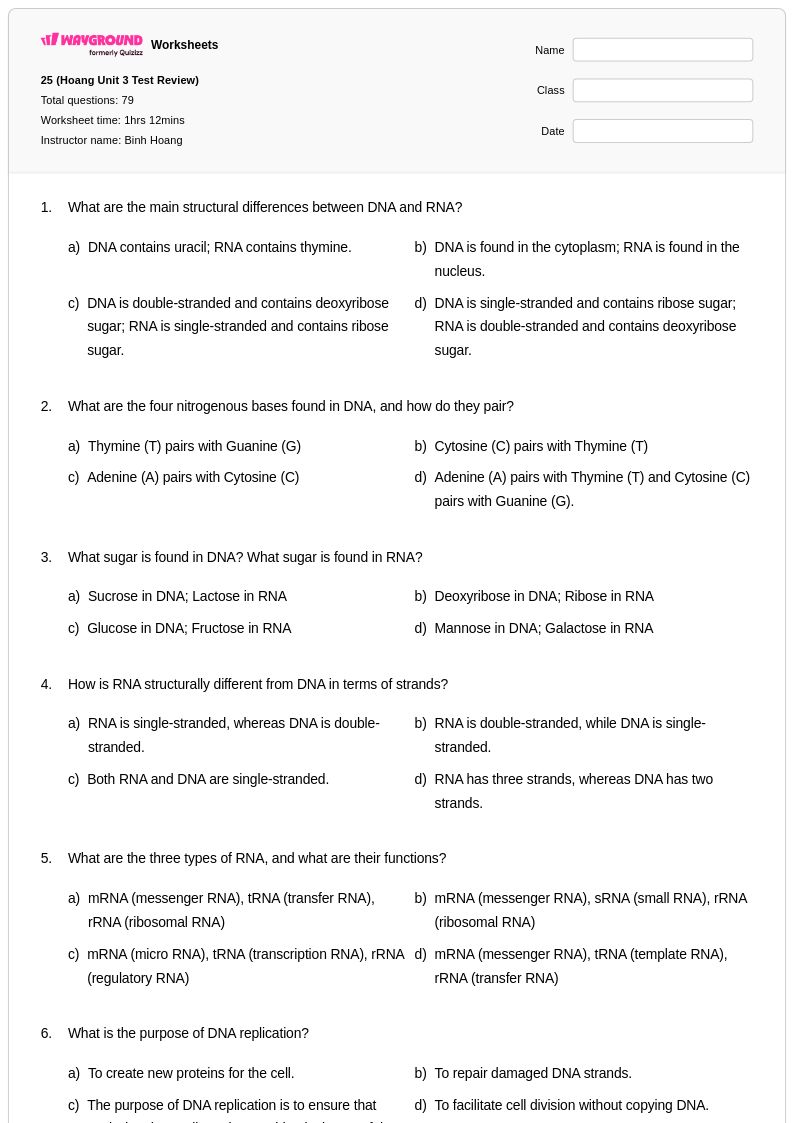
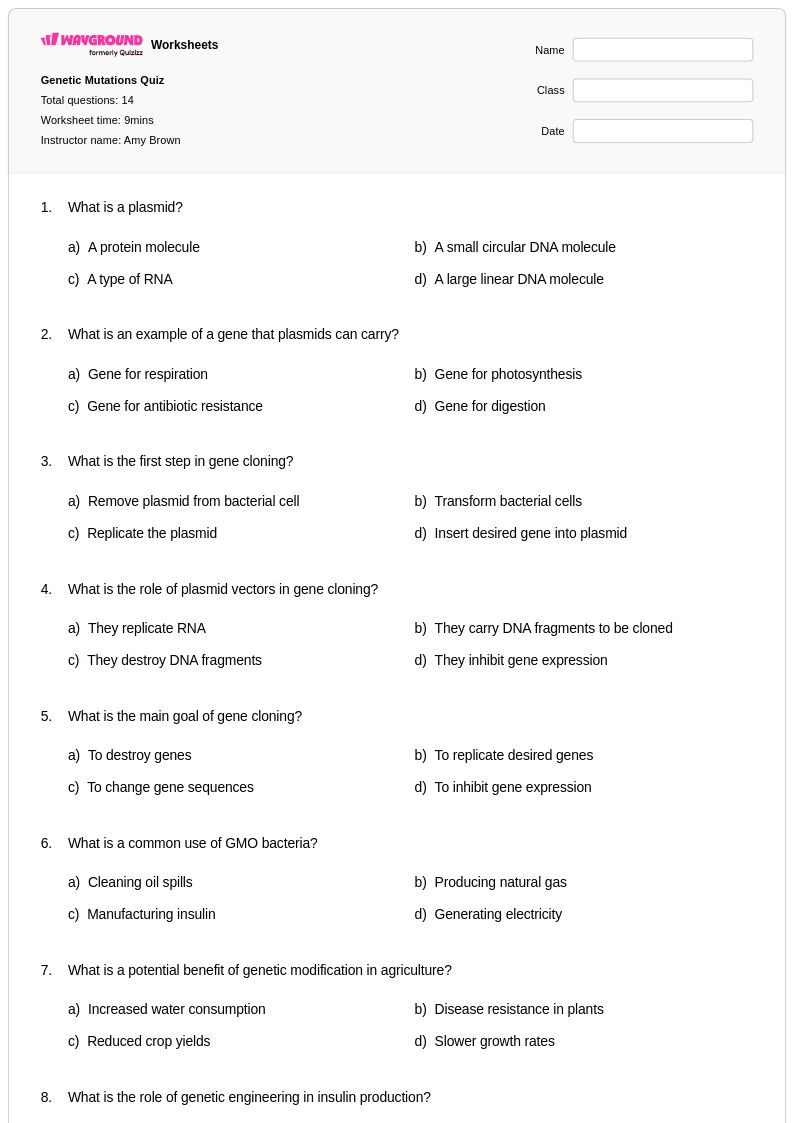
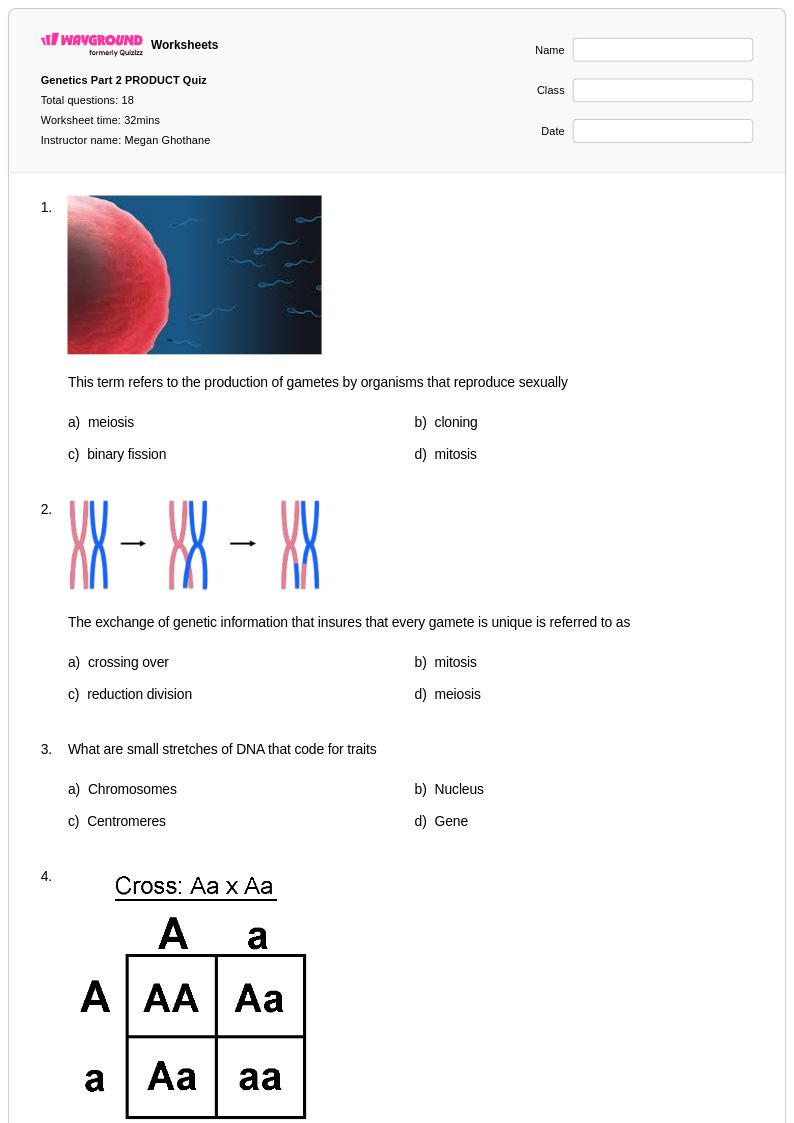
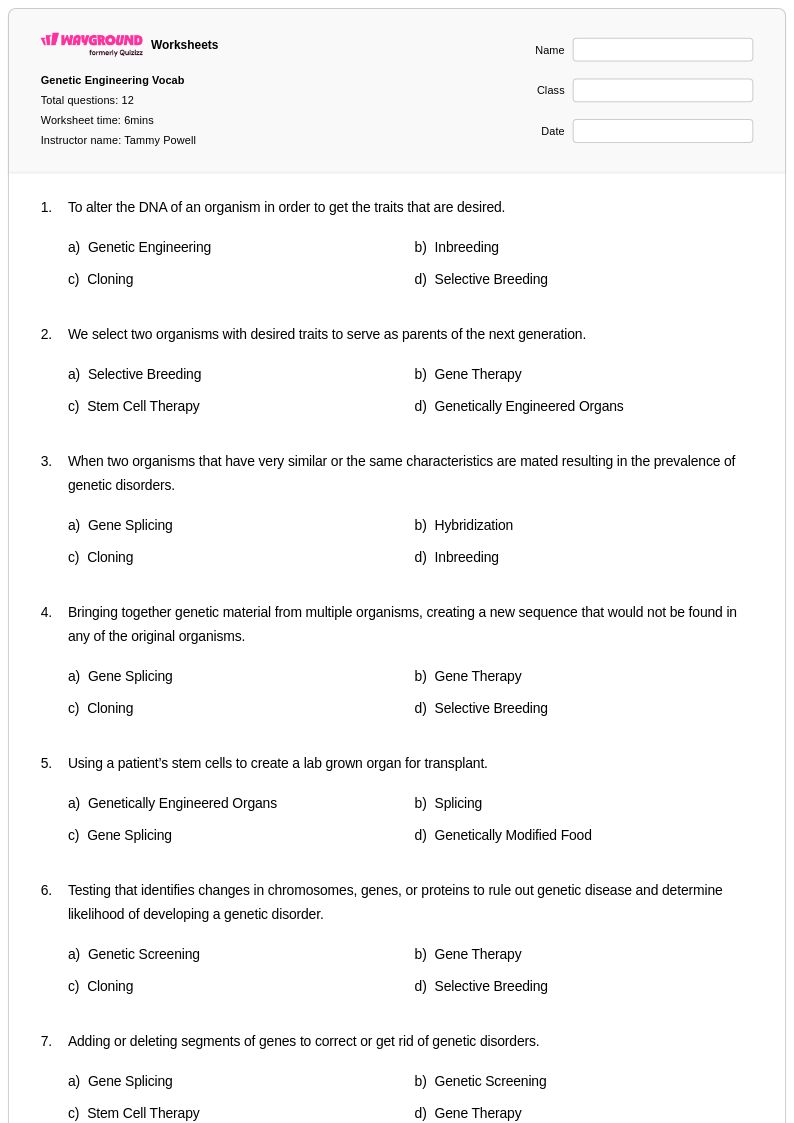
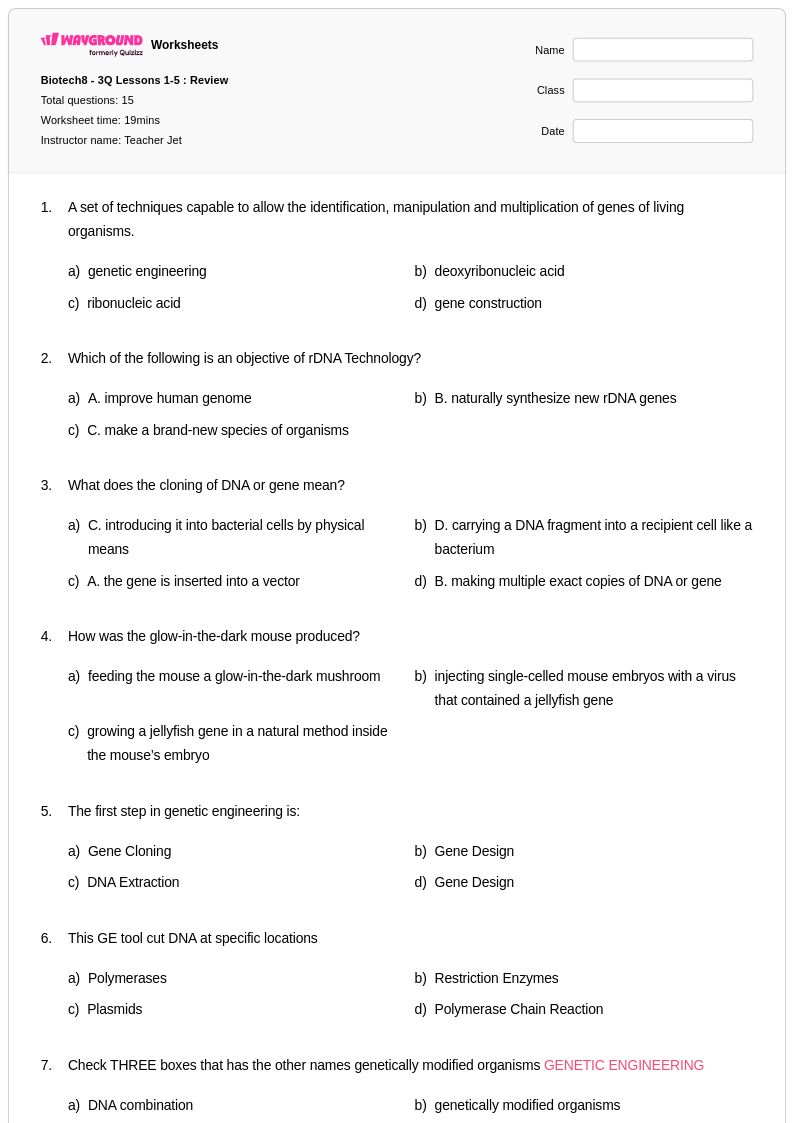
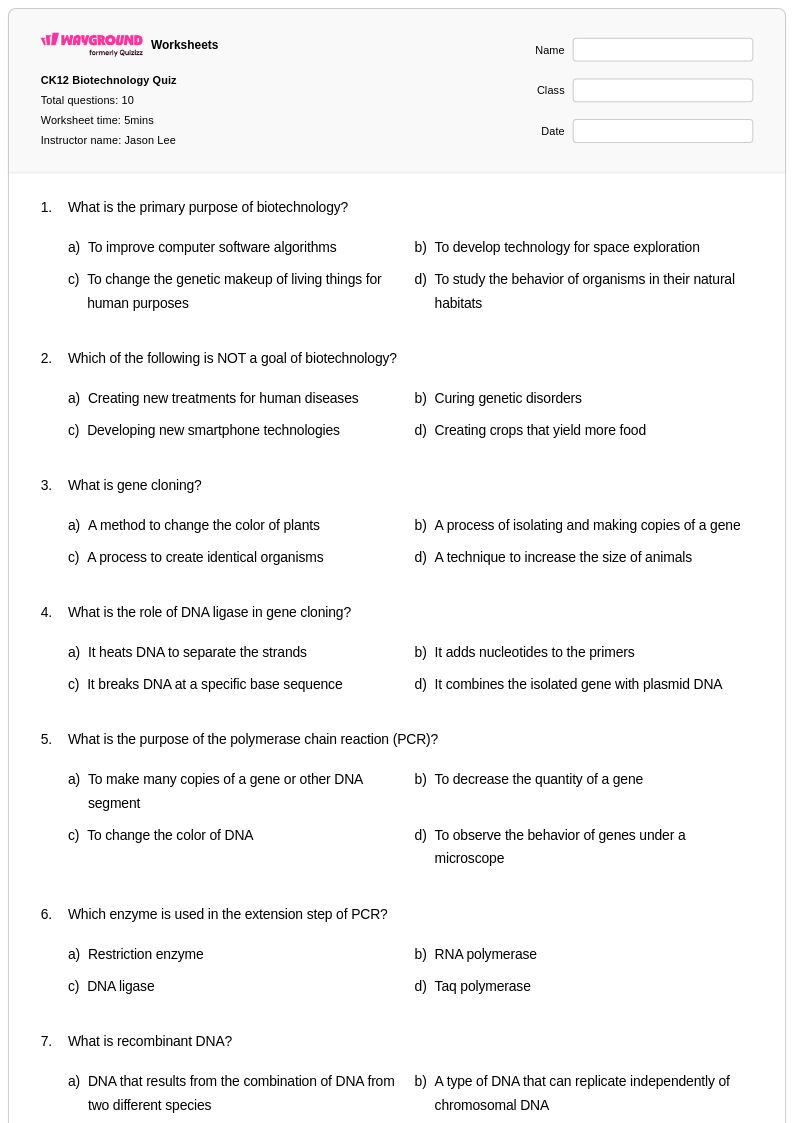
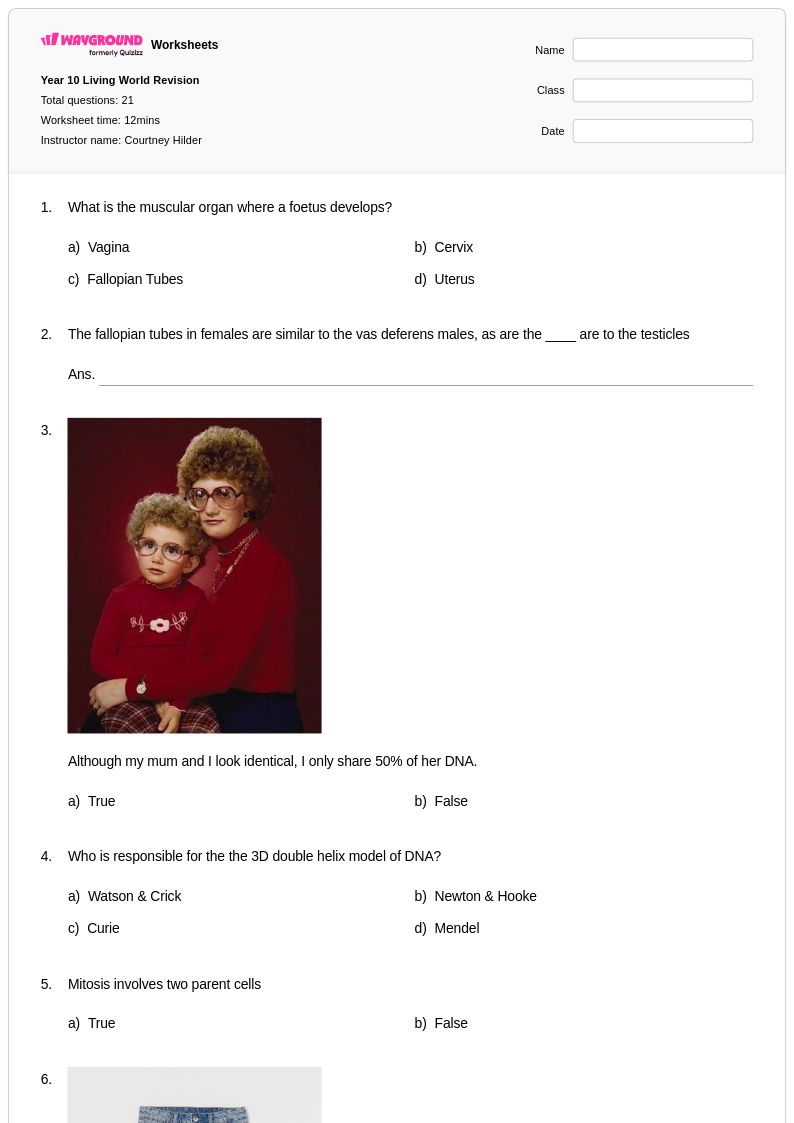
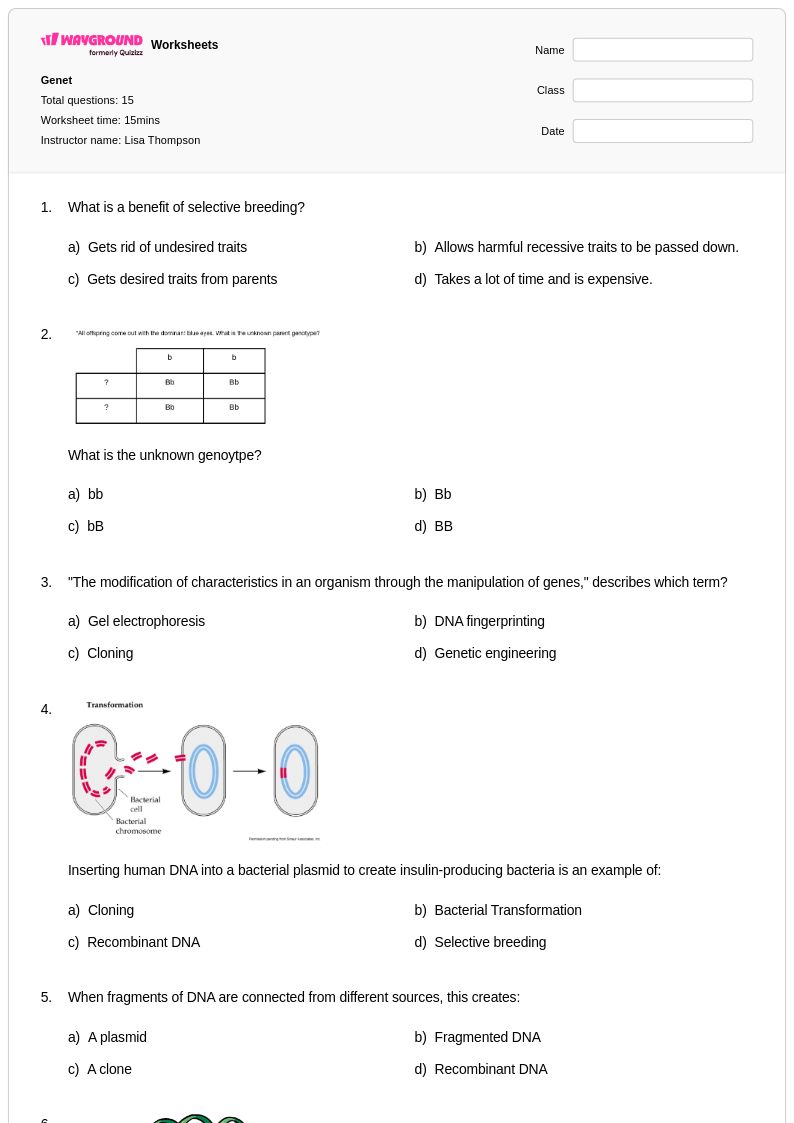
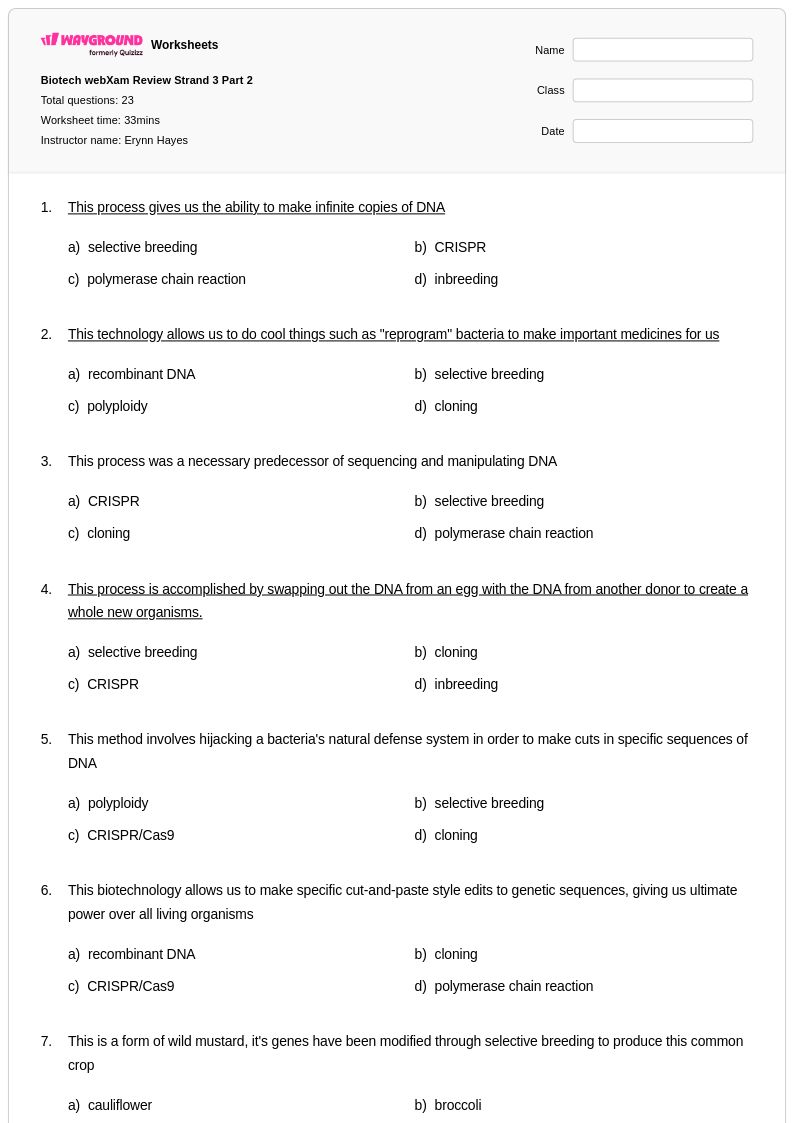
Year 10 cloning worksheets and printable PDFs from Wayground help students master genetic engineering concepts through comprehensive practice problems, detailed answer keys, and free educational materials covering reproductive and therapeutic cloning processes.
Year 10 cloning worksheets available through Wayground (formerly Quizizz) provide comprehensive coverage of this cutting-edge biotechnology topic, helping students master the fundamental concepts and ethical considerations surrounding reproductive and therapeutic cloning techniques. These expertly designed resources strengthen critical thinking skills through practice problems that explore DNA replication mechanisms, somatic cell nuclear transfer procedures, and the biological processes involved in creating genetically identical organisms. Students engage with real-world applications including agricultural cloning, endangered species preservation, and medical research applications while developing scientific literacy through structured activities that include detailed answer keys and free printable materials in convenient pdf formats.
Wayground (formerly Quizizz) supports biology educators with millions of teacher-created cloning worksheet resources that feature robust search and filtering capabilities, enabling quick identification of materials aligned with specific curriculum standards and learning objectives. The platform's differentiation tools allow teachers to customize content complexity and modify practice problems to meet diverse student needs, while flexible formatting options provide both printable pdf versions and interactive digital worksheets for varied classroom environments. These comprehensive collections facilitate effective lesson planning by offering ready-to-use materials for skill practice, targeted remediation for students struggling with molecular biology concepts, and enrichment activities for advanced learners exploring the ethical implications and future applications of cloning technology.
FAQs
How do I teach cloning to high school biology students?
Start by distinguishing between reproductive cloning and therapeutic cloning before introducing the molecular mechanisms involved, such as somatic cell nuclear transfer. Use diagrams to walk students through DNA replication and cell division processes so they can visualize each step. Once students understand the science, layer in ethical considerations and real-world case studies to develop critical thinking alongside content knowledge.
What practice exercises help students understand genetic cloning concepts?
Effective practice for cloning includes diagram-labeling activities that require students to sequence the steps of somatic cell nuclear transfer, as well as analytical questions that compare natural reproduction with artificial cloning methods. Case study prompts that ask students to evaluate the outcomes of therapeutic versus reproductive cloning build deeper conceptual understanding. These exercise types push students beyond memorization and into scientific reasoning.
What misconceptions do students commonly have about cloning?
A frequent misconception is that clones are identical in every way, including behavior and personality, when in fact environmental factors significantly influence gene expression. Students also often confuse reproductive cloning with therapeutic cloning, not recognizing that the latter is focused on producing stem cells rather than organisms. Another common error is conflating cloning with genetic modification, which involves deliberately altering DNA sequences rather than duplicating an existing genome.
How do I address the ethical dimensions of cloning in a science classroom?
Frame ethical questions around specific applications rather than abstract debates, asking students to evaluate scenarios such as the use of cloned embryos for medical research or the cloning of endangered species. Structured analytical questions that require students to weigh scientific benefit against ethical risk are more productive than open-ended opinion prompts. This approach teaches students to engage with bioethics using evidence-based reasoning, which aligns with both science and critical thinking standards.
How do I use Wayground's cloning worksheets in my classroom?
Wayground's cloning worksheets are available as printable PDFs for traditional classroom use and in digital formats for technology-integrated learning environments, so they work whether students are at desks or on devices. Teachers can also host the worksheets as a quiz directly on Wayground, enabling real-time student responses and streamlined grading. Each worksheet includes a complete answer key, supporting both teacher-led instruction and independent student practice.
How can I differentiate cloning instruction for students at different levels?
For students who are newer to cellular biology, begin with basic reproductive cloning concepts and simple diagram activities before introducing the molecular detail of DNA replication. More advanced learners can be challenged with questions that require them to compare genetic engineering techniques or evaluate the procedural steps of therapeutic cloning in depth. On Wayground, teachers can also apply individual accommodations such as read aloud support or reduced answer choices for students who need additional accessibility adjustments.