Free Printable Complementary, Supplementary, Vertical, and Adjacent Angles Worksheets for Year 7
Wayground's free Year 7 complementary, supplementary, vertical, and adjacent angles worksheets provide printable PDF practice problems with answer keys to help students master essential angle relationships and geometric concepts.
Explore printable Complementary, Supplementary, Vertical, and Adjacent Angles worksheets for Year 7
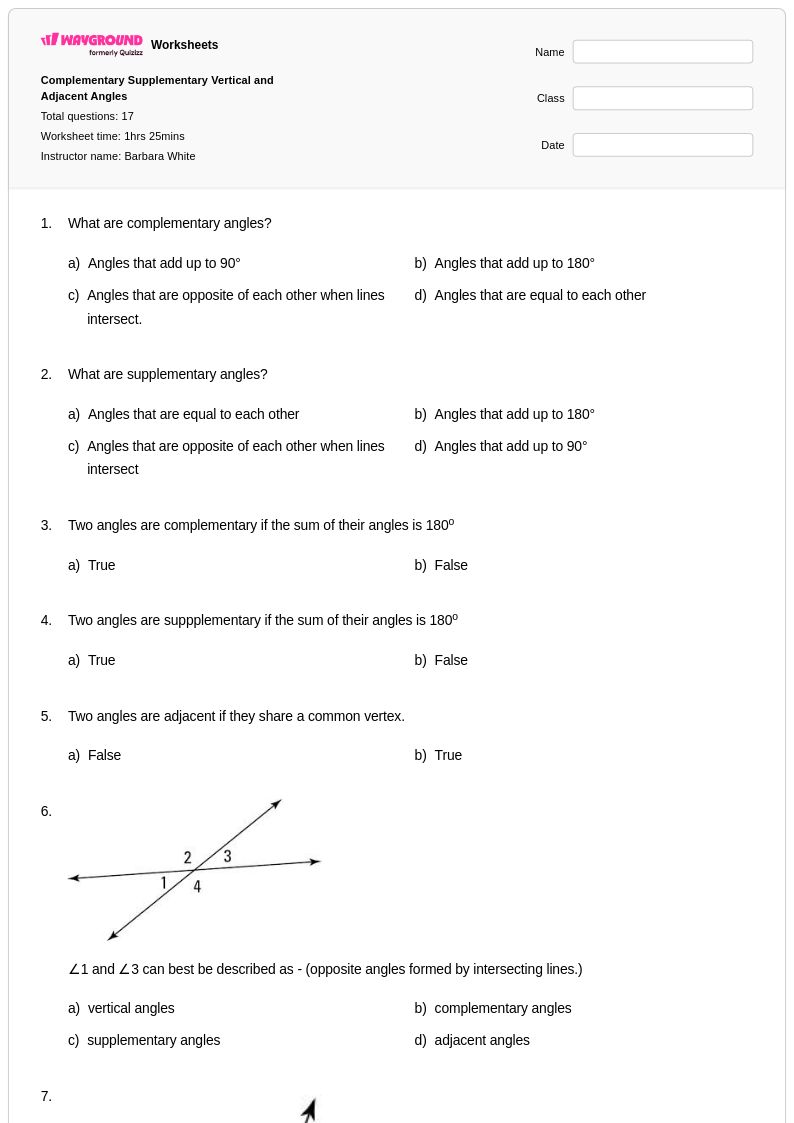
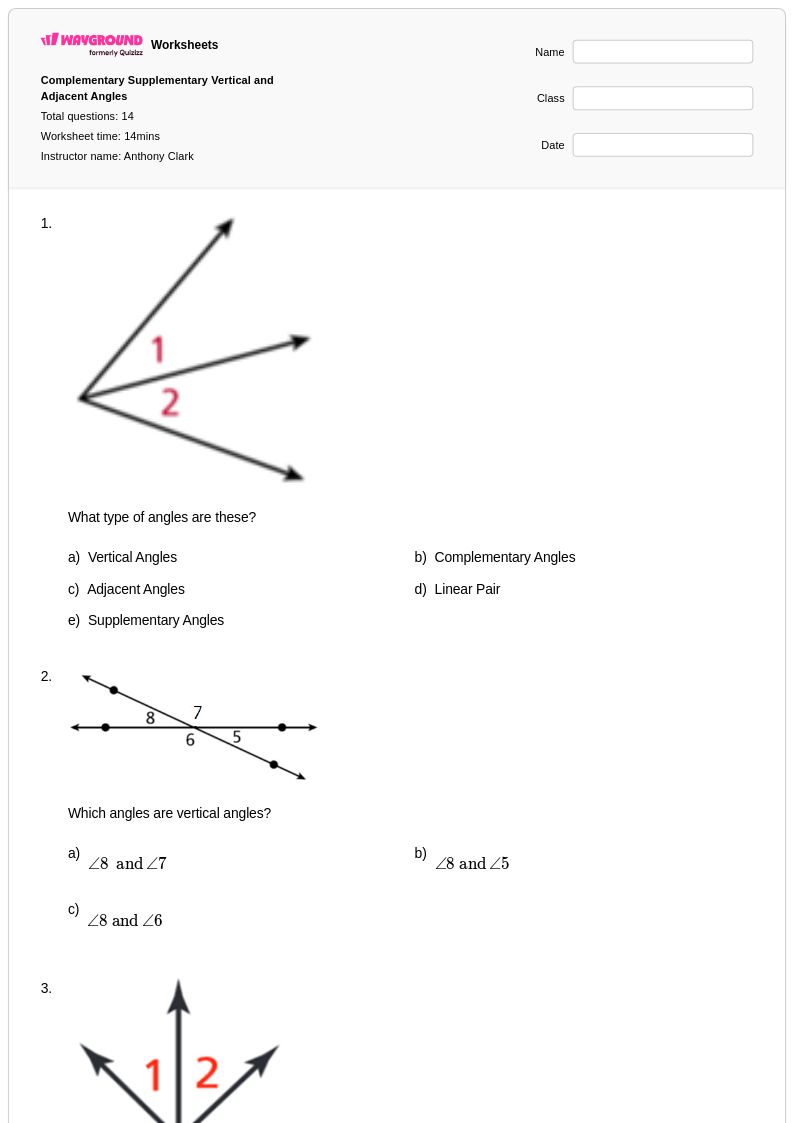
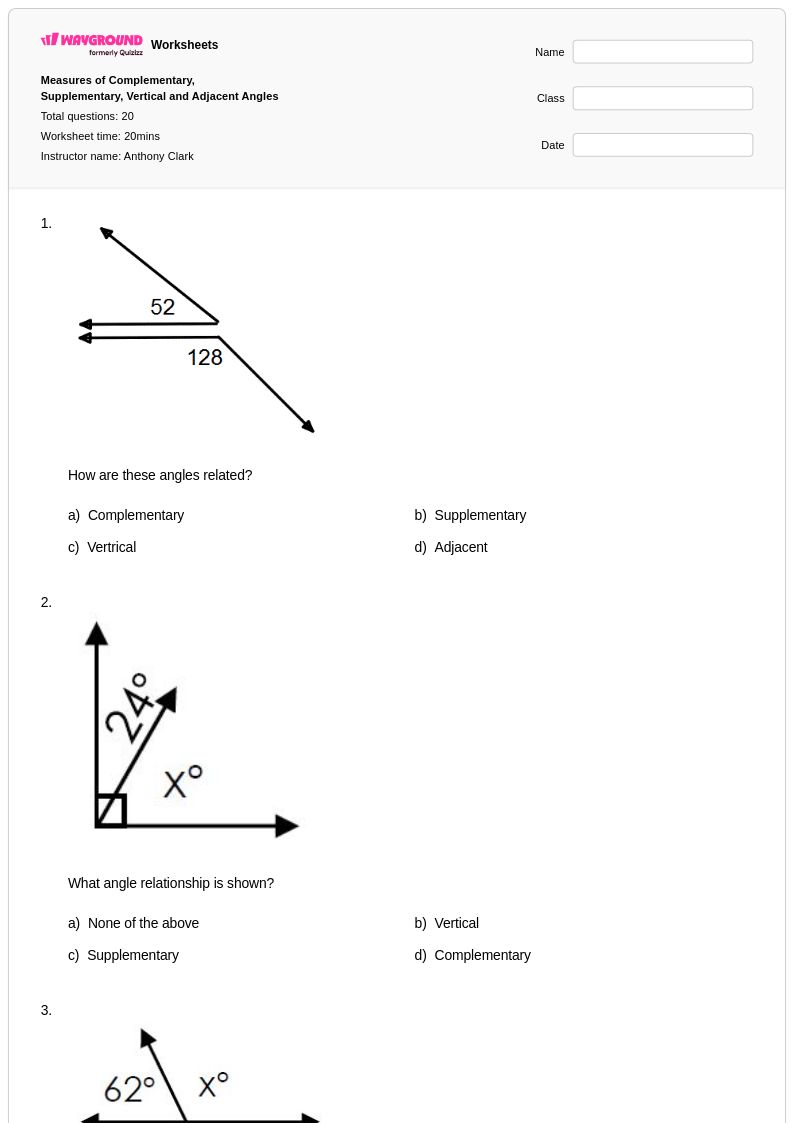
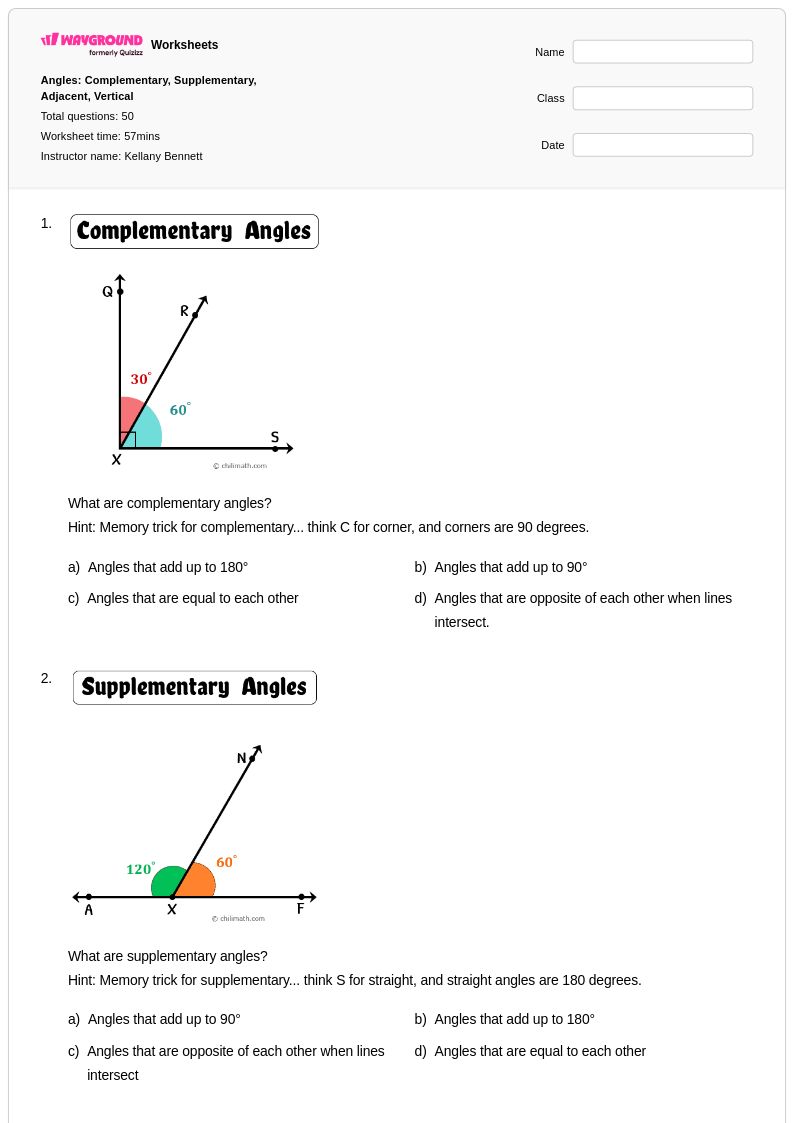
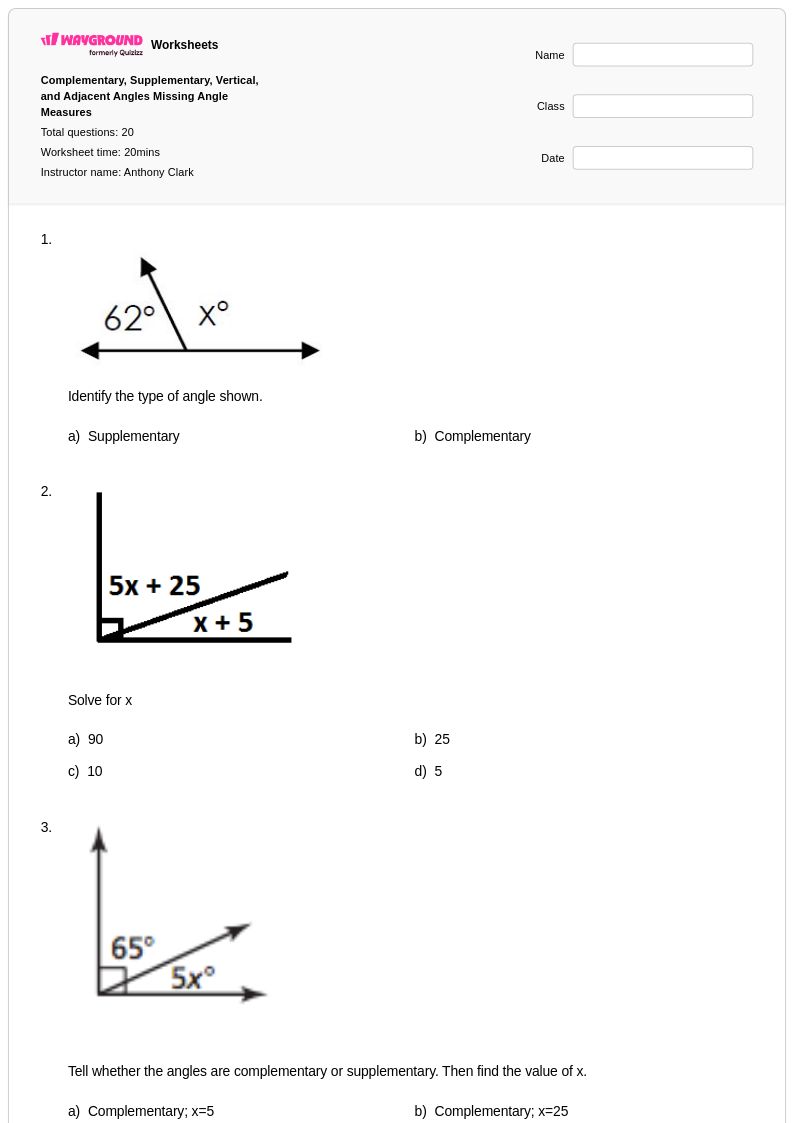
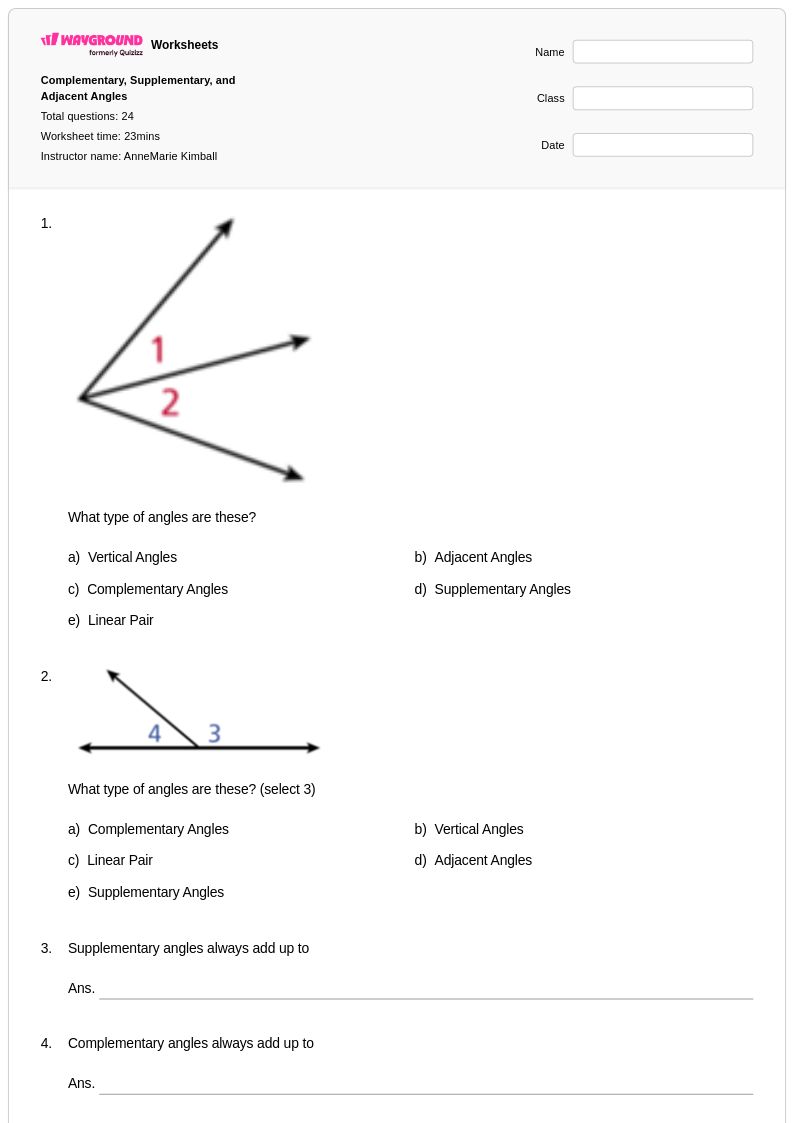
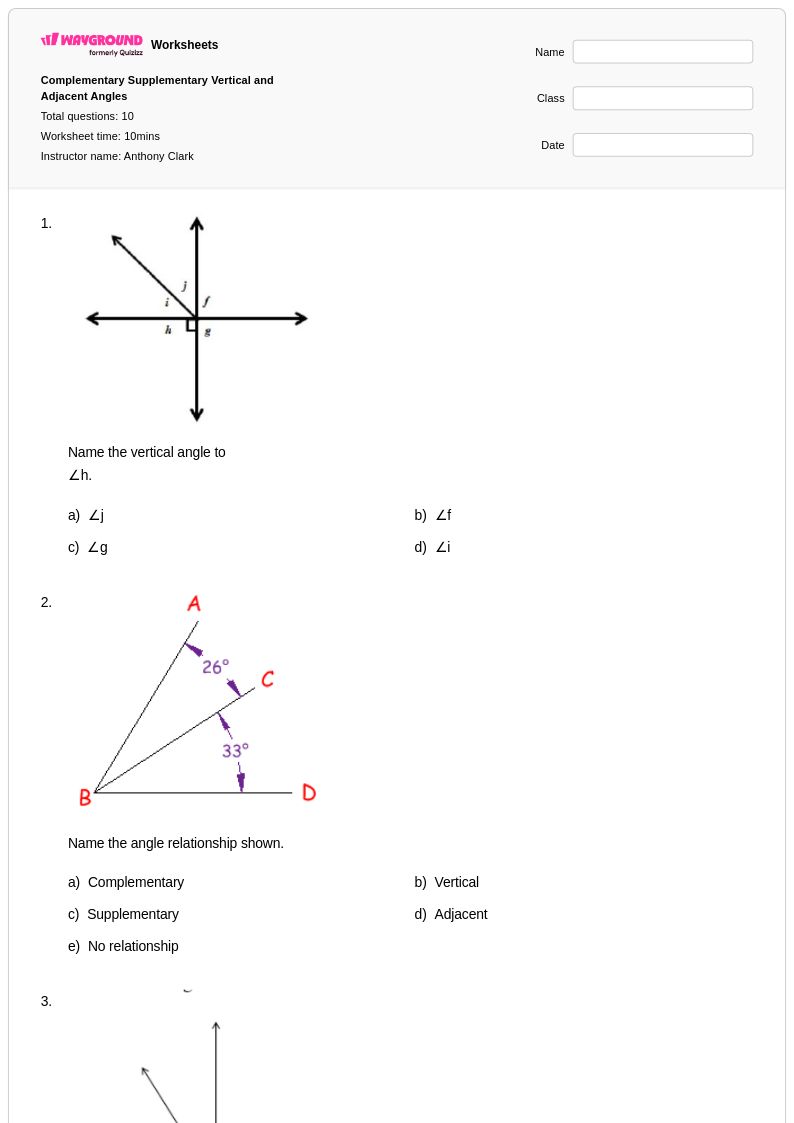
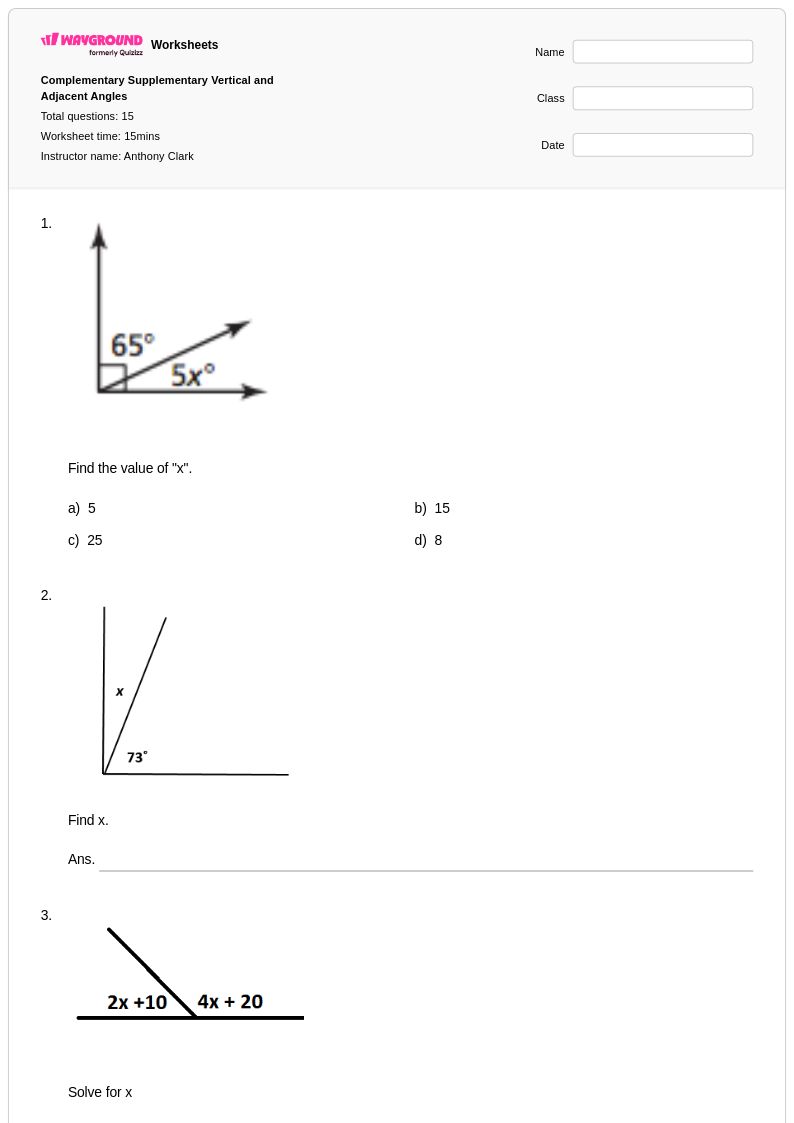
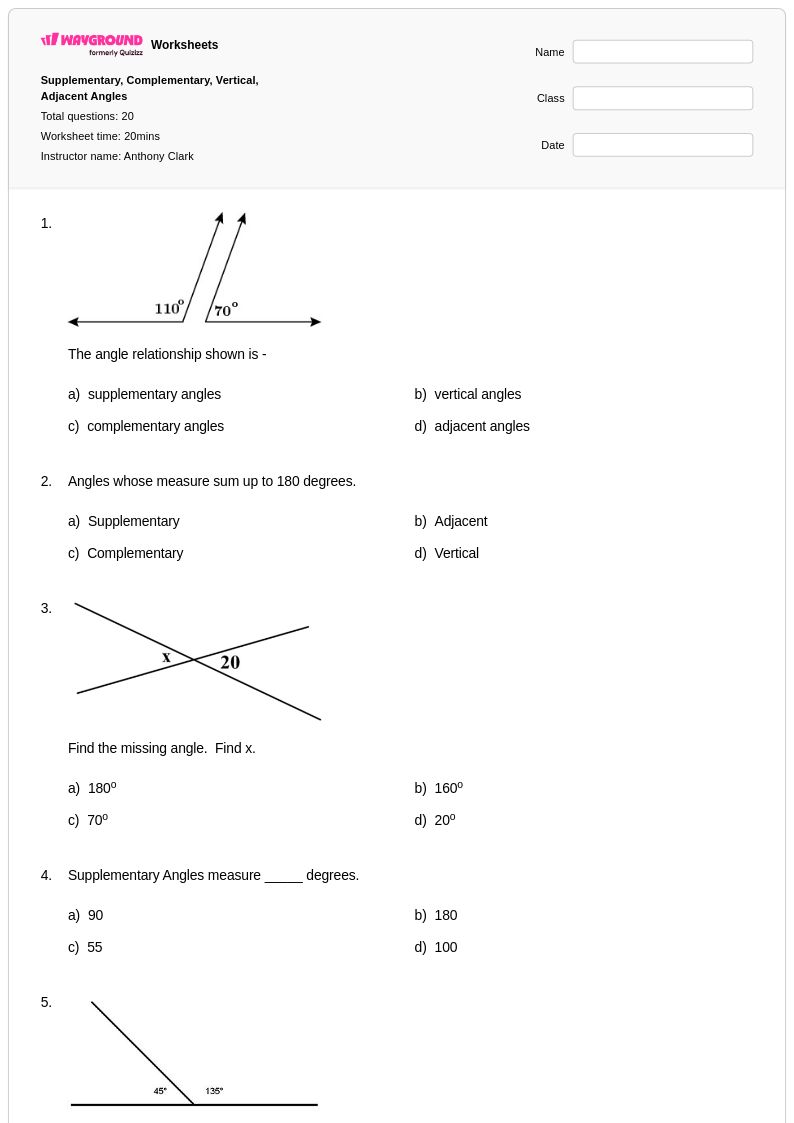
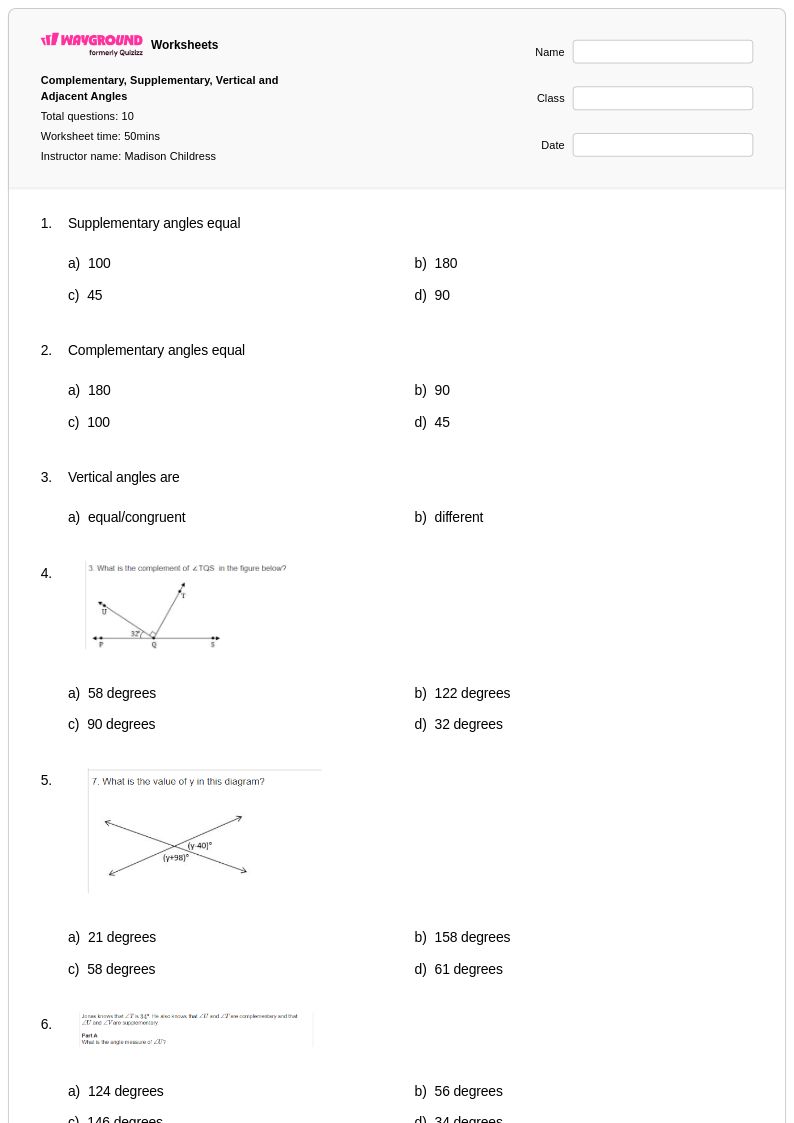
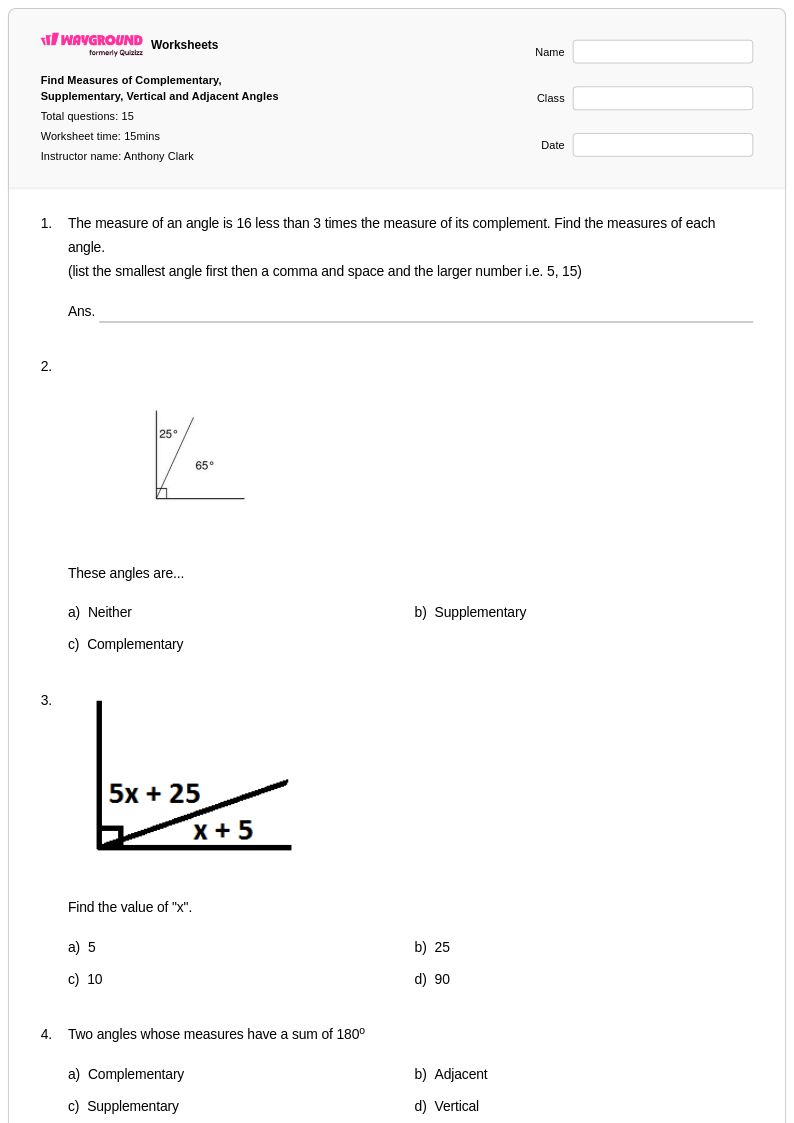
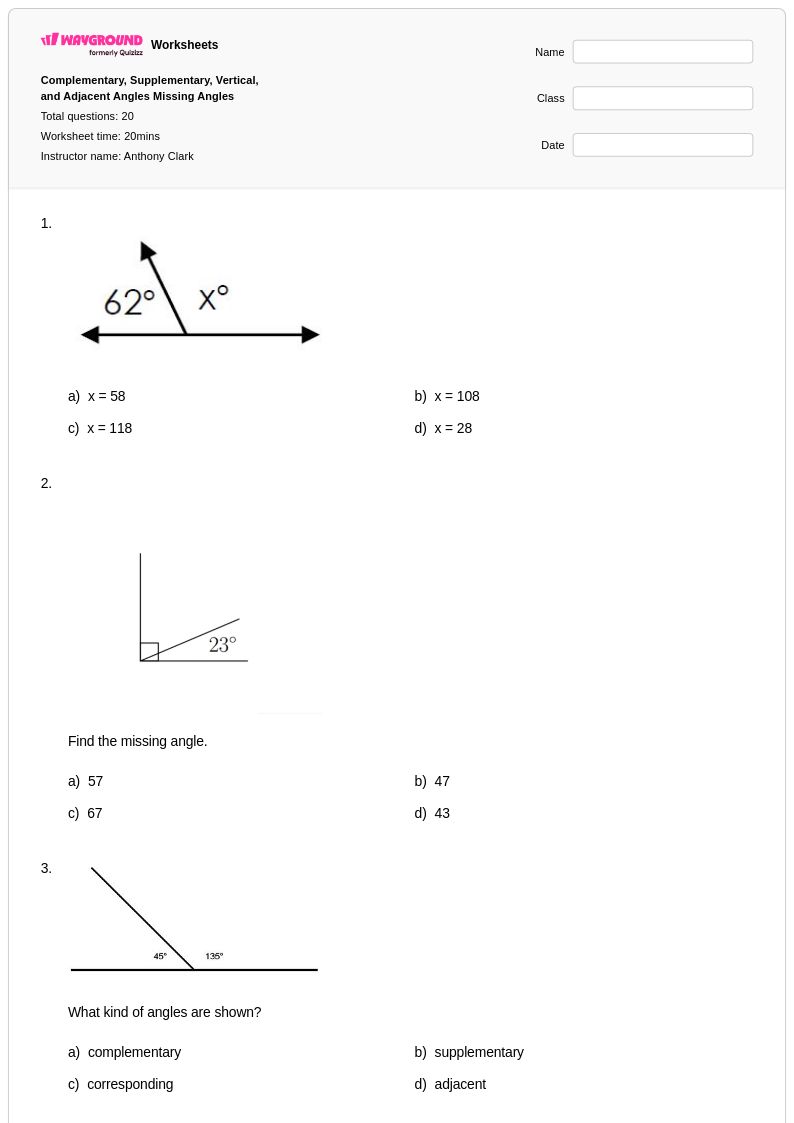
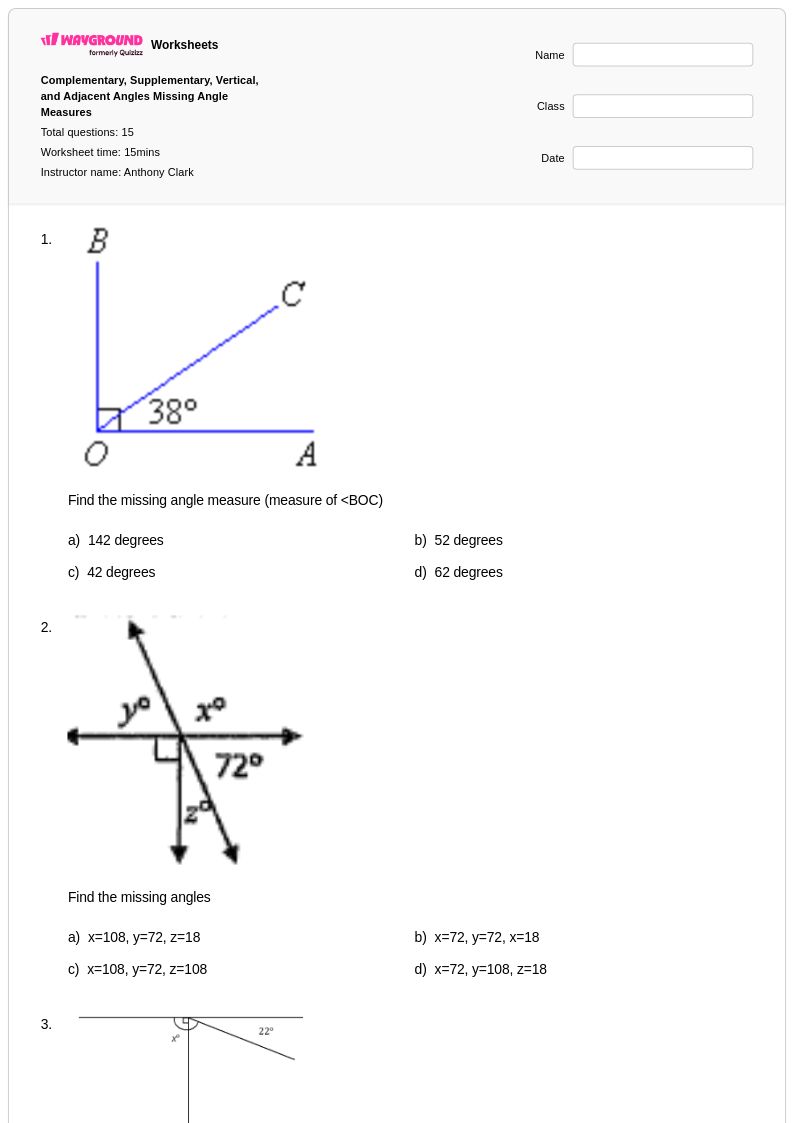
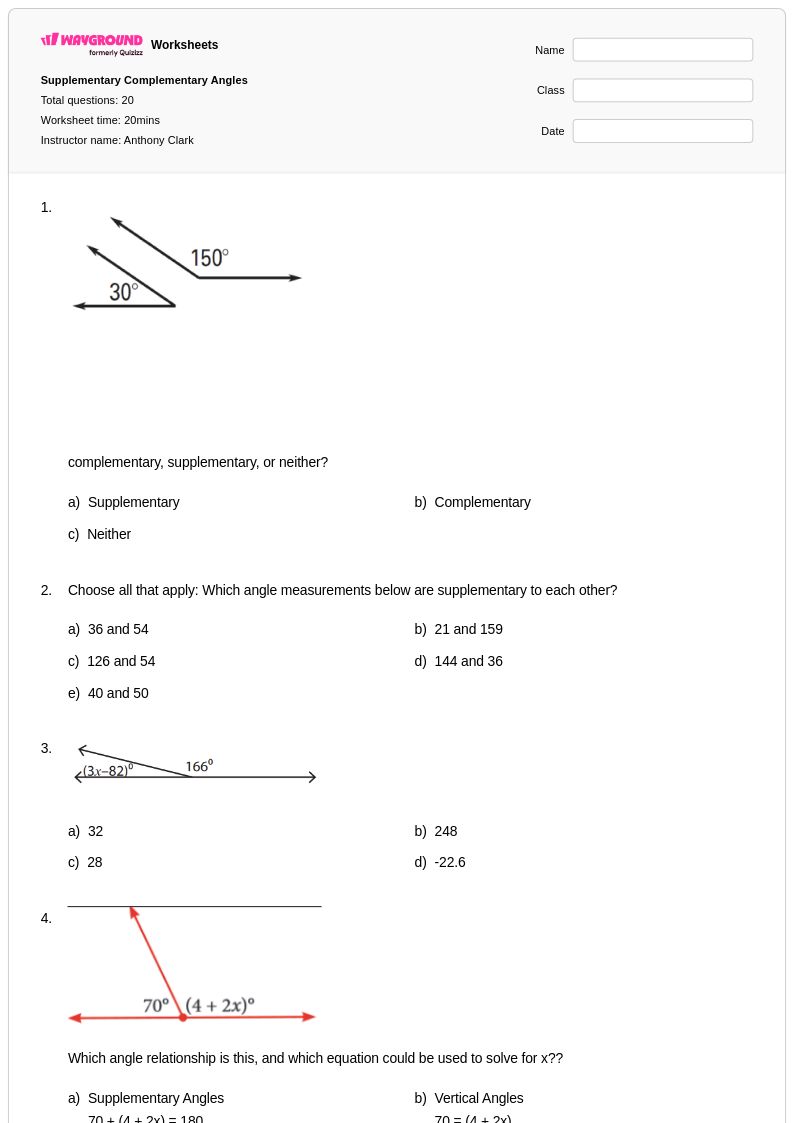
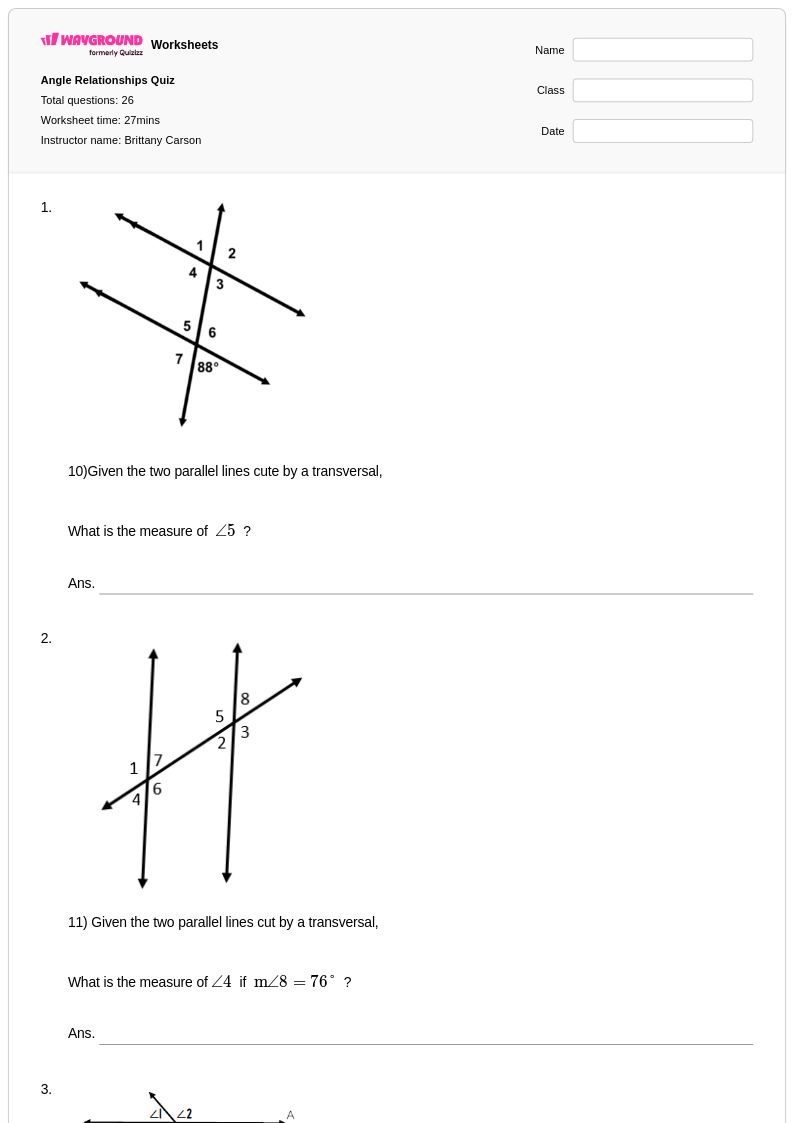
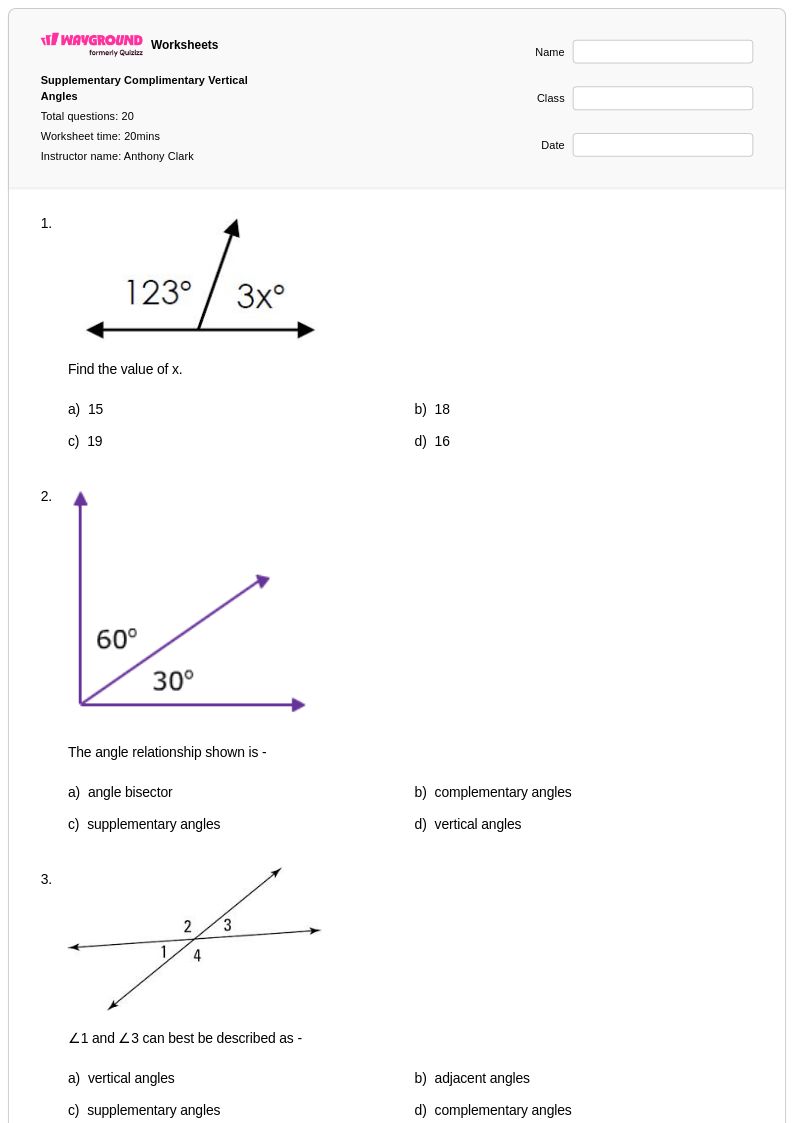
Year 7 students build essential geometric reasoning skills through comprehensive worksheets focused on complementary, supplementary, vertical, and adjacent angles available through Wayground's extensive collection. These carefully designed practice problems help seventh graders master the fundamental relationships between angle pairs, developing their ability to identify, classify, and calculate missing angle measures using established geometric principles. The worksheets strengthen critical thinking and problem-solving abilities as students work through varied scenarios involving intersecting lines, linear pairs, and perpendicular relationships. Each printable resource includes detailed answer keys to support independent learning and self-assessment, while the free pdf format ensures easy access for both classroom instruction and homework assignments.
Wayground's robust platform empowers mathematics teachers with millions of educator-created resources specifically targeting complementary, supplementary, vertical, and adjacent angle concepts for Year 7 learners. The platform's advanced search and filtering capabilities allow instructors to quickly locate worksheets that align with specific curriculum standards and learning objectives, while built-in differentiation tools enable seamless customization for diverse student needs and ability levels. Teachers can effortlessly modify existing materials or create personalized practice sets, choosing between printable pdf versions for traditional paper-based work or digital formats for interactive classroom experiences. This flexibility supports comprehensive lesson planning, targeted remediation for struggling students, enrichment opportunities for advanced learners, and ongoing skill reinforcement throughout the academic year.
FAQs
How do I teach complementary, supplementary, vertical, and adjacent angles in Grade 7?
Use intersecting-line and linear-pair diagrams to connect each visual relationship to an equation: complementary angles total 90 degrees, supplementary angles total 180 degrees, and vertical angles are equal. Ask students to justify which relationship applies before solving so they practice geometric reasoning rather than memorizing isolated rules.
What exercises help Grade 7 students practice angle relationships?
Effective practice moves from classifying angle pairs to solving for missing measures in linear pairs, intersecting lines, and perpendicular relationships. Include mixed and multi-step problems so students must combine angle facts and explain the sequence of calculations.
What mistakes do Grade 7 students make when solving angle relationship problems?
Students commonly treat every adjacent pair as supplementary, confuse vertical angles with adjacent angles, or write an equation using the wrong total. They may also calculate correctly from a diagram that they classified incorrectly, so require both a relationship label and supporting equation.
How can I use Grade 7 angle relationship worksheets for instruction and assessment?
Each Wayground worksheet includes a complete answer key and is available as a printable PDF or in a digital format, accommodating whole-class lessons, homework, small groups, and independent practice. Teachers can host the worksheet as a digital quiz on Wayground or print it, assign it on paper, and grade scanned or captured submissions with the Wayground for Teachers app.
How do Grade 7 angle relationships fit into the Common Core math progression?
These worksheets align with Common Core’s emphasis on using facts about supplementary, complementary, vertical, and adjacent angles to write and solve equations. This work connects arithmetic reasoning to algebraic geometry and prepares students for increasingly complex figures and formal geometric arguments.
How can I differentiate angle relationship practice for Grade 7 students?
Teachers can offer alternate worksheet versions with adjusted font spacing and size, a dyslexia-friendly font, translated content, or modified problem sets for remediation and enrichment. For digital work, individual students can receive extended time, Read Aloud, reduced answer choices, or reading mode without changing the default experience for classmates.
What grade level is this angle relationship worksheet collection for?
This collection is designed for Grade 7 students learning to identify, classify, and calculate complementary, supplementary, vertical, and adjacent angles. Its progression from basic recognition to multi-step problems matches the growing use of equations and logical reasoning in seventh-grade mathematics.