Free Printable Continental Drift Worksheets for Year 7
Explore Year 7 Continental Drift worksheets and printables from Wayground that help students understand plate tectonics theory through engaging practice problems, free PDF resources, and comprehensive answer keys.
Explore printable Continental Drift worksheets for Year 7
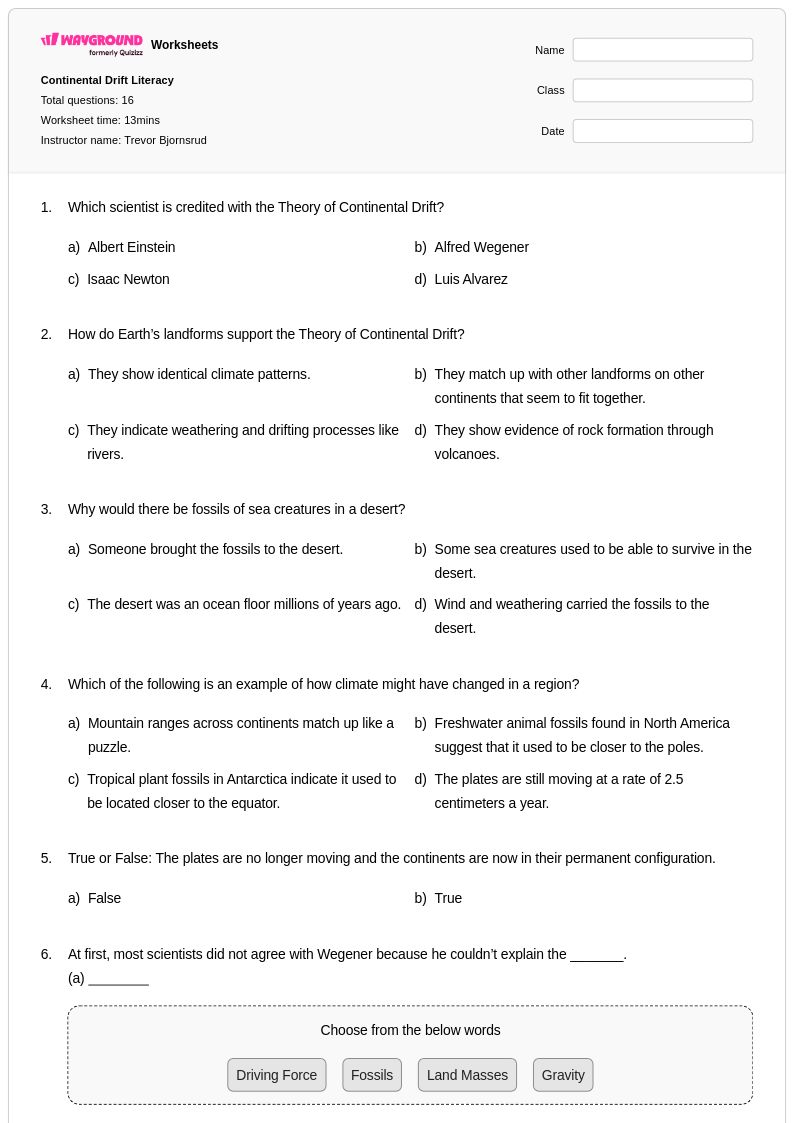
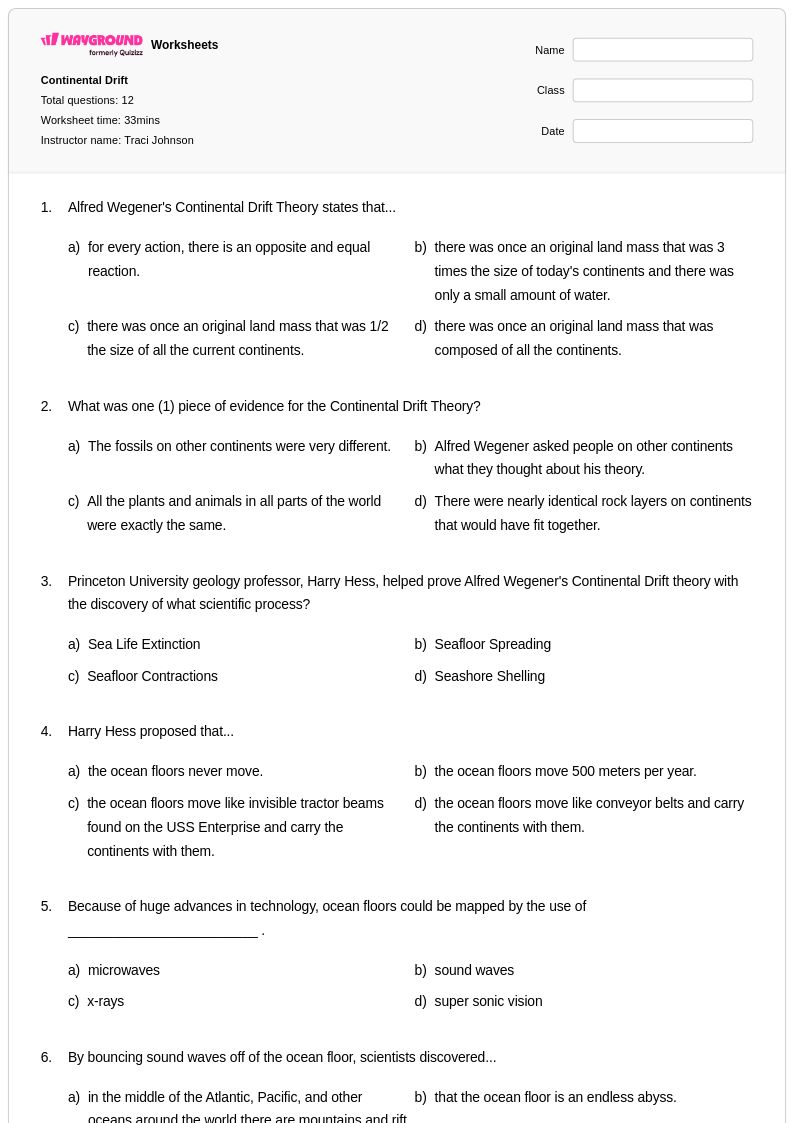
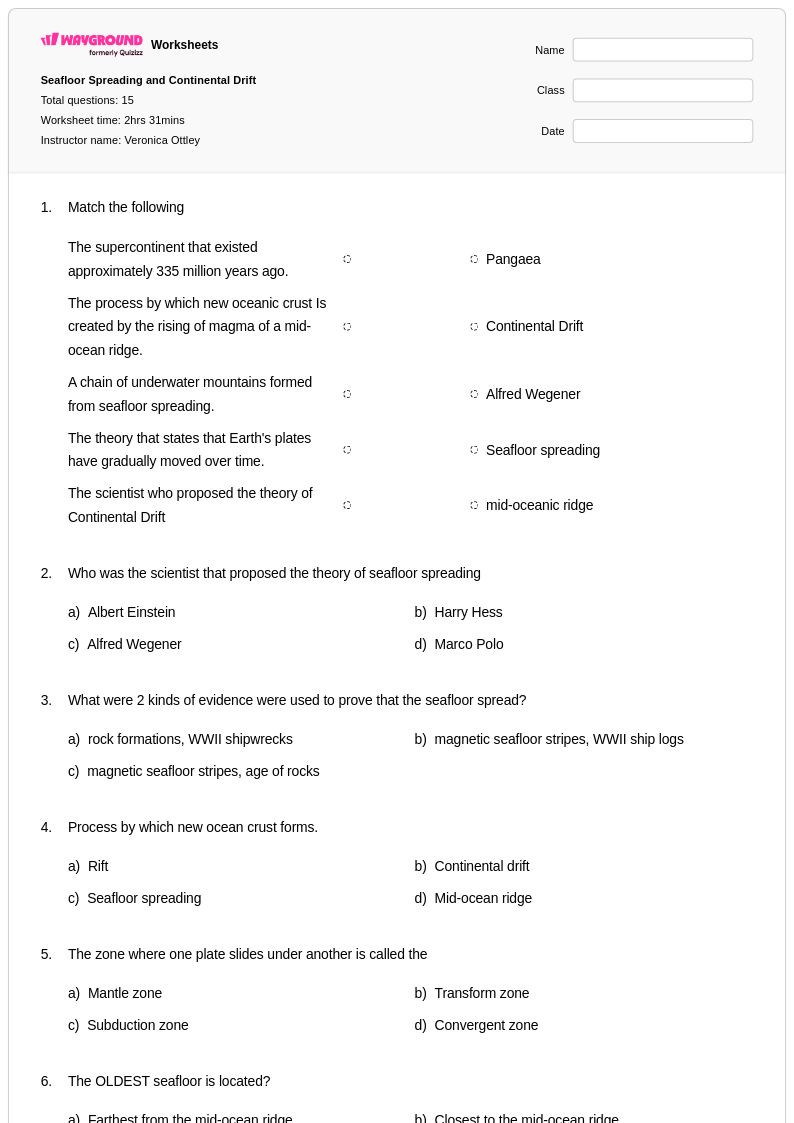
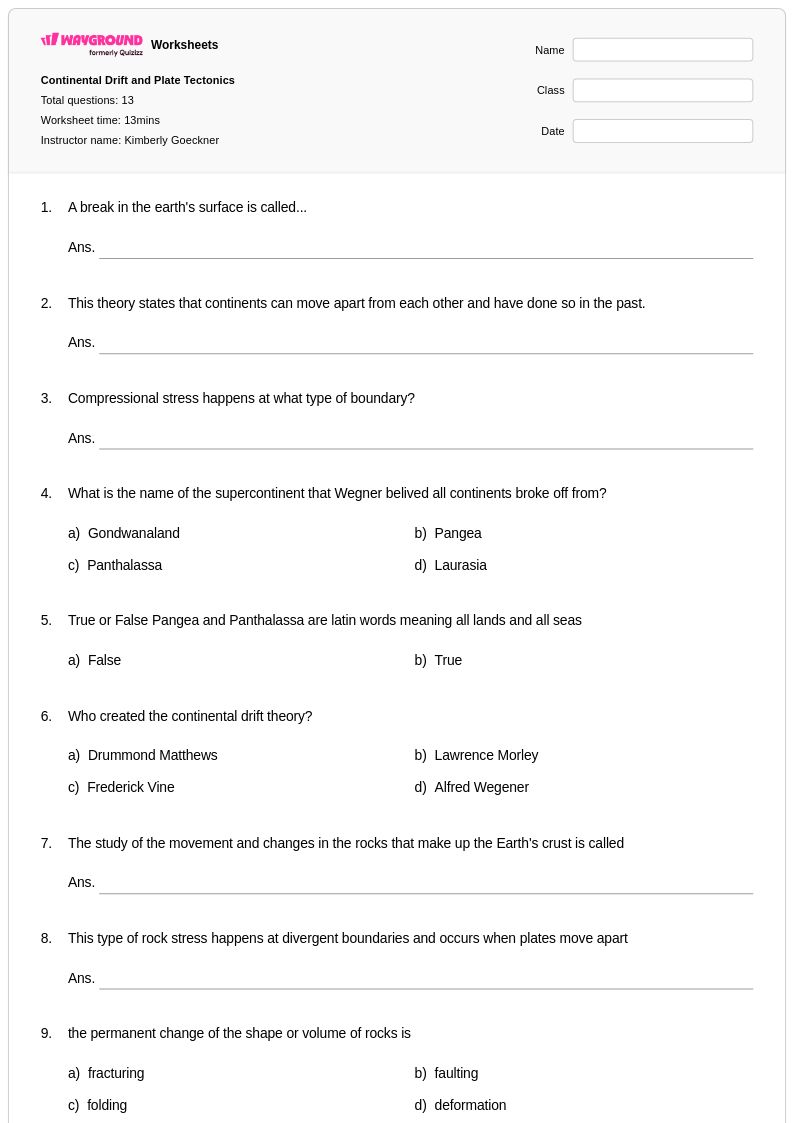
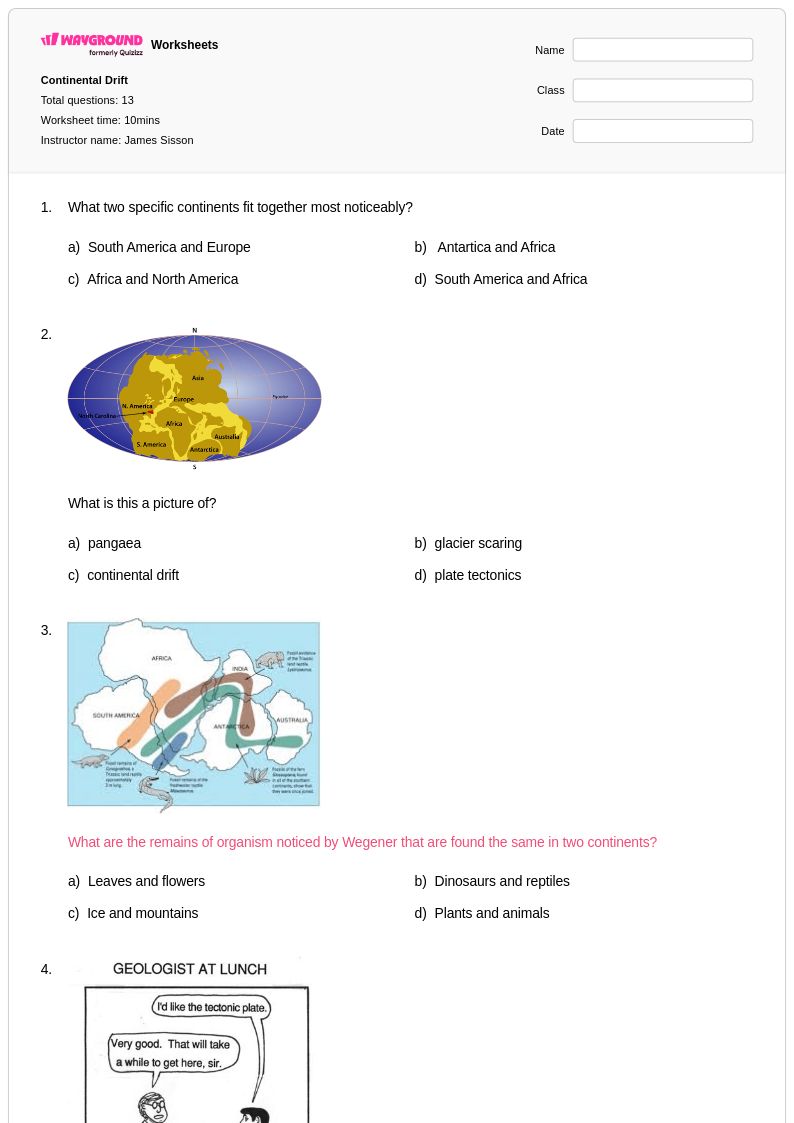
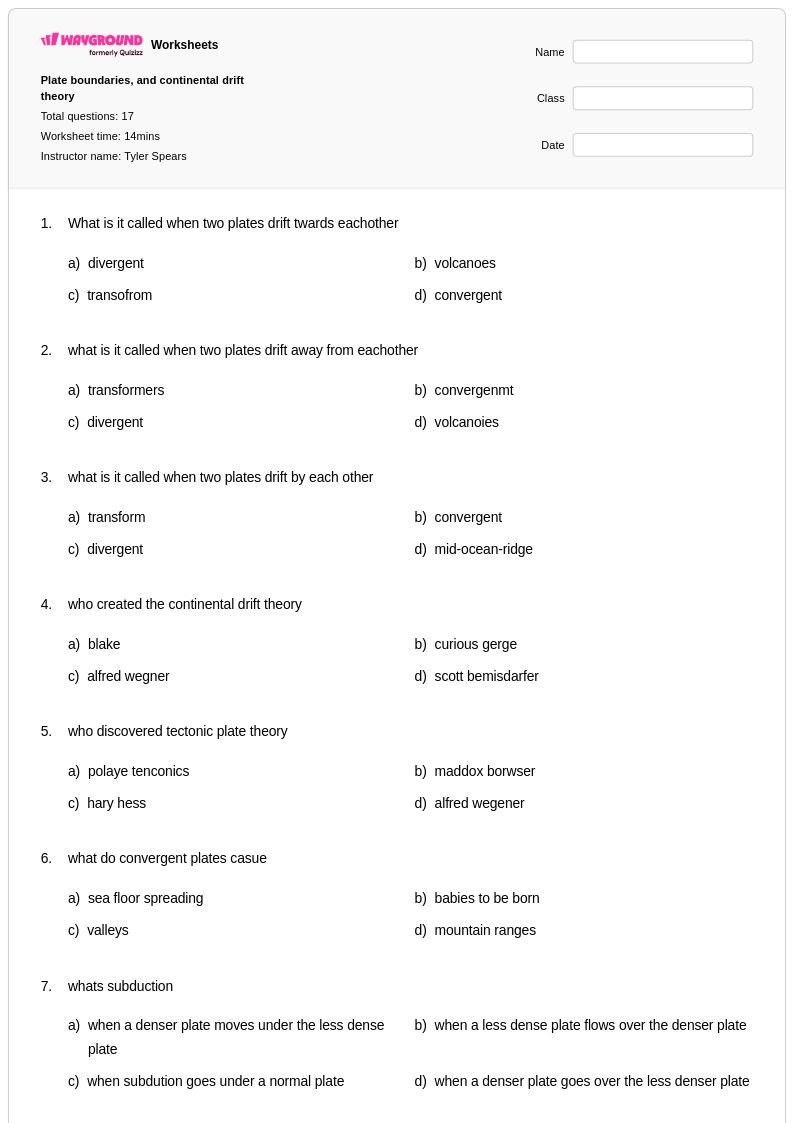
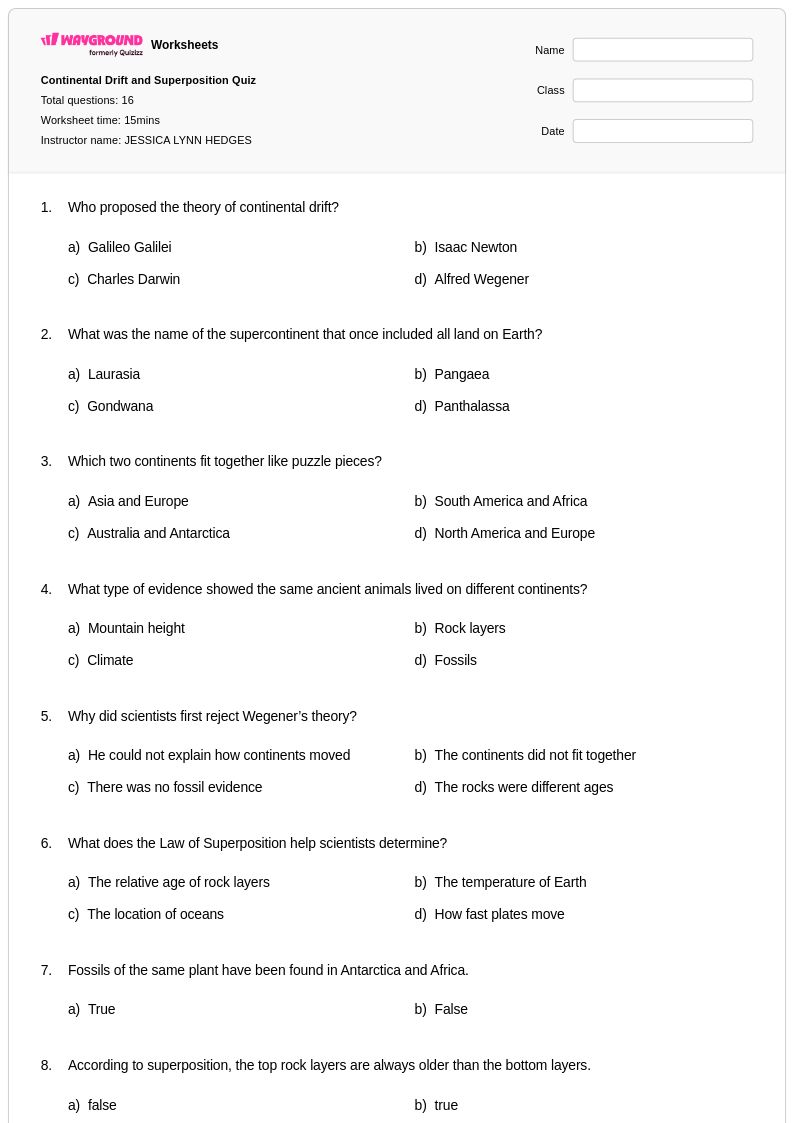
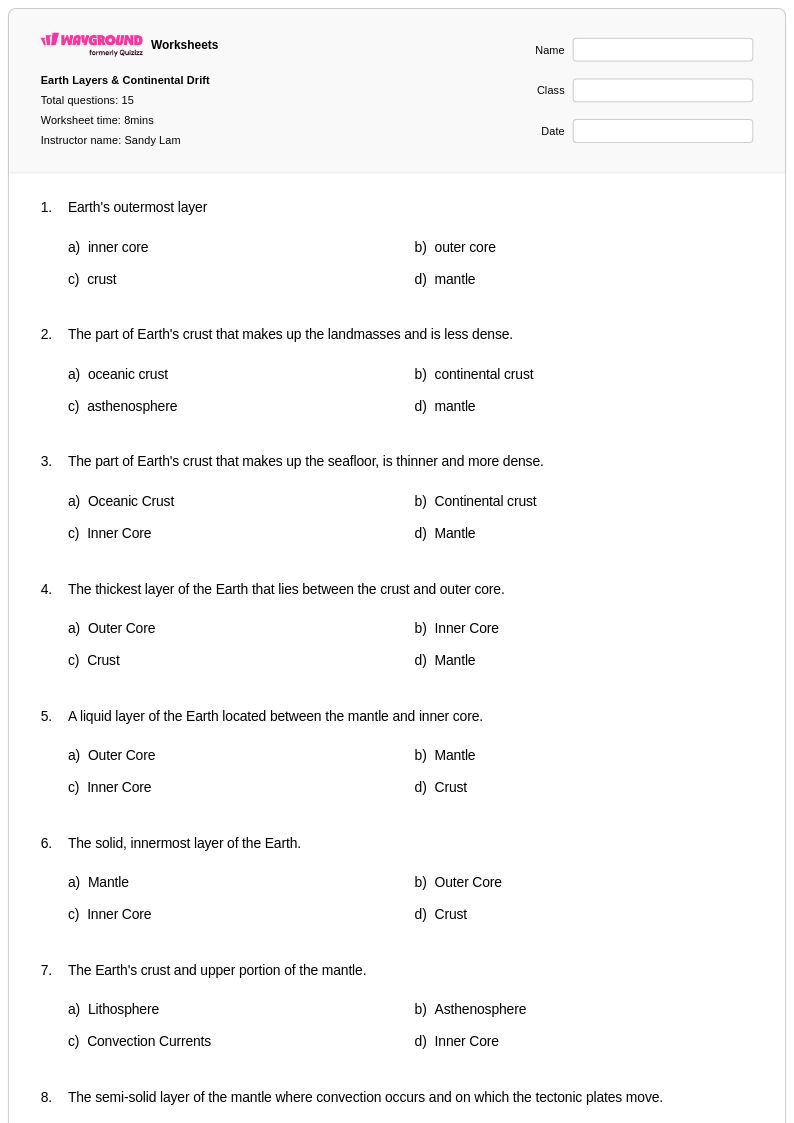
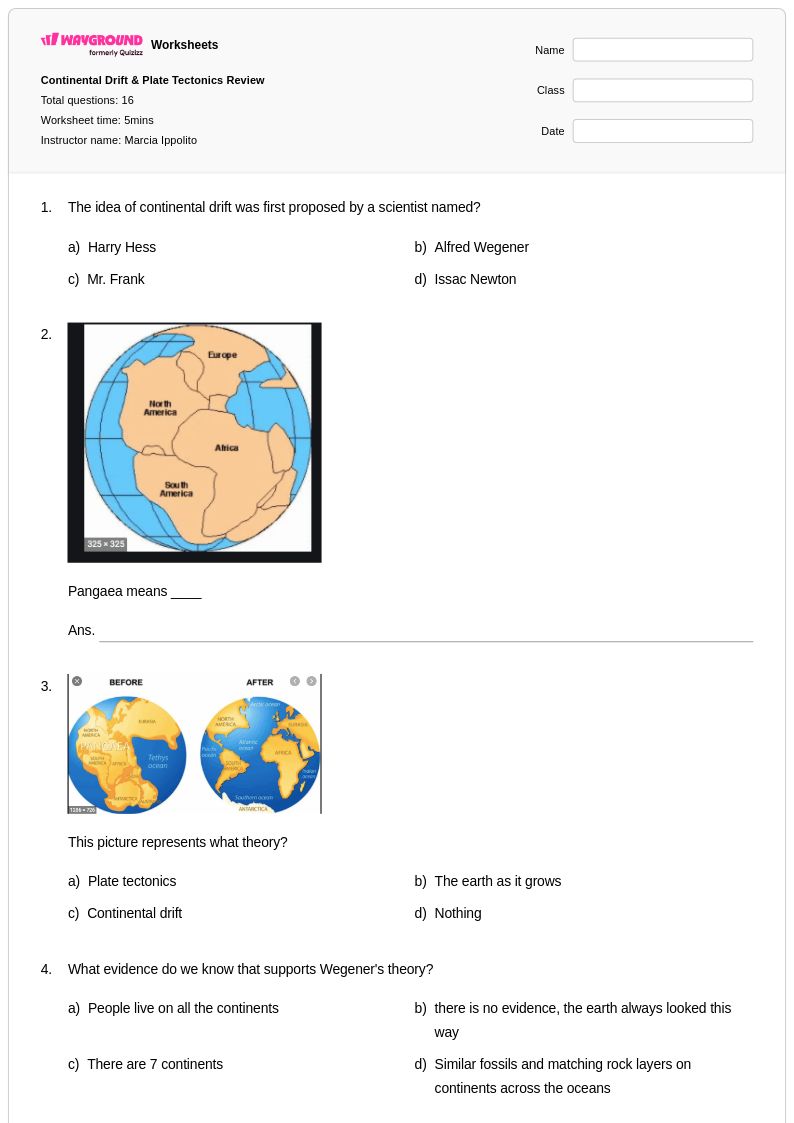
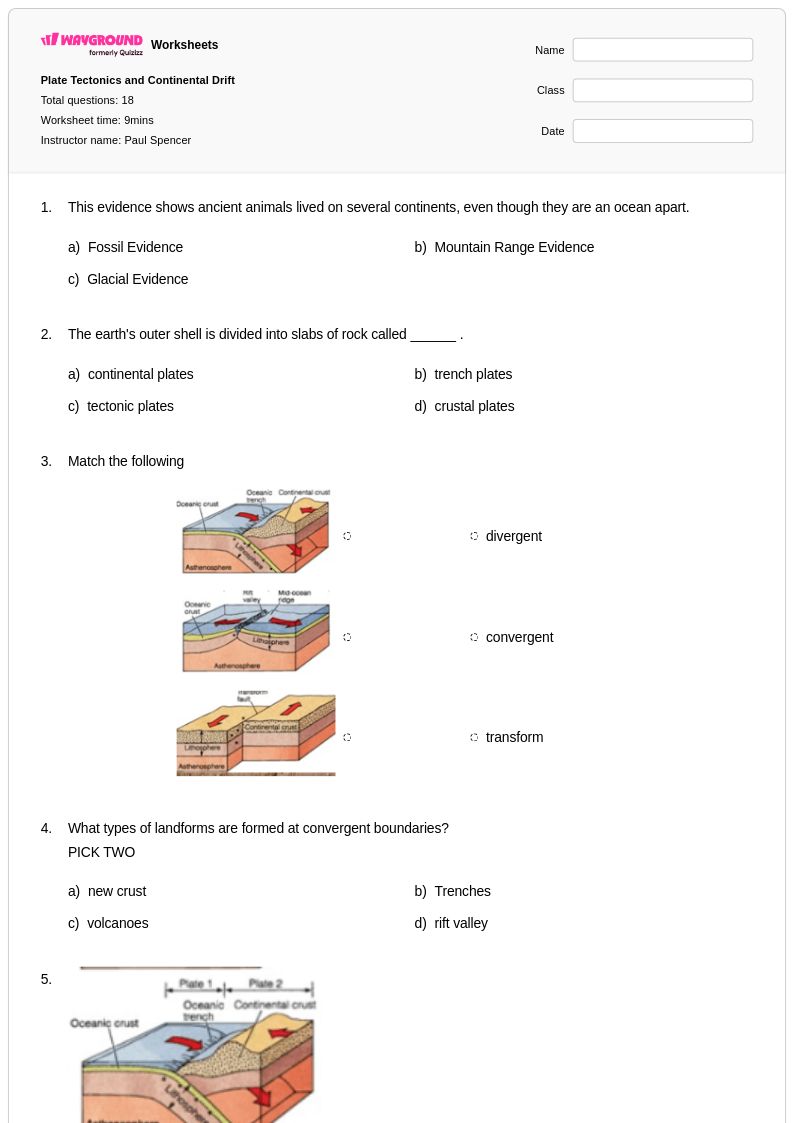
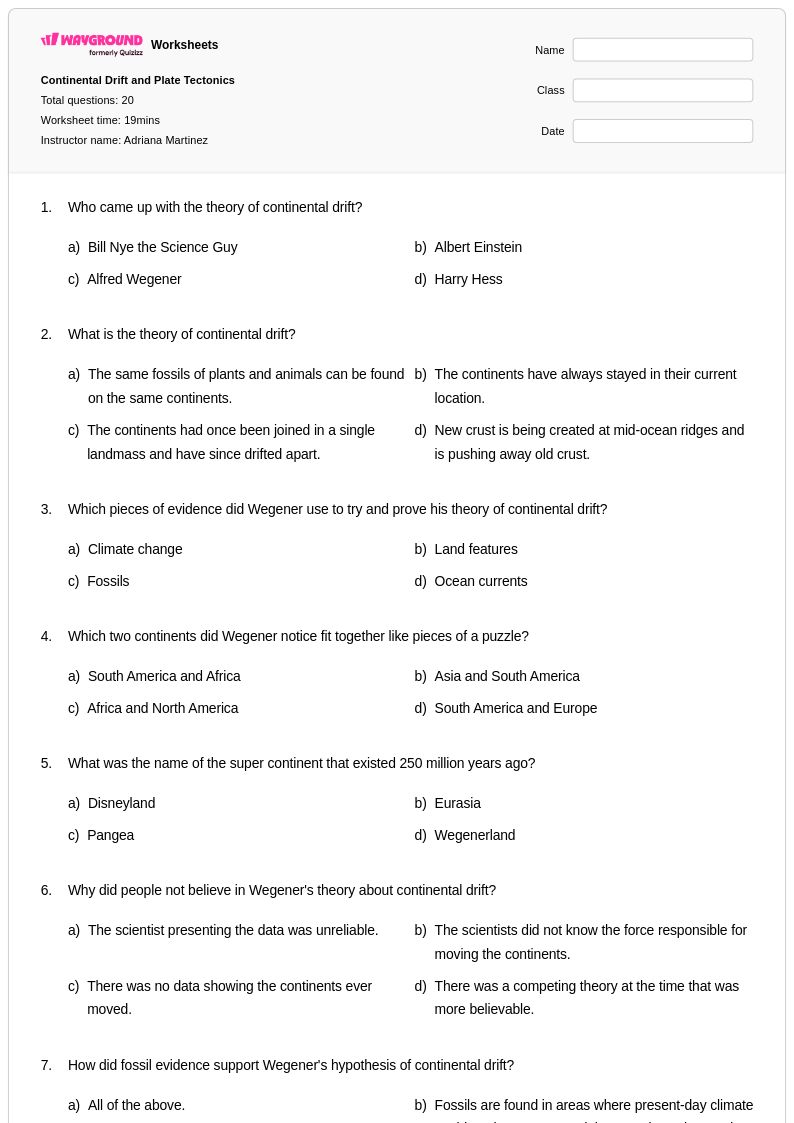
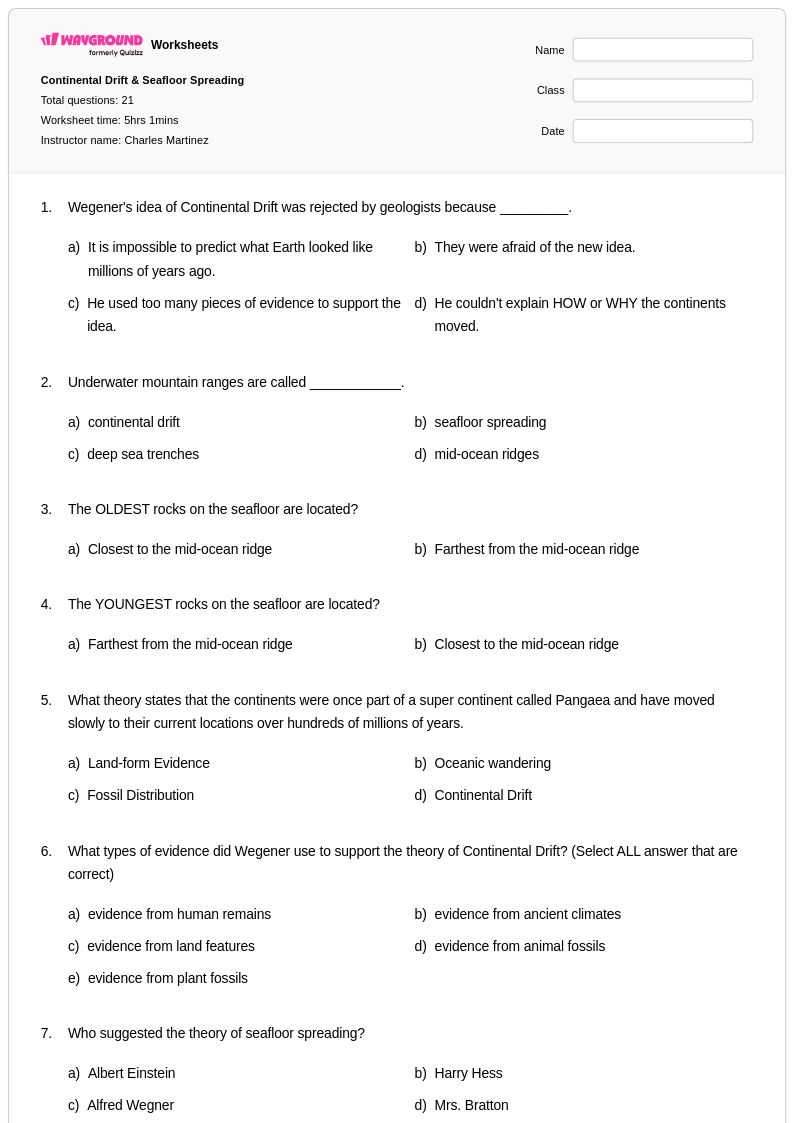
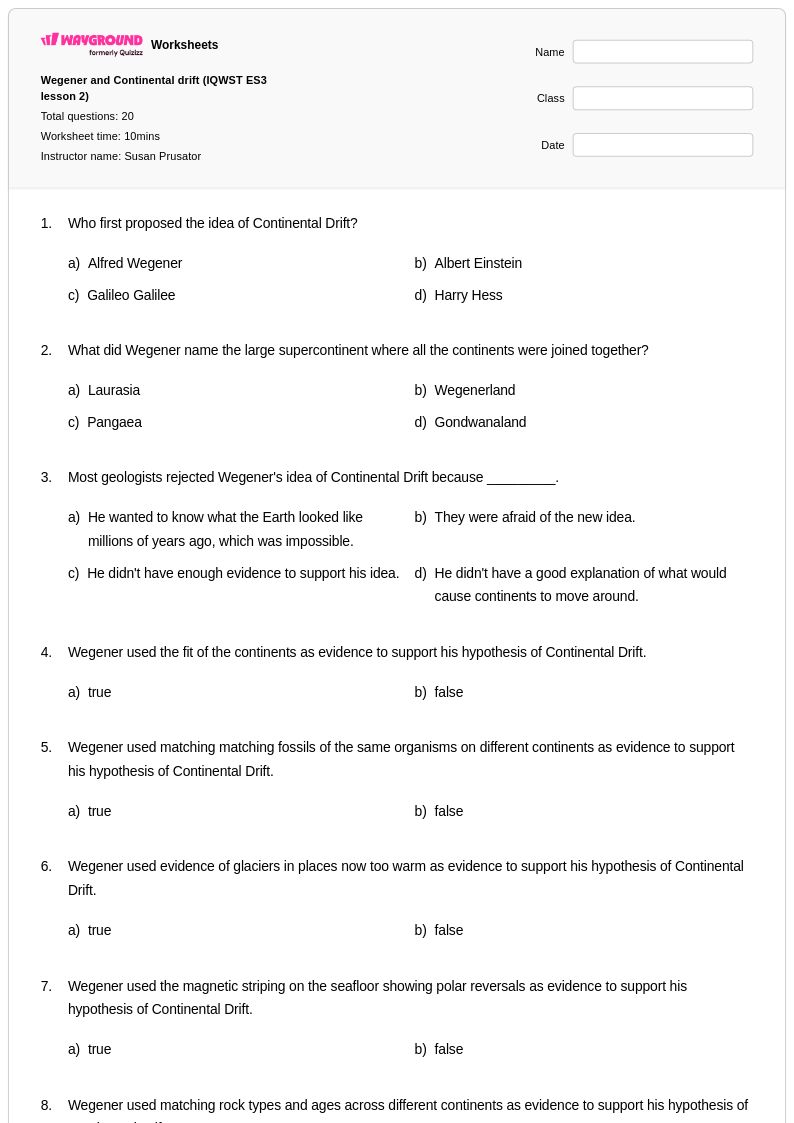
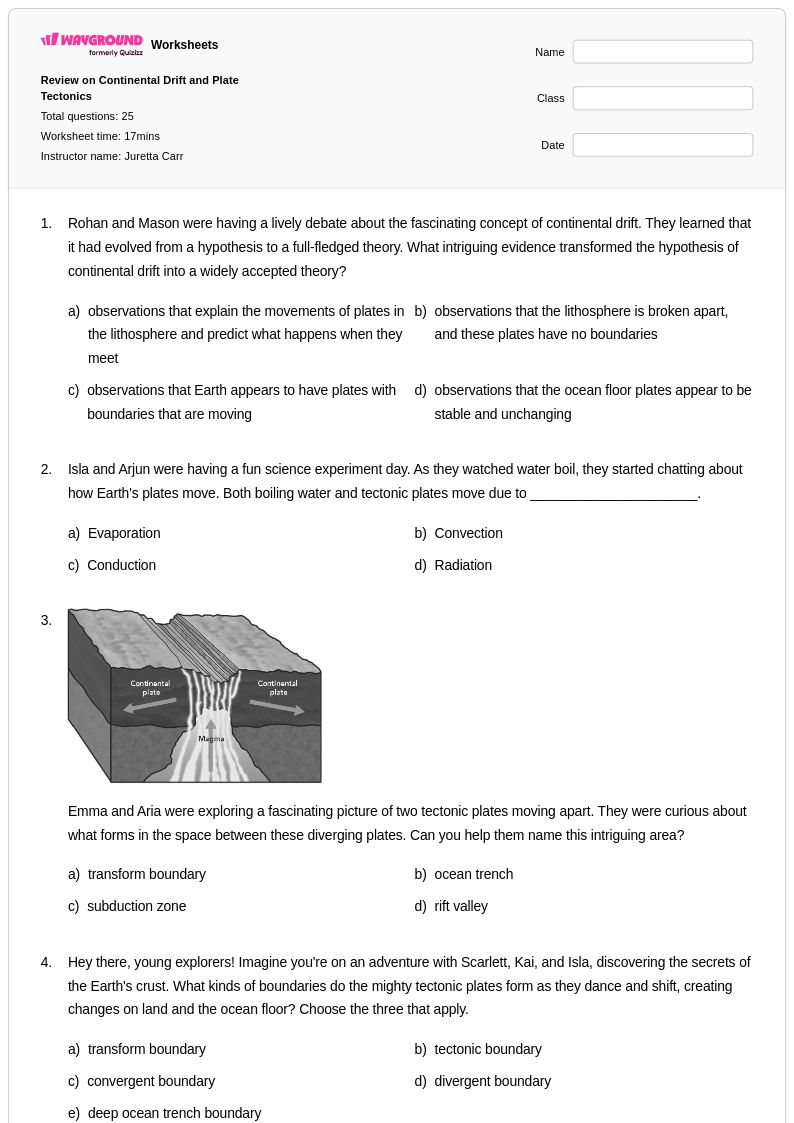
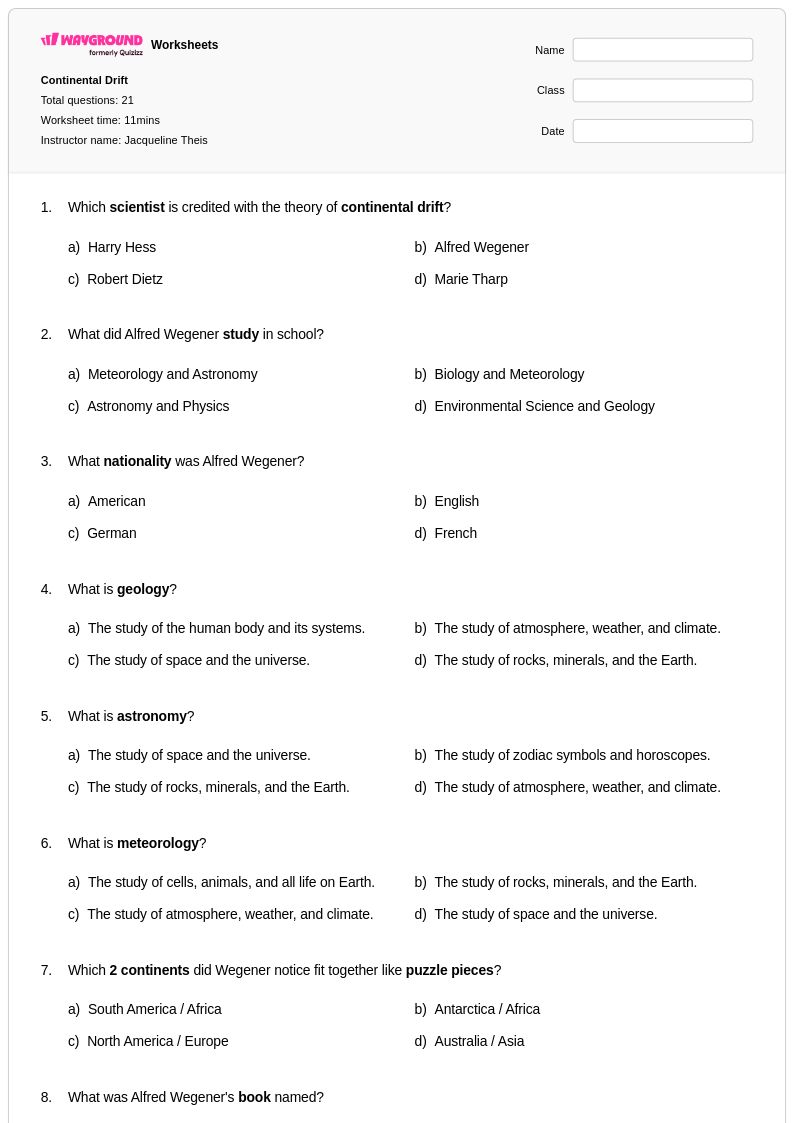
Continental drift worksheets for Year 7 students available through Wayground (formerly Quizizz) provide comprehensive coverage of Alfred Wegener's groundbreaking theory and the evidence supporting the movement of Earth's continents over geological time. These carefully designed educational resources help seventh-grade learners master fundamental concepts including fossil evidence across continents, matching rock formations and mountain ranges, paleoclimatic indicators, and the fit of continental margins. Students develop critical thinking skills through practice problems that require them to analyze geological and paleontological evidence, interpret continental reconstructions, and evaluate the strengths and limitations of Wegener's original hypothesis. Each worksheet comes with a complete answer key and is available as a free printable pdf, making it easy for educators to implement these valuable learning tools in both classroom instruction and independent study sessions.
Wayground (formerly Quizizz) supports science educators with an extensive collection of millions of teacher-created continental drift resources that streamline lesson planning and enhance student understanding of this pivotal Earth science concept. The platform's robust search and filtering capabilities allow teachers to quickly locate worksheets aligned with specific learning standards and differentiated for various skill levels within Year 7 classrooms. These versatile materials are available in both printable pdf format and interactive digital versions, enabling flexible implementation whether students are learning in-person or remotely. Teachers can customize existing worksheets or create new ones using the platform's comprehensive tools, making it simple to provide targeted remediation for struggling learners, enrichment activities for advanced students, and consistent skill practice opportunities that reinforce understanding of continental drift theory and its significance in modern plate tectonic science.
FAQs
How do I teach continental drift theory to middle school students?
Start with Alfred Wegener's original hypothesis and the four key lines of evidence he used: the puzzle-like fit of continental margins, matching fossil distributions across ocean basins, similar rock formations on separate continents, and paleoclimatic evidence such as glacial deposits in tropical regions. Using maps that show Pangaea, Gondwana, and Laurasia helps students visualize how today's continents were once connected. Connecting continental drift to modern plate tectonics gives students a complete picture of how the theory evolved into an accepted scientific framework.
What evidence should students be able to identify to support continental drift?
Students should be able to identify four main categories of evidence: the geometric fit of continental coastlines (particularly South America and Africa), matching fossil records of species like Glossopteris and Mesosaurus found on continents now separated by oceans, identical rock strata and mountain ranges that align across continents, and paleoclimatic indicators such as glacial striations in now-tropical Africa. Worksheets that ask students to analyze fossil distribution maps and rock formation data are especially effective at reinforcing these connections.
What common mistakes do students make when learning about continental drift?
A frequent misconception is conflating continental drift with plate tectonics — students often treat them as the same theory rather than understanding that plate tectonics is the modern, mechanism-based explanation that superseded and incorporated Wegener's original hypothesis. Students also struggle to distinguish between Pangaea, Gondwana, and Laurasia, sometimes using the terms interchangeably. Another common error is assuming continental drift happens on a human timescale rather than across hundreds of millions of years of geological time.
What exercises help students practice analyzing evidence for continental drift?
Effective practice exercises include fossil distribution mapping activities where students match species across now-separated continents, rock formation alignment tasks that ask students to reconstruct Pangaea using geological data, and paleoclimate analysis problems involving glacial deposits and coal seams. Practice problems that require students to evaluate multiple types of evidence simultaneously build the critical thinking skills needed to understand why Wegener's theory was initially controversial but ultimately supported by scientific consensus.
How can I use Wayground's continental drift worksheets in my classroom?
Wayground's continental drift worksheets are available as printable PDFs for traditional classroom distribution and homework assignments, as well as in digital formats for technology-integrated learning environments. Teachers can also host worksheets as a quiz directly on Wayground, making them suitable for in-class assessment or independent practice. Each worksheet includes a detailed answer key, which reduces grading time and helps teachers quickly identify where students need additional support.
How do I support students who are struggling with continental drift concepts?
Students who struggle with continental drift often benefit from visual scaffolding — labeled maps of Pangaea and fossil distribution overlays make abstract geological evidence more concrete. On Wayground, teachers can apply accommodations such as read aloud support so questions are read to students who need it, reduced answer choices to lower cognitive load, and extended time for students who need additional processing time. These settings can be configured per student without affecting the rest of the class, making differentiation practical in a mixed-ability Earth science classroom.