Free Printable Mass Extinction Worksheets for Year 7
Discover comprehensive Year 7 mass extinction worksheets and printables that help students explore Earth's major extinction events through engaging practice problems, free PDF resources, and detailed answer keys.
Explore printable Mass Extinction worksheets for Year 7
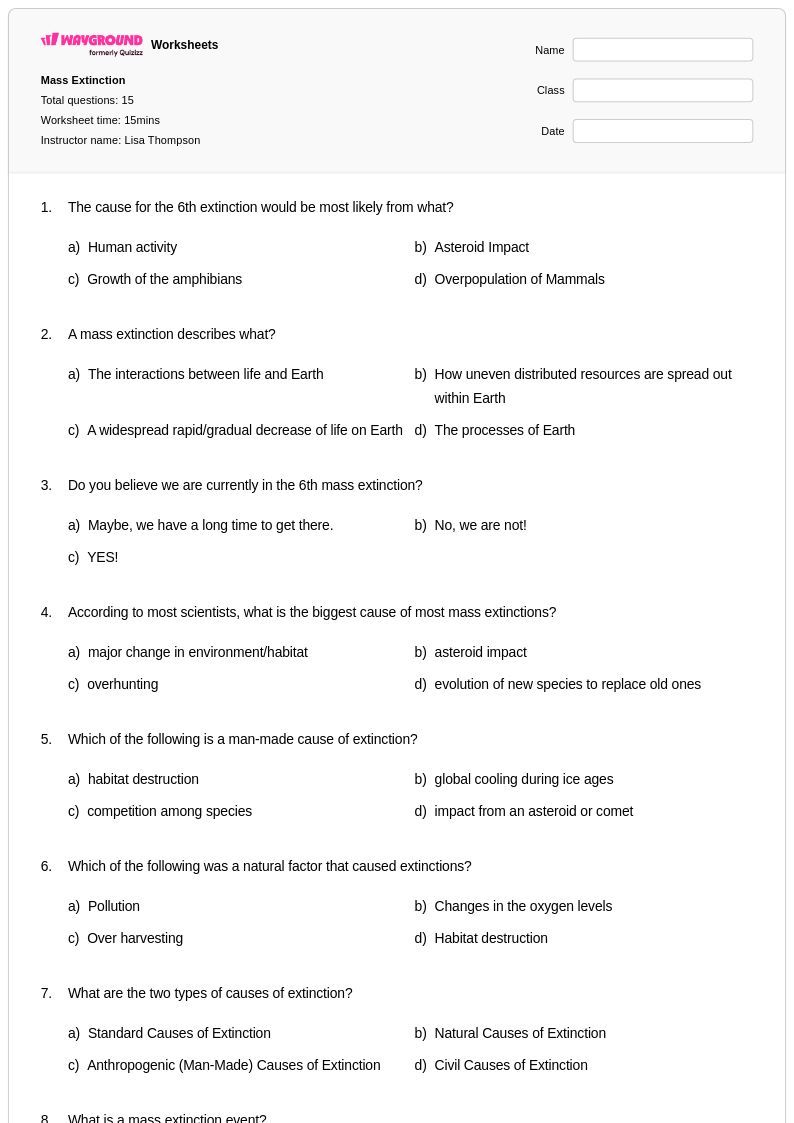
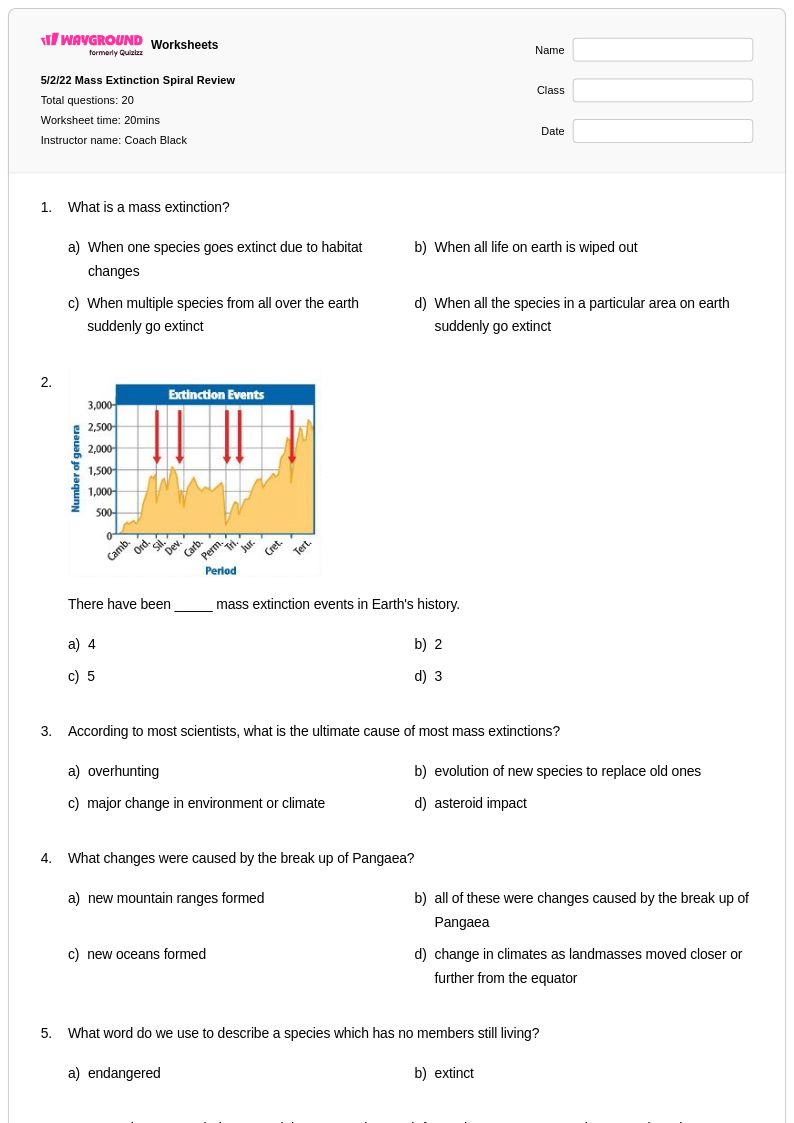
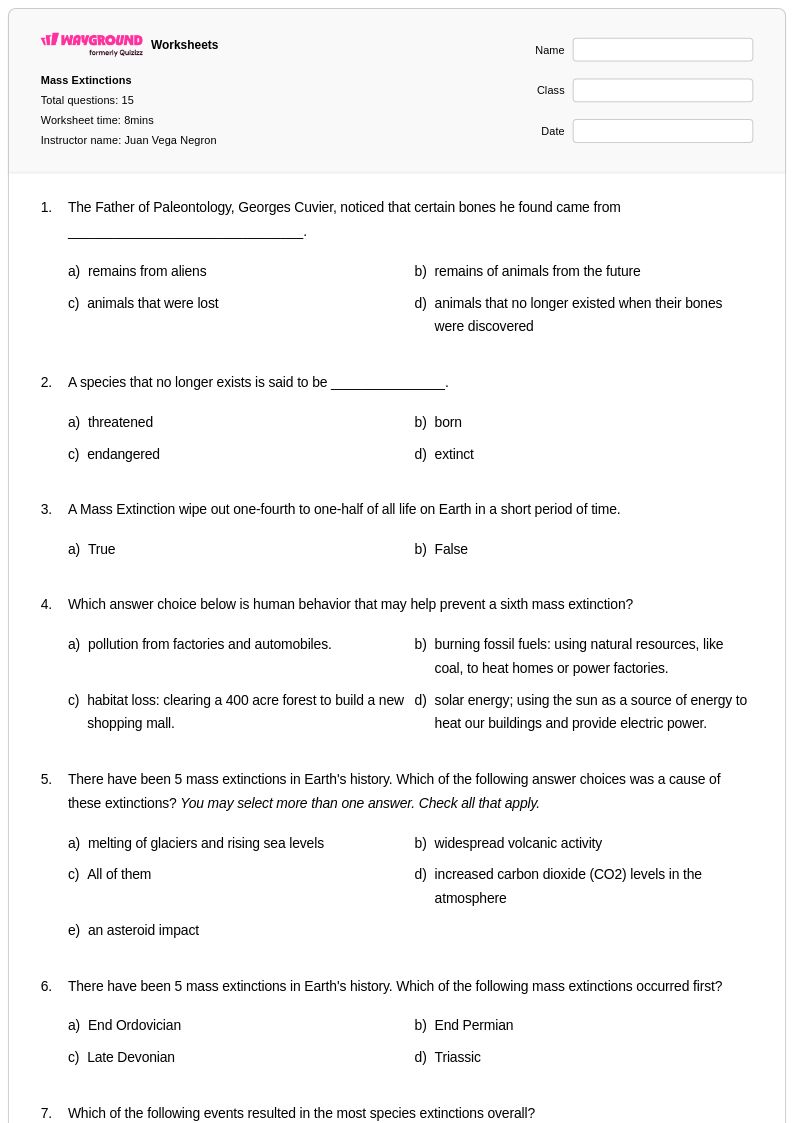
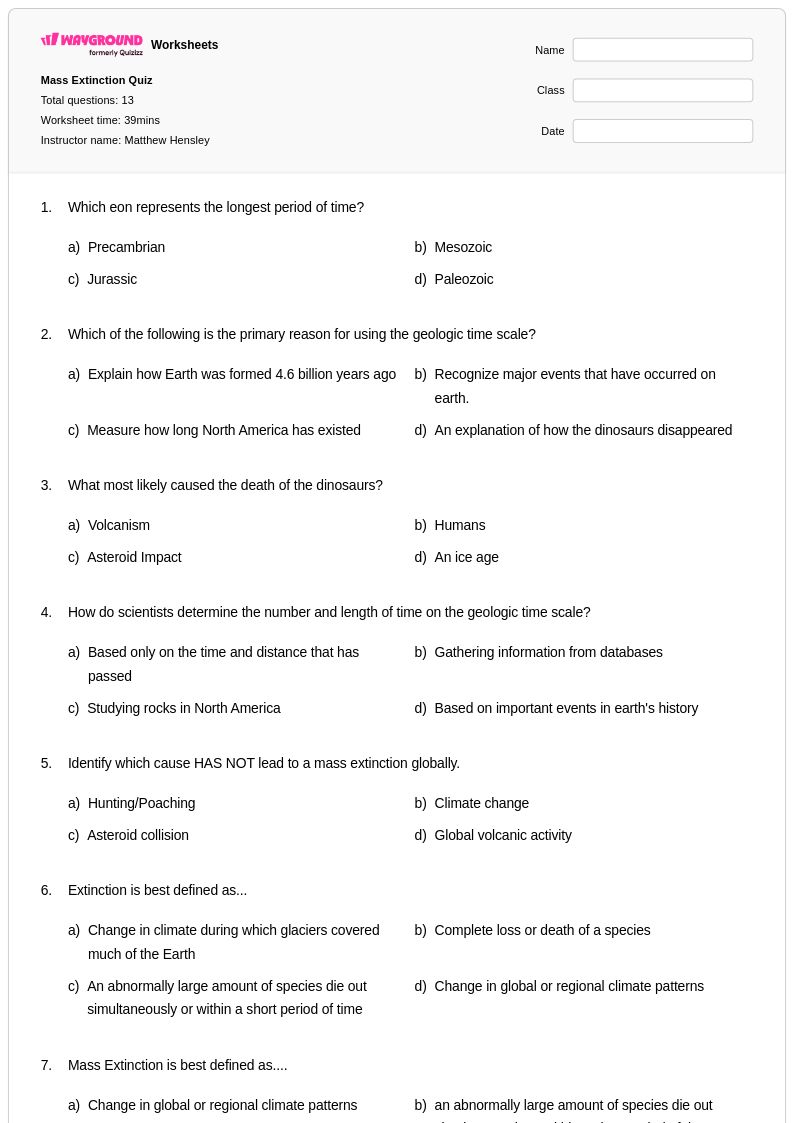
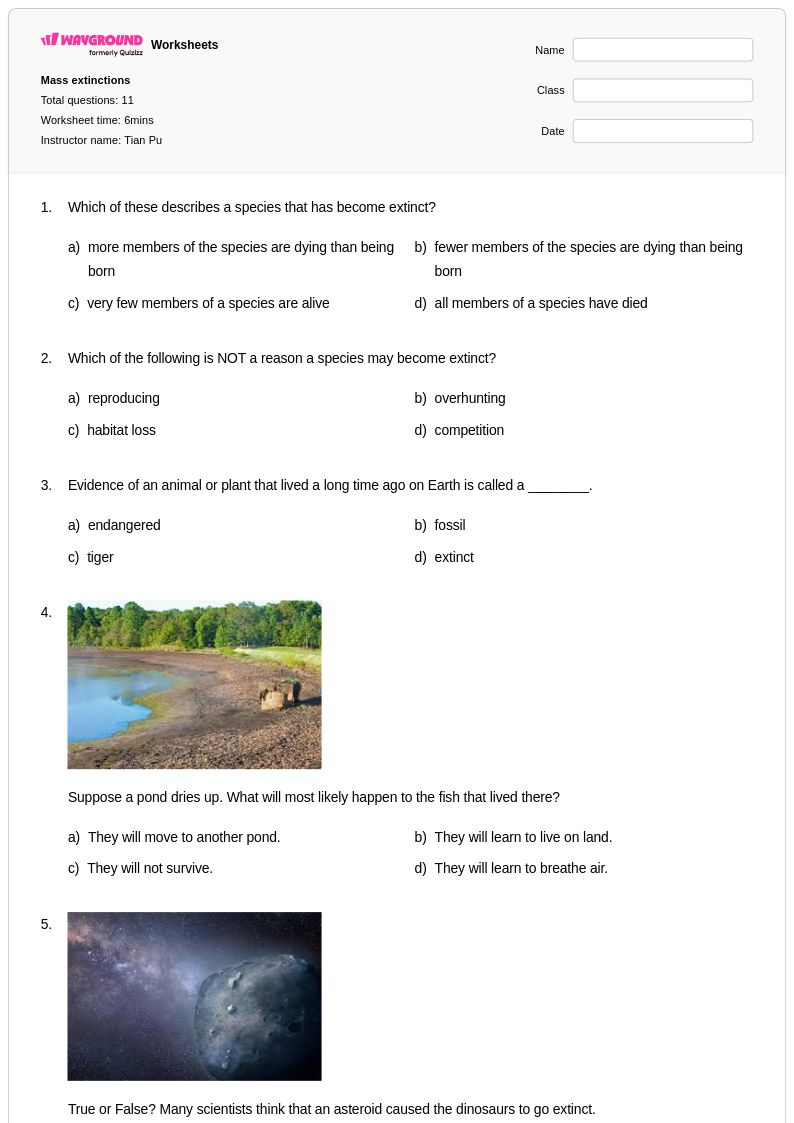
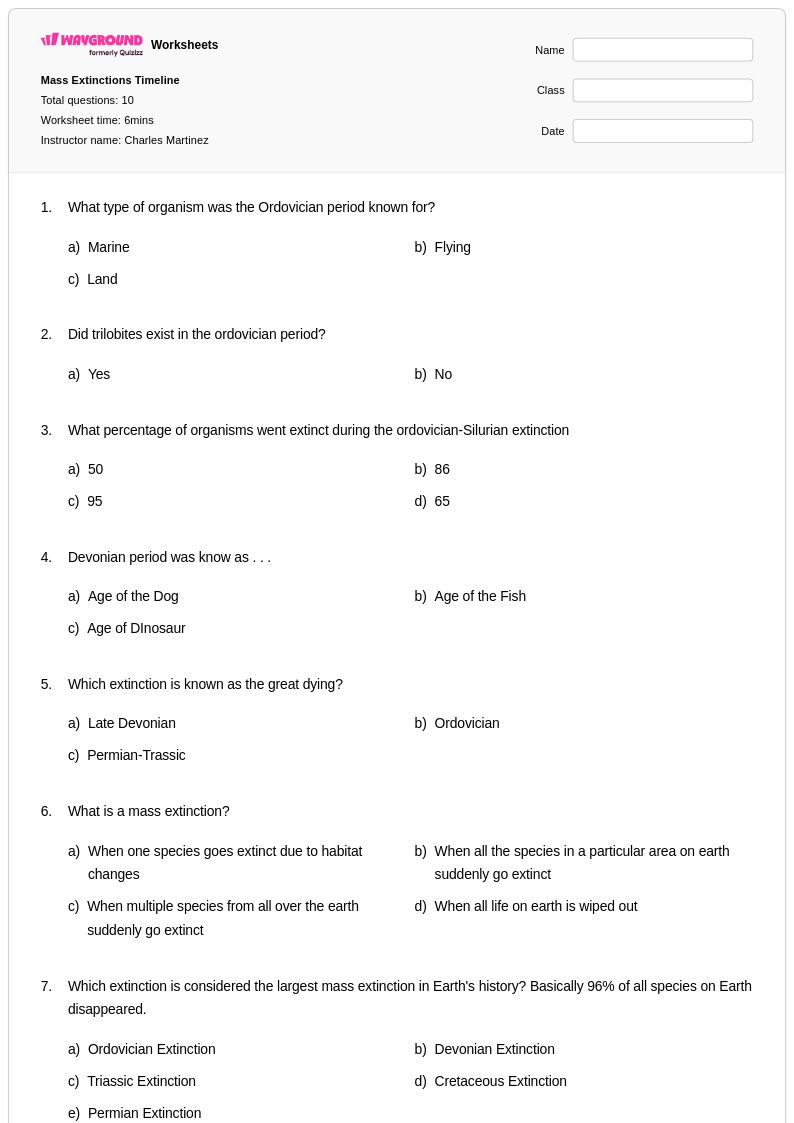
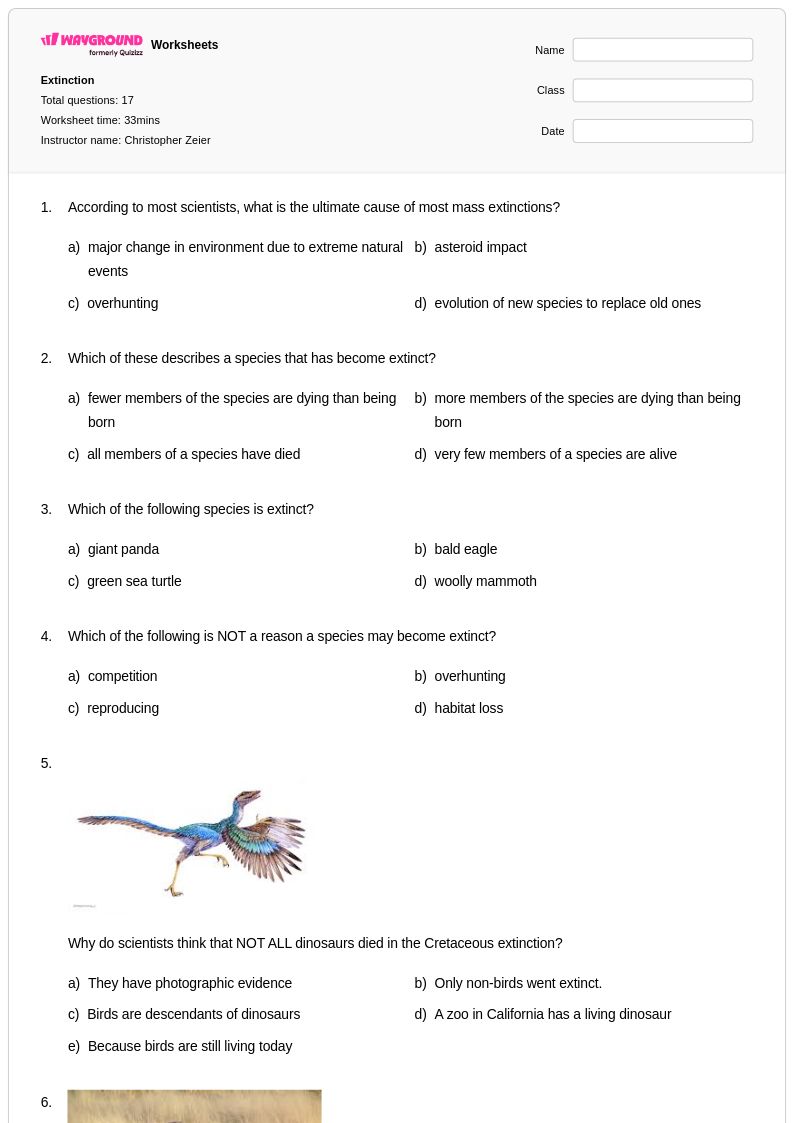
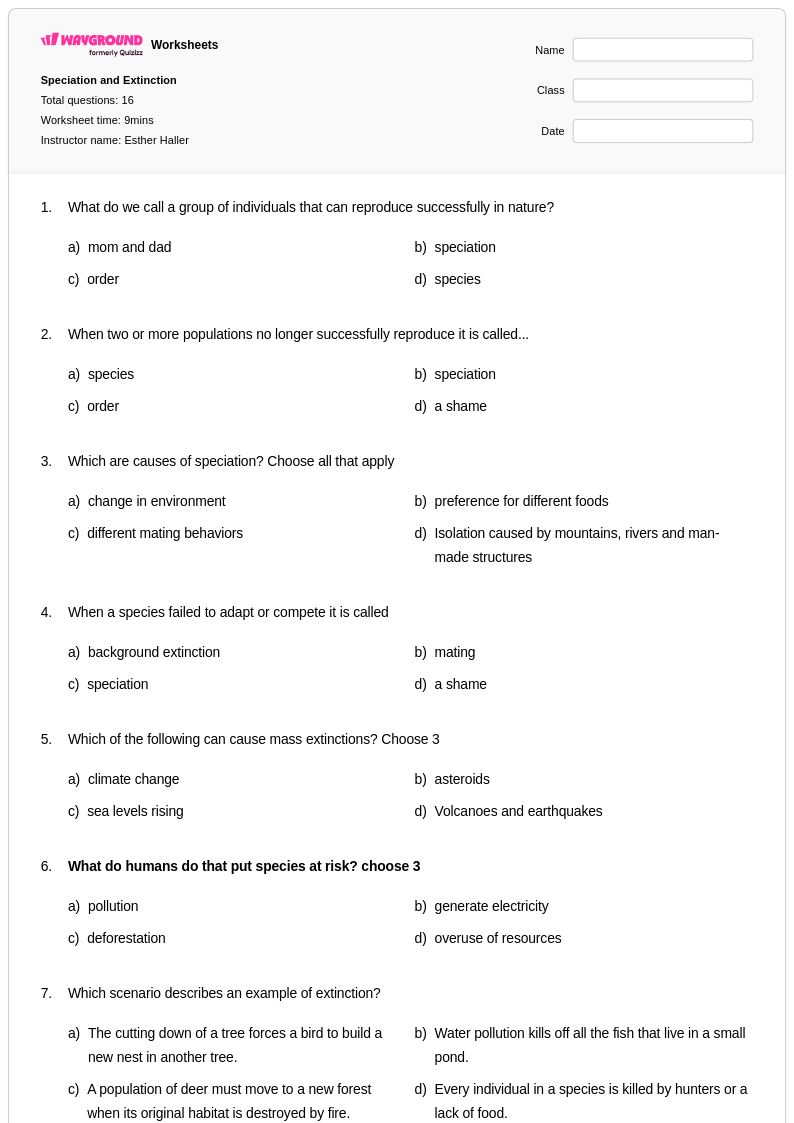
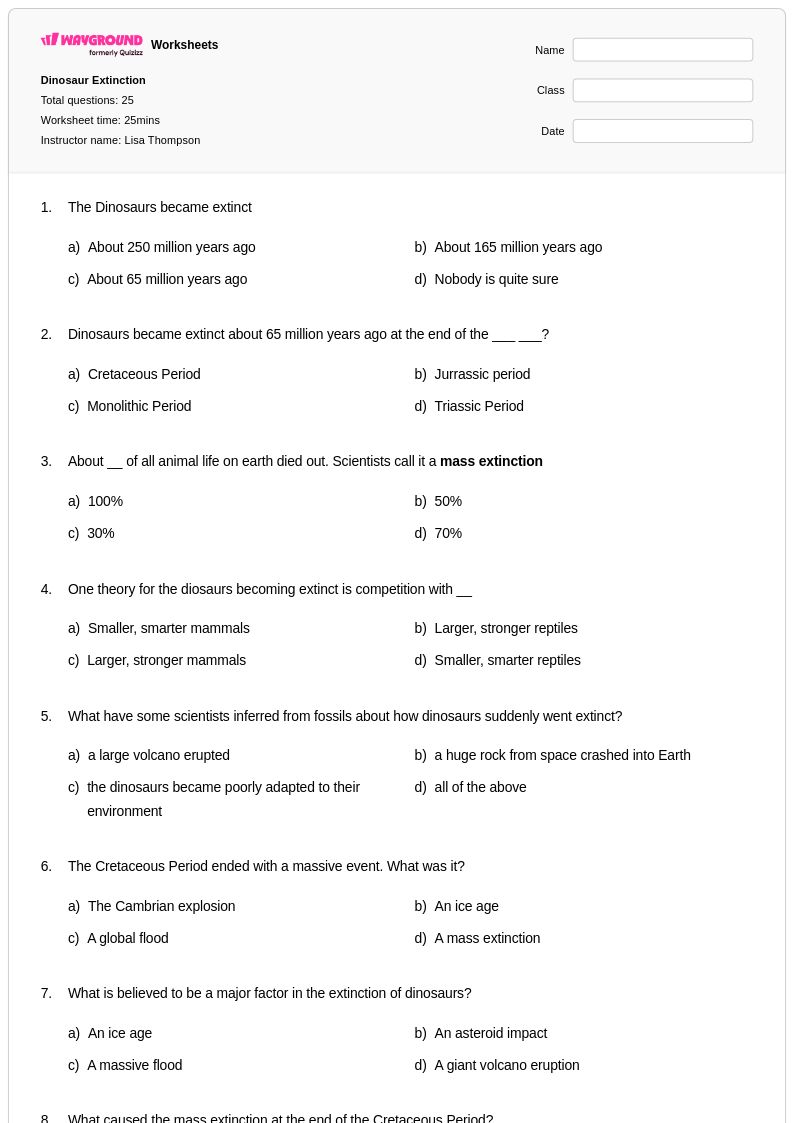
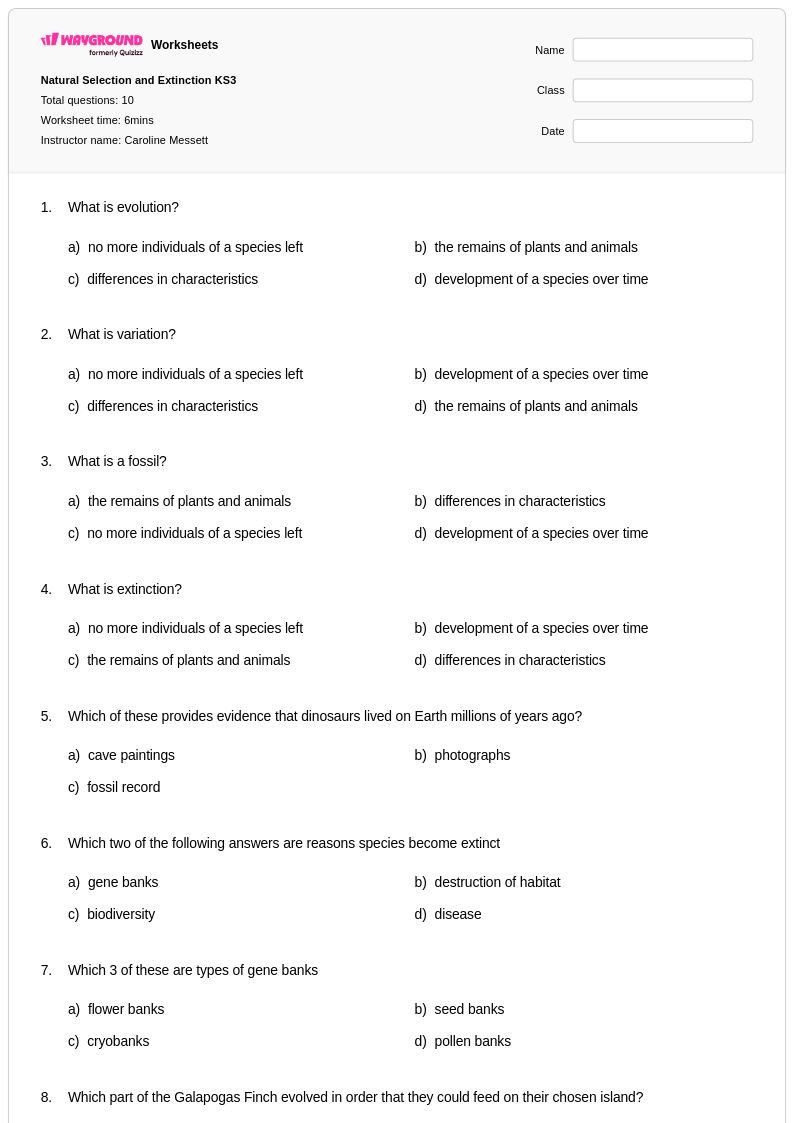
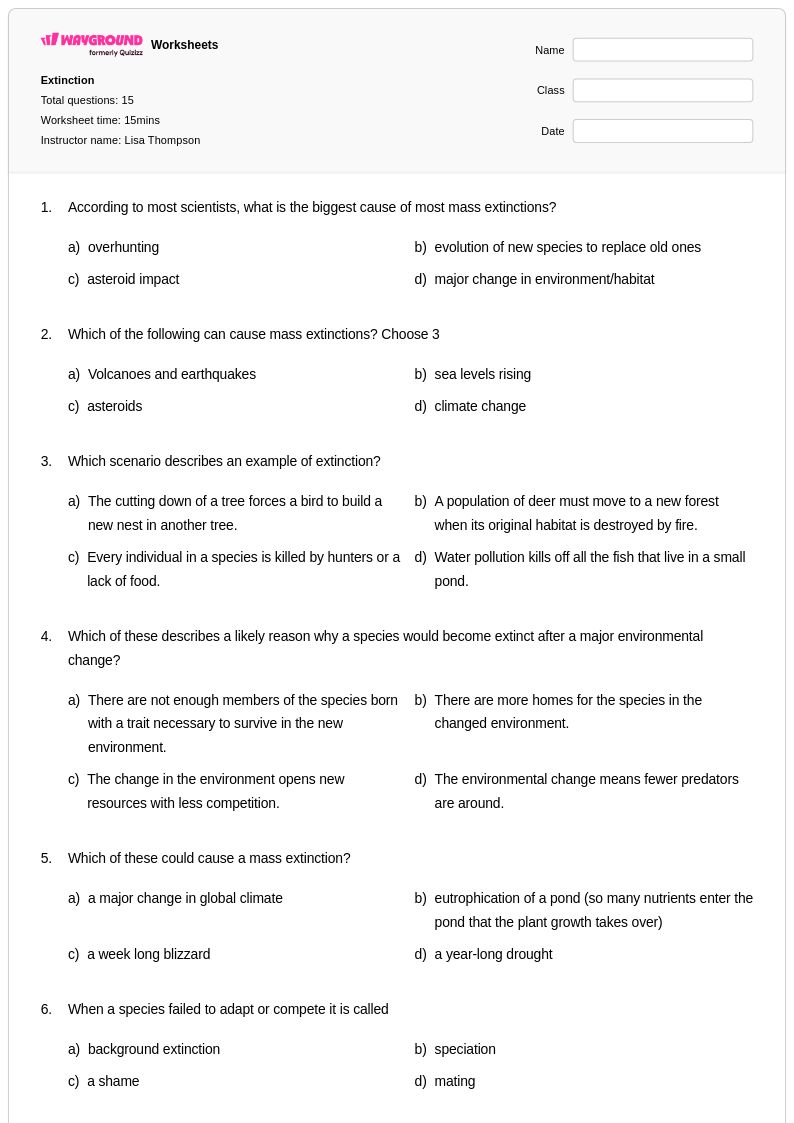
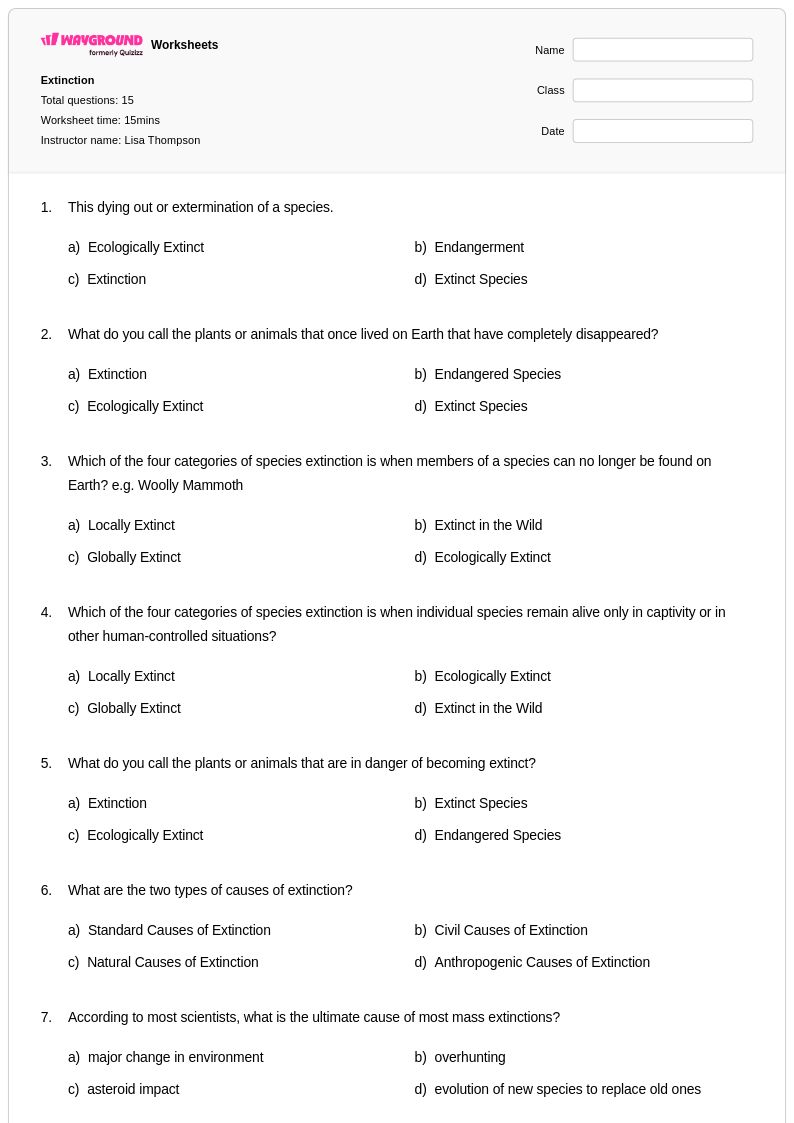
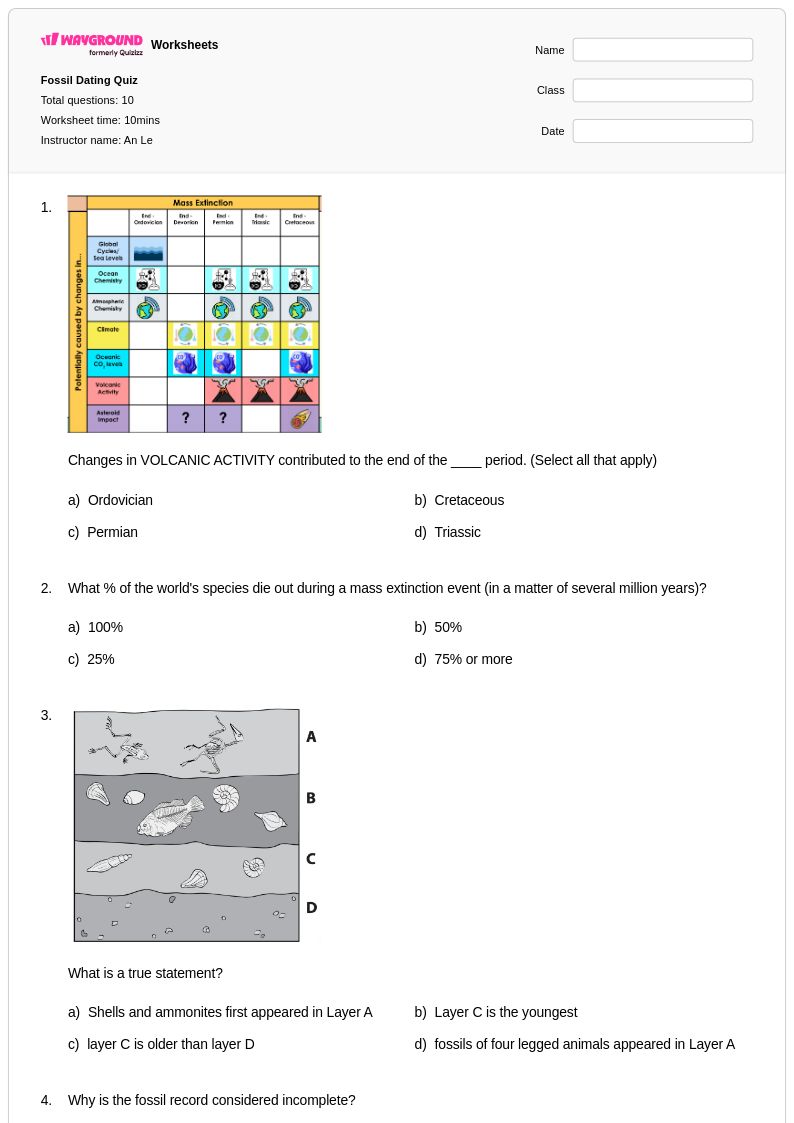
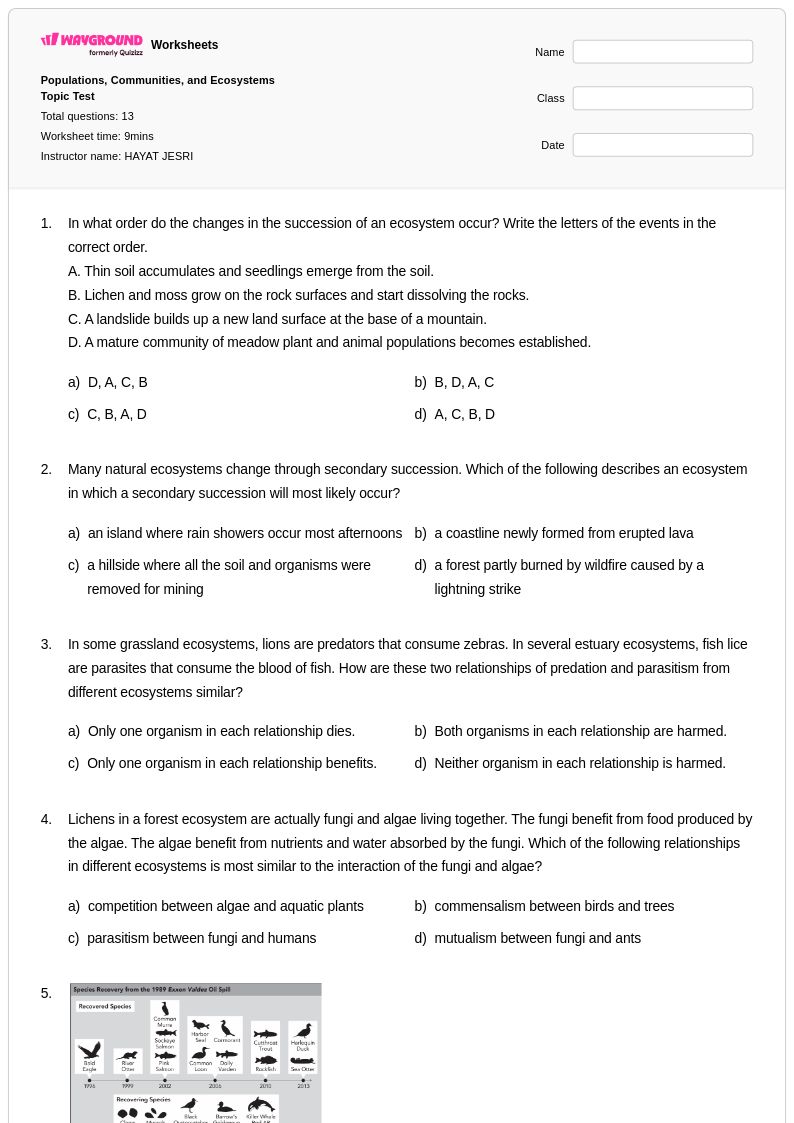
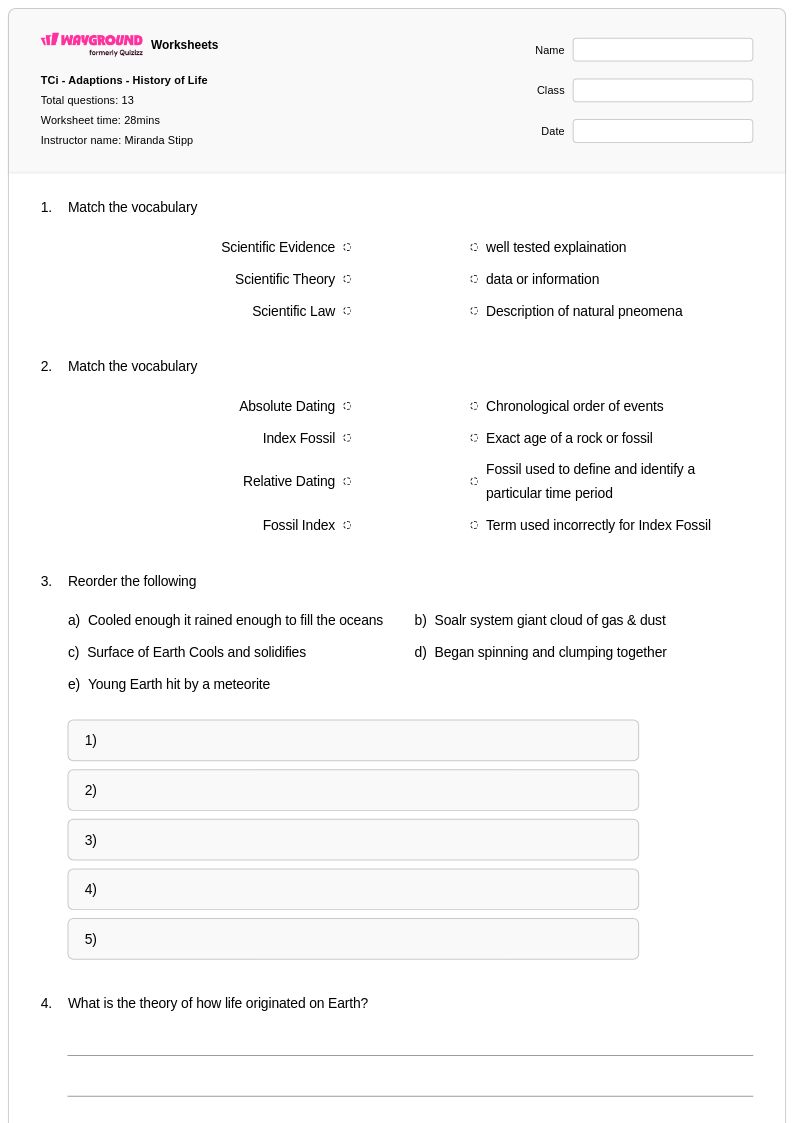
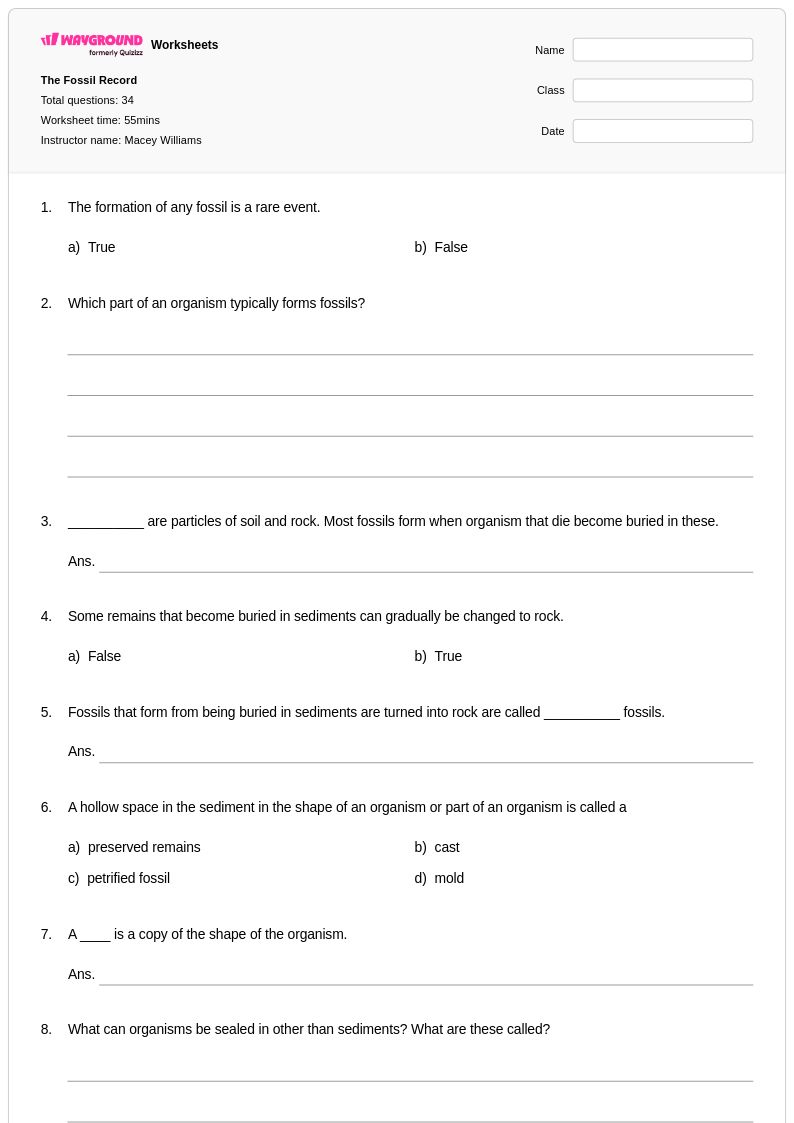
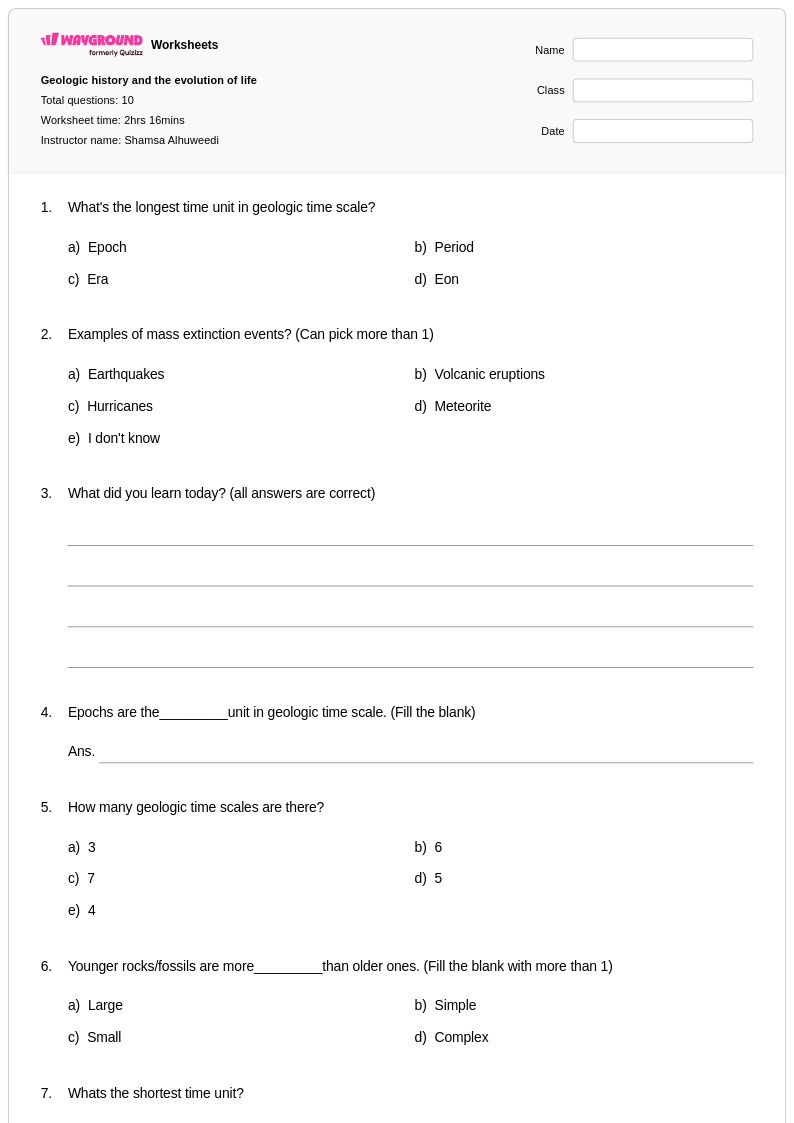
Mass extinction worksheets for Year 7 students available through Wayground (formerly Quizizz) provide comprehensive exploration of Earth's most dramatic biological upheavals throughout geological history. These educational resources strengthen critical thinking skills by engaging students with the scientific evidence behind major extinction events, including the Permian-Triassic extinction, the Cretaceous-Paleogene boundary event that eliminated non-avian dinosaurs, and ongoing discussions about the current sixth mass extinction. Students develop analytical abilities through practice problems that examine fossil records, environmental changes, and the interconnected nature of ecosystems during these catastrophic periods. The collection includes printable materials with detailed answer keys, free resources that cover extinction mechanisms such as asteroid impacts, volcanic activity, and climate change, and pdf worksheets that guide students through interpreting geological timelines and understanding the recovery patterns that follow mass extinction events.
Wayground (formerly Quizizz) supports educators with an extensive collection of teacher-created mass extinction resources drawn from millions of available materials, enabling precise curriculum alignment through robust search and filtering capabilities. Teachers can easily locate standards-aligned content that matches their specific Year 7 Earth and Space Science objectives while utilizing differentiation tools to accommodate diverse learning needs within their classrooms. The platform's flexible customization options allow educators to modify existing worksheets or combine multiple resources to create targeted practice sessions, whether for initial concept introduction, skill remediation, or advanced enrichment activities. These mass extinction materials are available in both printable and digital formats, including downloadable pdf versions, giving teachers the versatility to seamlessly integrate these resources into various instructional approaches while ensuring students gain deep understanding of how catastrophic events have shaped life on Earth throughout geological time.
FAQs
How do I teach mass extinction events in a science class?
Effective instruction on mass extinction begins by grounding students in geological time scales before introducing the five major extinction events: Ordovician-Silurian, Late Devonian, Permian-Triassic, Triassic-Jurassic, and Cretaceous-Paleogene. Teachers can sequence lessons around cause-and-effect relationships, connecting environmental triggers like volcanic activity, asteroid impacts, and climate change to changes in biodiversity. Using fossil evidence and extinction rate data helps students move beyond memorizing events toward understanding the mechanisms that drive them.
What exercises help students practice analyzing mass extinction events?
Data analysis exercises that ask students to interpret extinction rate graphs and biodiversity timelines are particularly effective for building conceptual understanding. Pairing these with interpretive questions about specific events, such as the role of the Chicxulub asteroid in the Cretaceous-Paleogene extinction, encourages students to connect evidence to conclusions. Worksheets that combine geological time scale work with analysis of fossil records reinforce how paleontological evidence supports our understanding of prehistoric extinction patterns.
What misconceptions do students commonly have about mass extinctions?
A common misconception is that mass extinctions are instantaneous events rather than processes that can unfold over thousands to millions of years. Students also frequently conflate background extinction rates with mass extinction events, not recognizing that mass extinctions represent statistically significant spikes above normal species loss. Another error is assuming that all mass extinctions share the same cause; in reality, each event has distinct primary drivers, and extinction selectivity, meaning which species survive versus perish, varies significantly across events.
How do mass extinction worksheets connect to broader Earth science and biology standards?
Mass extinction topics intersect directly with standards in Earth history, evolutionary biology, and environmental science. When students analyze the causes and consequences of extinction events, they are also practicing skills tied to geological time, natural selection, and ecosystem dynamics. Because mass extinctions demonstrate how abiotic factors drive rapid biological change, they serve as concrete case studies for standards involving the relationship between Earth systems and the evolution of life.
How can I use Wayground's mass extinction worksheets in my classroom?
Wayground's mass extinction worksheets are available as printable PDFs for traditional classroom use and in digital formats for technology-integrated learning environments, giving teachers flexibility regardless of their classroom setup. Teachers can also host worksheets as a quiz directly on Wayground, enabling real-time student interaction and progress tracking. The included answer keys support both independent student work and teacher-led review, making these resources practical for homework assignments, in-class practice, and assessments.
How can I support struggling students when teaching mass extinction concepts?
For students who find the volume of information across five extinction events overwhelming, narrowing initial focus to one well-documented event, such as the Cretaceous-Paleogene extinction, can build confidence before broadening scope. On Wayground, teachers can apply accommodations such as reduced answer choices to lower cognitive load for individual students, and the Read Aloud feature can support students who struggle with dense scientific terminology. Extended time settings can also be configured per student, ensuring all learners have equitable access to complex content without disrupting the rest of the class.