
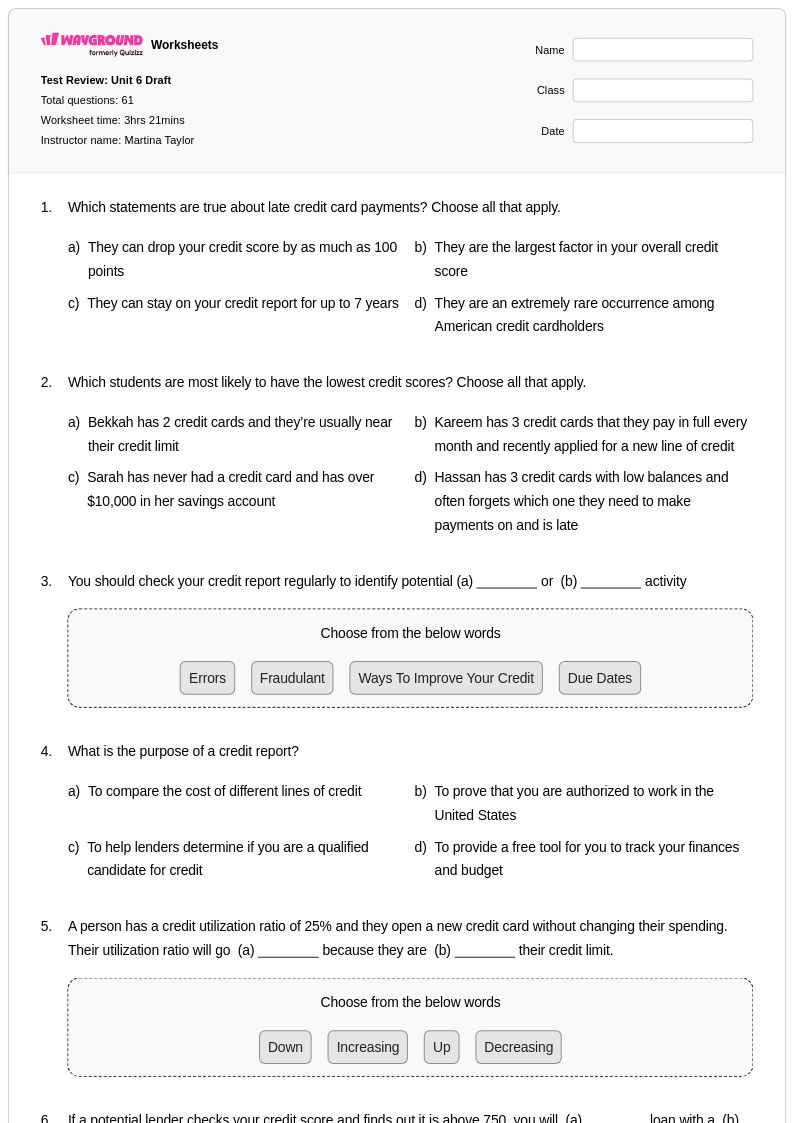
61 Q
9th - 12th
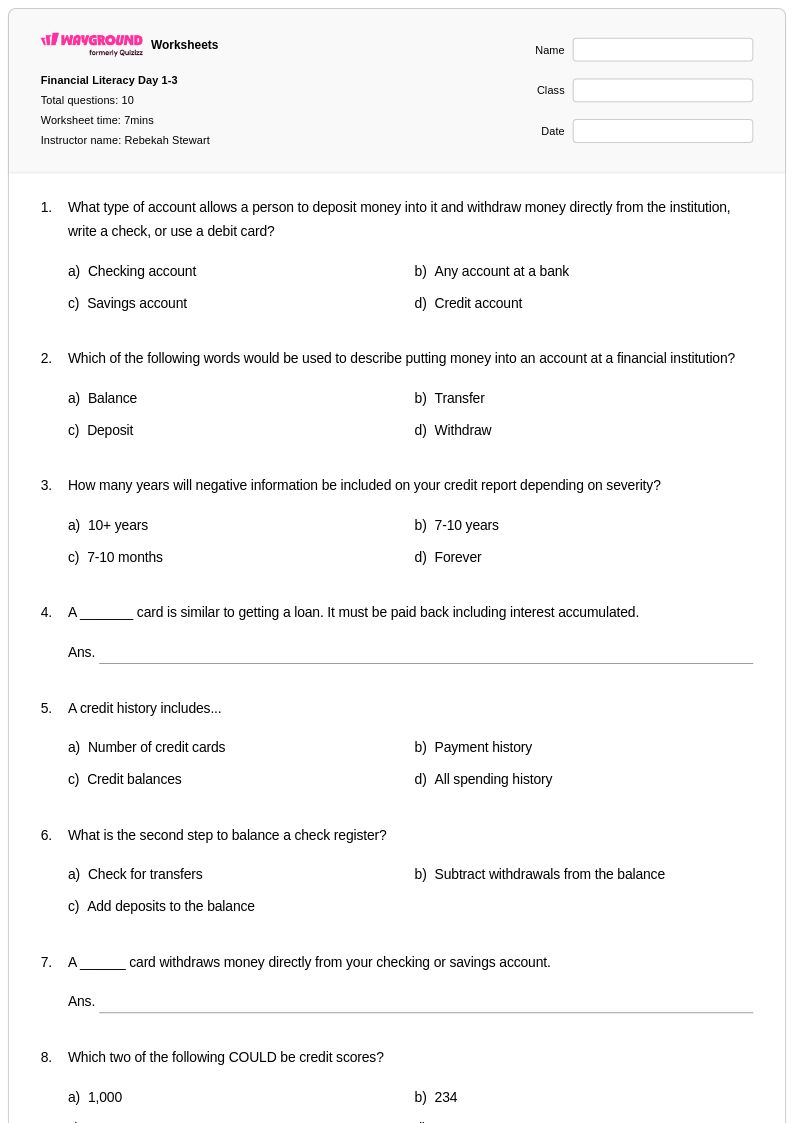
10 Q
6th - 8th

10 Q
5th
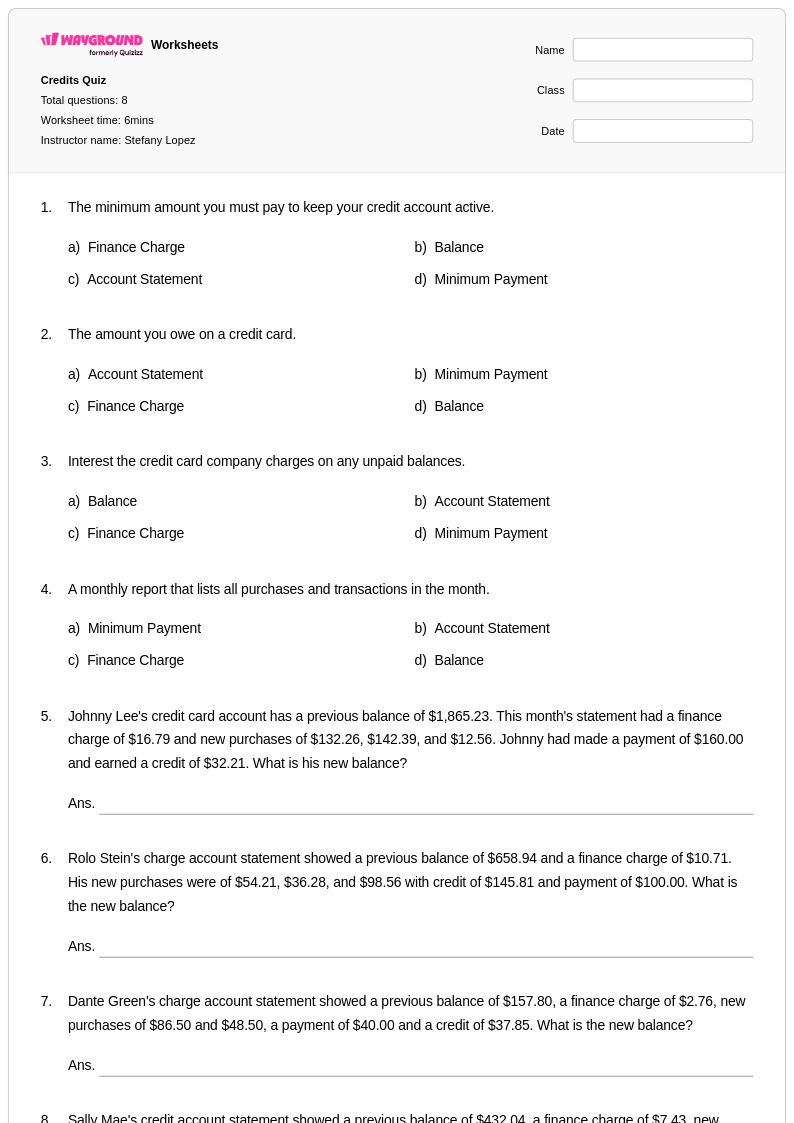
8 Q
9th - 12th
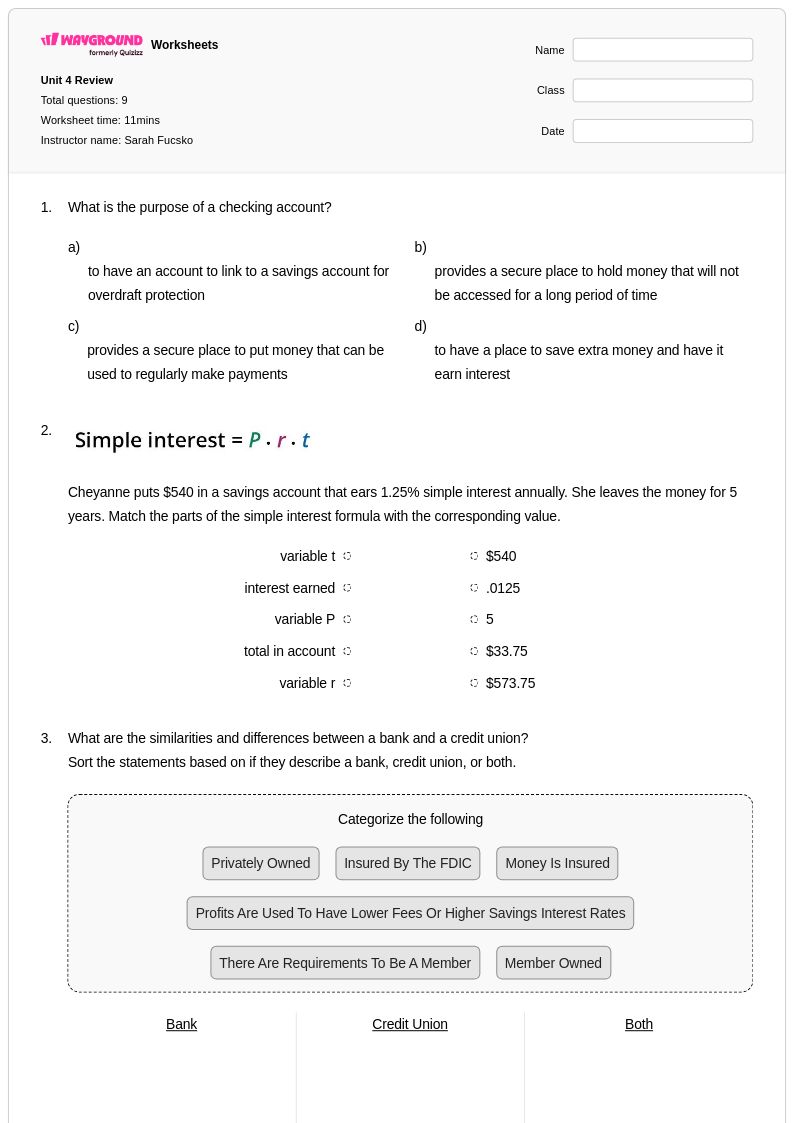
9 Q
12th
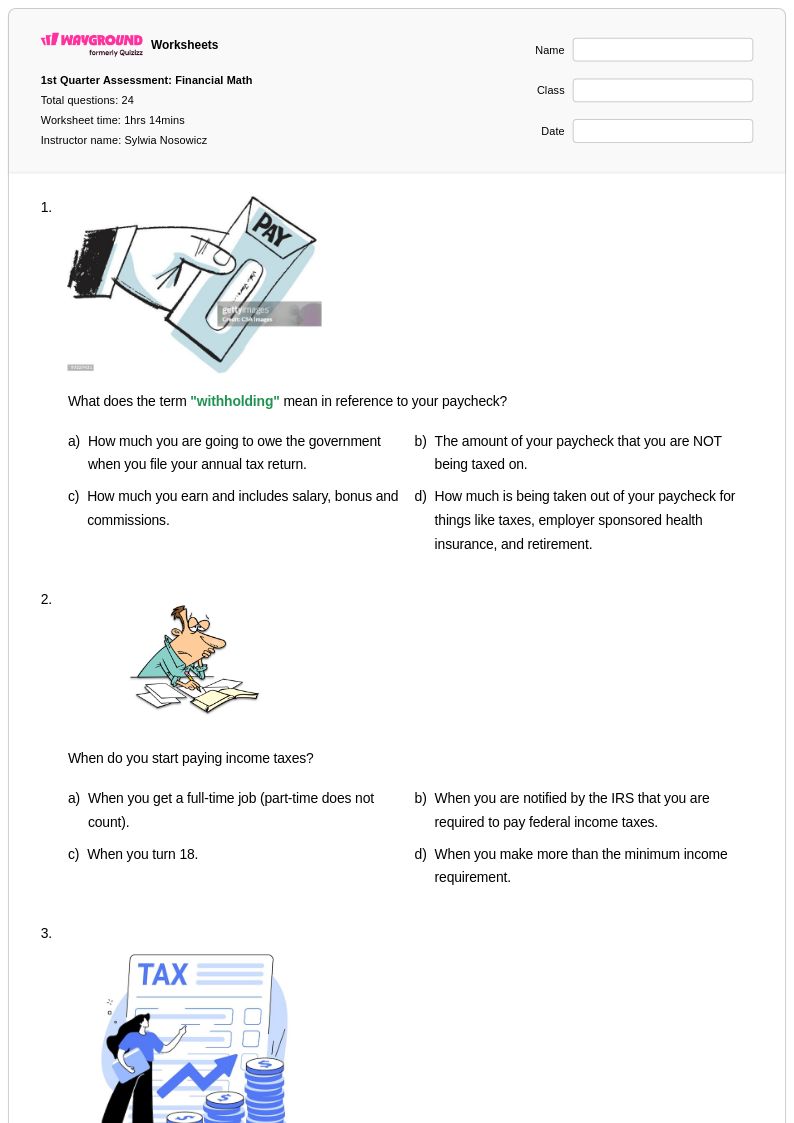
24 Q
12th
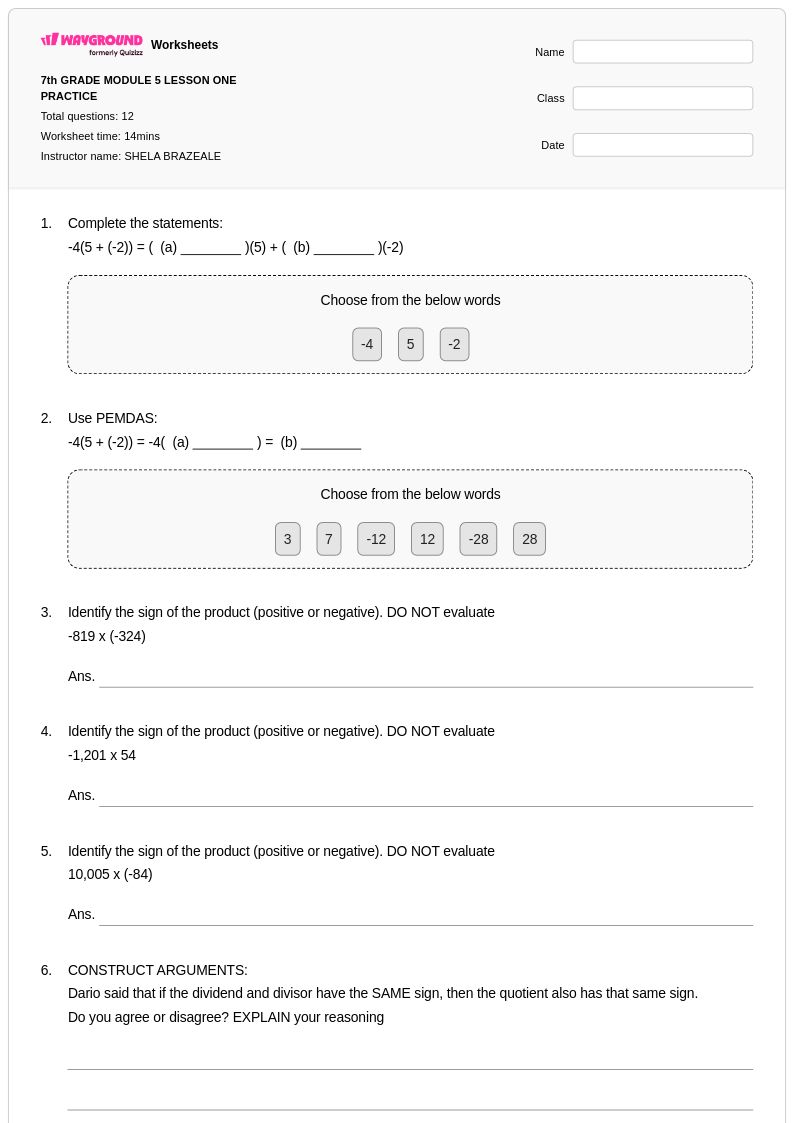
12 Q
7th
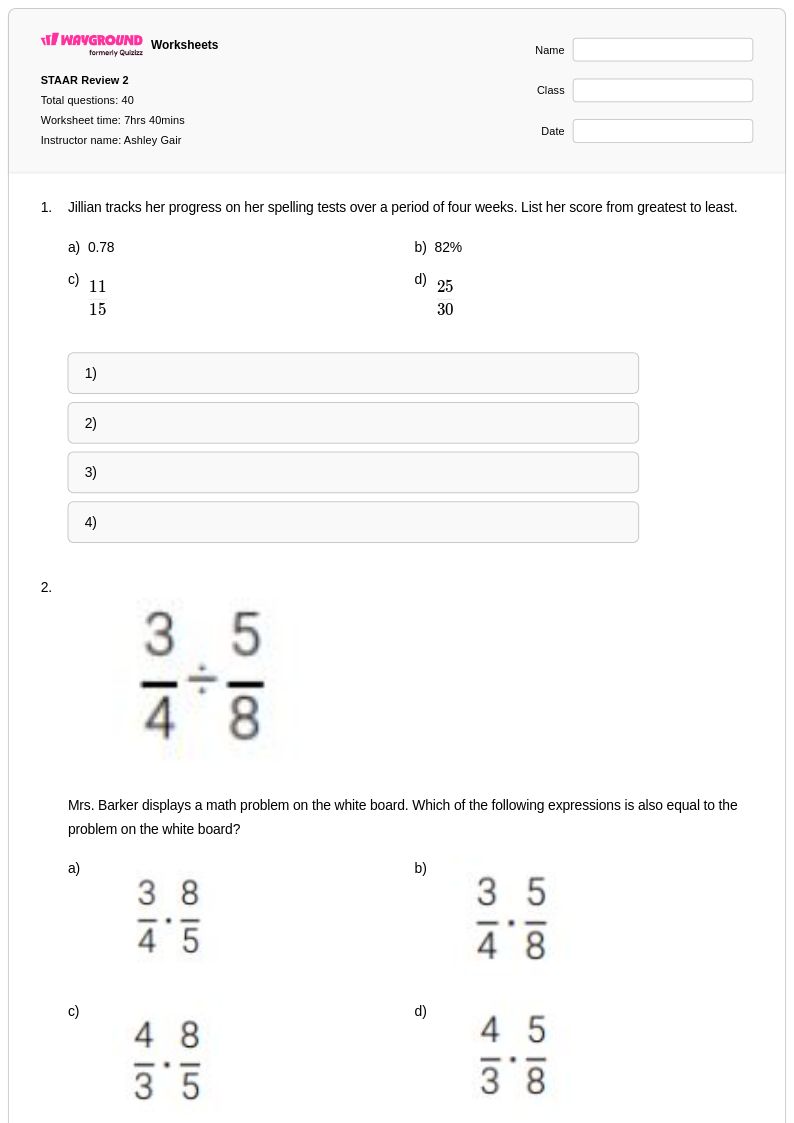
40 Q
6th
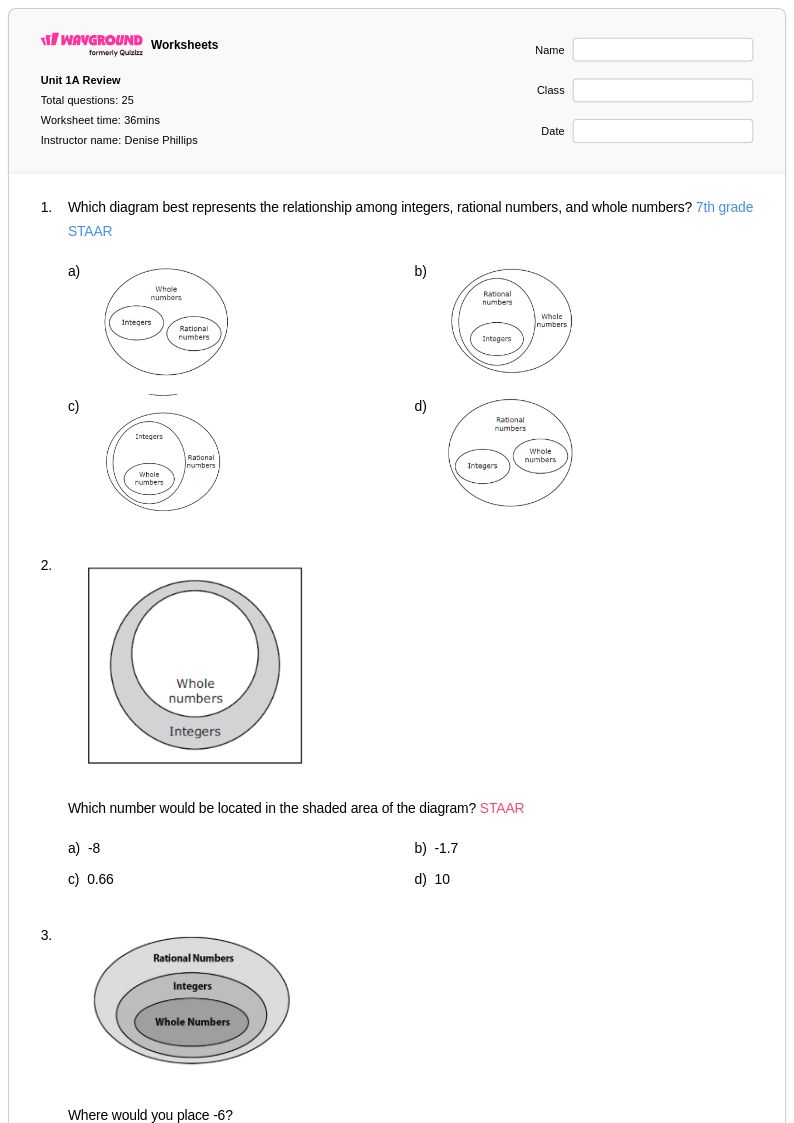
25 Q
7th
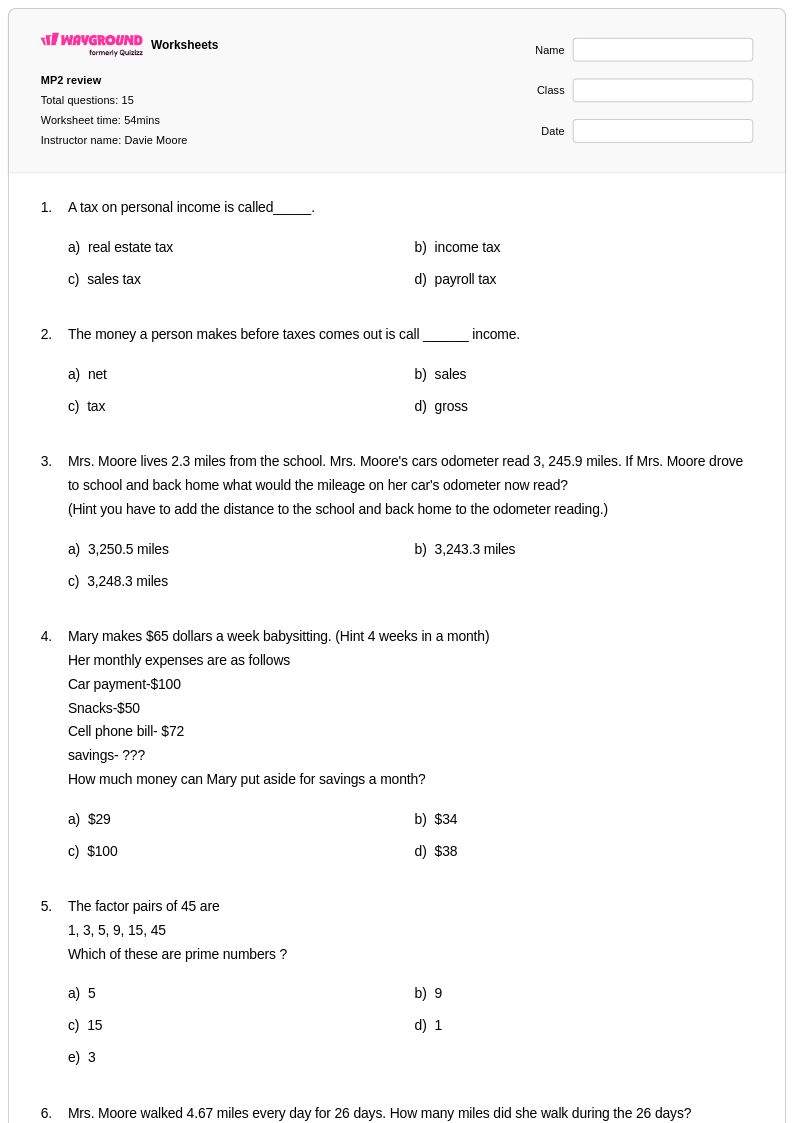
15 Q
5th
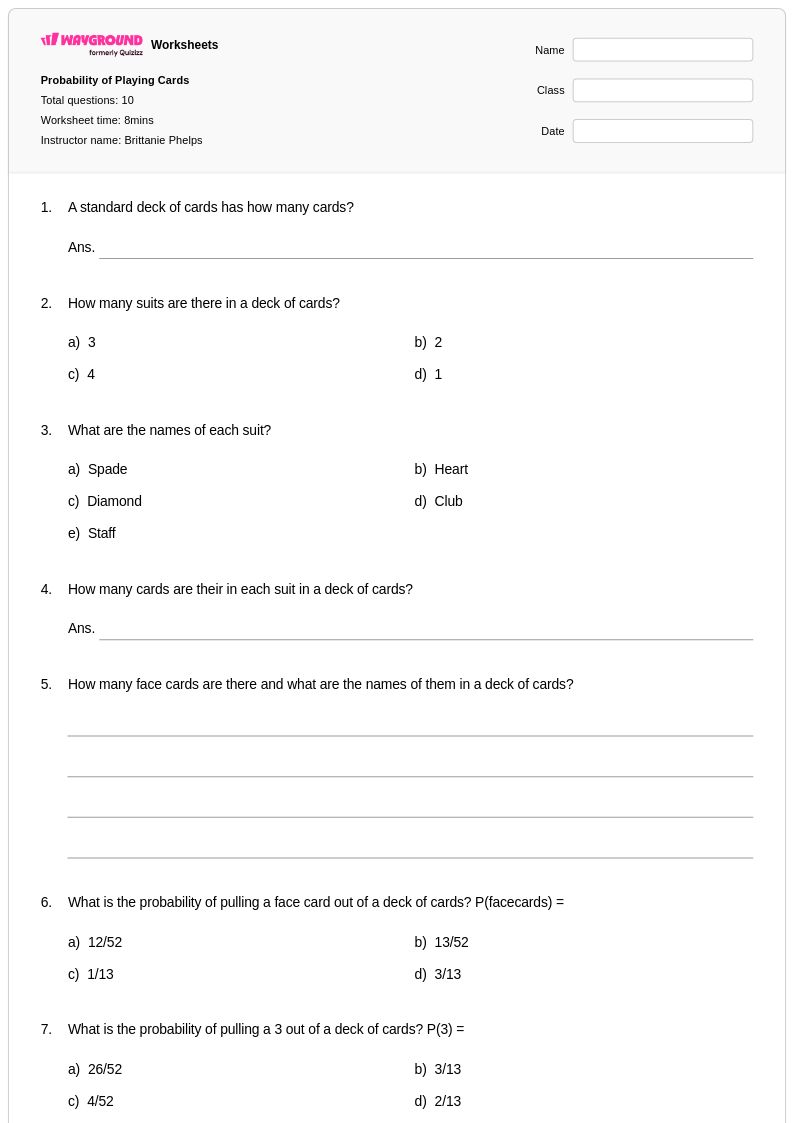
10 Q
7th
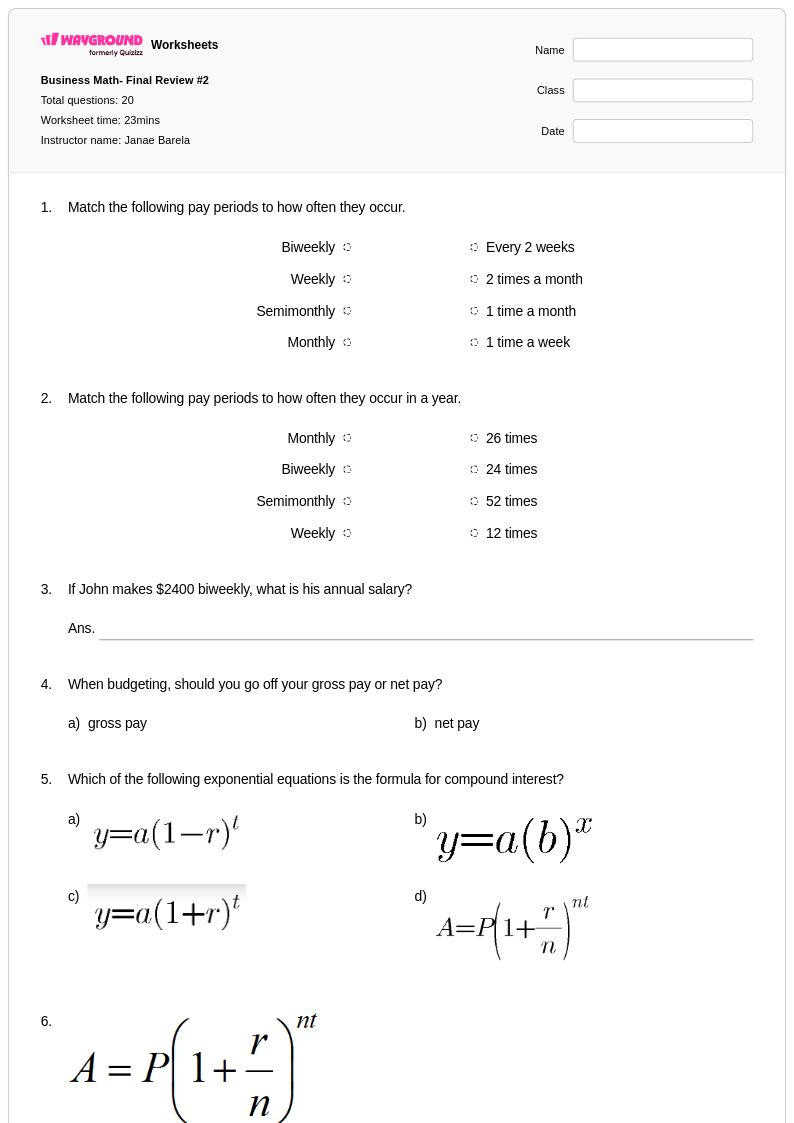
20 Q
9th - 12th
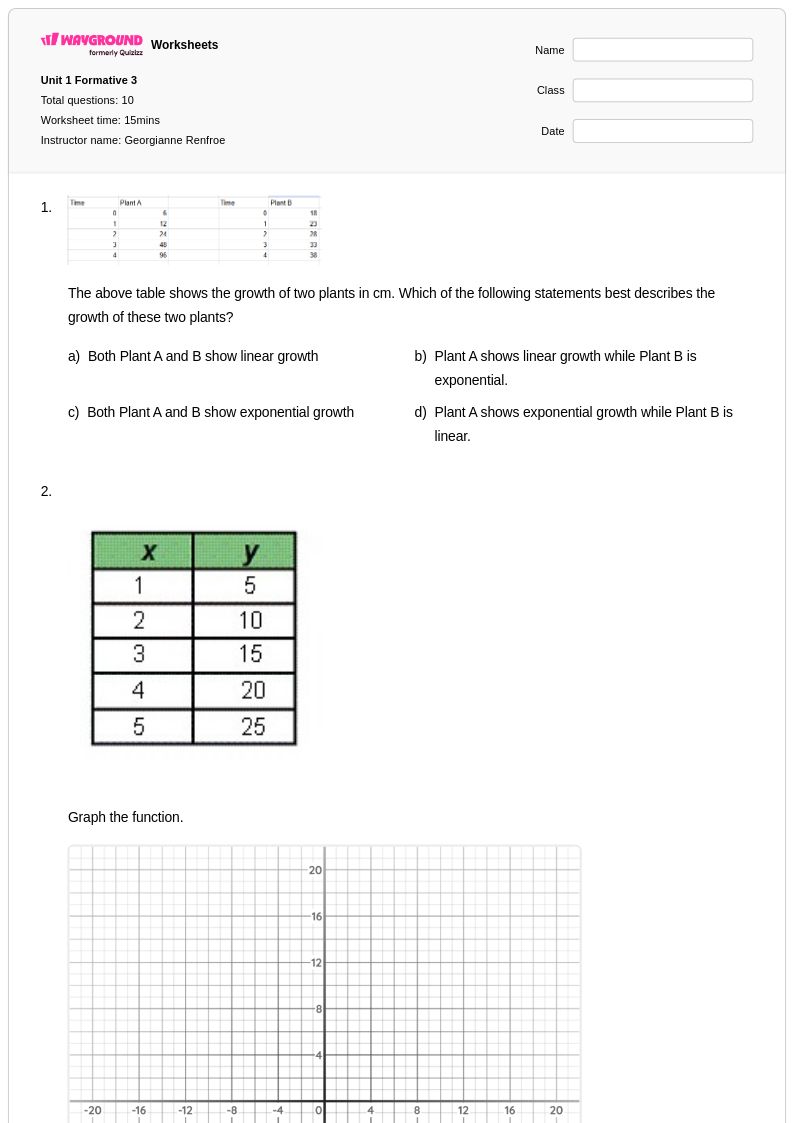
10 Q
12th
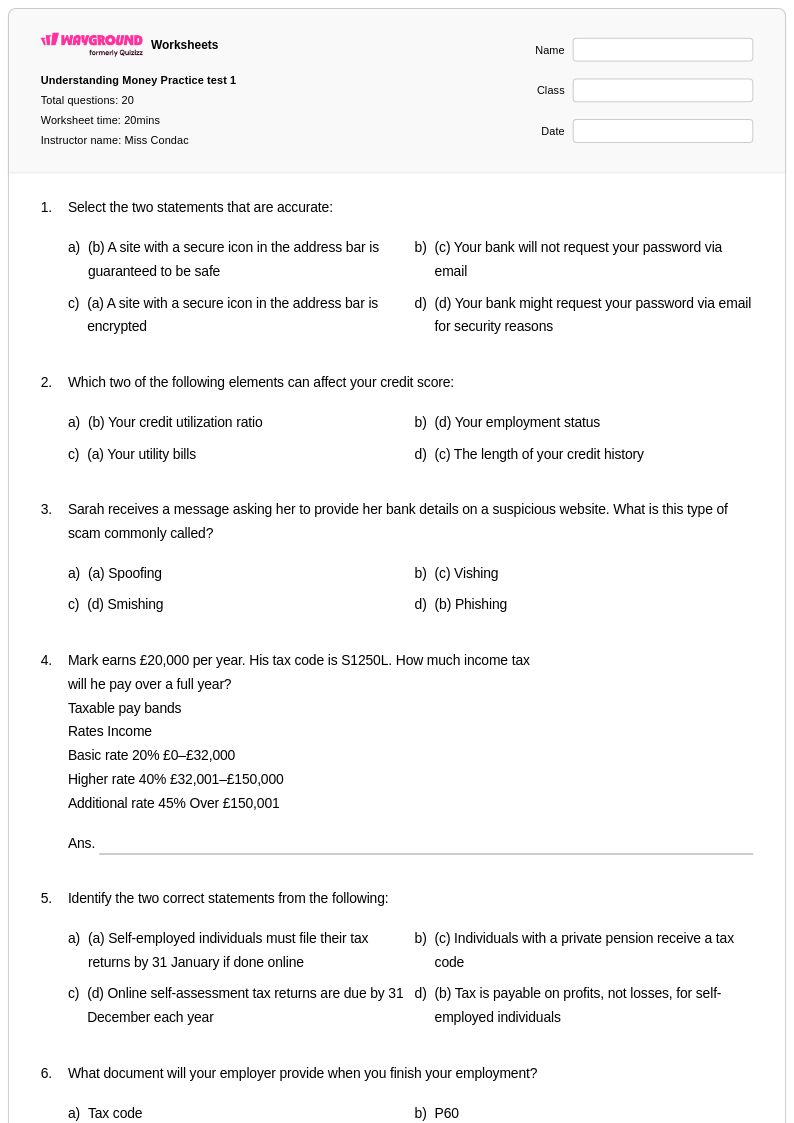
20 Q
9th
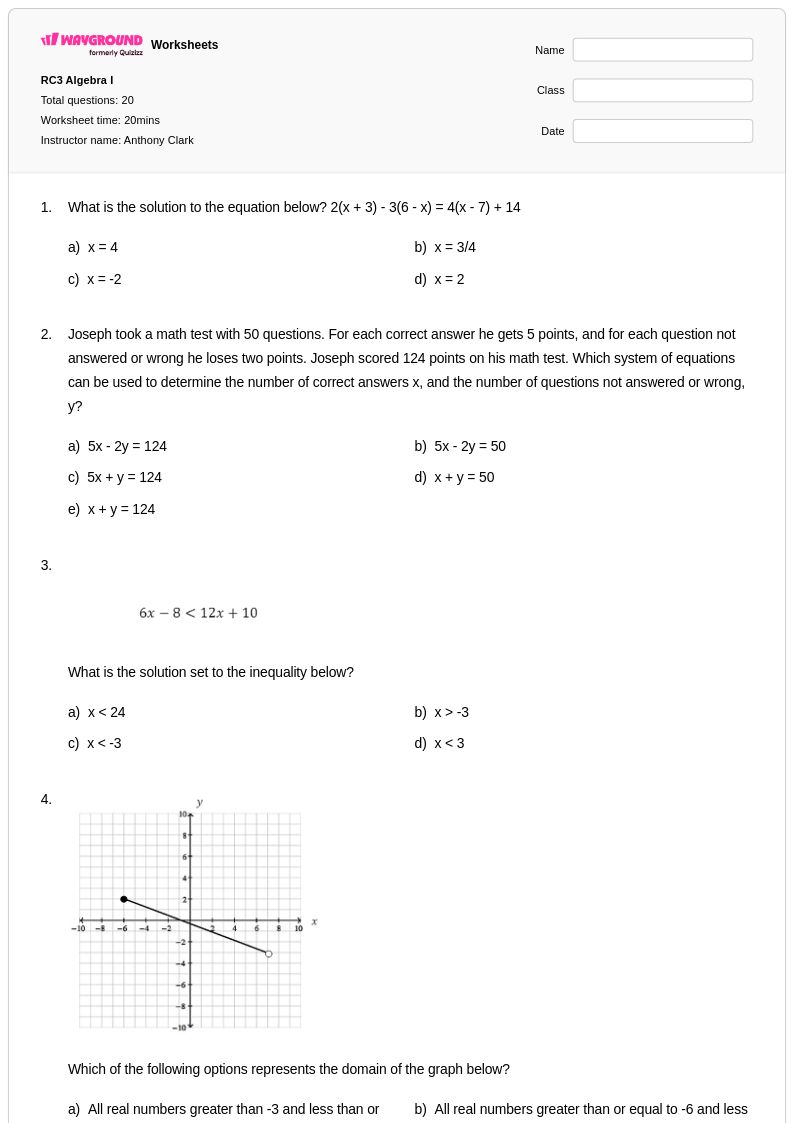
20 Q
8th - Uni
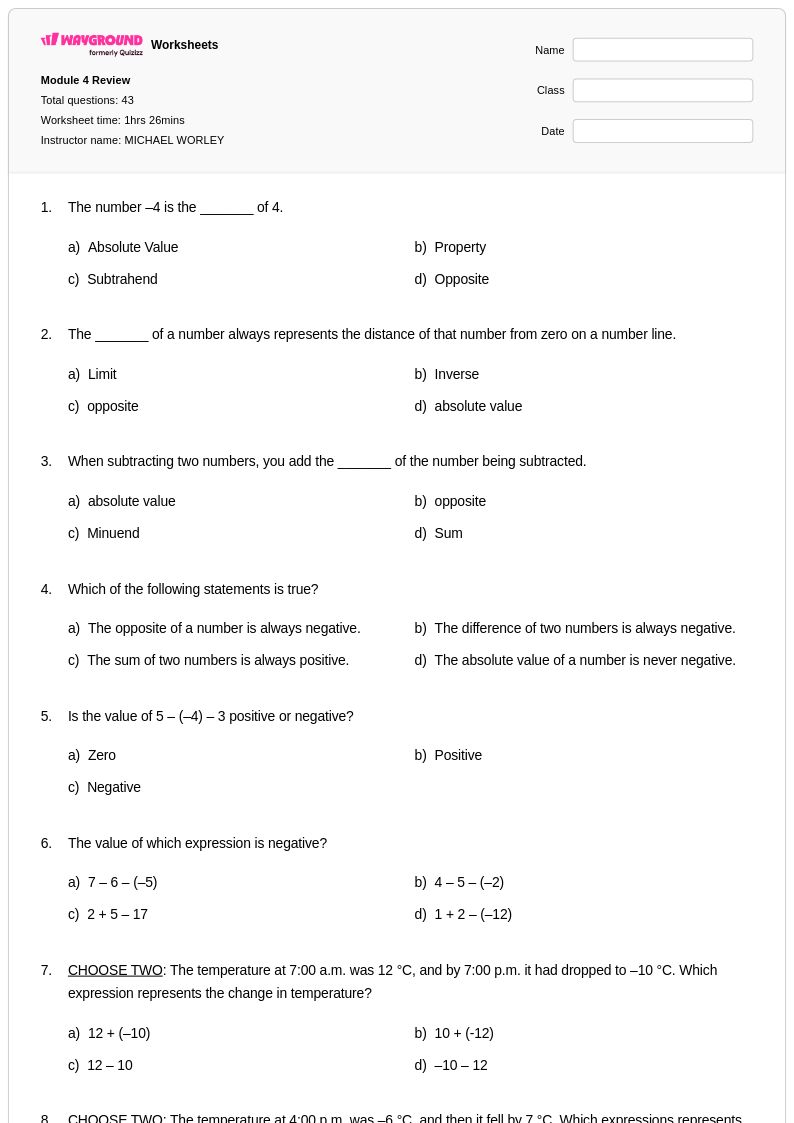
43 Q
7th
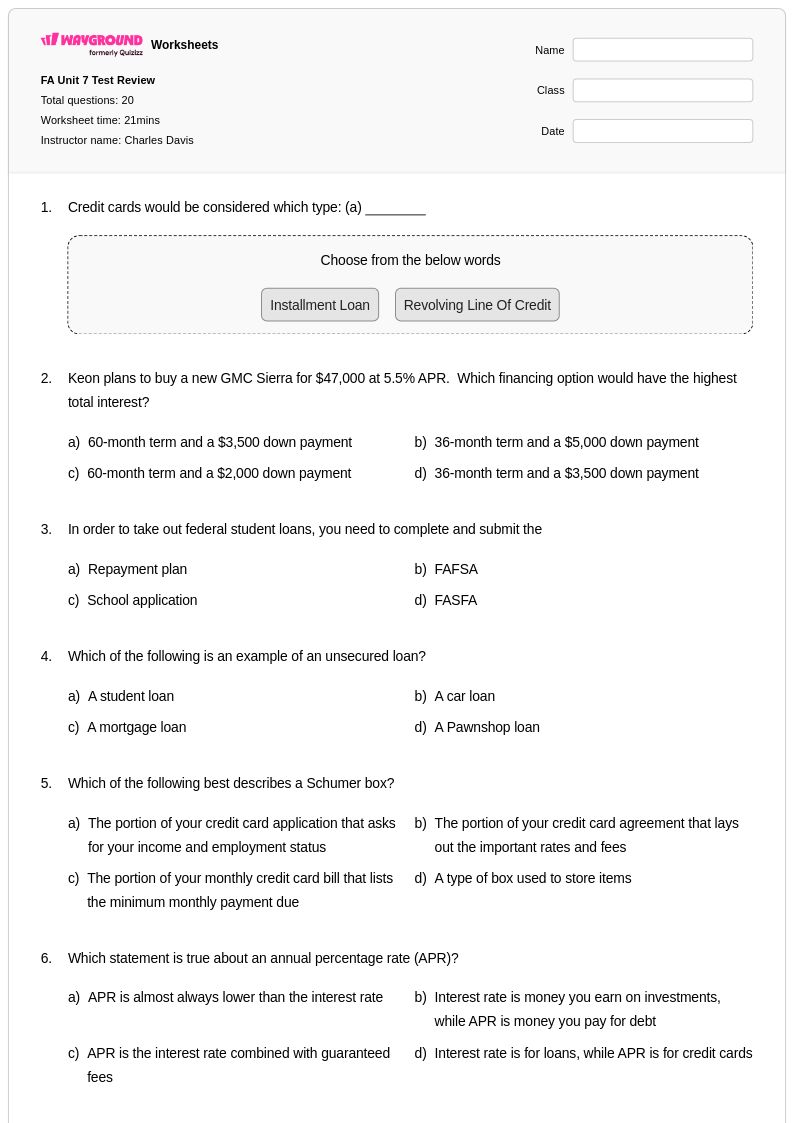
20 Q
9th - 12th
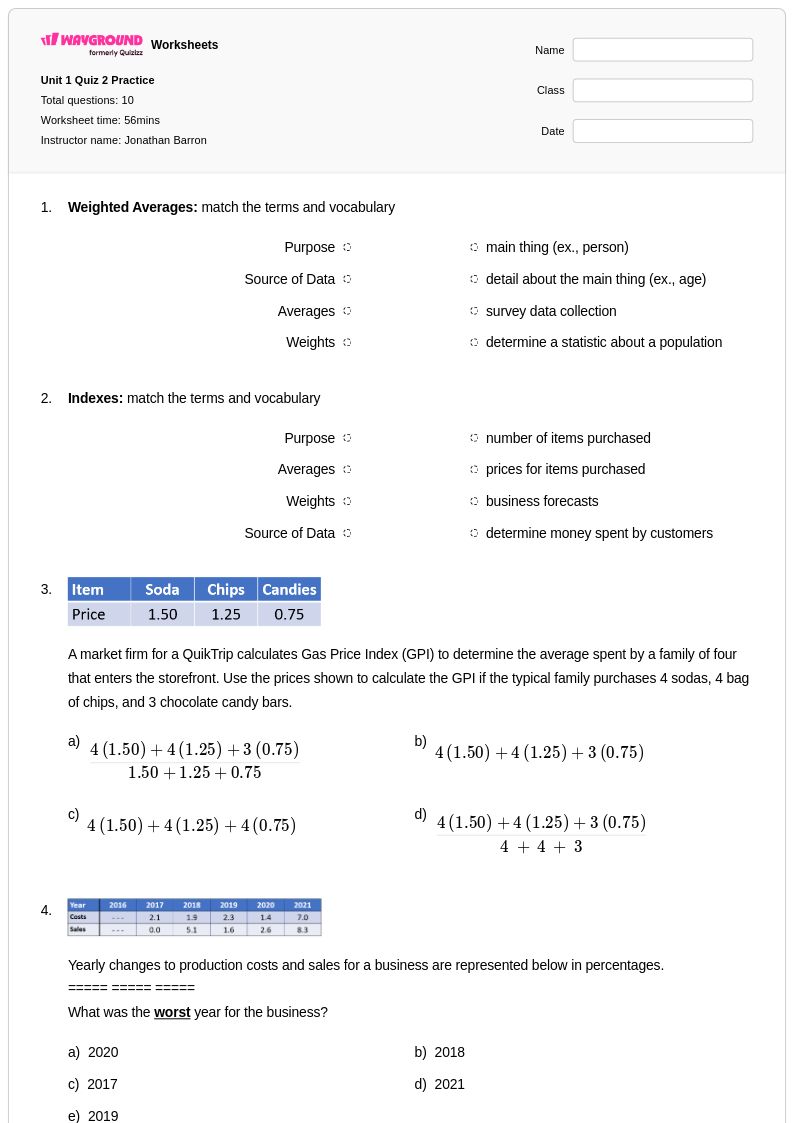
10 Q
9th - 12th
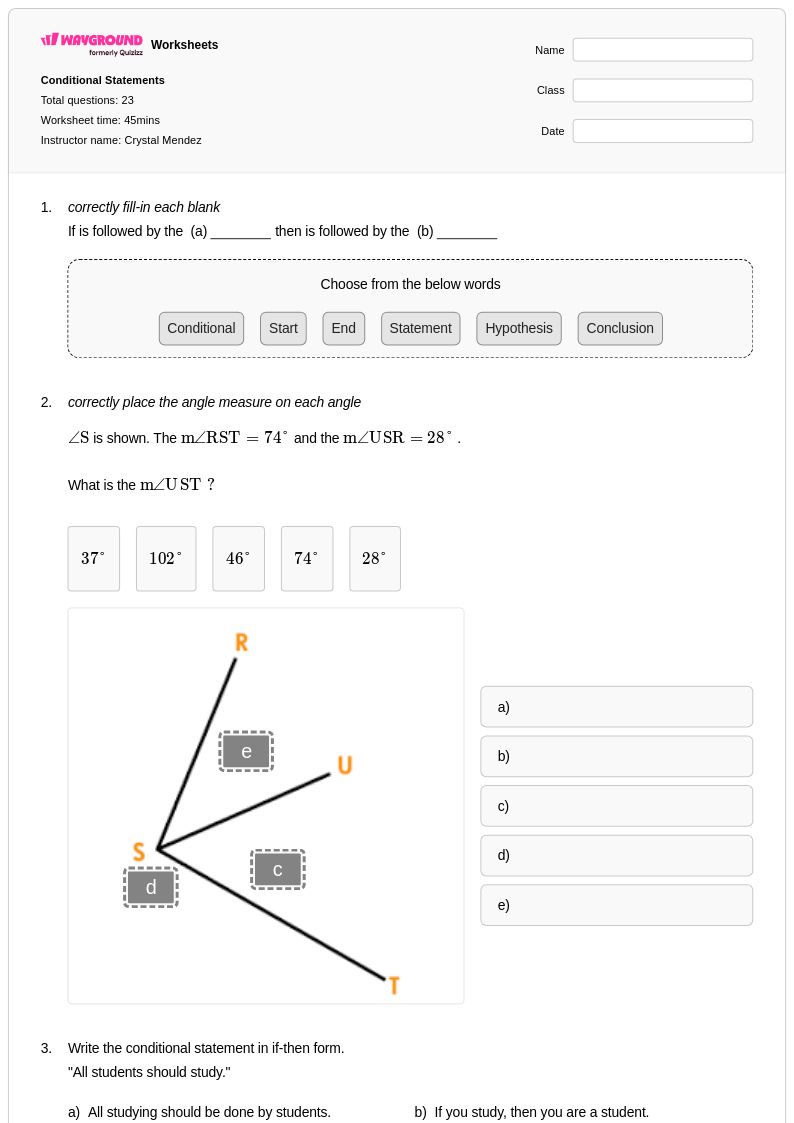
23 Q
10th
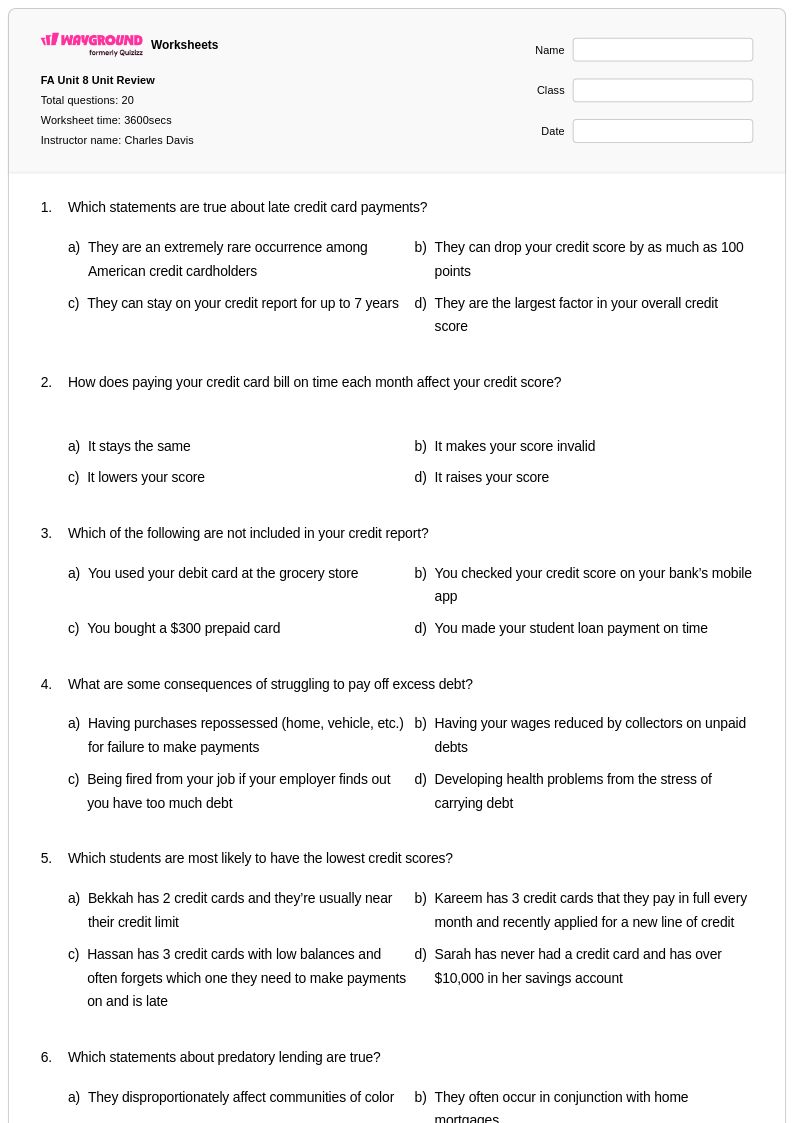
20 Q
9th - 12th
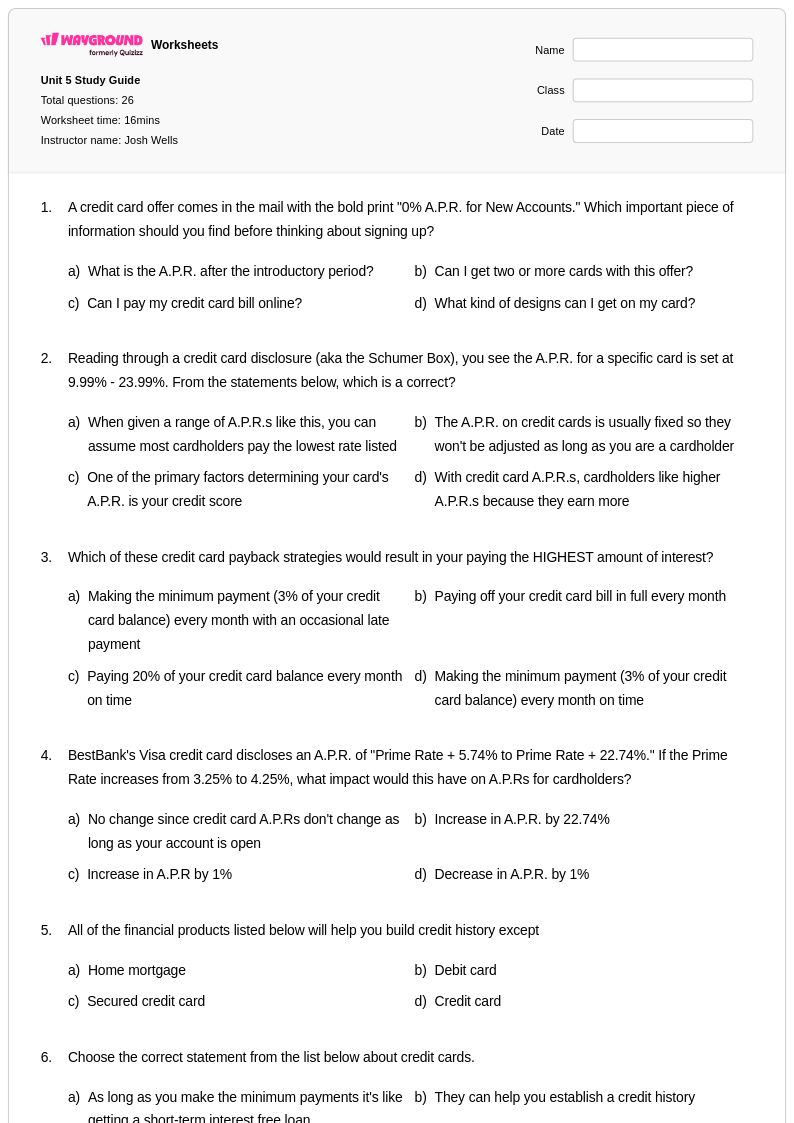
26 Q
12th
20 Q
6th
20 Q
12th
30 Q
11th
Explore Worksheets by Subjects
Explore printable Credit Card Statements worksheets
Credit card statement worksheets available through Wayground (formerly Quizizz) provide essential hands-on practice for students developing critical financial literacy skills. These comprehensive resources guide learners through the complex components of credit card billing statements, including balance calculations, interest charges, minimum payments, and transaction categorization. Students strengthen their analytical thinking as they interpret real-world financial documents, calculate annual percentage rates, and understand the long-term impact of carrying balances. The collection includes detailed answer keys that support independent learning, while printable pdf formats ensure accessibility across diverse classroom environments. These practice problems effectively bridge theoretical financial concepts with practical applications students will encounter in their daily lives.
Wayground (formerly Quizizz) empowers educators with millions of teacher-created credit card statement resources that streamline lesson planning and enhance student engagement. The platform's robust search and filtering capabilities allow teachers to quickly locate worksheets aligned with specific financial literacy standards and learning objectives. Differentiation tools enable seamless customization for varying skill levels, while both digital and printable formats accommodate diverse teaching preferences and technological constraints. These versatile resources support targeted remediation for struggling learners, enrichment activities for advanced students, and ongoing skill practice that reinforces mathematical reasoning within authentic financial contexts. Teachers benefit from the flexibility to modify content, track student progress, and integrate these materials into comprehensive financial literacy curricula that prepare students for real-world money management decisions.
FAQs
How do I teach students to read a credit card statement?
What exercises help students practice analyzing credit card statements?
What mistakes do students commonly make when interpreting credit card statements?
How can I use a credit card statement worksheet from Wayground?
How do credit card statement worksheets support Common Core math skills?
How can I differentiate credit card statement practice for mixed-ability classes?