Free Printable Energy Flow in Ecosystems Worksheets for Year 7
Year 7 Energy Flow in Ecosystems worksheets from Wayground help students master food chains, energy pyramids, and ecosystem relationships through engaging printables, practice problems, and comprehensive answer keys.
Explore printable Energy Flow in Ecosystems worksheets for Year 7
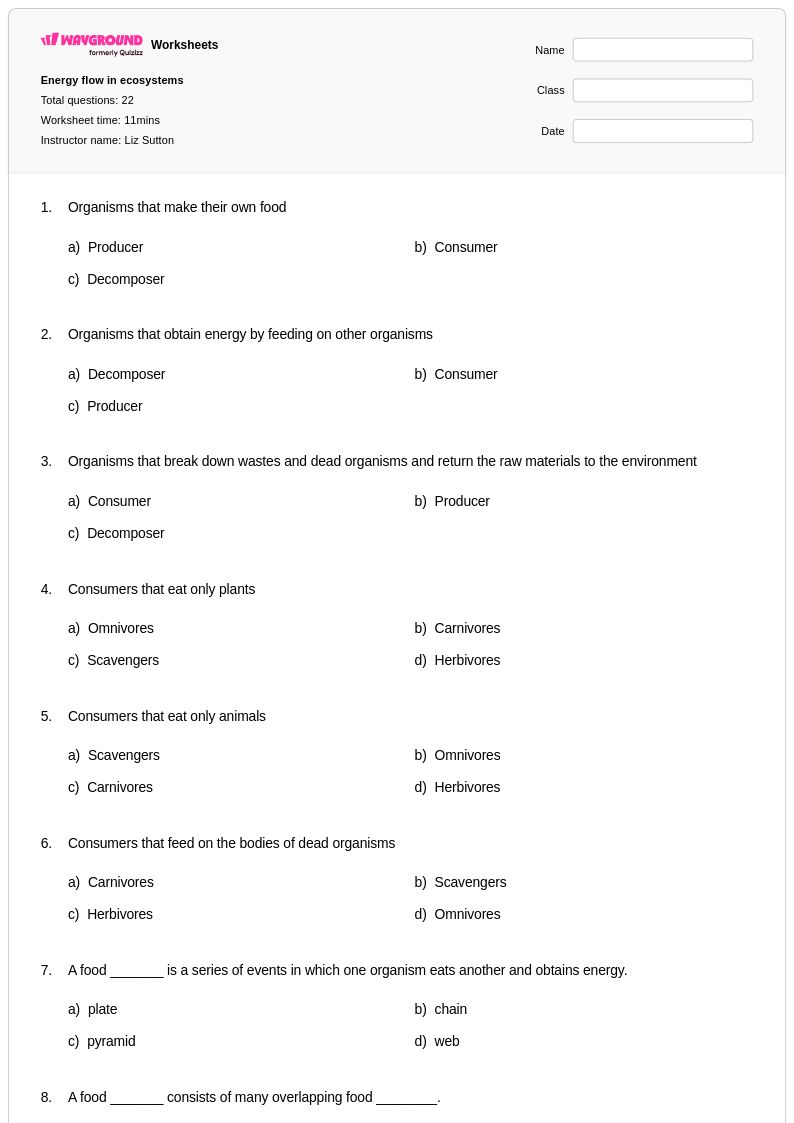
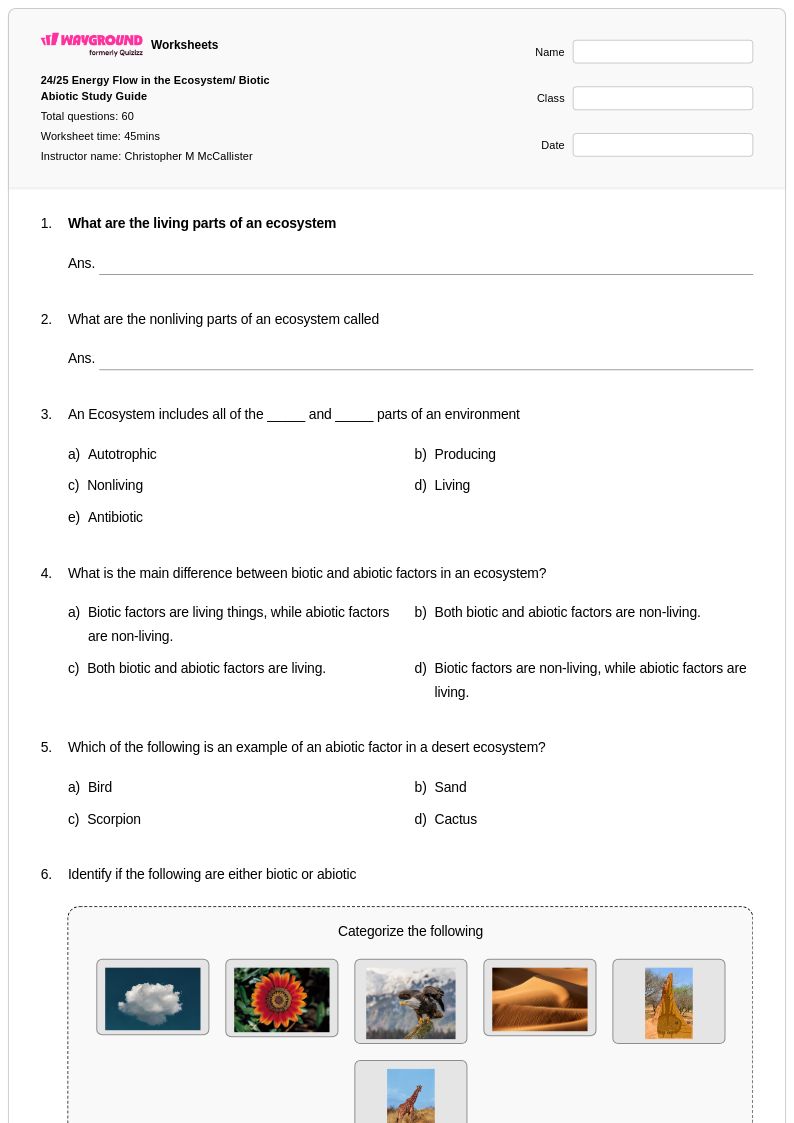
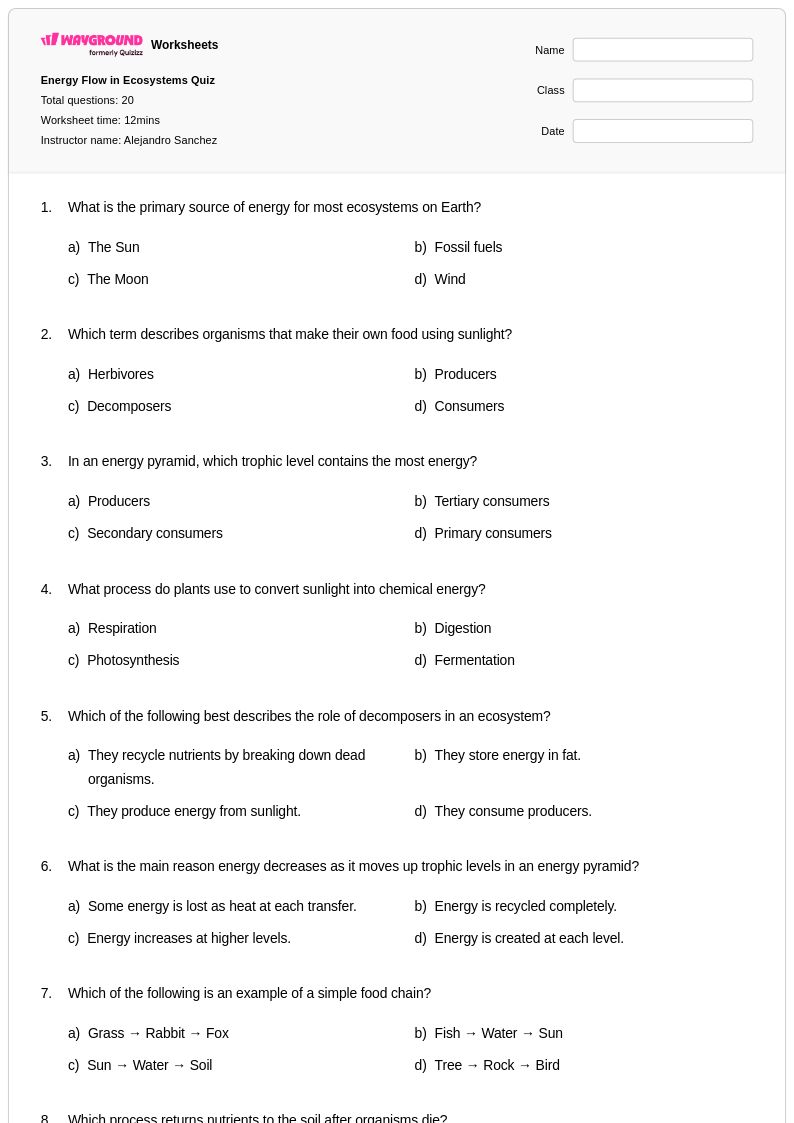
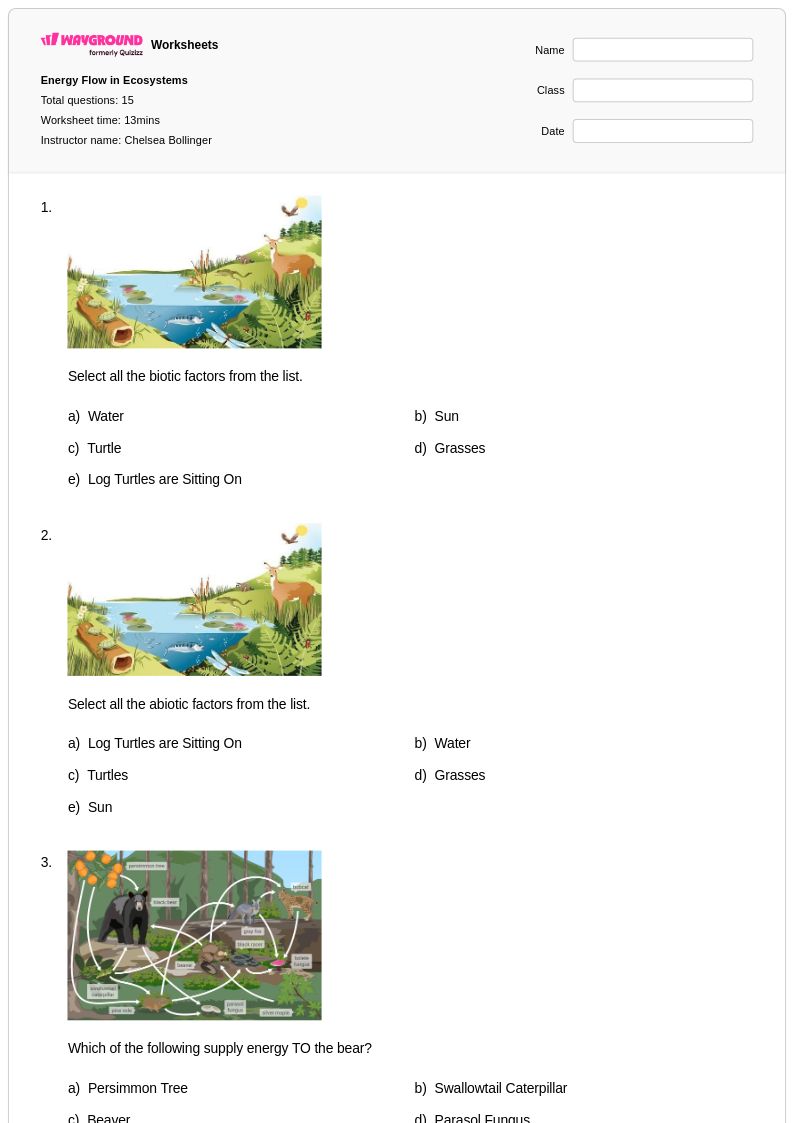
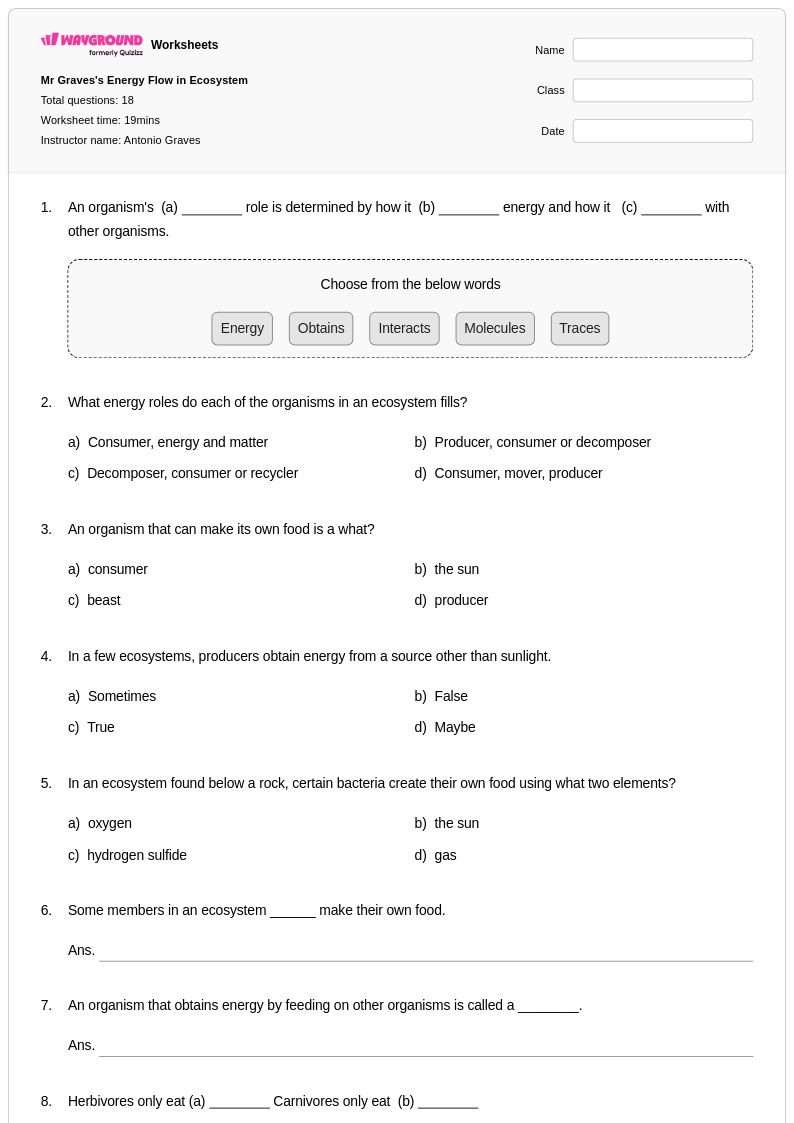
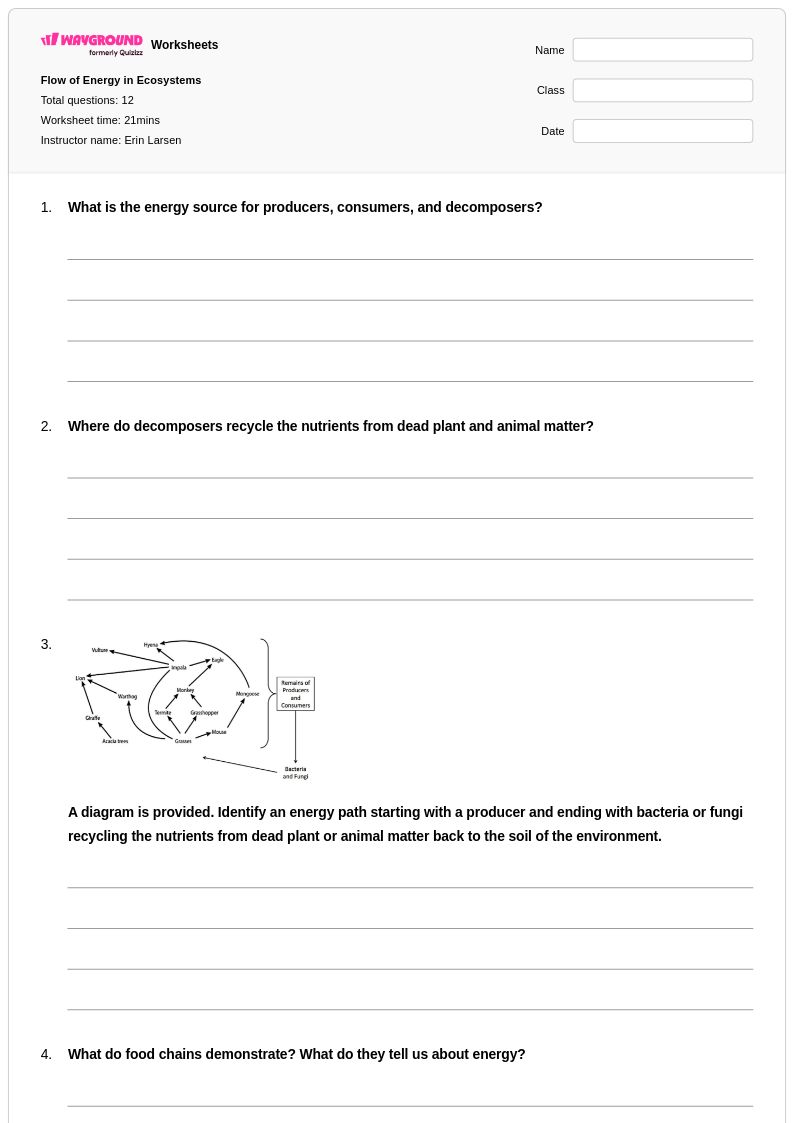
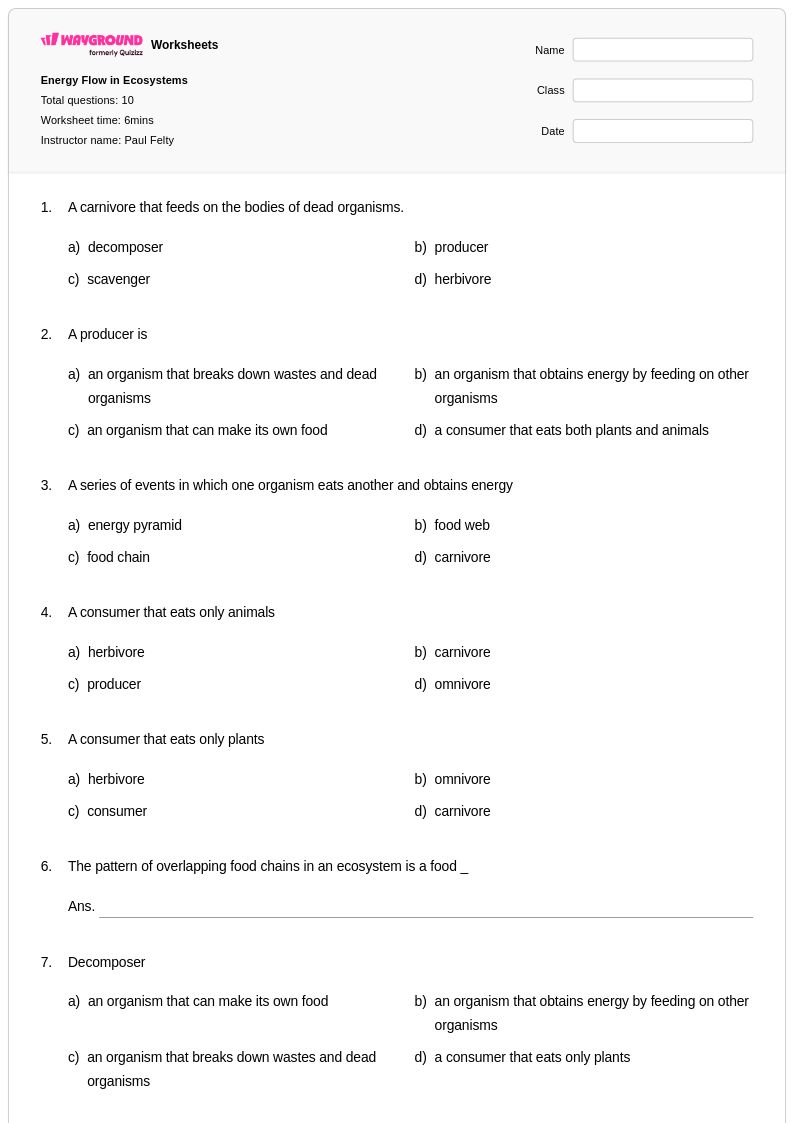
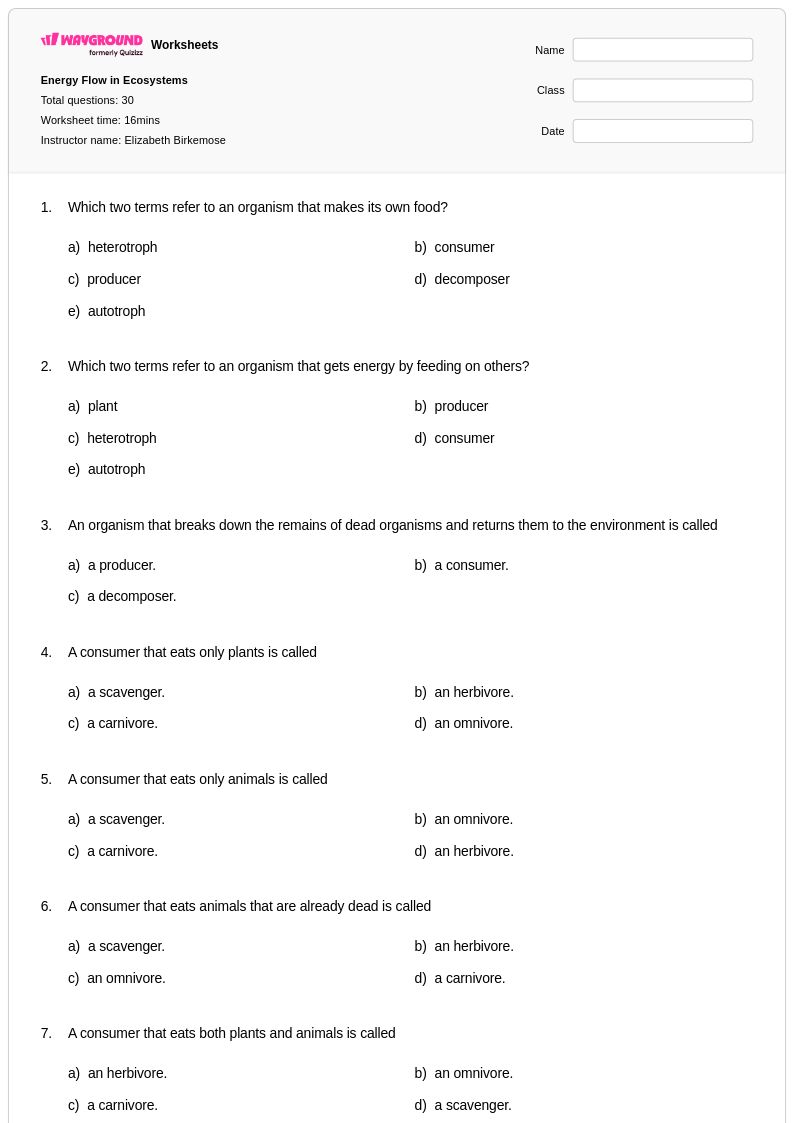
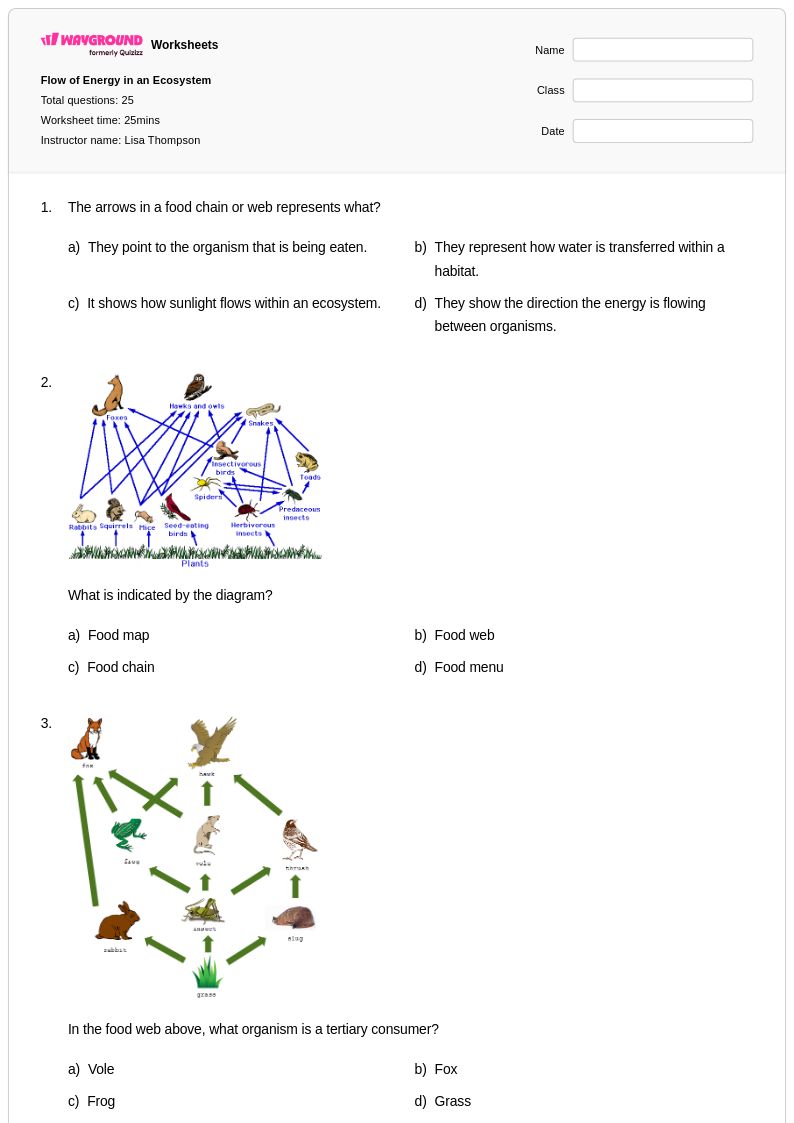
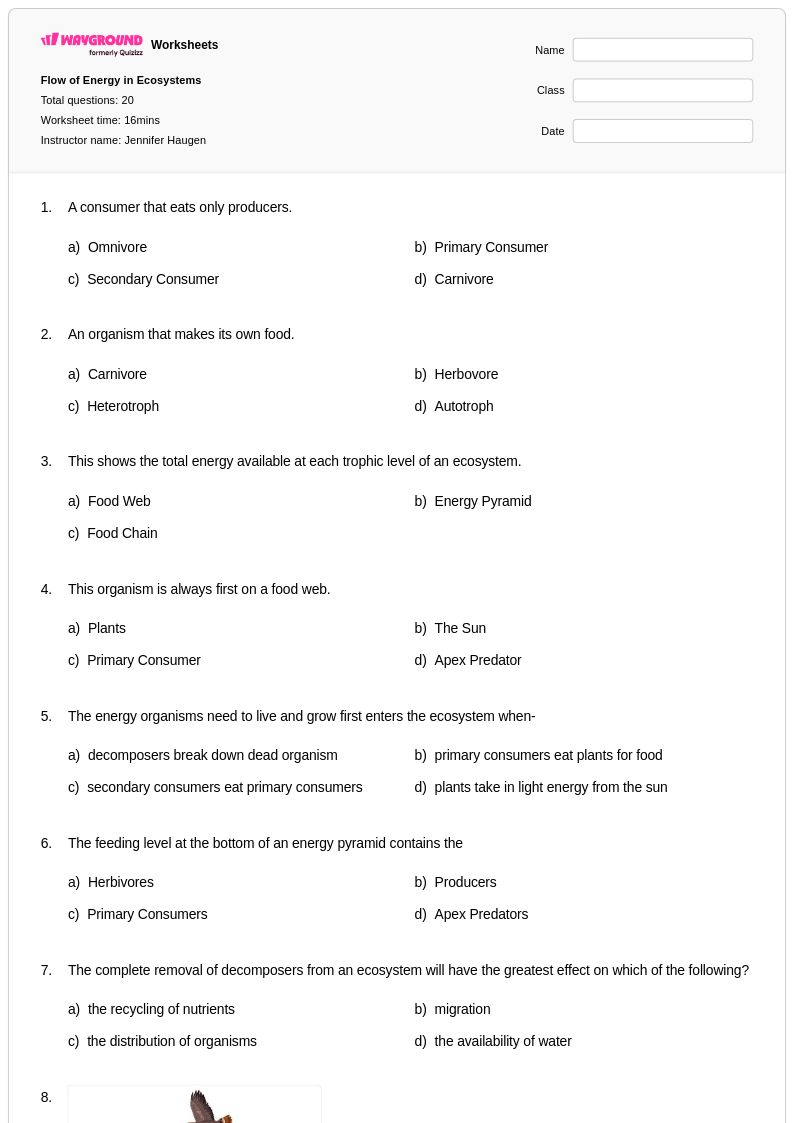
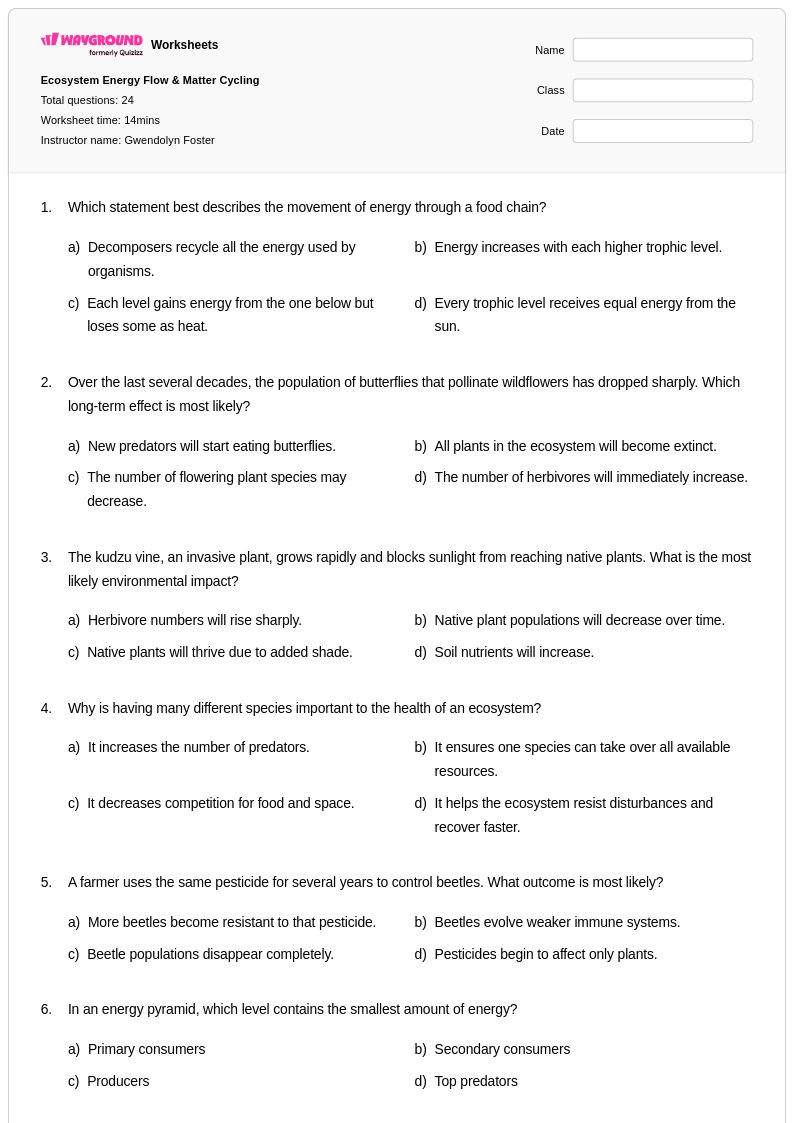
Energy flow in ecosystems represents a fundamental concept in Year 7 biology that helps students understand how energy moves through different trophic levels in natural communities. Wayground's comprehensive collection of energy flow worksheets provides seventh-grade students with targeted practice problems that explore concepts including producers, primary and secondary consumers, decomposers, food chains, food webs, and energy pyramids. These printable resources strengthen critical thinking skills as students trace energy pathways, analyze feeding relationships, and calculate energy transfer efficiency between organisms. Each worksheet comes with a detailed answer key that supports both independent study and classroom instruction, while the free pdf format ensures easy access for teachers seeking quality supplementary materials that reinforce ecosystem energy dynamics.
Wayground's extensive library draws from millions of teacher-created resources specifically designed to support Year 7 biology instruction on energy flow in ecosystems. The platform's advanced search and filtering capabilities allow educators to quickly locate worksheets that align with state science standards and match their students' specific learning needs. Teachers can customize these digital and printable materials to provide differentiated instruction, whether for remediation with struggling learners or enrichment activities for advanced students. The flexible pdf format enables seamless integration into lesson planning, homework assignments, and assessment preparation, while the diverse collection of practice problems helps educators address varying learning styles and reinforce key concepts about energy transfer, trophic relationships, and ecosystem stability through multiple engaging formats.
FAQs
How do I teach energy flow in ecosystems to biology students?
Start by establishing the concept of trophic levels and the role of producers before introducing food chains and food webs as visual models of energy transfer. From there, move into energy pyramids to show how available energy decreases at each level, using the 10% rule as a concrete calculation anchor. Real-world examples, such as a grassland or ocean ecosystem, help students connect abstract energy transfer principles to observable ecological relationships. Pairing direct instruction with structured practice problems that require students to calculate energy transfer efficiency reinforces both conceptual understanding and quantitative skills.
What are common misconceptions students have about energy flow in ecosystems?
One of the most persistent misconceptions is that energy is recycled through an ecosystem the way nutrients are — students often conflate the carbon or nitrogen cycle with energy flow. In reality, energy moves in one direction and is lost as heat at each trophic level, which is why it must be continuously input through photosynthesis. Students also frequently misapply the 10% rule, either applying it to nutrients instead of energy or misidentifying which direction the transfer flows. Another common error is overlooking decomposers entirely, treating them as outside the food web rather than as a critical pathway for energy and nutrient cycling.
What exercises help students practice the 10% rule and energy transfer efficiency?
Calculation-based problems where students trace energy values from producers through multiple consumer levels are the most effective practice format for the 10% rule, as they require both procedural accuracy and conceptual reasoning. Energy pyramid diagrams that ask students to fill in missing biomass or energy values at each trophic level add a visual dimension that reinforces why energy availability decreases up the food chain. Food web analysis problems, where students must identify all possible energy pathways between organisms, build fluency with complex ecological relationships. Combining quantitative and qualitative question types ensures students can both calculate and explain energy dynamics.
How do energy pyramids differ from food webs, and how should I teach them together?
Food webs show the directional relationships between organisms and the possible pathways energy can take through an ecosystem, while energy pyramids quantify how much energy is available at each trophic level. Teaching food webs first gives students the structural vocabulary — producers, primary consumers, secondary consumers, decomposers — before energy pyramids introduce the quantitative layer of how much energy is actually transferred. Sequencing instruction this way prevents students from treating the two representations as interchangeable, since food webs emphasize relationships and energy pyramids emphasize efficiency losses. Worksheets that require students to construct both representations from the same ecosystem scenario are particularly effective for reinforcing the distinction.
How can I use Wayground's energy flow in ecosystems worksheets in my classroom?
Wayground's energy flow in ecosystems worksheets are available as free PDF downloads for traditional classroom use and in digital formats that support technology-integrated environments, including the option to host them as a quiz directly on Wayground. Each worksheet includes a comprehensive answer key, making them well-suited for independent practice, homework assignments, or in-class problem-solving sessions where students self-check their work. The range of question formats — from food web analysis to energy transfer calculations — allows teachers to select problems that match the specific concept being reinforced on a given day. For students who need additional support, Wayground's platform also offers accommodations such as read aloud, extended time, and reduced answer choices, which can be configured individually without disrupting the experience of other students.
How do decomposers fit into energy flow, and why do students struggle with their role?
Decomposers, including bacteria and fungi, break down dead organic matter and release nutrients back into the soil, completing the cycling of matter even though energy itself is not recycled. Students struggle with their role because decomposers do not fit neatly into the linear producer-consumer model that food chains imply, leading many to omit them from energy diagrams entirely. Emphasizing that decomposers occupy their own functional category — separate from but connected to every trophic level — helps students accurately represent ecosystem energy flow. Worksheet problems that explicitly require students to trace what happens to the energy stored in dead organisms are a reliable way to correct this gap.