Free Printable Skeletal System Worksheets for Year 7
Explore Wayground's comprehensive Year 7 skeletal system worksheets and printables that help students master bone structure, functions, and anatomy through engaging practice problems with complete answer keys.
Explore printable Skeletal System worksheets for Year 7
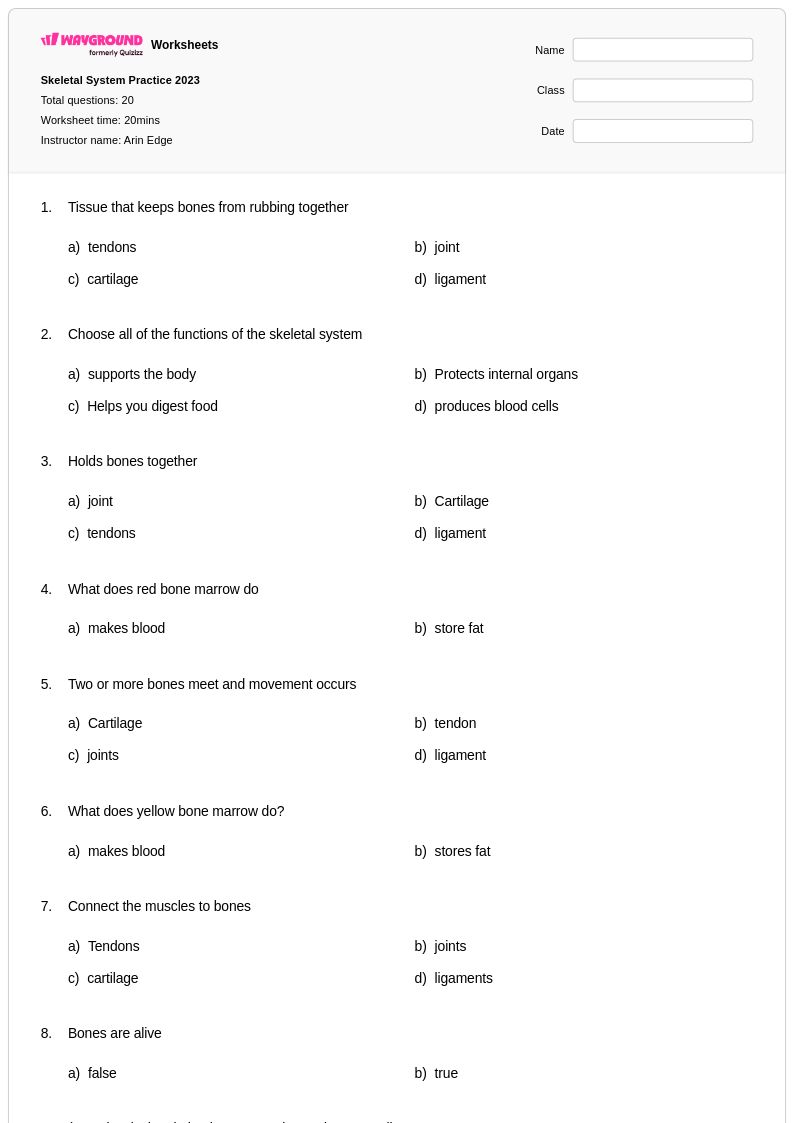
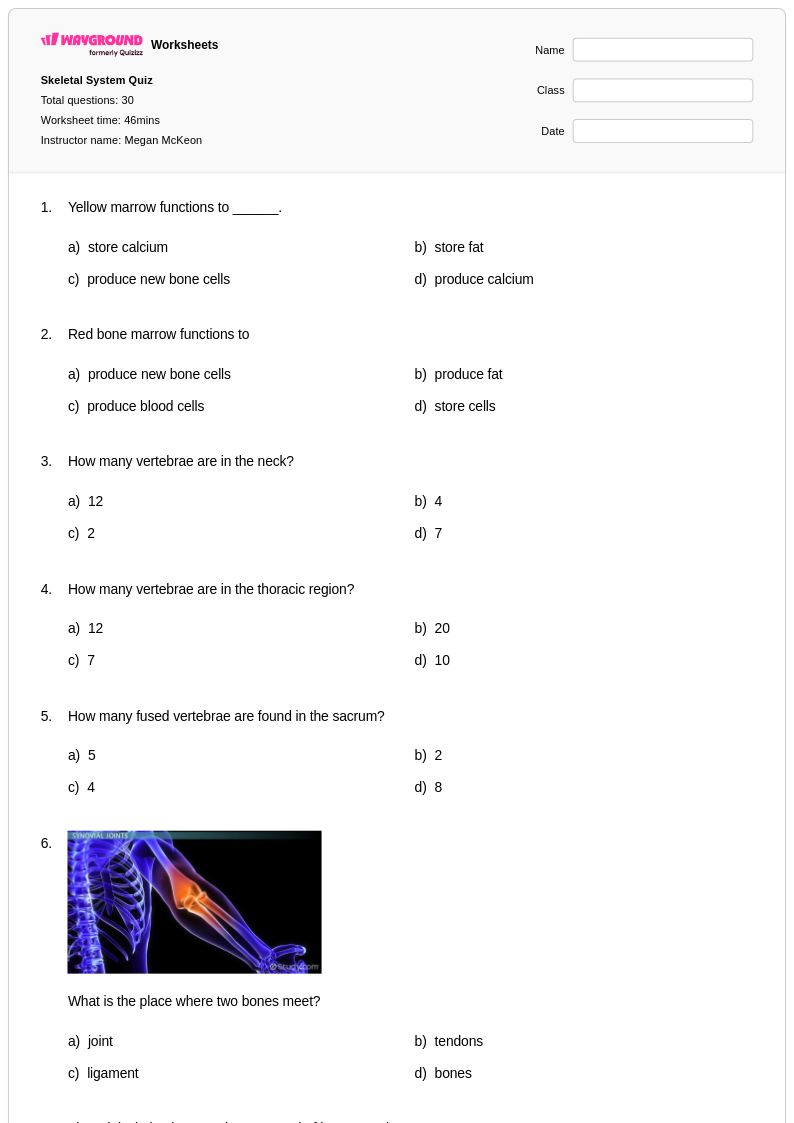
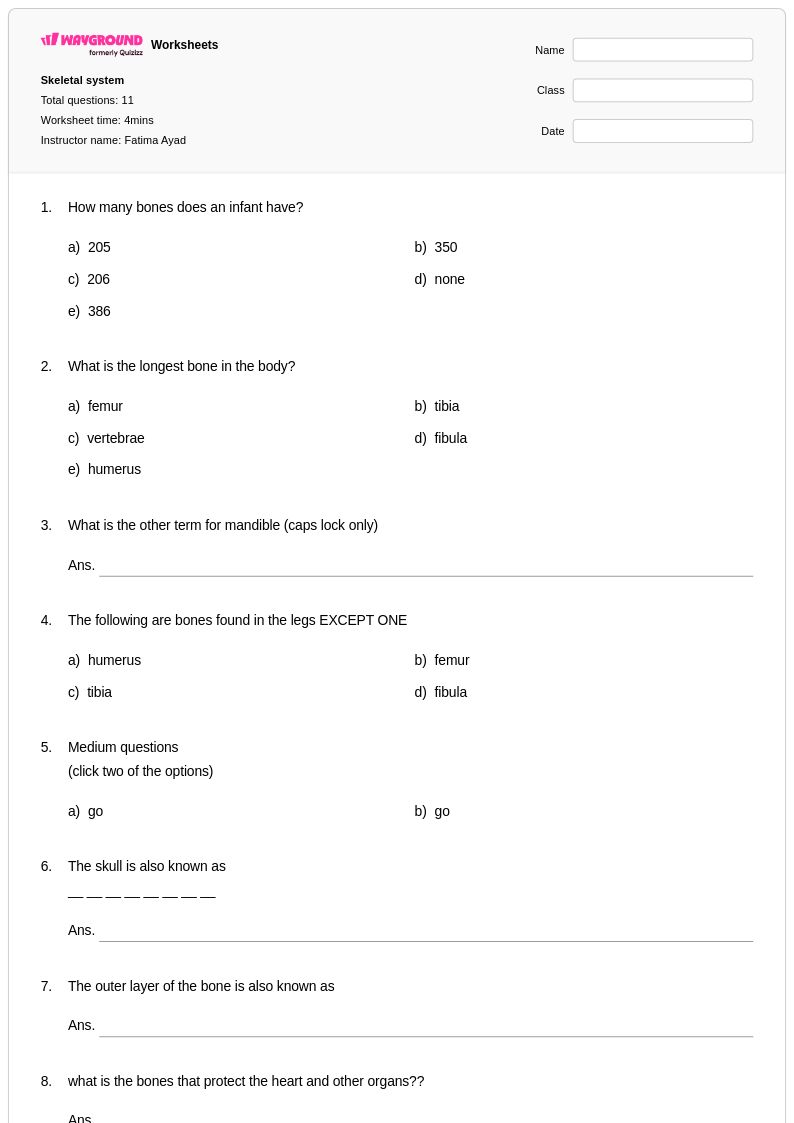
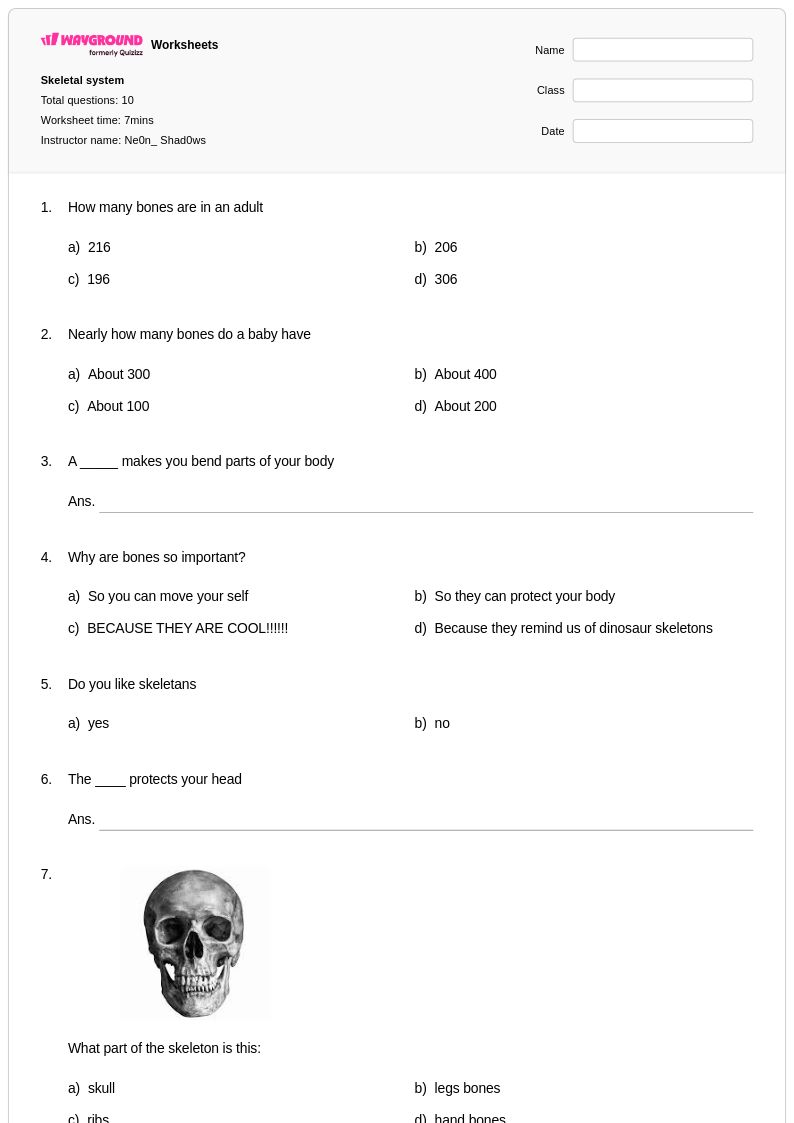
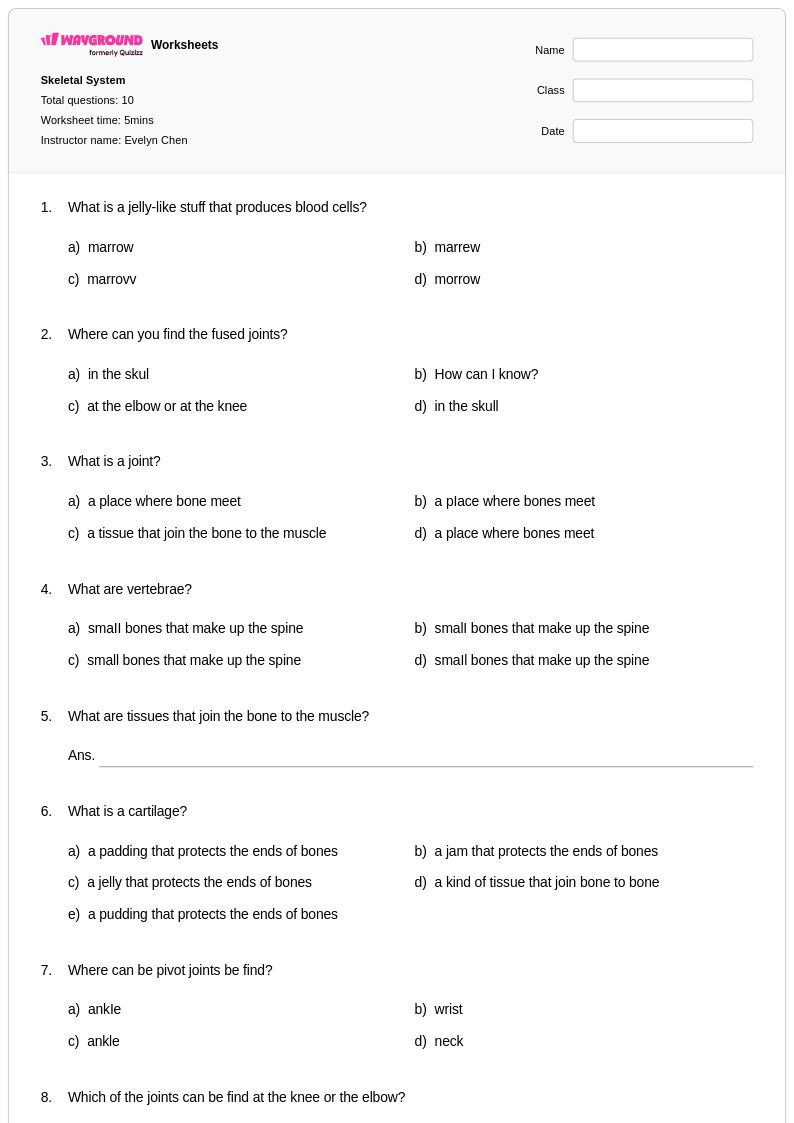
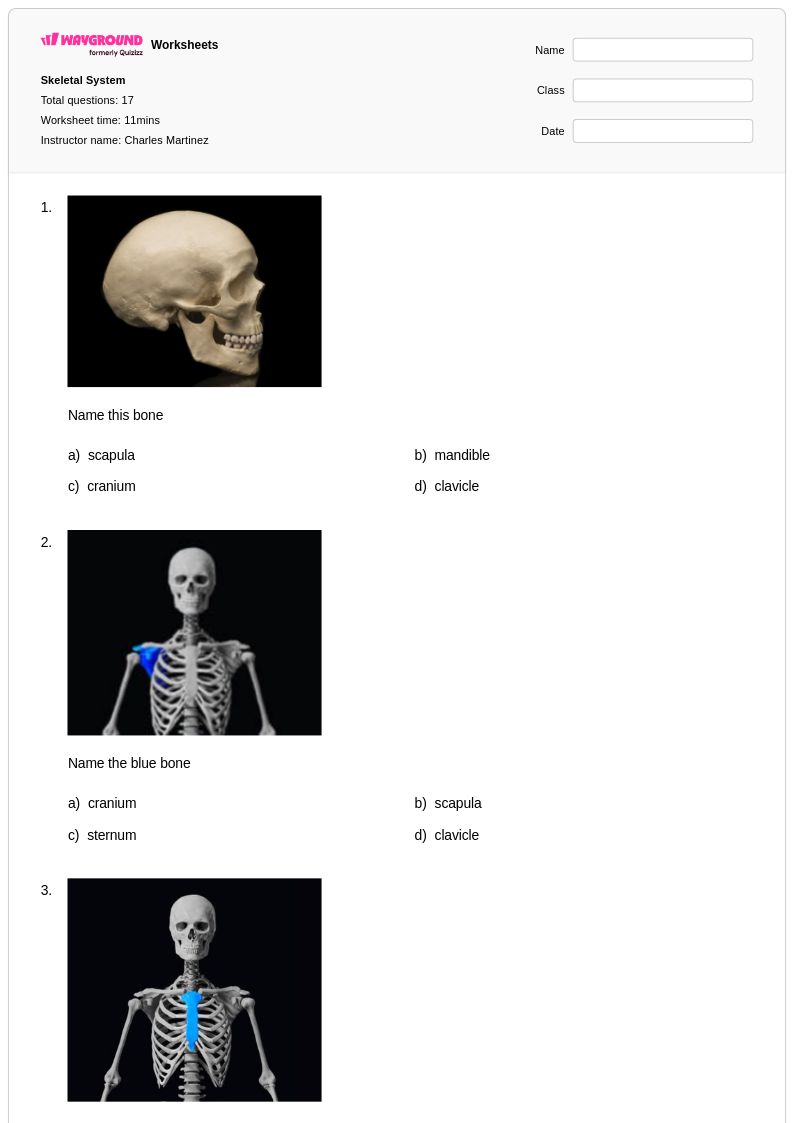
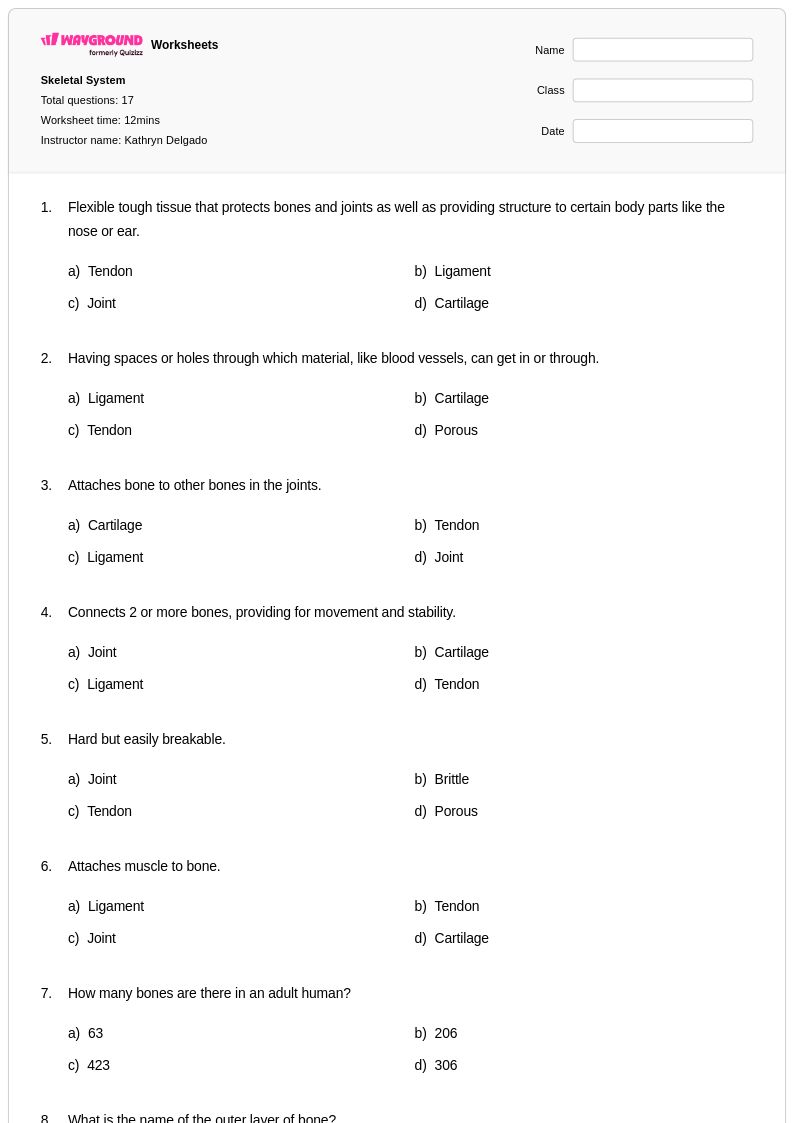
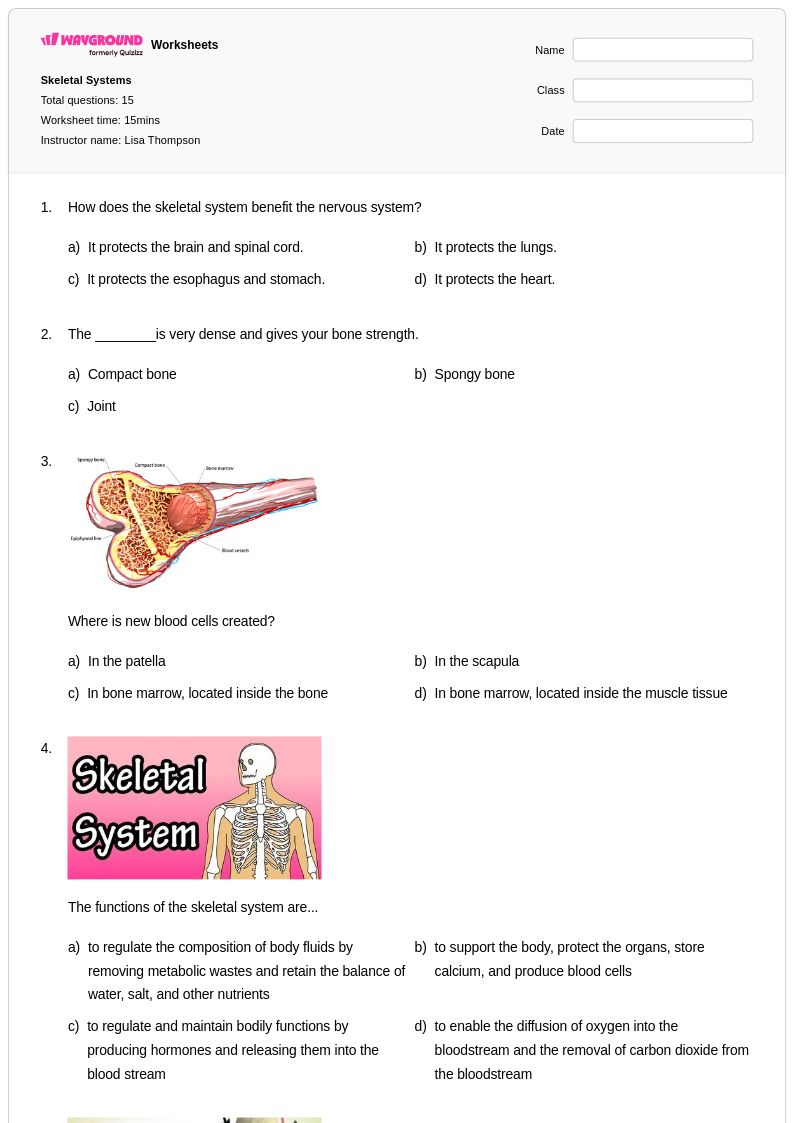
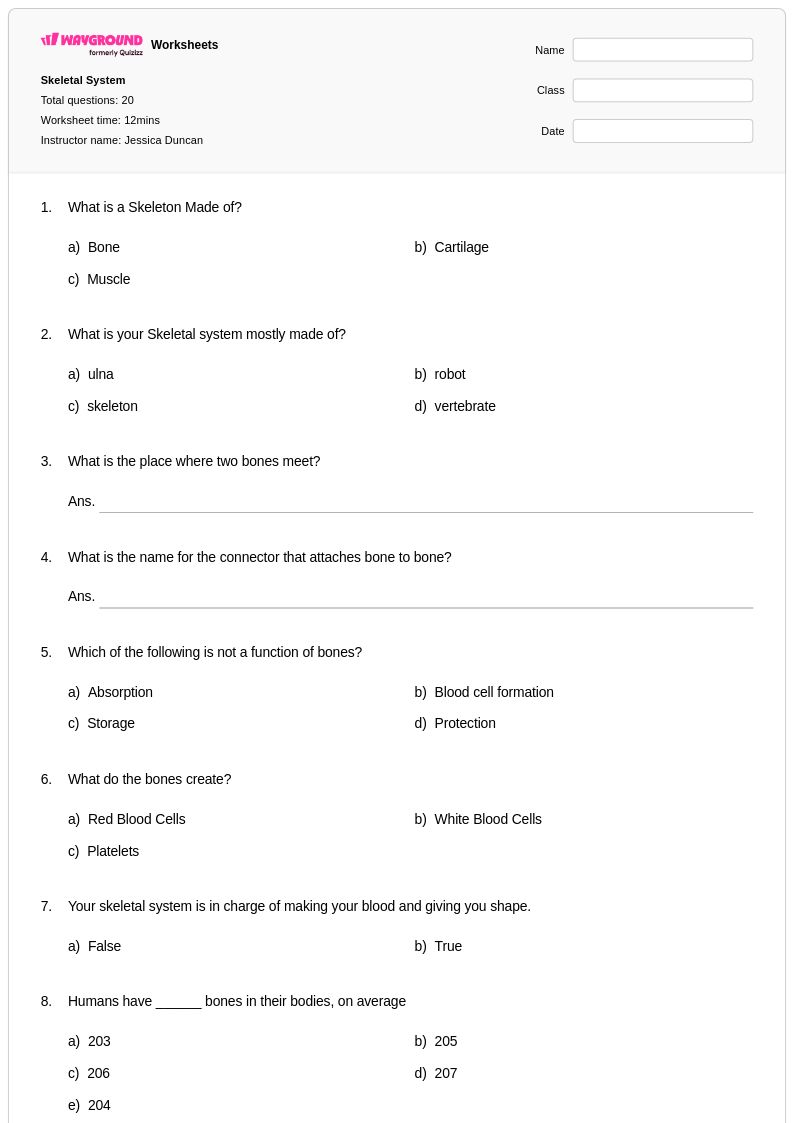
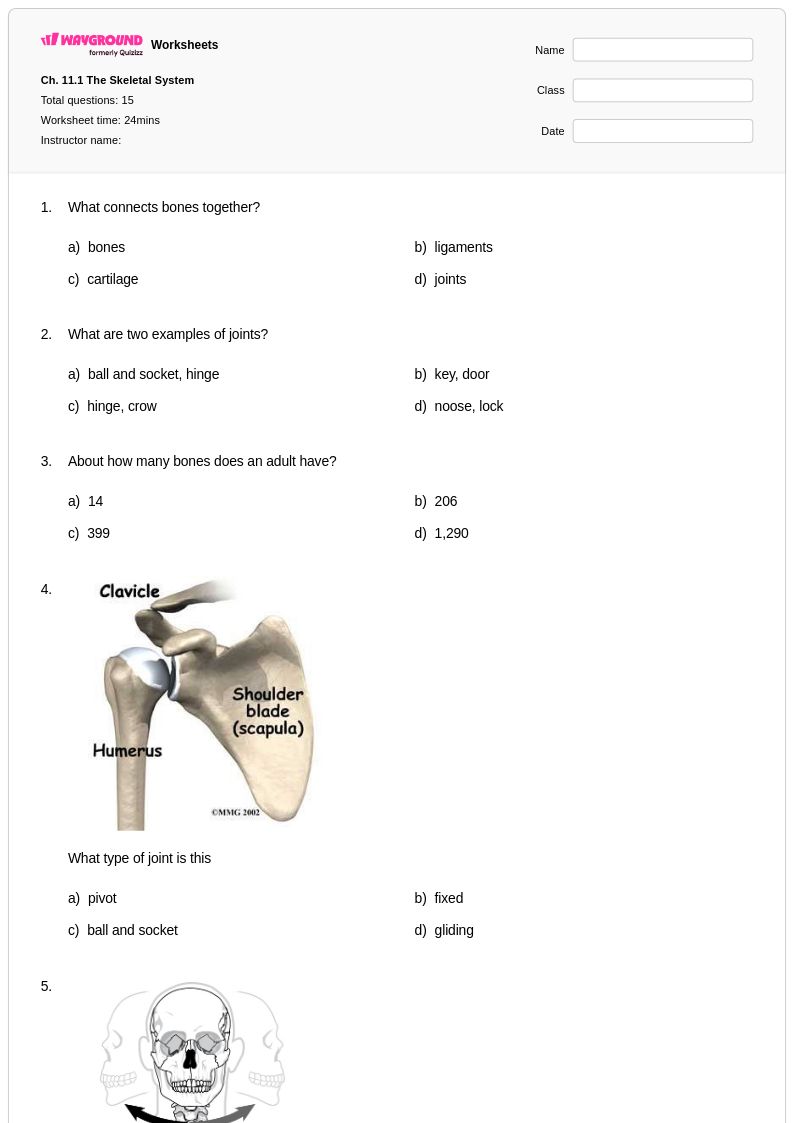
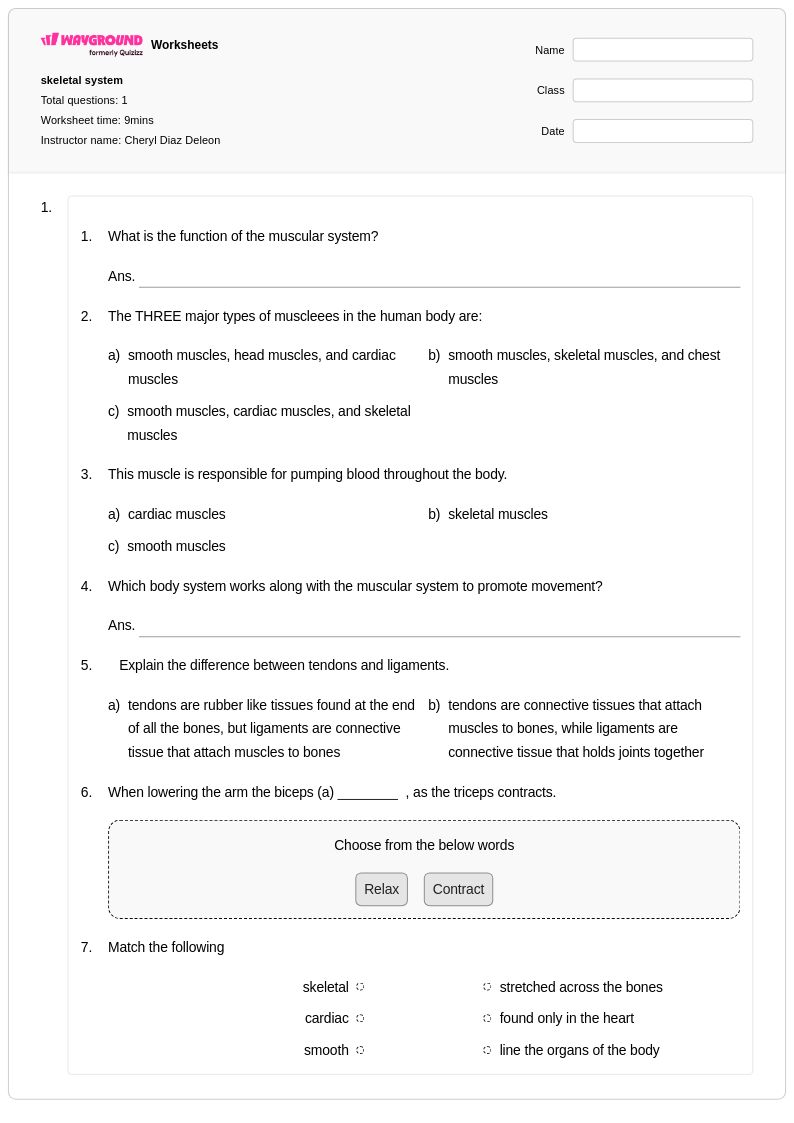
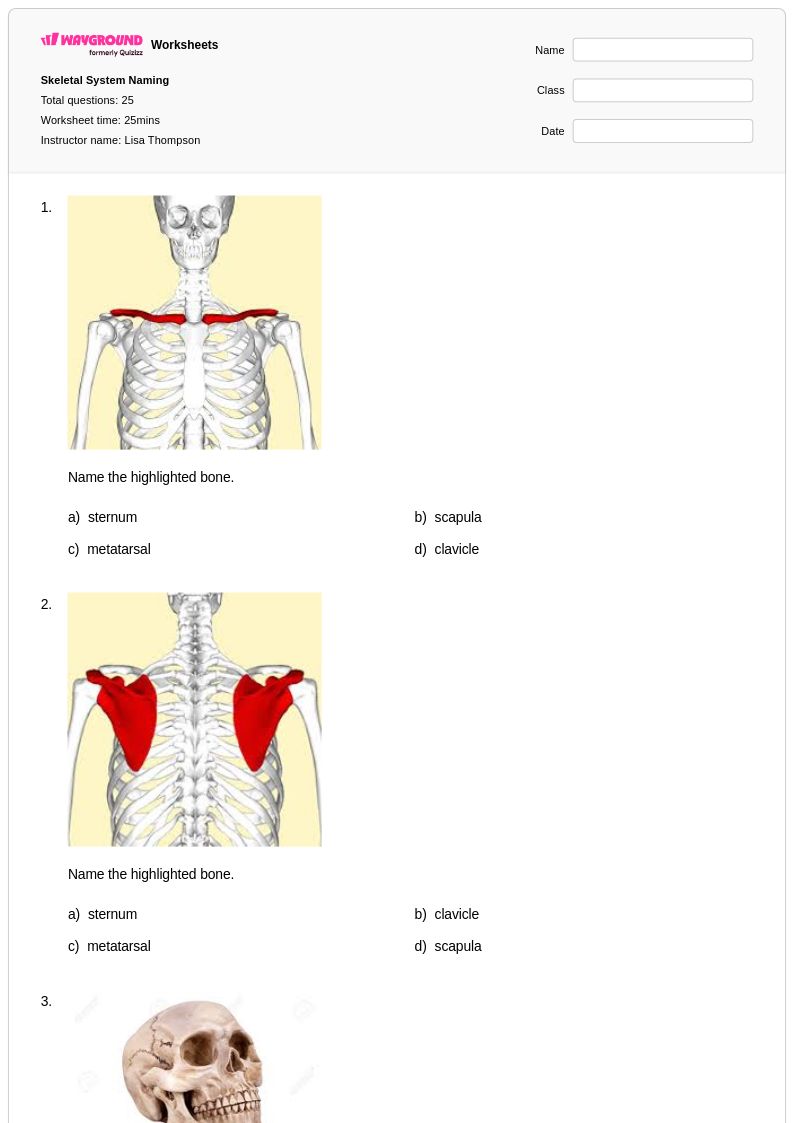
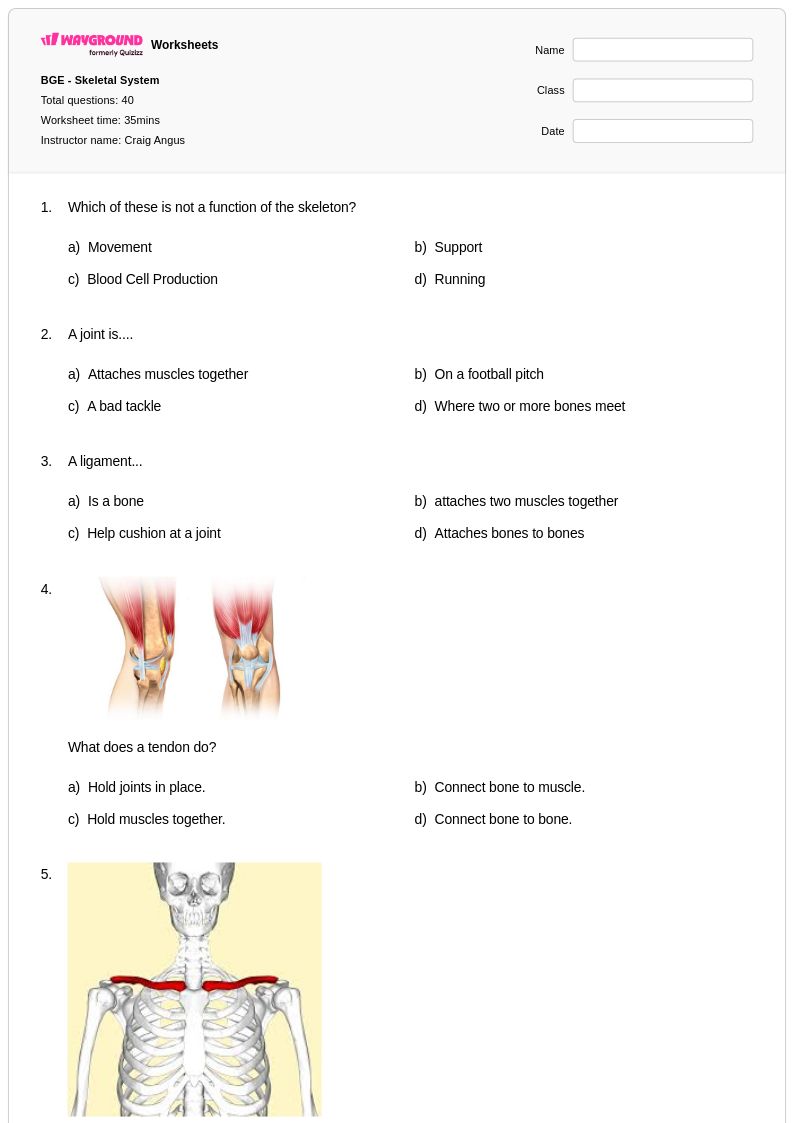
Year 7 skeletal system worksheets available through Wayground (formerly Quizizz) provide comprehensive coverage of bone structure, function, and the intricate mechanisms that support human movement and protection. These expertly designed educational resources strengthen students' understanding of bone composition, the differences between compact and spongy bone tissue, joint classifications, and the skeletal system's role in mineral storage and blood cell production. Each worksheet collection includes detailed practice problems that challenge students to identify major bones, analyze bone growth patterns, and explore how the skeletal system interacts with muscular and other body systems. Teachers can access complete answer keys and downloadable pdf formats, making these free printables ideal for both classroom instruction and independent study sessions that reinforce critical anatomical concepts.
Wayground's extensive platform supports educators with millions of teacher-created skeletal system resources that undergo rigorous quality standards and align with national science curriculum frameworks. The platform's advanced search and filtering capabilities enable teachers to locate precisely targeted worksheets based on specific learning objectives, difficulty levels, and state standards requirements. Differentiation tools allow seamless customization of content complexity, ensuring that advanced learners receive enrichment opportunities while struggling students access scaffolded support materials. These versatile resources are available in both printable and interactive digital formats, providing flexibility for diverse classroom environments and supporting effective lesson planning, targeted remediation, and comprehensive skill practice that builds students' foundational knowledge of human anatomy and physiological processes.
FAQs
How do I teach the skeletal system to students?
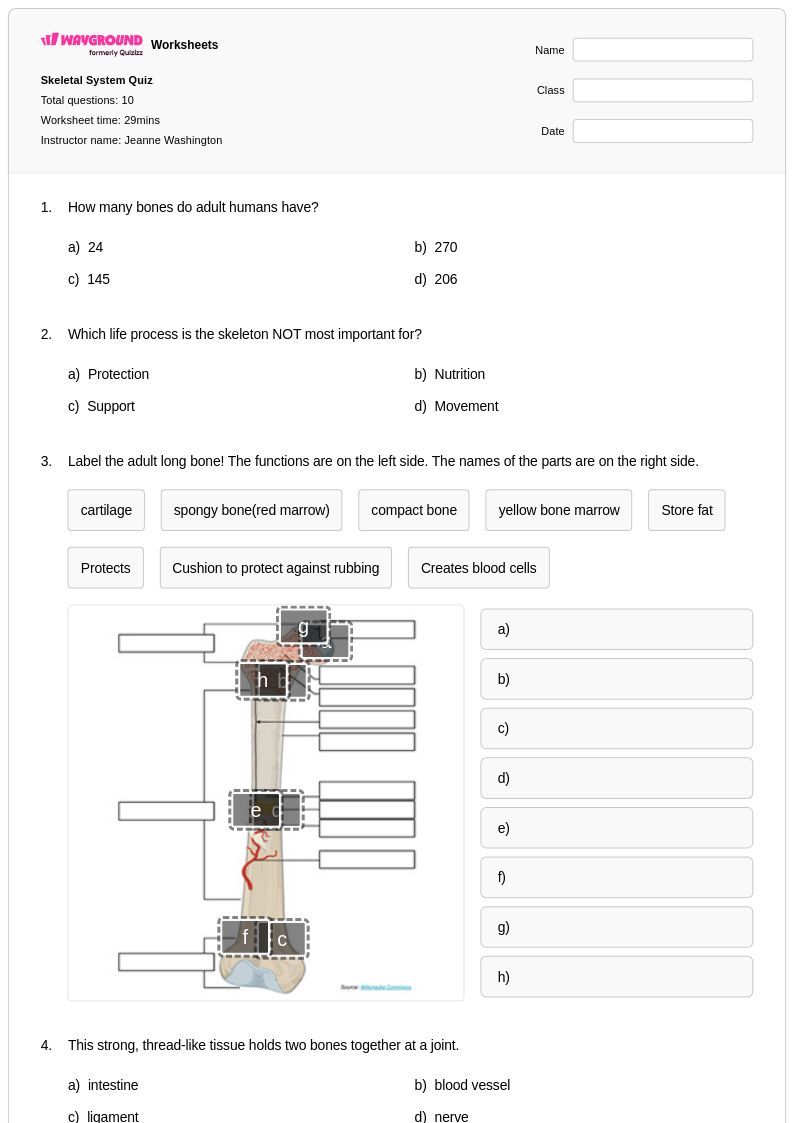
Start by introducing the skeletal system's four core functions: support, protection, movement, and mineral storage. Build from macrostructure (bone classification and regions) to microstructure (compact vs. spongy bone tissue), then connect skeletal anatomy to the muscular system through lever mechanics. Using labeled diagrams alongside written practice helps students anchor anatomical terminology to visual structures before moving to function-based questions.
What are good activities for practicing skeletal system concepts?
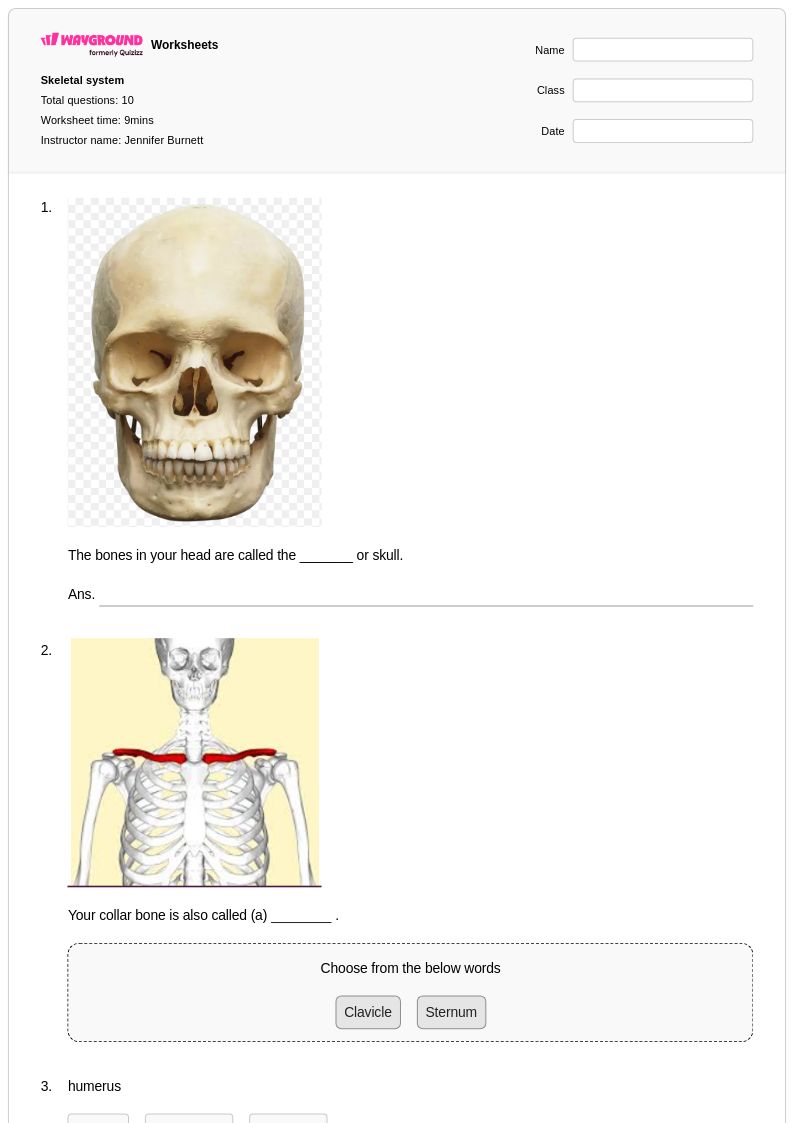
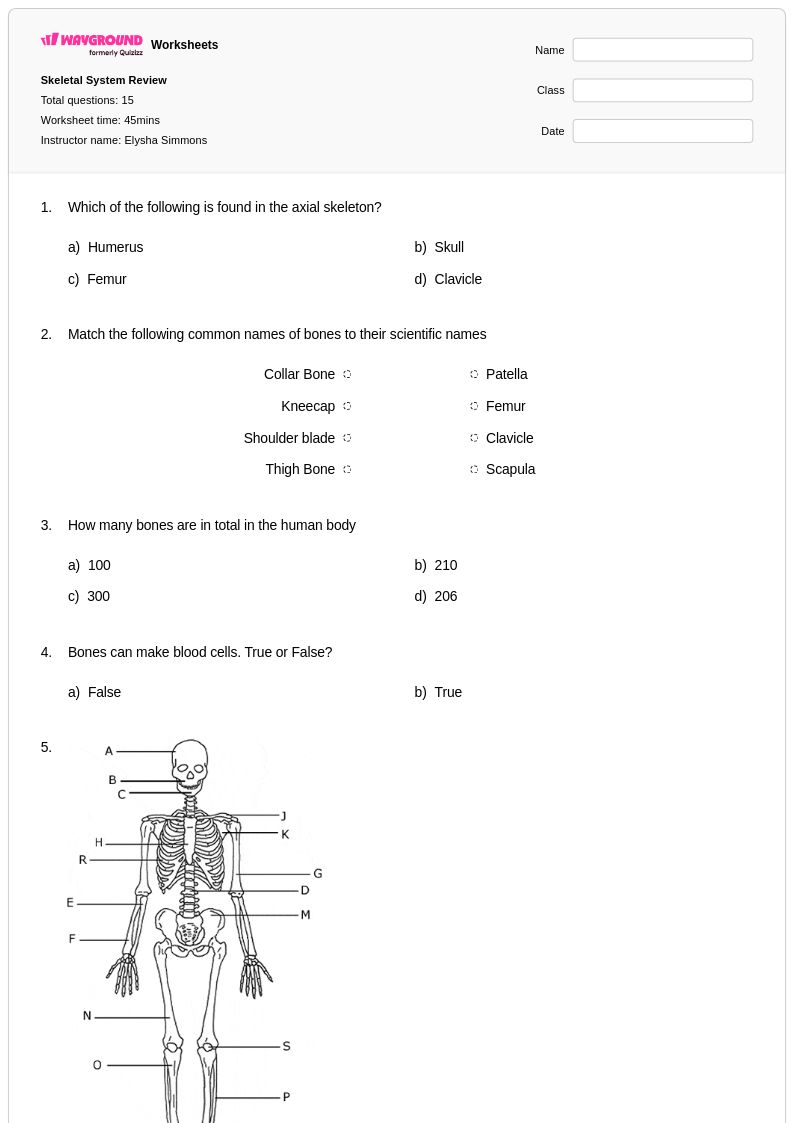
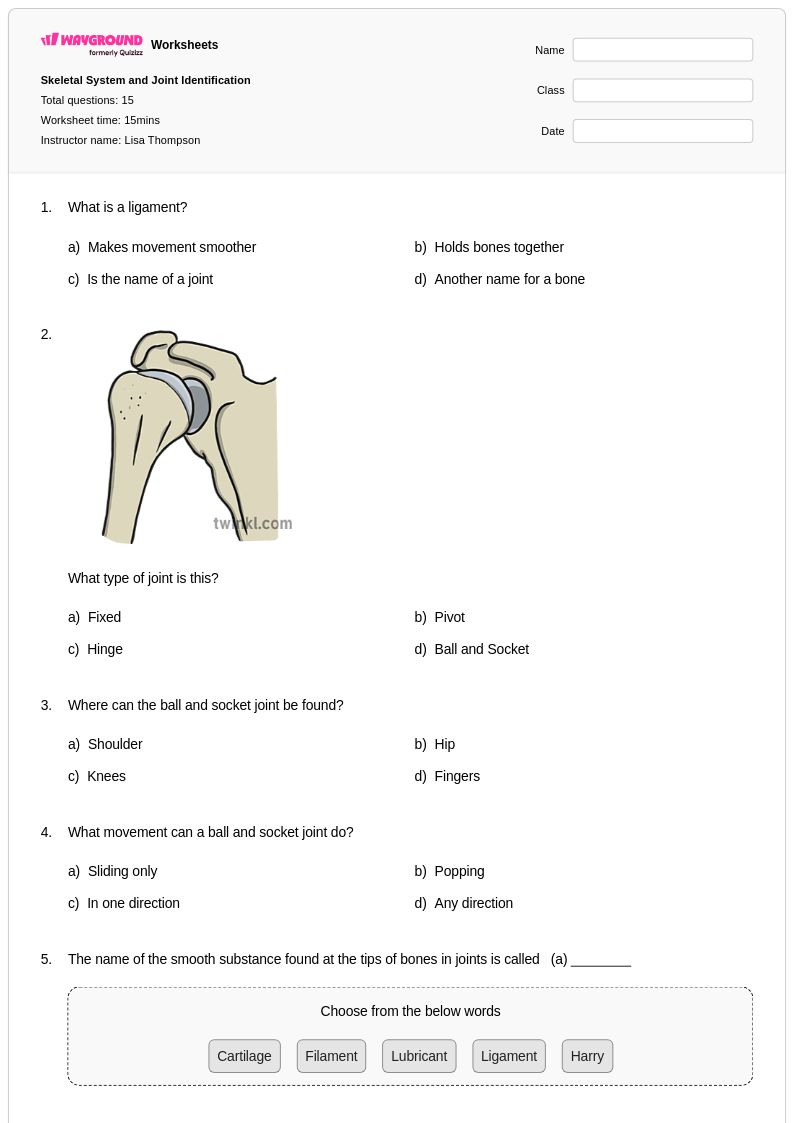
Effective practice activities include bone identification exercises using unlabeled diagrams, joint classification matching tasks, and scenario-based questions about fracture types and healing stages. Worksheets that require students to connect calcium regulation to bone density or link specific bones to muscular attachments push past memorization into applied understanding, which is where retention is strongest.
What mistakes do students commonly make when learning the skeletal system?
Students frequently confuse the axial and appendicular skeleton divisions, and they often misclassify joints by conflating structure with range of motion. Another common error is treating the skeletal system as purely structural, causing them to overlook its roles in hematopoiesis and mineral homeostasis. Targeted worksheet practice on these distinctions, especially with answer-key feedback, helps correct these misconceptions before assessments.
How do I differentiate skeletal system instruction for students with different skill levels?
For students who need foundational support, start with basic bone identification and simple labeling tasks before introducing functional or physiological content. More advanced students benefit from biomechanics problems involving lever systems and joint mechanics. On Wayground, teachers can also enable accommodations like Read Aloud for students who struggle with anatomical terminology in text form, or Reduced Answer Choices to lower cognitive load for students who need it.
How can I use Wayground's skeletal system worksheets in my classroom?
Wayground's skeletal system worksheets are available as printable PDFs for traditional classroom use and in digital formats for technology-integrated environments, including the option to host them as a quiz directly on Wayground. Teachers can use them for direct instruction support, formative assessment, remediation after a unit test, or as structured enrichment for students who need extension work. Each worksheet includes a complete answer key, making grading and feedback straightforward.
How does the skeletal system connect to the muscular system, and how do I teach that connection?
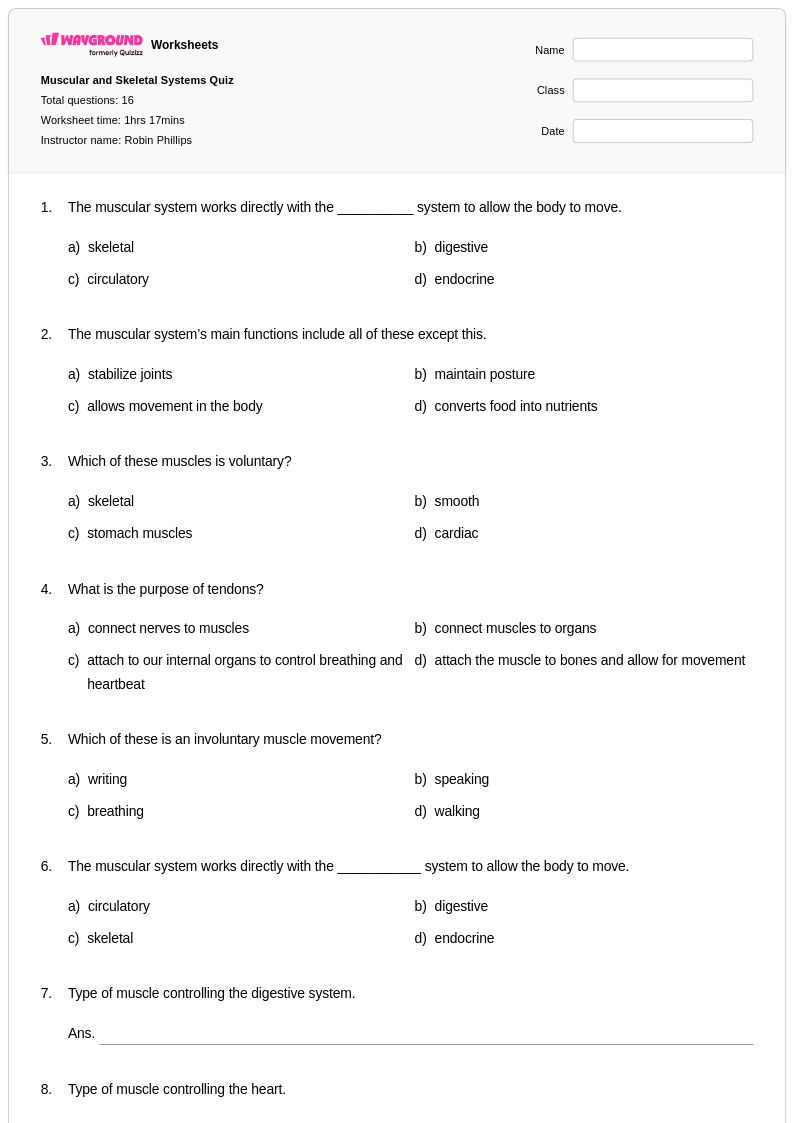
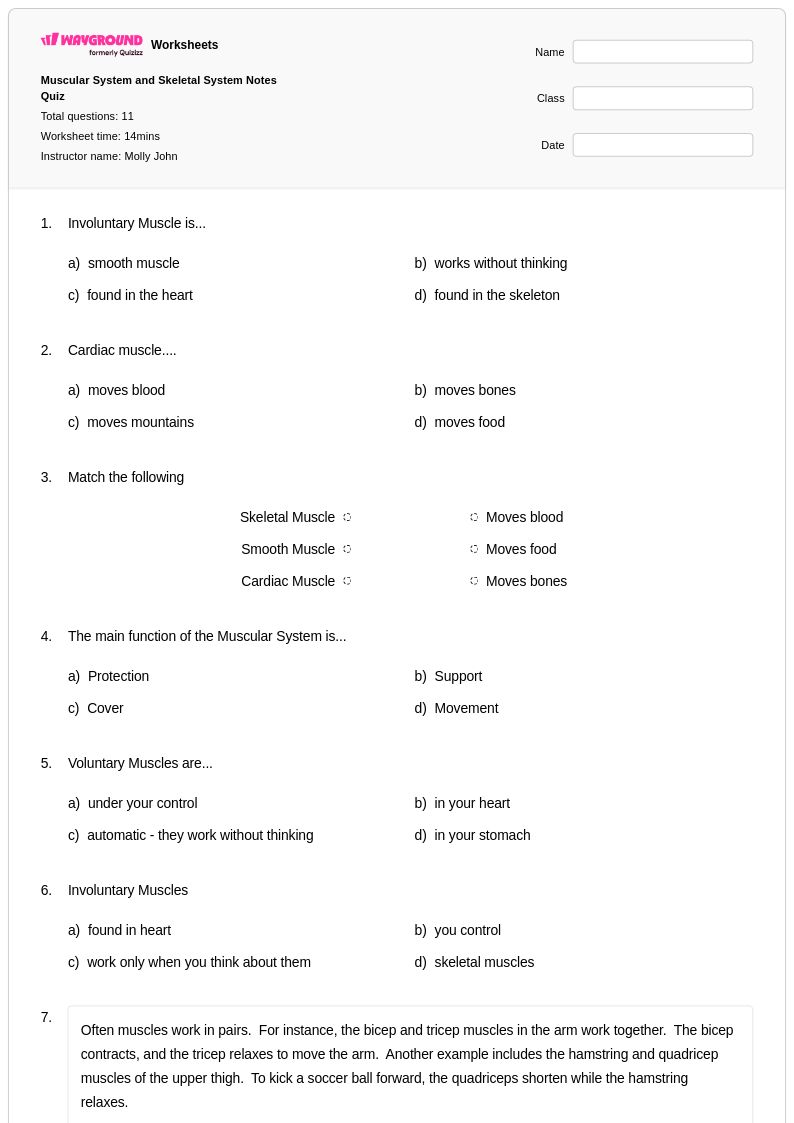
The skeletal and muscular systems work together as a lever system: bones act as rigid levers, joints as fulcrums, and muscles as the force-generating components. Teaching this connection explicitly helps students understand why skeletal anatomy matters beyond memorization. Worksheets that ask students to identify which muscles attach to specific bones, or to calculate mechanical advantage at a joint, make this interdependence concrete and assessable.