Free Printable Integumentary System Worksheets for Year 7
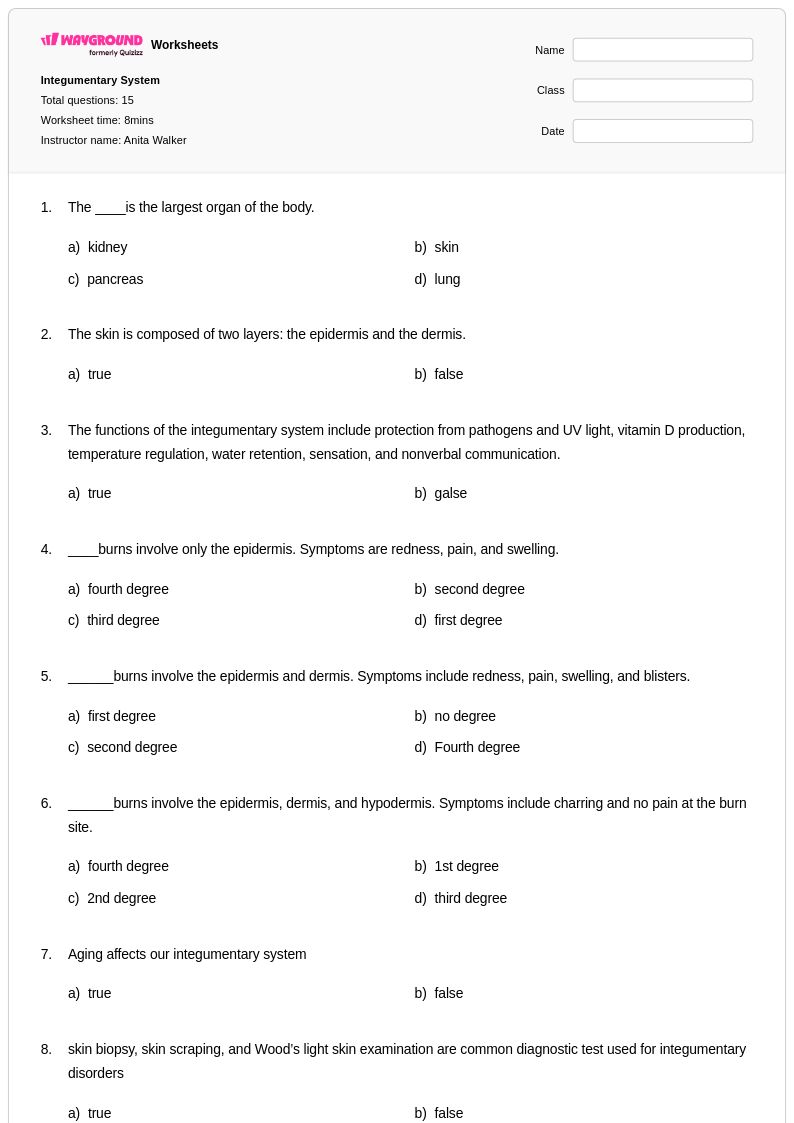
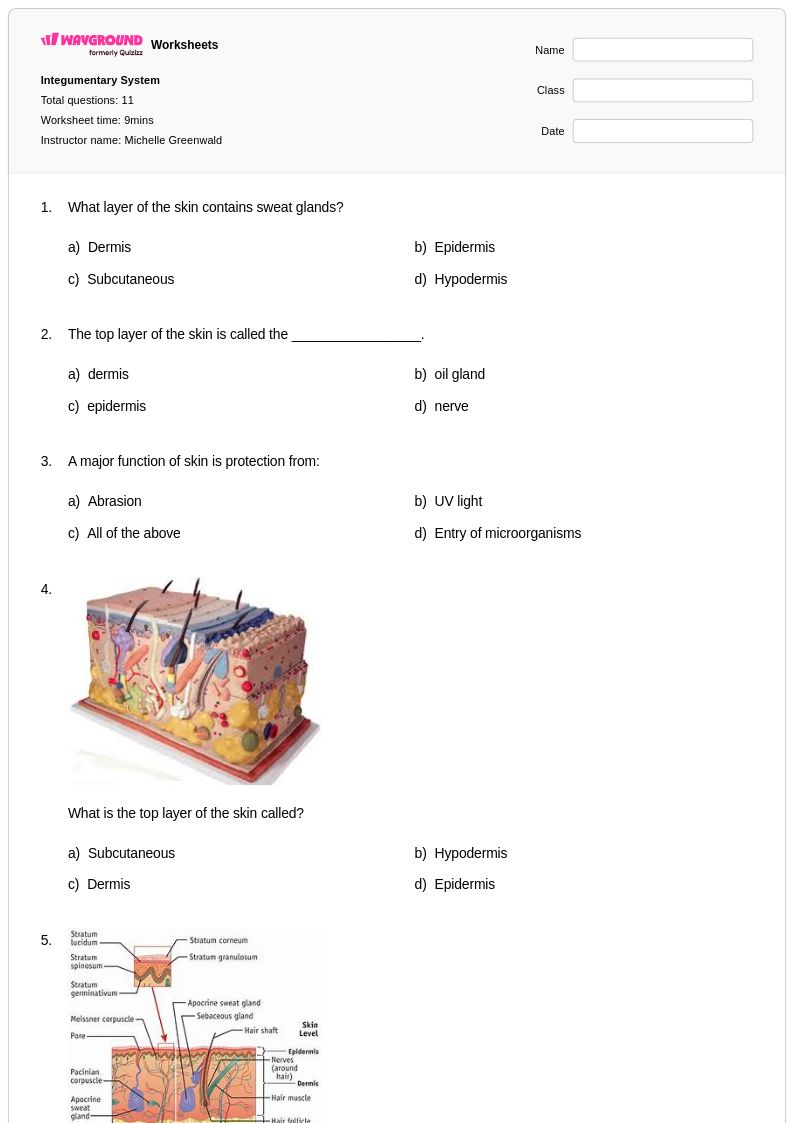
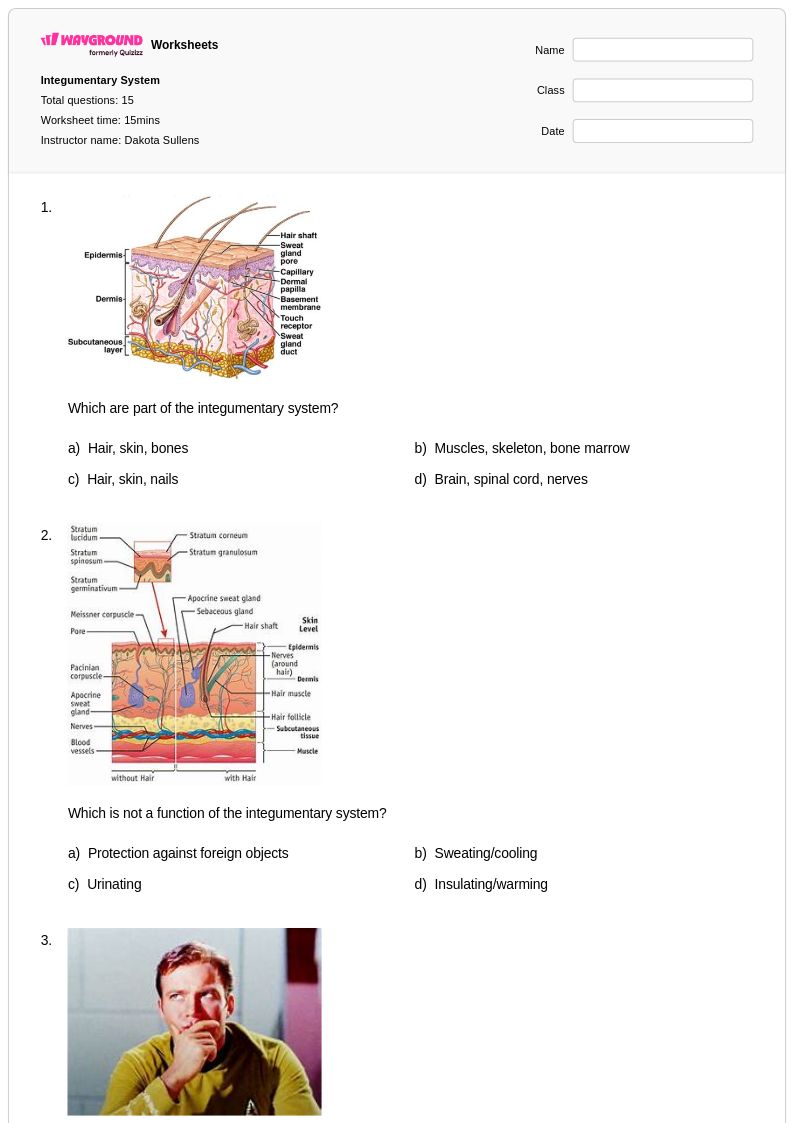
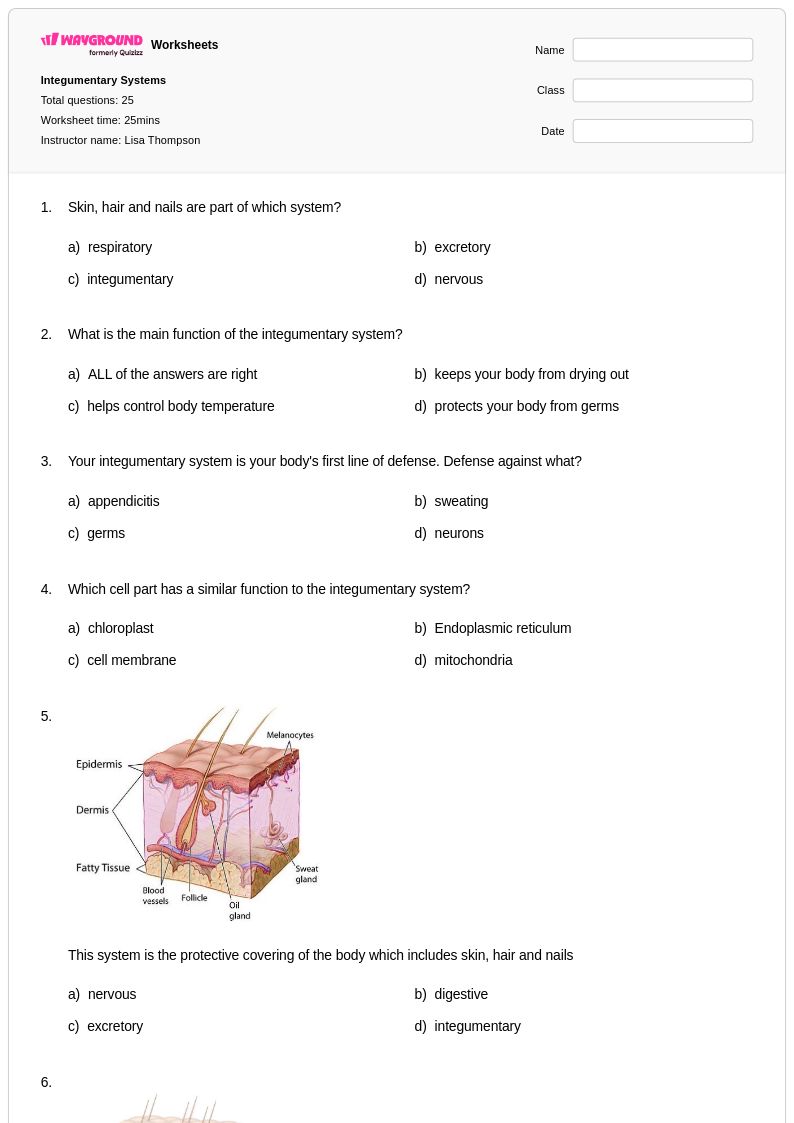
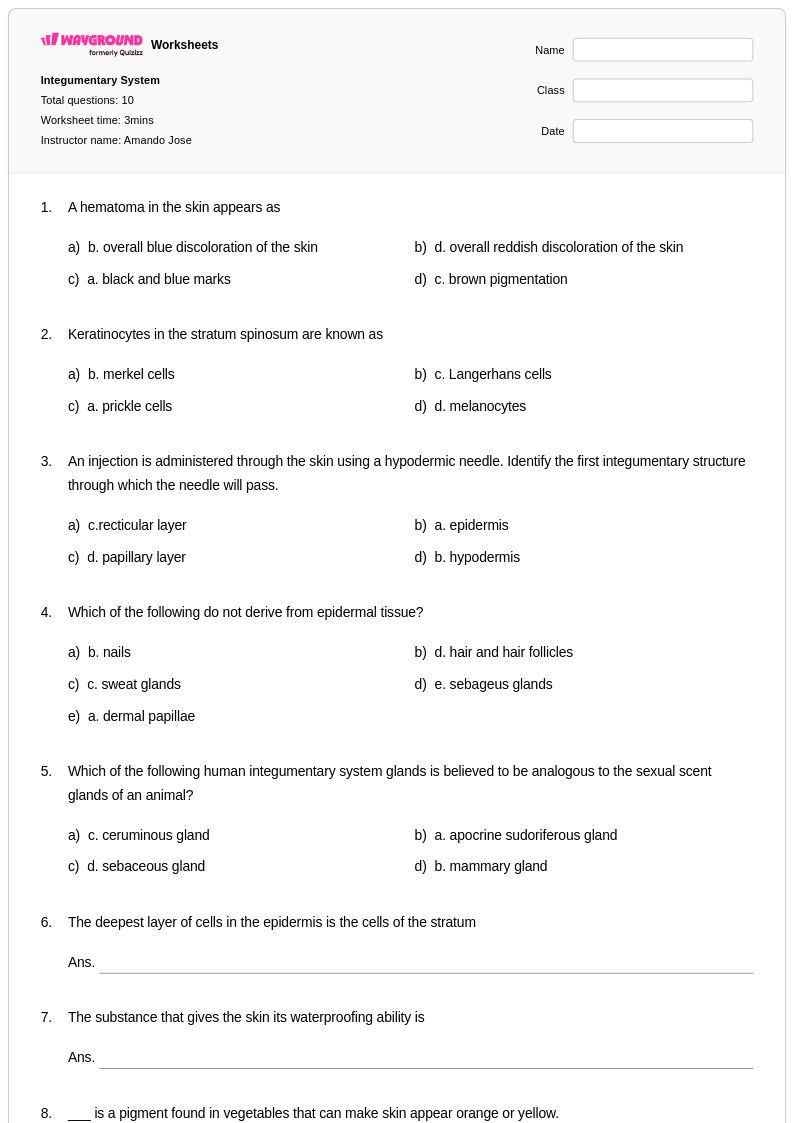
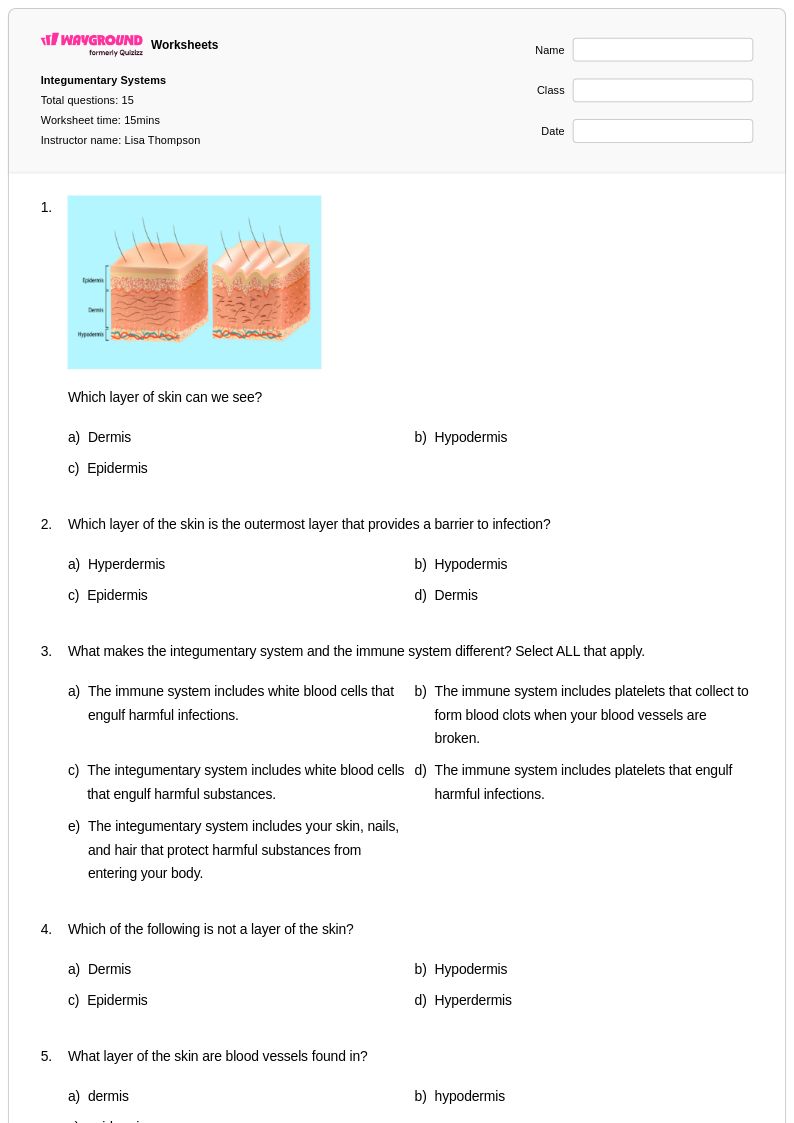
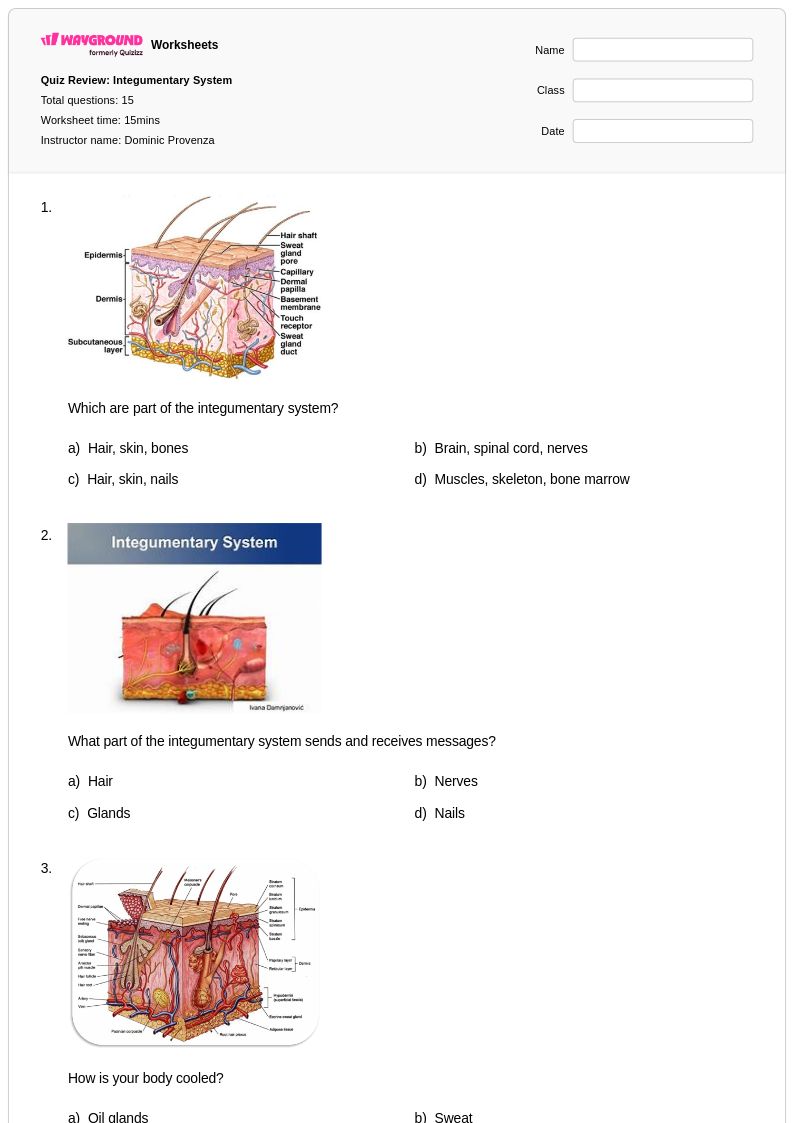
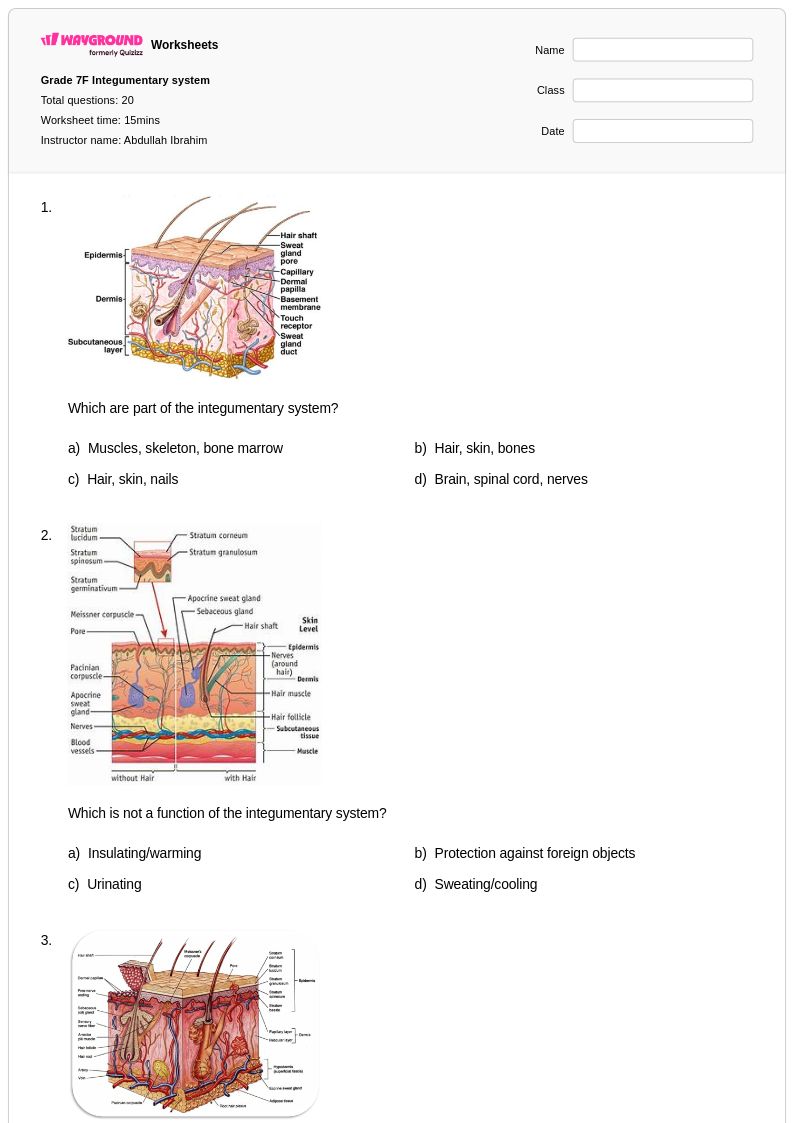
Year 7 integumentary system worksheets from Wayground help students master skin structure and function through engaging printables, practice problems, and comprehensive answer keys for effective biology learning.
Explore printable Integumentary System worksheets for Year 7
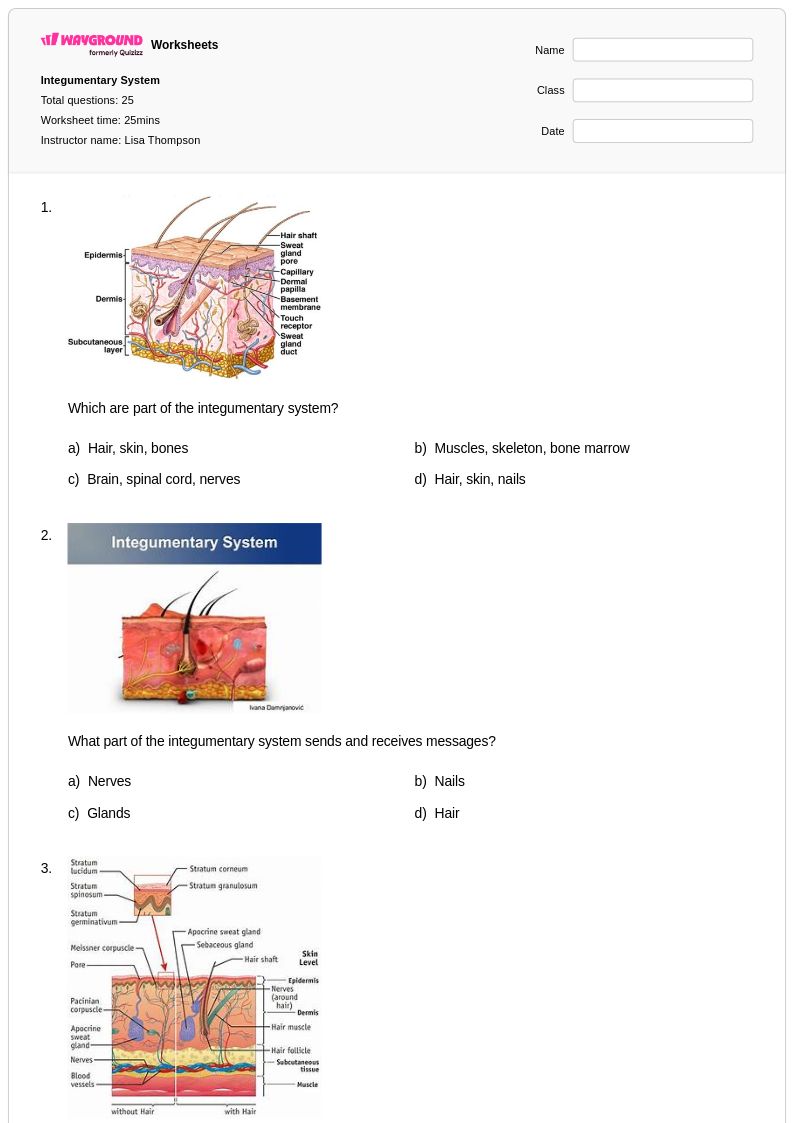
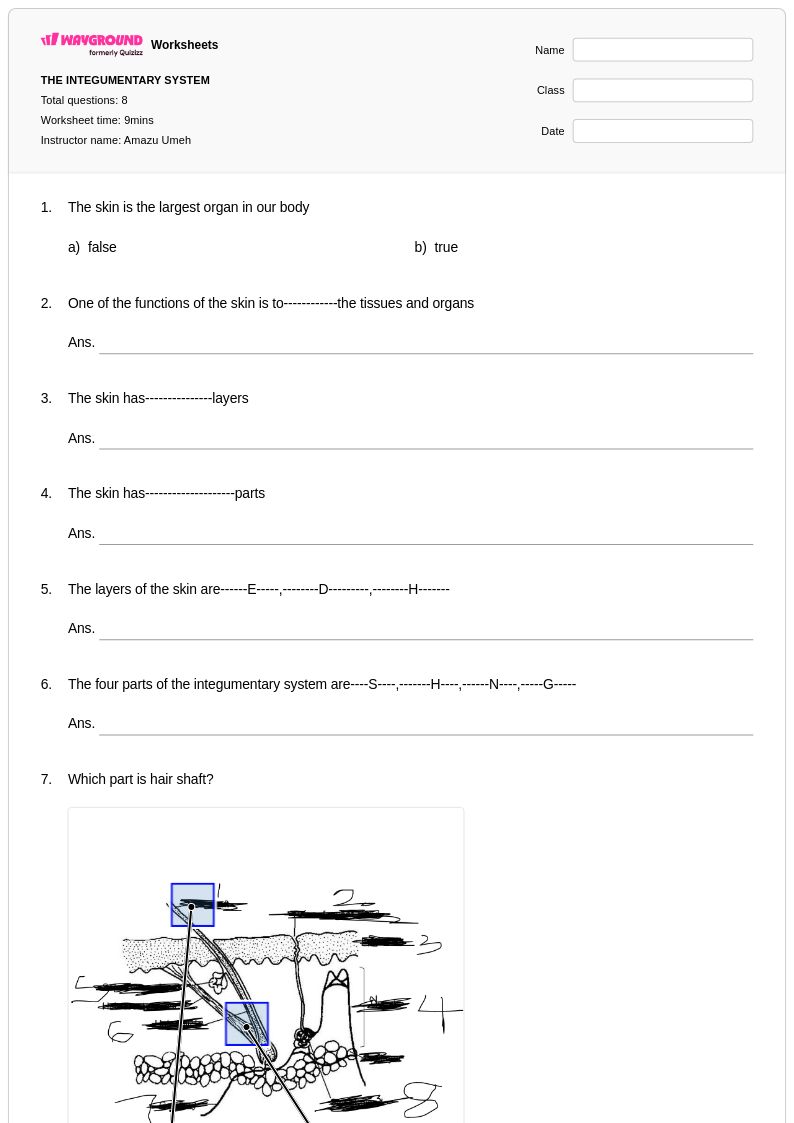
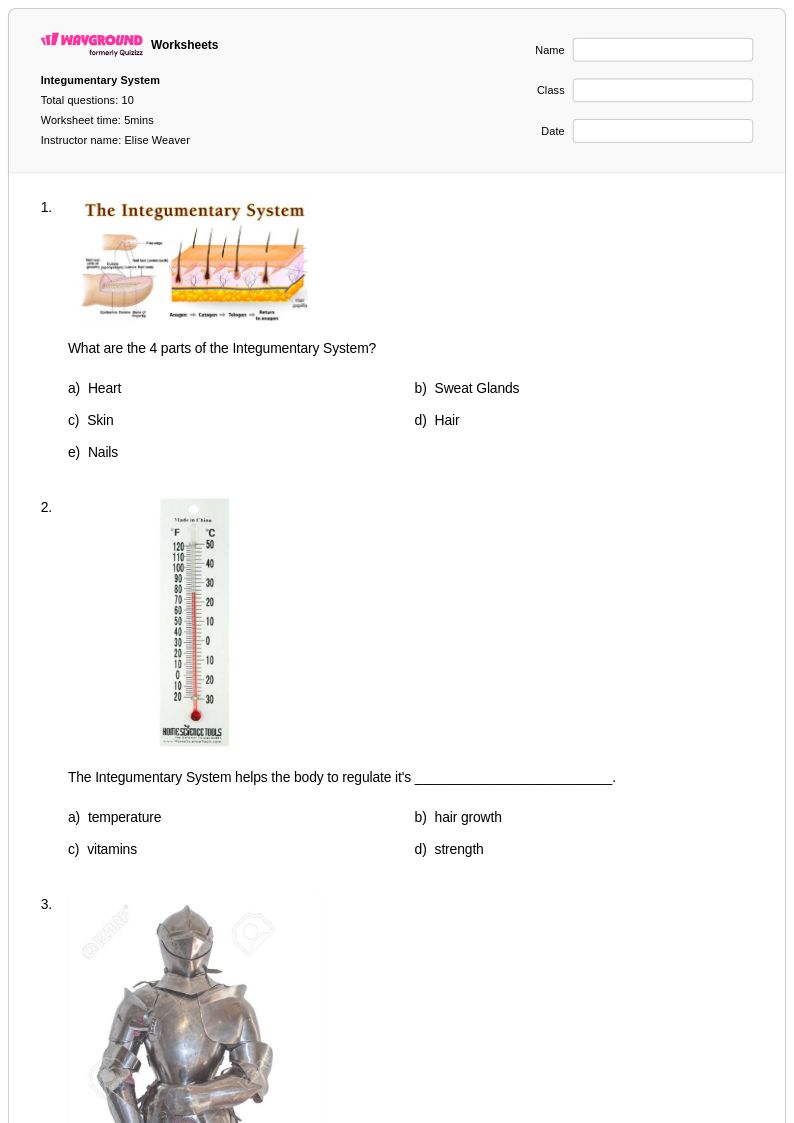
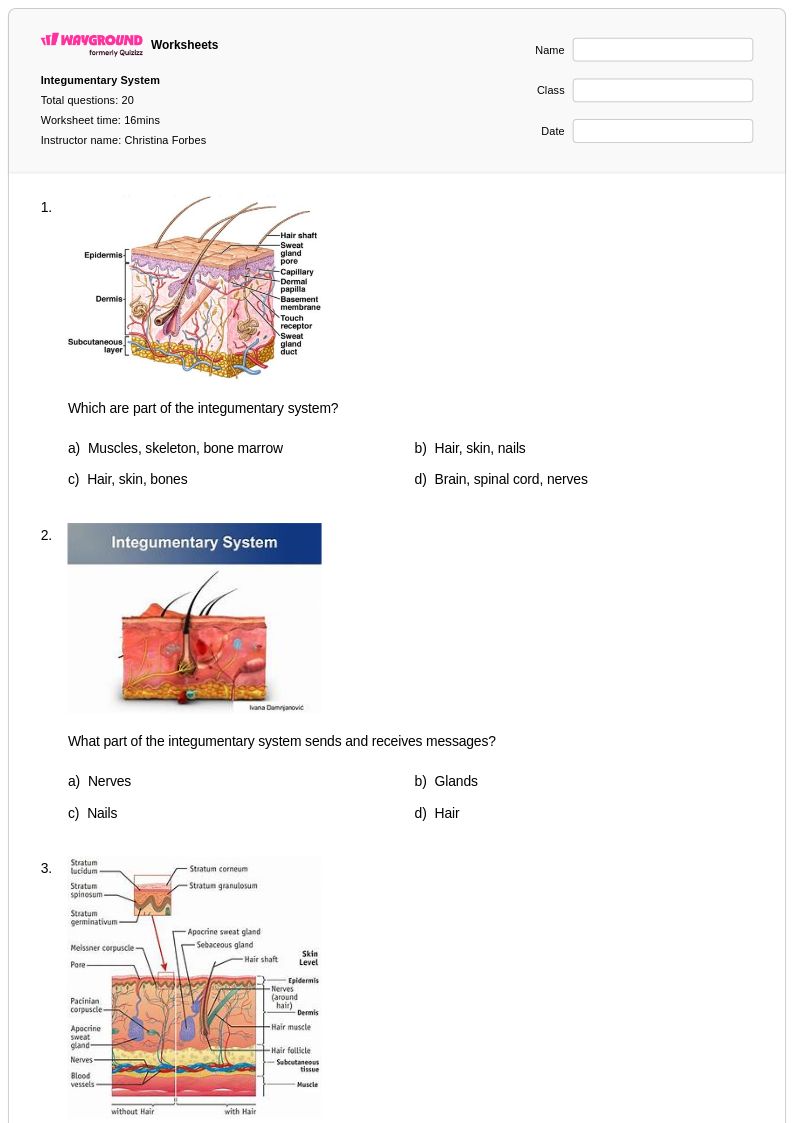
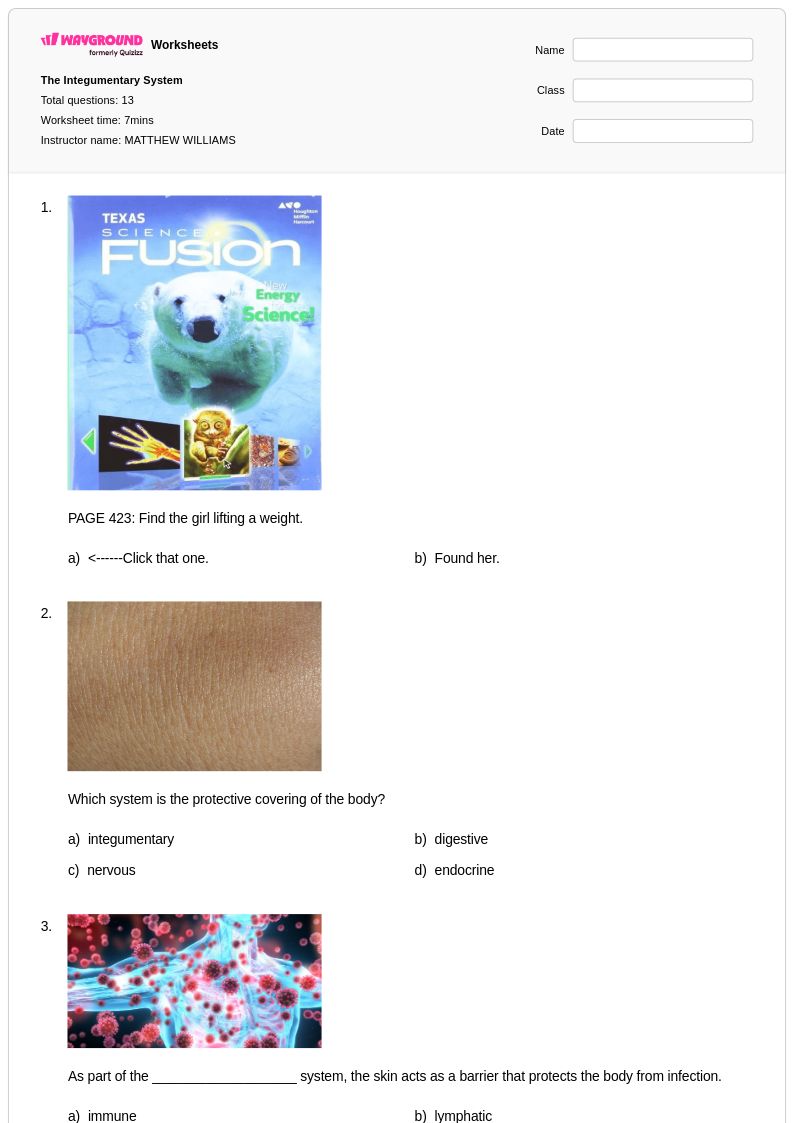
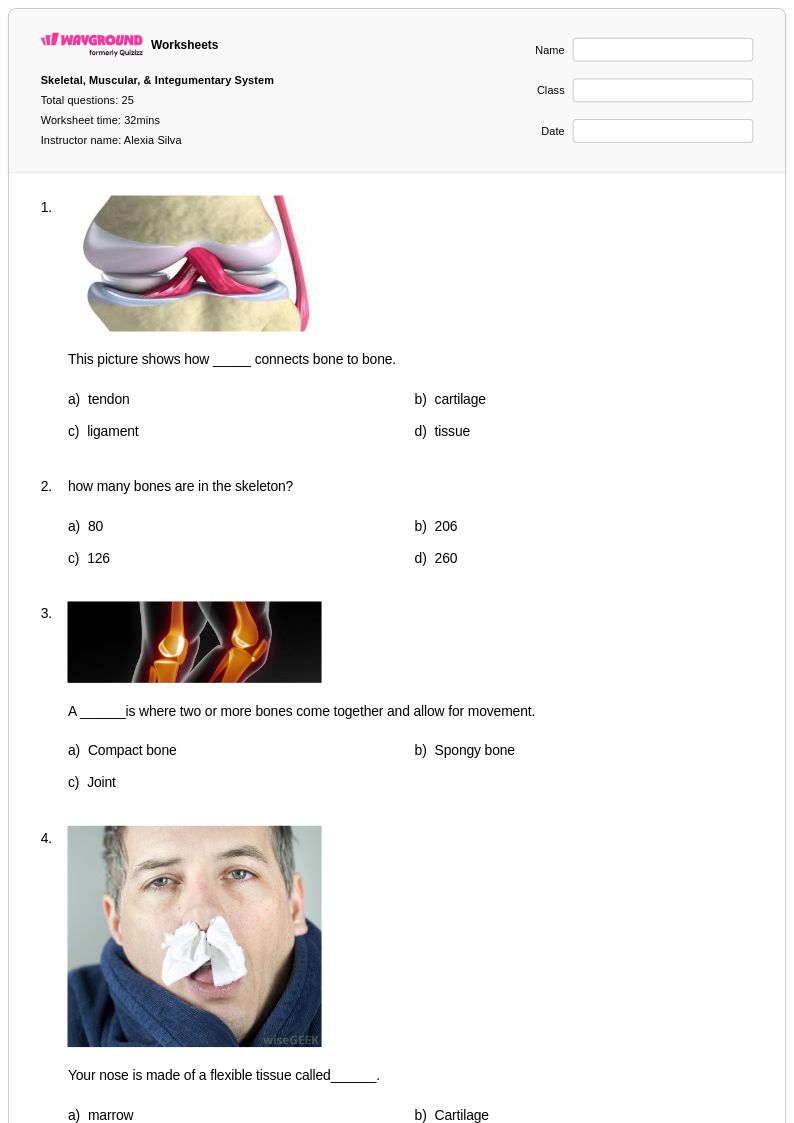
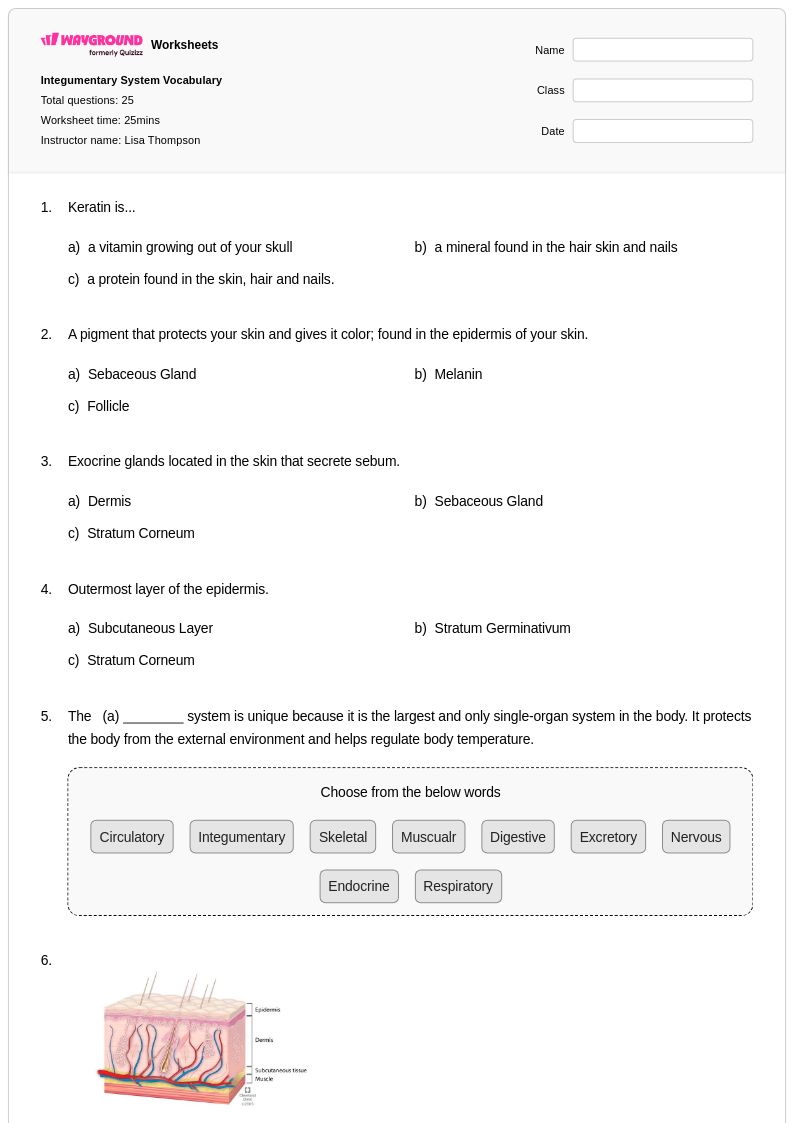
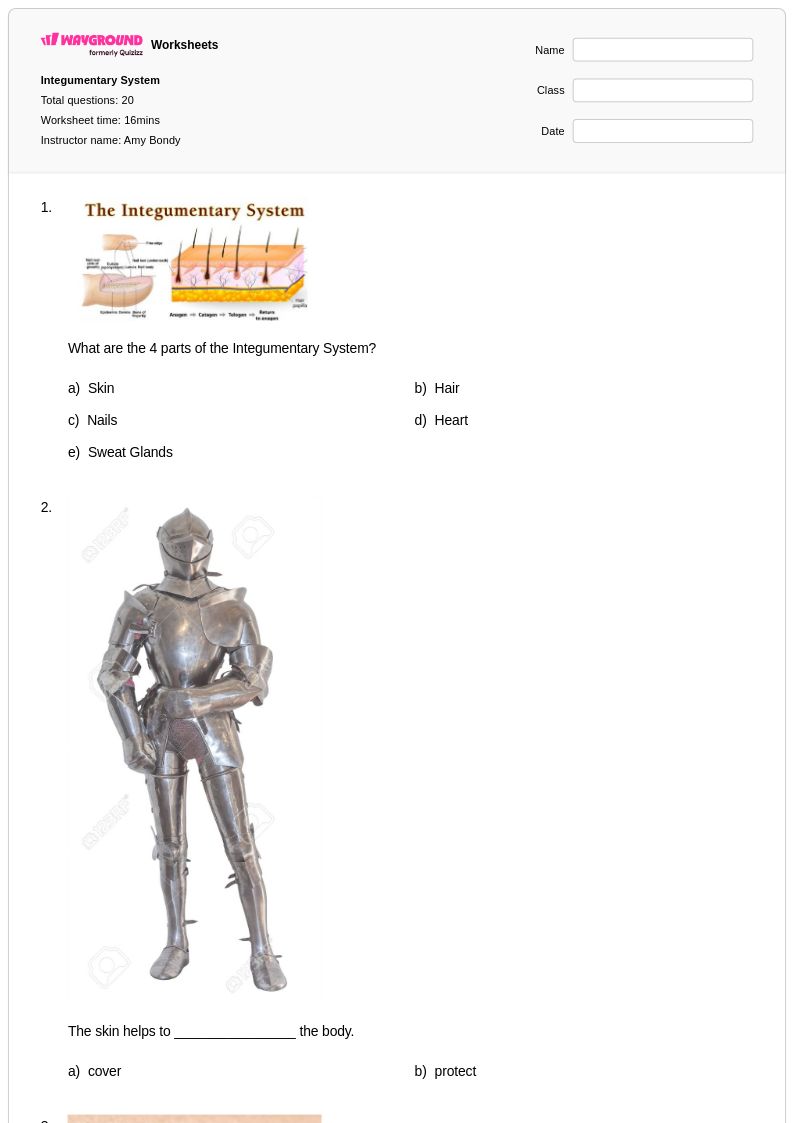
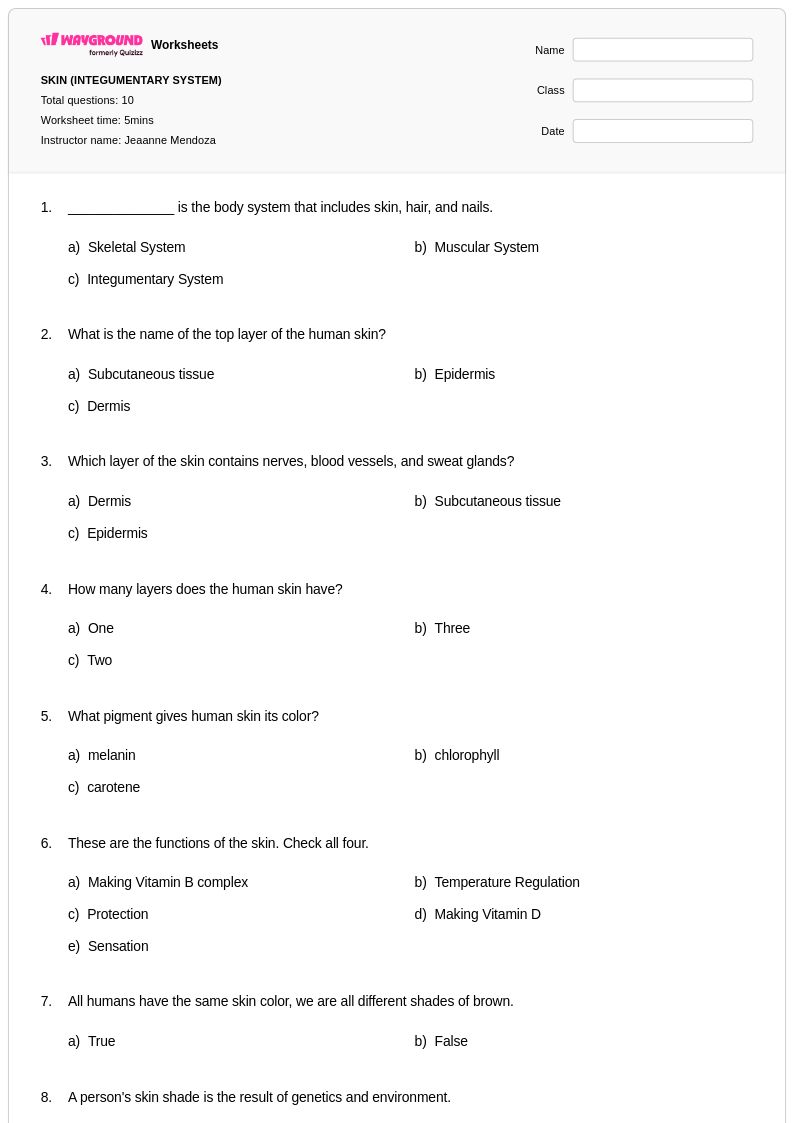
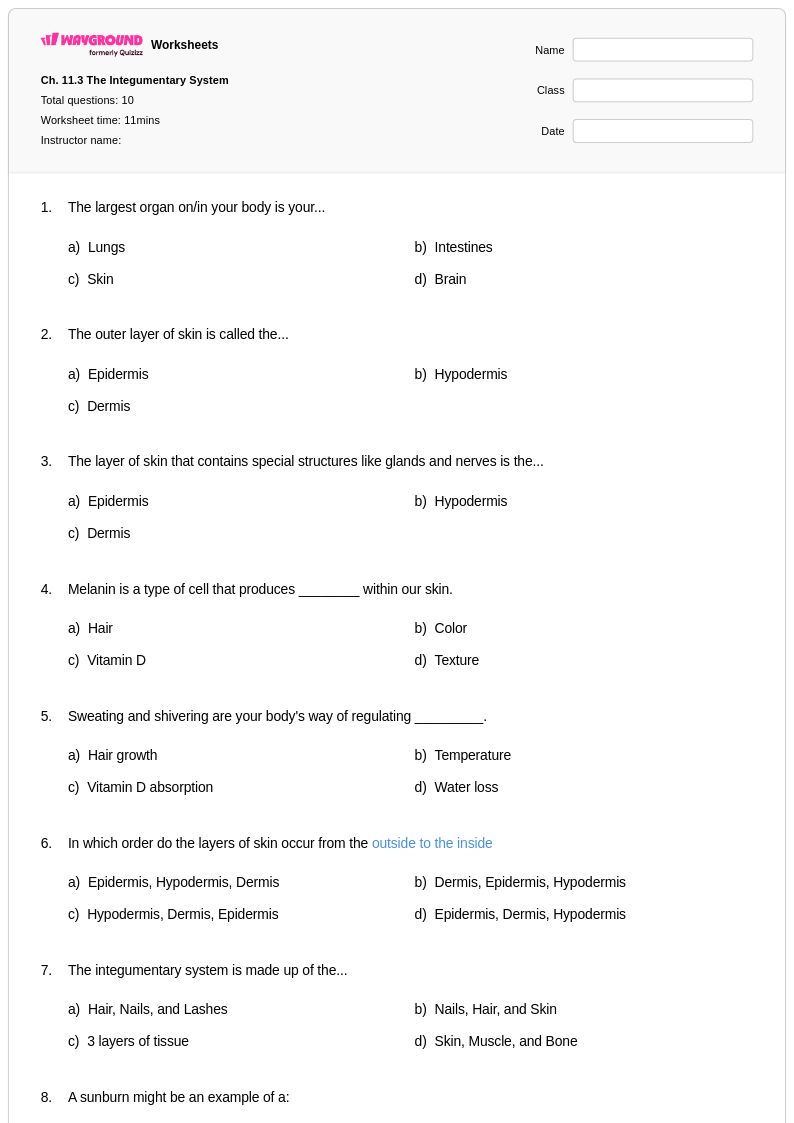
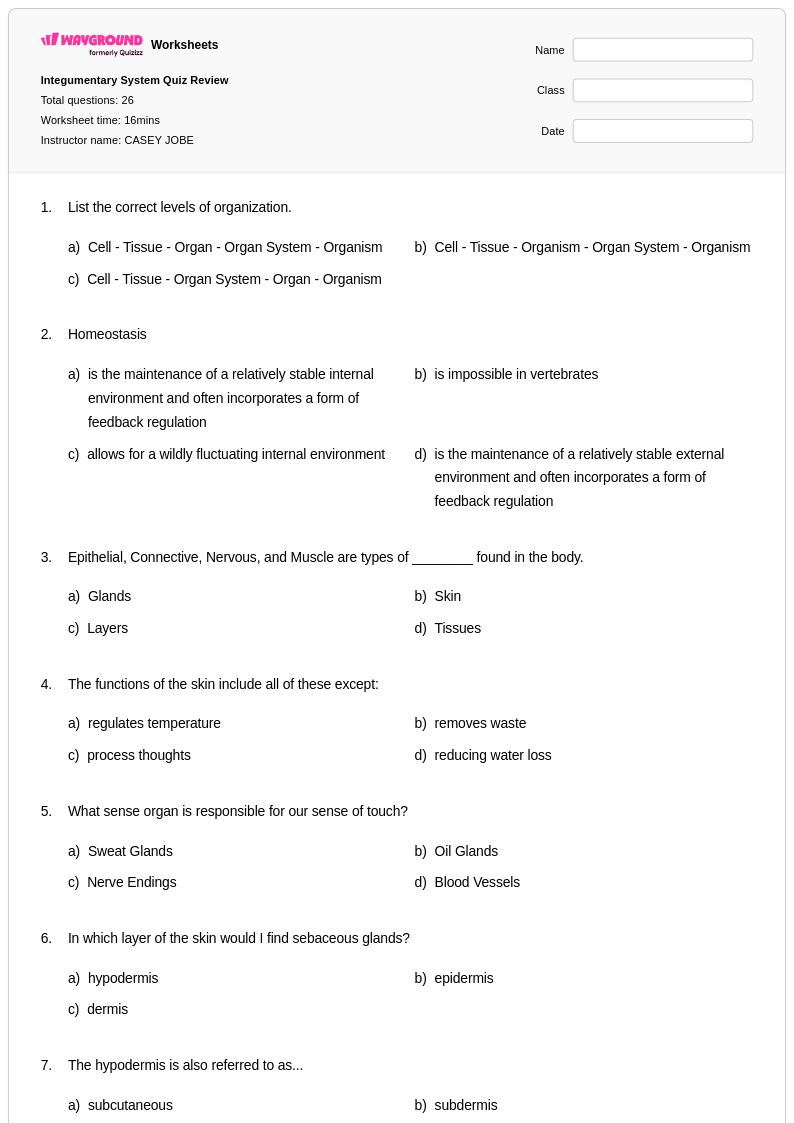
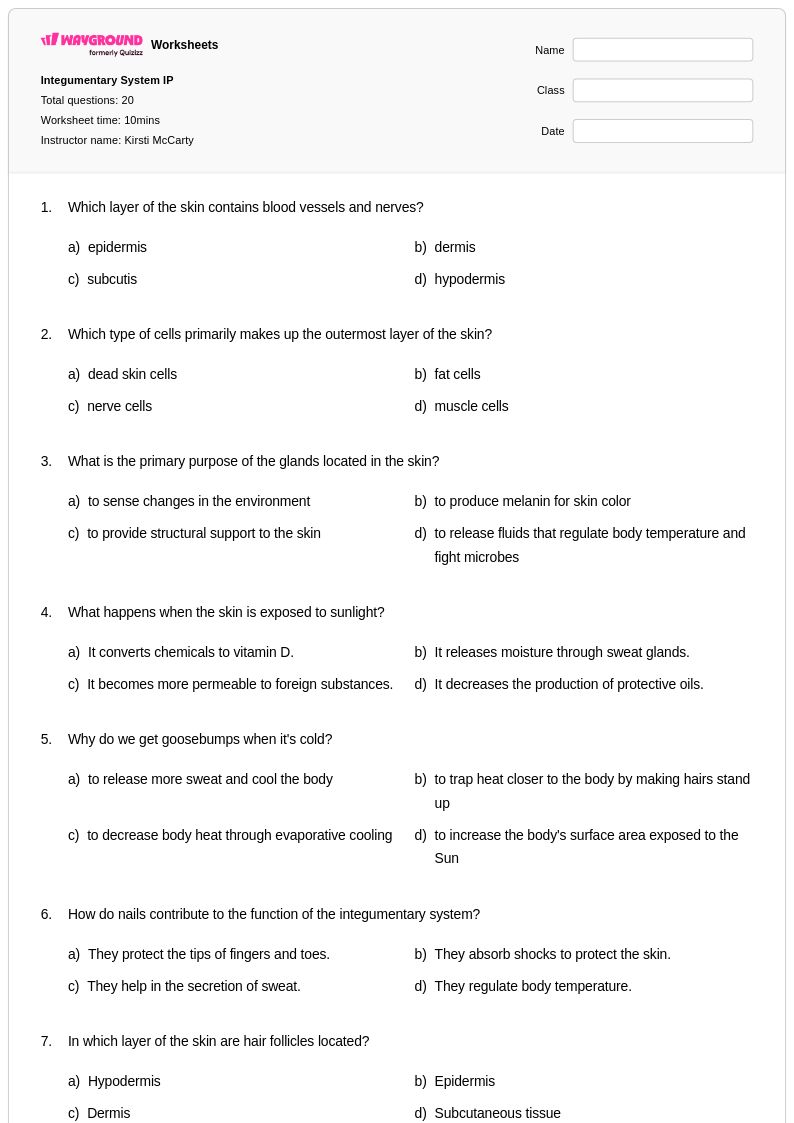
Integumentary System worksheets for Year 7 students available through Wayground (formerly Quizizz) provide comprehensive coverage of the human body's protective barrier and its essential functions. These expertly designed educational materials guide seventh-grade learners through detailed exploration of skin anatomy, including the epidermis, dermis, and hypodermis layers, while examining crucial processes such as thermoregulation, sensation, and vitamin D synthesis. The worksheets strengthen critical thinking skills through practice problems that challenge students to identify skin structures, analyze how the integumentary system maintains homeostasis, and understand the relationship between skin health and overall body function. Each resource includes complete answer keys and is available as free printables in convenient PDF format, making it easy for educators to incorporate hands-on learning activities that reinforce understanding of this vital body system.
Wayground (formerly Quizizz) supports science educators with an extensive collection of millions of teacher-created integumentary system resources specifically designed to meet Year 7 learning objectives and curriculum standards. The platform's advanced search and filtering capabilities enable teachers to quickly locate worksheets that match their specific instructional needs, whether focusing on basic skin structure identification or more complex topics like wound healing and skin disorders. These differentiation tools allow educators to customize content for diverse learning styles and academic levels, providing both remediation support for struggling students and enrichment opportunities for advanced learners. Available in both printable PDF format and interactive digital versions, these worksheet collections streamline lesson planning while offering flexible options for skill practice, formative assessment, and reinforcement of integumentary system concepts throughout the academic year.
FAQs
How do I teach the integumentary system to biology students?
Start by grounding students in the three layers of skin — epidermis, dermis, and hypodermis — before expanding to accessory structures like hair follicles, nails, and glands. Use labeled diagrams to show structural relationships, then connect each structure to its function (e.g., sebaceous glands and moisture regulation, eccrine glands and thermoregulation). Linking integumentary functions to homeostasis helps students see why this system matters beyond just 'the skin.'
What are the most common misconceptions students have about the integumentary system?
A frequent misconception is that skin is a passive barrier rather than an active, dynamic organ system. Students often underestimate the role of the integumentary system in thermoregulation, vitamin D synthesis, and immune defense. Another common error is confusing the epidermis and dermis — students may not realize the epidermis is avascular and relies on the dermis for nutrient delivery. Addressing these gaps early prevents compounding errors when students study wound healing or skin disorders.
What types of practice exercises help students master skin anatomy and function?
Diagram labeling activities are highly effective for reinforcing the layers of skin and the location of structures like Meissner's corpuscles, sweat glands, and hair follicles. Short-answer and scenario-based questions — such as analyzing what happens to thermoregulation during a fever — push students beyond memorization into application. Combining structural identification with functional reasoning is key to building durable understanding of integumentary physiology.
How does the integumentary system connect to other body systems, and how do I help students understand those connections?
The integumentary system interfaces directly with the nervous system (sensory receptors), immune system (Langerhans cells), and musculoskeletal system (nail and hair matrix activity). Help students visualize these connections by using comparison charts or case studies — for example, examining how a burn injury affects fluid balance and immune response simultaneously. Emphasizing systemic integration prepares students for the broader concept of homeostasis as a whole-body process.
How do I use Wayground's integumentary system worksheets in my classroom?
Wayground's integumentary system worksheets are available as printable PDFs for traditional classroom use and in digital formats for technology-integrated or hybrid environments, giving teachers flexibility regardless of their setup. Each worksheet includes a detailed answer key, which supports independent student review as well as teacher-led correction. Teachers can also host worksheets as a quiz directly on Wayground, enabling real-time engagement and immediate feedback during class or as assigned homework.
How can I differentiate integumentary system instruction for students at different levels?
For struggling learners, start with simplified diagrams that label only the major skin layers before introducing accessory structures. Advanced students can be challenged with pathology-based questions — analyzing conditions like psoriasis, alopecia, or burns — that require them to apply structural knowledge to disease processes. On Wayground, teachers can apply individual accommodations such as read aloud, reduced answer choices, and extended time to specific students, ensuring every learner engages with the material at an appropriate level without disrupting the rest of the class.