Free Printable Equivalent Expressions Worksheets for Year 5
Discover free Year 5 equivalent expressions worksheets and printables from Wayground that help students master identifying and creating mathematical expressions with equal values through engaging practice problems and comprehensive answer keys.
Explore printable Equivalent Expressions worksheets for Year 5
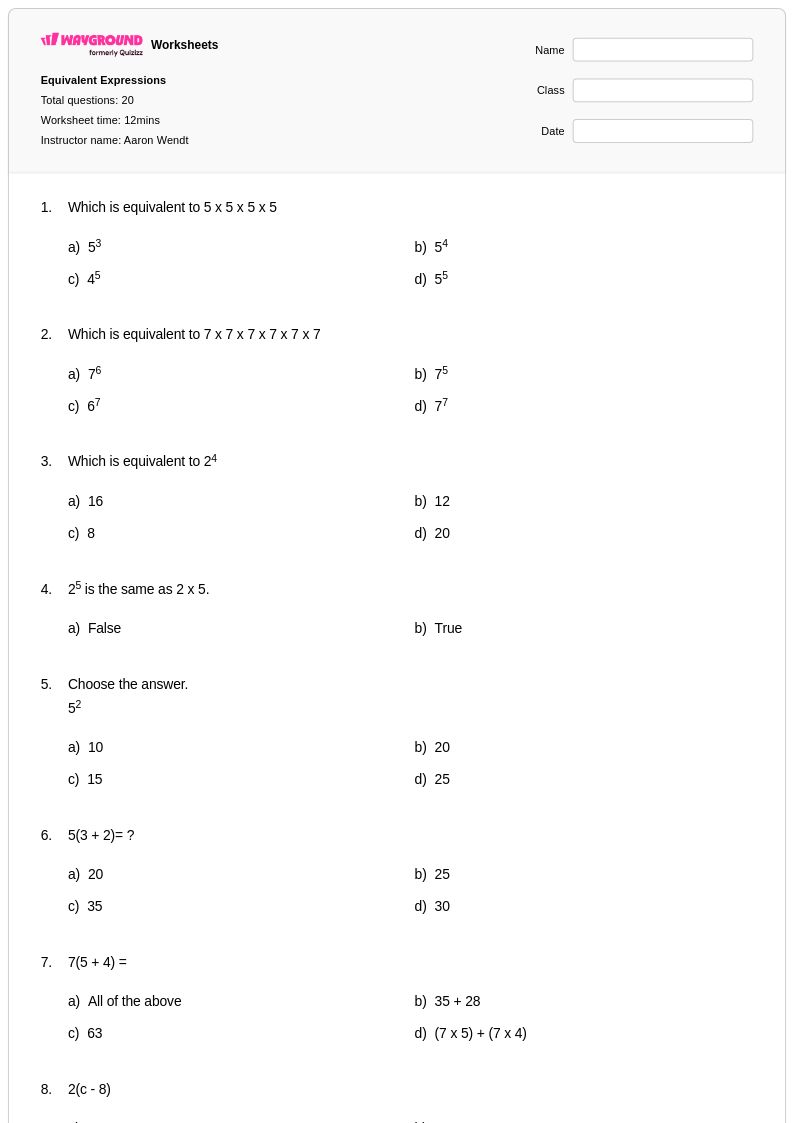
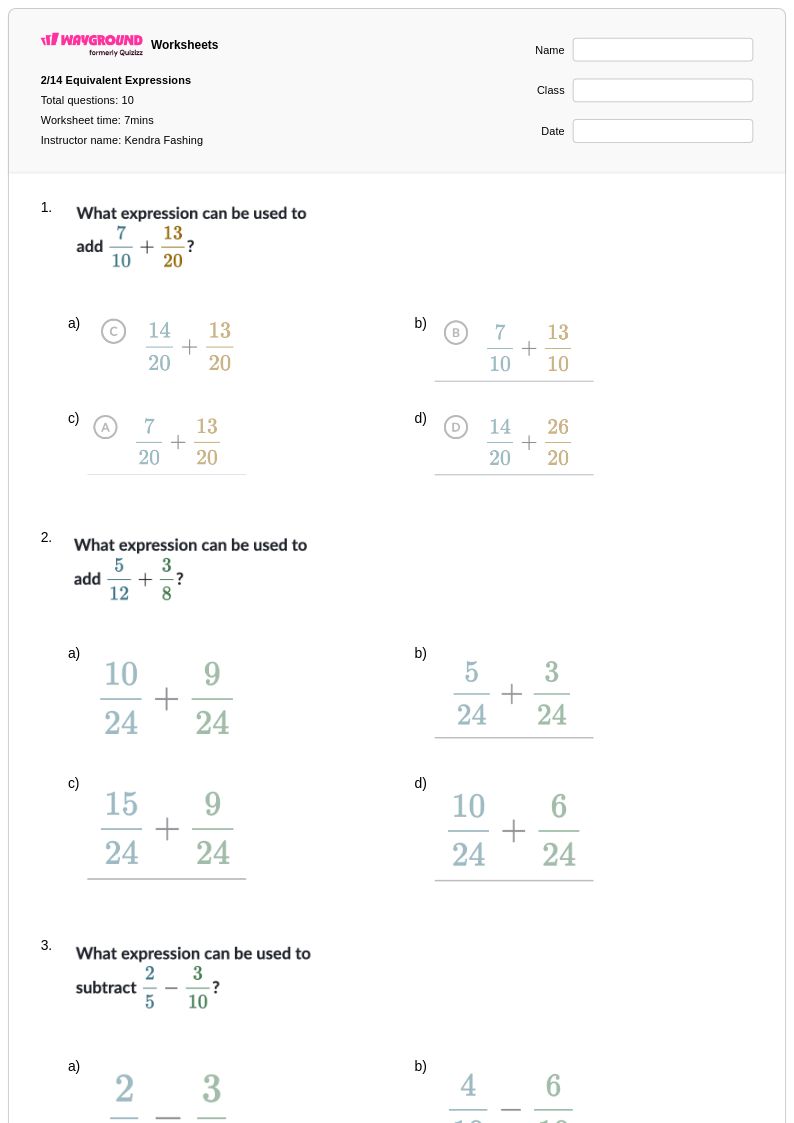
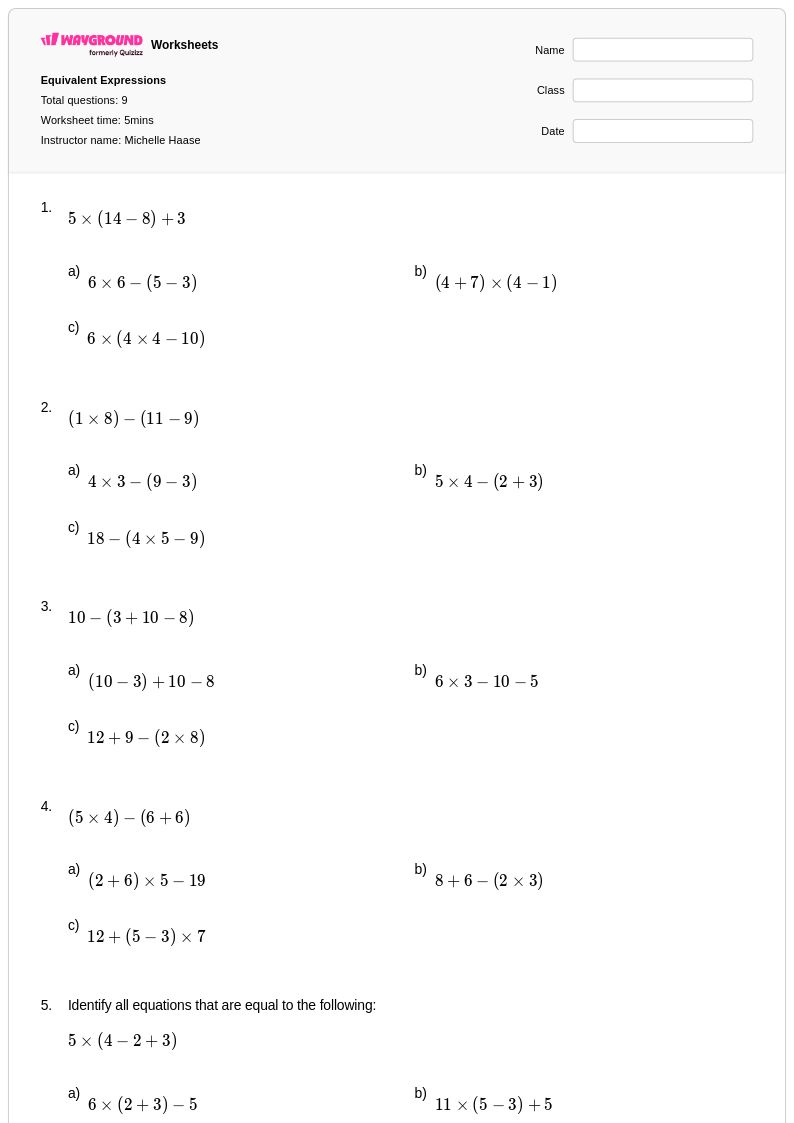
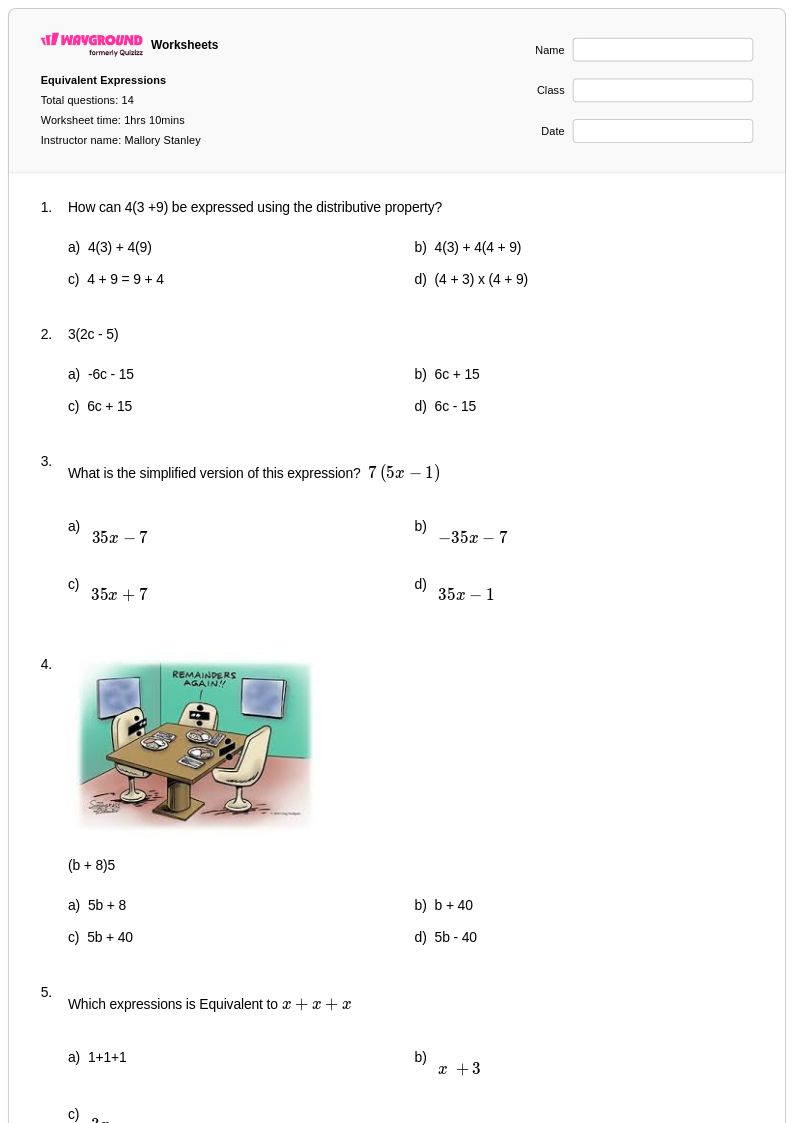
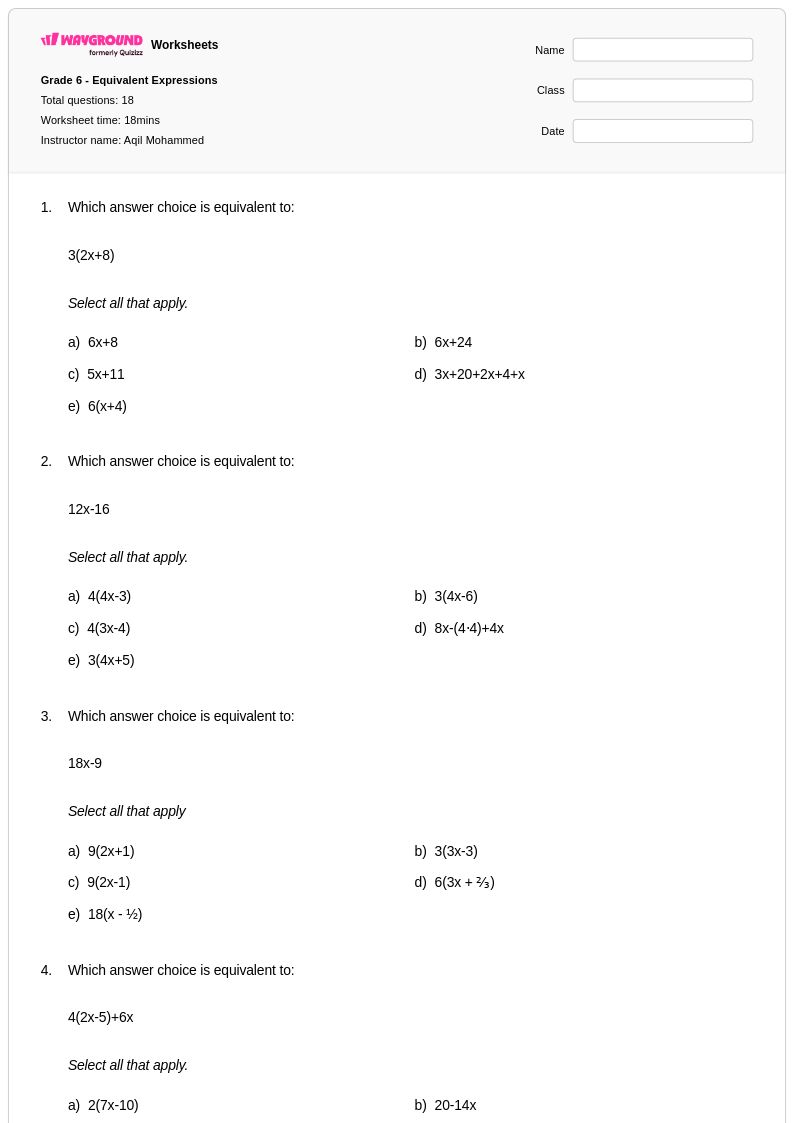
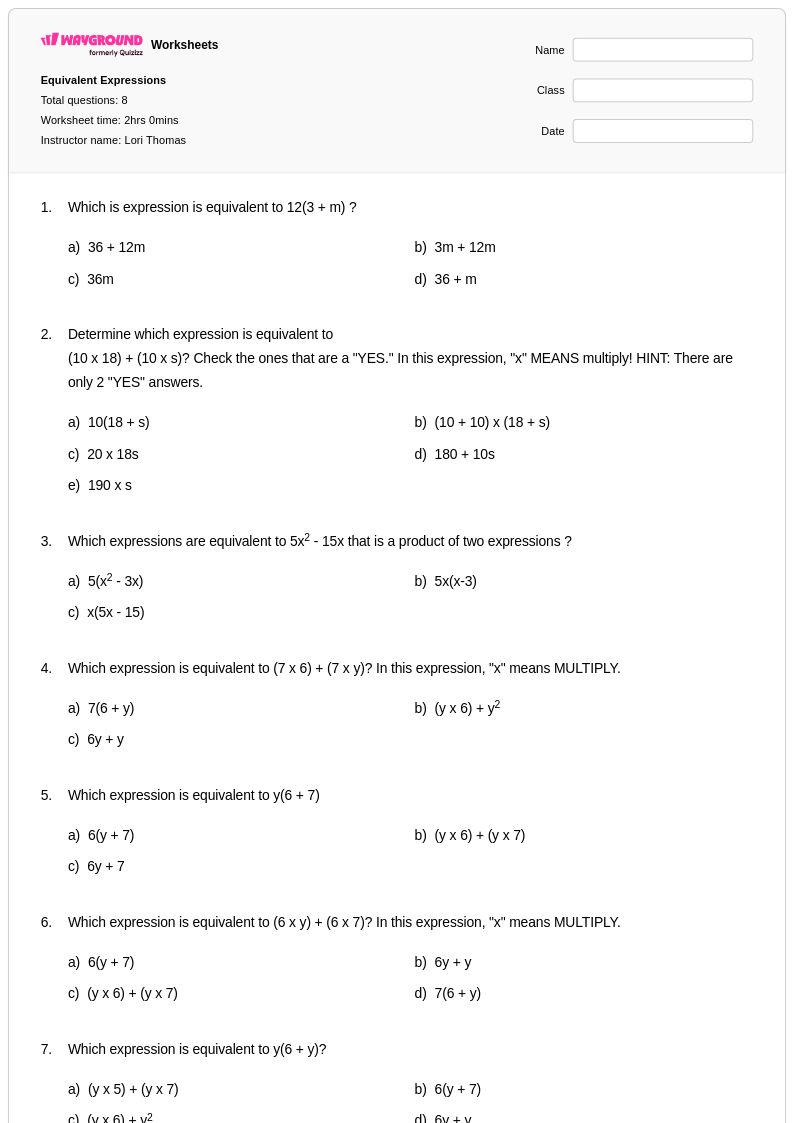
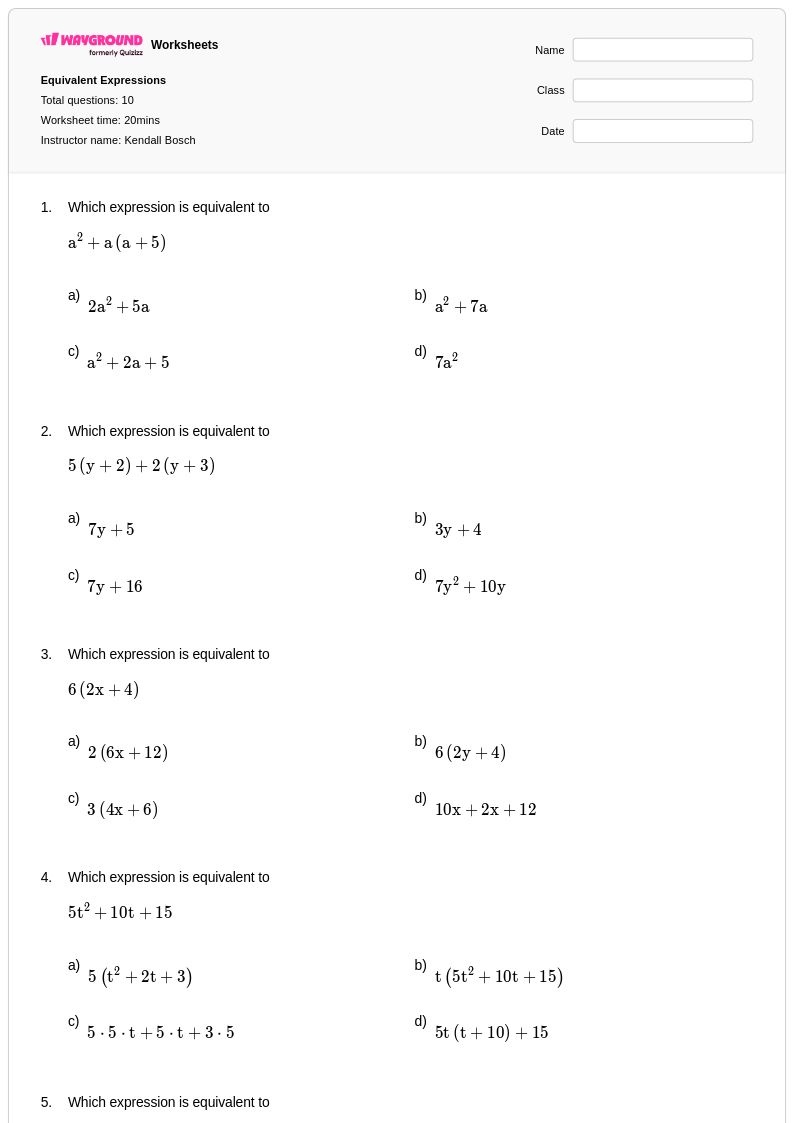
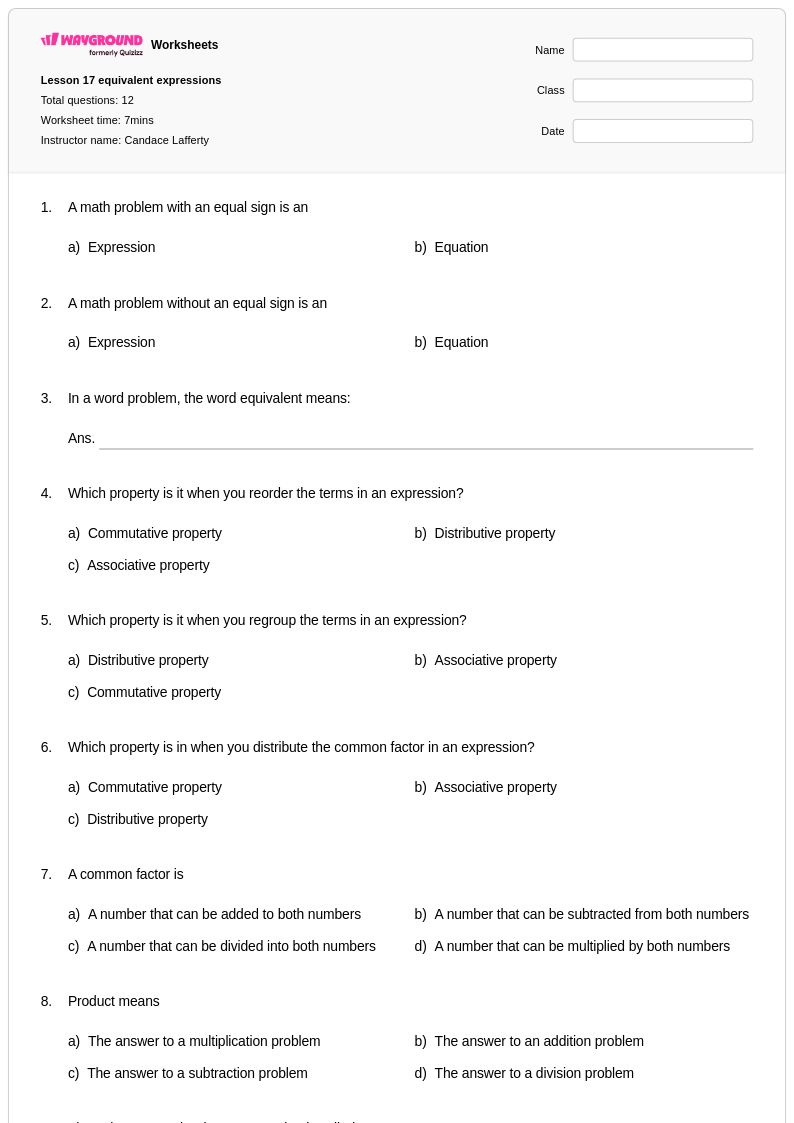
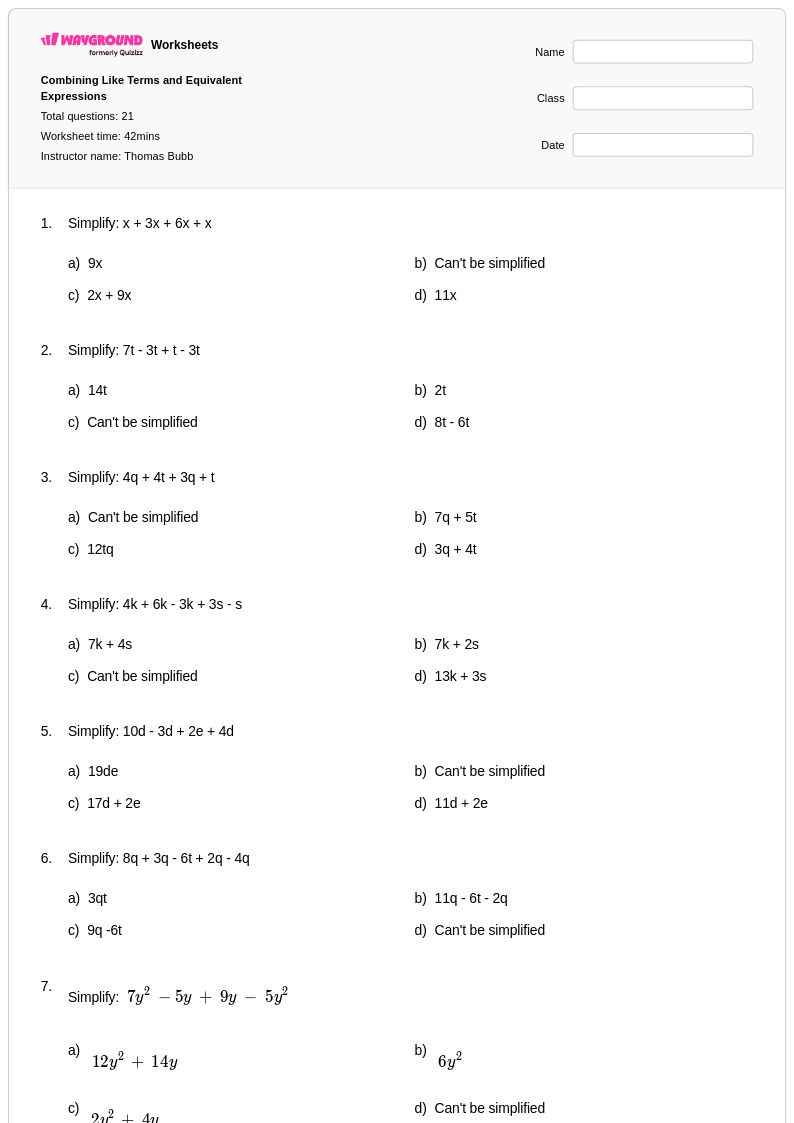
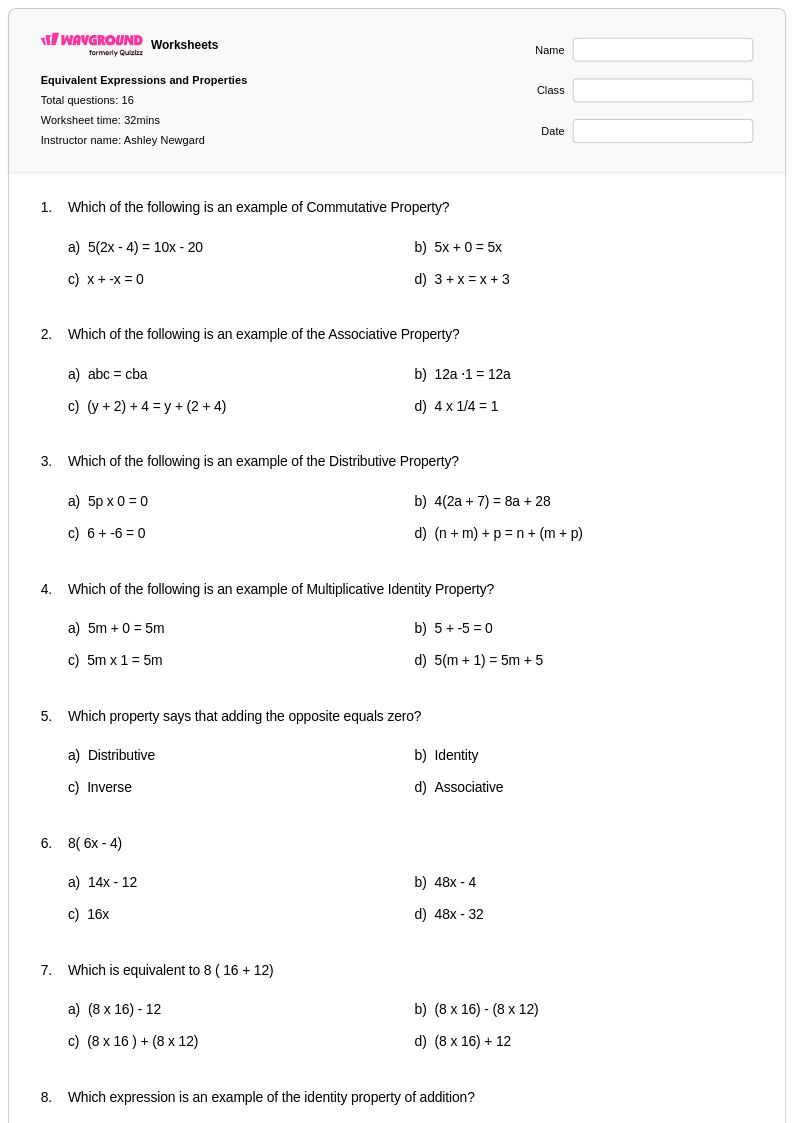
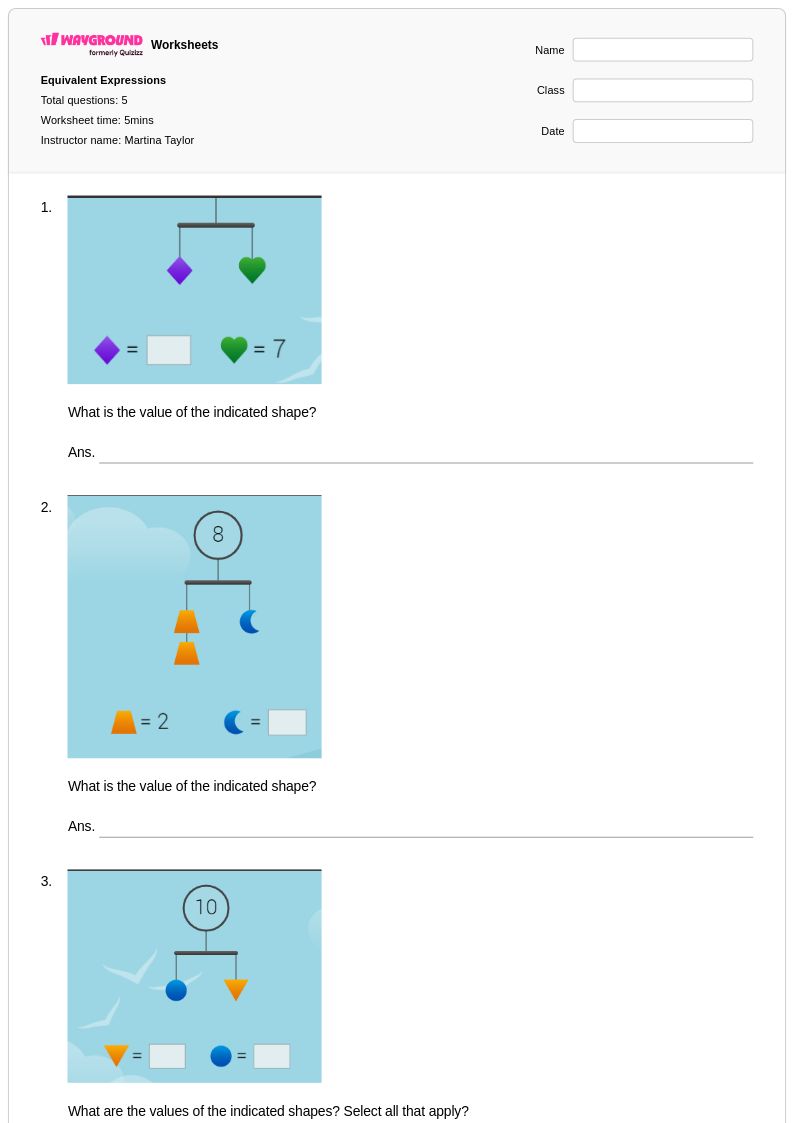
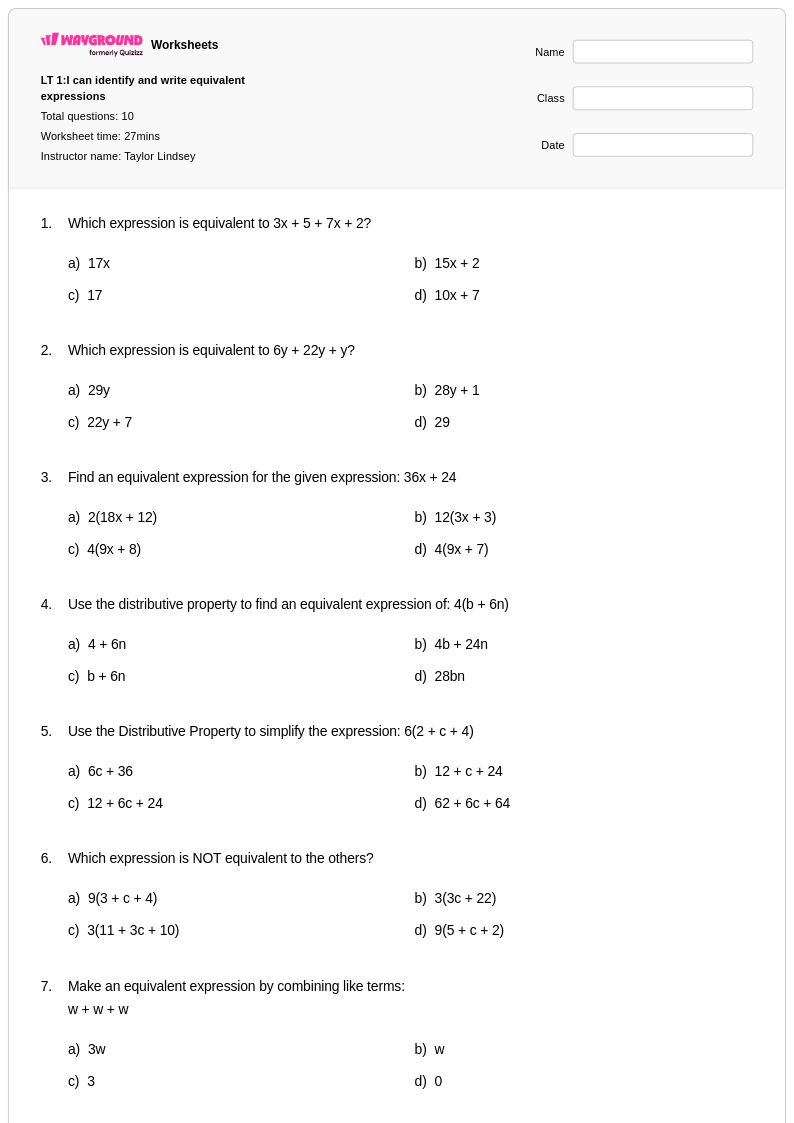
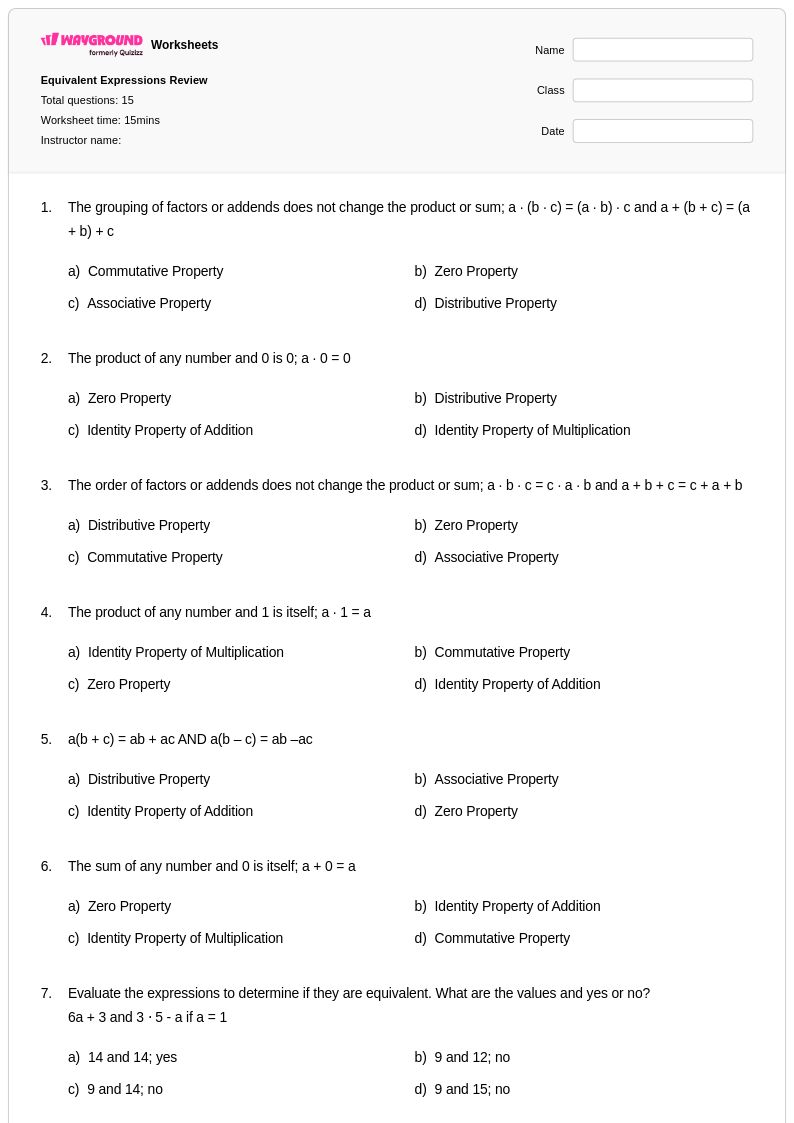
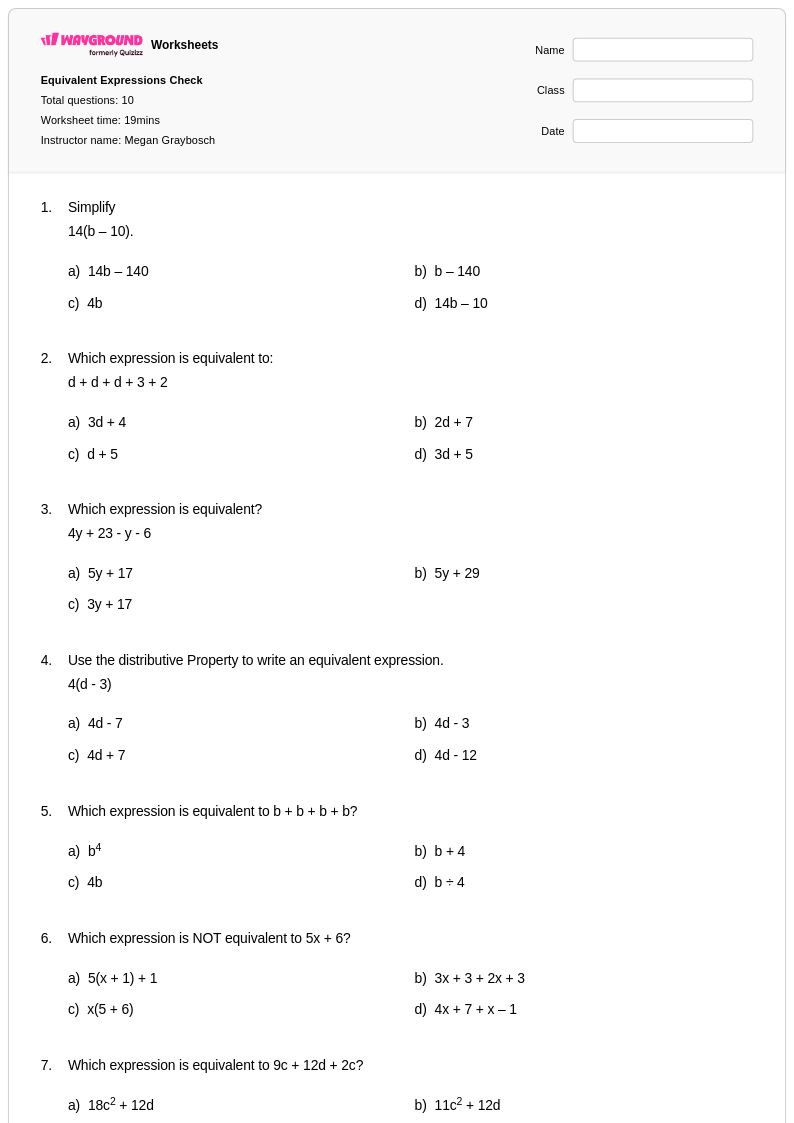
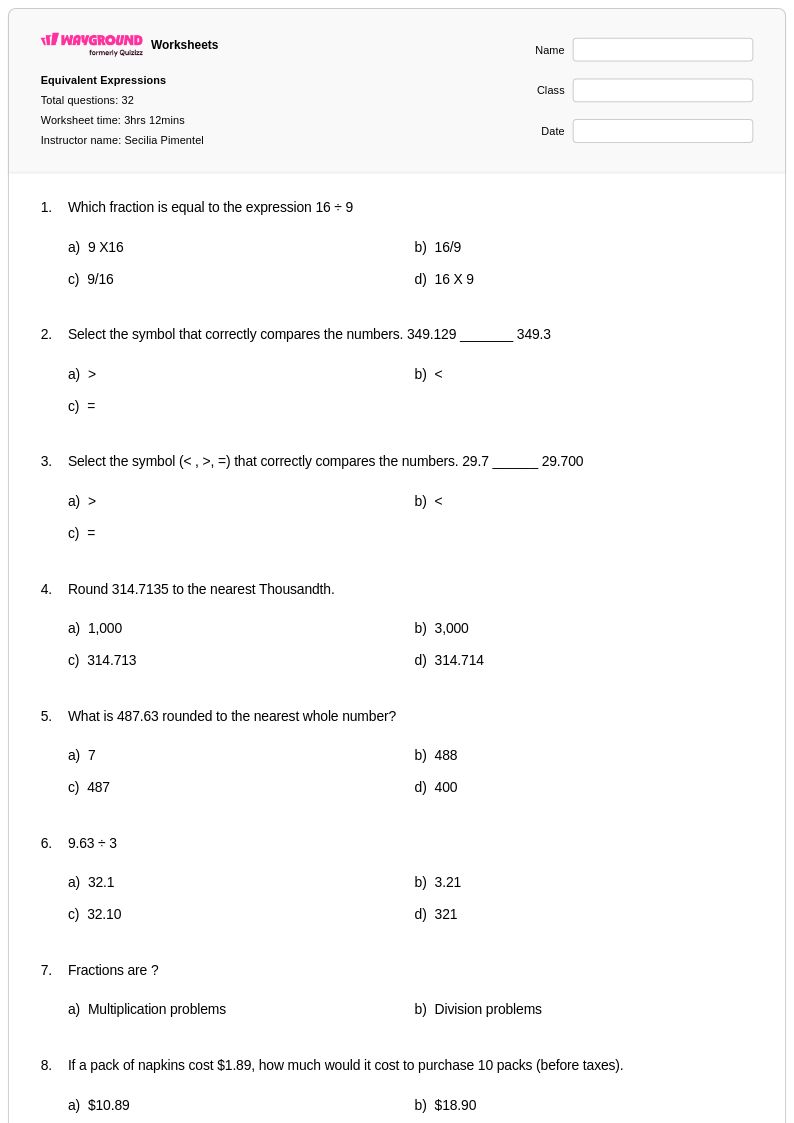
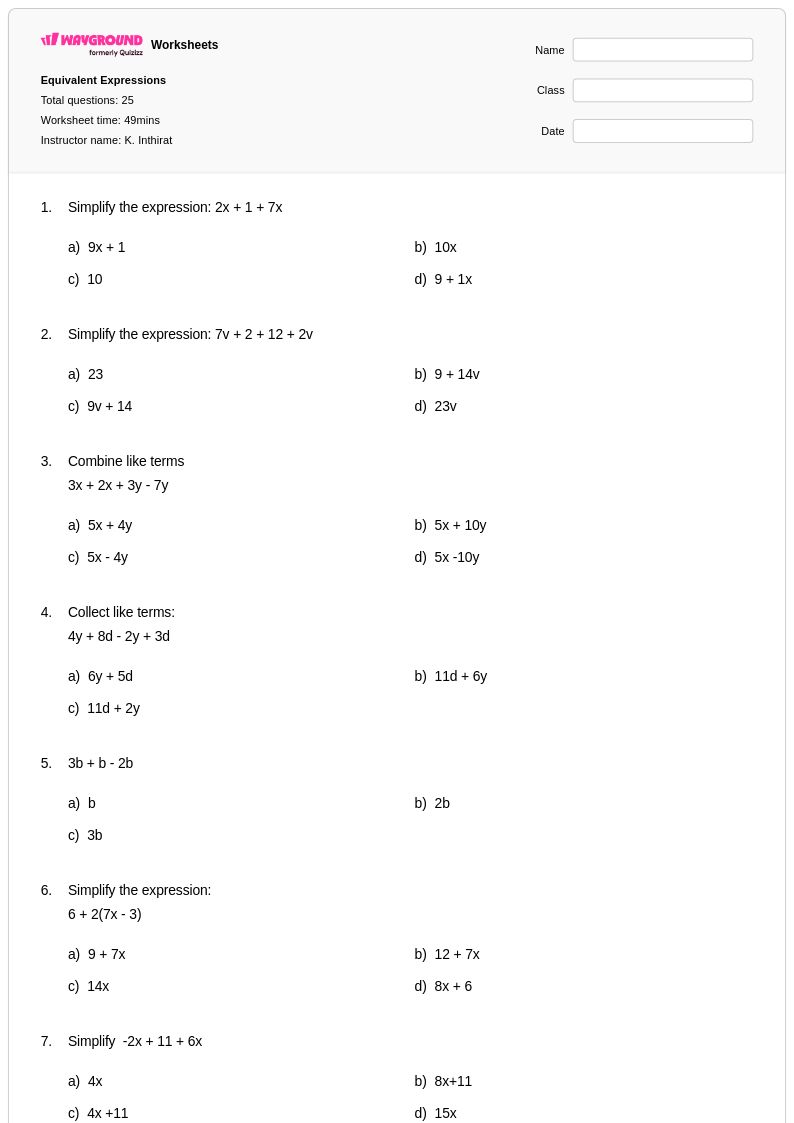
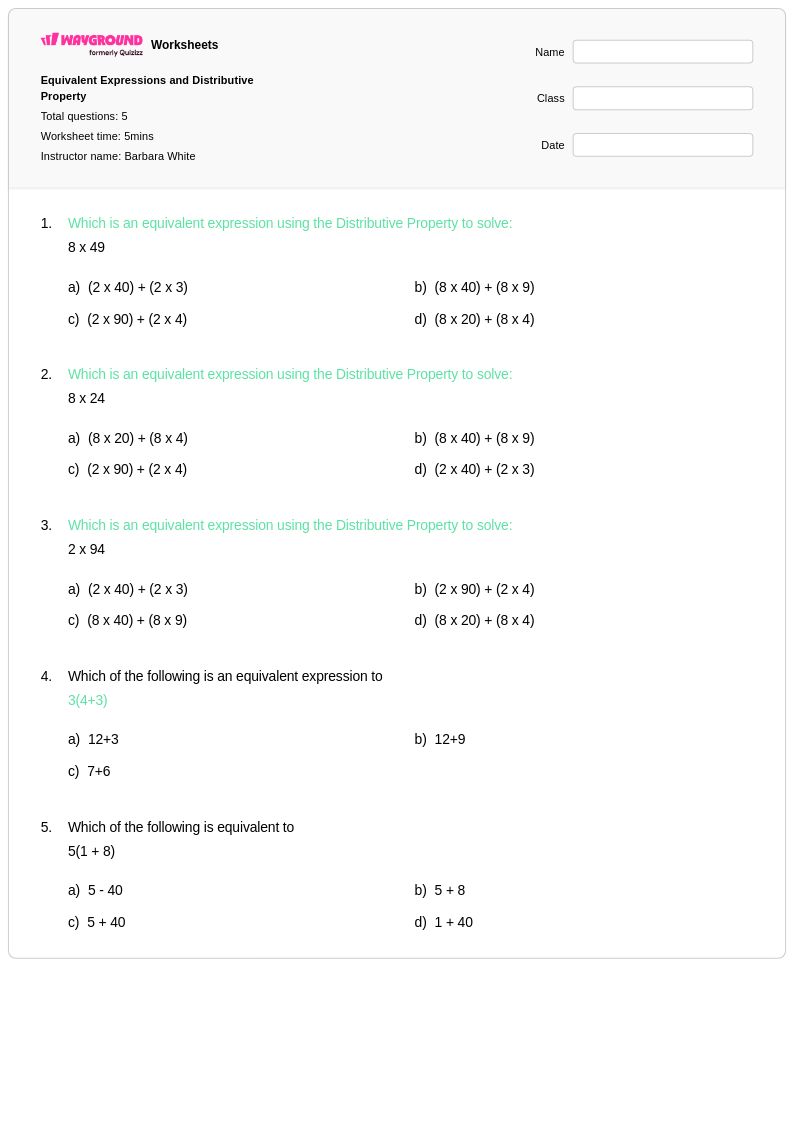
Equivalent expressions worksheets for Year 5 students available through Wayground (formerly Quizizz) provide comprehensive practice opportunities for mastering this fundamental algebraic concept. These carefully designed printables help fifth-grade students develop critical thinking skills as they learn to recognize, create, and manipulate expressions that have the same value despite different appearances. The worksheets systematically guide students through various strategies including the distributive property, combining like terms, and using the properties of operations to demonstrate mathematical equivalence. Each practice problem set includes detailed answer keys that support both independent learning and teacher-guided instruction, while the free pdf format ensures easy accessibility for classroom use and home practice.
Wayground (formerly Quizizz) empowers educators with an extensive collection of millions of teacher-created resources specifically designed to support equivalent expressions instruction at the Year 5 level. The platform's robust search and filtering capabilities allow teachers to quickly locate worksheets that align with specific curriculum standards and match their students' diverse learning needs. These differentiation tools enable seamless customization of practice materials, whether teachers need basic skill reinforcement for struggling learners or enriched challenges for advanced students. Available in both printable pdf formats and interactive digital versions, these resources streamline lesson planning while providing flexible options for remediation, skill practice, and assessment preparation that can be easily integrated into any mathematics curriculum.
FAQs
How do I teach equivalent expressions to 5th graders?
At Grade 5, equivalent expressions should be grounded in arithmetic before variables enter the picture. Start by showing students that 4 × (3 + 2) and 4 × 3 + 4 × 2 produce the same result — the distributive property as a fact they can verify, not a rule to memorize. From there, introduce simple expressions like 2 + 2 + 2 = 3 × 2 to build the idea that different-looking expressions can represent the same value. Keep variables minimal at this stage; the goal is building intuition about equivalence, not algebraic fluency.
What exercises help 5th graders practice equivalent expressions?
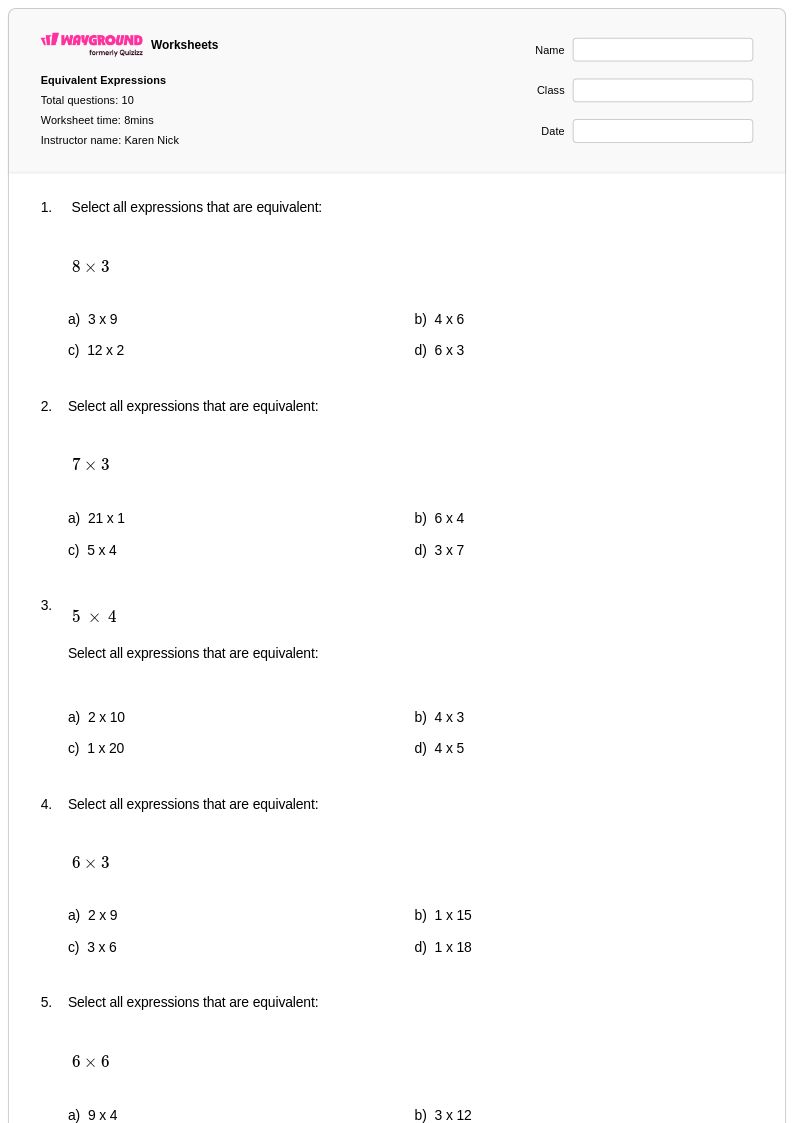
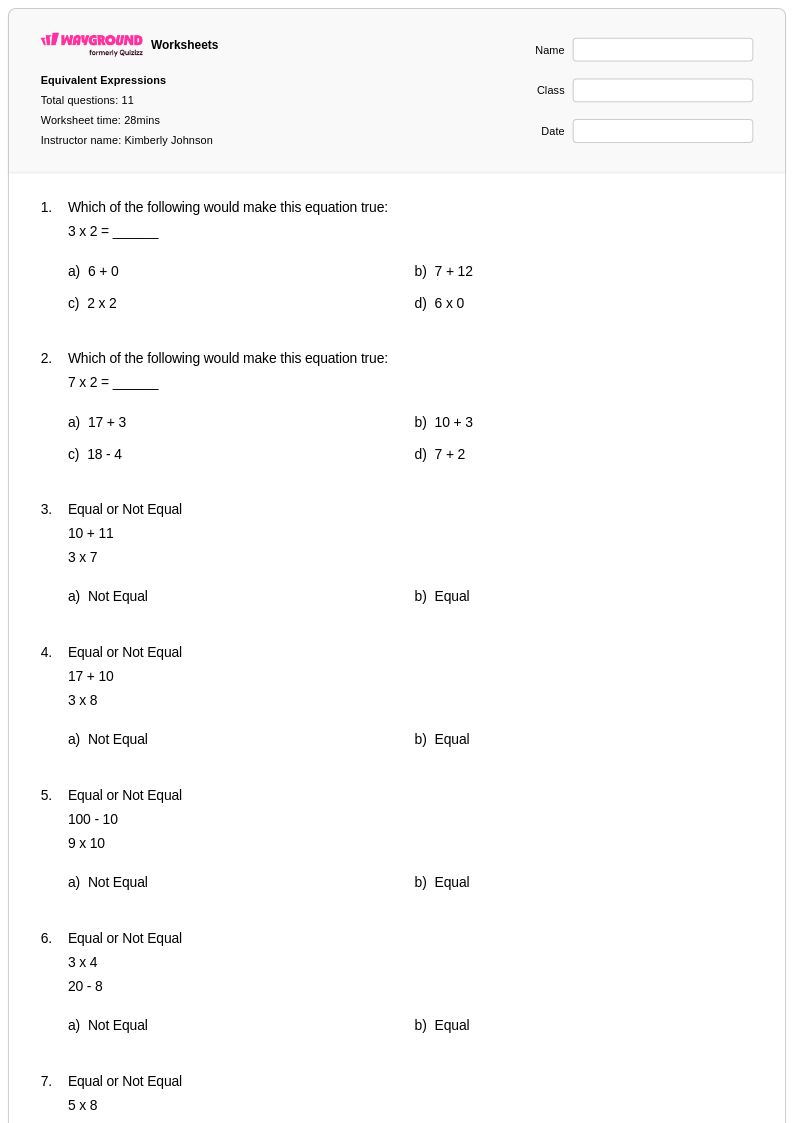
Matching tasks work well at this level: give students a set of expressions and ask them to pair the equivalent ones. True/false problems — 'Is 3 × (4 + 1) the same as 3 × 4 + 3 × 1? Show why.' — push students to justify rather than guess. Wayground's Grade 5 equivalent expressions worksheets progress from these identification tasks to problems where students apply the distributive property and combine like terms, building confidence before complexity increases.
What mistakes do 5th graders commonly make with equivalent expressions?
The most common error is only multiplying the first term in a parenthetical expression — writing 4 × (3 + 2) = 12 + 2 instead of 12 + 8. Students also struggle to accept that two expressions are equivalent when they look nothing alike; they expect equivalence to be visually obvious. A third pattern: when combining like terms, students add unlike terms (3 apples + 2 oranges = 5 apple-oranges), which is why concrete analogies about grouping similar objects can help before moving to abstract notation.
How do I use Wayground's Grade 5 equivalent expressions worksheets?
Download the PDF and print it for a no-prep paper assignment — the answer key is included, so you can hand it back with feedback the same day. For a more interactive session, host the worksheet as a digital quiz on Wayground and review results as a class. Printable practice is also a natural fit when you want students working independently without a screen, which many Grade 5 teachers find useful during quiet work blocks.
What grade level covers equivalent expressions in Common Core math?
Common Core introduces equivalent expressions formally in Grade 5, where students apply properties of operations — particularly the distributive property — to generate equivalent numerical expressions. This builds directly on Grade 3–4 work with multiplication and the properties of operations, and sets up Grade 6 work where variables enter and students begin writing and evaluating algebraic expressions. At Grade 5, the focus stays on numerical equivalence and understanding why the properties work, not on symbolic manipulation.
How can I support struggling 5th graders with equivalent expressions?
For students who find the abstract notation overwhelming, Wayground's read-aloud feature can help by reading expressions aloud so students aren't decoding notation and reasoning simultaneously. Reducing answer choices is another practical lever — it lowers the cognitive load on a concept that already asks students to hold two representations in mind at once. If you have English language learners in your class, Wayground also lets you translate the worksheet, so language isn't a barrier to demonstrating math understanding.