Free Printable Equivalent Expressions Worksheets for Year 7
Year 7 equivalent expressions worksheets provide free printables with practice problems and answer keys to help students master identifying, creating, and simplifying algebraically equivalent expressions through comprehensive PDF exercises.
Explore printable Equivalent Expressions worksheets for Year 7
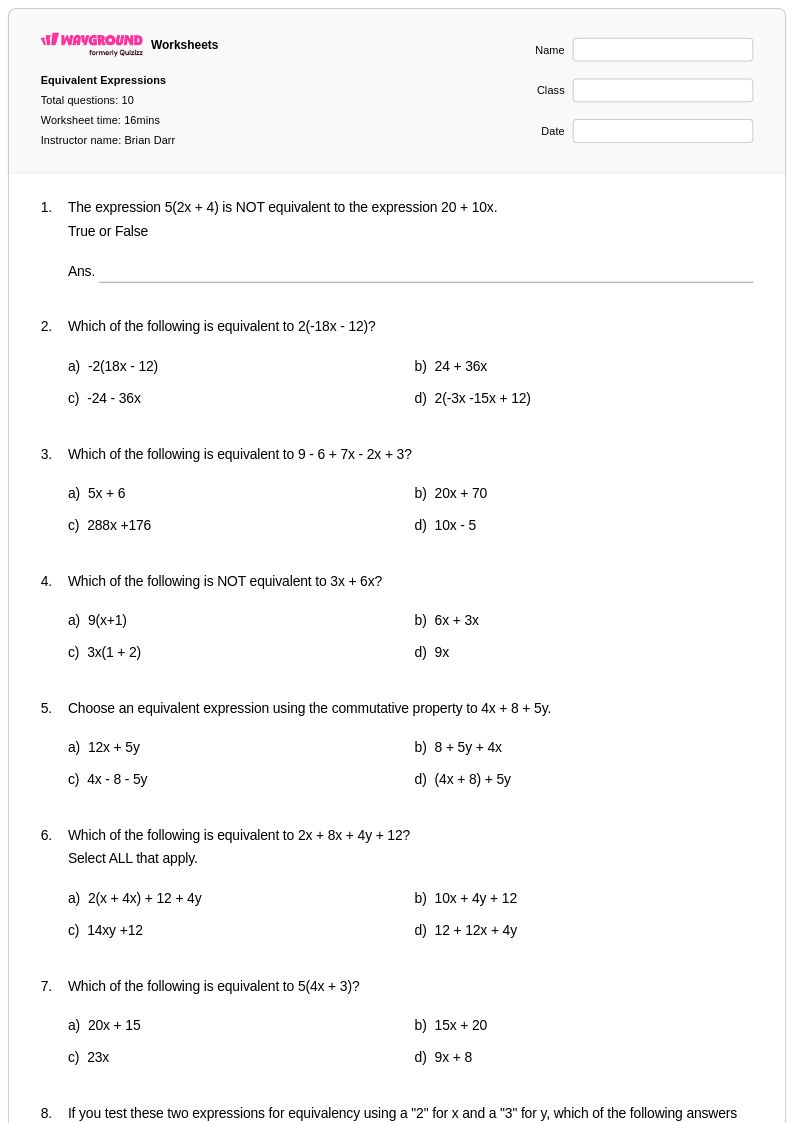
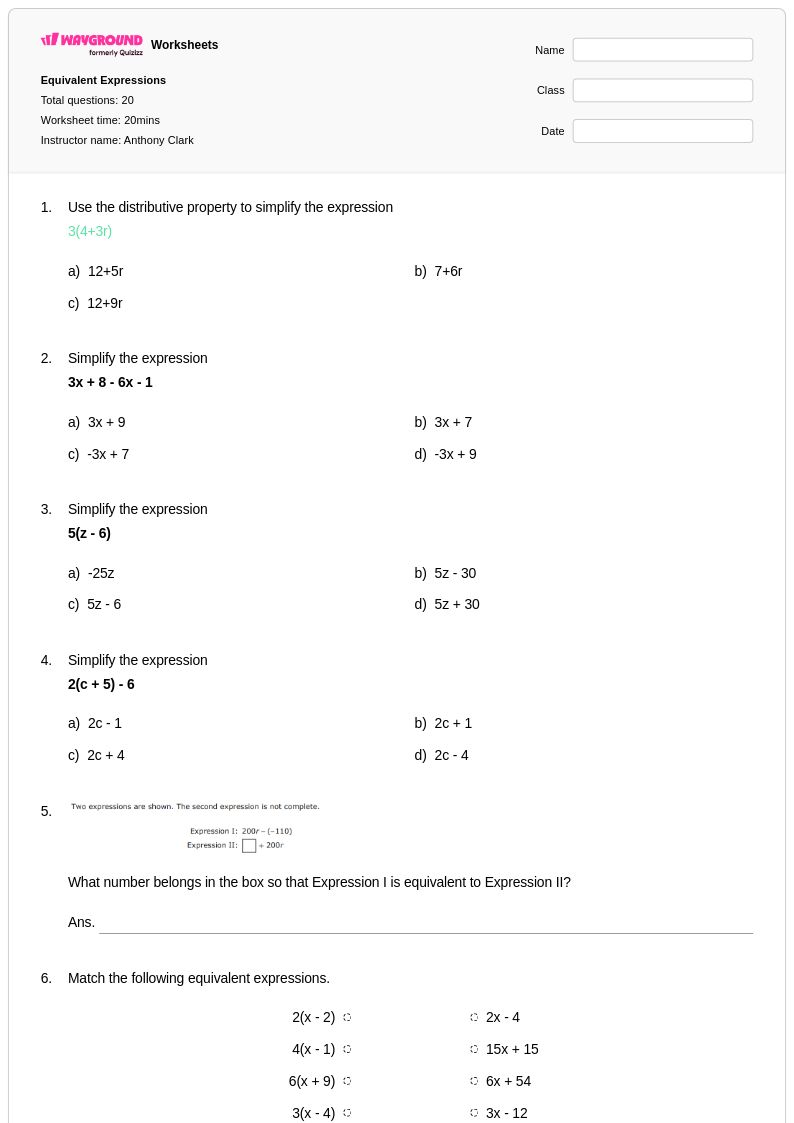
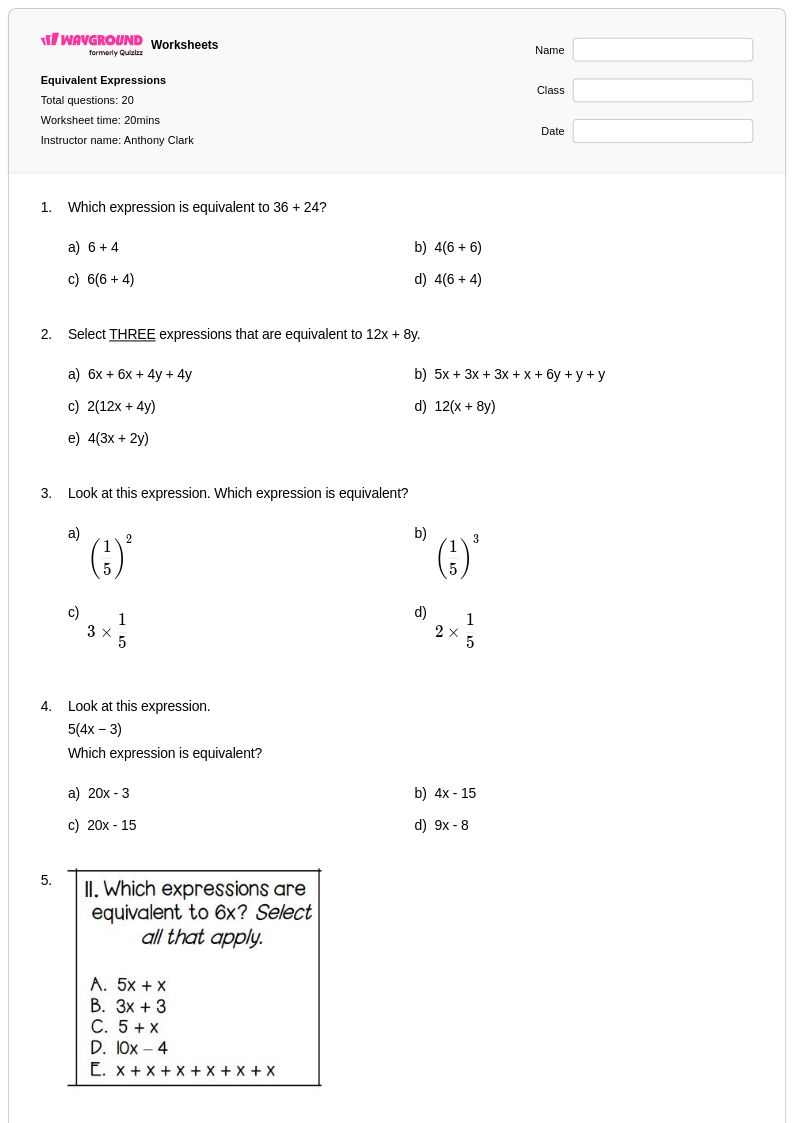
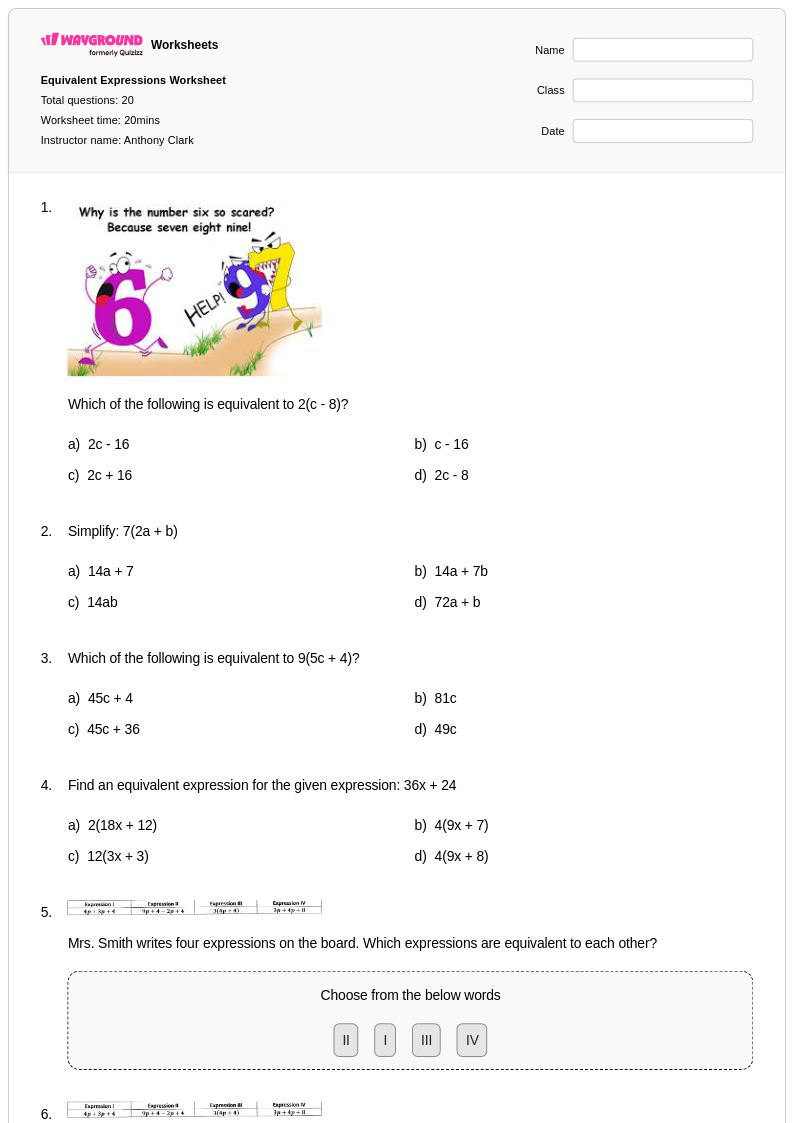
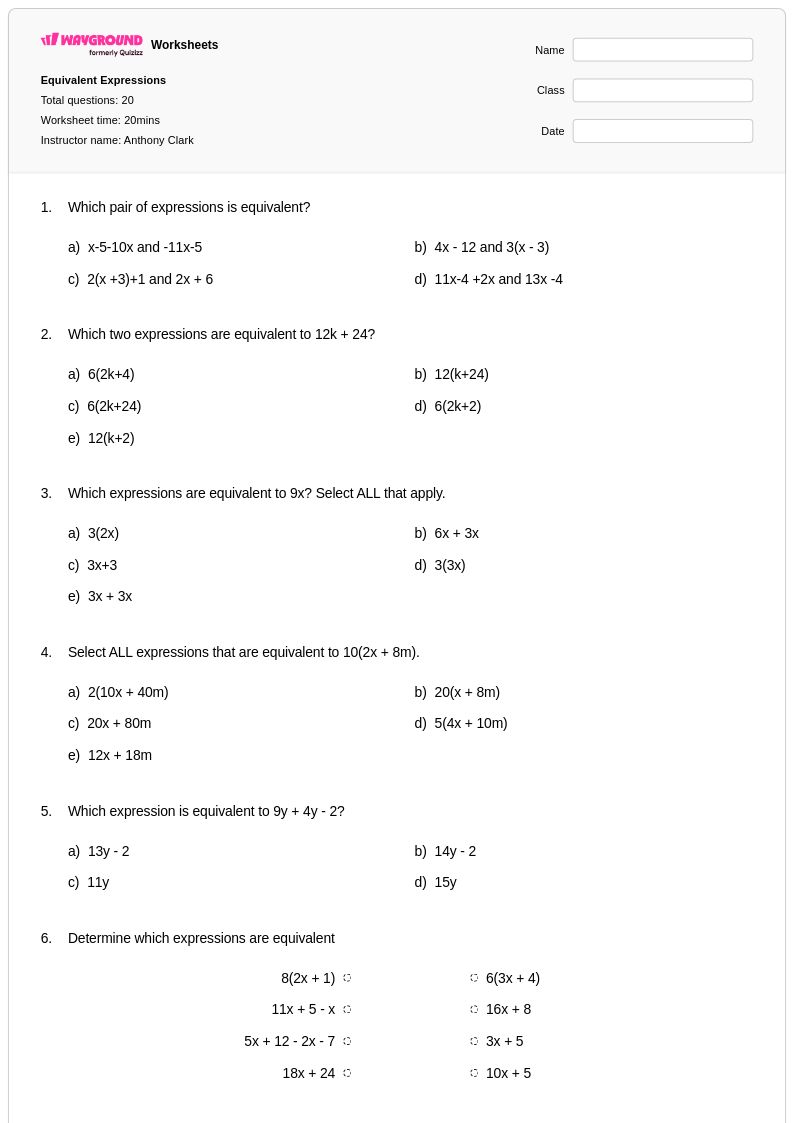
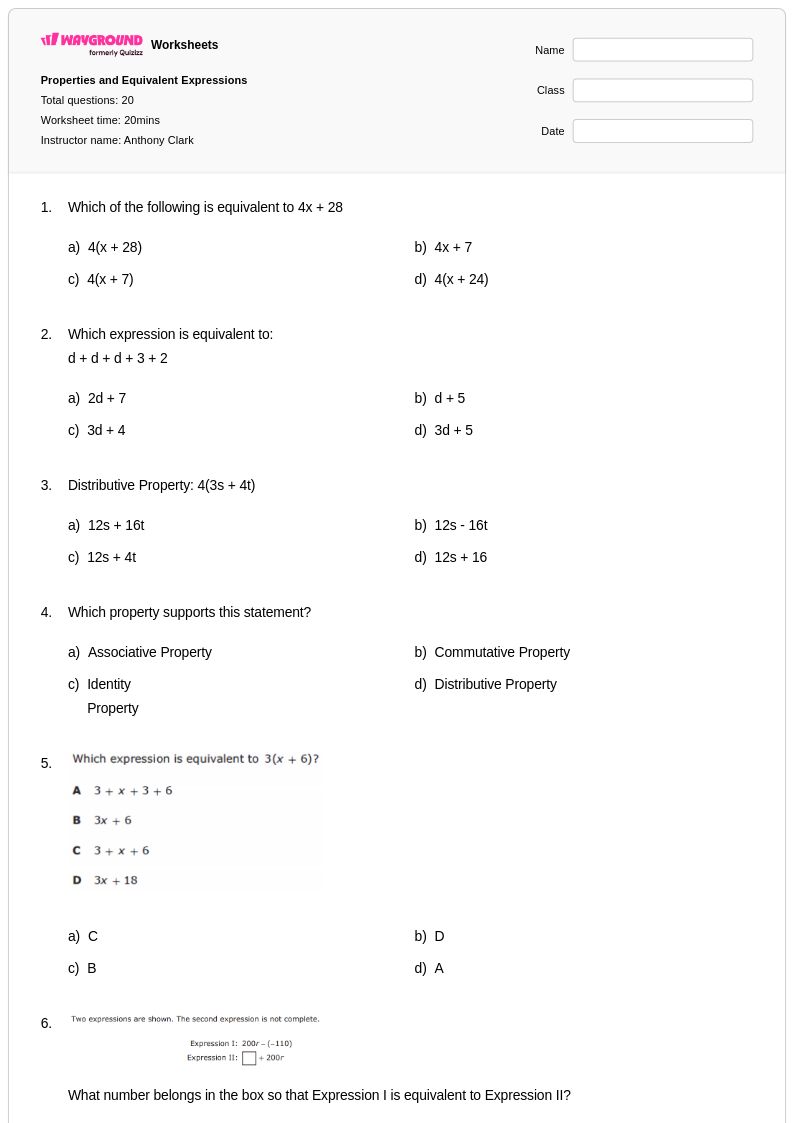
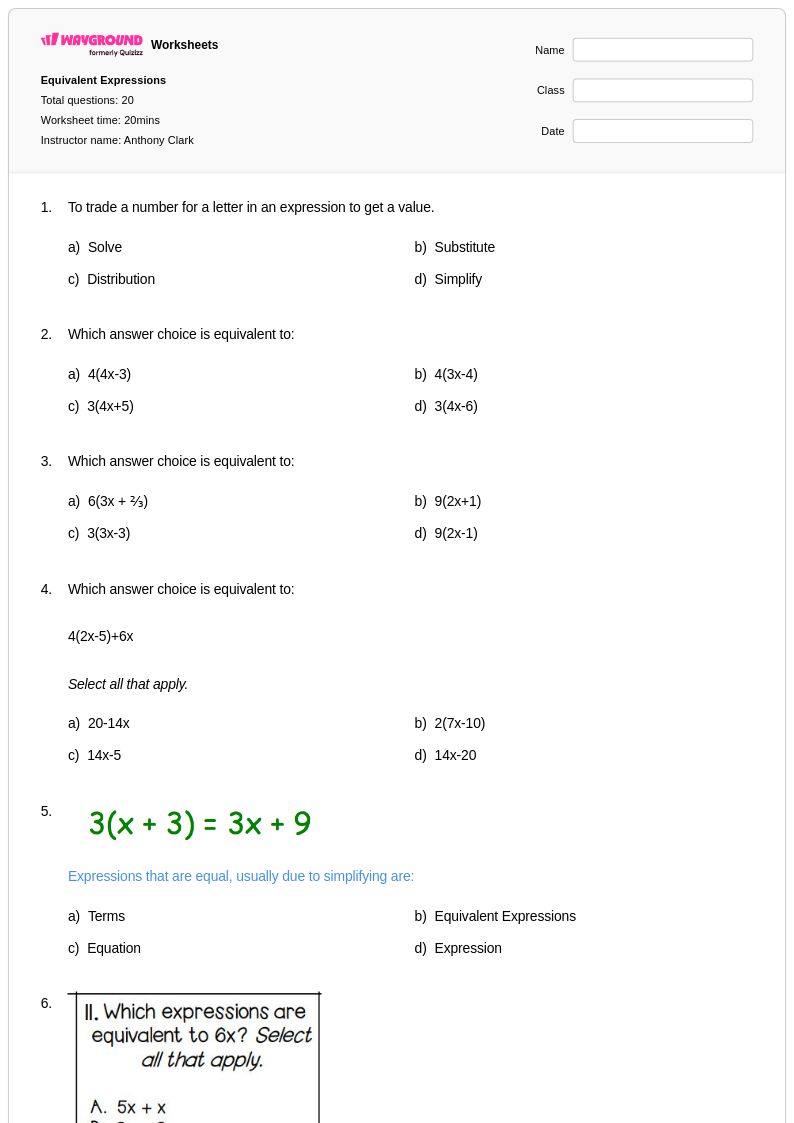
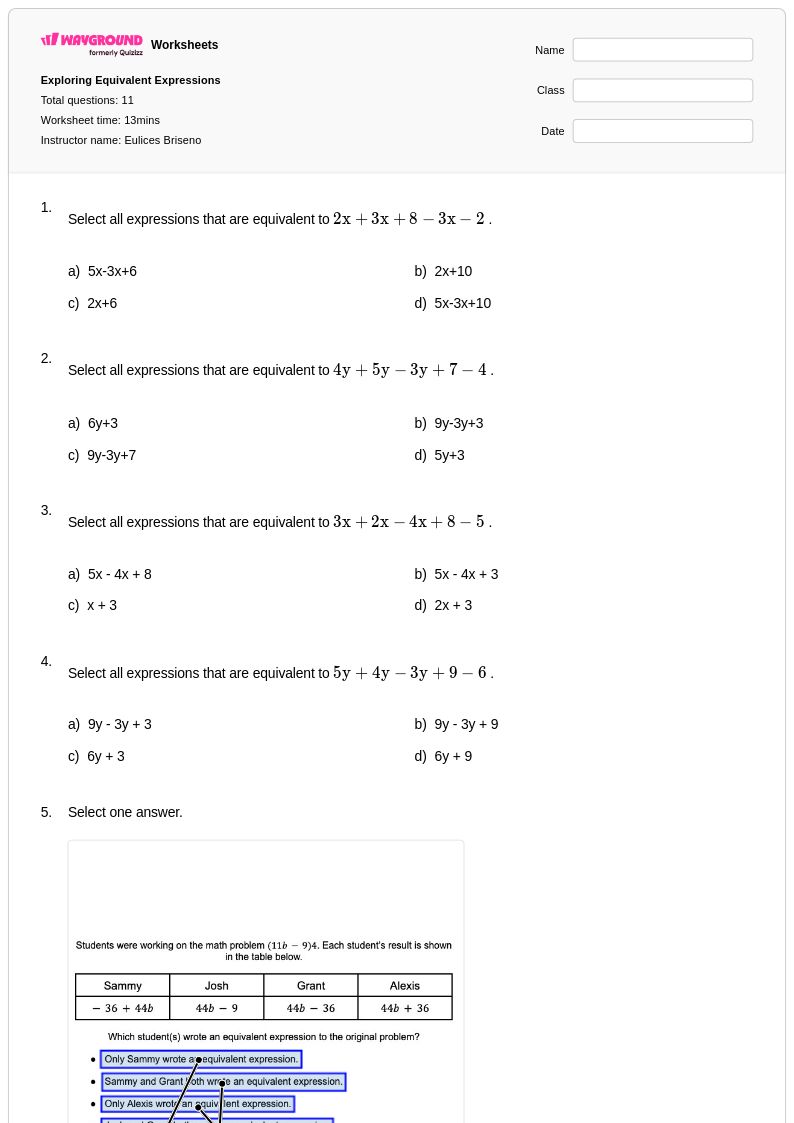
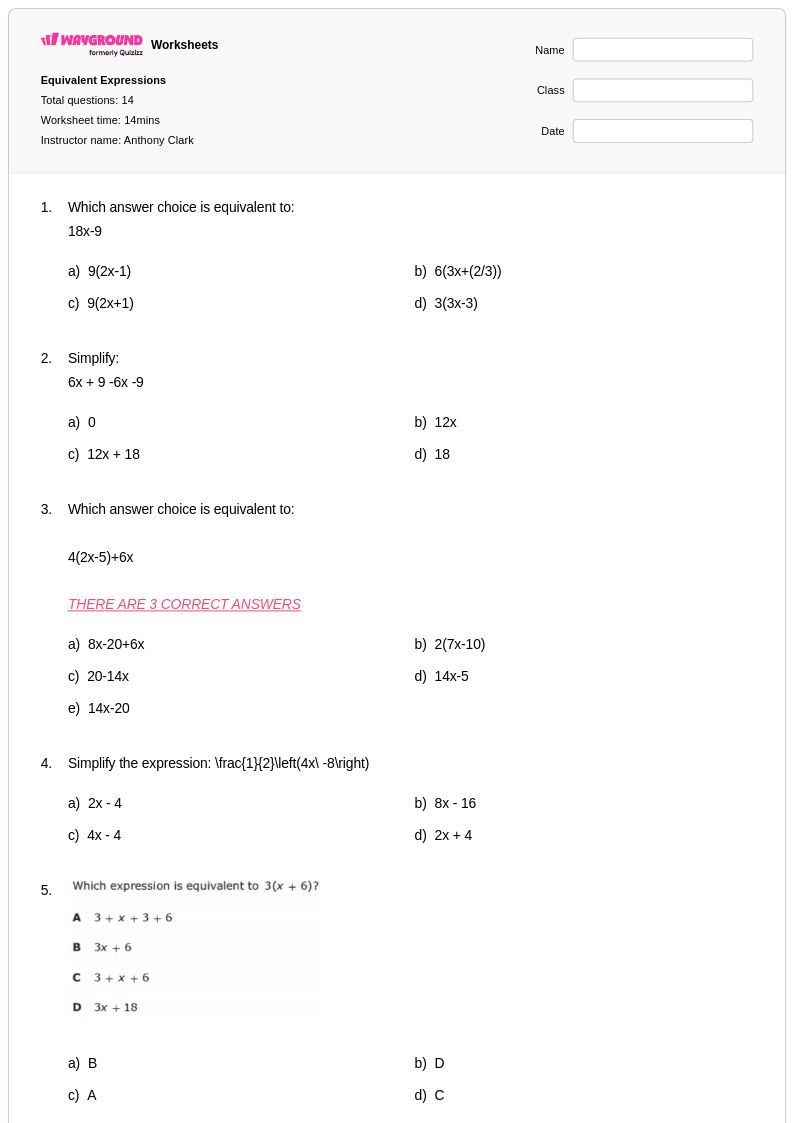
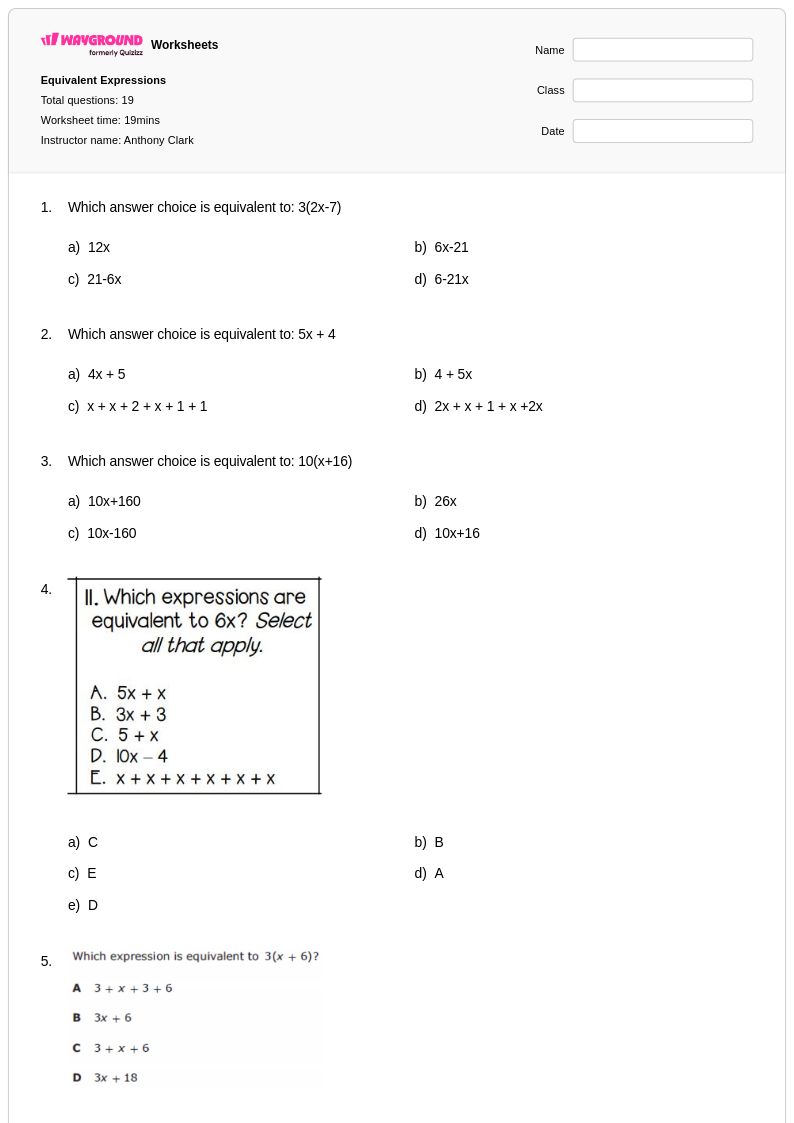
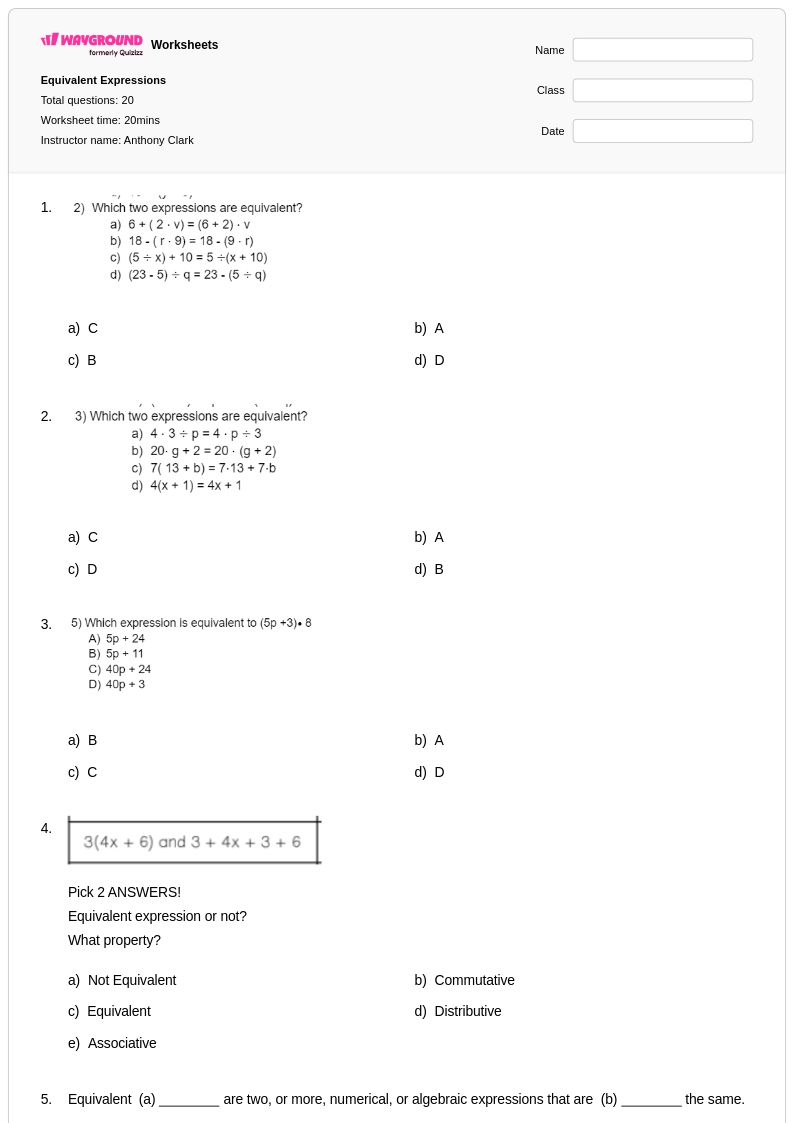
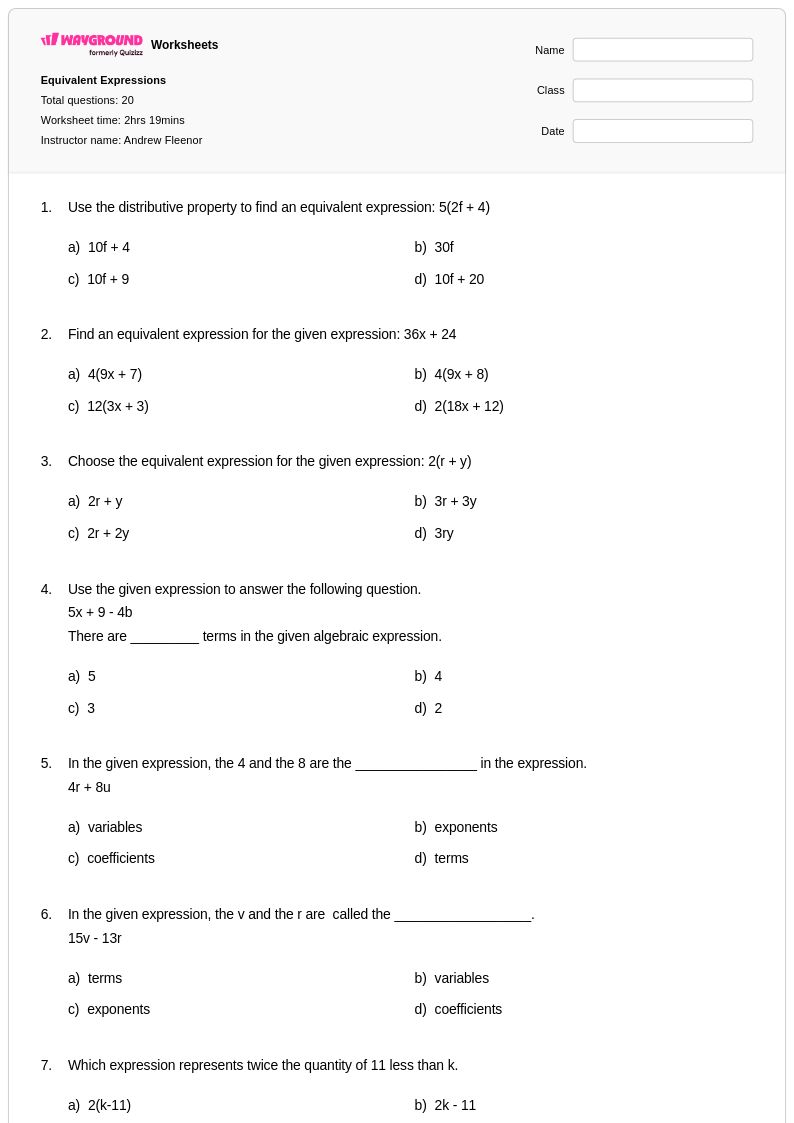
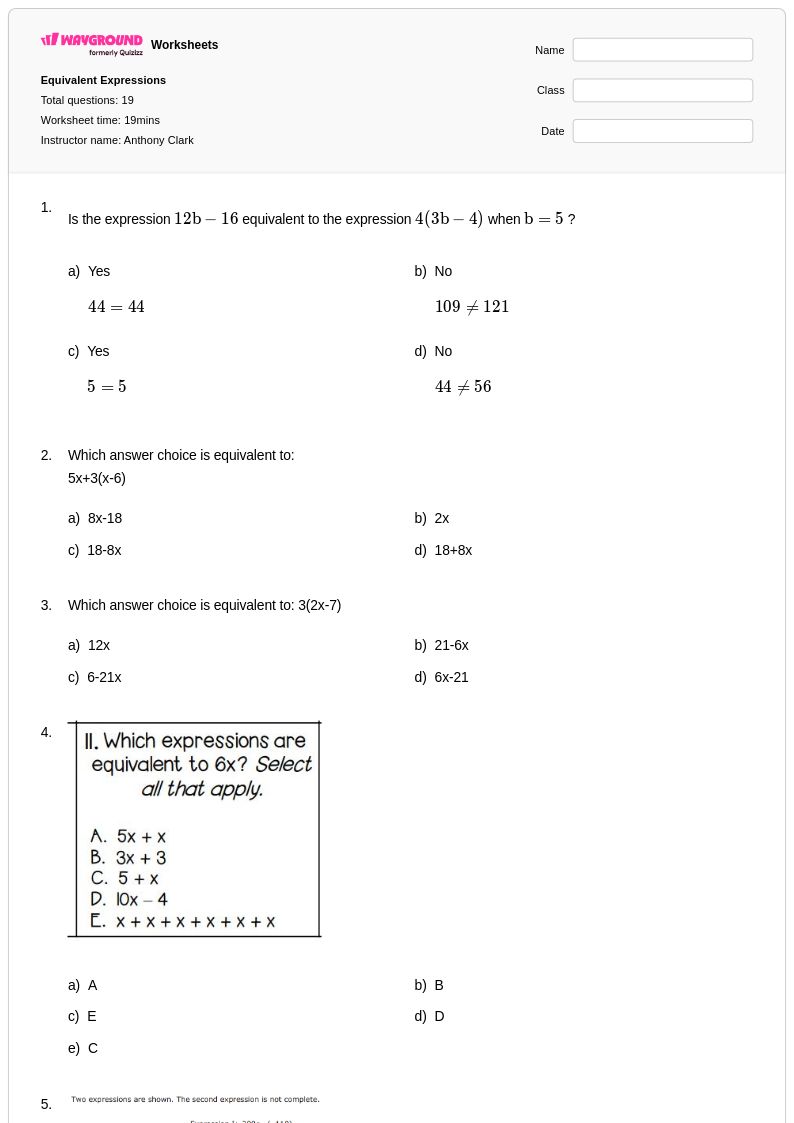
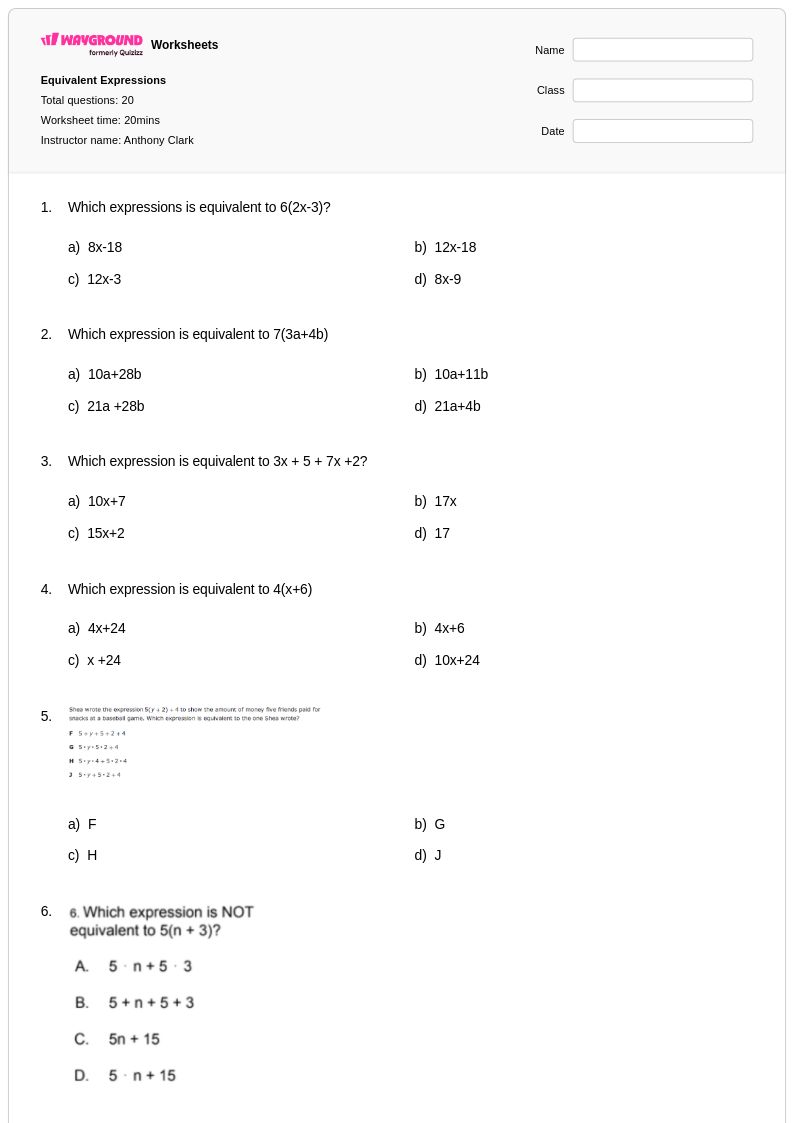
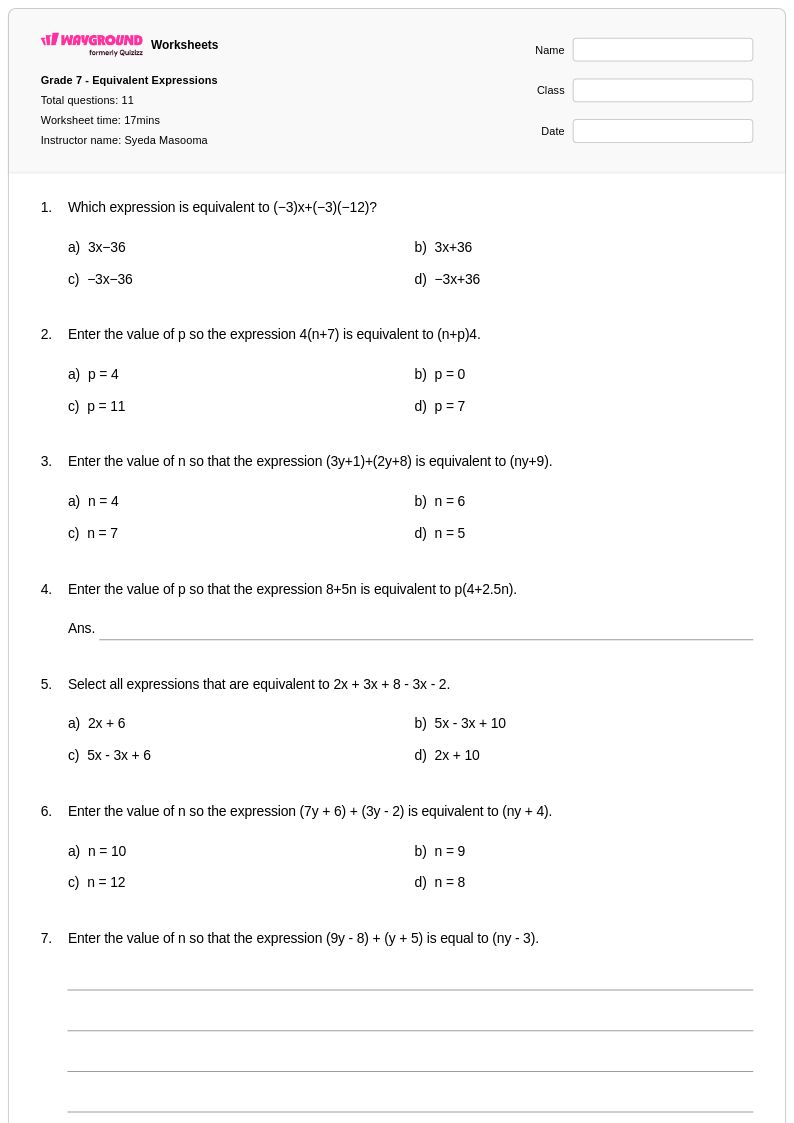
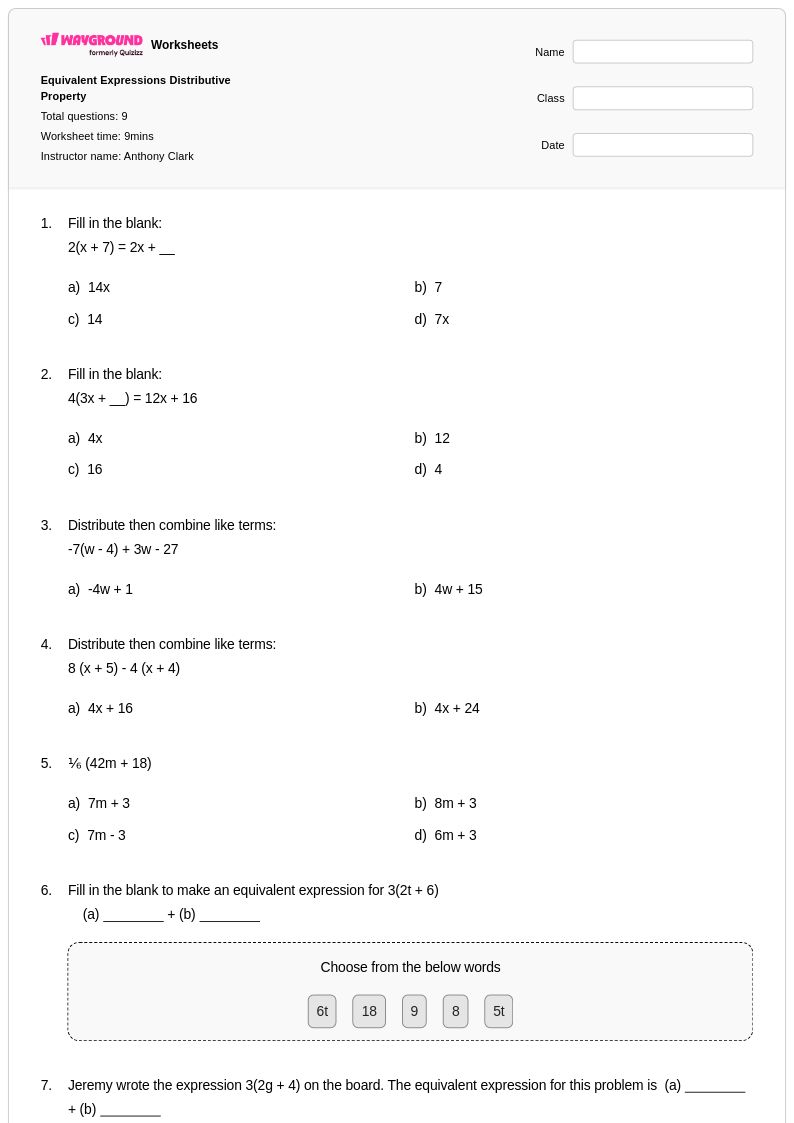
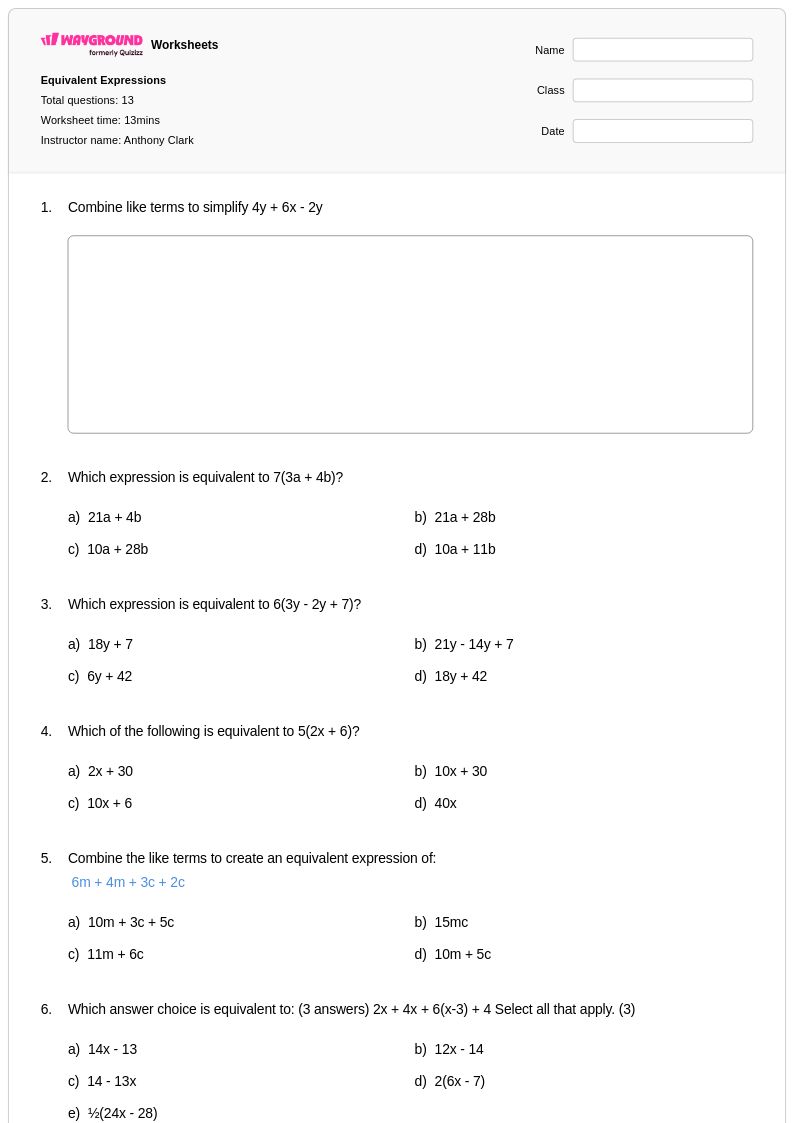
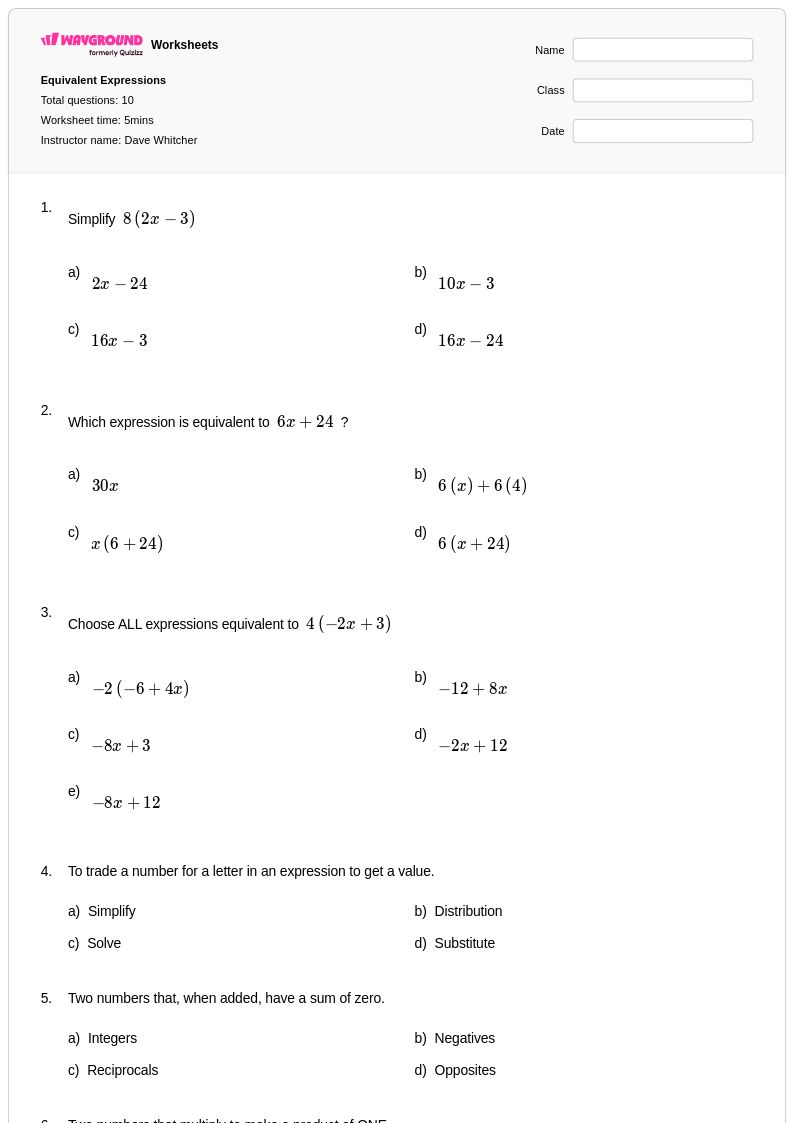
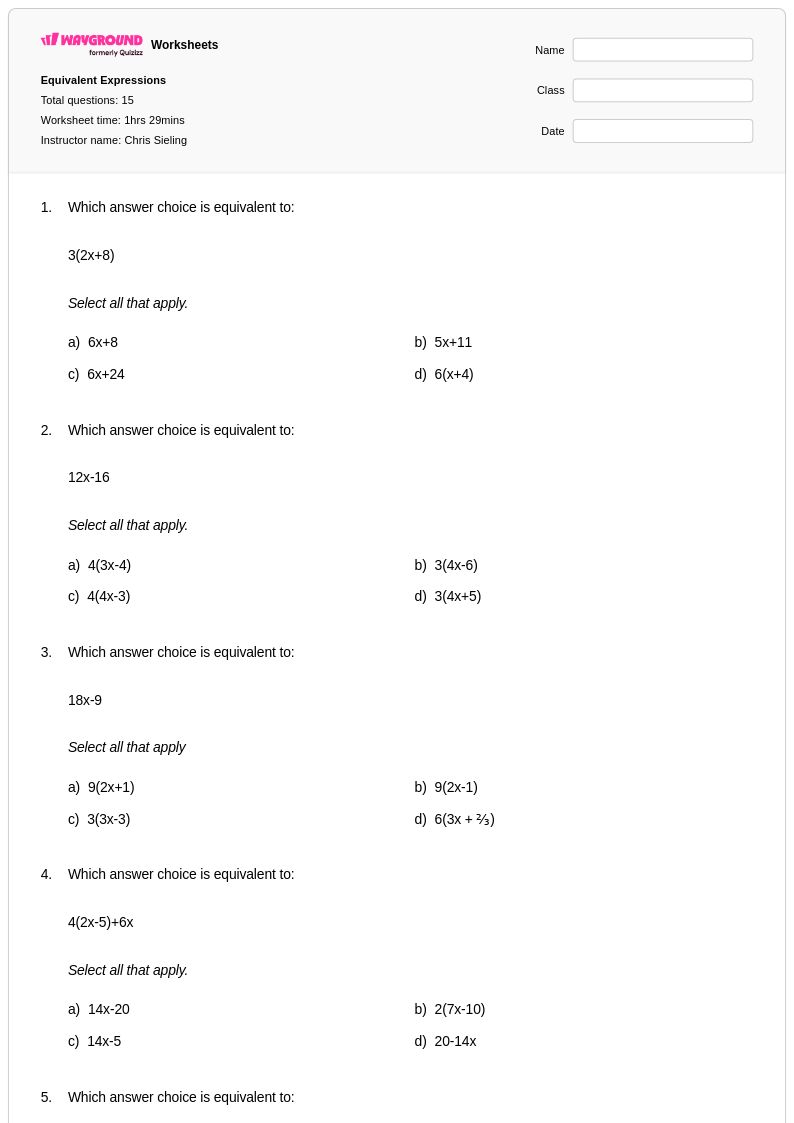
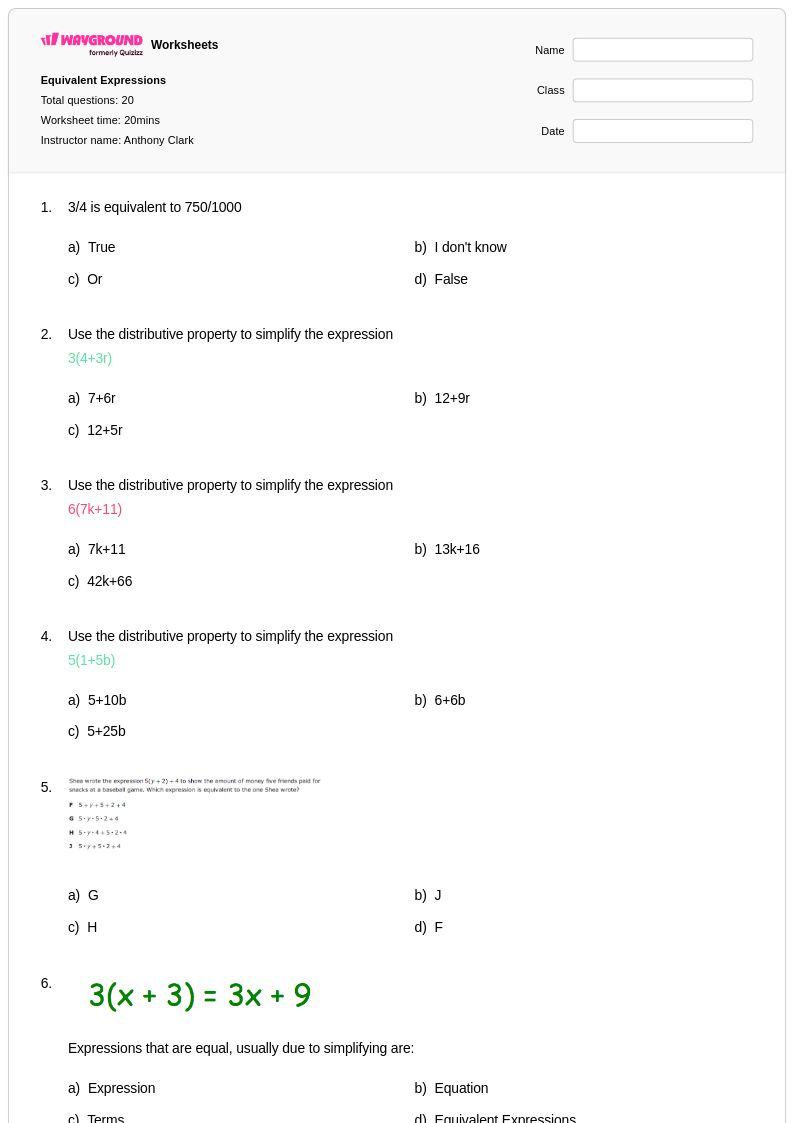
Equivalent expressions worksheets for Year 7 mathematics provide students with essential practice in recognizing and creating algebraic expressions that have the same value but different forms. These comprehensive worksheets available through Wayground (formerly Quizizz) focus on developing students' understanding of algebraic properties such as the distributive, commutative, and associative properties while building fluency in simplifying expressions through combining like terms. Students work through carefully structured practice problems that progress from basic identification of equivalent expressions to more complex tasks involving factoring, expanding, and applying algebraic properties. Each worksheet comes with a complete answer key and is available as a free printable pdf, allowing teachers to seamlessly integrate these resources into their instruction while providing students with immediate feedback on their mathematical reasoning and procedural skills.
Wayground (formerly Quizizz) empowers educators with an extensive collection of teacher-created equivalent expressions worksheets, drawing from millions of high-quality resources that are specifically aligned to Year 7 mathematics standards. The platform's advanced search and filtering capabilities enable teachers to quickly locate worksheets that match their students' specific learning needs, whether for initial instruction, remediation, or enrichment activities. Teachers can easily customize these materials to differentiate instruction, modifying problem difficulty or adding supplementary questions to address diverse learning levels within their classrooms. Available in both printable pdf format and interactive digital versions, these equivalent expressions worksheets support flexible lesson planning and provide educators with reliable tools for strengthening students' algebraic thinking and expression manipulation skills across various instructional settings.
FAQs
How do I teach equivalent expressions to 7th graders?
By Grade 7, students should be comfortable with the distributive property over positive integers — the new challenge is extending it to rational coefficients and negative numbers. Start by revisiting a familiar example like 3(x + 2) = 3x + 6, then introduce −2(x − 5) and work through why the signs behave the way they do. Factoring deserves explicit attention at this level: students need to see that factoring is not a separate skill but the reverse of distributing, and practicing both directions on the same expression builds that connection. Combining like terms with rational coefficients (½x + ¾x) is another Grade 7 sticking point worth isolating before mixing it into multi-step problems.
What exercises help 7th graders practice equivalent expressions?
At Grade 7, the most productive practice involves multi-step transformations rather than single-operation problems. Give students an expression and ask them to produce two different equivalent forms — one expanded, one factored. Sorting tasks also work well: a set of six expressions where students group the equivalent ones forces comparison and justification. Wayground's Grade 7 worksheets progress from basic identification through factoring and multi-term simplification, with the answer key letting students self-check before moving on.
What mistakes do 7th graders commonly make with equivalent expressions?
Sign errors dominate at this grade level. When distributing a negative coefficient — −3(x − 4) — students routinely write −3x − 12 instead of −3x + 12. A second common error is partial factoring: students factor out a number but leave the expression only partially simplified, not recognizing that the factored form isn't complete. Students also struggle with rational coefficients in like terms, sometimes adding the variables instead of the coefficients (½x + ¾x = ½¾x rather than 1¼x).
How do I use Wayground's Grade 7 equivalent expressions worksheets?
You can assign these as a digital quiz on Wayground — useful for a quick formative check where you want to see results before the next lesson. For independent practice or test prep, the printable PDF works well; every worksheet includes a complete answer key so students can self-assess. Either format covers the same problems, so you can mix approaches across a unit without students getting different practice content.
How does Common Core approach equivalent expressions in Grade 7?
Common Core's Grade 7 algebra work centers on applying properties of operations to add, subtract, factor, and expand linear expressions with rational coefficients. The key progression from Grade 6 is the introduction of rational numbers — including negatives — into expressions, which is where most of the new difficulty lives. Students move from working with whole-number coefficients to expressions like −½(4x − 6), and they're expected to justify equivalence using properties rather than just verifying by substitution. This prepares them for Grade 8 work on solving multi-step equations where rewriting expressions is a prerequisite step.
How can I differentiate equivalent expressions practice for my Grade 7 class?
For students who are still consolidating integer operations, the reduced answer choices accommodation on Wayground limits the number of options shown — helpful when a student's errors are coming from sign confusion rather than a misunderstanding of equivalence itself. For students who need more scaffolding on multi-step problems, Wayground's worksheet tools let you create an alternate version with wider font spacing and larger text, which reduces visual crowding on dense algebraic expressions without changing the math.