Free Printable Evaluating Expressions Worksheets for Year 7
Year 7 students can master evaluating expressions with Wayground's free worksheets and printables, featuring comprehensive practice problems and answer keys to build mathematical confidence and skills.
Explore printable Evaluating Expressions worksheets for Year 7
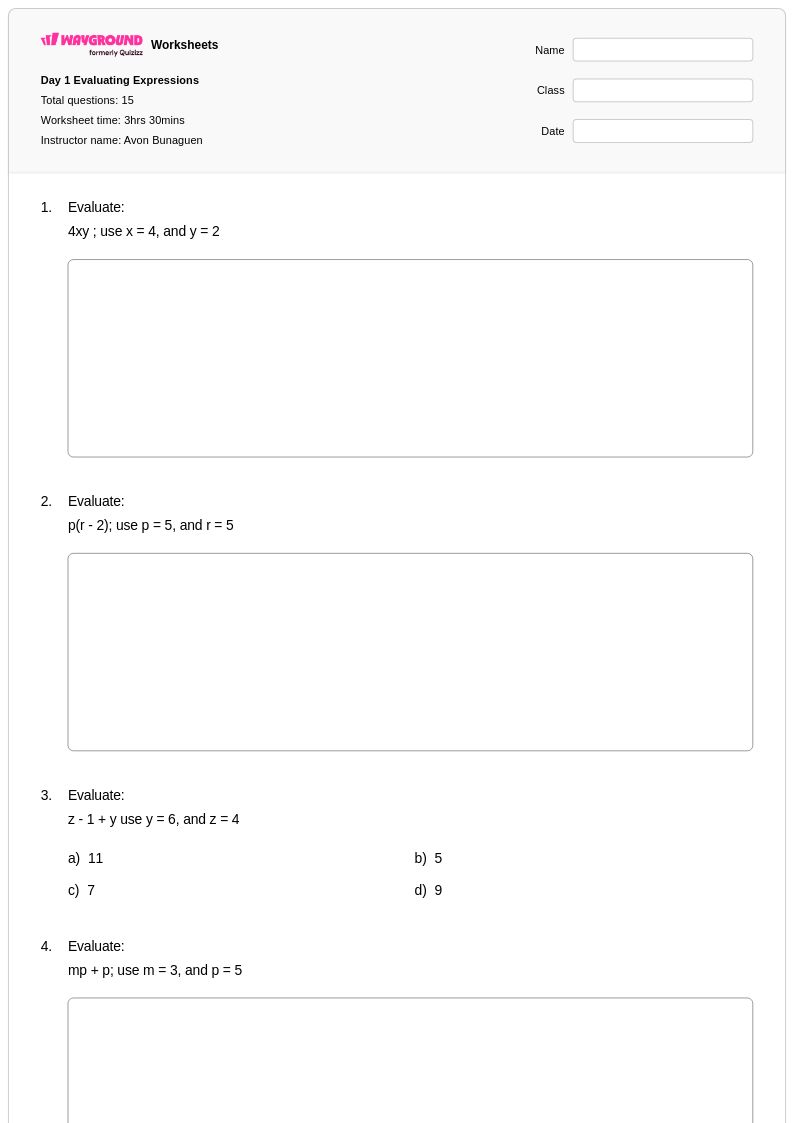
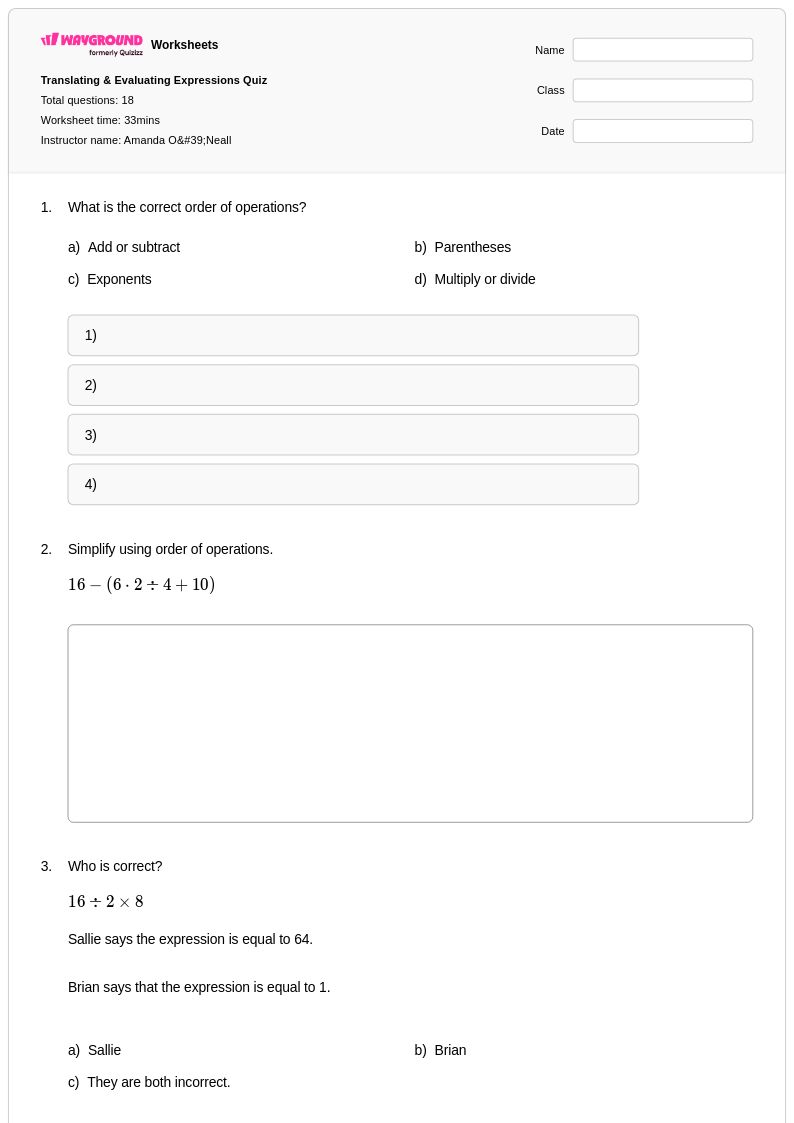
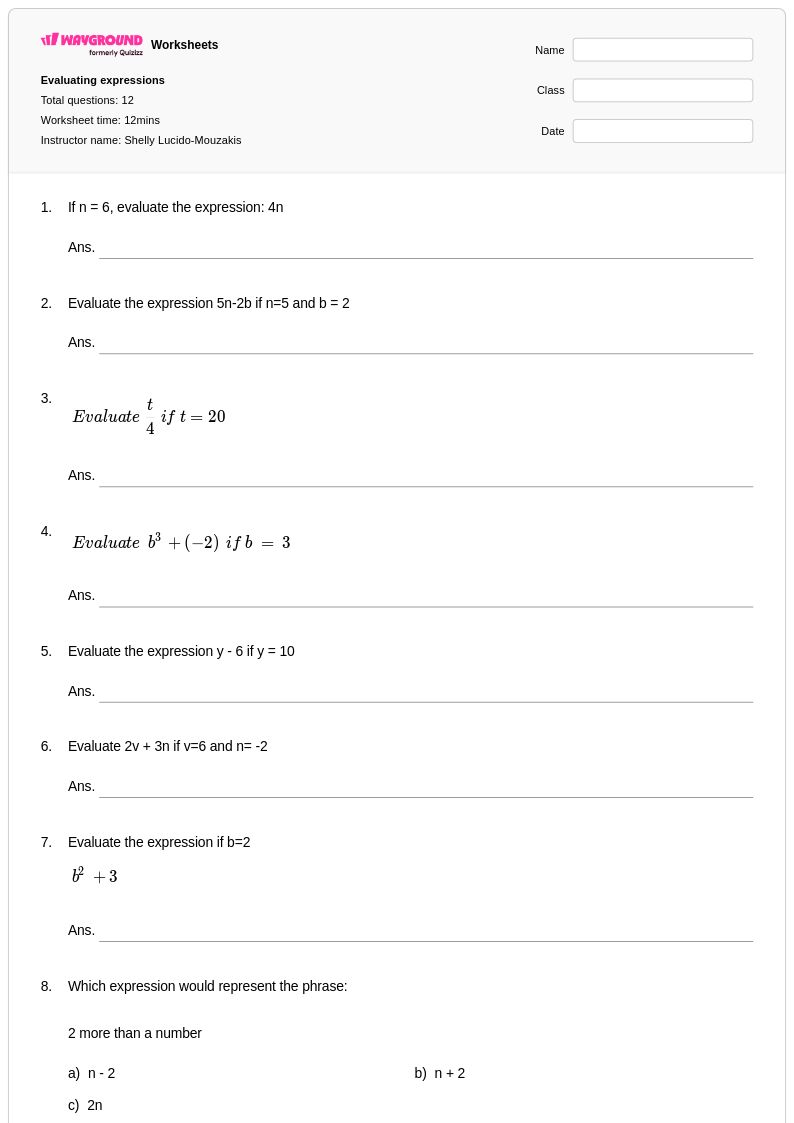
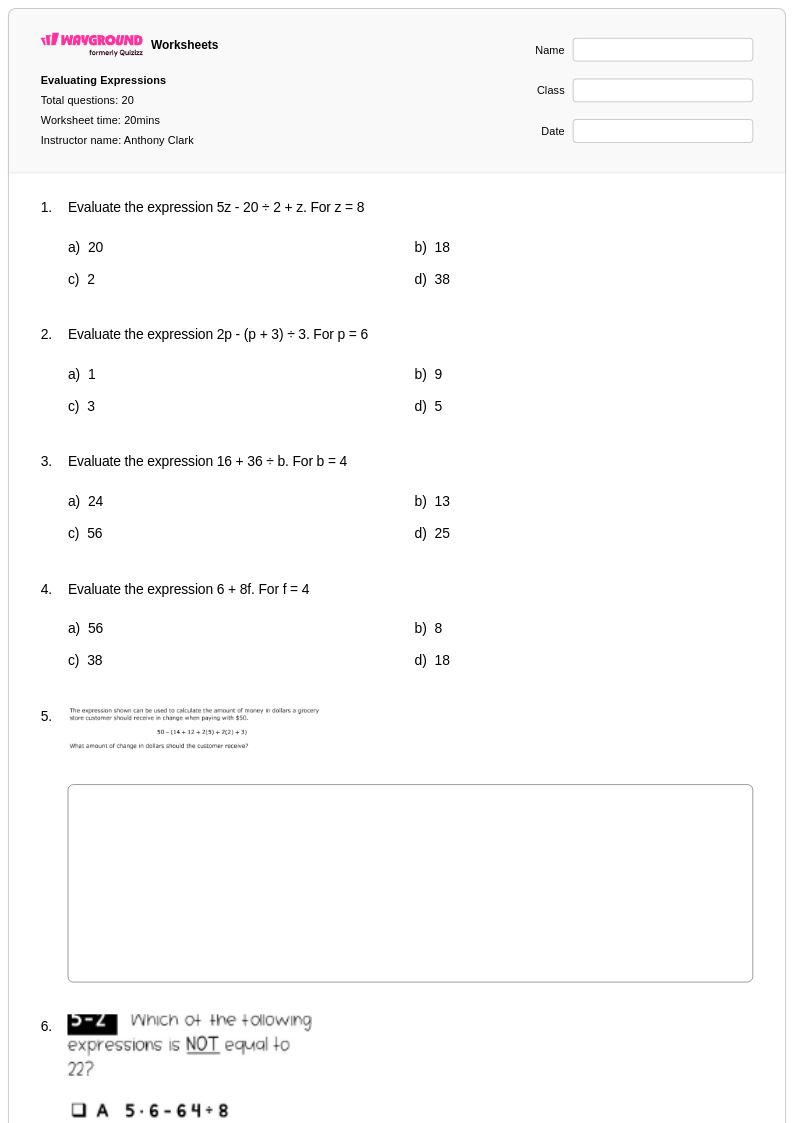
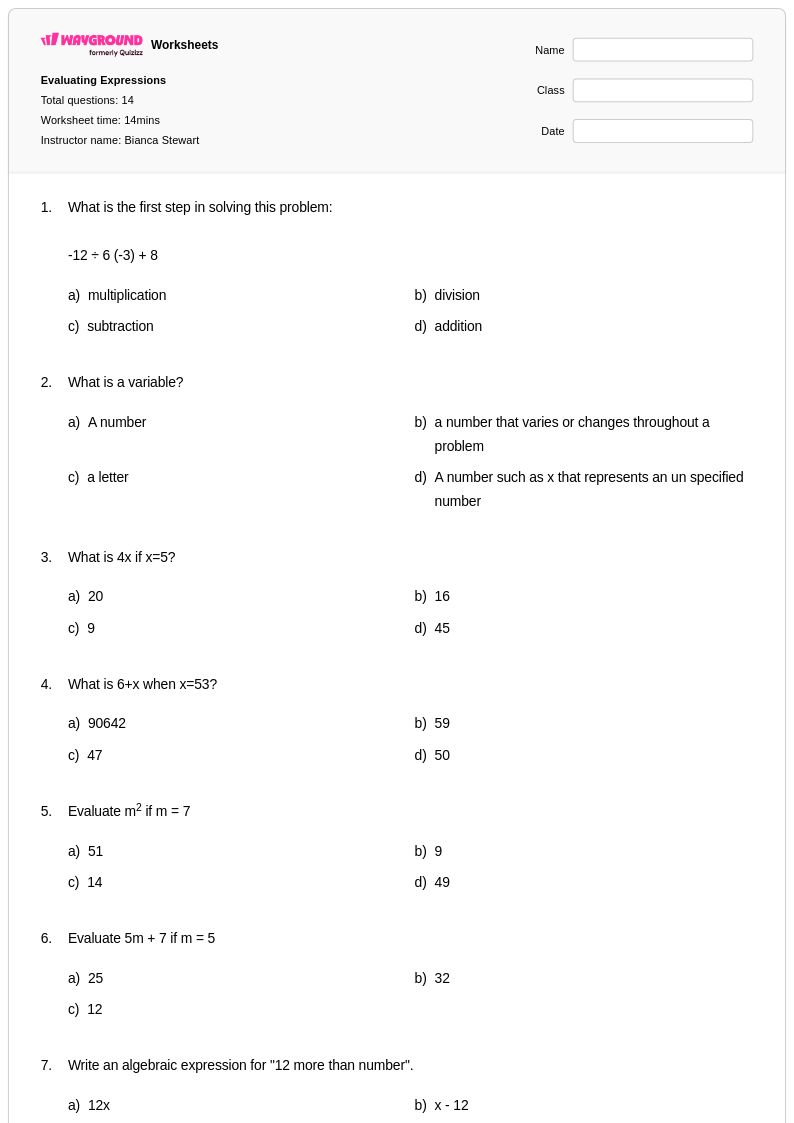
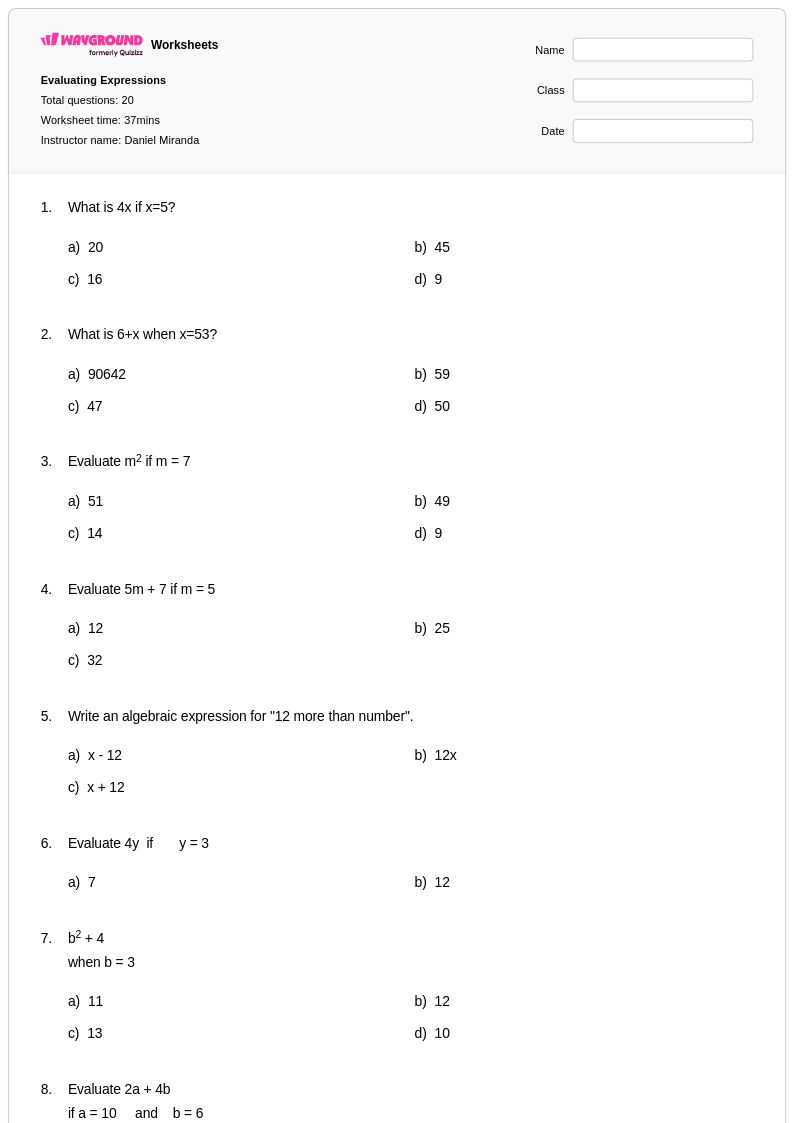
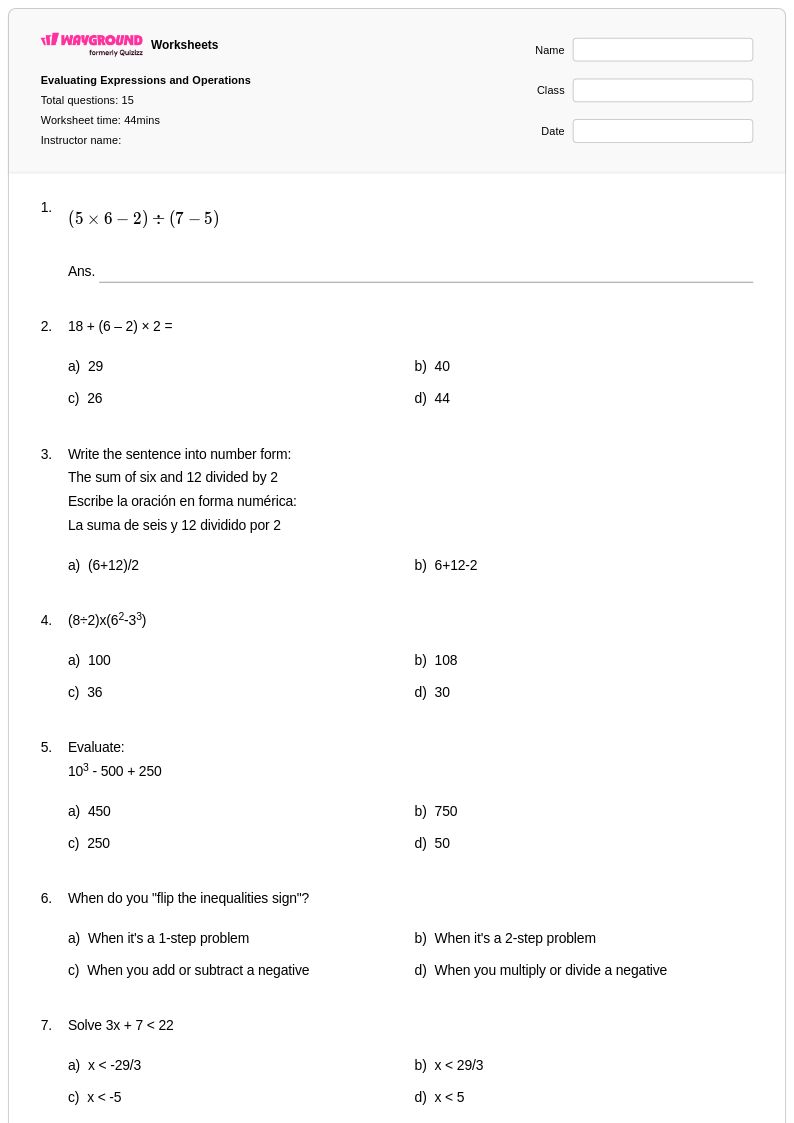
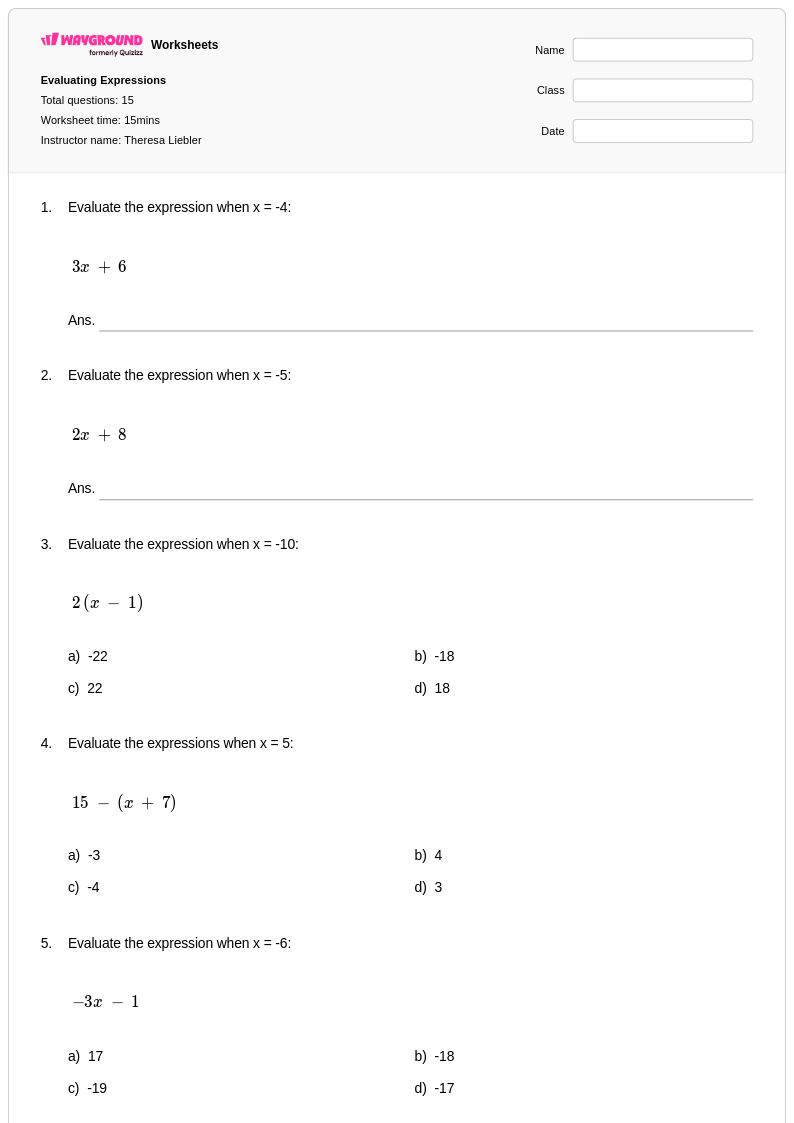
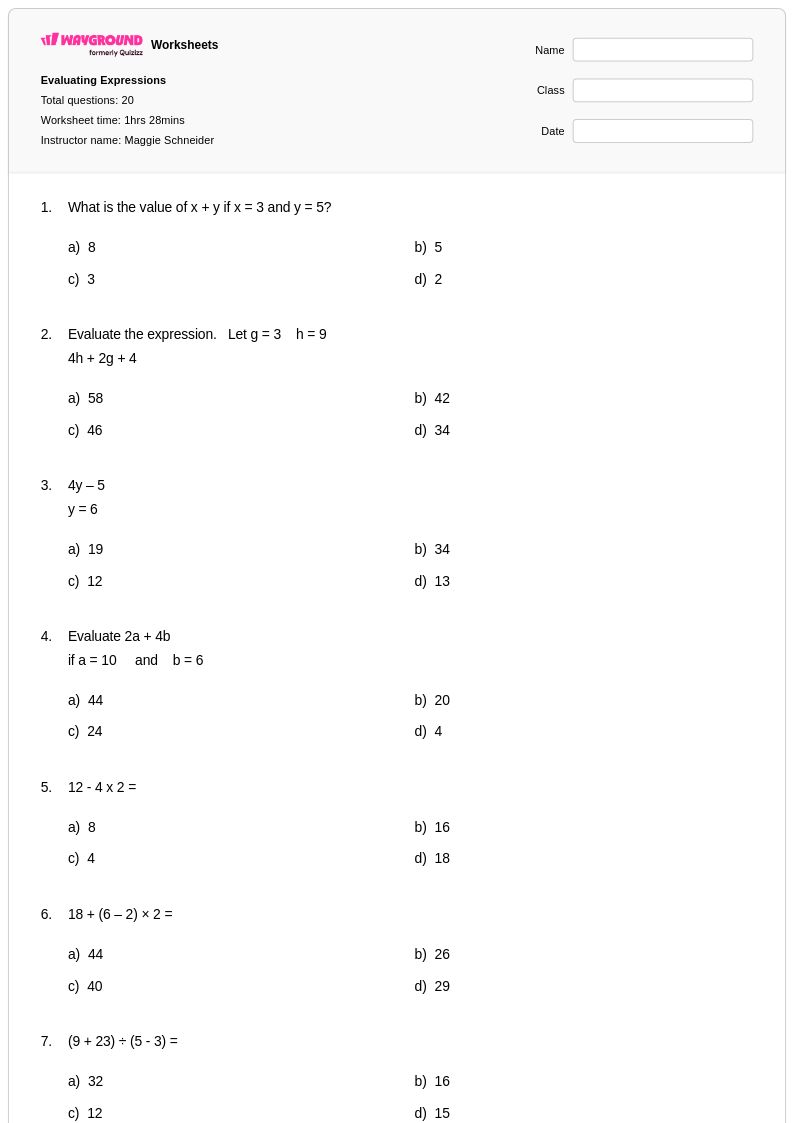
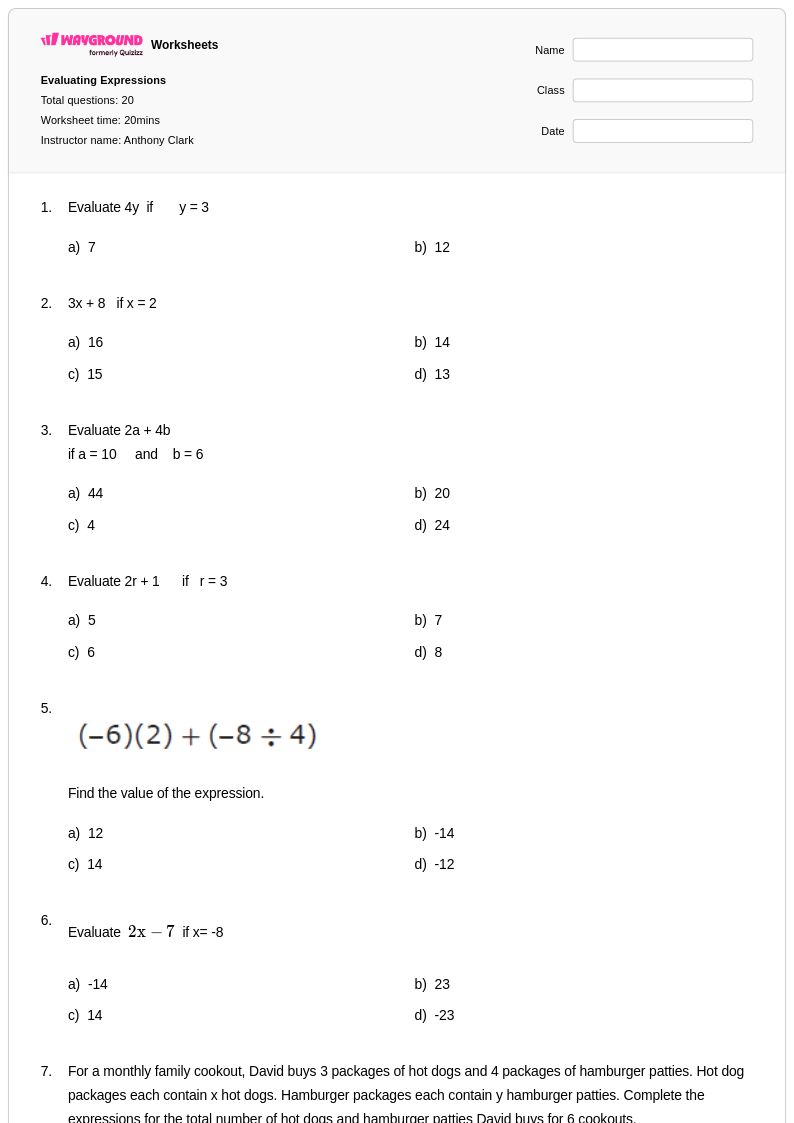
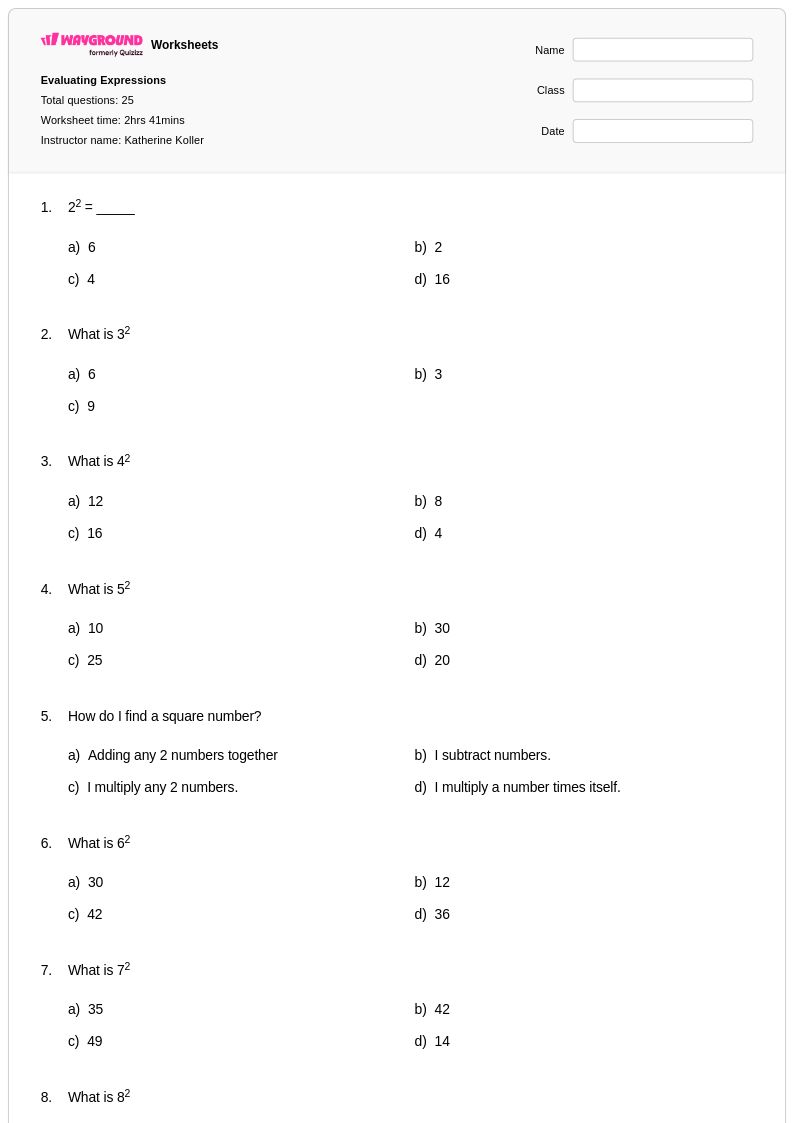
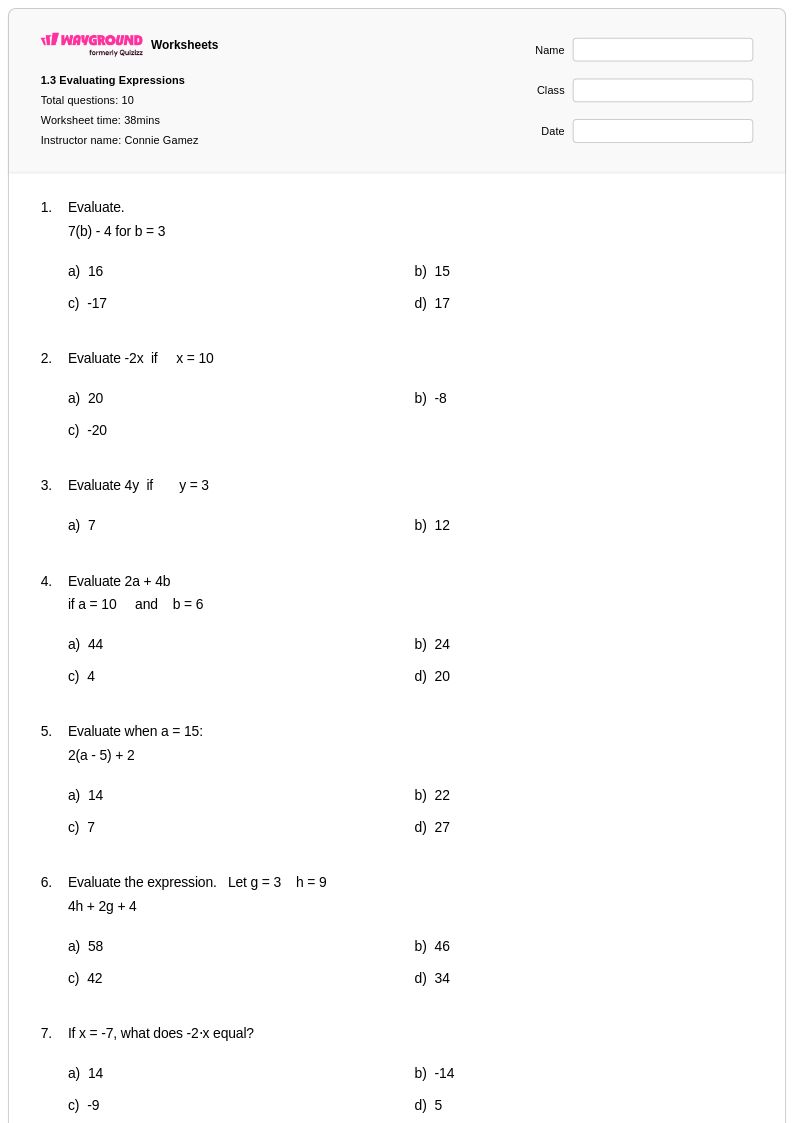
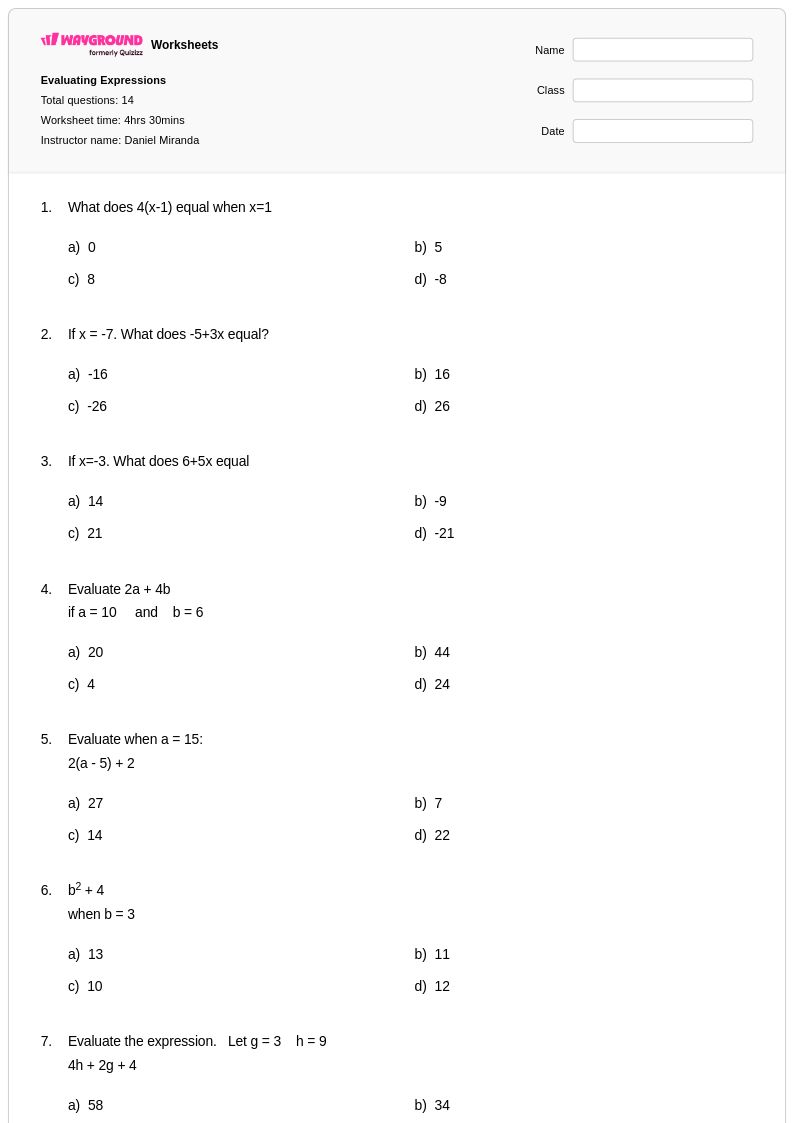
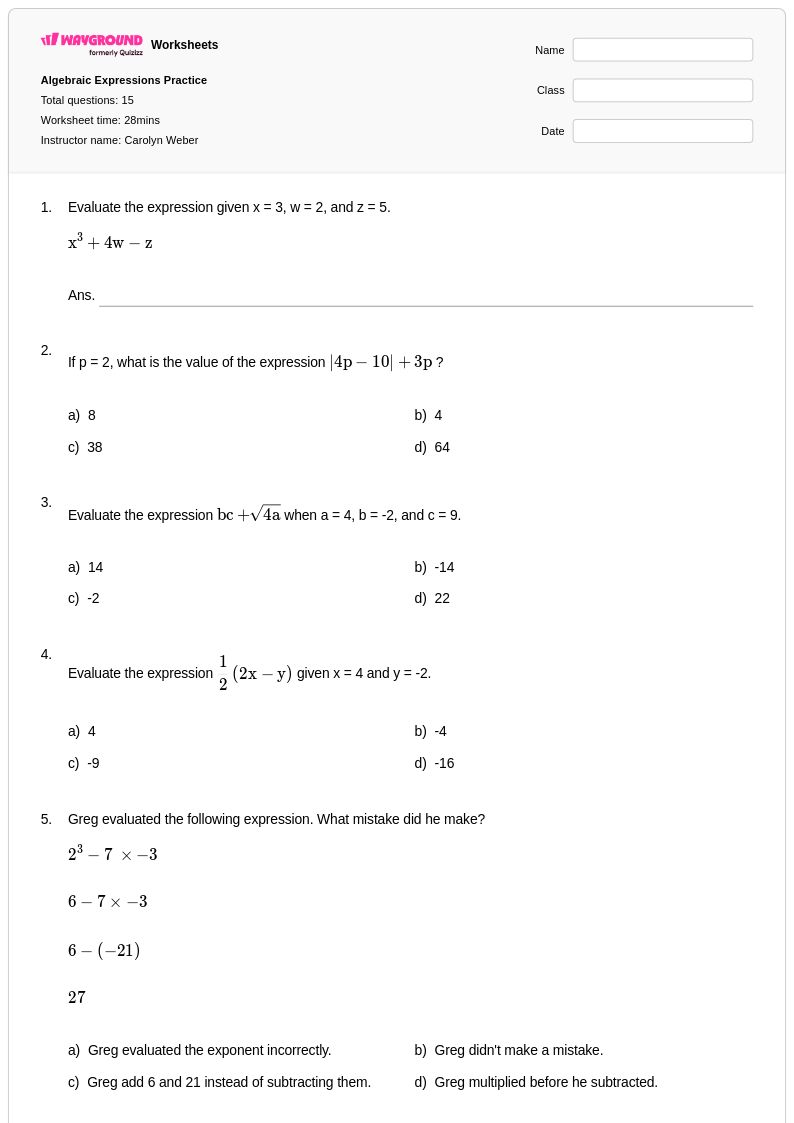
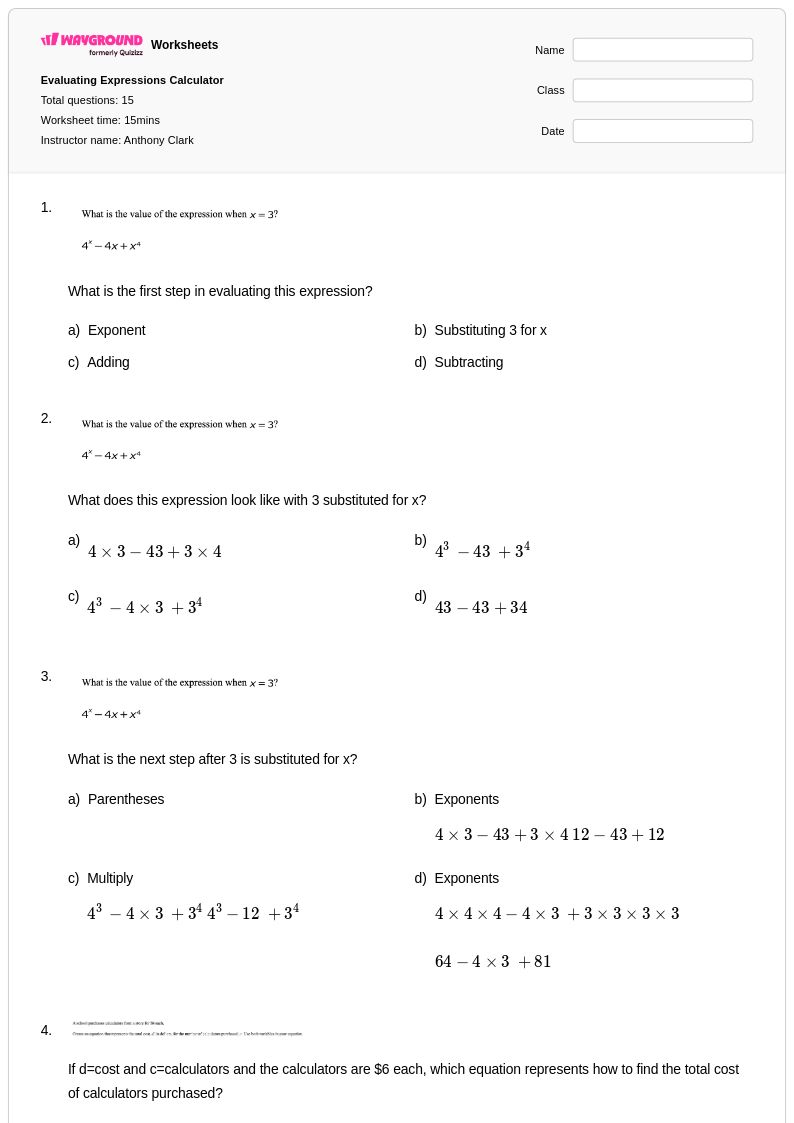
Evaluating expressions represents a fundamental skill in Year 7 mathematics that bridges basic arithmetic operations with more advanced algebraic thinking. Through Wayground's comprehensive collection of evaluating expressions worksheets, students develop proficiency in substituting numerical values for variables and applying the correct order of operations to solve complex mathematical expressions. These carefully crafted practice problems guide seventh graders through systematic approaches to evaluation, from simple single-variable expressions to multi-step problems involving exponents, parentheses, and multiple variables. Each worksheet includes detailed answer keys that allow students to verify their work and identify areas needing improvement, while the free printable format ensures accessibility for both classroom instruction and independent study at home.
Wayground, formerly Quizizz, empowers educators with millions of teacher-created resources specifically designed for Year 7 evaluating expressions instruction, featuring robust search and filtering capabilities that align with state mathematics standards. Teachers can easily differentiate instruction by selecting worksheets that match their students' varying skill levels, from foundational expression evaluation to more challenging multi-variable problems that prepare students for advanced algebra concepts. The platform's flexible customization tools enable educators to modify existing worksheets or combine multiple resources to create comprehensive practice sets tailored to their curriculum needs. Available in both printable PDF format and interactive digital versions, these worksheets support diverse learning environments while providing teachers with efficient tools for lesson planning, targeted remediation, skill enrichment, and ongoing assessment of student progress in this critical mathematical concept.
FAQs
How do I teach evaluating expressions in 7th grade?
By 7th grade, students should already know the mechanics of substitution, so instruction can focus on the harder cases: expressions with negative values, exponents applied to negative bases, and multi-variable problems where substitution order matters. A useful classroom move is to present two worked examples side by side — one where the negative sign is handled correctly and one where it isn't — and ask students to identify the error before they practice independently.
What exercises help 7th graders practice evaluating expressions?
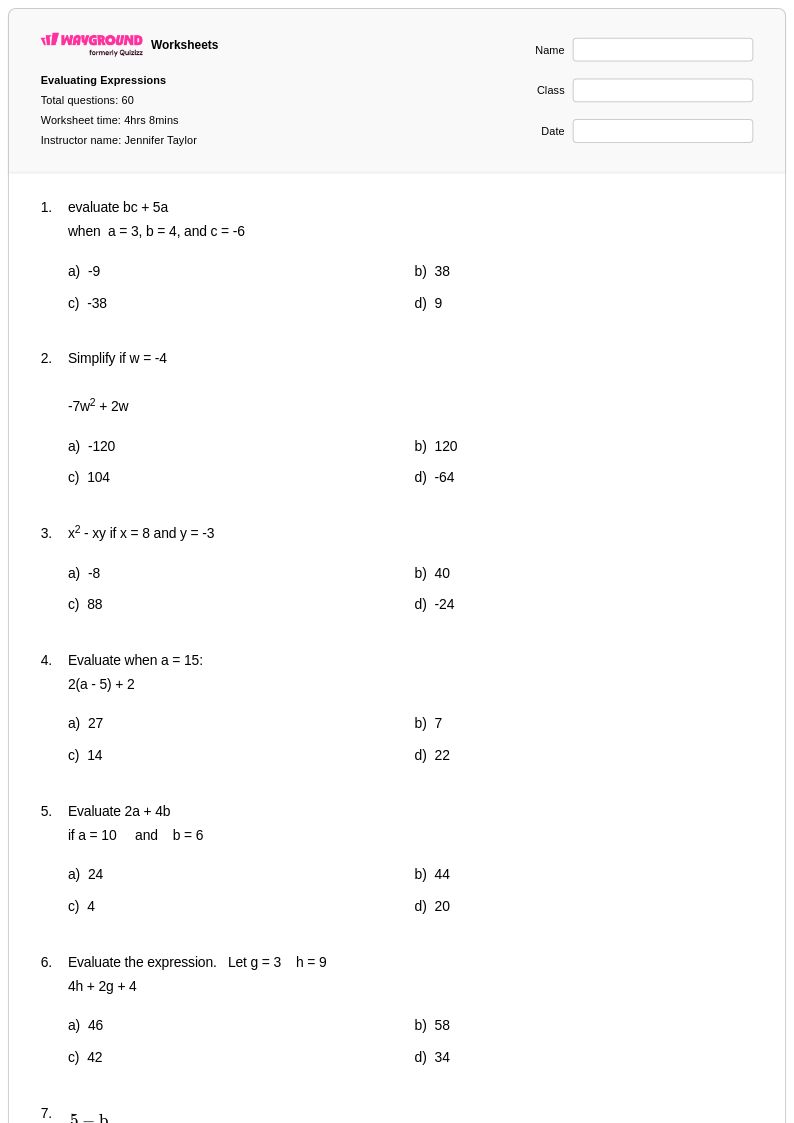
Problems involving negative integers and rational numbers are the core of 7th grade expression work. Good practice sets include: expressions where a negative value is substituted into a term with an exponent (students often square the number and then apply the negative, rather than squaring a negative), and multi-variable expressions where students must track two or three substitutions without losing a sign. Mixing in some reverse problems — given the result, what was the value of x? — builds flexibility.
What mistakes do 7th graders make when evaluating expressions?
The most persistent error at this level is mishandling negative bases with exponents: students evaluate (-3)² as -9 instead of 9. A close second is sign errors during substitution when the expression has subtraction — substituting a negative value into something like 5 - x and ending up with 5 - (-2) = 3 instead of 7. These aren't careless mistakes; they reflect genuine conceptual gaps that targeted practice can address.
How do I use Wayground's Grade 7 evaluating expressions worksheets?
The worksheets are available as printable PDFs and as digital quizzes you can host directly on Wayground. Both formats include a complete answer key. The digital version is particularly useful for 7th grade because you can see at a glance which problem types are tripping up the most students — helpful when you're deciding whether to reteach negative exponents or move on.
How does evaluating expressions fit into the 7th grade math curriculum?
Common Core builds on the 6th grade introduction to expressions by pushing 7th graders to work fluently with rational numbers — including negatives — inside algebraic expressions. Evaluating expressions at this level is the direct prerequisite for solving multi-step equations and inequalities, and for understanding equivalent expressions. Students who can't reliably evaluate an expression for a given value will struggle to verify whether two expressions are equivalent, which becomes central work in 7th and 8th grade.
How can I differentiate evaluating expressions practice for my 7th grade class?
For students still shaky on integer operations, extended time on digital questions reduces the pressure that leads to careless sign errors. For students ready for a challenge, look for multi-variable problems with rational number inputs — those push well beyond grade-level expectations without requiring a different worksheet entirely. Wayground's worksheet-level tools also let you adjust font size or spacing for students who benefit from a less visually dense page.