Free Printable Evaluating Expressions Worksheets for Year 6
Master Year 6 evaluating expressions with Wayground's comprehensive collection of free worksheets, printables, and practice problems featuring step-by-step solutions and answer keys to build mathematical confidence.
Explore printable Evaluating Expressions worksheets for Year 6
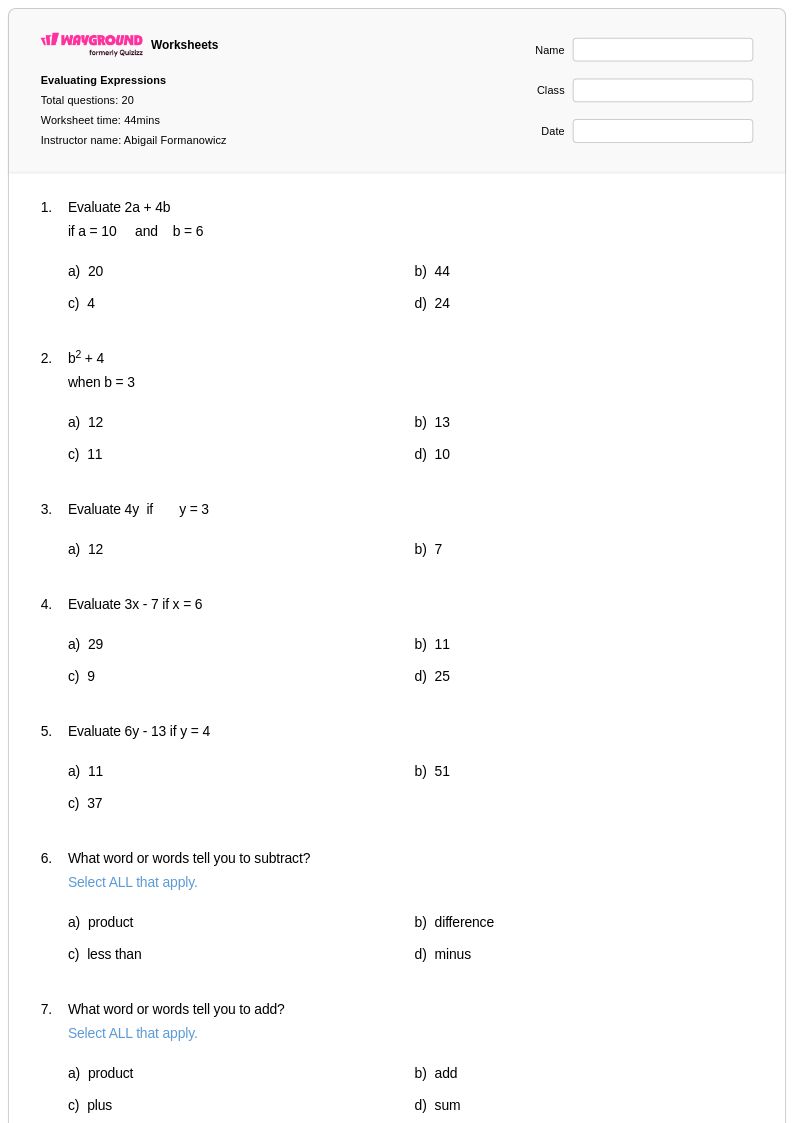
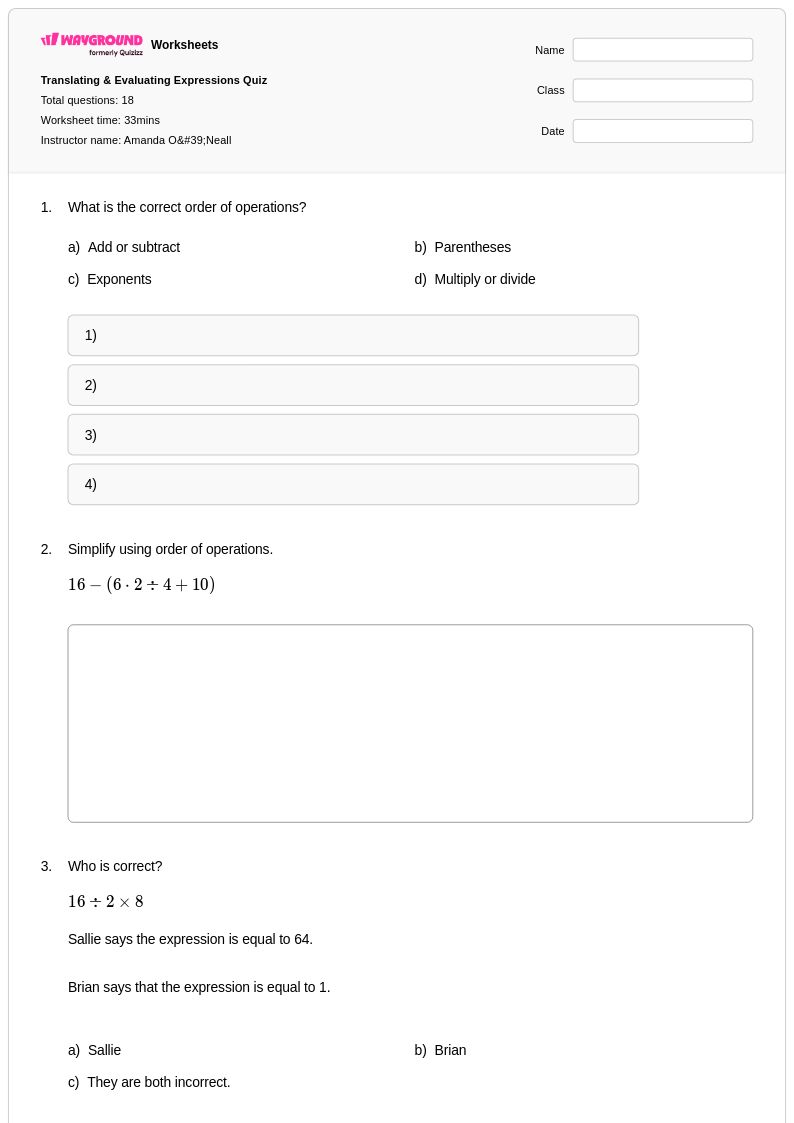
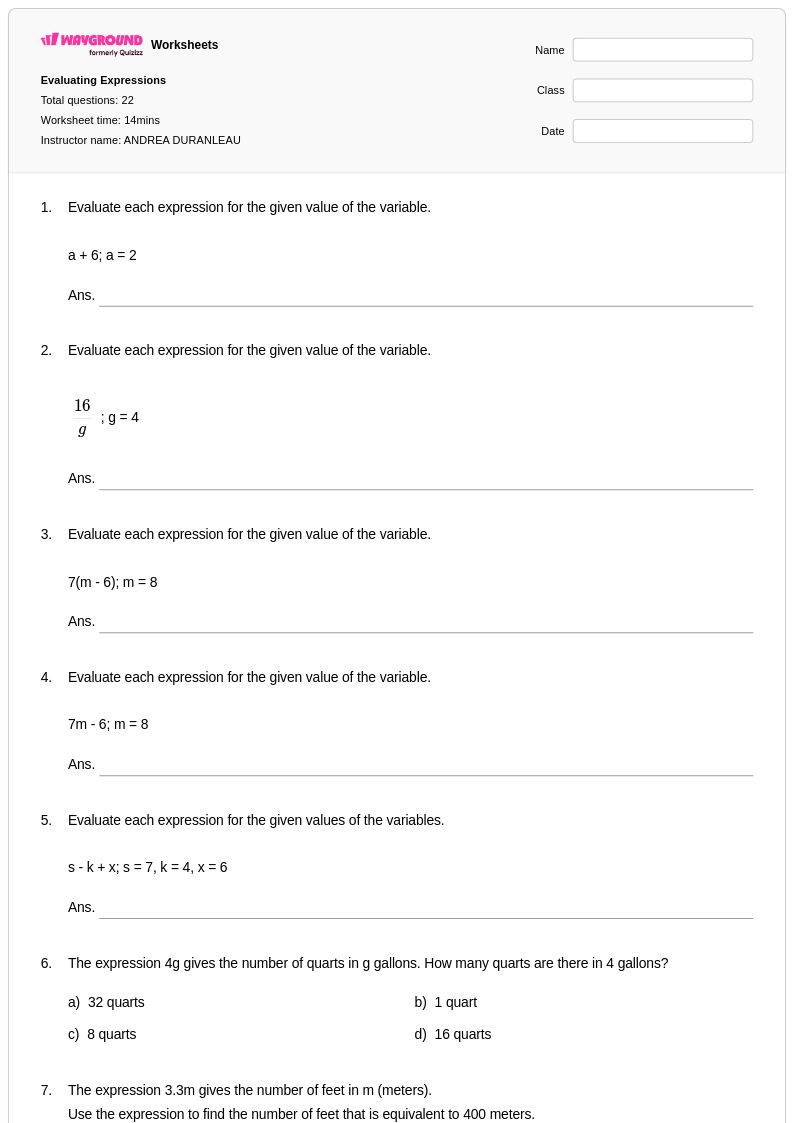
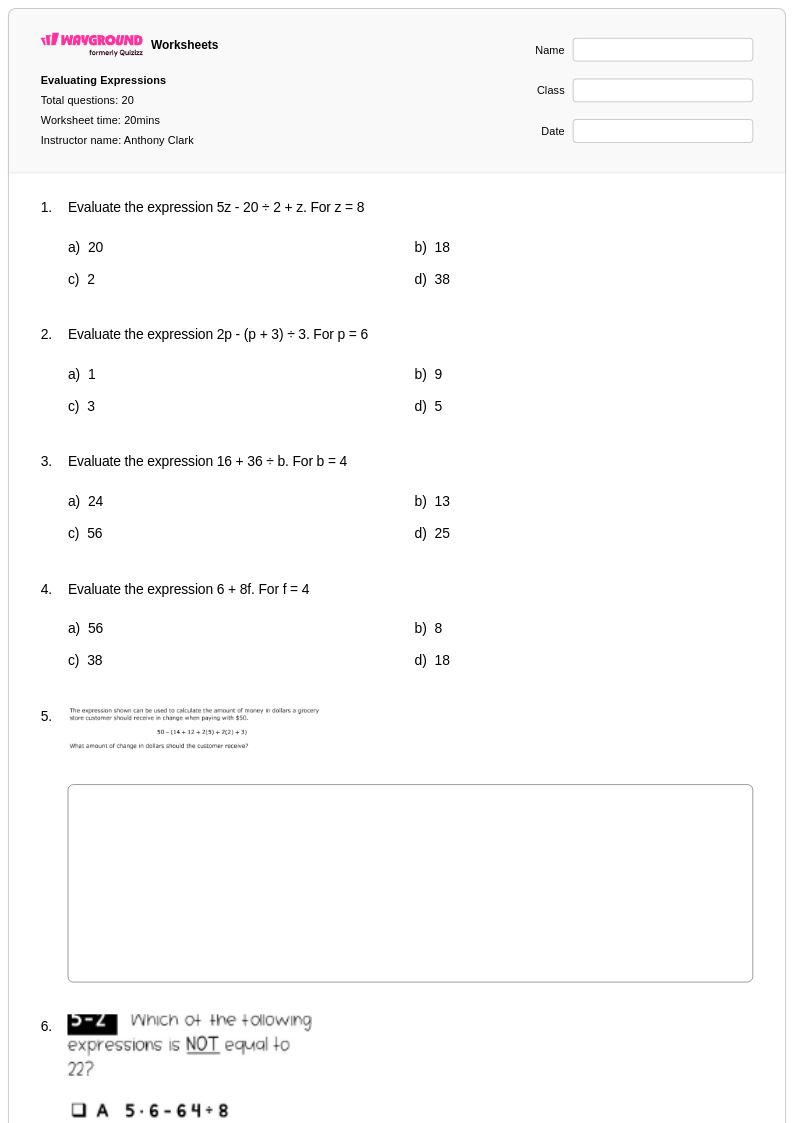
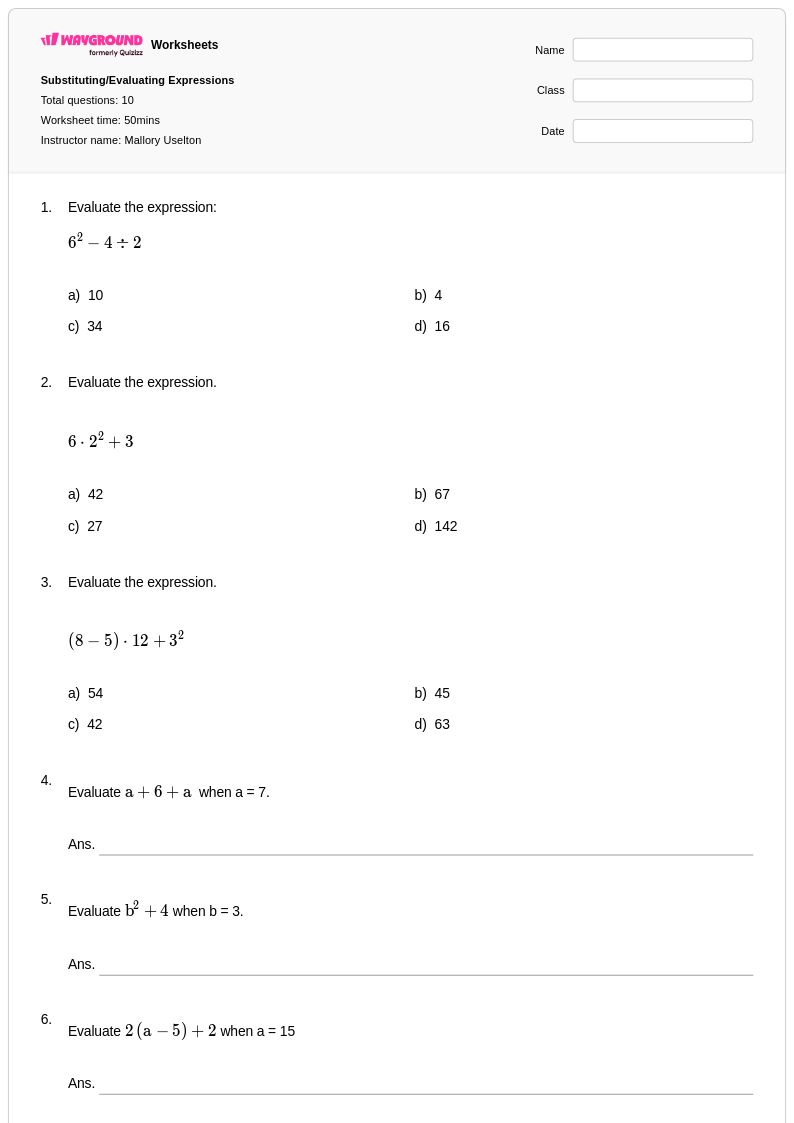
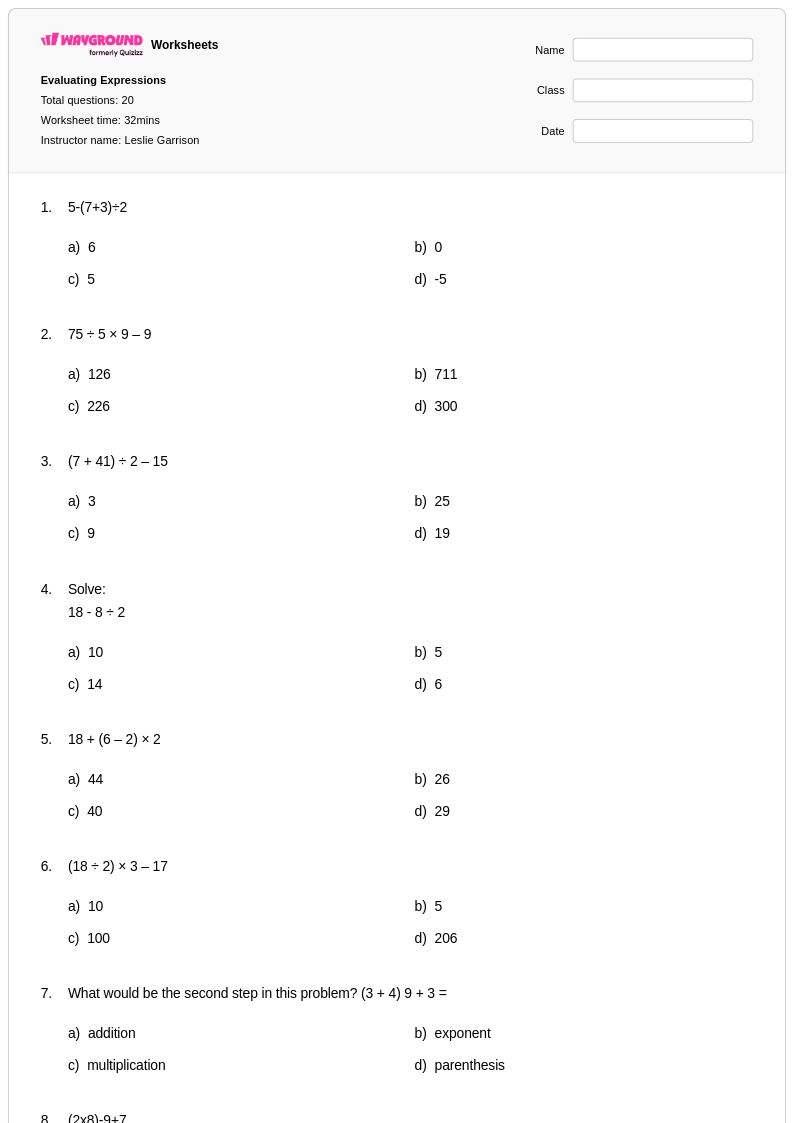
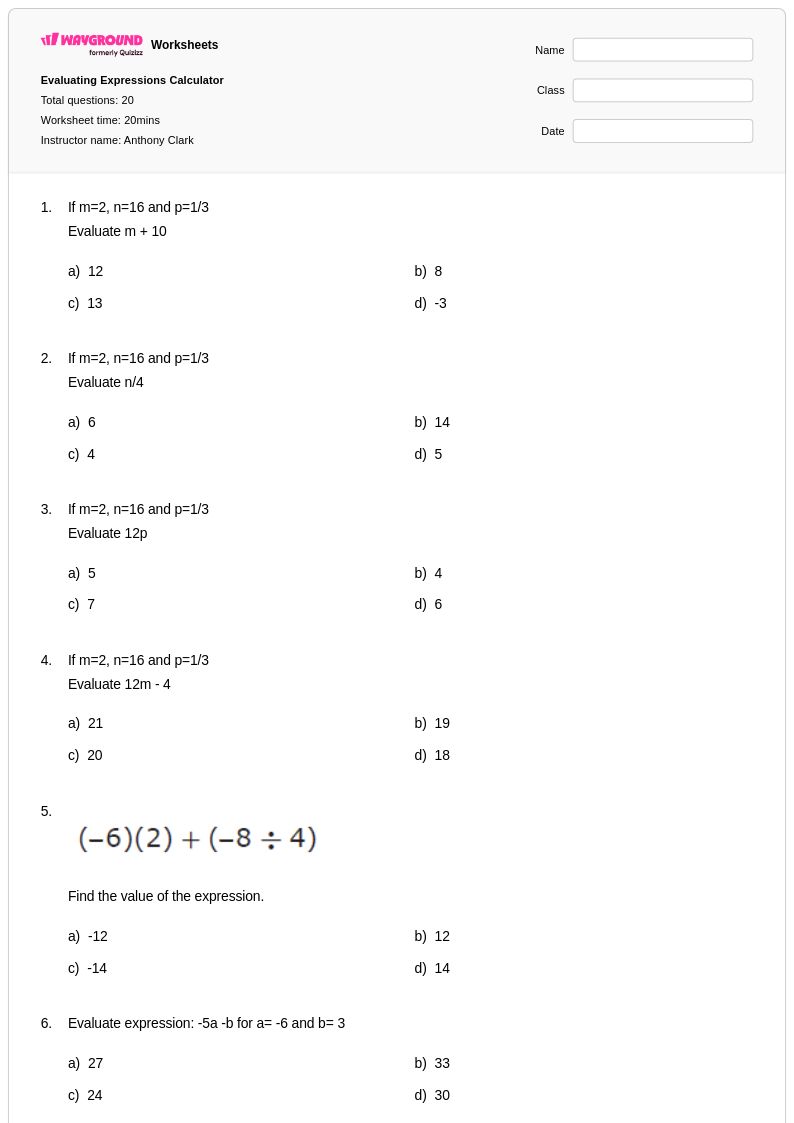
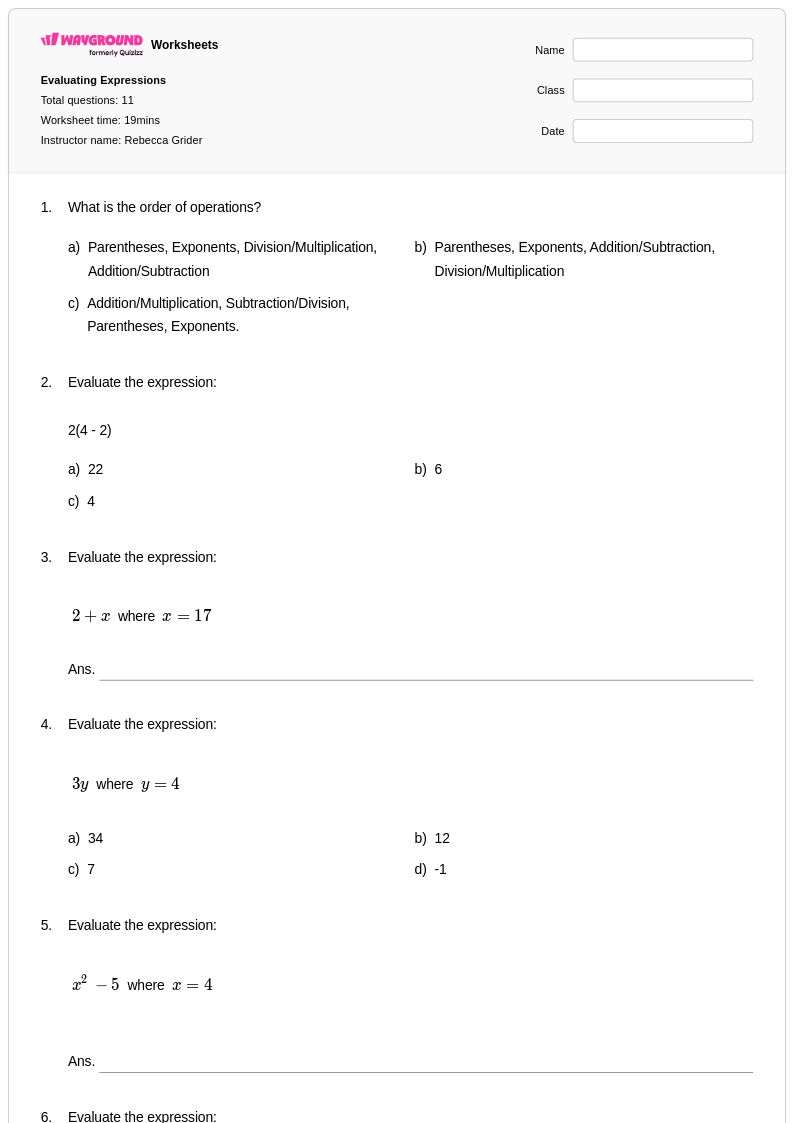
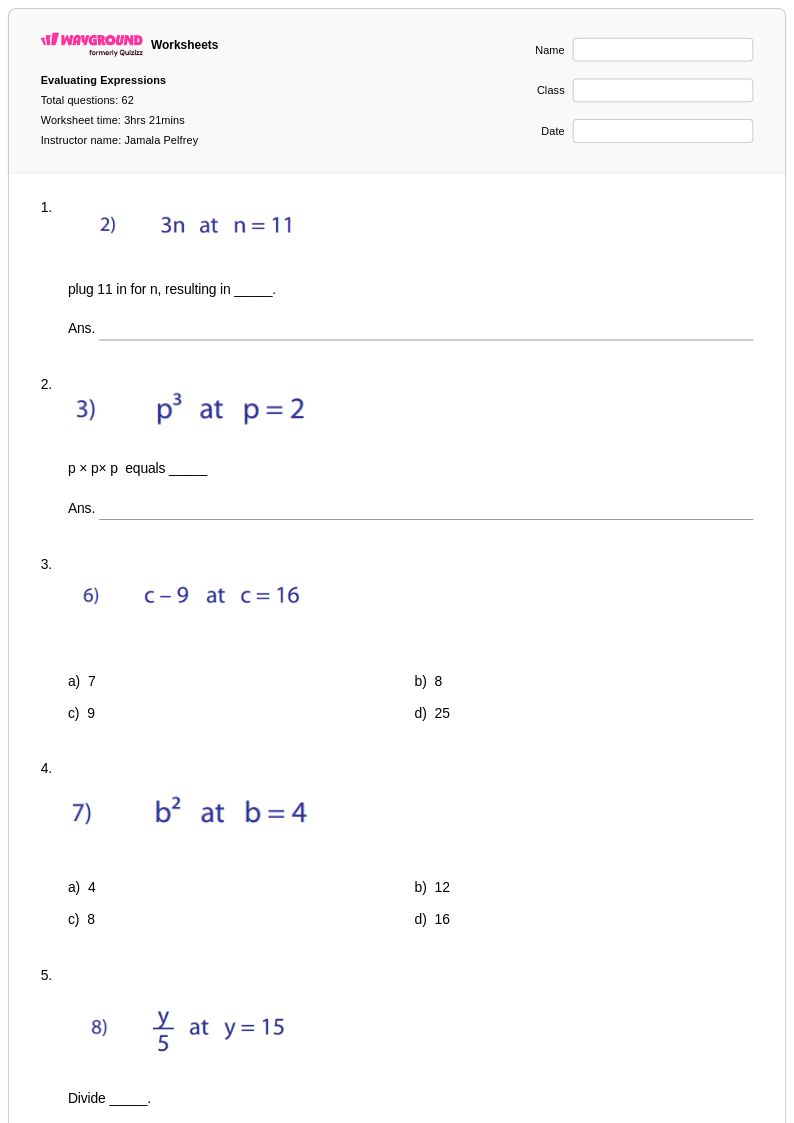
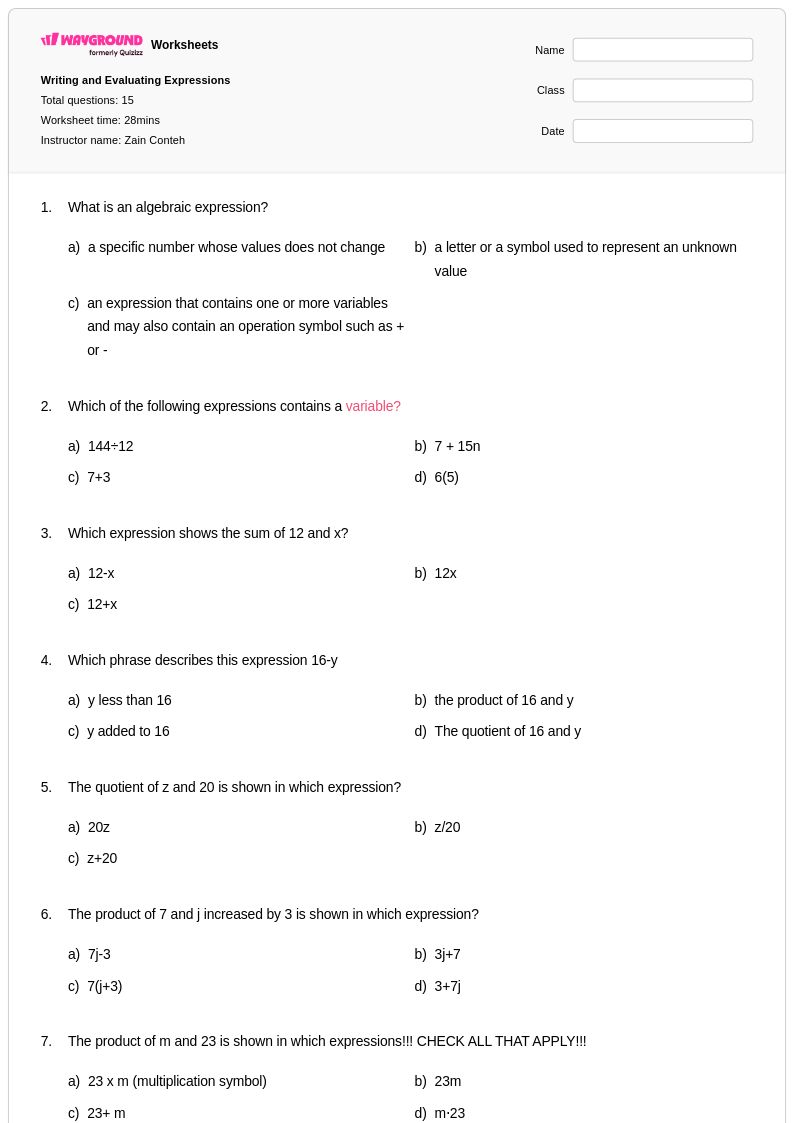
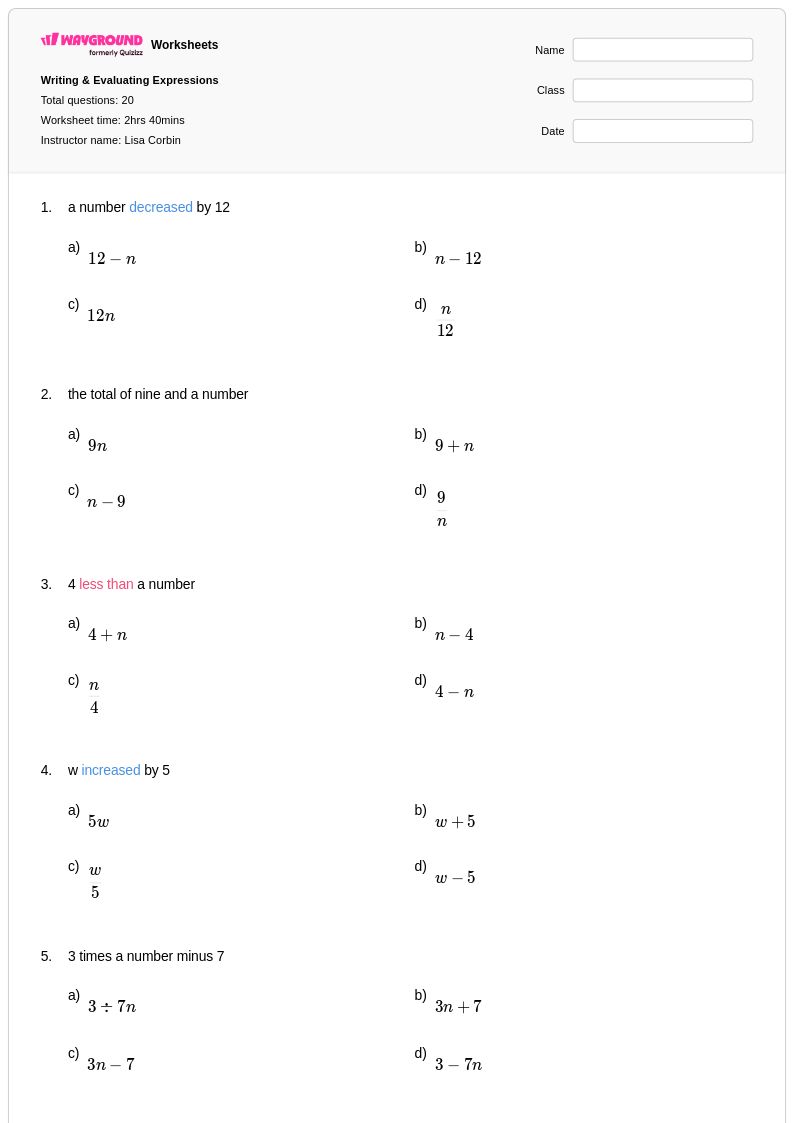
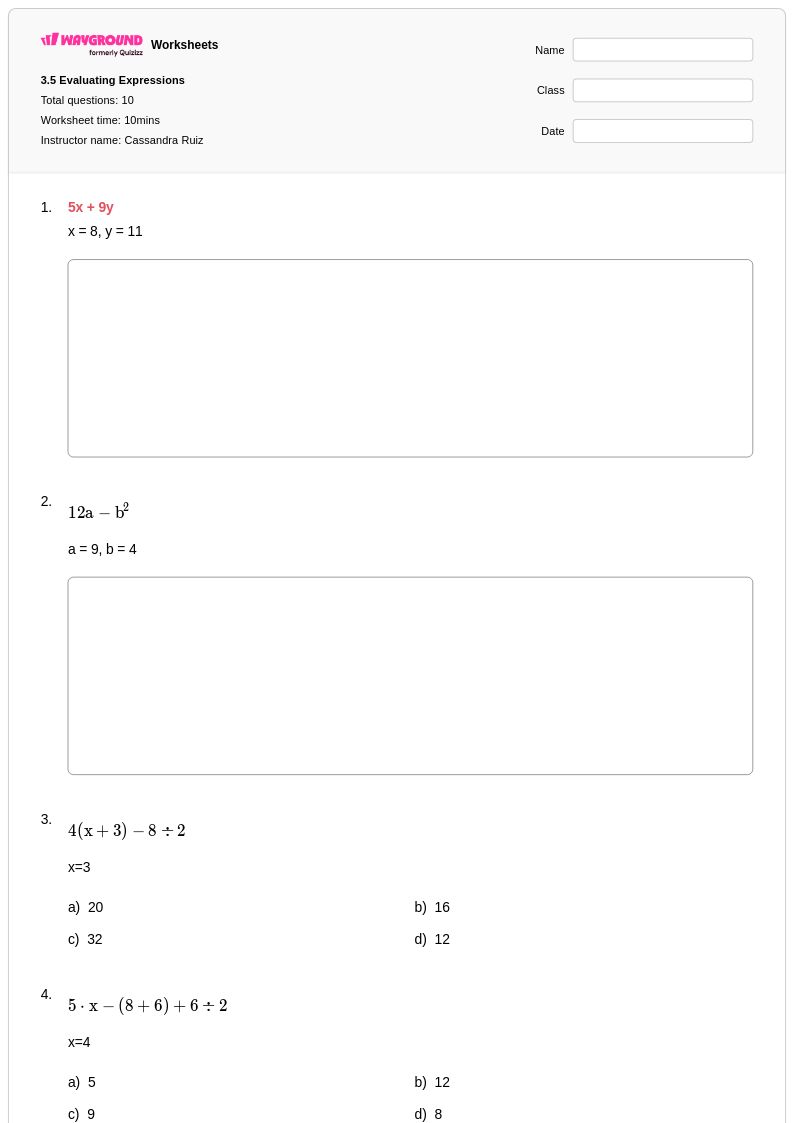
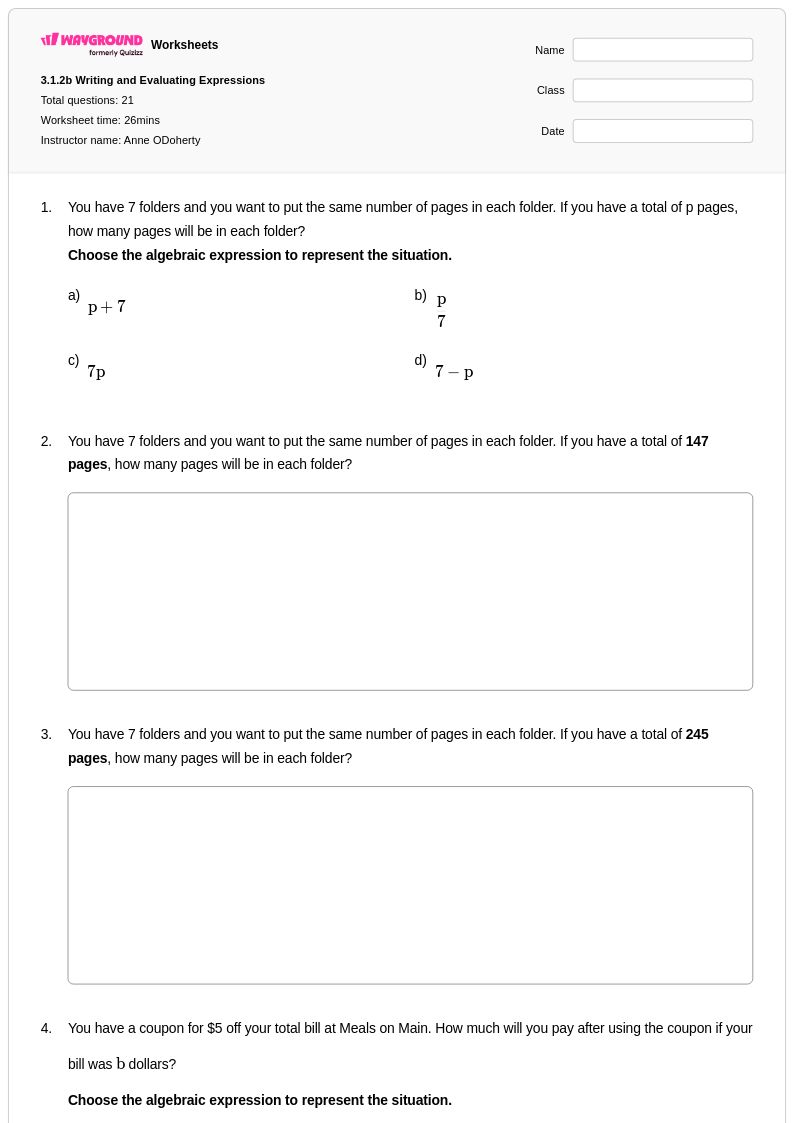
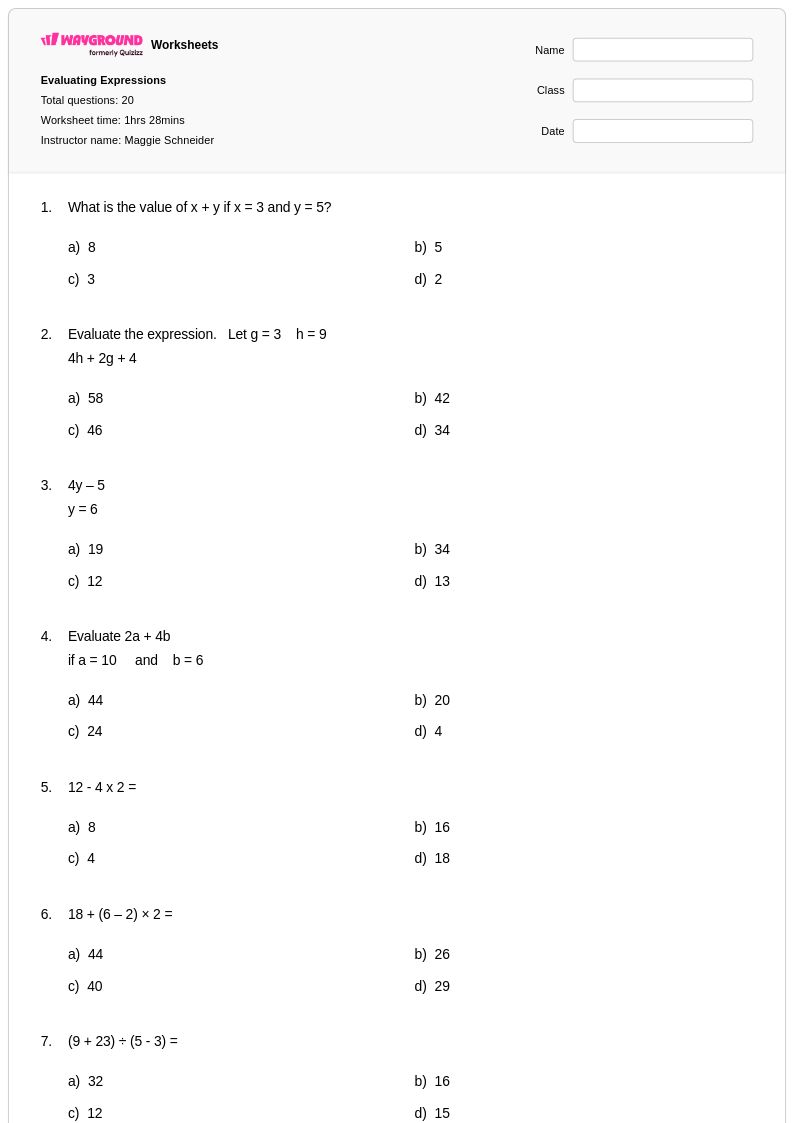
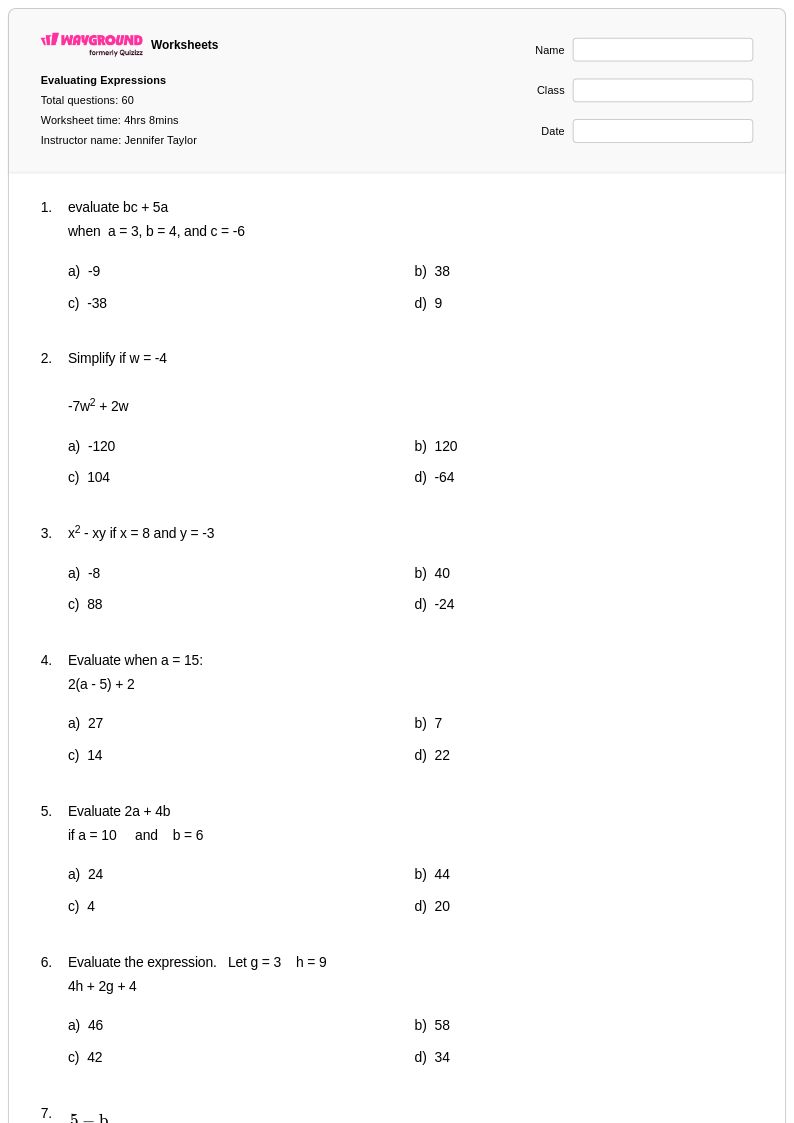
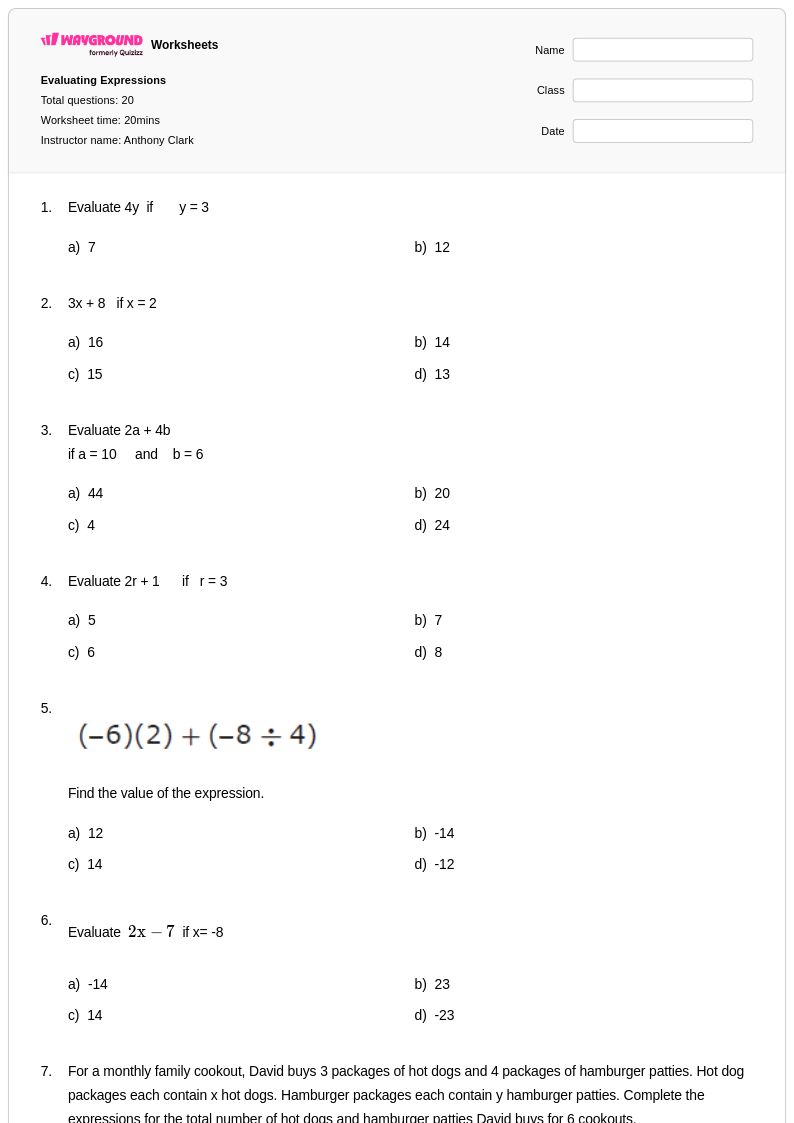
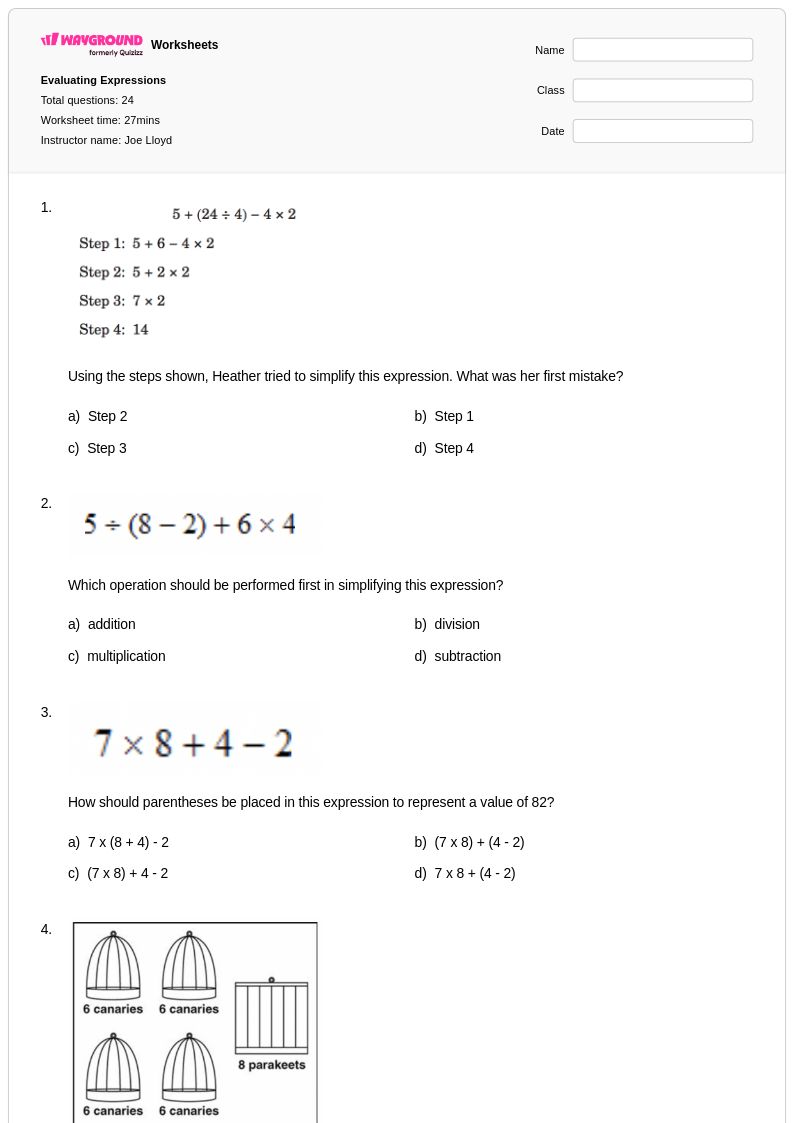
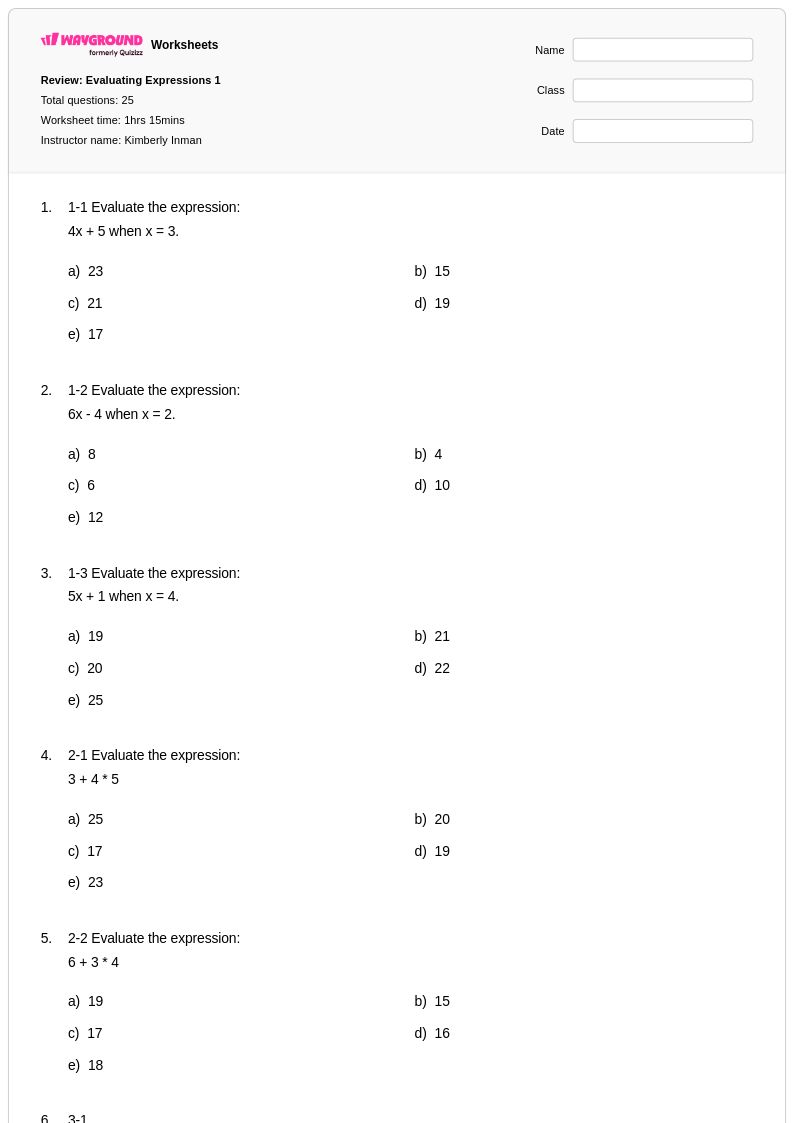
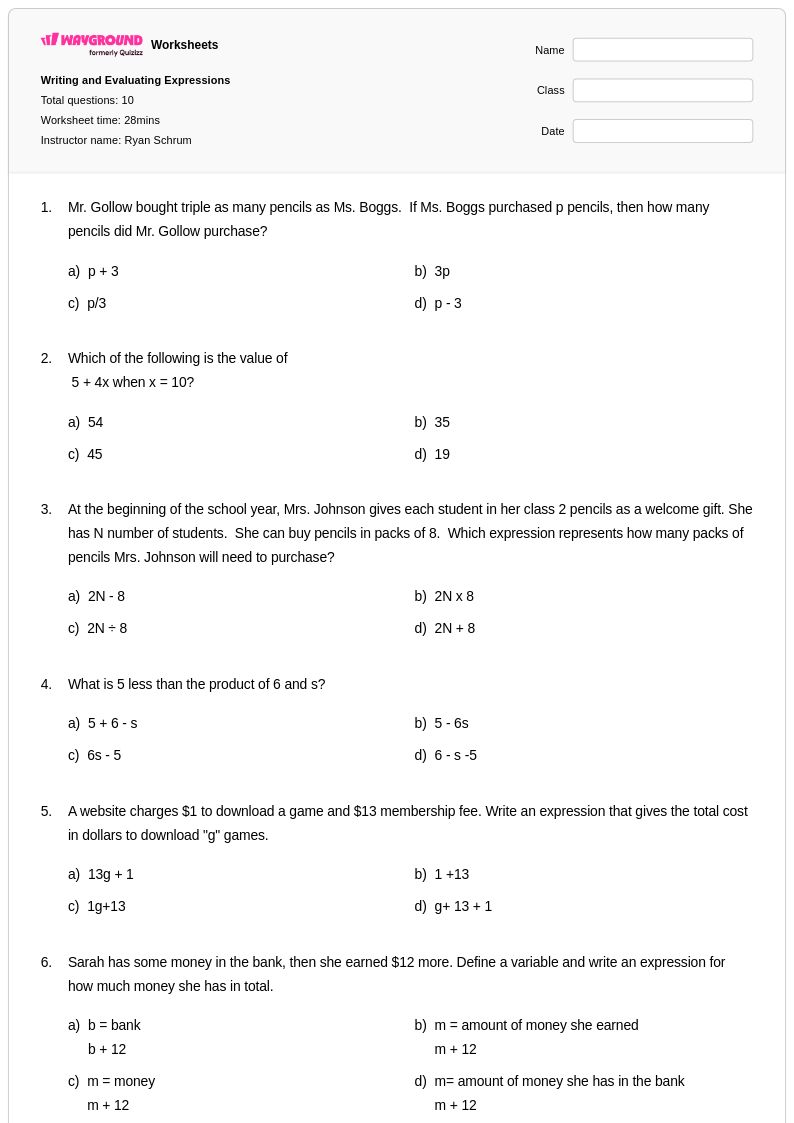
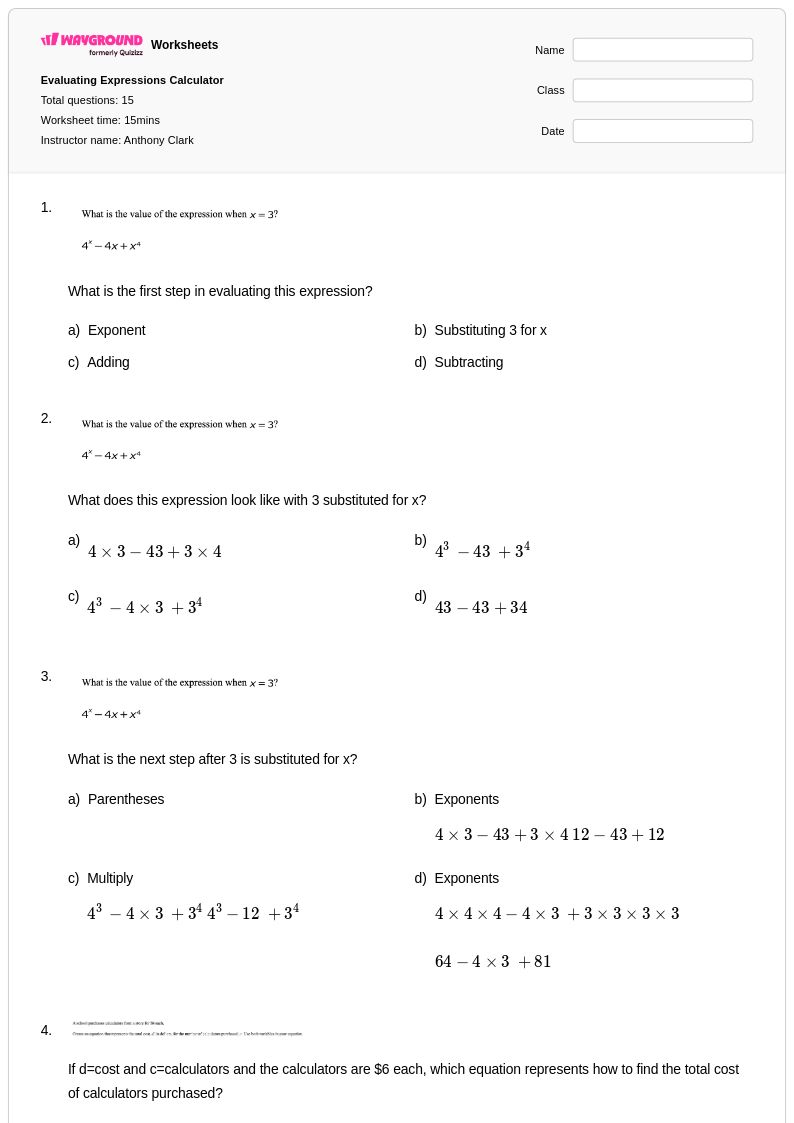
Evaluating expressions forms a critical foundation in Year 6 mathematics, bridging the gap between basic arithmetic and more complex algebraic thinking. Wayground's comprehensive collection of evaluating expressions worksheets provides students with structured practice in substituting values for variables and following the correct order of operations to find numerical results. These carefully designed printables strengthen essential mathematical skills including variable substitution, applying PEMDAS/BODMAS rules, and working with integers, fractions, and decimals within algebraic expressions. Each worksheet includes detailed practice problems that progress from simple single-variable expressions to more complex multi-variable scenarios, with complete answer keys provided to support both independent learning and guided instruction in pdf format.
Wayground's extensive library, featuring millions of teacher-created resources, empowers educators to find precisely the right evaluating expressions materials for their Year 6 classrooms through powerful search and filtering capabilities. Teachers can easily locate worksheets aligned with state mathematics standards and customize content to match their students' specific learning needs, whether for initial skill introduction, targeted remediation, or advanced enrichment activities. The platform's flexible format options allow educators to seamlessly integrate these resources into both traditional paper-based lessons and digital learning environments, while differentiation tools enable teachers to modify difficulty levels and problem types to accommodate diverse learning styles. This comprehensive approach to worksheet management streamlines lesson planning and ensures that every student receives appropriate practice opportunities to master the fundamental skill of evaluating algebraic expressions.
FAQs
How do I teach evaluating expressions to 6th graders?
Sixth graders are often encountering variables for the first time, so the substitution step needs explicit attention — don't assume they understand that 3x means 3 times x. A reliable approach: write the expression, rewrite it with the variable replaced by a blank, fill in the value, then apply order of operations. Keeping those two steps visually separate on paper helps students build the habit before the problems get more complex.
What exercises help 6th graders practice evaluating expressions?
Start with single-variable expressions using whole numbers, then introduce integers, then fractions and decimals. Problems that use the same expression with different input values — evaluate 4x + 2 when x = 3, then when x = 7 — are especially useful because they reinforce that the expression itself doesn't change, only the substituted value does. That distinction is foundational for later work with functions.
What mistakes do 6th graders commonly make when evaluating expressions?
The two most predictable errors: adding before multiplying (skipping or misapplying PEMDAS), and treating a coefficient like 5n as 5+n. A third one shows up once fractions enter the picture — students substitute correctly but then make arithmetic errors with the fraction itself. Isolating each of these in targeted practice sets, rather than mixing all problem types at once, makes it easier to identify which habit a student needs to correct.
How do I use Wayground's Grade 6 evaluating expressions worksheets?
Every worksheet includes a complete answer key, so it works well for independent practice or homework where students self-check. For in-class use, hosting it as a digital quiz on Wayground gives you real-time visibility into where students are getting stuck. If you prefer paper, the printable PDF is ready to go — and the Wayground for Teachers app lets you scan completed worksheets for grading rather than scoring them by hand.
Is evaluating expressions a 6th grade Common Core topic?
Yes. Common Core introduces evaluating expressions in 6th grade as part of the transition from arithmetic to algebraic thinking. At this level, students are expected to evaluate expressions for specific values of their variables, including expressions with whole-number exponents, and to apply the order of operations correctly. This work directly prepares them for writing and solving one-variable equations and inequalities later in the same year.
How can I support diverse learners with evaluating expressions practice in Grade 6?
For students still building reading fluency, the Read Aloud feature ensures the math itself isn't blocked by difficulty parsing the written problem. For students who feel overwhelmed by multi-step expressions, reducing answer choices on digital questions gives them a foothold while they build confidence. You can also generate a version of the worksheet with a dyslexia-friendly font or larger text — same problems, more accessible format.